a veritable Schubertiade, VI
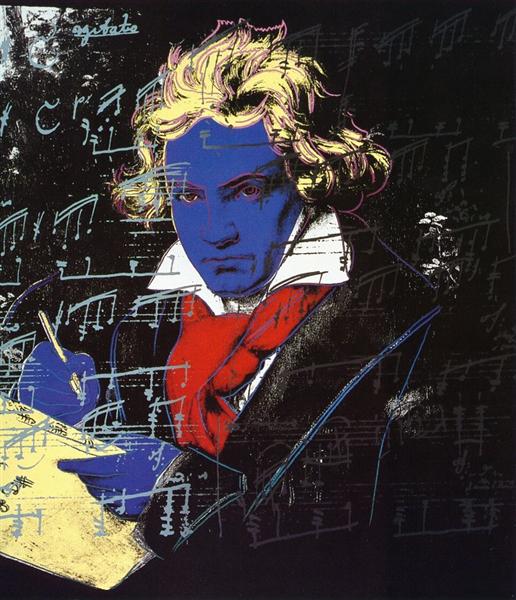
since discovering Tamás Érdi, feral hands,
uncommonly hirsute, but uncovering the
soul of a poet, an angel in wolf’s clothing,
a satyr, without a flute but, at the piano,
I’ve been hooked, combined with Liszt he
is again irresistible, not to mention totally
transcendental
you’ll find Liszt quite a bit like Beethoven,
but more bombastic than philosophical,
style trumps substance, Liszt was a
show-off, a pianistic Paganini
stylistic flourishes abound in the hands
of a deft, however uninformed might he
or she be, technical wizard, it doesn’t
take an Einstein, in other words, to be
a Puccini
and Liszt is a Puccini, who delivers
likewise, and for the very ages
note the same intensity as Beethoven
in Liszt, much of the same musical
idiosyncrasies, but with more dramatic,
late Romantic, alterations of tempo, he’ll
milk a phrase before returning to a more
Classical, which is to say, less elastic
beat
his extemporisations are also less
ruminative, more serendipitously
motivated, like jazz, Liszt wants
primarily to dazzle, kick around,
not instruct
and he does, masterfully, just that
here’s Alfred Brendel doing an alternate,
wholly incandescent version I couldn’t
at all leave out
here’s Julie Andrews giving her take on
the history of jazz
Richard
____________
As I said at the very beginning, you are “sensitive”, and I was right, because you rightly perceived that I was becoming impatient. My apologies. Patience is not my forte. 🙂 However, you have not “touched a nerve”, as this is by no means an emotional discussion from my pov. I have no intention to “vehemently reject” your position (after all it is yours not mine), but only to share my perspective, including what I perceive to be irrational arguments.
Here are the two statements you made;
” I, and the “demented” Nietzsche, incidentally, equally fervently mistrust, even deem fundamentally impossible”,
“I do not profess to “know what Nietzsche believes or “fervently mistrust[s]‘”.
Is that not a self-contradiction?
You say that you’re making an interpretation. But, what is knowledge but an interpretation? A translation from the concrete and the objective to the abstract and subjective, just as we translate a work of literature from one language to another? By interpreting Nietzsche to yourself, you gain a rational understanding of him, and by interpreting him to others, you share that understanding.
I think an important distinction should be made between a) the belief in the existence of Absolute Truth” and b) the belief of one’s monopoly of the Absolute Truth. You seem to be passionately rejecting b), which is quite understandable. But Platonism is not b) but a). It does not claim monopoly of the Absolute Truth, but instead, Plato and Socrates both exhort their listeners to pursue Beauty, Goodness and Truth, to pursue virtue, to be the lover of wisdom, which is the literal meaning of “philosophy”,
According to Einstein, this pursuit of the Absolute Truth is also the guiding principle of the scientists. Without this passionate pursuit of the truth, we would never discover that the earth is not flat. Now think about this: Can you still insist that it is uncertain whether or not the earth is flat, that it is impossible to have a rational understanding of the shape of the earth?
You argue that uncertainty makes people less likely to kill. But most people who kill are not driven by belief in the Absolute, but by their lust for pleasure, wealth and power. Some may kill in the name of Truth as a disguise for their ulterior motives, but it would be unfair and irrational to blame the Truth for their acts.
I’ll refrain from discussing the Catholic Church, partly because to me this discussion is about Platonism, and Christianity is not Platonism (though they share many similar aspects), and partly because I’m not associated with the Catholic Church and frankly don’t know enough about it to say anything useful
That is a unique experience. Einstein came to the same conclusion when he developed the Theory of Special Relativity, though perhaps he didn’t have quite the same experience. You both beheld the same underlying reality, although you expressed it in different ways.
Plato’s Absolute, i.e., which is Beauty, Goodness and Truth in One, is immanent. It is distinct but not distant from us, and every soul can ascend to it by reason and intellect. There are different types and levels of beauty, in the human body, in nature, in the universe, in science and art, literature and music. One doesn’t have to be a “Superman” to see beauty or create beauty. Every life is an artistic activity. Every individual is an artist.
The concept of Absolute by no means deny or diminish the freedom of individual existence. On the contrary, the more diverse and free the individual existence, the better and fuller it manifest Absolute Beauty. For instance, Beethoven’s Ninth, unless each member of the choir and orchestra plays his/her best part, the beauty of the symphony cannot be manifested nor experienced by the audience.
Unlike Kant who believes that the noumenal is unknowable, Platonists reason that the noumenal and the phenomenal correspond with one another (sort of like the way an image in the mirror corresponds to the original), since they are both derived from one and the same intelligible reality. Because of this “correspondence”, it is possible to do science. We have been able to predict with accuracy the movement of the stars and other events occurring in nature; Because of this “correspondence” between our consciousness and the outside world, it is possible for us to interact with other people and the world


 Richibi's Weblog