Richibi’s Weblog

Just another WordPress.com weblog

Tag: Daniil Trifonov

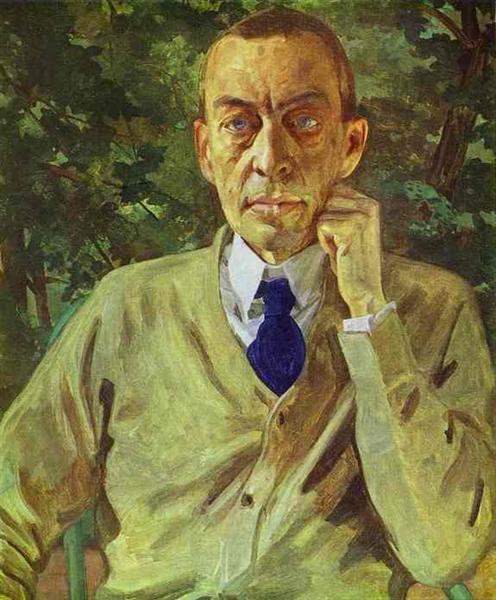
“Rhapsody on a Theme of Paganini” – Rachmaninov‏

portrait-of-the-composer-sergei-rachmaninov-1925.jpg!Large

 
                                      Konstantin Somov
 
                                              _________
 
 
no one plays Rachmaninov better than
Rachmaninov, of which we’ve got aural
representations though no visual live
performances
 
but here’s a Rhapsody on a Theme of 
Paganini to knock your socks off, in 
all its kinetic, electrifying energy
 
you might remember Daniil Trifonov
from my coverage of the XVth 
who has gone on to achieve a 
stunning international reputation, 
entirely, I submit, deservedly
 
watch him set the piece on fire, at 
pace I find faster than most, with 
nevertheless all the requisite 
dexterity, indeed prestidigitation,  
necessary to weave the intricacies 
of Rachmaninovian sound into 
apposite magic, that magic 
Rachmaninov would surely ‘ve 
looked for
 
check them both out
 
 
Richard

the XVth International Tchaikovsky Competition‏

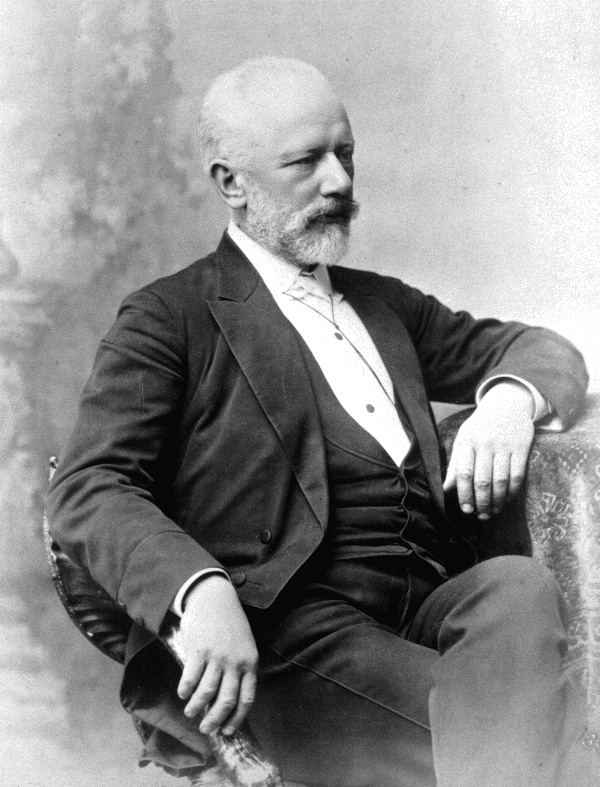
Pyotr Ilyich Tchaikovsky

Pyotr Ilyich Tchaikovsky

(1840 – 1893)

________

my musicologist friend alerted me to the
fact that since the 15th of this month, and
onwards till the 3rd of July, the XVth
International Tchaikovsky Competition
is
on, at which point I raced to my position,
got a front row seat, for you as well
should you decide to join me, at the gala
opening
, check it out, performed in the
Bolshoi Hall of the Moscow Conservatory,
in, of course, Moscow, no less

you’ll be reminded of the monumentality
of Tchaikovsky, his melodic sense, his
emotional power, his subtlety

also Russia’s

the introductory “Capriccio”, conducted
by Vladimir Fedoseyev, is rousing,
probably the best you’ll ever hear, though
it should’ve been called “espagnol” rather
than “italien”, I’ve always thought, there’s
even a redoubtable tambourinist – how
Spanish is that – you’ll want to watch out
for, however far from Spain he might, in
his quenched enthusiasm, seem

Tchaikovsky’s “Mélodie”, op. 42, no. 3,
played in all innocence by a 14-year-old,
a cherub in the guise of already an angel,
follows

the concert suite from his “Nutcracker”,
mastered by a 13-year-old with the
command of a prodigy, after that

you’ll remember Daniil Trifonov from
the 13th Rubinstein Competition, which
he won, accompanying a soprano here,
but you’ll also see him bring down the
house with his last two movements of
Tchaikovsky’s iconic 1st Piano Concerto

why would they have left out the
thunderous, wonderful first, I wonder

Daniil also won the last Tchaikovsky
Competition, the 14th, also in 2011

most of the program is in Russian,
with some considerations for a
perhaps interested English audience,
thanks to Valery Georgiev, a conductor
of considerable note, not at all the
vagrant here that he seems

my musicologist, who speaks everything,
understands the Russian, but it’s not
difficult to understand, the message
is one of harmony and peace

the opposite of war is not peace, they
are saying, it’s art, and specifically
here music, these are here actions to
unite, beyond borders, beyond creeds,
beyond even transgressions

they signal out Van Cliburn, who plays
all, incidentally, of Tchaikovsky’s 1st

I signal out Eurovision, the Tchaikovsky
Competition
, now in its XVth year

watch

Richard

Chopin “Études”, opus 25‏

if the Debussy, was a bit too fast a move from Chopin’s
Romanticism, his enchanting melodies wrought with
pressing and intent emotion to tug at your most
unresisting aural senses, into a 20th Century of
cynicism and machinery, speed, neurosis, world war,
it was probably too fast for those who actually lived
it as well, just as we think of our own world as out of
control, ultimately the swoons of Chopin would no
longer cut it alone as mileposts towards so unmoored
a future, a heretofore beyond mere private emotions,
other voices would come up responding to further
calamities, inconsistencies in the cultural argument,
where the poet no longer could stand prophetically
alone, there were others also to tend to, and nations
and even new ideologies burgeoning, social, sometimes
sinister even, experiments, Romanticism would have no
choice but to cede to the imperatives of a new, often
inclement, order

but that nevertheless choice still imprint is nowhere
near as definitive as Chopin before all that happened,
as people were still all celebrating and expressing
their newfound personal validity, freedom, worth,
fruit of the revolution not only of the political world
but of the cultural one as well

Elizabeth Barrett Browning is to my mind his only
literary equivalent, compare their equal ardour
and the likeness of their compelling muse

Daniil Trifonov, playing Chopin’s other set of
“Études”, opus 25, not only lives them, he’s
utterly possessed, he’s in Tel Aviv, it’s May, 2011

Richard

psst: the first Étude is called the “Aeolian Harp”,
the ninth the “Butterfly”, the second to last,
or eleventh, the “Winter Winds”, all of which
you might try to make out in passing, they are
not that difficult to identify, all the others are
named for their key