Richibi’s Weblog

Just another WordPress.com weblog

Tag: concertos

November / Month of the Sonata – 21

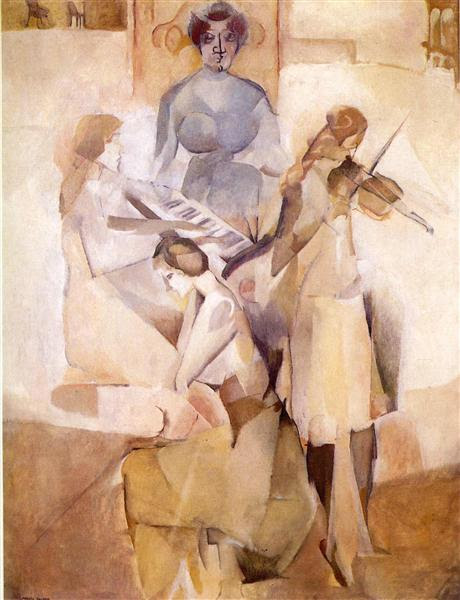
Sonata, 1911 - Marcel Duchamp

    Sonata (1911)  


          Marcel Duchamp


                   _______


as I was about to listen to Stravinsky’s

Sonata for Two Pianos, an intriguing,

I thought, combination, I came upon,

entirely inadvertently, his Concerto for

Two Pianos, which, to my confusion, 

was for only two pianos 


a concerto is a piece of music consisting,

indeed, of more than one movement, 

but with an accompanying orchestra,  

according to the definition, Stravinsky  

must’ve been playing with words, his 

Concerto for Two Pianos, however, 

suits my project, a month of, specifically, 

sonatas, irrespective of his erroneous

nomenclature


and it is entirely delightful, though

maybe in your face, listen


this is where I might elaborate on the 

meaning of sonata, it is nothing more

than a piece of music consisting of

more than one segment, called

movements, anything can happen, 

much like in a novel, consisting of 

chapters, where anything also can 

happen


the term sonata is used for pieces of

music written for one or two instruments, 

for the one which can only play one note 

at a time, anything not a keyboard, 

requires harmonic accompaniment, it is 

a tradition, though not absolute


a piece of music written for three 

instruments consisting of more than 

one segment, movements, is called 

a trio, for four, a quartet, five, a 

quintet, and so forth, until one stops 

counting and we call it a symphony, 

a symphony is a sonata written for  

an indefinite number of instruments, 

which is to say an orchestra


a concerto is a symphony with a 

soloist, it’s named according to 

the soloist’s instrument 


but they’re all, essentially, sonatas


a piece of music consisting of more

than one segment of music, or 

movement, written for two instruments 

only, as far as I’m concerned, is called 

a sonata, so, to my mind, this Concerto

for Two Pianos should be called a

sonata 


but that’s just my opinion


what do you think


I think one should ever read the fine 

print, even with Stravinsky


enjoy


R ! chard

November / Month of the Sonata – 1

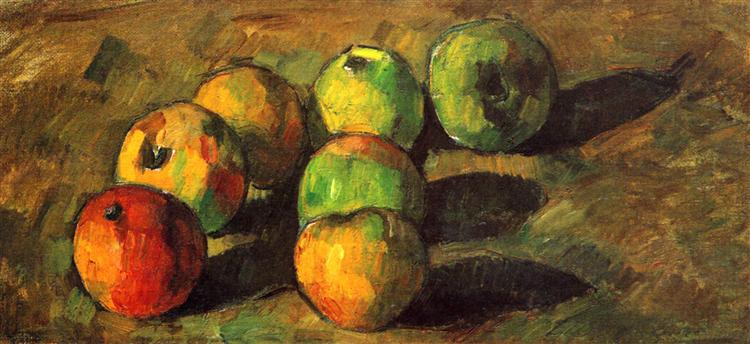
Still life with seven apples, 1878 - Paul Cezanne

      Still Life with Seven Apples (1878) 


               Paul Cézanne


                      _____


a sonata is to the concerto what an apple

is to an apple pie, its essential component, 

after which the rest is decoration, however 

inspired


sonatas existed before Mozart, but he’s 

the one, along with Haydn, as well as

early Beethoven, who put them on the 

musical map, 1750 to 1800, more or 

less


it seems to me appropriate, therefore, 

to start my Sonata Month then


here’s something by Mozart, 1789, his 

last piano sonata, No. 18, in D major,

K. 576


three movements, fast, slow, fast – allegro, 

adagio, allegretto – a perfect example of 

the sonata as it was establishing itself

then, a piece of music consisting of 

several distinct sections, movements, 

meant to highlight contrasts, musical 

agility in the artist, compositional 

imagination


listen, enjoy


R ! chard

Piano Concerto no 2, opus 19 – Beethoven

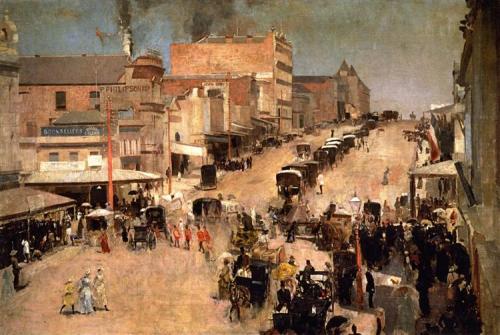
allegro-con-brio-bourke-st-west-1890.jpg!Large.jpg

     Allegro con brio, Bourke St. West (1890) 


                Tom Roberts


                    ________


a concerto is a movie, but for the ears,

one listens, rather than looks, for one’s 

information


quite specifically, Beethoven introduces

drama into his inventions, where earlier 

there’d been merely an invitation to the 

dance, minuets, for instance, gigues, or 

disparate, disorganized, appeals, 

otherwise, to our more interior, whether 

secular or mystical, emotions, see in 

this context, for instance, early adagios, 

heart-wrenching, melting often, odes


these, or the even slower largos, fit 

neatly, however, into Beethoven’s 

compositional scheme of things,  

between the introductory allegros,

often con brio, and the closing, 

and equally spirited rondos, by 

becoming the pivotal element in 

his intended musical evening, the 

core of his narrative presentation, 

the plangent centre of his three 

part play, film 


here’s his Second


listen


R ! chard


Beethoven’s Symphony no 6, in F major, opus 68, “Pastoral”‏

symphonies are not my preferred musical form, they are
generally too broad, grand, impersonal, they are nevertheless
the other most impactful order of presentation among musical
instruments, along with the concerto
 
a symphony is a concerto without a soloist, or it might be more
appropriate to say that a concerto is a symphony accommodating
a soloist, or soloists, in either case the musical elements remain
the same, you don’t have a symphony without movements   
 
a symphony is also of course another name for that very orchestra,
just to confuse you
 
 
despite my indifference to that particular form of entertainment 
some symphonies are nevertheless still for me impressive, some
even meaningful, poignant, several of Beethoven’s, most of the
works of the transcendental Bruckner, Brahms’ magnificent Fourth,
most others you can keep, as far as I’m concerned, I need a firm
anchoring principle, not the amorphous peregrinations of an
unbridled, often cacophonous crowd 
 
 
those that I love however have touched me deeply, Beethoven’s 
Sixth for instance, wherein through its second movement a loved
one spoke to me unmistakably from heaven, there and then made
me believe in an afterlife and angels, I remember the day clearly
and cherish still that powerful metaphysical moment  
 
 
in the “Pastoral” Beethoven apotheosizes nature, the movements
themselves, of which there are an unconventional five, are named
after rural settings, like paintings
 
     
I imagine Beethoven channeling the idyllic Classical Fragonard, or
prefiguring the bucolic and more Romantic Constable, Beethoven
straddles triumphally both epochs 
 
you will hear the birds sing, the rippling of the brook, it is as fresh
as ever springtime, as profound and expansive as itself time
 
Beethoven here speaks as clearly as actual language, and thereby
suggests that music is indeed itself an expressive tongue, earlier
it had been, though moving and undeniably evocative, essentially
an entertainment, a courtly device, though often enough sublime,
see Haydn, Mozart
 
Beethoven is not courtly, he is bold, assured, and mighty, of a new
breed of colonizers of the new and exhilarating democracy, the
French Revolution had just happened and their aristocracy was
dead and gone, indeed guillotined, a new day had dawned for
the common people, the idea of human rights
 
Beethoven spoke to these as a prophet, Moses at a secular Mount,
declaring the ideals of the Age of Reason, of which we still carry
the torch, to the multitudes and to their ensuing spawn
 
 
Klemperer at first seemed slow to me, nearly tired, but little by
little established a mesmerizing solemnity
 
by the end of the piece I’d again been touched by heaven 
 
 
Richard