Richibi’s Weblog

Just another WordPress.com weblog

Tag: Chopin

a veritable Schubertiade, X

Vienna, 1914 - Thomas Hart Benton

      Vienna (1914) 


            Thomas Hart Benton


                  _____________


the three great representatives of the Romantic 

Period in music are Beethoven, Schubert, both 

linked to Vienna, see above, and Chopin, in the

other musical capital at the time, Paris


their basis is Classical, the rules set up by 

Mozart and Haydn, tonality, tempo, and 

repetition, which all of them rigorously 

obey


Schubert wrote no concertos, Chopin wrote

no symphonies, Beethoven wrote for everything,

they all, in other words, had their particular lanes


Beethoven and Schubert, however, both Viennese, 

see above, sound strikingly similar


here, in his Piano Sonata No 19 D 958 in C minor,

Schubert, at the very height of his powers,

technically, musically, aesthetically, incorporates,

miraculously, the spirits of both Beethoven, his 

predecessor, and Mozart, Beethoven’s 

predecessor, transforms them into something 

like their accumulated gift to the world, a child

of their coordination, their lineage


listen


R ! chard

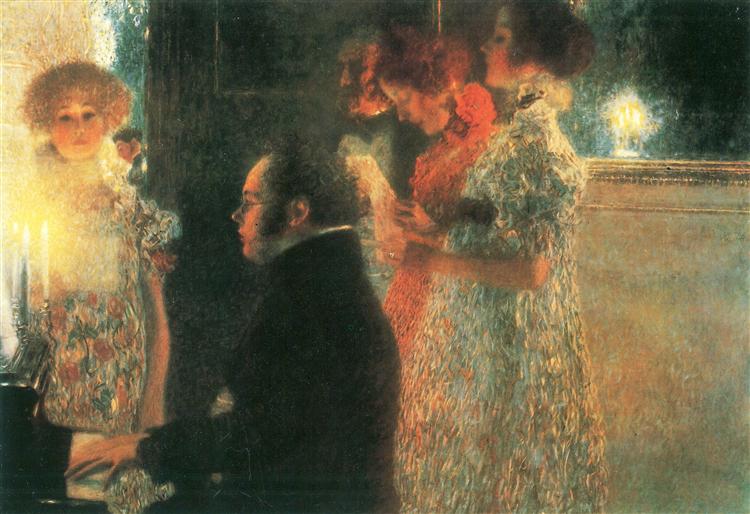
a veritable Schubertiade, IV

Schubert at the Piano II, 1899 - Gustav Klimt

    Schubert at the Piano II (1899)


                 Gustav Klimt 


                       ______


for the second evening of Schubert sonatas

during my May Schubertiade, it wouldn’t be

surprising to hear again an early work, 1819, 

Schubert would’ve been 22, the series is 

undoubtedly and necessarily somewhat 

chronological


his Piano Sonata in A major, D 664, is 

blatantly anchored in the Classical idiom,

you can hear Mozart all over the place, not 

all pejoratively, Mozart is effervescent, full

of exuberance and creativity, Schubert

diligently follows


but Romanticism equals intimacy, poignancy, 

which Schubert touches upon in his andante, 

the second movement, to a degree not yet 

as markedly as, for instance, Chopin yet,

famous for his sweeping Romanticism, but

still convincing and promising


the third movement, the allegro, is right back 

at Mozart, to delight the aristocracy, his 

essential audience, see above


listen


R ! chard


November / Month of the Sonata – 18 

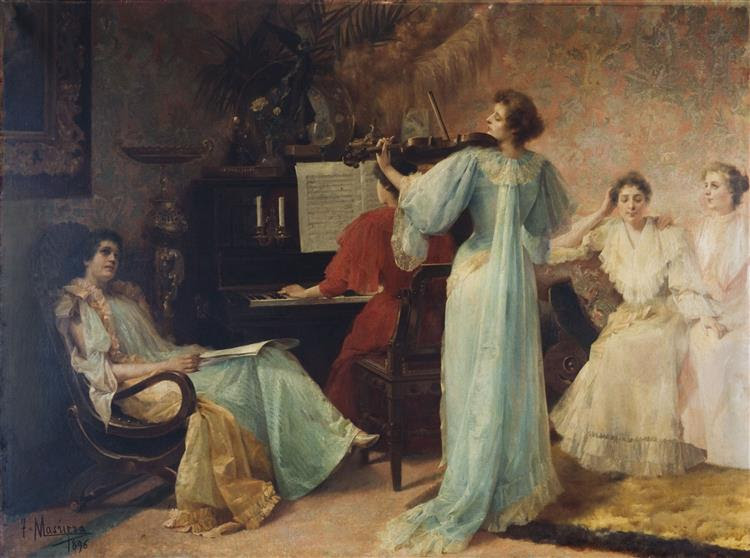
Una melodia de Schubert, c.1896 - Francesc Masriera

    A Melody of Schubert (c.1896) 


           Francesc Masriera


                  ________


though there are other, and quite significant, 

composers who fit into this category, 

Beethoven, Schubert, and Chopin pretty

much define, all by themselves, the 

Romantic Period


Chopin composed only two sonatas of note,

plus one more that is overlooked for being 

an early, student effort, not up to the

standard of his later ones, Chopin, rather, 

wrote mostly shorter pieces, nocturnes, 

études, preludes, polonaises, and more, 

that later became the very stuff of his 

reputation


Schubert wrote enough sonatas that he 

could be compared to Beethoven, indeed

it can be difficult to tell one from the other,

much as it can be difficult to tell Haydn 

from Mozart, products in either case of 

being both of their respective eras


when I was much younger, a guest among

a group of academics, where I’d been invited 

by the host’s wife, a co-worker, what I knew  

of Classical music, in the large sense, which 

is to say comprising all of the musical periods, 

Classicism, Romanticism, Impressionism, 

and beyond, was all self-taught


is that Beethoven, I asked the host, about 

a piece of music he’d put on


that’s Schubert, he replied, aghast, as 

though I’d just farted


I blushed, deep red, confounded


Schubert, having great admiration for 

Beethoven, took on many of the older

composer’s lessons, four movements

instead of the Classical three, for 

instance, and many of the technical 

tricks of his forebear


but there’s an essential component of

their styles that marks one from the

other, an easy way to tell them apart, 

Beethoven always composes against 

the beat, Schubert following it


listen to the first few notes of Beethoven’s 

“Pathétique”, for instance, the beats are  

erratic, confrontational, the mark of a 

revolutionary, Beethoven was brashly 

proclaiming his worth, he had something 

to prove


Schubert, who was essentially playing

for friends, just wanted to entertain

them, which he did in spades, without

bombast or bluster


listen to his Piano Sonata in A major,

D959, for example, no swagger, no 

ostentation, delivering nevertheless 

something quite, and utterly, 

enchanting, everything following, 

unobtrusively, the beat


enjoy


R ! chard

November / Month of the Sonata – 12

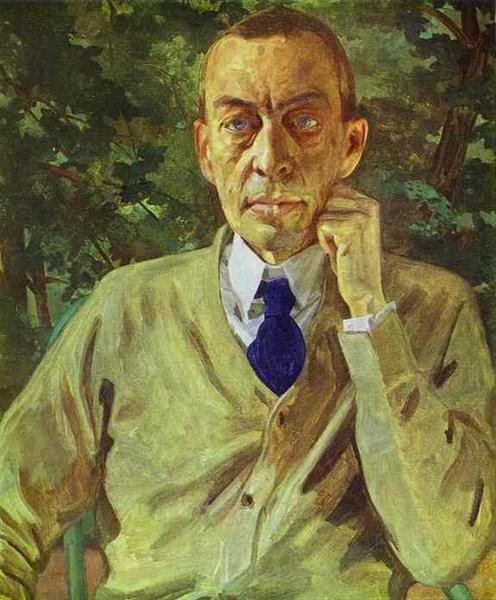
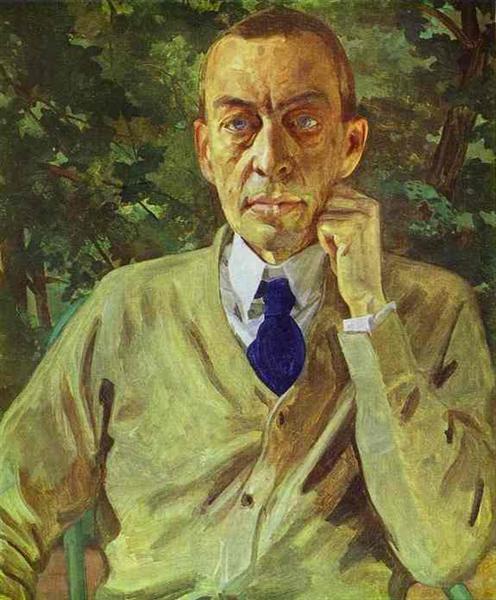
Portrait of the composer Sergei Rachmaninov, 1925 - Konstantin Somov

      Portrait of the Composer Sergei Rachmaninov (1925) 


              Konstantin Somov


                     __________


Rachmaninov, late Romantic, early

Impressionist, yanked, despite his 

modern bent, Romanticism, solidly,

into the Twentieth Century, we 

heard him in movies, and 

consequently on TV, back then, on 

long-play albums, 78s at the time, 

that were flooding the market, first 

movement on the one side, the next 

two on the other, that’s how we used 

to listen


later, we’d hear Sergeant Pepper’s 

Lonely Heart’s Club Band doing the 

same, in the late ’60s, before discs


Rachmaninov doesn’t sound like 

Chopin, Beethoven, Schubert, but

you can hear their roots, their blood 

running through his compositions


but here, in his Piano Sonata no. 2,

Opus 36, he elaborates, a sure sign

of Impressionism, intellectual rather

than emotional appeal, something 

had become tiresome after half a

century of Romantic dramatization,

how many Anna Karenina‘s can you 

take


the culture was returning to objective,

rather than emotional, Charles Dickens,

Victor Hugo, and the like, bleeding-heart,

considerations, and seeking out more 

rational answers to our psychological

stresses, consequently Freud, music

had to keep up


later, I’ll tell you a story about how 

music changes the world


meanwhile, here’s Rachmaninov’s

Piano Sonata no 2


enjoy


R ! chard

November / Month of the Sonata – 9

      Jules Delsart


           ______


at the end of the Romantic Period, 1886, and

encroaching on the upcoming Impressionistic

Era, César Frank wrote his Violin Sonata in

A major, a musical glimpse into a new age,

this is not Chopin, not Beethoven, not 

Schubert, despite obvious, if you’re 

listening, homages, references


you’ll note the atonality, musical progressions 

that seem askew, eccentric, not as harmonious 

as those earlier composers, like a neurosis 

taking over


tempo, a second essential element of music 

in the West, however changeable might it be, 

even within the individual movements, is 

recognizable


repetition, the third pillar of Western music 

is keeping us on track, bringing us back to

the original statement, to the air each 

movement presents at their several 

introductions 


Frank’s sonata was so appreciated by an

accomplished cellist friend, Jules Delsart,

that he asked if he would transcribe it for 

cello, their joint Sonata in A major for 

Cello and Piano remains to this day a 

stalwart on the cello circuit


compare, an exercise in sharpening your

aesthetic pencil, try it, enjoy


R ! chard

November / Month of the Sonata – 7

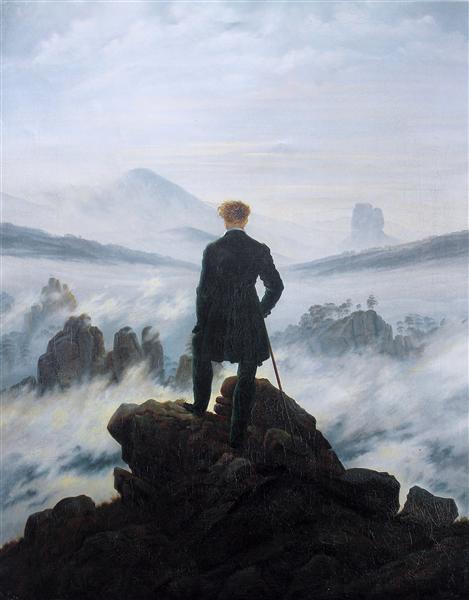
The Wanderer Above the Sea of Fog, 1818 - Caspar David Friedrich

     “The Wanderer Above the Sea of Fog(1818)


             Caspar David Friedrich


                   _____________


meanwhile, back at sonatas for one 

instrument, it’s about time I brought 

up Chopin, the one composer that 

everyone associates before anyone

else with Romanticism, 1800, say, 

till about 1880, he incorporates it, 

not without reason, Chopin 

personifies the Romantic Era, like 

Mozart represents the Classical


others who count would be Elizabeth

Barrett Browning, her “Sonnets from

the Portuguese” – How do I love thee? 

Let me count the ways – Victor Hugo’s

Les Misérables”, and Charles Dickens

preaching, in all his works, humanity


Caspar David Friedrich‘s, also, iconic 

Wanderer Above the Sea of Fog“, 

see above


Chopin sounds a lot like Beethoven,

indeed, the first notes of his Second

Piano Sonata, in B-flat minor, Op. 35

are a reference to Beethoven’s 

Sonata no 8, his Pathétique“, listen,

you’ll hear the same peremptory,

commanding, chord, demanding 

attention, the rest is consummate,

however, Chopin 


in the last movement, you’ll specifically

hear what Chopin brought to the table,

texture, soundscape, rather than a 

narrative line, music as background,

atmosphere, context


enjoy


R ! chard

how to listen to music if you don’t know your Beethoven from your Bach, XVIII – Rachmaninov

Portrait of the composer Sergei Rachmaninov, 1925 - Konstantin Somov


     Portrait of the composer Sergei Rachmaninov


                   Konstantin Somov


                                ______


though you probably still wouldn’t be able

to tell a prelude from a hole in the wall, 

nor, admittedly, can I, unless indicated,

if you’ve listened to the pieces I’ve

recently presented, you’ve noted, even 

merely sensed, really, that the preludes 

of one composer don’t sound at all like

those of the others, Bach doesn’t sound 

like Chopin, who doesn’t sound at all   

like Debussy, the first step in telling  

your Beethoven from your Bach, as 

promised in my title


you might not even be able to tell which  

is which as you’re listening, but you can

tell they’re different, you do the same 

thing telling your Monet from your 

Renoir


Rachmaninov also wrote, like Chopin, 

and Debussy, 24 preludes, and, like 

Chopin, in every key, major and minor


but spread out through three publications, 

Opus 3, no. 2from 1892, comprising of 

only one prelude, but a scorcher, The 

Bells of Moscow, listen

a second set, Opus 23, consists of ten, 

mostly iconic, pieces, you’ve heard 

them somewhere before, therefore 

iconic


the final set comes out in 1910, 

Opus 32with thirteen preludes,

for a total of 24


you’ll marvel, even Marilyn Monroe 

famously did


enjoy 


R ! chard 

how to listen to music if you don’t know your Beethoven from your Bach, XVI – on Chopin

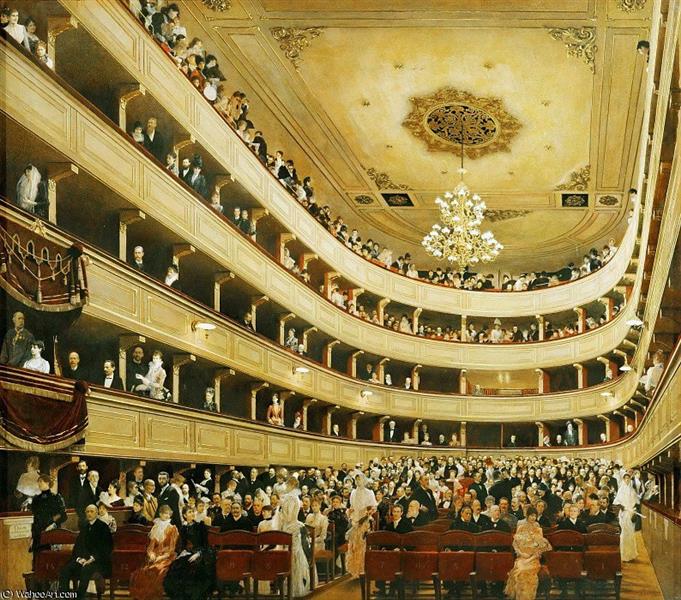
The Old Burgtheater, 1888 - 1889 - Gustav Klimt

       The Old Burgtheater (1888 – 1889)  

                  Gustav Klimt

                        _______


having brought up nocturnes and ballades

in my last instalment, however peripherally, 

I’ll dig into these deeper, to illustrate the 

impact Romanticism had on music, on 

fine arts as well, and literature, in the 

West, as it highlighted emotions as a 

requirement of the audiences that 

funded them


the French Revolution had happened,

the idea of individual rights, liberty,

equality, fraternity, spread across 

even autocracies, czars, kaisers, 

kings were threatened


theatres were becoming, because of 

the growth of the Middle Class, what 

had been the salons of the aristocrats,

people were paying for what the nobility

had been seeing, in concert halls, see

above


but the audience wanted their money’s 

worth, both in spectacle, and personal

contact, easy ingenuity was out, they

had to be impacted, get them howling,

whooping, just like today


but to return to ballades and nocturnes,

they were the answer, plangent appeals

to the heart, which had not been a 

concern of the earlier Classical Period,

where prestidigitation, technical

wizardry, had been the requirement

of the courtly courts  


ballades, nocturnes, preludes, didn’t 

exist before the Romantic Period, 

essentially, music that hadn’t a 

formal structure, hadn’t a set of 

compositional rules, but spoke, 

rather, from a place of intimacy,

unconstrainedly


here’s a balladefor instance, here’s 

a nocturne, both of Chopin, as 

identifiable as Shakespeare, van 

Gogh, in each their own particular 

vocabulary, wearing his heart on

his sleeve, and always absolutely 

extraordinary 


enjoy


R ! chard

“The Story of Phaeton” (II) – Ovid

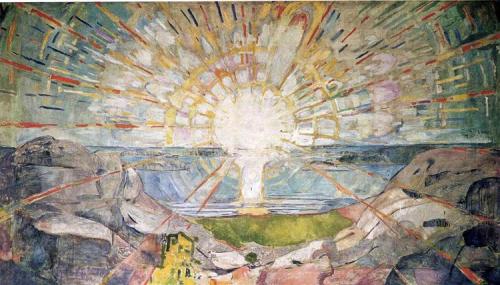
the-sun-1916.jpg!Large

   “The Sun (1911 – 1916) 


            Edvard Munch


                _______


                    The Sun’s bright palace, on high columns rais’d, 


The Sun, Helios / Phoebus / Apollo


                    With burnish’d gold and flaming jewels blaz’d;
                    The folding gates diffus’d a silver light,
                    And with a milder gleam refresh’d the sight; 


since the folding gates of the bright

palace shimmered with a silver light 

rather than with the glow of the gold 

and flaming jewels of the palace itself,

their milder gleam was easier on the 

eyes, refresh’d the sight


                    Of polish’d iv’ry was the cov’ring wrought: 


the palace was covered with polish’d

wrought ivory


                    The matter vied not with the sculptor’s thought, 


the execution of the palace was  

everything that its sculptor, its

architect, had had in mind to 

create


                    For in the portal was display’d on high
                    (The work of Vulcan) a fictitious sky


Vulcan, god of fire, metal, smiths, 

metalworkers


at the entrance to the palace, the

portal, Vulcan had painted the ceiling, 

he’d display’d on high … a fictitious 

sky, I suspect Dryden must’ve had 

Michelangelo and his ceiling of the  

Sistine Chapel in mind during his 

translation of this passage of Ovid


                    A waving sea th’ inferiour Earth embrac’d, 


inferiour, Earth, surging from under the 

greater masses of water dominating it, 

especially after the flood, is, therefore, 

beneath the waving sea, inferiour to it


                    And Gods and Goddesses the waters grac’d. 


remember that Ovid is describing a 

painting here, on the ceiling at the

entrance, the portal, to the palace 

of the god of the Sun


                    Aegeon here a mighty whale bestrode; 


Aegeon, marine god, god of storms,

note the similarity of the name with 

that of the Aegean Sea, but which 

came first, the chicken or the egg, 

the god or the expanse of water, 

remains, as far as I’ve been able 

to determine, undetermined


                    Triton, and Proteus (the deceiving God) 


Triton, another god of the Sea, you’ll 

remember him coming to the aid of 

Neptune, his father, in settling the

waters after the flood at the request 

of Jove / Jupiter / Zeus


Proteus, still another sea god, 

described as deceiving, for his 

ability to effortlessly, and 

spontaneously, change his shape, 

from which, incidentally, we get 

the adjective protean, for easily 

changeable, or versatile 


                    With Doris here were carv’d, and all her train, 


Doris, sea goddess, and all her train,

her following of nymphs, the Nereids,

her fifty daughters, if you’ll remember,

are carv’d, etched, given graphic 

representation


                    Some loosely swimming in the figur’d main, 


figur’d, painted, depicted, drawn


main, the open ocean, but, probably 

also here, the main, or central, part 

of the painting itself


                    While some on rocks their dropping hair divide, 


their hair divide, they loosen strands 

of their wet hair 


                    And some on fishes through the waters glide: 


sea gods and goddesses are often

shown riding sea creatures, dolphins, 

seahorses, even whales, see Aegeon

above

                    Tho’ various features did the sisters grace,
                    A sister’s likeness was in ev’ry face. 


the sisters, the Nereids, all have different

features, but a family resemblance, sister’s 

likeness, can always be detected in each

individual sibling’s rendering


                    On Earth a diff’rent landskip courts the eyes, 


Earth doesn’t look, court[ ] the eyes,

at all like what’s painted on the 

palace’s ceiling


landskip, landscape


                    Men, towns, and beasts in distant prospects rise, 


distant prospects, from a distance, one 

can see [m]en, towns, and beasts 

appear, rise, arise


                    And nymphs, and streams, and woods, and rural deities. 


nymphs, consigned, it appears, to 

earthly duties, streams, and woods, 

are not a feature of the Sun god’s 

palace


                    O’er all, the Heav’n’s refulgent image shines; 


the Heav’n’s refulgent, brightly shining,

image, expression, is manifest [o]’er all,

everywhere, the rays of the sun cast a

light on everything


                    On either gate were six engraven signs. 


again I’m reminded of a Renaissance

wonder, Lorenzo Ghiberti‘s gilded bronze 

doors for the Florence Baptistery, which 

Michelangelo himself called the Gates of

Paradise, a work nearly as famous, then 

and now, as his own Sistine Chapel ceiling   


Ovid would never have known of these 

masterworks, of course, having lived 

over a millenium earlier, but I suspect 

John Dryden, a cultured man, a couple 

of hundred years later than these 

cultural icons, would no doubt have 

been fully aware of them, much as we, 

however disinterested we might be, 

can’t help but have heard of, say, 

RembrandtChopinCharles Dickens,

for instance, though they be, similarly, 

centuries separated from us 


my point is that, without knowledge of 

the original Latin, Dryden‘s cultural

heritage must’ve slipped, I think, 

consciously or not, into his 

translation, for better, or for worse


it should be remembered, however,

that Dryden was writing for an early 

18th Century audience, much as I 

am presently doing myself with 

Dryden for a 21st, and maybe also

similarly skewing his idiom to better 

adapt it to our own time, for better, 

also, or for worse 


                    Here Phaeton still gaining on th’ ascent, 


gaining on th’ ascent, going faster 

and faster, climbing higher and 

higher


                    To his suspected father’s palace went


suspected father, Phaeton doesn’t

yet know if Helios / Phoebus / Apollo

is indeed his father


                    ‘Till pressing forward through the bright abode,
                    He saw at distance the illustrious God:
                    He saw at distance, or the dazling light
                    Had flash’d too strongly on his aking sight. 


had Phaeton not been as far, at

distance, from what he was seeing,

the illustrious God, the dazling, or 

dazzling, light would’ve hurt his 

eyes, hurt his aking, or aching, 

sight


                     The God sits high, exalted on a throne
                    Of blazing gems, with purple garments on; 


Tyrian, surely, purple, a hue we’ve 

seen here before, indicative of 

stature, of imperial, if not even

divine, as in this instance, 

pedigree


                     The Hours, in order rang’d on either hand,
                    And Days, and Months, and Years, and Ages stand.
                    Here Spring appears with flow’ry chaplets bound;
                    Here Summer in her wheaten garland crown’d;
                    Here Autumn the rich trodden grapes besmear;
                    And hoary Winter shivers in the reer. 


this is no longer a picture, but the 

real thing, Phoebus / Apollo / Helios

sits high, exalted on a throne /  Of 

blazing gems, with purple garments 

on, while Time and all of the Seasons 

hold court around him


                     Phoebus beheld the youth from off his throne;
                    That eye, which looks on all, was fix’d in one. 


Phoebus, who sees everything, who 

looks on all, beholds, fixes his eye on, 

his son


                     He saw the boy’s confusion in his face,
                    Surpriz’d at all the wonders of the place;
                    And cries aloud, “What wants my son? for know
                    My son thou art, and I must call thee so.” 


Phaeton, according to Phoebus / 

Apollo / Helios‘ forthright admission,

is truly his son


                     “Light of the world,” the trembling youth replies,
                    “Illustrious parent! since you don’t despise
                    The parent’s name, 


despise, refute


                                                some certain token give,
                    That I may Clymene’s proud boast believe,
                    Nor longer under false reproaches grieve.” 


your word is good, Phaeton allows,

but incontrovertibly, now, prove it, 

some certain token give, he 

challenges 


                     The tender sire was touch’d with what he said,
                    And flung the blaze of glories from his head, 


flung the blaze of glories from his head, 

reduced the intensity of his presence,

the impact of his charisma, took off 

his dazling crown, if only, maybe,

metaphorically, to be father to his son


                    And bid the youth advance: “My son,” said he,
                    “Come to thy father’s arms! for Clymene
                    Has told thee true; a parent’s name I own,
                    And deem thee worthy to be called my son.
                    As a sure proof, make some request, and I,
                    Whate’er it be, with that request comply;
                    By Styx I swear, whose waves are hid in night,
                    And roul impervious to my piercing sight.” 


an oath upon Styx is incontrovertible, 

like swearing on a Bible, as earlier 

noted


                     The youth transported, asks, without delay,
                    To guide the sun’s bright chariot for a day. 


Phaeton wants to drive his father’s 

car, the sun’s bright chariot, how 

contemporary, how immediate, 

how timeless 


stay tuned


R ! chard


“Années de pèlerinage”, 2nd Year – Liszt

petrarch.jpg!Large

     “Petrarch (c.1450) 


           Andrea del Castagno


                     ___________


                                    for John, who would’ve 

                                                       been 60 today


though the suite might’ve started with

Bach’s string of dance pieces in the 

early 18th Centuryit becomes evident 

during the 19th Century, after a lapse 

of nearly 100 years, while it fell into 

disfavour, that its resurrection as a 

valid musical form might’ve kept the 

original structure, which is to say its 

several separate parts to make up a 

whole, its movements, but that it 

now was serving different purpose 


where music had, through to the early

Romantic Period, followed dance 

rhythms, or variations of tempo,

adagio, andante, allegro, and the like,

it now presented itself as a background

for settings, be it ballets, as in

Tchaikovsky’s, plays, as in Edvard

Grieg’s celebrated , Peer Gynt Suite“,

after Ibsen‘s eponymous play,

specific locations, as in Debussy’s

Children’s Corner“, or more  

expansively, both geographically

and in its compositional length,

these very “Années de pèlerinage” 

of Liszt


this is in keeping with the exploration

of consciousness of that era, which 

would lead to not only Impressionism, 

but to Freud, and the others, and the 

development of psychoanalysis


you’ll note that music seems much 

more improvisational in Liszt than in

Chopin, or Beethoven, prefiguring

already even jazz, more evocative,

less emotional, more personal, not

generalized, idiosyncratic, a direct

development of the newly acquired

concept of democracy, one man, at

the time, one vote, one, indeed, 

voice, however individual, however 

even controversial 


listen, for instance, to Liszt’s “Années

de pèlerinage”, 2nd Year, Italy 


   1. Sposalizio

   2. Il penseroso

   3. Canzonetta del Salvator Rosa 

   4. Sonetto 47 del Petrarca 

   5. Sonetto 104 del Petrarca 

   6. Sonetto 123 del Petrarca 

   7. Après une lecture de Dante: Fantasia Quasi Sonata 


today you can listen to suites 

from famous films, for instance 

Blade Runner“, the beat, in 

other words, goes on


but note the renovations, find them, 

dare you, you’ll be surprised at 

your unsuspected perspicacity


listen


R ! chard