“Requiem” – Antonin Dvorak
_____________
if Brahms’ 2nd Piano Concerto is, to my
mind, the last one of the Romantic Period,
Beethoven’s First is, accordingly, the first
I thought it, therefore, instructive to pair
them
Beethoven, impelled by ideological
speculations, built not only a variation
on what had come before, music as
entertainment, a reason to dance, but
gave it a greater, which is to say,
philosophical, dimension
by extending the reach of the cadence
beyond the usual metered rhythm,
sending the melodic statement
beyond an otherwise constricting bar
line, Beethoven turned a lilt into a
sentence, a ditty into a paragraph
Shakespeare does the same thing to
poetry, for instance, with iambic
pentameter devoid of rhyme
“But, soft! what light through yonder window breaks?
It is the east, and Juliet is the sun.
Arise, fair sun, and kill the envious moon,
Who is already sick and pale with grief,
That thou her maid art far more fair than she”
and with this newfound oratory,
peremptory, insistent, imbued,
however, with utterly convincing
honesty, unfettered emotion,
which is to say, humanity,
Beethoven establishes the
sensibility of a very era, listen
that era, up to, eventually, Brahms,
elaborates on that ethos, adding
texture and enhanced authority
to the original concept, setting
the moral agenda for that, and
other generations, to follow
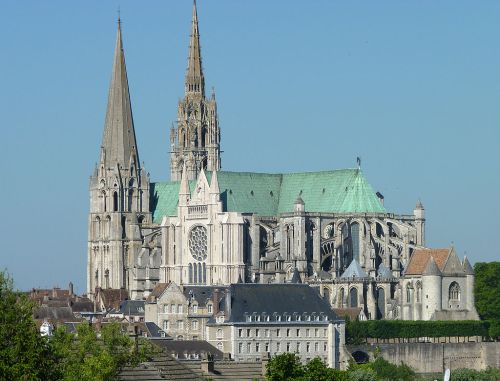
Brahms is more ponderous, mighty,
a cathedral instead of a church, a
commandment instead of an
aspirational, merely, thrust, he
adds even a fourth movement to
an already magnificent structure,
an extra steeple to a towering
edifice, a subliminally received
reference to Beethoven‘s already
inspired, but tripartite only,
architecture
see Chartres for a comparable
ecclesiastical counterpart
R ! chard
 Richibi's Weblog
