Richibi’s Weblog

Just another WordPress.com weblog

Tag: Camille Saint-Saëns

Bassoon Sonata, opus 168 – Camille Saint-Saëns
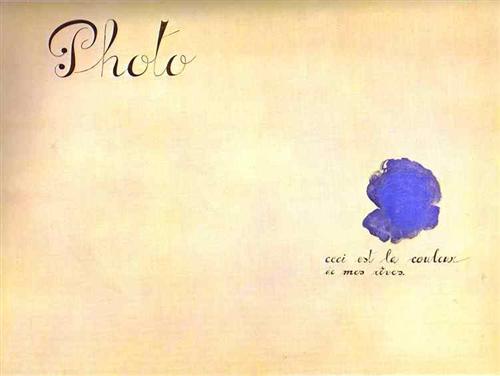
photo-this-is-the-color-of-my-dreams.jpg!Blog

                  Photo; This is the Color of My Dreams (1925)
 
                                                Joan Miró 
 
                                                   ______


 for  my sister

a competition program that pits
youngsters against each other,
but on a variety of instruments,
with some operatic voice, has
riveted us to our sets on Friday
evenings, seven o’clock local
time throughout Canada

out of the province of Quebec,
however, and therefore in
French

Virtuose lives up to its name
with extraordinary performances
from mere children, and some
adolescents, you can catch all of
the past episodes, and performers,
on their website

last week a young man delighted
us with a movement from a bassoon
sonata
, an unlikely instrument, of 

Saint-Saëns, his opus 168

my sister expressed surprise,
un basson, she marvelled

quickly I sought out, of course, the
full composition, it’s otherwise for
me like reading one chapter only
out of a book

it’s a short piece, no longer the
grand statements of the earlier
Romantic Period, but a series of
pastiches, fleeting impressions,
impromptu ruminations rather
than extended dissertations,
something like what I’m doing
here with these texts

you’ll recognize also a similar
approach in other composers of
the period, Debussy especially,
but too Satie, Ravel, Poulenc to
name only a few, the speed of
the new century precluded
extended musical peregrinations,
you’ll remark on the dearth of
symphonies, concertos,
composed during this epoch

the composition is in G major, my
cleaning lady had come over, was
already busy in an adjoining room
at the time, I was nearing the
end of the first movement, the
allegro moderato, a wistful
evocation of spring, I thought,
an innocent, fragile blossom
unfurling its delicate petals
with unaffected grace and
unconscious poetry

the final note sounded, the
bassoonist removed his lips from
the tube, but the note kept on
playing, coming, as I soon
understood, not from the video I
was watching, but from the other
room, Jo had turned on the
vacuum cleaner

o my god/dess, I uttered, hurried
over to where she was, subdued
my enthusiasm in order not to
unduly rattle her, as I brimmed
with my scintillating insight

your vacuum cleaner vacuums in
G, I gushed when she turned to
acknowledge me, it continued the
last note, I explained, of the first
movement of my sonata, Saint-
Saëns’ – say that three times with
a lisp, I interjected – until you
turned your vacuum cleaner off,
which is also, I pointed out, a
wind instrument

her delight was modest compared
to mine, however ever nevertheless
congenial, and quickly she returned
to her duties

I went back tickled pink to my
monitor and the following
movement, the sprightly and equally
enchanting allegro scherzando

Richard
“Caprice d’après l’étude en forme de valse de Saint-Saëns” – Eugène Ysaÿe


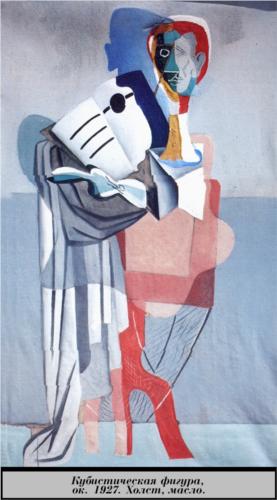
Salvador Dali "Homage to Erik Satie" (c. 1926)

Homage to Erik Satie (c. 1926)

Salvador Dali

________

the very variety, the infinite variety,
of possibilities in music, in any art,
in any craft, in any even venture,
has had me believe in a diversified
world rather than the monotheistic
one we’ve been trained to ascribe
to, I believe in Olympus rather than
in Purgatory, Hell, and Heaven, I
see many more variations on a
theme, always, than immutable
objects, we are even ourselves in
constant, ever evolving, flux, look
at me, I’m not the boy, not the even
young man I used to be, though I
was never, of course, as wise as
I am now, later in life, or so I feel
I can continue to tell myself, ha ha

on this multiplicity read the
accomplished and convincing
Martha Nussbaum, incidentally

as an example of this exuberant
fruition consider this wonderful
interplay of artists and forms,
Ysaÿe‘s Caprice d’après l’étude
en forme de valse de Saint-Saëns
“,

Caprice on the Study in Waltz
Form of Saint-Saëns

here’s the study, Étude en forme
de valse, op 52, no 6
“,
from which
it’s taken

don’t overlook either the “exuberant
fruition
” above, the Dali on Satie

or find it again right here, just click

Richard

“The Carnival of the Animals” – Saint-Saëns/Nash/Disney

in the same spirit of “music as literature” as in
Liszt’s Années de pèlerinage“, or Mussorgsky‘s
Pictures at an Exhibition especially, Camille
Saint-Saëns, composed his Le carnaval des
through an anthropomorphised menagerie 
where the description is impressionistic rather
than narrative, which is to say more painterly
 
he composes in patches of musical textures
instead of melodic and linear paragraphs,
incompatible with the original association
of music as melody, or song, one’s response
would become thereby more intellectual
than emotional, one does not swoon, or
even sway, in other words, as marvel at the
synesthetic imagination, which lets you see
sounds and hear pictures
 
you’ll hear here, or “hear, hear”, the turtles
doing their determined interpretation of the 
can-can, at an improbable crawl, in playful
reference to Offenbach‘s “Galop infernal”,
mad gallop, from his Orpheus in the  
Underworld, other such instances of 
compositional salutations follow, not at
all an unusual practice among composers,
great and small 
 
you’ll be enchanted by the shimmering
ethereality of the aquarium, by the grace
and majesty of the now mythic swan,
among other zoological bedazzlements, 
in 14 movements, in therefore essentially
a symphony, a piece for orchestra with
several movements
 
here they are        
I.      Introduction et marche royale du Lion
               (Introduction and Royal March of the Lion)
II.     Poules et Coqs 
               (Hens and Cocks)
III.    Hémiones (animaux véloces) 
               (Wild Asses)
IV.   Tortues
                (Tortoises)
V.     L’Éléphant 
                (The Elephant)
VI.    Kangourous 
                (Kangaroos)
VII.   Aquarium
VIII.  Personnages à longues oreilles
                (Personages with Long Ears)
IX.    Le coucou au fond des bois 
                (The Cuckoo in the Depths of the Woods)
X.     Volière
                (Aviary)
XI.    Pianistes
                (Pianists)
XII.   Fossiles
                (Fossils)
XIII.  Le Cygne
                (The Swan)
XIV.  Finale
 
 
you’ll want to read the poems that Ogden 
Nash later wrote about them, his very own
Carnival of the Animals“, that now often
accompany the piece, a mistake, I find, for
exposing two entirely idiosyncratic and 
incompatible sensibilities opposite each
other, thereby taking away from each 
 
but Walt Disney has, and you will too have,
a great deal of fun nevertheless with both
of them, though they’re somewhat in his
version abridged, no swan 
 
 
Richard