Richibi’s Weblog

Just another WordPress.com weblog

Tag: Cadmus – founder of Thebes

“The Mariners transform’d to Dolphins” – Ovid
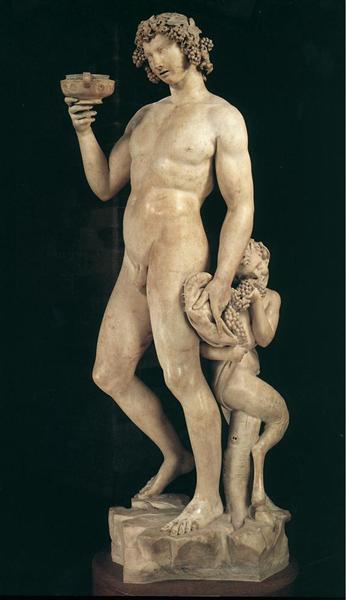
Bacchus, 1497 - Michelangelo

        Bacchus” (1497)


            Michelangelo


                   _______   


             Him Pentheus view’d with fury in his look,


Pentheus, king of Thebes, if you’ll

remember, after Cadmus, his

grandfather, founder of Thebes


viewed, scanned, surveyed


             And scarce with-held his hands, whilst thus he spoke:


with-held, withheld


             “Vile slave! whom speedy vengeance shall pursue,
             And terrify thy base seditious crew:


Vile slave, the zealous votary from

the last instalment, follower, acolyte

of Bacchus / Dionysus, who’d been

captured by Pentheus’ men instead

of the god himself


by exacting a speedy vengeance on

this [v]ile slave, Pentheus expects

to terrify the remaining elements of

the offending crew, the seditious

party of Bacchus / Dionysus


             Thy country and thy parentage reveal,
             And, why thou joinest in these mad Orgies, tell.”


where are you from, what are you

doing here, Pentheus asks


             The captive views him with undaunted eyes,
             And, arm’d with inward innocence, replies,

             “From high Meonia’s rocky shores I came,
             Of poor descent, Acoetes is my name:
             My sire was meanly born; no oxen plow’d
             His fruitful fields, nor in his pastures low’d.

meanly, poor, without adequate

means


plow’d, low’d, an interesting

rhyme, they’re called forced

or oblique rhymes


             His whole estate within the waters lay;


estate, livelihood, Acoetes‘ father,

his sire, was a fisherman


             With lines and hooks he caught the finny prey,


finny, having fins


             His art was all his livelyhood; which he
             Thus with his dying lips bequeath’d to me:


His art, the quality of his work


             In streams, my boy, and rivers take thy chance;
             There swims, said he, thy whole inheritance.


Acoetes will inherit at best his

father’s skill


             Long did I live on this poor legacy;
             ‘Till tir’d with rocks, and my old native sky,


that of Meonia, see above


             To arts of navigation I inclin’d;


arts of navigation, knowledge of

the open sea, the wider oceans


             Observ’d the turns and changes of the wind,
             Learn’d the fit havens, and began to note
             The stormy Hyades, the rainy Goat,
             The bright Taygete, and the shining Bears,
             With all the sailor’s catalogue of stars.


Hyadesa cluster of stars, with their

own mythic origin story, grieving

nymphs cast upon the heavens,

augurs of rain,hence stormy


the rainy Goat, Capricornus, the

constellation


Taygete, a satellite of the planet

Jupiter

the shining Bears, Ursa Major

and Ursa Minor, or the Great

and the Little Bear, whose

origins you might remember

from The Story of Calisto


             “Once, as by chance for Delos I design’d,


Delos, a Greek island


design’d, planned as a destination


             My vessel, driv’n by a strong gust of wind,
             Moor’d in a Chian Creek; a-shore I went,


Chian, of Chios, a Greek island


             And all the following night in Chios spent.
             When morning rose, I sent my mates to bring
             Supplies of water from a neighb’ring spring,
             Whilst I the motion of the winds explor’d;
             Then summon’d in my crew, and went aboard.
             Opheltes heard my summons,


Opheltes, a confederate apparently


                                                                and with joy
             Brought to the shore a soft and lovely boy,
             With more than female sweetness in his look,


hmmmm


             Whom straggling in the neighb’ring fields he took.


he took, he apprehended


             With fumes of wine the little captive glows,
             And nods with sleep, and staggers as he goes.

             “I view’d him nicely, and began to trace
             Each heav’nly feature, each immortal grace,
             And saw divinity in all his face,
             I know not who, said I, this God should be;
             But that he is a God I plainly see:
             And thou, who-e’er thou art, excuse the force
             These men have us’d; and oh befriend our course!

befriend, accord it your sympathy

             Pray not for us, the nimble Dictys cry’d, 
Dictys, one of Acoetes‘ shipmates


             Dictys, that could the main-top mast bestride,
             And down the ropes with active vigour slide.
             To the same purpose old Epopeus spoke,


Epopeus, another sailor


             Who over-look’d the oars, and tim’d the stroke;
             The same the pilot, and the same the rest;
             Such impious avarice their souls possest.


all countermanding Acoetes‘, however

discerning, assessment


             Nay, Heav’n forbid that I should bear away
             Within my vessel so divine a prey,
             Said I; and stood to hinder their intent:


Acoetes had no intention of confining

this so divine a prey to his ship


             When Lycabas, a wretch for murder sent
             From Tuscany, to suffer banishment,
             With his clench’d fist had struck me over-board,
             Had not my hands in falling grasp’d a cord.


Lycabas, a third shipmate


Tuscany, a region of what is now

central Italy


it appears, however, that Acoetes

lived to tell the tale


stay tuned


R ! chard

“The Story of Pentheus” – Ovid

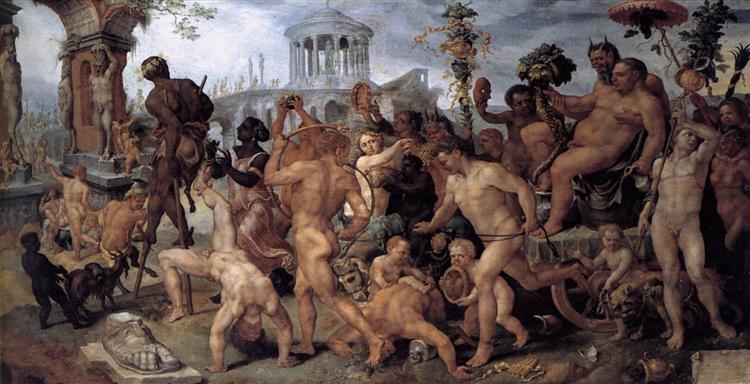
The Triumphal Procession of Bacchus, c.1536 - Maerten van Heemskerck

         The Triumphal Procession of Bacchus” (c.1536)


                   Maerten van Heemskerck


                             _______________


till now the separate stories in Ovid’s

Metamorphoses have been linked,

one being either a consequence of

the other,or its cause, but the story

of Pentheus, grandson of Cadmus,

king and founder of Thebes, who

earlier in this series had his own

tale told, starts, as my German

teacher used to say, from the

scratch


This sad event, therefore, in the

first line of the poem, refers to

what will follow, not what came

before


            This sad event gave blind Tiresias fame,

            Through Greece establish’d in a prophet’s name.


Tiresias, if you’ll remember, had been

blinded by Juno / Hera, goddess of the

gods, for having sided with Jove / Jupiter

/ Zeus, her husband, in a wager between

them he’d been called upon to decide,

Jove / Jupiter / Zeus, however, gave 

Tiresias, as consolation, having been

barred by a pact among the gods not

to undo each other’s spells, the gift

of insight, prophecy


the example that follows, of his divination,

establish[‘d] at that time his reputation

[t]hrough[out] Greece as a prophet


            Th’ unhallow’d Pentheus only durst deride

            The cheated people, and their eyeless guide.


unhallow’d, unholy, wicked, sinful


Pentheus, king of Thebes following

his grandfather, Cadmus, but that’s

an entirely other story


only, of all the people, none but

Pentheus durst, dared, deride,

mock, their eyeless guide, Tiresias

            To whom the prophet in his fury said,

            Shaking the hoary honours of his head:


hoary, grizzled, gray, aged


            “‘Twere well, presumptuous man, ’twere well forthee

            If thou wert eyeless too, and blind, like me:

            For the time comes, nay, ’tis already here,

            When the young God’s solemnities appear:


the young God[], Bacchus / Dionysus,

son of Semele and Jove / Jupiter / Zeus,

if you’ll remember, god of revelry,

intoxication, wild abandon


            Which, if thou dost not with just rites adorn,

            Thy impious carcass, into pieces torn,

            Shall strew the woods, and hang on ev’ry thorn.


impious carcass, dishonoured corpse, 

of any thou who wouldn’t’ve honoured

the celebrations


            Then, then, remember what I now foretel,

            And own the blind Tiresias saw too well.”


own, agree to, admit

            Still Pentheus scorns him, and derides his skill;

            But time did all the prophet’s threats fulfil.

            For now through prostrate Greece young Bacchus rode,


prostrate, beholden, reverent, observant

of the solemnities


            Whilst howling matrons celebrate the God:

            All ranks and sexes to his Orgies ran,

            To mingle in the pomps, and fill the train.


the rites of Bacchus were bacchanals,

orgies, celebrations of abandon, Mardi

Gras, for instance, in New Orleans,

annual Gay Parades, now everywhere,

or Hallowe’en since time immemorial


see above


            When Pentheus thus his wicked rage express’d:

            “What madness, Thebans, has your souls possess’d?

            Can hollow timbrels, can a drunken shout,


timbrels, tambourines


            And the lewd clamours of a beastly rout,

            Thus quell your courage;


quell your courage, overcome your

sense of discipline


                                            can the weak alarm

            Of women’s yells those stubborn souls disarm,


those stubborn souls, the Theban

spirit of pride and honour


            Whom nor the sword nor trumpet e’er could fright,

            Nor the loud din and horror of a fight?

            And you, our sires, who left your old abodes,


our sires, the older generation of

Thebans, of his grandfather

Cadmus‘ ilk


            And fix’d in foreign earth your country Gods;


foreign earth, very Thebes, from Tyre,

where Cadmus and his followers had

come from, in search of Europa, if

you’ll remember


            Will you without a stroak your city yield,


stroak, stroke


            And poorly quit an undisputed field?


undisputed field, there are no

military obstructions


            But you, whose youth and vigour should inspire

            Heroick warmth, and kindle martial fire,

            Whom burnish’d arms and crested helmets grace,

            Not flow’ry garlands and a painted face;


Remember him to whom you stand ally’d:


him, Pentheus himself, their king


            The serpent for his well of waters dy’d.


The serpenta reference here to the

dragon that Cadmus slew, which had

guarded the cavern where his crew

had been scouting for water, if you’ll

remember


            He fought the strong; do you his courage show,

            And gain a conquest o’er a feeble foe.


a feeble foe, licentiousness, abandon,

undisciplined revelry


            If Thebes must fall, oh might the fates afford

            A nobler doom from famine, fire, or sword.


Pentheus appeals to a loftier reason

for defeat, famine, fire, or sword, than

mere, and ignoble, debauchery


            Then might the Thebans perish with renown:

            But now a beardless victor sacks the town;


beardless victor, the young Bacchus /

Dionysus


            Whom nor the prancing steed, nor pond’rous shield,

            Nor the hack’d helmet, nor the dusty field,

            But the soft joys of luxury and ease,

            The purple vests, and flow’ry garlands please.


Bacchus / Dionysus is not impressed

by armour, military accomplishments,

prowess, but by grace, elegance, and

poetry


            Stand then aside, I’ll make the counterfeit

            Renounce his god-head, and confess the cheat.


the counterfeit, Bacchus / Dionysus


            Acrisius from the Grecian walls repell’d

            This boasted pow’r; why then should Pentheus yield?


Acrisius, a king of Argos, who must’ve

also repell’d from his city Bacchus /

Dionysus, according to the poem


            Go quickly drag th’ impostor boy to me;


th’ impostor boy, the counterfeit,

Bachus / Dionysus


            I’ll try the force of his divinity.”


try, test


            Thus did th’ audacious wretch those rites profane;


th’ audacious wretch, Pentheus


            His friends dissuade th’ audacious wretch in vain:

            In vain his grandsire urg’d him to give o’er

            His impious threats; the wretch but raves the more.


his grandsire, Cadmus

            So have I seen a river gently glide,

            In a smooth course, and inoffensive tide;

            But if with dams its current we restrain,

            It bears down all, and foams along the plain.


nature will have its way, so will the

gods, watch out, the narrator says,

who it is that you challenge

            But now his servants came besmear’d with blood,

            Sent by their haughty prince to seize the God;


his servants, Pentheus‘ men


the God, Bacchus / Dionysus


            The God they found not in the frantick throng,

            But dragg’d a zealous votary along.


votary, follower, adherent,

acolyte


the servants, Pentheus‘ men,

who did not, apparently, deliver


stay tuned


R ! chard

“The Birth of Bacchus” – Ovid

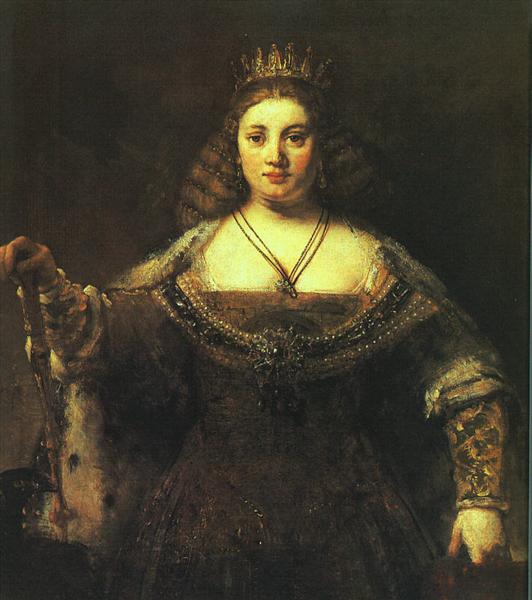
Juno, c.1662 - c.1665 - Rembrandt

           Juno” (c.1662 – c.1665)


                  Rembrandt


                      ______


             Actaeon’s suff’rings, and Diana’s rage,

             Did all the thoughts of men and Gods engage;

             Some call’d the evils which Diana wrought,

             Too great, and disproportion’d to the fault:

             Others again, esteem’d Actaeon’s woes

             Fit for a virgin Goddess to impose.

             The hearers into diff’rent parts divide,

             And reasons are produc’d on either side.


Diana / Artemis had transformed

Actaeon into a stag, if you’ll

remembernot all the gods were

on side


              Juno alone, of all that heard the news,

              Nor would condemn the Goddess, nor excuse:


Juno, wife of Jove / Jupiter / Zeus

queen, therefore, of the gods


               She heeded not the justice of the deed,

               But joy’d to see the race of Cadmus bleed;


Cadmus, founder of Thebes, brother

of Europa


               For still she kept Europa in her mind,

               And, for her sake, detested all her kind.


Europa had been whisked away

by Jove / Jupiter / Zeus, Juno’s

husband, and borne him several

children, to the enduring enmity

of the queen of the deities


               Besides, to aggravate her hate, she heard

               How Semele, to Jove’s embrace preferr’d,

               Was now grown big with an immortal load,

               And carry’d in her womb a future God.


Jove / Jupiter / Zeus, incorrigible

philanderer apparently, had now

impregnated Semele, youngest

daughter of Cadmus, to Juno’s

utter disgust and dismay


              Thus terribly incens’d, the Goddess broke

               To sudden fury, and abruptly spoke.


the Goddess, Juno / Hera


let me reiterate here that the original

gods and goddesses of Olympus had

migrated with the Greeks to other

areas of the Mediterranean, but

became known, in the lands that

they’d settled, by other names

according to the languages and

customs that evolved in these new

territories, thus the Greek goddess

Hera was in Rome and its outlying

areas known as Juno, the Greek

Zeus as both Jupiter and Jove,

though their home remained for

all Mount Olympus


              “Are my reproaches of so small a force?

               ‘Tis time I then pursue another course:


though Juno / Hera might’ve

harangued Jove / Jupiter / Zeus

about his inveterate philandering,

her reproaches were not enough

to stop the god from his

determined activities


she therefore ordains


              It is decreed the guilty wretch shall die,

               If I’m indeed the mistress of the sky,

              If rightly styl’d among the Pow’rs above

               The wife and sister of the thund’ring Jove

               (And none can sure a sister’s right deny);

               It is decreed the guilty wretch shall die.


Juno / Hera is not only the wife of

Jove / Jupiter / Zeus, but also his

sister, both children of Cronos /

Saturn and Rhea / Ops, who

were themselves children of the

earth goddess Gaia and the sky

god Uranus


              She boasts an honour I can hardly claim,

               Pregnant she rises to a mother’s name;

              While proud and vain she triumphs in her Jove,

               And shows the glorious tokens of his love:


though Juno / Hera did indeed have

children with Jove / Jupiter / Zeus,

she is probably no longer here

bearing him any, I am supposing,

while Semele, proud and vain, is

now show[ing] the glorious tokens

of his love


              But if I’m still the mistress of the skies,

               By her own lover the fond beauty dies.”


it appears that Juno / Hera will

contrive to make Jove / Jupiter

/ Zeus the cause of Semele’s

demise


              This said, descending in a yellow cloud,

               Before the gates of Semele she stood.


Semele, priestess of Jove / Jupiter

/ Zeus, would’ve been officiating at

the Cadmeia, the equivalent of the
Athenian Acropolis, at Thebes, the

city named after her father, its

founder, Cadmus


sparks will surely fly


stay tuned


R ! chard

“The Transformation of Actaeon into a Stag” – Ovid

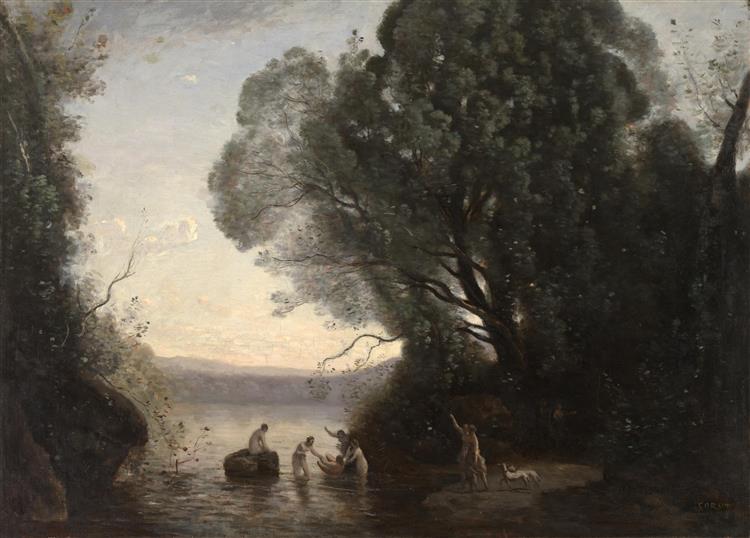
The Bath of Diana, 1855 - Camille Corot


           “The Bath of Diana(1855)


                       Camille Corot


                                 _____


                In a fair chace a shady mountain stood,


chace, chase


a fair chace, not far away


                Well stor’d with game, and mark’d with trails of blood;

                Here did the huntsmen, ’till the heat of day,

                Pursue the stag, and load themselves with rey:


rey, probably prey, cause rey is not

a word, and ray instead of rey would

lead to inanities, improbabilities, lead

to hunters, huntsmen, bearing branches,

or stalks, of flowers at best, at worst,

bolts of light


                When thus Actaeon calling to the rest:


Actaeongrandson of Cadmus

founder of Thebes


                “My friends,” said he, “our sport is at the best,

                The sun is high advanc’d, and downward sheds

                His burning beams directly on our heads;


let’s take a break, Actaeon says, it’s
midday, too hot, it’s scorching


                Then by consent abstain from further spoils,

                Call off the dogs, and gather up the toils,

                And ere to-morrow’s sun begins his race,

                Take the cool morning to renew the chace.”


we’ve gathered sufficient quarry, he

continues, let’s wait until to-morrow,

for the cool[er] morning, in order to

renew the chace


                They all consent, and in a chearful train

                The jolly huntsmen, loaden with the slain,

                Return in triumph from the sultry plain.


loaden, laden


the slain, the spoils from the hunt


                Down in a vale with pine and cypress clad,

                Refresh’d with gentle winds, and brown with shade,

                The chaste Diana’s private haunt, there stood


Diana / Artemis, goddess of the Hunt,
and of the Moon


                Full in the centre of the darksome wood

                A spacious grotto, all around o’er-grown

                With hoary moss, and arch’d with pumice-stone.


see above


                From out its rocky clefts the waters flow,

                And trickling swell into a lake below.

                Nature had ev’ry where so plaid her part,

                That ev’ry where she seem’d to vie with art.


to vie, to contend, to curry for

position, favour


                Here the bright Goddess, toil’d and chaf’d with heat,

                Was wont to bathe her in the cool retreat.

                Here did she now with all her train resort,

                Panting with heat, and breathless from the sport;

                Her armour-bearer laid her bow aside,

                Some loos’d her sandals, some her veil unty’d;

                Each busy nymph her proper part undrest;

                While Crocale, more handy than the rest,

                Gather’d her flowing hair, and in a noose

                Bound it together, whilst her own hung loose.


Crocale, one of Diana’s nymphs


                Five of the more ignoble sort by turns

                Fetch up the water, and unlade the urns.


ignoble, not noble, lacking authority,

pedigree, courtly experience 


unlade, empty


an idyll about to unravel


stay tuned


R ! chard

“The Story of of Cadmus” (V) – Ovid

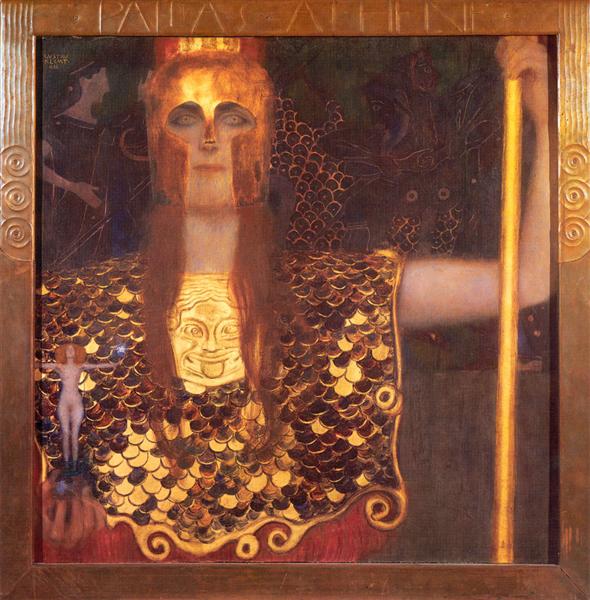
Minerva or Pallas Athena, 1898 - Gustav Klimt

         Minerva or Pallas Athena” (1898)


                Gustav Klimt


                       ______


an interesting thing has happened with

the story of Cadmus, he is not only a

mythical figure, but also a legendary

one, which is to say that Cadmus has

roots in actual history, he’s not just an

imaginary construct like those that

until now have peopled Ovid’s text


Cadmus appears to have actually

founded Thebes, whose origins,

however, are lost in antiquity, going

back to, it appears, the late Bronze

Age, around 2000 BC, goodness


stories evidently grew around

Cadmus, that transformed him into

our first documented hero, indeed

superhero


counterparts exist in other traditions,

consider David, for instance, who

slew his own dragon, Goliath, before

becoming king of the Israelites, 10th

Century BCE, at Jerusalem, where

he consorted, incidentally, later, with

Bathsheba, however illicitly, but

that’s another story


King Arthur, late 5th to early 6th

Centuries CE, stems from British

lore, though his historical actuality

has been contested, is also a hero

with preternatural capabilities based

on some historical accountability


in our day, there’s James Bond,

based on real, living and breathing,

personalities


or, dare I say, even Jesus


the point here is that actual people

are being included in the, however

culturally specific, mythologies,

which, in each, had earlier consisted

of metaphorical constructs merely,

the concept of History, in other words,

was being born, memorable events

were to be remembered, recorded,

documented, if only, originally, orally,

around, say, campfires, however

aggrandized might have been their

recollected heroes


Cadmus, meanwhile, in our story, is

about to establish his own historical,

and archeologically confirmed, note,

credentials


            The dire example ran through all the field,
            ‘Till heaps of brothers were by brothers kill’d;


The dire example, the dragon’s teeth,

grown into men, had begun, if you’ll

remember, to slaughter one another


example, display


            The furrows swam in blood: and only five
            Of all the vast increase were left alive.
            Echion one, at Pallas’s command,
            Let fall the guiltless weapon from his hand,


Echion, one of the five surviving

brothers


Pallas, Pallas Athena, goddess of

Wisdom, also of War


see above


            And with the rest a peaceful treaty makes,
            Whom Cadmus as his friends and partners takes;


the rest, the four other survivors


            So founds a city on the promis’d earth,
            And gives his new Boeotian empire birth.


promis’d earth, the premonition of

the oracles whose counsel Cadmus

had sought at Delphi, if you’ll

remember


            Here Cadmus reign’d; and now one would have guess’d
            The royal founder in his exile blest:


his exile, from Tyre, Cadmus’ original

home, from which his father, Agenor,

had sent him, not to return, he’d

warnedwithout his sister, Europa


            Long did he live within his new abodes,
            Ally’d by marriage to the deathless Gods;


Ally’d by marriage, at the end of a

period of penance for having killed

the dragon, which had been sacred

to Ares, god of War, the gods gave

Cadmus Harmonia, goddess of

Concord, to be his wife


Ares would eventually exact mighty

vengeance, but that’s another story


            And, in a fruitful wife’s embraces old,
            A long increase of children’s children told:
            But no frail man, however great or high,
            Can be concluded blest before he die.


even Cadmus, though he might

enjoy a long life, and many, a long

increase of, children, is not immune

to any of the vicissitudes of life either

until his own time has come, the poet

advises, however ominously


and here Ovid also introduces the

subject of his next metamorphosis,

Actaeon, however early, luring us

thereby, deftly, literarily, towards

his next instalment, Actaeon’s

story, eponymously, there, given

its title


            Actaeon was the first of all his race,

            Who griev’d his grandsire in his borrow’d face;

            Condemn’d by stern Diana to bemoan
            The branching horns, and visage not his own;


his grandsire, his grandfather,

Cadmus was the father of Autonoë,

who was the mother of Actaeon


borrow’d face, Actaeon was

transformed into a stag by the

goddess Diana / Artemis, of the

Hunt, of the Moon, of Chastity,

for having seen her naked as

she was bathing


he now has the face, the visage, of

someone, something, he hadn’t

been before, borrow’d


            To shun his once lov’d dogs, to bound away,
            And from their huntsman to become their prey,


having been transformed into a

stag, or metamorphized, Actaeon

would end up hunted, and worse,

by his own, once lov’d, dogs


            And yet consider why the change was wrought,
            You’ll find it his misfortune, not his fault;
            Or, if a fault, it was the fault of chance:
            For how can guilt proceed from ignorance?


to have been at the wrong place

at the wrong time, yet to suffer,

however unfairly, the consequences,

that, Ovid asks, is the question, the

conundrum


stay tuned


R ! chard

“The Story of of Cadmus” (lV) – Ovid

     Cadmus Sowing the Dragon’s Teeth” (1610/1690)


               Peter Paul Rubens


                       ___________


                Cadmus beheld him wallow in a flood
                Of swimming poison, intermix’d with blood;


swimming poison, the venom the

dragon had spewed, intermix’d

with blood, after Cadmus had

struck the beast with his jav’lin,

if you’ll remember


                When suddenly a speech was heard from high
                (The speech was heard, nor was the speaker nigh),


the suggestion here is that the voice

is disincarnate, ethereal, otherworldly,

from high, not nigh


                “Why dost thou thus with secret pleasure see,
                Insulting man! what thou thy self shalt be?”


secret pleasure, the self-satisfaction

of the soul, unspoken


what thou thy self shalt be, a prophecy

as cryptic as oracular pronouncements

ever tended to be,also ever ominous


                Astonish’d at the voice, he stood amaz’d,
                And all around with inward horror gaz’d:


all around, the detritus, the waste, the

ravages that surrounded him, that

Cadmus viewed, gaz’d at, amaz’d …

with inward horror


                When Pallas swift descending from the skies,
                Pallas, the guardian of the bold and wise,


Pallas, the goddess Athena, of Wisdom,

of War, bold and wise patroness,

protectress of, among other Greek

cities, incidentally, Athens, site of, on

the Acropolis there, the Parthenon,

her temple


                Bids him plow up the field, and scatter round
                The dragon’s teeth o’er all the furrow’d ground;


we’ve seen this happen before, if you’ll

remember, with Deucalion and Pyrrha,

casting the stones, their mighty mother‘s

bones, to replenish, after the flood, the

resurgent Earth with people


                Then tells the youth how to his wond’ring eyes
                Embattled armies from the field should rise.


wond’ring, startled


                He sows the teeth at Pallas’s command,
 
               And flings the future people from his hand.
 
               The clods grow warm, and crumble where he sows;


Cadmus is sow[ing] people, future

people, however, apparently, military,

at the command of the goddess, but

Pallas, remember, is goddess of  War,

these metamorphosizing, ahem, 

entities would be her progeny, her

spawn


                And now the pointed spears advance in rows;
                Now nodding plumes appear, and shining crests,
                Now the broad shoulders and the rising breasts;
                O’er all the field the breathing harvest swarms,
                A growing host, a crop of men and arms.


an army – listen, this is how I think

Shostakovich would’ve heard it,

from his 7th Symphony, the

Leningrad, its first movement, a

searing allegretto, a movement

he’d initially entitled War before

deciding against it


here’s the entire symphony, should

you be, and I highly recommend it,

into it, a much more convincing, to

my mind, production, however

significantly extended

 
                So through the parting stage a figure rears
                Its body up, and limb by limb appears
                By just degrees; ’till all the man arise,
                And in his full proportion strikes the eyes.


as each of the teeth develops, grow[s]

warm, as each figure rears … and limb

by limb appears, men arise, recognizable

as such, each in his full proportion


                Cadmus surpriz’d, and startled at the sight
                Of his new foes, prepar’d himself for fight:
                When one cry’d out, “Forbear, fond man, forbear
                To mingle in a blind promiscuous war.”


forbear, hold on, desist, stop


promiscuous, indiscriminate


                This said, he struck his brother to the ground,
                Himself expiring by another’s wound;
                Nor did the third his conquest long survive,
                Dying ere scarce he had begun to live.


the new foes are slaughtering each

other, Cadmus doesn’t have to lift

a finger


what’s up


stay tuned


R ! chard