Richibi’s Weblog

Just another WordPress.com weblog

Tag: Beethoven

an homage to the victims of the Titanic
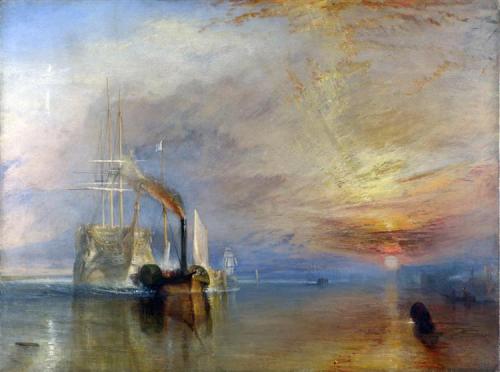
the-fighting-temeraire-tugged-to-her-last-berth-to-be-broken-up-1839.jpg!Large

  The Fighting Temeraire tugged to her last berth to be broken up (1839) 

          William Turner

                _______

while I’m on the subject of threnodies
which is to say “song[s] of lamentation
for the dead”, as I earlier statedlet me 
bring your attention to this extraordinary 
piece, an homage to the victims of the
Titanic
 
it doesn’t even have a title, much as 
Mozart and Haydn didn’t before music 
went mainstream, into public forums 
rather than merely aristocratic salons, 
and when an identifying moniker 
instead of a number became manifestly 
more practical, especially when the 
emerging Middle Classes were 
becoming the ones who were paying 
the composer’s bills, at the opera 
houses and the other sprouting 
concert venues, when some composers 
had even up to 32 sets of piano sonatas 
to remember, three and four often to 
a single set, opus number, as many as 
there are movements in a very sonata

and that’s not counting the numbered 

symphonies and string quartets of 
theirs, left to similarly calculate, 
decipher, extricate

it doesn’t have a title, I think, because
to my knowledge, it is the first of its
kind, a composition created by 
computer, for computer, an entirely 
self-contained digital work of, 
manifestly, art – I’d been waiting, 
diligently, for one – and like Beethoven, 
after the work was done, the artist(s)
just felt the title best left to the 
wordsmiths, thus – you’re welcome –  
Threnody for the Victims of the 
Titanic

sure, computers have done practical
things before, admirably, but never 
told a story, and certainly never one 
as profound as this one

these are the last moments of the 
Titanic, digitally reproduced, in real 
time, 2 hours and 40 minutes, they
are mesmerizing, you don’t want 
to miss a thing

there are no voices, apart from a 
few radio transmissions at the 
start, spotting the iceberg, calling 
out commands to beware, stop 
the engines

afterwards only silence, and the 
sound of the waves, the churning
of the engines, which have been 
restarted, sounding as rhythmic, 
incidentally, and numbing, as the 
wheels on the railroad tracks of
Steve Reich‘s Different Trains“,
another powerful threnody 

later the flash and crack of flares,
the crunch of the ship sinking  

the pervasive, however disrupted, 
silence and the inexorable passage 
of ever ticking time combine to be, 
thereafter, transfixing, meditative, 
ultimately transcendent, a fitting 
setting for a threnody 

I know of only another work to take
you to that venerable place,
Beethoven’s opus 111

and often enough Pink Floyd, for 
that matter, and the visionary 
Alan Parsons Project, of course, 
discoursing on inexorable Time 

and, now that I think of it, Elgar‘s
The Dream of Gerontius, whose 
character goes from his deathbed 
in the first act, to his afterlife in 
the second, effecting transcendence
for us by, yes, ingenious 
metaphorical proxy

but I digress

what I call Threnody for the Victims 
of the Titanic is a narrative with 
sound, not a movie, not a television
program, it has more commonality 
with a musical production than 
anything else but painting in art 
history, though its means are 
intuitively literary, ship stories go
back to The Odyssey through
Gulliver’s TravelsTreasure 
Island and to one of my very 
favourites, Ship of Fools“,
relatively recently

I could add Mutiny on the Bounty“,
Moby Dick“, “The Caine Mutiny 

in art, a precedent would’ve been set
in our collective consciousness by 
William Turner‘s celebratedThe 
Fighting Temeraire …, but I would 
mention as well Caspar David 
Friedrich‘s The Wanderer above 
the Sea of Fog for its existential
pertinence

a few literary points I’d like to stress
to back up my overt adulation, I find  
it impressive that the Classical rules
of tragedy have been maintained, 
unity of action, time, and place, 
prescriptions going back to 
Aristotle‘s Poetics in our cultural 
history, to profoundly express 
tragedy, iconic, epic, misfortune

not to mention the Classical musical
imperatives of tempo, tonality and 
repetition, none of which can be 
faulted here in this consummate 
composition

there is a no greater leveller of tempo 
than time, larghissimo here*, in the 
largest sense of that word, the 
cosmic, the inexorable pace of 
temporality in our brief heavens

a greater leveller of tonality neither  
is there than the rigorously impartial 
hum of the imperturbable Cosmos 

nor is there greater repetition than 
uniformity, however disrupted by  
however fervent ever human 
intervention, see Sisyphus, or 
Martha in “Who’s Afraid of Virginia
Woolf for iconic disrupters

R ! chard

*   Shostakovich had asked the 
     Beethoven Quartet to play the first 
     movement of his 15th String Quartet,
     “Elegy: Adagio“, so that flies 
     drop dead in mid-air, and the 
     audience start leaving the hall from 
     sheer boredom  

     well this inspired elucidation is even  
     slower than that
“First Piano Concerto” – Pyotr Ilyich Tchaikovsky

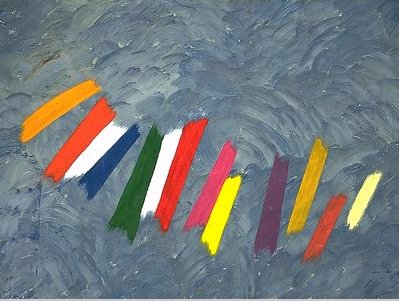
concerto-1975

      “Concerto (1975) 

               Jack Bush

                         _____

if there’s a piece that defines Classical music
for most people, encapsulates it, even for 
those who aren’t especially interested in 
Classical music, that piece would be, I think,
Tchaikovsky‘s First Piano Concerto

strictly speaking Tchaikovsky isn’t a Classical
composer, but a Romantic one, the Classical 
period in music having been transformed 
some years earlier into the Romantic period
by none other than Beethoven1770 – 1827, 
perhaps the most transformative composer 
of all time – Tchaikovsky‘s First Piano Concerto
was written in the winter of 1874 – 1875, pretty
well at the end of the Romantic Period, which 
then ceded to the Impressionists, just to get 
our periods right

what the Romantic Period added to the 
Classical Era was emotion, sentiment – note 
the use of tenuto, for instance, beats being 
drawn out, languidly, longingly, for pathos – 
what it maintained was the structure, the 
trinity of Classical conditions, rhythm, tonality, 
and repetition, which is why even the most 
uninformed listener will usually be able to 
sing along throughout the entire performance
the blueprint is in our collective blood, in the 
DNA of our culture

to remain present a piece must remain 
relevant to the promoter, an interpreter must
have reason to play it, substance surely plays 
a big part, but technical considerations play 
perhaps an even greater role towards a great
work’s longevityChopsticks“, for instance, 
is good but it won’t fill a concert hall  

unless, of course, it’s with Liberace

the “First Piano Concerto” of Tchaikovsky is 
the Everest of compositions, emotionally
complex and technically forbidding, nearly 
impossible, it would seem, were it not for 
those few who’ve mastered its treacherous 
challenges, conquered its nearly indomitable  
spirit

Van Cliburn put it on the map for my 
generation, with a ticker tape parade in 
New York to confirm it

Martha Argerich later on kept the ball rolling

and now Behzod Abduraimov, a mere youth, 
born in 1990 in UzbekistanTashkent, delivers 
by far the best performance I’ve seen since,
giving it new life for the new millenium
 
behold, be moved, be dazzled, be bewitched  

Behzod Abduraimov, watch

Richard

“Is Art Truth?”

paradise-jpglarge

  “Paradise” 

        Hieronymus Bosch

                   __________

Is Art Truth?“, a friend asks after speaking of 
its benefits, “Art accepts and tells the truth-Is
that it ?“, she inquires, wonders

art, like truth itself and beauty, is in the eye 
of the beholder, I submit, and therefore my 
definition is, once again, entirely personal, 
though I’ve rigorously plumbed it

it requires background

art died for a thousand years, it was 
essentially unrecorded, dormant from 
the fall of Rome to the Renaissance, nor 
promoted but for Catholic purposes, 
hence the majestic cathedrals and the 
magisterial altarpieces, works produced 
by, however, communities until eventually 
certain artisans were recognized as more 
inspired than others, and given autonomy

enter Duccio, for instance

in time these new, necessarily idiosyncratic
perspectives – see Hieronymus BoschDante
Alighieri – dominated, veering in their search 
for truth in their art and beauty – selling points,
incidentally – towards less strictly orthodox 
utterances

see above

art, and its contemporary science, were 
chipping away at ecclesiastical dogma

till God died, and artists continued their 
prescient march forward, shaping our 
zeitgeist, our spirit of the times, with 
their pronouncements for lack of any 
other guides

but the voices grew personal, see Mozart
often profound and prophetic, see 
Beethoven, till the confluence of disparate 
realities gave us secularism, each soul for 
itself as a tenet, a credo, a belief, a truth

what did they have in common

I believe it was their quest for beauty 
through truth, their quest for truth 
through beauty, with a nod here to 
the salient Keats 

art is prayer, a search for, as well as a 
manifestation of, one’s personal 
identification with the sacred

it is not truth, it is not beauty, it is the 
fervent intention itself, linked with a 
correspondent workmanship, craft, 
which inspires 

see for instance van Gogh for this, who, 
remember, nevertheless shot himself, 
artists are mortal, merely, messengers, 
ever, therefore, fallible, unsure, fearful 
even, often, of their, perhaps 
Promethean, fire

for consolation, or even maybe 
transcendence, see again,
pertinently here, Beethoven  

listen

Richard

psst: thanks, Joan

on art, its purpose

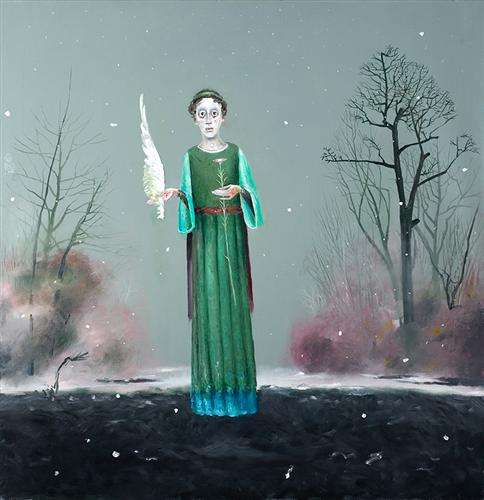
poet-with-flower-2008-jpgblog

                                Poet With Flower (2008)

                                          Stefan Caltia

                                                 _____

wherefore art, I’ve long and often wondered,
with only a wink to Juliet’s Romeo, for my
question dug deeper, why, indeed, itself art

we build our souls on the stories we’ve 
heard, the impressions we’ve received
from voices that spoke directly to our 
senses, painters with paint, musicians
with music, writers with words, poets 
with poems

it started with fairy tales, which told of
right and wrong, good and bad, courage,
kindness, responsibility, and dire 
consequences for discord

Biblical stories also took up a lot of my own
childhood, Jesus, Adam and Eve, Moses
and the Ten Commandments, this last 
reinforced by Cecil B. DeMille’s epic

but soon enough it was Oliver TwistLittle
Nell, and by an inescapable authorial leap, 
since these were all by an irresistible 
Charles Dickens for a guy my age, Sydney
Carton, who valiantly stands in for his
friend, Charles Darnay, at the guillotine, a 
quantum, even existential, leap from 
Peter Pan and Mary Poppins 

though I had the good fortune to learn to 
read and write music as a boy, play music, 
learn about Bach, Brahms and Beethoven, 
it didn’t take anyone else much more than
their enthusiasm to see what the Beatles
were similarly doing, the Rolling Stones, 
the Supremes, they were not only singing, 
but making history, shaping it, and us, we 
followed the questions they rose, their 
responses, the effects upon ourselves
for nothing is considered until it’s 
mentioned, spoken, made clear, and they
were those prophets

the same goes for art, we see as we see
cause Monet, Picasso, Warhol showed 
us how to see, what to look at

and of course poets, Shakespeare, 
RostandDanteGoethe, to inform, each,
their individual language, and culture

I have been Philip CareyScarlett O’Hara, 
Blanche DuboisGary Cooper in High
Noon“, both Martha and George in 
Who’s Afraid of Virginia Woolf“, lately 
I’ve been even Hank Williams

as Babette would say, a French doll who 
gets abducted in Raggedy Ann and Andy:
A Musical Misadventure“, an animated 
movie from the Seventies, – oo aahrr yoo 

Richard

psst: all of them have been me too,
      incidentally

up my idiosyncrasies – a bio

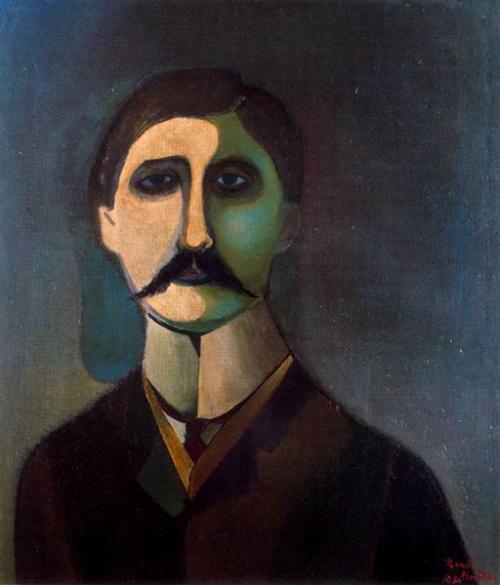
marcel-proust.jpg!Large

      “Marcel Proust” 
 
       Richard Lindner
 
          ___________
 
 
for a bio with which I’ve been asked 
to provide an online poetry magazine 
I’ve been encouraged to apply to, I’m 
submitting the following text
 
I thought you might enjoy it
 
 
Richard
 
           ______________
 
 
my name is Richard Bisson, from
which you’ll intuit my French 
Canadian background, though I 
write mostly in English, with no 
trouble however in French, my 
mother tongue is le français  
 
I am thus imbued, undoubtedly,
with that sensibility, my peers 
have been HugoFlaubert, and
most of all Marcel Proust, whom 
I imbibed for 33 years, in French,
page by page, reading each out 
loud as though it were my own, I 
cannot but be replicating now his 
rhythms, his aesthetic, his view 
of the world
 
it didn’t take me as long to read 
Homer, in the thunderous Robert  
Fitzgerald translation, – a mighty
roar resounding still from the 
ninth century before the Christian 
Era – from him I learned to speak 
from the heart, it’s not one’s style  
one has to master, but one’s 
humanity
 
Robert Browning gave me the 
dramatic monologue as a poetic
device, a gift he’d received from
 
Shakespeare himself, of course,
the unbridled freedom of his own 
literary imagination
 
Carl Sandburg‘s Chicago taught 
me to talk about every wo/man, 
about things even my own folks 
were doing
 
Collapsed showed me that even 
apparently inconsequential acts
can be poetry, poetry in the 
apparently humdrum 
 
Mary Oliver is a strong present 
influence
 
the cadence is entirely Beethoven,
with some help, I must admit, from 
the atonalists, SchoenbergBerg,
and Weberncommas are my bar 
lines
 
 
I call what I do prosetry, a word so 
new my computer won’t even let 
me write it, I’m a prosetrist, this 
word either
 
I want to link everyday experience 
with poetry, make poetry in the eye 
of the beholder, where truth and 
beauty lie
 
if people can see what I see, they 
can see that way themselves, it’s 
something one learns, and it’s all 
in the way one entrenches words 
and ideas
 
I eliminated the word “if” from my 
vocabulary once, for being then
too speculative, it changed my life, 
I’ve replaced it since with the word 
“miracle”, that has also changed 
my life
 
I am 67 years old
 
I live in Vancouver, Canada
 
I consider myself to be, at this 
point in my life, bibliosexual, I
sleep with my books, and we’re
all still getting along just fine 
 
may you be so blessed
 
 
Richard
 
psst: also Anaïs Nin, for the 
          intimacy of her diaries
 
          o, and Woody Allen, for
          giving up before his  
          nihilism and just 
          laughing

Meditation 1 – John Donne

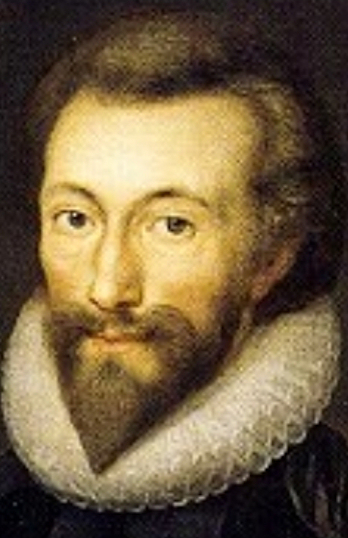
John_Donne

                              John Donne
 
                                 _______
 

to my utter embarrassment, my
profound dismay, I attributed in
my last title John Donne‘s No
inadvertently, a somewhat later 
though nearly contemporary 
poet of Donne‘s, equally as 
noteworthy, thereby accounting, 
maybe, for my confusion, my 
lapse, my infelicity, however still 
unforgivable
 
once I mistook Schubert for 
Beethoven, and, however similar
these might become in their 
euphoric musical explorations
despite their obvious rhythmic 
differences, never a sufficient 
excuse, though, for that flagrant 
flaw – still blush at the memory 
of that faux pas, among French 
intellectuals no less, the worst, 
the least forgiving   
 
John Donne, I’ve found since, is
not only noteworthy for his ribald 
poems, the ones we studied mostly 
at school, but his “Devotions upon
Emergent Occasions, from which 
No man is an island” is but one
inspirational bit, is replete with 
other gems 
 
he’d composed them after having
survived a brush with death, they 
are wise, and worth individually
considering for their spiritual 
illumination, their metaphysical 
light, their sage and sober 
guidance
 
here’s Meditation 1, or
 
                                   The first grudging of, the sicknesse.
 
“Variable, and therfore miserable condition of Man; this minute I was well, and am ill, this minute. I am surpriz’d with a sodaine change, and alteration to worse, and can impute it to no cause, nor call it by any name. We study Health, and we deliberate upon our meats, and drink, and ayre, and exercises, and we hew, and wee polish every stone, that goes to that building; and so our Health is a long and regular work; But in a minute a Canon batters all, overthrowes all, demolishes all; a Sicknes unprevented for all our diligence, unsuspected for all our curiositie; nay, undeserved, if we consider only disorder, summons us, seizes us, possesses us, destroyes us in an instant. O miserable condition of Man, which was not imprinted by God, who as hee is immortall himselfe, had put a coale, a beame of Immortalitie into us, which we might have blowen into a flame, but blew it out, by our first sinne; wee beggard our selves by hearkning after false riches, and infatuated our selves by hearkning after false knowledge. So that now, we doe not onely die, but die upon the Rack, die by the torment of sicknesse; nor that onely, but are preafflicted, super-afflicted with these jelousies and suspitions, and apprehensions of Sicknes, before we can cal it a sicknes; we are not sure we are ill; one hand askes the other by the pulse, and our eye asks our urine, how we do. O multiplied misery! we die, and cannot enjoy death, because wee die in this torment of sicknes; we art tormented with sicknes, and cannot stay till the torment come, but preapprehensions and presages, prophecy those torments, which induce that death before either come; and our dissolution is conceived in these first changes, quickned in the sicknes it selfe, and borne in death, which beares date from these first changes. Is this the honour which Man hath by being a litle world, That he hath these earthquakes in him selfe, sodaine shakings; these lightnings, sodaine flashes; these thunders, sodaine noises; these Eclypses, sodain offuscations, and darknings of his senses; these Blazing stars, sodaine fiery exhalations; these Rivers of blood, sodaine red waters? Is he a world to himselfe onely therefore, that he hath inough in himself, not only to destroy, and execute himselfe, but to presage that execution upon himselfe; to assist the sicknes, to antidate the sicknes, to make the sicknes the more irremediable, by sad apprehensions, and as if he would make a fire the more vehement, by sprinkling water upon the coales, so to wrap a hote fever in cold Melancholy, least the fever alone should not destroy fast enough, without this contribution nor perfit the work (which is destruction) except we joynd an artificiall sicknes, of our owne melancholy, to our natural, our unnaturall fever. O perplex’d discomposition, O ridling distemper, O miserable condition of Man!”
  
                                                                                      John Donne
 
 
in other words, carpe diem, seize 
the day, don’t worry, be happy,
something too many of us learn 
too late 
 
Richard
 
psst: thanks, Guy, for the heads up,
         Guy is a librarian friend of mine 
         with the goods on the Tudors


String Quartet in G minor, opus 10‏ – Claude Debussy

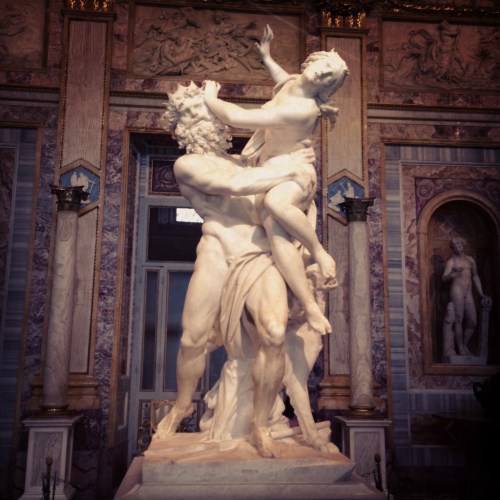
Il-ratto-di-Proserpina-Galleria-Borghese
                                        
                                    “Pluto and Persephone” (1522)
 
                                               Gian Lorenzo Bernini
 
                                                  ______________
 
 
if I’ve been away from my post for so long,
it’s either because my muse had left me, 
abandoned me to the rigours of an 
especially inclement winter, cold, driving 
rain, short somber days, weather for 
isolation, insulation, hibernation
 
or, like Persephone, I’d been abducted 
as to an Underworld, moral as well as 
meteorologicalhowever cosseted might’ve 
been there my stay, eiderdown pillows, 
blankets, books, Internet movies, concerts, 
plays, until by permission of Plutofateful 
consort, God of the Netherworld, by the
intercession of Mother Demeter, Queen of 
the Harvest, I’ve been allowed, even urged, 
to return for spring
 
where cherry blossoms are burgeoning, 
flowers bud in their variety of colours, 
birds sing, trees, like myself, begin to 
scratch out their brimming script onto 
the open-armed page of heaven
 
 
I’d left the string quartet evolving towards
Bohemia and Russia, in the capable hands 
of Smetana and Borodin respectively, from 
its solid roots in Vienna with Haydn and 
 
it would evolve westwards, of course, too 
to France eventually, as the centre of art 
shifted somewhat from Vienna to Paris in 
the late 19th Century, and spread, through 
paint mostly, the eye superseding the ear, 
wresting the cultural reins from music as 
oracle for the times, the new perspective 
of Impressionism
 
minor, his opus 10, a world away from 
the emotional seductiveness of 
Romanticism, but rather driving, electric, 
cosmopolitanteeming with traffic, it’s 
1893, the zeitgeist has changed
 
 
Richard

“Pohádka” (“Fairytale”) – Leoš Janáček

"Fairy Lake" - Martiros Saryan

Fairy Lake (1905)

Martiros Saryan

________

for the recital season coming up,
my friend, the musicologist, has
once again been called upon to
write reviews of featured pieces

out of giddy exhilaration at his
playful essays, he sent me
several draughts he’d already
composed around piano and
cello pieces, of mostly familiar
enough faces, Schumann,
Beethoven, Strauss, but of Leoš
Janáček
I’d only heard mention,
none ever of his compositions

his Pohádka“, or Fairytale“, is
a programmatic piece, which
means it accompanies a story,
like a soundtrack does a movie,
but Pohádka is based on a tale
of Vasily Zhukovsky, a Russian
epic poet, and is not accompanied
by a film, nor a ballet for that
matter – see “The Nutcracker” or
“Sleeping Beauty” for that – but
lives and breathes on its own
merits

Kashchei, Lord of the Underworld,
objects to the union of his daughter
with a charming prince, represented
here by the piano and the cello
respectively

they run away and find refuge with
another potentate who prefers the
prince for his own daughter, and
casts a spell on him so that the
prince may love her, instead of
Maria, the princess, which he does

Maria, forsaken, in a pique at this
turn of events, turns into a blue
flower

o, to turn into a blue flower
whenever I’m in a pique, I thought,
I only wish, and succumbed
forthwith to the improbable story

the spell is lifted, however, from
both, of course, however much I
might prefer to remain a blue iris,
say, anemone, or hyacinth, when a
magician, don’t ask, turns up to
set everything aright, and they
live happily ever after

the version you’ll hear is
transposed for piano and double
bass, a somewhat deeper, thrilling
register, or that may be just the
bassist, but the magic entirely
remains, if it isn’t completely
enhanced, rendered definitive
by this superb performance

my friend says Janáček has
neither musical forebears, nor
descendants, but composes in
a world of his own, an utterly
enchanted world, I surmised

what do you think

listen, just click

Richard

psst:

“con moto”, by the way, means
“with conviction”

at the XVth International Tchaikovsky Competition – Shino Hidaka

  "The Musical Contest" -  Jean-Honoré Fragonard

The Musical Contest (1754-5)

Jean-Honoré Fragonard

______

with only four contestants to go,
I already crown Shino Hidaka the
winner of the XVth Tchaikovsky
Competition
, this kind of affinity
only comes around once in a
lifetime, her Bach was not only
perfect but inspired, probing,
her ensuing Chopin,
mesmerizing, the Beethoven
that followed aptly, though ever
unexpectedly, transcendental,
transcendence not ever
happening without absolute
mystical concentration, her
Tchaikovsky, an evocation
rather than a mere description
of a Russian village, her
Rachmaninov, on utter fire

Dmitry Shishkin, before her,
neither was un-brilliant, a
consummate technician,
however, rather than an outright
revelation, his spirited Bach was
a turning point for me, finally
someone who got it, his Mozart,
as frivolous and delightful as
Mozart would’ve wanted it to be,
the rest appropriately everywhere
dazzling, second, therefore, ever
so illustrious, nevertheless,
prize, bravo

neither, incidentally, milked any
of their notes, just played what
was written

Richard

psst: compare Fragonard, above, to
Mozart, a synaesthetic match,
where sight and sound are
interwoven, giving you social
intimations of the mid-18th
Century

at the XVth International Tchaikovsky Competition – Bach‏

"J.S. Bach, Wohltemp. Klav. Bd. I, No. IV. (Extrait) / (Duo de Tristesse)" -  Robert Strûbin

“J.S. Bach, Wohltemp. Klav. Bd. I, No. IV. (Extrait) / (Duo de Tristesse)” (1957)

Robert Strûbin

________

if I’ve been getting on their backs
about their Bachs at the Tchaikovsky
Competition
, it’s that they’re playing
Bach as though he were mediocre
Beethoven, it’s like asking Duke
Ellington to be Pink Floyd, it’s just
a completely different generation,
era

Bach wrote for the harpsichord, a
precursor to the piano, it could not
control the volume, nor the length
of a note, the pianoforte came
along to resolve both issues

therefore before Beethoven, who
made full use of the new invention
and worked hard the pianissimos
and the fortissimos, to degrees that
often became either inappropriate
or too authoritative, indelicate or
obnoxious if you’re not in the mood
– I remember wanting to play his so
solemn 111 at my father’s funeral,
but realized late that the first
movement was not especially in
that situation warranted, nor even
parts of the transcendental, but not
always not obstreperous, adagio –
and thumbed thus his nose at the
aristocracy, who earlier, before
the citoyens had demanded their
rights and when the world had
been considered to be of a
rational, logical order, a clock,
and as regular, would never have
tolerated such impudence

Bach and Mozart do not sway
much from strict rhythm, neither
do they alter volume much at all

so that the constant display of
heartfelt Bach and passionate
Mozart becomes cloying, and
not at all what these Classical
and Baroque masters would
have approved of

nor Beethoven, nor Chopin, for
that matter, whose strict tempo
markings didn’t include much
rubato, ritardandos, which you
could think of as milking a note,
putting velvet on your canvas,
it doesn’t work, the composition
itself unaided by bathos, pathos,
delivers, check out, of course,
Glenn Gould

Andrei Korobeinikov sat me right
down the other night with his
arresting BWV868, thrilling,
followed by more dazzling
pyrotechnics, though he fizzled,
and fractured his Beethoven, the
very 111 I care so much for, I
couldn’t even finish, you don’t
need a velvet canvas behind the
111, neither cloying ritardandos,
just skill, nor tangles of notes,
for that matter

Richard