Richibi’s Weblog

Just another WordPress.com weblog

Tag: Beethoven

Cello Suite no 5 in C minor – J.S. Bach
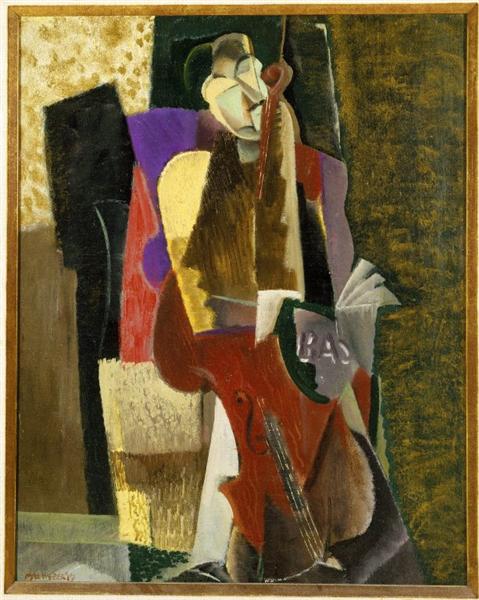
the-cellist.jpg!Large

        The Cellist (c.1917) 

              Max Weber

                 ______

what struck me immediately upon hearing
the bow’s very first strokes on the violin in 
this Fifth Cello Suite of Bach was that the 
mood was not only brashly Romantic, but 
quite specifically Russian Romantic, right 
up there with Dostoyevskyand Fiddler 
on the Roof, dark brooding colours at 
first, followed by long plaintive musical 
phrases, you can even hear the sound of 
the steppes, I thought, stretching out into 
the endless distance, this performance,  
surmised, is not, other than 
compositionally, Baroque, not to mention 
not even German 

yet as played by Mischa Maisky, it’s one 
of the best versions of the Fifth I’ve ever 
heard, and if it works, who’s to complain

but more context – Bach never gave not 
only textural indications, but not even 
tempos to his pieces, apart from the 
very dance terms that identify the 
movements, so what, therefore, is the 
specific pace, you’ll ask, of a courante, 
for instance, you tell me, I’ll reply

in other words, the modular terms were 
significantly looser in the early 18th 
Century than later, when metronome 
markings would begin to demand more
accurate replication of the artist’s 
explicit specifications – Beethoven 
especially made sure of that, by 
requiring accurate renderings of his   
mood or pace indications, largo,  
allegro, andante, for instance, still less  
strict than the stipulation later for exact 
musical beats per minute – trying to 
keep pace with a prerecorded tape, for 
example, as in again the industrially 
driven, which is to say emotionally 
indifferent, context of the seismic 
Different Trains“, masterpiece of a 
more technically conditioned era

I don’t think that Bach would at all have
been disappointed that the heirs of his 
fervent, though more genteelcreations 
might’ve morphed into something 
profound for other groups, be they 
national, or of a class, or of even a 
generation, of people, which is to say 
that these works have superseded 
their merely regional intent, and have 
reached beyond space and time, the 
very purview of music, to speak a 
common and cooperative, indeed a
binding, language

I said to my mom the other day that if
we all sang together, we could save
the world


R ! chard

psst: Maisky’s encore,, incidentally, is from  
          the Bourrée” of Bach’s Third Cello  
          Suitenote this contrastingmore  
          courtly – more refinement, more 
      reserve – rendition, you can even 
          hear, not to mention see, in this
          particular instance, not Russian 
          steppes, but European trees on 
          their baronial estates, if you lend  
          an attentive ear
French Suite no 3 in B minor – Bach

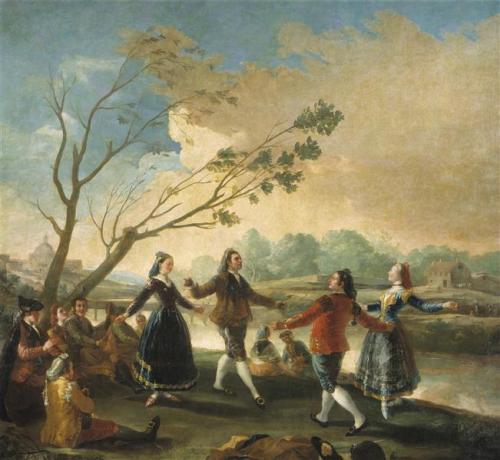
dance-of-the-majos-at-the-banks-of-manzanares-1777.jpg!Large.jpg

   “Dance of the Majos at the Banks of Manzanares (1777)

           Francisco Goya

                _________

upon reading up somewhat on the different
Bach Suites, I’ve provisionally concluded
that the earlier English Suites, 1715 to 1720,
were a modification of the established form 
of the suite, which would not have included 
a prelude, which isn’t, indeed, a dance

the Cello Suites follow, ahem, suit

but by the French Suites, 1722 to 1725, Bach 
is eschewing – Gesundheit – the prelude, but 
inserting, however, an air in his Fourth – an  
air is not either a dance – and mixing up  
their order in the later Suites, a minuet, for 
instance, in the last one of them, his Sixth,  
coming up after the gigue, which sports even
also a polonaise, where in his Fifth, Bach adds  
a loure, I ask you, a slow French gigue, to his  
bristling concoction

the terms French and English, incidentally, 
were added only after Bach’s demise, for 
diverse and uncorroborated reasons, so 
that these titles probably don’t mean much 
to a contemporary audience, who can’t tell, 
anyway, our gavottes from our bourrées

the music of Bach is like that of no other 
composer, he owns essentially the Baroque
Period, having, in fact, wrenched the Era 
from the painters, who’d established it in 
art to such a degree that it defined its
earlier historical phase

with Bach, the torch is handed over to 
music, from then on until the 
Impressionists, the period is defined 
by composers, both Classical, then 
Romantic, with some poets holding 
some sway 

the technique that dominates the music 
of Bach is that of counterpoint, where 
a tune is repeated in the harmonization
a few beats from its first iteration, 
vocally, we call that singing in canon

his music is introspective, as though 
the player were privately meditating,
it has the playfulness of Mozart, but
Mozart is expressive, not interior,
therefore nowhere near as spiritual,
Beethoven will return with a 
profundity that matches Bach’s, but 
with much more Sturm und Drang, 
tempestuous moral struggle, much  
less resignation, ouch, watch

listening to Bach for me is like getting 
on a train, and just letting the rhythm
of the wheels sustain me, as I watch,
indeed introspectively, the surrounding 
countryside, stopping at the musical 
journey’s several halts, its intervals, 
until its final destination, which 
despite, or even because of, taking 
sometimes hours, is nevertheless  
endlessly satisfying, and never  
ever less than, however improbably, 
inspiring

here’s Bach’s Third French Suite
you’ll note it includes an idiosyncratic 
“trio”, not strictly a recognized dance
either – leave it to the saucy French, I   
say, to consider interpolating a trio


R ! chard

English Suite No 3 in G Minor – Bach

suite-fibonacci-2003.jpg

   “Suite Fibonacci (2003) 

           Charles Bezie

               ________

 
before I say much more about his Cello
Suites, let me point out that Bach has
some French Suites, some English 
Suites, on top of similarly structured 
Partitas and Toccatas, the French have 
their tout de suites, and hotels have, 
nowadays, their so named luxury 
apartments 

musical suites are sets of dance pieces, 
by the early 18th Century much stylized, 
with an introductory prélude, an allemande, 
followed by a courante, which is to say, folk 
dances, the first German, the next French, 
then a sarabande, Spanish, followed by a 
couple of galanteries, court dances, 
minuets, gavottes, bourrées, then a final 
English gigue

all of the markings are in French, which
leads me to believe that all of these 
dances must’ve originated at the court 
of Louis XlVth, the Sun King, 1638 to 
1715

but the suggestion is that Europe was 
becoming an integrated community
all of these dances were eclipsed by
the Classical Period, of Haydn and 
Mozart, apart from the minuet, which 
more or less defined, nevertheless, 
that new era

the minuet will die out by the time of
Beethoven, you’ll note, to be replaced
by the waltz, which had been 
considered much too racy until 
transformed by Chopin into a work 
of ethereal art

the Strausses, father and son, gave it,
only a little later, celebratory potency,
but that’s another story


here’s Bach’s English Suite, the 3rd
for context, the French ones are a 
little too salty, as it were, they do not 
quite conform to prescribed suite 
notionshowever might their 
propositions have been, ahem, 
sweet 

meanwhile, enjoy this one


R ! chard

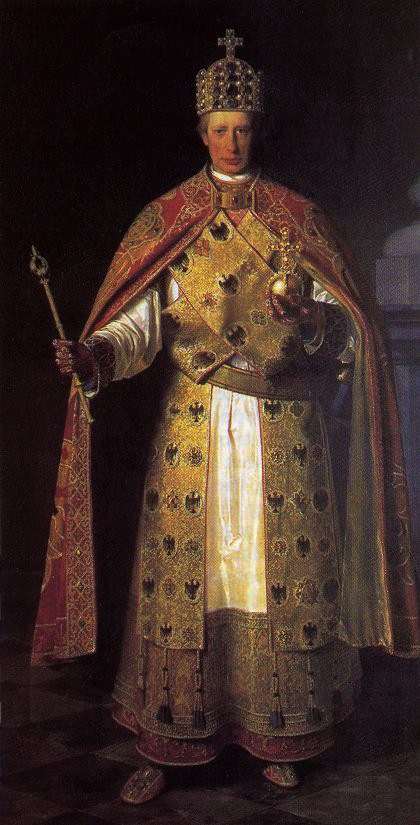
String Quartet in C major, opus 76, no 3, “Emperor” – Joseph Haydn

Ludwig_Streitenfeld_001.jpg

    Francis II as Holy Roman Emperor (1874)

          Ludwig Streitenfeld

               _____________

Haydn’s String Quartet, opus 76, no 3
is nicknamed the Emperor cause the 
second movement, the poco adagio;
cantabile, is a recapitulation of an 
anthem Haydn had earlier written for 
Francis ll, the Holy Roman Emperor
– not, incidentally, for Napoleon, the 
Emperor of the moment, who was to 
defeat Francis lleventually, at the 
Battle of Austerlitz, December 2, 1805, 
thereby dissolving that Holy Roman 
Empire, which had been established 
by Leo, the very Pope, lll when, on 
December 25th, 800, which is to say 
preceding Austerlitz by a thousand 
years, he crowned Charlemagne its 
Emperor 

Haydn must’ve been a monarchist


you’ll recognize that second movement
as the present day anthem of Germany

but listen to how Haydn makes it glisten, 
explicitly, with articulations and filigree 
that render it utterly irresistible

the adagio is usually the moment that
remains immutable, if the composer
is doing hir stuff, it’s the one you walk 
home singing, the faster movements,
however histrionic, are nearly a dime 
a dozen, though ever nevertheless 
often dazzling 

this adagio is utterly Romantic, though
I’m sure Haydn didn’t know what he 
was doing, cause despite their push
against the democratic surge, even 
monarchists, princes, dukes, dutiful 
composers, were finding, and voicing, 
their personal, and individual, which 
is to say, their democratic, opinions, 
however aristocratic their pedigree

artists had done a similar thing when 
their personalities began to single 
themselves out as especially gifted 
when the Renaissance was 
happening, it was now music’s hour, 
individual voices were staking their 
claim, Haydn’s manifestly superior 
based on talent and, after widespread 
economic affluence, audience appeal, 
Haydn’s commercial boots were made 
for walking, and he filled them both
magnificently and incontrovertibly

the poco adagio; cantabile is not 
courtly music, it reaches for not
merely elegance, but the heart,
we’ve entered another 
transformational generation, 
something like the revolution 
that triggered change in the 
cultural upheaval of the1960s 

our first step then was the Beatles, 
theirs was Haydn, or rather Elvis
Presley shoring up the Beatles, 
Beethoven was more aptly John,
Paul, George and Ringo 


but watch the rapture on the players’ 
faces, Francis ll would’ve been 
appalled, much like parents in my 
generation facing the pill, drugs, 
unorthodox sexual couplings, and, 
of course, raucous and unruly rock 

music

today, under the spell of the 
Romantic Period, and encouraged
by that very Sexual Revolution, the
Calidore String Quartet’s Elysium
their evident blissemotionally 
manifest, and utterly arresting, sells 
tickets, for better orhopefully not, 
for worse

but you call the shots, to decorum or 
not to decorum, that is the question

watch, wonder, listen 


R ! chard

String Quartet in B flat, Opus 55, no 3 – Haydn

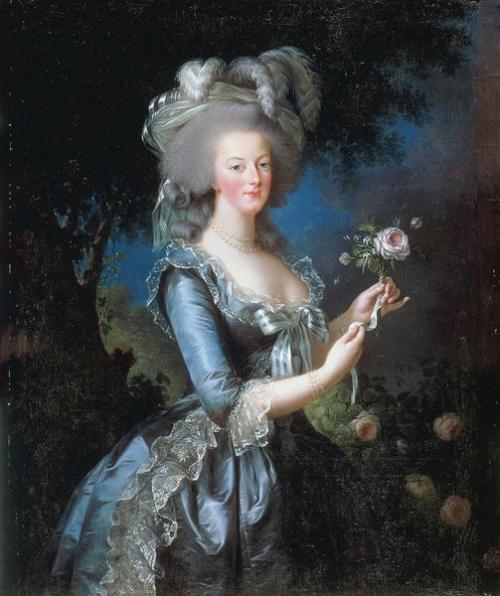
queen-marie-antoinette-of-france-1783.jpg!Large

                      “Queen Marie Antoinette of France (1783) 

                                Louise Élisabeth Vigée Le Brun

                                              ___________________

first of all, let me grievously repent an
egregious confusion I probably left
in my last diatribe, I said that the second
movement of the Opus 54, no 2 sounded 
to me like a minuet, I had, through 
embarrassing inattention, confused its,
however unmemorable, adagio with that
of this Opus 55, no 3, which I’d listened 
to in too quick succession, driven as I 
am by my thirst for epiphanies

the Opus 54, no 2 will do, but I’m not 
going back for seconds, nor to the 
Opus 55, no 3, though here’s where  
I flaunt nevertheless Haydn, not to 
mention Bach, Mozart, Beethoven, 
all the way to eventually Bruckner, 
Brahms, the extraordinary Richard
Wagner, passing through Schubert,
Mendelssohn, the Strausses, father
and son, and the unrelated Strauss,
Richard, another incontrovertible 
giant, and I nearly left out the 
unforgettable Liszt, all of them 
forefathers of our present music

you might have noticed that these 
are all Germanic names, obedient 
to the Hapsburg empire, with 
Vienna as its supreme cultural 
capital, and it was that 
Austro-Hungarian dynasty that
indeed nearly single-handedly 
secured our Western musical 
traditions

a few Italians are remembered,
from the 18th Century, Scarlatti 
maybe, Boccherini, Albinoni
but not many more 

no one from France, but they were 
about to have a revolution, not a 
good time for creative types,
though, incidentally, Haydn was 
getting Tost, to whom he was 
dedicating his string quartets for 
services rendered, to sell his stuff 
in very Paris 

then again, Marie Antoinette, I thought, 
was Austrian, an even archduchess, 
and would’ve loved some down-home 
music at nearby Versailles

so there you are, there would’ve been 
market

the English had Handel, of course,
who was, albeit, German, getting 
work where he could when you 
consider his competition, he was 
too solemn and plodding by half,
to my mind, for the more 
effervescent, admittedly Italianate, 
continentals, Italy having led the 
way earlier with especially its 
filigreed and unfettered operas

but here’s Haydn’s Opus 55, no 3
nevertheless, the best Europe had
to offer, socking it to them

Haydn’s having a hard time, I think, 
moving from music for at court to
recital hall music, music for a much
less genteel clientele, however 
socially aspiring, we still hear 
minuets, and obeisances all over 
the place, despite a desire to 
nevertheless dazzle, impress

then again, I’m not the final word, as
my mea culpa above might express, 
you’ll find what eventually turns 
your own crank, floats your own 
boat, as you listen

which, finally, is my greatest wish


R ! chard

“The Seven Last Words of Our Saviour on the Cross”, opus 51 – Joseph Haydn

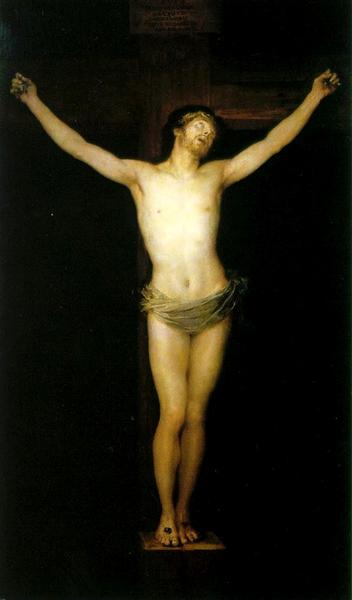
crucified-christ-1780.jpg!Large.jpg

                  “Crucified Christ (1780) 

                          Francisco Goya

                                 _______

Haydn’s Opus 51 was commissioned 
for the Oratorio de la Santa Cueva, the 
Holy Cave Oratoryin Cádiz, Spain,
church, as the name suggests, built 
partially underground, it would be
performed, the Opus 51, for the Good 
Friday service of 1787, Haydn therefore 
put his Opus 50 on hold, six string 
quartets, to finish this ecclesiastical 
work on time

what had been required was a work for 
small orchestra to inform the Seven 
Last Words of our Saviour on the 
Cross, it would therefore have at least
segments, movements, and would be 
divided by the elaboration of the 
bishop upon the significance of these 
individual “Words”, or, in fact,
statements, see this example 

Haydn added an introduction, and a 
finale in the form of an earthquake,
quite, I think, wittily and ever so 
appropriately

nearly simultaneously, Haydn 
composed the orchestral 
arrangement for string quartet, and 
later for orchestra and voice, for, in
other words, an oratorio

to my mind “The Seven Last Words 
of Our Saviour on the Cross” is 
Haydn’s crowning achievement, in 
all of its iterations

you’ll note that there is even first of 
all a title, and the title asks for 
something quite specific, indeed 
words, which the composer would
have to render musically, somehow, 
he’d need drama, something of a 
musical narrative, no minuets

all of the movements, apart from 
the end ones, are variations on 
slow – adagio, lento, largo, even 
grave – and how do you keep an 
audience, or in this case a 
congregation, happy, or even 
interested, with seven potentially 
lugubrious adagios in a row, all 
profoundly melancholy

only Shostakovich has managed 
to do that since, which I’ll talk 
about at some point later

Haydn also undoubtedly inspired 
Beethoven here with the 
consequences of so many 
movements, the possibility of 
extending a musical intention
into something resembling,
indeed, a book, a story, the 
introduction of narrative, 
essentially, into our musical 
history, which is to say, music
as literature 

the orchestral version of “The 
Seven Last Words” is performed 
here at the very Oratorio de la
Santa Cueva, the string quartet
version, played not only better 
than I’ve ever heard it played
before, but better even than any 
other quartet I’ve ever heard, 
period, includes the commentaries 
in German by an attendant prelate,
as intended in the original 
composition 

the movements’ “Seven Words” are 
indicated in Latin, not, incidentally, 
the  language of “Our Saviour”, and 
move from “Lord, why have you 
forsaken me” to “If it is Your will, 
then let it be done”

the last version presented here is 
the oratorio, for orchestra and
voice  

all of them, utterly inspiring

listen


R ! chard 

        (to be, incontrovertibly, continued,
         this piece is too loaded with 
         substance, it is transformational)

Quintet for Clarinet and String Quartet in B♭ Major, Op. 34 – Carl Maria von Weber

Carl-Maria-Von-Weber

              Carl Maria von Weber

                        ________

though I’d considered heading into 
later string quartets, later clarinet
quintets actually, an intriguing, I 
thought, divergence, it seemed a 
better idea to return to the 
Classical and early Romantic 
Periods to find an anchor for our  
formative musical idiom, again
rhythm, tonality, and recurrence

Carl Maria von Weber does an 
intermediate Clarinet Quintet
between Mozart’s and Brahms’,
which is noteworthy for especially
its Classical roots than its 
Romantic pretensions, I think, 
Weber sounds nothing like 
Beethoven, but is a nearly spitting
image of Mozart, which isn’t a bad
position at all to be in

listen for his courtliness, the staid,
though lively, musical interactions

you’ll note that the clarinet, though 
to one side, takes preeminence in
this composition – it’s nearly even 
a clarinet concerto – Weber called 
it a Quintet for Clarinet and Strings,
a perhaps more apt appellation

appellations, incidentally, remain 
the means by which we sharpen 
our understanding, however 
presumptuous might the term 
sound, appellations, in other 
words, count

though I could’ve used, I suppose, 
nomenclature, or something 


R ! chard

on string quartets – Opus 76, no 1 – Joseph Haydn

joseph-haydn-1791.jpg!Large.jpg

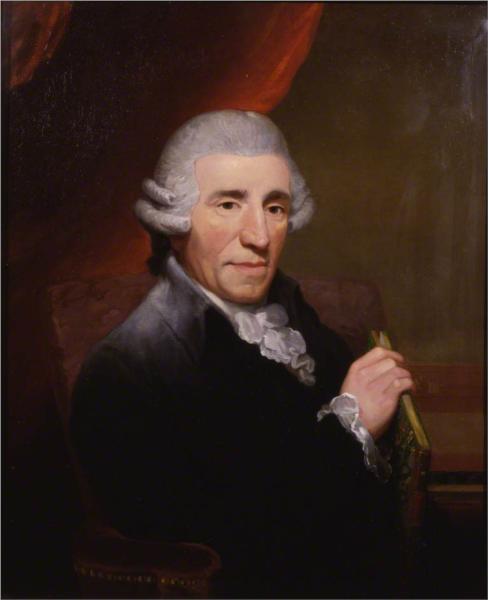
                                   “Joseph Haydn (1791) 

                                          Thomas Hardy

                                                 ______

to not consider other musical forms of
Shostakovich would be unfair, his
symphonies are mostly propaganda,
however often, though somewhat 
culturally specific, riveting

my favourite works of his, works I 
consider iconic, are mostly chamber 
pieces, piano solos, string quartets

a string quartet, after a symphony, is
like sitting down to dinner with four,
at the very least, acquaintances, 
rather than being a guest at a party,  
the conversation is more intimate,
every person plays hir part, everyone
is heeded, if even only with courtesy,
a social, a Classical, an aristocratic,
prerequisite 

movements can be compared to 
courses, distinct and identifiable for
their particular culinary, musical, 
propriety

later variations on this reflect the 
variations in social mores, where 
restaurants, the modern way of
socializing, allow for disparate 
choices, often superimposed, 
throughout the meal for any,
every, occasion

dim sum, tapas, celebrate this, not
unhappily 


but string quartets can be tricky, I 
thought I’d start from the beginning,
with some Haydn, their recognized 
Father, you’ll understand when you
hear this, his Opus 76, no 1, an 
outstanding string quartet to live 
up to

Haydn set the standard for string 
quartets when the norms of Western 
music were being established, Bach
had given us the alphabet, the
well-tempered clavier, Mozart, the 
grammar, the structure of music,
tempo, tonality, repetition, Beethoven 
gave us the literature, the poetry, the 
philosophical, the transcendent

Haydn is somewhere between these 
last two, but decidedly, still, the king  
of the string quartet, though Beethoven  
does a good job of trying to best him,  
and so does Shostakovich, you’ll have 
to pick

but first, let’s start with Haydn, that’ll
be already, you’ll see, or hear, enough

later, I’ll get into it


R ! chard

Dmitri Shostakovich – “Symphony No 4” in C minor, opus 43

portrait-of-joseph-stalin-iosif-vissarionovich-dzhugashvili-1936.jpg!Large

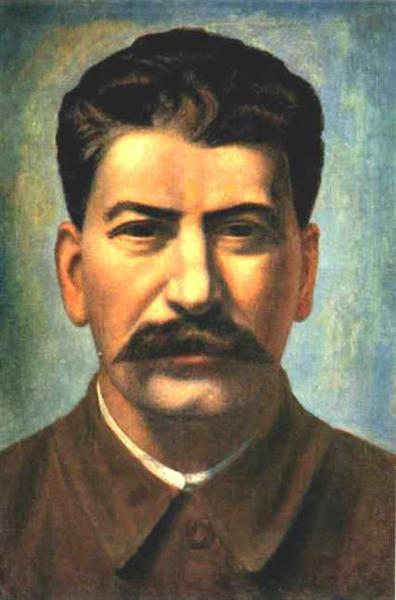
   “Portrait of Joseph Stalin (Iosif Vissarionovich Dzhugashvili) (1936)

                   Pavel Filonov

                           _________

if you’ve been waiting for a Shostakovich 
to write home about among his early 
symphonies, here’s the one, his 
Symphony no 4 in C minor, opus 43 will
knock your socks off from its very 
opening gambit, have a seat, settle in, 
and get ready for an explosive hour

the Fourth was written in 1936, some 
years after the death of Lenin, and the 
instalment of Stalin as the supreme, 
and ruthless, authority, after several 
years throughout the Twenties of
maneuvering himself, cold-bloodedly,
into that position 

from Stalin, Death is the solution to 
all problems. No man – no problem.

fearing retribution after Stalin had 
criticized his recent opera, Lady 
Macbeth of Mtsensk“, Shostakovich 
cancelled the first performance of 
this new work, due to take place in 
December, ’36, others had already 
suffered internal exile or execution 
who had displeased the tyrant, a 
prelude to the infamous Great Terror

the Symphony was eventually played
in 1961, 25 years later, conducted by
no less than Kirill Kondrashin, who’d
partnered Van Cliburn a few years 
earlier in Cliburn’s conquest of Russia
but along with this time however the 
long-lived Leningrad Philharmonic 
Orchestra 

to a friend, I said, this is the biggest
thing since verily Beethoven, no one 
has so blown me away symphonically 
since then

he looked forward, he replied, to 
hearing it 

the Fourth Symphony has three distinct 
movements, to fit thus appropriately the 
definition of symphony, though the first 
and third have more than one section, 
something Shostakovich would have 
learned from already Beethoven, it gives 
the opportunity of experiencing a variety 
of emotions within one uninterrupted 
context, add several movements and 
you have a poignant, peripatetic musical 
journey, more intricate, psychologically 
complex, than many other even eminent
composers, Schubert, Chopin, 
Mendelssohn, even Brahms, for instance 

it’s helpful to think of film scores, and 
their multiple narrative incidents,
brimming with impassioned moments,   
however disparate, Shostakovich had 
already written several of them

let me point out that Shostakovich’s 
rhythms are entirely Classical, even 
folkloric in their essential aspects, 
everywhere sounds like a march, 
proud and bombastic, if not a 
veritable dance, peasants carousing,
courtiers waltzing, and repetition is
sufficiently present to not not 
recognize the essential music 
according to our most elementary
preconceptions

but the dissonances clash, as though 
somewhere the tune, despite its rigid 
rhythms, falls apart in execution, as 
though the participants had, I think,  
broken limbs, despite the indomitable 
Russian spirit

this is what Shostakovich is all about, 
you’ll hear him as we move along 
objecting, however surreptitiously,
cautiously, to the Soviet system, like 
Pasternak, like Solzhenitsyn, without 
ever, like them, leaving his country 
despite its manifest oppression, and 
despite the lure of Western accolades,
Nobel prizes, for instance, it was their 
home

and there is so much more to tell, but
first of all, listen

R ! chard 


Dmitri Shostakovich – Symphony no. 1, opus 10

portrait-of-dmitri-shostakovich-1963.jpg!Large

     “Portrait of Dmitri Shostakovich (1963) 

             Martiros Sarian

                    ______

after being transfixed, rendered aquiver, by
this mesmerizing conductor in a performance
I can only remember for his magnetism, 
expressive fingers performing arabesques of 
such exquisite sensitivity, eyes that melt, 
light up, gleam, glitter, at every ebb and flow 
of the turbulent, towering, music, eyebrows 
that, blonde, cherubic, angelic, display with 
manifest intention, the spiritual implications 
of every musical turn, a youth only, in my 
senescent estimation, taking on the conquest 
of the 21st-Century world, lately installed as 
conductor, most illustriously, of both the 
Royal Liverpool, in 2005, and the Oslo, in 
2011, Philharmonics

Vasily Petrenko led me back to Shostakovich,
after his monumental Tchaikovsky 5th,
whereupon I’ve undertaken a chronological 
review of all Shostakovich’s symphonies, 
something I did long ago with Beethoven’s 
sonatas, to my great cultural advantage, it 
was a journey that informed me not only 
intellectually but, even more significantly, 
spiritually, taught me about patience, tumult, 
and the wisdom, even glory, one acquires in 
resignation, so long as you hold onto your 
principles, your core 

you look back, I told a man once, and you 
see what you’ve come through, and you 
are proud, you recognize the hero that 
you are, or weren’t

we have only our poise and grace to lend 
to the world, or our venom and invective

but I digress

here’s Shostakovich, his First, in a line 
of Shostakovichian explorations

if you’ll join me

R ! chard