Richibi’s Weblog

Just another WordPress.com weblog

Tag: Beethoven

“Grand Piano Sonata” in G major, opus 37 – Tchaikovsky

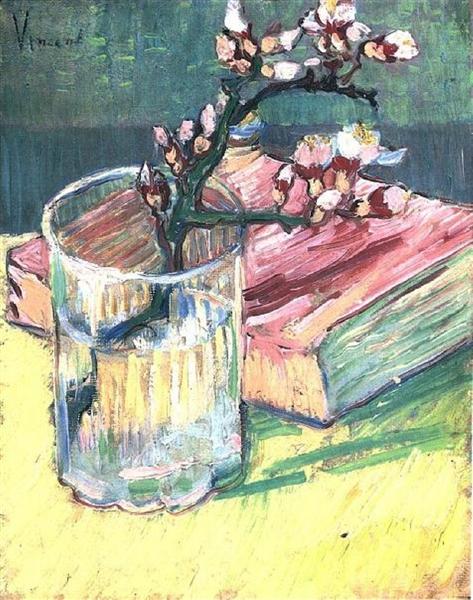
blossoming-almond-branch-in-a-glass-with-a-book-1888(1).jpg!Large.jpg

  “Blossoming Almond Branch in a Glass with a Book (1888)

       Vincent van Gogh

             __________

if Tchaikovsky’s 2nd Piano Sonata hasn’t
remained in the canon, if it isn’t one of 
the pieces you’ve heard if only through
the grapevine, it’s, I suspect, cause it’s 
essentially not an advance on other more 
prescient works in the form, other more 
oracular compositions

Beethoven had paved the way for the 
Romantic Period, nearly invented it,
established incontrovertibly the 
dimensions of the sonata, notably its 
purpose, its structure, Schubert had, 
however belatedly, confirmed it, with 
works equal to his, and even, here 
and there, superior, listen

but having reached the summit of 
what a sonata could say, the form 
little by little withered in its several
Romantic permutations, Tchaikovsky
here, for example, and became mere
elaborations upon a waning theme 
rather than exciting, and revelatory, 
productions 

the sonata would survive, but  
transformed by another era, 
Impressionism, Tchaikovsky would
as well, of course, but not through 
his sonatas

his Second, however, is not not 
worth a listen, would you pass, 
for instance, on a less celebrated
perhaps, van Goghsee above

Tchaikovsky’s, therefore, Second

 
R ! chard

Piano Sonata in C# minor, opus 80 – Tchaikovsky

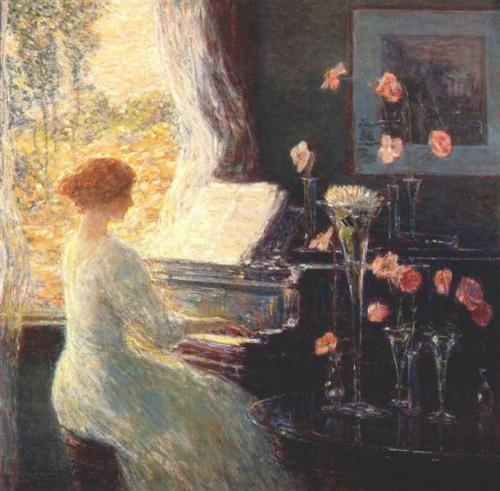
the-sonata-1.jpg!Large

The Sonata 

              Childe Hassam

                     ___________

                            for Sarah and Rachel, the daughters
                              of the son of a dear cousin, after a 
                                belated lunch recently, two young 
                                  girls14, 16, in bloom, as Proust 
                                    would say, who speak not only 
                                      music, but French and English,
                                        fluently, I checked – perhaps   
                                          even German, their Oma  
                                            lives with them – they also  
                                              play the flute, the piano,    
                                                and sing, what could be
                                                  I ask you, more beautiful,  
                                                   two young girls ibloom, 
                                                     indeed in very blossom   
                                        
                               or am I being too French
 
the form of the sonata had been established 
decisively during the Classical Period, out 
of the rudiments of Bach’s own such pieces
Mozart and Haydn had given the concept its 
final shape, its structure, three or four 
contrasting movements, by definition all 
entertainments

Beethoven kicked the entertainment part 
right out of the ball park, made his show 
into a veritable transcendental meditation, 
rather than to merely applaud, audiences 
gasped, were meant to be awed, as I still 
ever am by his musical speculations

but by definition as well, a sonata is a 
piece for a single instrument, therefore
inherently introspective, whether the 
player has an audience or not, soloists, 
note, play easily on their own

even an accompanied sonata, as violin
sonatas often are, for instance, or this 
one for two pianos, would lose the 
intimacy of a solo piece, for having 
someone playing, however compatibly, 
over one’s shoulder  

in other words, a piano sonata is, by
definition, a monologue, a soliloquy,
where notes tell the story that words 
would intimately, even confessionally,
in poetry, convey

the emotions that are elicited from 
a piece are as real as they would 
be from any literary alternative, 
except that they’re quickened, like 
aromas, through the senses, rather 
than through divisiveby definition 
confrontational, logic

rosemary reminds me always, for 
instance, of one of my departed 
aunts, like the taste of a madeleine 
dipped in tea opened the door for 
Proust to an entire earlier epoch, 
the seed, the subject, of his 
disquisition on Time, À la 
recherche du temps perdu“, An 
Exploration into Elapsed Time“, 
my own translation, none of the 
published proffered titles   
having rendered the subtlety  
of the shimmering original
  
rosemary, in other words, speaks,
if even only to me

listen to Tchaikovsky’s First Piano
Sonata, in C# minor, opus 80, one
of only two of his, what do you 
hear, think, feel


R ! chard

First Symphony, “Winter Dreams”, opus 13 – Tchaikovsky

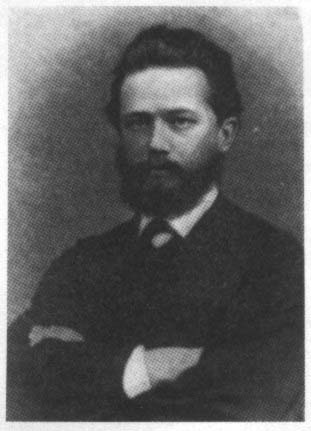
Tchaikovsky_6.jpeg

 Pyotr Ilyich Tchaikovsky (1866)

            ______

                               for Elizabeth, who said she’d  
                                “be all ears once it happens“, 
                                     this first of my Tchaikovskys
                                               
the example of Beethoven was 
a hard act to follow, no one 
nearby, which is to say, in the
vicinity of Vienna, which had 
ruled the musical world for 
more than half a century, from 
Mozart to late Beethoven, 
would be able to match his 
eminence, not even the, 
however mighty, Brahms 

but in the East a star was born, in
1840, of extraordinary dimensions,
to tower above the High Romantic 
period, which shone with, were it 
not for its distance from the 
European central galaxy,  
comparable brightness  

Beethoven had written for every
instrument, every combination 
of instruments, every voice, 
every combination of voices, 
no other composer had, nor 
has since, done that but the 
incandescent Tchaikovsky
who’d ever ‘a’ thunk it

symphonies, concertos, string
quartets, sonatas, variations, 
ballets, operas, liturgical 
pieces, there wasn’t anything 
he didn’t touch, and transform 
into magic

here‘s an early work, his Opus 13
only, in order to get chronological 
perspective, and, as I pursue this 
compelling trajectory, a sense of  
his musical evolution, his First
Symphony, “Winter Dreams”*

listen for troikas flying across 
the steppes, hear the bells tingle 
from their fleeting carriages, be 
swept away by the exhilarating 
majesty


R ! chard

Simon Bolivar Symphony Orchestra,
      Joshua dos Santos, conductor

“Lament From Epirus” – Christopher King

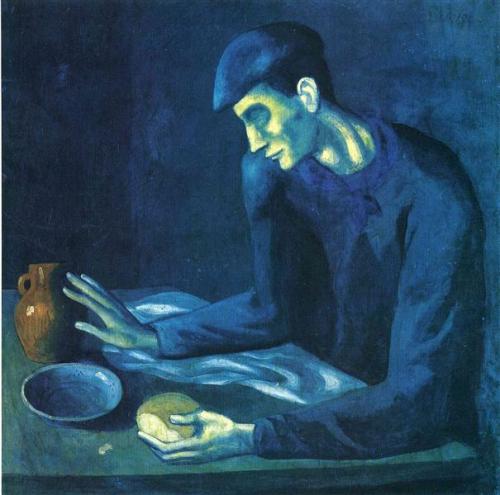
breakfast-of-a-blind-man-1903.jpg!Large.jpg

   “Blind Man’s Portion (1903) 

          Pablo Picasso

                ________

though you’ll have to actively listen 
to Christopher King rather than 
merely hear him hereas you might 
have been doing with many of my 
suggested musical pieces, should 
you be at all interested in the history 
of music, he is fascinatingdates his 
investigations back millennia to very 
Epirus, Ancient, nearly primordial, 
Greece, to mirologia there, ancient 
funerary chants

some have survived, and have been 
recorded for posterity, onein 1926, 
by Greek exile fled to New York City,
Alexis Zoumbas, a year laterhowever 
improbably, by an Americanblind 
man, his own story inspirational, akin 
to that of Epictetus, one of the two 
iconic Stoic philosophers, the other,
incidentally, an emperorthough the 
blind man here, Willie Johnson, was 
never himself slave, but only, by a 
historical whisker, the emancipations 
of the American Civil War


Christopher King‘s comparison
of an Epirotic miralogi with an 
American one brings up, for me,
the difference between Mozart 
and Beethoven, notice how the
Willie Johnson version is more
rhythmic, the cadence is much 
more pronounced than in the 
Greek one, Johnson would’ve
got that from the musical 
traditions Europeans had 
brought over from their native 
continent, probably also from
Africa, Africans

Beethoven would’ve been 
surroundedmeanwhile, by Roma, 
perhaps called gypsies then, their 
music ever resonant in his culture, 
not to mention later Liszt‘s, and 
the Johann Strausses’ even, for 
that matter, Paganini also seems 
to have been imbued with it, it 
having come up from Epirus 
through, notably, Hungary – not 
to mention, later still, that music’s 
influenceand I’ll stop there, on
late 19th-Century Brahms


Christopher King, incidentally,
sounds a lot like someone you 
already know, I think, from his 
eschewing Gesundheit – cell 
phones, for instance, to his 
enduring preoccupation with 
death, not to mention his 
endearing modesty, indeed 
his humility, his easy 
self-deprecationdespite his,
dare I say, incontestable, and 
delightful, erudition

makes one wonder why that 
other hasn’t become also 
famous yet

what do you think


R ! chard

Sonata for Violin and Piano in F minor, BWV 1018 – Bach

four-amateur-of-prints.jpg!Large.jpg

    “Four Devotees of Prints

            Honoré Daumier

                __________

up at the crack of about nine this 
morning, I determined to get the 
ordeal of trying to print 
something out of the way, go 
over to my mom’s, a few blocks 
down the street, to use her  
printer, something I figured  
would probably present obstacles

though we followed the proposed
instructions, nothing would work,
print, pressed, delivered nothing

hoops were required, several of 
which I managed, got closer, and  
more prepped, but when they 
essentially seemed to contract
marriage, I withdrew – though I 
might‘ve inadvertently sworn a 
ring

flummoxed, even irritated, by 
the manufactured distress, I
determinedly decided to go 
back to paper, I am not a robot, 
I ascertain, as they often 
electronically instruct, to, 
mean really, confirm your 
identity


back home, I lit a candle for Collin, 
my friend, who ‘s just had a 
debilitating stroke, and listened to
Bach again, an absolute cradle

listen to how falling into the 
rhythmic pocket, beats landing  
on anticipated beats in a rocking 
motion, lets you slip into surrender, 
and even physical, solace 

hear, however, how the lingering 
notes of the violin transgress bar
lines, much like with Beethoven
in order to tell a more personal
story

Bach gets to look a lot more like
Beethoven every minute, or the 
reverse, I’m finding, like 
grandchildren resembling, atom 
for atom, their grandparents

stay tuned, there’s a lot more
to uncover 


R ! chard

a “Musical Offering” – Bach

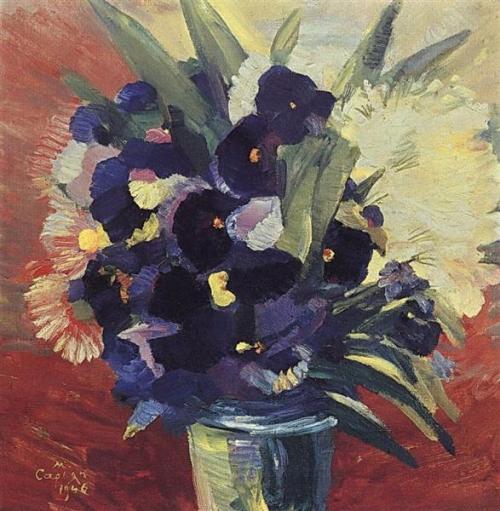
bouquet-of-flowers-1946.jpg!Large

    “Bouquet of Flowers (1946) 

            Martiros Sarian

                _________

                                      for Collin

a friend, who lives too far from me 
to visit, but who is too close to my 
heart for me to do nothing, has just 
had a stroke, “His body, smile, motor functions are improving.The most affected area is his speech center. He is filling in the gaps, has surrendered to his situation, but is operating at about 25% comprehension and memory. He has to rebuild his language, and is getting his ideas across with a lot of help in translation. He will be doing a lot of speech therapy. His uncanny resilience will serve him well.“, 
I’ve been advised

should I continue to write to him,
I’ve wondered, maybe just a few 
cheery words a day, does he 
take the time to read his mail, 
can he, does someone do it for 
him, should I call, or when  
I thought, if not anything else, why 
not music, something I can easily 
send, something he can hear, 
surrender to, rather than pay any 
more cerebral attention 

yesterday, I sent him Bach, Bach’s 
Musical Offering“, 1747, Bach is
from a much more serene period
in music than Beethoven, my 
recent area of investigation here
Bach wrote a lot of ecclesiastical 
stuff, cantatas and such, masses, 
was indeed music director for the 
Lutheran churches in Leipzig for 
a time, the combination makes for 
reflective, often even transcendental 
music, Beethoven wouldn’t at all, 
in this case, ‘ve done, with all of
his Sturm und Drang

I’m lighting a candle a day for my
friend, I’ll also be sending him
internet flowers, till I think of 
what else I can do but pray, for 
his speedy recovery


thanks for dropping by

R ! chard 

“Caprices” for Solo Violin – Paganini

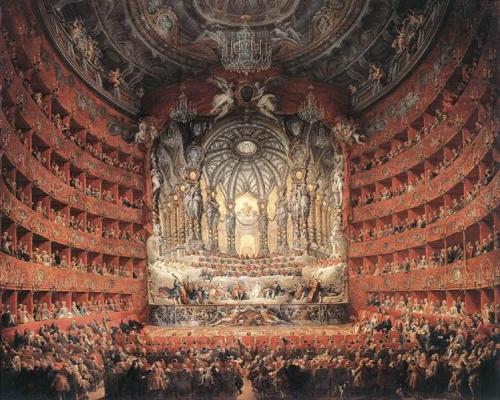
musical-f-te-1747.jpg!Large

    “Musical Fête (1747) 

           Giovanni Paolo Panini

                        ____________

though by now you must be assuming 
that Beethoven had been defining the
entire early Romantic Period all by 
himself, 1803, let’s say, to, say, 1810, 
when Schubert, 13 by then, started 
kicking in, however immaturely, with 
his D1 – D1, note, not D960, over a 
thousand compositions later, a work 
imbued, so early, not unexpectedly,  
with the irrepressible spirit of Mozart, 
and therefore, by thenincidentally, 
audibly outdated – but you would be, 
we would  be, overlooking the extraordinary  
influence of a maverick, a relic of the  
earlier Italian domination of the arts, 
from the Renaissance, at least, on – 
Paganini – the wizard of the 
violin, who’d sold his soul, like Faust,  
to the devil, it was susurrated, for his
extraordinary gift
 
Bach had not only changed the course 
of musical history, in the early 18th
Century, but shanghaied the very 
language of art as oracular expression,
and substituted music as the voice that 
spoke for the people, music will define 
henceforth, for a time, the period
 
there is the Italian Baroque, of course,
utterly masterful paintings, sublime
even, see abovebut it has been 
supplanted in our 21st-Century 
popular imagination by the Baroque 
of the German nations, their music, 
Bach’s, transcendental then, though 
ever so intricate, descriptions of his 
particular epoch 

this dominance will migrate to Paris, 
eventually, and back to art, painting, 
after over a hundred tumultuous, 
and impermeable, years, with the 
Impressionists, in the late 19th 
Century

meanwhile, Paganini will get in the 
way, 1780 – 1840, an exact, more or 
less, contemporary of Beethoven, 
1770 – 1827, and show off what 
Romantics can do, unleashed, 
before a newly enfranchised, and 
thrilled, as you will surely be, 
audience  

watch, be dazzled


R ! chard

psst: the Caprices are essentially
          cadenzas, the improvised solo
          sections in concertos, where 
          instrumentalists get to show 
          off their stuff, and riff, however
          exponentially, on their subject

          Paganini, makes an art form 
          of that, as do others, whom 
          I’ll bring up, trust me, later

          stay tuned


what’s up in Amsterdam – Piano Sonata in B flat major, D.960 – Franz Schubert

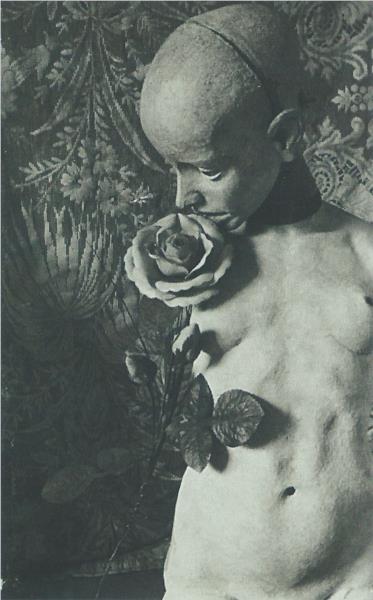
the-doll-1934-5.jpg!Large

      “The Doll / Die Puppe (1934) 

                 Hans Bellmer

                     ________

should you be concerned about telling 
your Schubert from your Beethoven,
don’t fret, I myself, though considered 
by some in this area to be omniscient, 
however manifestly, as you’ll note here, 
erroneouslyupon watching a film last 
night – the splendid Ex Machina”,  
about a robot in the form of Alicia
Vikanderviscerally commanding in 
neon blue, which is to say, incandescent, 
with stainless steel and wires for body 
parts – arms, legs, stomach – as part of 
her more human, and curvaceous, 
attributes – face, chest, and pelvis – who 
fears she might be disassembled when 
her purpose is served, and a new, and 
better robot might not only take her 
place, but also her very physical and 
metaphysical components, and concocts 
to save her life, if that’s what you’d call it, 
however convincing, sophisticated, might 
be her replication – confused the Schubert
sonata that filtered through the score for 
one of Beethoven’s, though can you 
blame me, when the sci-fi tale had been 
so otherwise gripping 

the D960, Schubert’s 23rd and last piano 
sonata, was written in 1828, shortly before 
he died, it is extraordinary, and entirely 
worthy of being compared to Beethoven,
of being held, indeed, in equal 
consideration

but you be the judge 

you’ll note again Schubert’s reserve, his 
courtesy, he is philosophical, rather than 
combative, his reply to Fate is acquiescent, 
though never subordinate, his response to 
the challenge of Life is to display the 
colours, sounds, and other, however 
humble, ephemeral, perhaps even
inconsequential, attributes of his existence, 
with the grace of a very flower, whose 
essence we still, today, have not ceased
to acknowledge, and to profoundly admire 

this is our only answer, he states, our 
ever so resplendent, however individual, 
humanity, which it is our very salvation 
to recount, to relate 

Beethoven would surely have agreed,  
and applauded

listen


R ! chard


String Quintet in C major, D. 956 – Franz Schubert

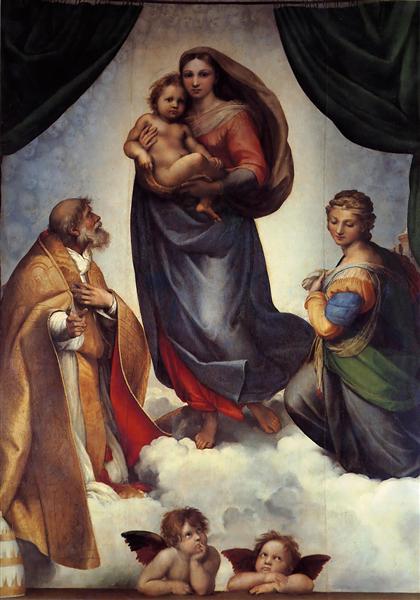
the-sistine-madonna-1513.jpg!Large

   “The Sistine Madonna (1513)
 
          Raphael


          __________ 


if you listen to only one piece of music  
this week, make it this one, Schubert’s 
a monument of Western culture, it’d be
like missing the Venus de Milo when 
you’re at the Louvre, or the Sistine 
Madonna of Dresden’s Zwinger 
the church of Saint Agnes Outside the 
Walls, transformative experiences

quartets, I couldn’t not next introduce
their very gold standard 
 
written in 1828, it was composed at 
the very height of the Romantic 
Period, just a little ahead of Chopin,
1810 – 1849, his other significant 
counterpart, apart from the ageing
Beethoven, 1770 – 1827, who still 
towered above all, despite his 
demise, and was universally 
admired 
 
but had Schubert lived longer than 
his 31 years, I suspect he might’ve 
been Beethoven’s equal, Schubert 
died even earlier than Mozart did, 
at 35, but of something that wasn’t
spoken of until much later, which 
is why we haven’t heard about the 
loss of this other musical giant
quite as grievously as we have 
about his somewhat more senior 
counterpart
 
but listen
 
it’s even hard to tell him apart from 
Beethoven, the passion, the urgency, 
the drama, even composing against 
the beat, a signature trait in 
Beethoven, like Alfred Hitchcock 
showing up in his own movies, or
Woody Allen, always introducing a 
work of art
 
a few things
 
though the frame is immaculately 
Classical, tonality, tempo, and 
recapitulation are not at all 
unobserved, the mood has changed 
from courteous, deferential, and 
respectful, to urgent, confessional, 
and private, the walls are there, but 
the furniture has changed, thanks 
of course here to Beethoven
 
and to the times
 
was writing her Sonnets from the 
Let me count the ways. – right about 
thenunfettered love poems to her 
beloved husband, Robertthe equally 
famous poet, who was remaining 
nevertheless, in his own work, more 
emotionally punctilious
 
I noted as well that the tempo in the 
second movement, one of the most 
beautiful adagios eversurely, 
lurches into an intemperate rebellion,
a second rhythm, up against the earlier 
mournful resignation of the poignant 
lament – note, in passing, that its 
stress of the dominant note is on the 
last beat not the first, like a weight 
that becomes, at every inching 
forward, intolerable, very path to a 
personal Calvary – before returning 
to that very fateful, though luminous, 
initial, stricken dirge

the next movement, the scherzo, does 
the reverse, fast, then slow, then fast 
again, to give the work in its entirety
eight rather than the four traditional 
tempi
 
the piece now has episodes, rather 
than merely a clockwork display,
drama has replaced the dance
entirely as the subtext for music
 
Schubert died two weeks after its
publication, for your info, I think 
his soul had been talking
 
 
R ! chard

psst: there’s a magical film I associate 
          with this music, The Company 
          of Strangers“, a Canadian 
          production, about several elderly
          ladies who get stuck in the 
          wilderness after their tour bus  
          breaks down in the middle of 
          nowhere
 
          you’ll never forget it
 

Cello Concerto no 2 in D major – Haydn

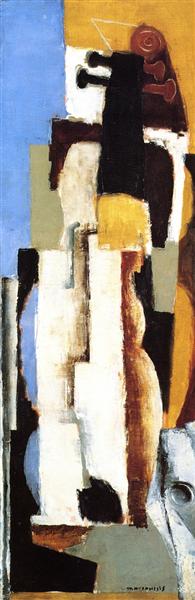
a-cello-1921.jpg!Large

         A Cello (1921)

        Louis Marcoussis

             ___________

between Bach’s transcendent Suites for
Cello and Beethoven’s reinvention of that 
instrument, two only cello works occupy
the last half of that century, both by
Haydn

his Second, however, Concerto, written 
several years later than his First, 1783, 
indeed nearly twenty years later, seems 
to me less accomplished, though ever, 
nevertheless, unimpeachably, and 
impressively, Haydn 

the first movement is long, long works 
only until you start thinking it’s long

the initial melody in the adagio, the 
second movement, struck me as artificial, 
saccharine, though Haydn weaves magic, 
not unexpectedly, still, and  
continuously, around it in its 
development, his elaboration of it

and the pace of the third movement, 
following the second, is disconcerting 
rather than surprising, rather than, 
were it effective, delightful

Mozart wrote a Cello Concerto too, 
apparently, but, if so, it is lost

otherwise we’re on to the next historical
epoch, Beethoven’s, after this inauspicious 
turn at this generation for the cello, lost 
for a while among the more assertive 
instruments of that prim, and proper,
Classical Era


R ! chard