Richibi’s Weblog

Just another WordPress.com weblog

Tag: Beethoven

a veritable Schubertiade, X

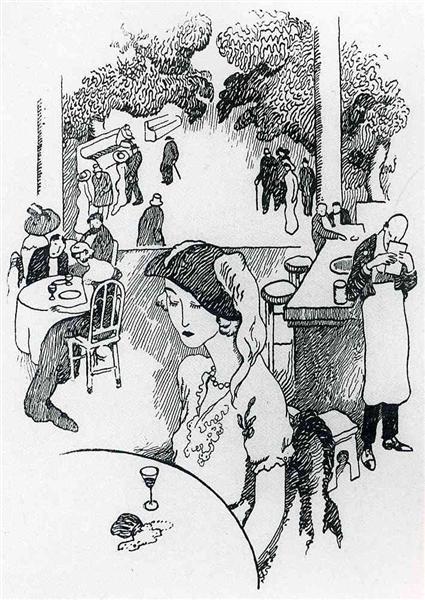
Vienna, 1914 - Thomas Hart Benton

      Vienna (1914) 


            Thomas Hart Benton


                  _____________


the three great representatives of the Romantic 

Period in music are Beethoven, Schubert, both 

linked to Vienna, see above, and Chopin, in the

other musical capital at the time, Paris


their basis is Classical, the rules set up by 

Mozart and Haydn, tonality, tempo, and 

repetition, which all of them rigorously 

obey


Schubert wrote no concertos, Chopin wrote

no symphonies, Beethoven wrote for everything,

they all, in other words, had their particular lanes


Beethoven and Schubert, however, both Viennese, 

see above, sound strikingly similar


here, in his Piano Sonata No 19 D 958 in C minor,

Schubert, at the very height of his powers,

technically, musically, aesthetically, incorporates,

miraculously, the spirits of both Beethoven, his 

predecessor, and Mozart, Beethoven’s 

predecessor, transforms them into something 

like their accumulated gift to the world, a child

of their coordination, their lineage


listen


R ! chard

a veritable Schubertiade, IX

Heaven, 2008 - Mark Ryden
 

     Heaven (2008) 


          Mark Ryden


              _______


by the time of his Piano Sonata in G major, 

D 894, October, 1826, Schubert would’ve 

known he was about to die, he was 29, 

he would die two years later, November, 

1828, you can hear it, his encounter with 

Heaven


this is not merely entertainment, this is

contemplation, a description of what he’s 

seen at the Celestial Gates, you can 

actually hear the stars twinkle in their 

great expanse of infinity from the very 

first movement


later, dance rhythms suggest an embrace, 

an embrace as a symbol of acknowledgment, 

acquiescence, acceptance, welcome, into 

the Beyond, whatever you might want to 

call it


Beethoven confronts God, Schubert describes 

his personal death experience


but that’s not one, but a couple of other stories


meanwhile, listen


R ! chard

a veritable Schubertiade, VIII

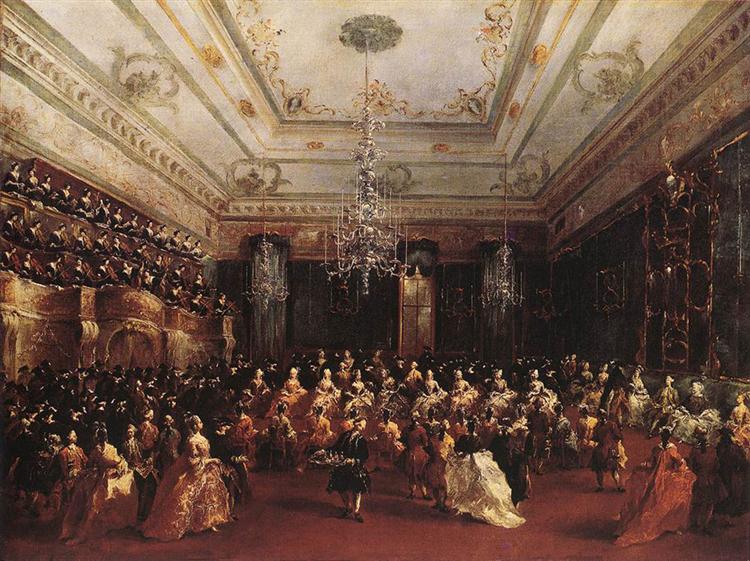
Ladies Concert at the Philharmonic Hall, 1782 - Francesco Guardi

      Ladies Concert at the Philharmonic Hall” (1782) 


                  Francesco Guardi


                         _________


Schubert’s Piano Sonata in B major, D. 575

is an early work, he was twenty, still under 

the influence of Mozart, which is to say, 

tonality, tempo and repetition, but impacted,

decidedly, by Beethoven, who’d just 

transformed Classicism, the art of the 

courts, see above, into Romanticism, the

art of the people, music had to now not

only  entertain, but matter


listen, enjoy


R ! chard

a veritable Schubertiade, VI

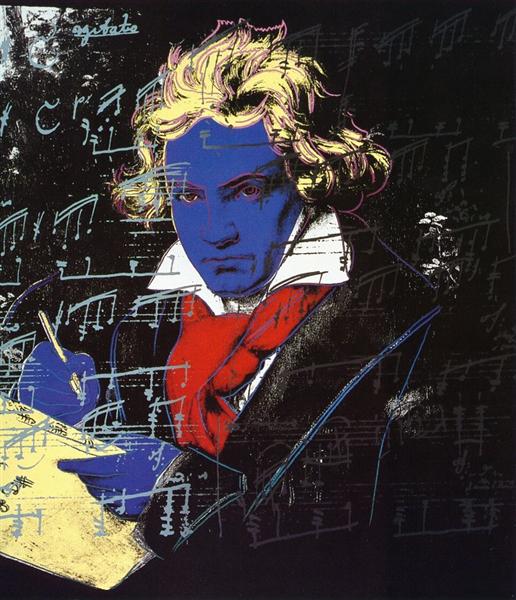
Beethoven, 1987 - Andy Warhol


     “Beethoven (1987) 


           Andy Warhol


               ________


by this time, in his Piano Sonata in A minor, 

D 845, Schubert has accumulated so much 

Beethoven that his Beethoven is beginning 

to shine through in his own compositions, 

Beethoven was a forefather, still present, 

it’s often difficult to tell one, indeed, from 

the other, even here


Beethoven, see above, punched through

Classicism – Mozart, Haydn – its artificiality,

delivering emotion, instinctively, from the

very start, from which he nearly

single-handedly delivered to the world no

less than Romanticism, like delivering the 

recalibration of time and space after 

Einstein essentially, so profound a 

cultural metaphysical reorganization


Schubert remains ever more courteous,

more beholden to the upper crust that

supports him, and that he ever wants to 

court, you can hear it, listen, there is no 

confrontation here, just, dare I say,

entertainment


Schubert was not a revolutionary


R ! chard


a veritable Schubertiade, III

Impression, sunrise, 1872 - Claude Monet


     Impression, Sunrise (1872) 


               Claude Monet


                   ________


what struck me most about Schubert’s Piano 

Sonata no. 17 in D major, his D850, was, more

than its emotional impact, its technical

wizardry, from the start Schubert dazzles with 

his prestidigitation, his manual dexterity, the

notes fly


there’s a lot of Beethoven in this composition,

working against the beat, apart from the fourth 

movement, the rondo, Schubert is being 

unequivocally Beethoven


the fourth movement is, incidentally, utter 

Mozart, you can tell from the preponderance

of trills


texture, meanwhile, overcoming melody, 

in, most notably, the third movement, is 

right out of Chopin, his Winter Winds 

for instance, an inspired combination

of both melody and texture, where is

the supremacy of either, listen, you tell 

me, do the Winds conquer the groans, 

the tribulations, of the underlying melody, 

the left hand, the low notes, the chthonic, 

the earth, or does the dexterousness of 

the right hand, the ephemeral, the 

transitory, win the day


texture will overcome melody eventually, 

as the century moves along, Impressionism 

will prioritize perspective over emotion, the 

head over the heart, Debussy, among 

others, Renoir, Monet, Pissaro, will 

dominate, see above,  but that’s another

story


meanwhile Schubert


listen


R ! chard

a veritable Schubertiade

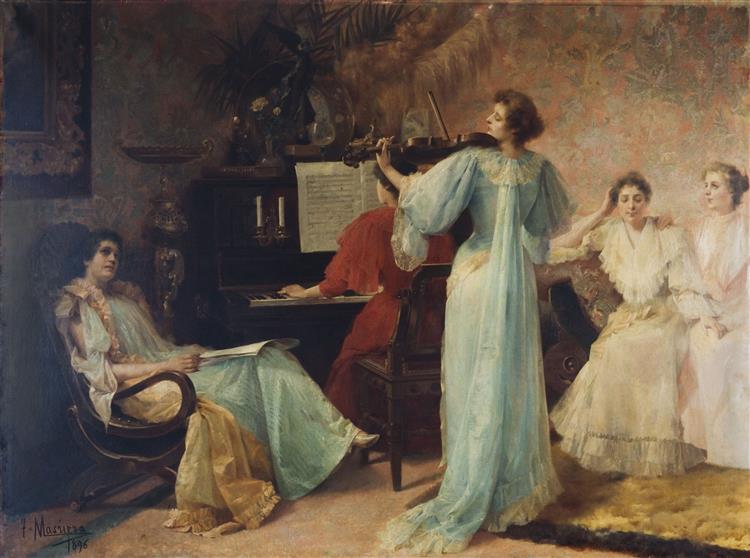
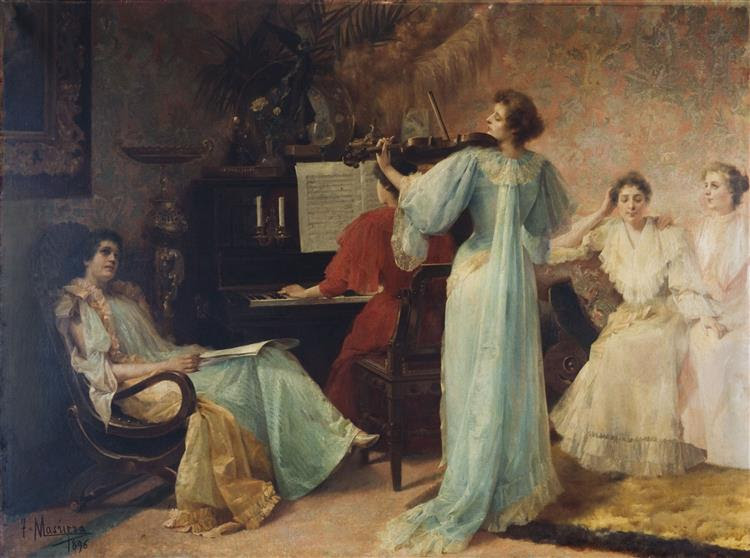
Una melodia de Schubert, c.1896 - Francesc Masriera

            Una melodia de Schubert” (c.1896)                   

                        Francesc Masriera             

                              ___________

in May, the recital society of my city is featuring

an internationally famous pianist doing several

Schubert sonatas, twelve of them, spread out 

across four evenings, a veritable Schubertiade,

I’ve got tickets for all of them


maybe you’d like to join me


I always do my research before attending any

cultural event, much like reading up on Italy, 

for instance, before going there


the program seems to be more or less

chronological, the first night featuring

earlier Schubert sonatas 


his D568, his Seventh, composed in 1817, 

is, to my mind, enchanting, but not yet 

reaching the heights of his later

transcendental productions, more of 

which later, should you stick around


Schubert always sounds a lot like Beethoven, 

but with more civility, less confrontation, 

Schubert is still chamber music, and, in this

outing, I find he sounds a lot like Mozart even, 

dexterous, delightful, but fundamentally 

frivolous


it’s the difference between dessert and food 

that will sustain you, that’ll speak to your soul, 

more about which later, should you stick 

around


meanwhile, D568, enjoy


R ! chard

sonatas, continued (“String Quartet, Op. 76 no. 1” – Haydn)

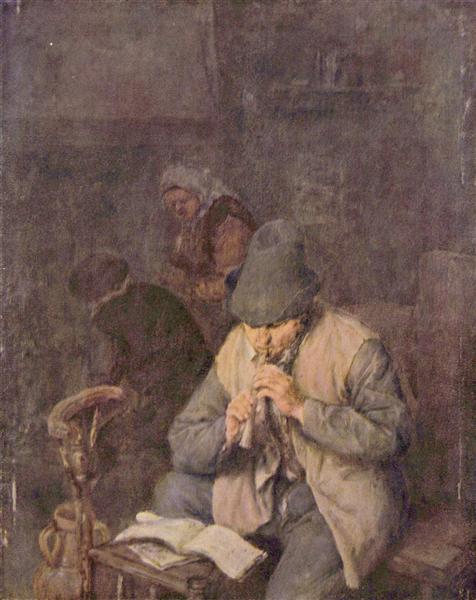
The Flute Player, c.1660 - Adriaen van Ostade


          Adriaen van Ostade


               ___________


o, I said, when my flute teacher, an art I’d taken up

too late in life, presented me with a piece I should 

learn to play, the second movement of Haydn’s 

Opus 76, no. 1, an adagio sostenuto


adagios always remind me of John, I’d read, at

a modest ceremony of remembrance for him, 

from a text I’d prepared, which prophetically, 

transcendentally, connected me with a

cornucopia of adagios, I’d sought them out,

been consoled, repaired, eventually inspired, 

by them, Haydn’s Opus 76, no.1, movement 

two, had been a total shoe-in


Haydn is where the history of string quartets 

starts in the West, they existed before, but 

not formally as a musical format, became 

thereafter, however, an identifiable category, 

and consequently, imitated


the string quartet, a piece of music written

for four instruments, all string traditionally,

two violins, a viola, and a cello, playing 

more than one segment of music, 

Classically three, then becoming four,

became a structure that has not even

nowadays lost its appeal, though the 

individual combinations might’ve 

significantly, since, been altered 


Haydn wrote 68 string quartets, which  

established him as their spiritual father, 

all string quartets devolve from him,

including Beethoven‘s, those of 

Shostakovich, and Messiaen


marvel


R ! chard

sonatas, continued (Messiaen – “Quartet for the End of Time”)

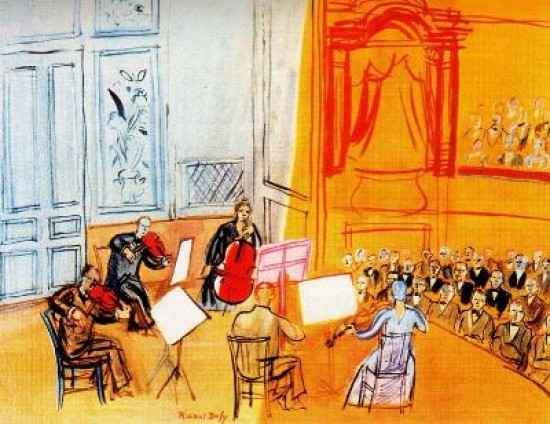
Red quartet - Raoul Dufy

    Red Quartet 


       Raoul Dufy


           _____


if a trio is a sonata written for three instruments,

a sonata, a piece of music consisting of more 

than one segment, or movement, written for 

four instruments, is called a quartet


a quartet is also what we call the group itself

of four players


quartets can play more than just quartets, they 

can also play waltzes, nocturnes, rhapsodies, 

for instance, just as trios, groups of three, can

play more than just trios 


but quartets, the form, have had a long and 

glorious history, from Mozart and Haydn, 

the Classicists, through Beethoven, an 

ardent Romantic, to the more political 

Shostakovich, enemy, for a time, of his 

repressive Soviet state, and on to 

Messiaen, who composed his own 

Quartet for the End of Time, in a Nazi 

concentration camp


let me start with the Messiaen, now that I’ve

whetted your appetite, and work our way back 

to Mozart to see where we came from, and 

how


there are seven movements in Quartet for

the End of Time, not the Classical three or

four, atonality abounds, discordant, not 

unexpectedly, progressions, repetition also 

takes its punches, not easily identifiable 

throughout, but tempo, the third pillar of 

Western music, more or less holds its 

own, keeping the tradition, however 

precariously, together, listen


it’s 1941, we’re in a concentration camp,  

Messiaen is caught between hope and 

despair, give the guy a break, he hasn’t 

many absolutes to hold onto, tempo 

might be one of them, the heartbeat,

pulse, perseverance, an actual human 

pace, a rhythmic instinct, by which 

eventually, hopefully, meaning 

transpires


hope is in one’s creativity, he says, each 

individual answer can be a tribute to

one’s own tribulations, our responses 

can be poetry, lessons rather than

invectives, epiphanies rather than

agonies, may the Force, in other words, 

be with you, in the face of even the most

trying difficulties, honour can supplant 

trials, he concludes, given grace and 

integrity


Beethoven says pretty much the same 

thing in his last piano sonata, remember,

his Opus 111listen, a not not impressive

corroboration


R ! chard

November / Month of the Sonata – 19

Over the town, 1918 - Marc Chagall

      Over the Town (1918)  


              Marc Chagall


                  ________


Johannes Brahms is pretty well the last of

the great Romantics, 1833 – 1897, he wrote 

his Piano Sonata no 3, in F minor, Opus 5,

when he was not quite twenty, with the 

same bravura as Beethoven, let me point

out, his sonata has five movements, a sign, 

as I’ve said before, of bristling confidence


as a form grows from its original, pristine, 

shape, it can only grow by evolving,

becoming something, eventually, that it 

wasn’t, by dint of breaking all the rules,

transgressing


style becomes the manner in which a

work is transformed from its integral

state into something more decorated,

more intricately designed, like adding 

lace to a perfectly adequate collar, or

making a soufflé out of an egg


but who wouldn’t, won’t


a point is reached where style overcomes

substance then, and becomes the focus 

of the entertainment, one watches the 

bravura


to my mind, this, however wondrous, 

sonata, hasn’t the emotional appeal

that I’d heard in the earlier Romantics,

that would keep me rapt to the end,

the draw for me is the prestidigitation, 

the manual dexterity, which is like 

watching someone fly through the 

air with the greatest of ease, but be

not otherwise moved, see above


but that’s me, and that’s to my mind


incidentally, since this is Brahms’ 

last sonata, he only wrote three,

this is probably the last of the 

great Romantic sonatas, after 

which Impressionism


R ! chard

November / Month of the Sonata – 18 

Una melodia de Schubert, c.1896 - Francesc Masriera

    A Melody of Schubert (c.1896) 


           Francesc Masriera


                  ________


though there are other, and quite significant, 

composers who fit into this category, 

Beethoven, Schubert, and Chopin pretty

much define, all by themselves, the 

Romantic Period


Chopin composed only two sonatas of note,

plus one more that is overlooked for being 

an early, student effort, not up to the

standard of his later ones, Chopin, rather, 

wrote mostly shorter pieces, nocturnes, 

études, preludes, polonaises, and more, 

that later became the very stuff of his 

reputation


Schubert wrote enough sonatas that he 

could be compared to Beethoven, indeed

it can be difficult to tell one from the other,

much as it can be difficult to tell Haydn 

from Mozart, products in either case of 

being both of their respective eras


when I was much younger, a guest among

a group of academics, where I’d been invited 

by the host’s wife, a co-worker, what I knew  

of Classical music, in the large sense, which 

is to say comprising all of the musical periods, 

Classicism, Romanticism, Impressionism, 

and beyond, was all self-taught


is that Beethoven, I asked the host, about 

a piece of music he’d put on


that’s Schubert, he replied, aghast, as 

though I’d just farted


I blushed, deep red, confounded


Schubert, having great admiration for 

Beethoven, took on many of the older

composer’s lessons, four movements

instead of the Classical three, for 

instance, and many of the technical 

tricks of his forebear


but there’s an essential component of

their styles that marks one from the

other, an easy way to tell them apart, 

Beethoven always composes against 

the beat, Schubert following it


listen to the first few notes of Beethoven’s 

“Pathétique”, for instance, the beats are  

erratic, confrontational, the mark of a 

revolutionary, Beethoven was brashly 

proclaiming his worth, he had something 

to prove


Schubert, who was essentially playing

for friends, just wanted to entertain

them, which he did in spades, without

bombast or bluster


listen to his Piano Sonata in A major,

D959, for example, no swagger, no 

ostentation, delivering nevertheless 

something quite, and utterly, 

enchanting, everything following, 

unobtrusively, the beat


enjoy


R ! chard