Just another WordPress.com weblog
Tag: ballades
_______
having brought up nocturnes and ballades
I’ll dig into these deeper, to illustrate the
impact Romanticism had on music, on
fine arts as well, and literature, in the
West, as it highlighted emotions as a
requirement of the audiences that
funded them
the French Revolution had happened,
the idea of individual rights, liberty,
equality, fraternity, spread across
even autocracies, czars, kaisers,
kings were threatened
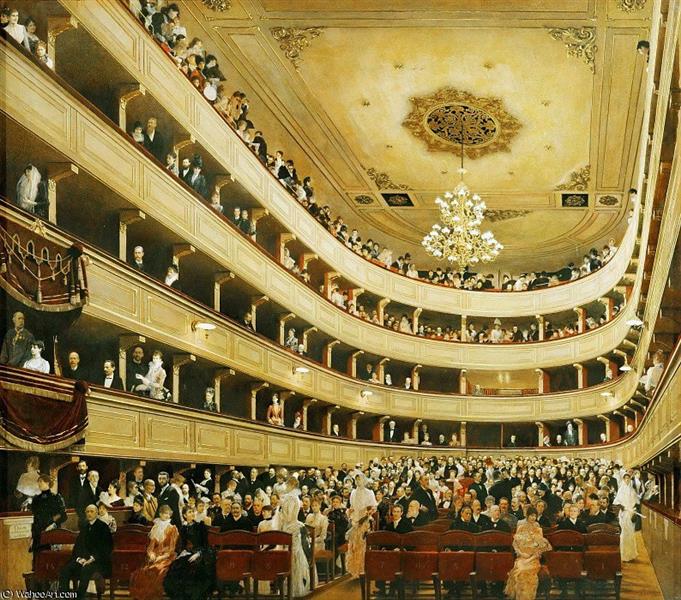
theatres were becoming, because of
the growth of the Middle Class, what
had been the salons of the aristocrats,
people were paying for what the nobility
had been seeing, in concert halls, see
but the audience wanted their money’s
worth, both in spectacle, and personal
contact, easy ingenuity was out, they
had to be impacted, get them howling,
whooping, just like today
but to return to ballades and nocturnes,
they were the answer, plangent appeals
to the heart, which had not been a
concern of the earlier Classical Period,
where prestidigitation, technical
wizardry, had been the requirement
of the courtly courts
ballades, nocturnes, preludes, didn’t
exist before the Romantic Period,
essentially, music that hadn’t a
formal structure, hadn’t a set of
compositional rules, but spoke,
rather, from a place of intimacy,
unconstrainedly
here’s a ballade, for instance, here’s
identifiable as Shakespeare, van
Gogh, in each their own particular
vocabulary, wearing his heart on
his sleeve, and always absolutely
extraordinary
enjoy
R ! chard

 Richibi's Weblog