Richibi’s Weblog

Just another WordPress.com weblog

Tag: Bach

at the XVth International Tchaikovsky Competition – Dmitry Masleev‏

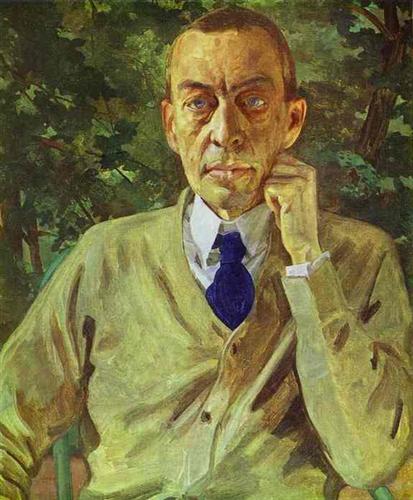
"Portrait of the Composer Sergei Rachmaninov" -  Konstantin Somov

Portrait of the Composer Sergei Rachmaninov (1925)

Konstantin Somov

_____________

after two superb performances on
the last day, June 20, of the Round
1 competitions, I expected to close
up shop, not listen to another
deserving competitor, skipped a
trio of competent but otherwise
uninteresting contenders, and
readied to quickly go on to the
second round nominations

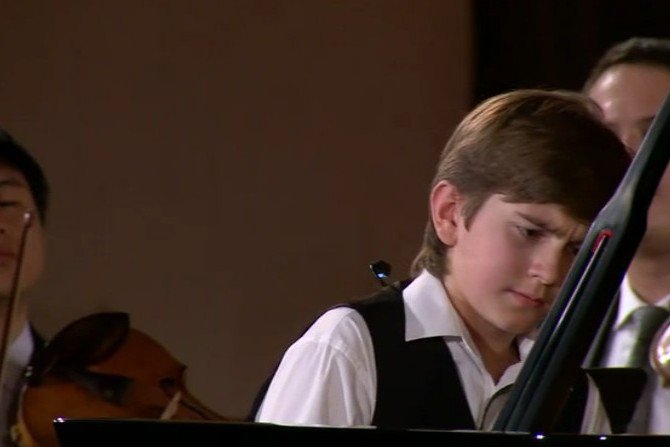
Dmitry Masleev, the very last
performer, wasn’t to go down,
however, without a fight, wowed
me, despite my initial sceptical air
he delivered from the beginning an
unimpeachable Bach, followed by
a “Farewell” Sonata to rival Shino
Hidaka
‘s, my queen, from there it
was nowhere but up, his final
Rachmaninov dotted the i’s,
crossed the t’s, of his brilliance,
a fitting hiatus to a powerful
and significant showdown

listen

Richard

at the XVth International Tchaikovsky Competition – Shino Hidaka

  "The Musical Contest" -  Jean-Honoré Fragonard

The Musical Contest (1754-5)

Jean-Honoré Fragonard

______

with only four contestants to go,
I already crown Shino Hidaka the
winner of the XVth Tchaikovsky
Competition
, this kind of affinity
only comes around once in a
lifetime, her Bach was not only
perfect but inspired, probing,
her ensuing Chopin,
mesmerizing, the Beethoven
that followed aptly, though ever
unexpectedly, transcendental,
transcendence not ever
happening without absolute
mystical concentration, her
Tchaikovsky, an evocation
rather than a mere description
of a Russian village, her
Rachmaninov, on utter fire

Dmitry Shishkin, before her,
neither was un-brilliant, a
consummate technician,
however, rather than an outright
revelation, his spirited Bach was
a turning point for me, finally
someone who got it, his Mozart,
as frivolous and delightful as
Mozart would’ve wanted it to be,
the rest appropriately everywhere
dazzling, second, therefore, ever
so illustrious, nevertheless,
prize, bravo

neither, incidentally, milked any
of their notes, just played what
was written

Richard

psst: compare Fragonard, above, to
Mozart, a synaesthetic match,
where sight and sound are
interwoven, giving you social
intimations of the mid-18th
Century

at the XVth International Tchaikovsky Competition – Daniel Kharitonov‏

Daniel Kharitonov

Daniel Kharitonov

__________

Daniel Kharitonov will be 17 in
December, I think he could win

after the usual misconceived, to
my mind, Bach, which he ends,
however, with lengthened notes
that evoke the organ instead of
the more skittish, less ceremonial
harpsichord, giving credence to
some, at least, rubato in Bach,
for Bach wrote exceedingly for
the organ, he then not only
recaptures your confidence with
an unexpectedly sparkling
“Appassionata”, not easy after
so many, then polishes off his
laurels with virtuosic Liszt,
Chopin and Rachmaninov after
having played a lovely, aptly
contemplative, “Méditation” of
Tchaikovsky

Daniel Kharitonov is going places,
indeed has gone, Carnegie Hall, for
instance, in 2013, he would’ve been
14

watch

Richard

at the XVth International Tchaikovsky Competition – the program‏‏

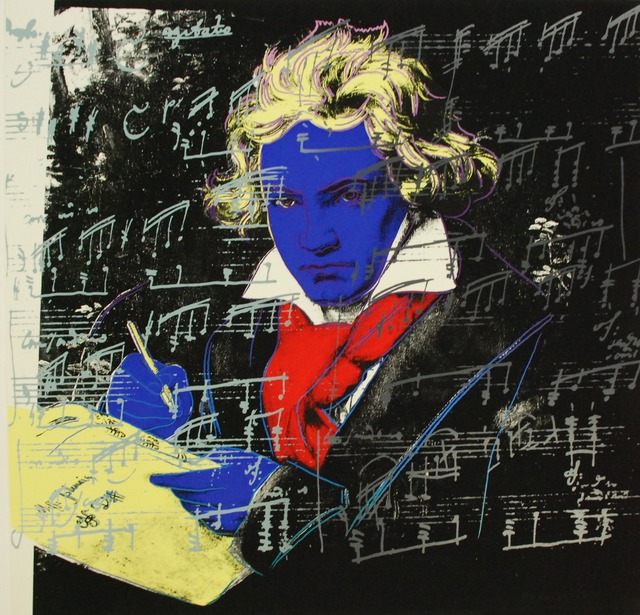
"Beethoven, 1987" -  Andy Warhol

Beethoven, 1987 (1987)

Andy Warhol

______

you’ll probably have noted, if you’ve
been following the Tchaikovsky
Competition
, that, unlike the
Rubinstein, the selection of works
is much more constrained, though
the mighties nevertheless
predominate

after the third day and into the
fourth, only one contestant has
started with anything other than
Bach, a Tchaikovsky

but unfortunately none of them but
one had given us a Bach worthy of
his name, then followed through
with, not surprisingly, a quite
competent Mozart, the cultural
conditions being not yet all that
different, aristocrats were looking
for their own music instead of the
church’s, secular instead of
ecclesiastical, therefore a tune
rather than an oratorio, Beethoven
and the Revolution would change
all that

afterwards a sonata of Mozart,
Haydn or Beethoven, the Classical
triumvirate, after which Tchaikovsky,
appropriately at this competition,
then études, either “-tableaux”,
“transcendentales”, or plain and
simple, by Rachmaninov, Liszt, or
Chopin, that’s it, you get to hear
the “Appassionata” or the “Grandes
études de Paganini”
several times
that way, sharpening discernibly
your musical ear

one was riveting, Andrey Dubov‘s

another, Lukas Geniušas transfixed
me with his opus 2, no 3, of
Beethoven, a work I usually only
ever tolerate, sending it soaring
into the bard’s later mature, and
revelatory, period

others have been competent, even
admirable, several, however, not
ready for this trial, they’ve come
without adequate preparation for
the ball

though I’ve been watching it in
my pajamas, I should talk

Richard

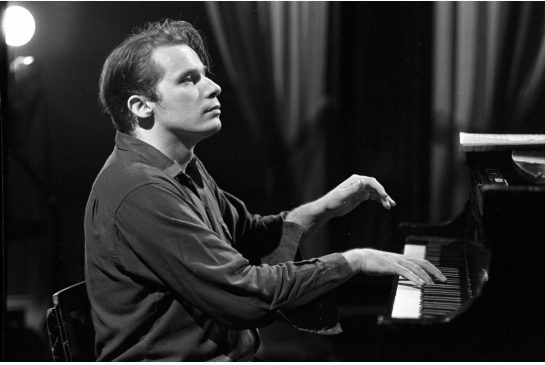
Glenn Gould‏

Glenn Gould

Glenn Gould

_______


if you think I can talk, listen to Glenn
Gould
tell in spades what I’ve only
ever been able to tell in clubs, or,
as we say in French, trèfles, clover,
a piece of music can say more than
just hello, great ones are oracular,
even transcendent

if ever they made a movie of my life
I want Glenn Gould to play me, even
the wonderful Colm Feore, I think,
couldn’t as effectively manage it

Richard

psst: here’s more, incandescent, Bach,
Glenn Gould playing his signature
piece
, just click

Chopin: “Études”, opus 10

if I haven’t brought up Chopin much in this series
it’s that I think of him more as a decorator than
as an innovator, he was developing a sensibility
that had been defined by the earlier Beethoven,
adding texture and style, form instead of function,
the wheel had been invented, now it remained to
be artfully applied
 
some break new ground, others decorate it, make
it enchanting, Chopin makes things enchanting 
 
he is also the first composer we think of when we
think of Romanticism, which says quite a lot about
the quality, the universality, of his gift 
 
 
here are his opus 10, “Études”, or “Studies”, 12 of
them, they are not sonatas, for not having more
than one movement, they are “études” , “studies”,
called by that name for being what they are, then
given numbers to differentiate them, also their
key, the convenience of universally attributing
titles not having quite caught on yet though a
couple of these do have them, the 5th, the
“Black Keys”, for obvious reasons, and the last,
the “Revolutionary”, again for reasons you’ll find
obvious once you’ve heard it 
 
tonality however remains, no apparent discords,
that’ll come later  
 
 
note that in comparison to Mozart the notes are
a shimmer, the same alphabet is used, the one
set up by Bach, but where Mozart made these
into narratives to follow, and even sing along to,
with Chopin the same flurry of notes becomes
a wash of sound you could never vocally keep
up with, a texture rather, an enveloping caress,
prefiguring incidentally the Impressionists, the
lush soundscapes of for instance Debussy 
 
 
though you’ll find the same prerequisite opening
musical statement as in Mozart, followed by the  
contrasting one, often these will be in altogether
constrasting rhythms as well, tempi, compared
to the single strict beat throughout of the 
foundational Classical model    
 
the tempo itself is also much more lax, some
passages surrendering formal rhythmic strictures
to greater emotional content, more self-expression,
less attention to rules, in accord with the newly
installed ideal of individual human rights 
 
hence Romanticism, the fruit of the Revolution 
 
 
note also that the musical argument is no longer
in the Mozartean playground but of a more mature
understanding, Chopin has known love 
 
 
Richard


piano concerto no 25, K.503, Wolfgang Amadeus Mozart

 
Mozart in our Western musical tradition is arguably the first
composer to write piano concertos, for two reasons, first
cause earlier there were no pianos, there were only
harpsichords, Bach wrote five wonderful concertos but for
the harpsichord 
 
secondly cause music was coming out of the shadow of the
Church in order to also cater to a more secular audience,
the monied aristocracy, who were looking for status through
art, personal portraits, music to make more illustrious their
already storied houses
 
Mozart is sprightly, unaffiliated, unopinionated, and
supremely talented, it was going to take a Beethoven to
make music more profound
 
meanwhile we have Mozart’s effervescent baubles, his
glistening, incandescent gems  
 
three movements
 
     1. allegro maestoso     
 
     2. andante    
 
     3. allegretto    
 
 
K is for KöchelLudwig von Köchel, the man who catalogued
Mozart’s works chronologically, of which there have been
accumulated after several revisions 626, none of which had
originally been given titles, though later sometimes
posthumously, for instance the “Jupiter” Symphony, his last,
no 41, K551  
 
no one plays Mozart like Mitsuko Uchida  
 
 
Richard