Richibi’s Weblog

Just another WordPress.com weblog

Tag: Ares – God of War

“The Story of of Cadmus” (V) – Ovid
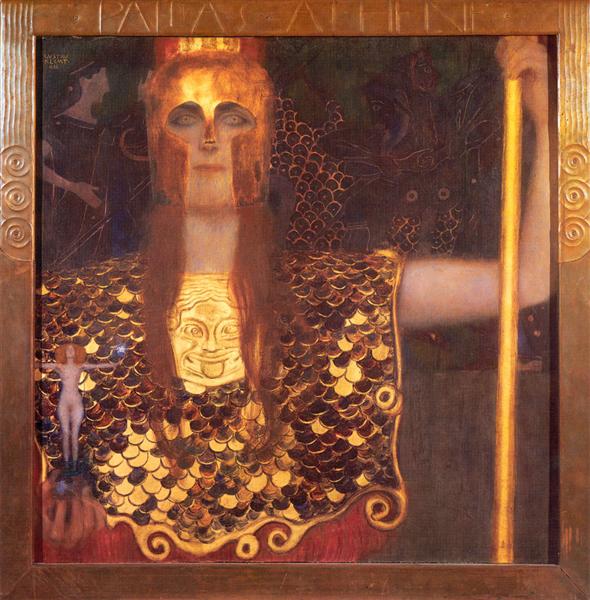
Minerva or Pallas Athena, 1898 - Gustav Klimt

         Minerva or Pallas Athena” (1898)


                Gustav Klimt


                       ______


an interesting thing has happened with

the story of Cadmus, he is not only a

mythical figure, but also a legendary

one, which is to say that Cadmus has

roots in actual history, he’s not just an

imaginary construct like those that

until now have peopled Ovid’s text


Cadmus appears to have actually

founded Thebes, whose origins,

however, are lost in antiquity, going

back to, it appears, the late Bronze

Age, around 2000 BC, goodness


stories evidently grew around

Cadmus, that transformed him into

our first documented hero, indeed

superhero


counterparts exist in other traditions,

consider David, for instance, who

slew his own dragon, Goliath, before

becoming king of the Israelites, 10th

Century BCE, at Jerusalem, where

he consorted, incidentally, later, with

Bathsheba, however illicitly, but

that’s another story


King Arthur, late 5th to early 6th

Centuries CE, stems from British

lore, though his historical actuality

has been contested, is also a hero

with preternatural capabilities based

on some historical accountability


in our day, there’s James Bond,

based on real, living and breathing,

personalities


or, dare I say, even Jesus


the point here is that actual people

are being included in the, however

culturally specific, mythologies,

which, in each, had earlier consisted

of metaphorical constructs merely,

the concept of History, in other words,

was being born, memorable events

were to be remembered, recorded,

documented, if only, originally, orally,

around, say, campfires, however

aggrandized might have been their

recollected heroes


Cadmus, meanwhile, in our story, is

about to establish his own historical,

and archeologically confirmed, note,

credentials


            The dire example ran through all the field,
            ‘Till heaps of brothers were by brothers kill’d;


The dire example, the dragon’s teeth,

grown into men, had begun, if you’ll

remember, to slaughter one another


example, display


            The furrows swam in blood: and only five
            Of all the vast increase were left alive.
            Echion one, at Pallas’s command,
            Let fall the guiltless weapon from his hand,


Echion, one of the five surviving

brothers


Pallas, Pallas Athena, goddess of

Wisdom, also of War


see above


            And with the rest a peaceful treaty makes,
            Whom Cadmus as his friends and partners takes;


the rest, the four other survivors


            So founds a city on the promis’d earth,
            And gives his new Boeotian empire birth.


promis’d earth, the premonition of

the oracles whose counsel Cadmus

had sought at Delphi, if you’ll

remember


            Here Cadmus reign’d; and now one would have guess’d
            The royal founder in his exile blest:


his exile, from Tyre, Cadmus’ original

home, from which his father, Agenor,

had sent him, not to return, he’d

warnedwithout his sister, Europa


            Long did he live within his new abodes,
            Ally’d by marriage to the deathless Gods;


Ally’d by marriage, at the end of a

period of penance for having killed

the dragon, which had been sacred

to Ares, god of War, the gods gave

Cadmus Harmonia, goddess of

Concord, to be his wife


Ares would eventually exact mighty

vengeance, but that’s another story


            And, in a fruitful wife’s embraces old,
            A long increase of children’s children told:
            But no frail man, however great or high,
            Can be concluded blest before he die.


even Cadmus, though he might

enjoy a long life, and many, a long

increase of, children, is not immune

to any of the vicissitudes of life either

until his own time has come, the poet

advises, however ominously


and here Ovid also introduces the

subject of his next metamorphosis,

Actaeon, however early, luring us

thereby, deftly, literarily, towards

his next instalment, Actaeon’s

story, eponymously, there, given

its title


            Actaeon was the first of all his race,

            Who griev’d his grandsire in his borrow’d face;

            Condemn’d by stern Diana to bemoan
            The branching horns, and visage not his own;


his grandsire, his grandfather,

Cadmus was the father of Autonoë,

who was the mother of Actaeon


borrow’d face, Actaeon was

transformed into a stag by the

goddess Diana / Artemis, of the

Hunt, of the Moon, of Chastity,

for having seen her naked as

she was bathing


he now has the face, the visage, of

someone, something, he hadn’t

been before, borrow’d


            To shun his once lov’d dogs, to bound away,
            And from their huntsman to become their prey,


having been transformed into a

stag, or metamorphized, Actaeon

would end up hunted, and worse,

by his own, once lov’d, dogs


            And yet consider why the change was wrought,
            You’ll find it his misfortune, not his fault;
            Or, if a fault, it was the fault of chance:
            For how can guilt proceed from ignorance?


to have been at the wrong place

at the wrong time, yet to suffer,

however unfairly, the consequences,

that, Ovid asks, is the question, the

conundrum


stay tuned


R ! chard

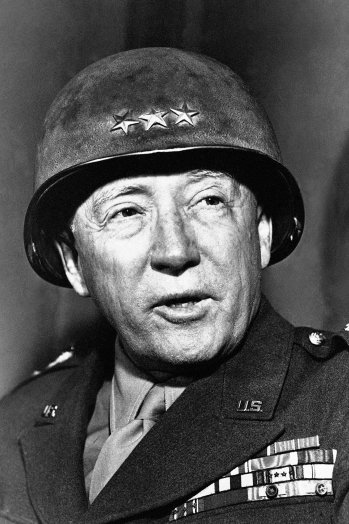
“Through a Glass, Darkly” – General George S. Patton, Jr.

general_george_patton_a_p

                 General George S. Patton, Jr.

                           ______________

Through a Glass, Darkly

Through the travail of the ages,
Midst the pomp and toil of war,
I have fought and strove and perished
Countless times upon this star.

In the form of many people
In all panoplies of time
Have I seen the luring vision
Of the Victory Maid, sublime.

I have battled for fresh mammoth,
I have warred for pastures new,
I have listed to the whispers
When the race trek instinct grew.

I have known the call to battle
In each changeless changing shape
From the high souled voice of conscience
To the beastly lust for rape.

I have sinned and I have suffered,
Played the hero and the knave;
Fought for belly, shame, or country,
And for each have found a grave.

I cannot name my battles
For the visions are not clear,
Yet, I see the twisted faces
And I feel the rending spear.

Perhaps I stabbed our Savior
In His sacred helpless side.
Yet, I’ve called His name in blessing
When after times I died.

In the dimness of the shadows
Where we hairy heathens warred,
I can taste in thought the lifeblood;
We used teeth before the sword.

While in later clearer vision
I can sense the coppery sweat,
Feel the pikes grow wet and slippery
When our Phalanx, Cyrus met.

Hear the rattle of the harness
Where the Persian darts bounced clear,
See their chariots wheel in panic
From the Hoplite’s leveled spear.

See the goal grow monthly longer,
Reaching for the walls of Tyre.
Hear the crash of tons of granite,
Smell the quenchless eastern fire.

Still more clearly as a Roman,
Can I see the Legion close,
As our third rank moved in forward
And the short sword found our foes.

Once again I feel the anguish
Of that blistering treeless plain
When the Parthian showered death bolts,
And our discipline was in vain.

I remember all the suffering
Of those arrows in my neck.
Yet, I stabbed a grinning savage
As I died upon my back.

Once again I smell the heat sparks
When my Flemish plate gave way
And the lance ripped through my entrails
As on Crecy’s field I lay.

In the windless, blinding stillness
Of the glittering tropic sea
I can see the bubbles rising
Where we set the captives free.

Midst the spume of half a tempest
I have heard the bulwarks go
When the crashing, point blank round shot
Sent destruction to our foe.

I have fought with gun and cutlass
On the red and slippery deck
With all Hell aflame within me
And a rope around my neck.

And still later as a General
Have I galloped with Murat
When we laughed at death and numbers
Trusting in the Emperor’s Star.

Till at last our star faded,
And we shouted to our doom
Where the sunken road of Ohein
Closed us in it’s quivering gloom.

So but now with Tanks a’clatter
Have I waddled on the foe
Belching death at twenty paces,
By the star shell’s ghastly glow.

So as through a glass, and darkly
The age long strife I see
Where I fought in many guises,
Many names, but always me.

And I see not in my blindness
What the objects were I wrought,
But as God rules o’er our bickerings
It was through His will I fought.

So forever in the future,
Shall I battle as of yore,
Dying to be born a fighter,
But to die again, once more.

                 General George S. Patton, Jr.

                        ____________

General George S. Patton, Jr., a 
celebrated American general who 
fought bravely during the Second  
World War, is known to my  
generation especially through the 
much acclaimed film, Patton“, 
which lionized him then, 1970 

George C. Scott portrayed him 
impeccably, indelibly searing him 
into our collective consciousness

he appears to have been the very
paradigm of American heroism, 
rough, coarse even, wilful, 
inflexible, unforgiving, righteous 
to a fault, but instilled with a 
sense of divine mission 

he believed in reincarnation, notably,
the poem above recounts throughout 
history his many lives as a warrior

to me he seems the very incarnation 
of the Greek god Ares, rather, come 
down from high Olympus, again 
throughout history and time, to  
 effect his defining role as the
immortal God of War

George S. Patton was also, it would 
appear, a poet, if the example above 
is to count, maybe he was, indeed, 
inspired

Richard