“Metamorphoses” (The Giants’ War, X) – Ovid
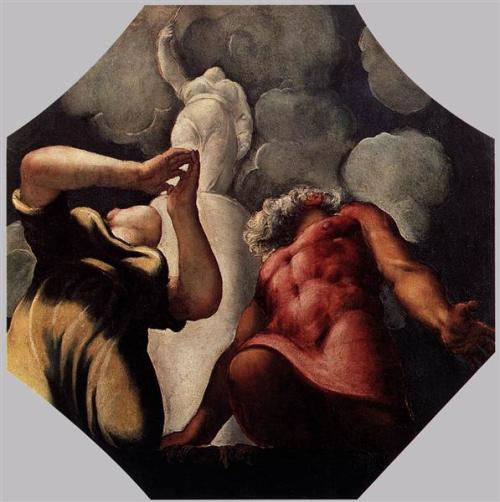

“The Dance of the Muses at Mount Helicon“ (1807)
________
though Zeus may preside over kings,
none other than Apollo and the Muses
preside over poets, according to
Hesiod
Kalliope, foremost of the nine Muses,
who tends specifically to kings, and
to those being born of kings, in the
company of her sisters, Kleo and
Euterpe, Thaleia and Melpomene,
Terpsichore and Erato and Polymnia
and Ourania, will pour a dew sweeter
than honey upon such a one’s tongue,
and his words become soothing,
palliative, placating
“far shooting Apollo“, however,
presides at the inspiration of poets,
lending the lyrical notes from his
representative lyre, not to mention
his lyrics, derivative both terms of
that etymological “lyre”, incidentally,
so far has Apollo “shot”, dare I say,
his spirit into our collective
unconscious
“From the Muses and far-shooting Apollo
are singers and guitar-players across the earth,
but kings are from Zeus. Blessed is he whom the Muses
love. From his mouth the streams flow sweeter than honey.
If anyone holds sorrow in his spirit from fresh grief and
is dried out in his heart from grieving, the singer,
servant of the Muses, hymns the deeds of men of the past
and the blessed gods who hold Olympus, and
right away he forgets his troubles and does not remember
a single care. Quickly do the gifts of the goddess divert him.”
Theogony (lines 94 – 103)
Hesiod
therefore poets
Richard
psst: a friend has just passed on,
it is a time for poets
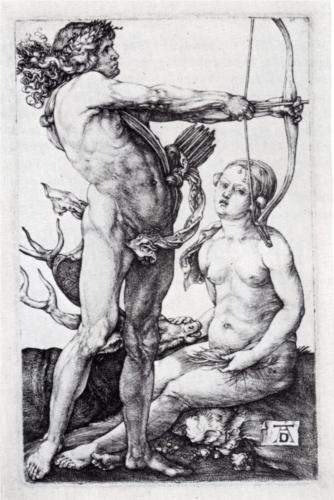
“Apollo and Diana“ (1502)
________
in the tradition of Elizabeth Barrett Browning,
a forthright, personal poem
a merely theoretical dilemma
yesterday, I had lunch with Vickie,
she said she admired our relationship,
despite the fact, which I’d interjected,
that there was no sex
she didn’t find that unacceptable
I found her concern more personal,
revealing, than strictly theoretical
then gave up the improbable
thought
I dream, however, ever, Apollo, and
irrepressibly, of your genitals,
knowing that your spawn would
transform me, ineradicably, into
a constellation, its crystallization
our progeny, into immortal stars
but that would mean leaving you,
Apollo, behind
could I, would I, do that
love
me
a friend of mine, Apollo, having
appropriated that name already
to launch a, not unpromising,
career as an artist, had never
to date considered a surname
for what I called his nom de
pinceau, his brush name
but in a farfelu moment, French
for having lost one’s head – my
head, not his, having surrendered
immediately to his fantasy – he’d
happened upon “Appleseed” as
maybe a fitting, and to be
considered, apposition, addition,
to his presently truncated name,
I jumped on it
he later called the phenomenon,
at a loss for provenance, an
inspiration, to which I forthwith
concurred, Apollo Appleseed,
can you dig it, I told him he now
had to live up to it
inspiration is always the source
of poetry, I said, poetry is what
we all live for, to make our lives
beautiful
it involves following our inspirations,
however fanciful, however out there,
people have built lives around art,
literature, dreams, madeleines, for
goodness’ sake, fording oceans,
climbing mountains, and have
become not to be forgotten, it’s the
magic that counts, ever the aim of
inspiration
when inspiration strikes it is ever
charged with possibility, perspicacity,
delight, it is not a negative function
when inspiration strikes it is time
to stand and deliver, it knows the
ineluctable way, the one that’s in
your heart
you too can plant apple trees across
the land, of your own potentialities, if
only you dare follow even one of your
dreams
Richard
psst: you’ll have to forgive my ardour,
it’s been my Johnny Appleseed
speaking
and don’t forget to click

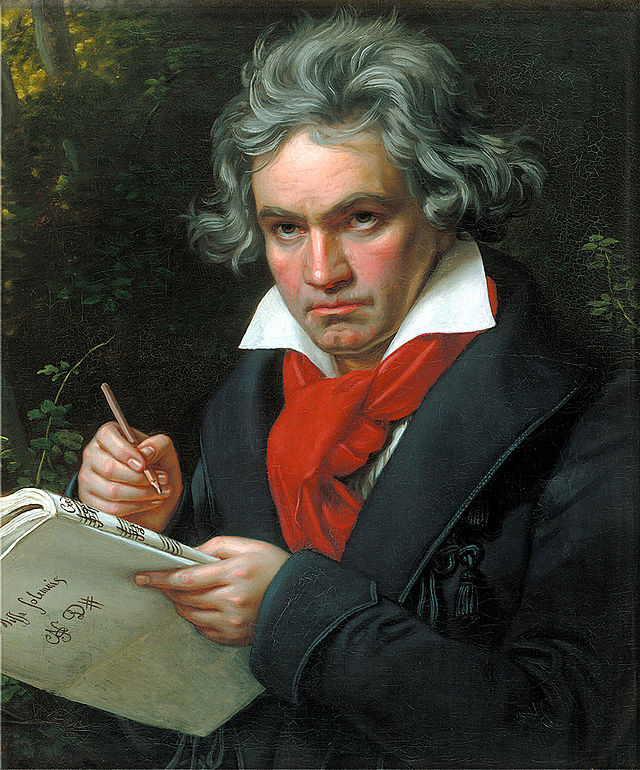
“A portrait of Ludwig van Beethoven“ (1820)
_____________
you might say a triumvirate of piano concertos dominate
our Western musical culture, a veritable trinity of pianistic
masterworks that tower over, and have ruled, our musical
consciousness throughout the modern epoch, the
Rachmaninoff 3 has been one of them, but the 5th of
Beethoven is surely the granddaddy, the “Guppa” as a
favourite grandchild I know would say, the Olympian
Zeus, the Christian God the Father, of them all, in majesty
and authority, others quake in its overwhelming aura, it is
the sun to all the other stars
Glenn Gould is the standard still by which it should be
played, none yet, to my mind, has surpassed him
Karel Ancerl conducts the Toronto Symphony Orchestra,
a competent orchestration, overshadowed inevitably by
this prodigy, who nevertheless doesn’t ever flaunt his
finger play but remains faithful throughout to the
dictates, the tonal balances, of the music, it is 1972
I had mentioned “variations in volume, tempo, tonality,
the play of harmonization and discords” in Rachmaninoff,
note the strict adherence to tempo here, even the fastest
runs of notes are grounded in beat, more solid, less elusive
than the iridescent Rachmaninoffian allusions to Debussy,
you could set a metronome to the appropriate tempo of
each individual movement in Beethoven, it would remain
constant, apart from a few restrained ritardandos near
the end of some musical elaborations, until its very final
apotheosis, beat was ever an anchor for the fulgurating
Beethoven, an article of faith from which he strayed only
with great circumspection
note the language is not emotional, passionate and ardent,
but philosophical, metaphysical, Beethoven is confronting
cosmological considerations, existential realities, not the
more emotional concerns that confound us every day, it’s
God he’s talking to, eternity, not the incarnate tendrils
of the moment, not the poignant stuff even of soon
through Schubert a Chopin, Beethoven was at the start
of that Romantic Movement, indeed its very first
proponent, but not quite ready to wear his heart itself
on his sleeve, but a more spiritual, probing reason, whose
ardent metaphysical ratiocinations would set all the others
on fire, setting the stage for all the other stars
later, if you haven’t guessed what it’ll be already, I’ll
supply you with the third concerto, the Holy Ghost, of
the trinity, the Apollo, god of music and the sun, among
our concert greats
Richard
 Richibi's Weblog