Richibi’s Weblog

Just another WordPress.com weblog

love and hope

a poem by me  
 
                                                                                                                                                                                                                                          richibi 

                           __________________
 

love and hope

                                                                                                                                                                                                                                             why do we ever only hear of people falling hopelessly in love
and never hopefully

 
why do we fall in love instead of rising to it 
 
why don’t we have verbs of elevation,
like lift, fly, transcend

 
when love is often like very wings 
 
shouldn’t adverbs be more encouraging,
shouldn’t they inspire rather than drop like lead,
shouldn’t they water love like the garden of infinite possibilities 
one in love imagines and irrepressibly invents  
rather than succumb to fear of despair, 
and the dark side 

 
I’ve wondered
 
since without love there can after all be no heaven
 
and yet we fall   
 
 
                                                   richibi   


              ______________________________

the sixth and seventh circles of Purgatory

after having managed with Dante first the seven circles of lurid Hell,
then five in the much more tolerable Purgatory, I’ve reached the sixth
and seventh circles there of Lust and Gluttony, sins I have been more
particularly prone to
  
the egregious crimes of murder, fraud, treason, blasphemy, the stuff 
of very Hell, were never a concern for me, while the venial imperfections 
of pride, envy, wrath, sloth, Purgatory’s more tempered lot, would never,
surely, transcendentally confound me, I thought, should there be indeed
a Hell, a Heaven, or a Purgatory, notions incidentally that were first made
explicit by Dante himself in his “Divine Comedy“, no earlier topographical
description of the place had ever been written, later Bosch would paint his
Garden of Earthly Delights”  
 
we owe our notions of the Christian afterlife even still to Dante 
  
  
but where of course does all this fit in a universe we know to be infinite,
an idea itself, that last, that is no less awesome
 
somewhere above Olympus, the home of the Greek Gods, is where it sits,
I think, but beneath the canopy of the stars, which enclosed the earth then, 
but which dispersed, it would seem, of its own incorporeality when we’d
reached beyond  
 
  
at the terrace of Gluttony, a level that winds around the mountain,
Dante meets among emaciated shades – “shades”, he says, “that
seemed things dead twice over”, who hunger for instead of victuals
eternal life – Forese Donati, an old flame 
  
“how did you come so far so fast?”, he asks his bosom friend who’d died
only a short four years earlier  
  
“It is my Nella”, he replies, his wife
  
        “whose flooding tears so quickly brought me 
         to drink sweet wormwood in the torments. 
  
         With her devoted prayers and with her sighs,
         she plucked me from the slope where one must wait  
         and freed me from the other circles.”
   
but I think it was Dante himself who could never have consigned such a
privy buddy to anything short of Purgatory   
 
                                                                                                                                                                                                                                                    and that was the terrace of Gluttony
 
tomorrow I do Lust   
 
 
upon moving towards that terrace, the last before reaching the
circles of Paradise, an angel blinds Dante with its radiance so that
he must turn away his eyes  
 
        “And as, announcing dawn, the breeze of May
          stirs and exudes a fragrance
          filled with the scent of grass and flowers,
 
          just such a wind I felt stroking my brow  
          and I could feel the moving of his feathers,
          my senses steeped in odor of ambrosia.” **


I wish you angels, and Heaven 
 
Richard 
 
 
*    “Purgatorio“, XXIII, 85-90 
**  “Purgatorio“, XXIV, 145-150 
 
                           translations by Robert and Jean Hollander


about poems

a while ago, around a piece I’d sent purporting to be a poem,
a friend asked, can a poem have only two lines 
 
what do you think, I answered, can it, was it 
 
which is to say a poem is in the eye of the beholder 
 
 
what would you call the following strophe, it is worth considering, the more you define what you mean by a poem, the more, like angels, like miracles, you find them, the more, soon, you find your own, the more suddenly they’re everywhere 
 
 
Richard 
 
                         ___________________
 
                                                                                                                                                                                                                                                    A Hand

                                                                                                                                                                                                                                                     A hand is not four fingers and a thumb. Nor is it palm and knuckles, not ligaments or the fat’s yellow pillow, not tendons, star of the wristbone, meander of veins. A hand is not the thick thatch of its lines with their infinite dramas, nor what it has written, not on the page, not on the ecstatic body. Nor is the hand its meadows of holding, of shaping— not sponge of rising yeast-bread, not rotor pin’s smoothness, not ink. The maple’s green hands do not cup the proliferant rain. What empties itself falls into the place that is open. A hand turned upward holds only a single, transparent question. Unanswerable, humming like bees, it rises, swarms, departs.  
 
 
                                    Jane Hirshfield


“Once and Upon” – Madeline Gleason

having got up on the wrong side of my Monday morning, I wasn’t to be moved by even poetry, but like a morning prayer I began to read this one, as I do one, even two, even many, every morning
 
I was enchanted, I hope you are too 
 
 
Richard 
 
psst: compare e.e. cummings for childlike innocence and fancy, “anyone lived in a pretty how town” for instance
           
  
                          ___________________


Once and Upon

                                                                                                                                                                             Cross at the morning
and at waking,
with a mourning for summer,
she crossed the bridge Now
over the river Gone
toward the place called New
to begin her Once Upon.

Once and Upon
my daddy long legs
walked in a web of work
for my sisters and me,
as Mother spun round
with silver knives and forks
in a shining of pans,
a wash of Mondays
and plans
for our lives ten thousand weeks.

To cross the bridge Now
over the river Gone
toward the place called New
to begin her Once Upon,
in a mourning for summer, she moved
to write her right becoming
and find her true beloved.

Snippets and tags of Gone,
criss-crossed as retold,
beggared the strumming
of fresh rhythms
that should have stirred her becoming.

Once and Upon
she ate the plum
and from a full mouth
disgorged the pit
into her hand
while Mother spun as she canned
peach and plum in season –
the land, holy Mother to
the plentiful fruit.

To cross.
But where should her steps lead
away from the river?

Through a desert she hurried,
thirsting she ran
to reach becoming,
passed three water holes
but never saw them,
so eager was she to reach
outward evidence
of her inward drawing.

Sisters of grace,
comely, sea-washed,
with blond shell hair and skin,
whirling with intermittent passion
amidst daddy long legs
and Mother awash
among the underthings,
boys shouting and running,
swaggering and dying
for the sisters’ charms.
AMEN!

Tops a-spin in a dying dance.
Yoo Hoo, Fatty! Buck!
Hi, Pete! Hello, old Gene!

Cross at the morning,
summer crossed with the beginning
of gold,
a sea of brown leaves swirling.

And no trees bent down
to whisper their wisdom
for her becoming.
Ah! Now! Ah! Gone! Ah! New
Ah! Once Upon!  


                         Madeline Gleason 


             ___________________________

true happiness

 
in the movie Never on Sunday” Homer Thrace, an American moralist and armchair philosopher, objects to the libertine ways of the modern Greeks, Ilya especially, a whore, disconcerts him, she likes her job, so do the dockworkers, and the other women who ply her trade at the port of Piraeus, near Athens 
  
Homer Thrace accuses them all righteously of pursuing the Stoic and Epicurean philosophies that came out of the fall of Greece, instead of the true and noble ideals of the more upstanding Socrates, Plato, and Aristotle, who believed that the greatest happiness comes from the joy of understanding  
  
when he tells Taki, who plays the bouzouki, that he can never be a true musician because he can’t read music, Taki, who is too old now to learn, hides in the bathroom forlornly, and says he will never play again 
  
Ilya, Melina Mercouri, in a star turn, tells him composers need his music to be able to write his notes down, what would composers do without him, if birds can’t read music, she asks, should they stop singing  
  
Taki comes out of the bathroom
  
so had I   

  
Richard


                       ______________________________

John Ruskin, on truth in art

that we have dismissed, often indeed forgotten, the great voices of our culture,
the great oracles, the dead, they’ve dared to call them, painters, composers,
poets, doesn’t make their pronouncements less true, less inspiring, proof that
they are still very much alive, and relevant 
  
that they are still relevant ties us to the great notion that we are from very
Homer to the present day one family, one illustrious family, which to disregard, 
or any of its great giants, would be our inestimable loss 
 
where would we be without their wisdom, leaves without a trunk
 
 
John Ruskin was a great influence on Marcel Proust, my own supreme poet and prophet, I needed to plumb his literary pockets for, I did not doubt, nuggets of priceless gold
 
 
Richard 
 
 
                       _____________________


Chapter 7
 
8 – That then which I would have the reader inquire respecting
       every work of art of undetermined merit submitted to his
       judgment, is not whether it be a work of especial grandeur,
       importance, or power; but whether it have any virtue or
       substance as a link in this chain of truth; whether it have 
       recorded or interpreted anything before unknown; whether
       it have added one single stone to our heaven pointing pyramid,
       cut away one dark bough, or levelled one rugged hillock in our
       path. This, if it be an honest work of art, it must have done, for
       no man ever yet worked honestly without giving some such help
       to his race. God appoints to every one of his creatures a separate
       mission, and if they discharge it honourably, if they acquit themselves
       like men and faithfully follow that light which is in them, withdrawing
       from it all cold and quenching influence, there will assuredly come of
       it such burning as, in its appointed mode and measure, shall shine
       before men, and be of service constant and holy. Degrees infinite
       of lustre there must always be, but the weakest among us has a
       gift, however seemingly trivial, which is peculiar to him, and which
       worthily used will be a gift also to his race for  ever: 
                ‘Fool not’, says George Herbert,
                                                                     ‘For all may have,
                             If they dare choose, a glorious life or grave’ 
      
 
                                            John Ruskin (from “Modern Painters“) 


                     ______________________________________________

“Trouble” – Matthew Dickman‏

                                                                                                                                                                              after the great hiatus of the Middle Ages Descartes declared I think, therefore I am, and set the modern world in motion, the Age of Reason, the Era of Human Rights 
 
but even Shakespeare some seventy years earlier had given voice already to the consequent existential dilemma, by way of Hamlet in his “To be, or not to be“, the moral dilemma of the individual before existence – “the slings and arrows of outrageous fortune” – and the abyss of eternity, a question up to that point forbidden on dire pain of heresy  
  

                                                                                                                                                                         Emily Dickinson touches on the subject famously, others also of equal authority, but here is something I thought true, touching, beautiful, and ultimately inspiring for anyone who’s delved that deep  
 
                                                                                                                                                                   Richard 
  
  
                       ______________________
  
 
Trouble   
 

                                                                                                                                                                        Marilyn Monroe took all her sleeping pills
to bed when she was thirty-six, and Marlon Brando’s daughter
hung in the Tahitian bedroom
of her mother’s house,
while Stanley Adams shot himself in the head. Sometimes
you can look at the clouds or the trees
and they look nothing like clouds or trees or the sky or the ground.
The performance artist Kathy Change
set herself on fire while Bing Crosby’s sons shot themselves
out of the music industry forever.
I sometimes wonder about the inner lives of polar bears. The French
philosopher Gilles Deleuze jumped
from an apartment window into the world
and then out of it. Peg Entwistle, an actress with no lead
roles, leaped off the “H” in the HOLLYWOOD sign
when everything looked black and white
and David O. Selznick was king, circa 1932. Ernest Hemingway
put a shotgun to his head in Ketchum, Idaho
while his granddaughter, a model and actress, climbed the family tree
and overdosed on phenobarbital. My brother opened
thirteen fentanyl patches and stuck them on his body
until it wasn’t his body anymore. I like
the way geese sound above the river. I like
the little soaps you find in hotel bathrooms because they’re beautiful.
Sarah Kane hanged herself, Harold Pinter
brought her roses when she was still alive,
and Louis Lingg, the German anarchist, lit a cap of dynamite
in his own mouth
though it took six hours for him
to die, 1887. Ludwig II of Bavaria drowned
and so did Hart Crane, John Berryman, and Virginia Woolf. If you are
travelling, you should always bring a book to read, especially
on a train. Andrew Martinez, the nude activist, died
in prison, naked, a bag
around his head, while in 1815 the Polish aristocrat and writer
Jan Potocki shot himself with a silver bullet.
Sara Teasdale swallowed a bottle of blues
after drawing a hot bath,
in which dozens of Roman senators opened their veins beneath the water.
Larry Walters became famous
for flying in a Sears patio chair and forty-five helium-filled
weather balloons. He reached an altitude of 16,000 feet
and then he landed. He was a man who flew.
He shot himself in the heart. In the morning I get out of bed, I brush
my teeth, I wash my face, I get dressed in the clothes I like best.
I want to be good to myself.


Matthew Dickman


                        ____________________________________

5 April, 2010

                                                                                                                                                                               April is dour here, with grim rain and nearly sleet, but for the burgeoning buds and leaves manifesting themselves in a variety of resplendent colours, from the lightest pastels to the most saturated earth tones, for our wonder and delectation, despite the glum gray cover of clouds 
  
under my matching umbrella I am also a flower, I conclude, and take consolation, inspiration, from the fact that I am not among them alone
  
and proceed as though touched by magic   
    
  
Richard   


                               __________________________                                                                     


Still Life with Teapot and Fan – Wang Weidong‏

Still Life with Teapot and Fan by Wang Weidong

                           ” Still Life with Teapot and Fan ” 
 
                                       
Wang Weidong  
 
                                   _________________  

                                                                                                                                                                                                                                despite bifurcations in the direction of abstract art – Impressionism Surrealism, Expressionism, Pop – representational art, with its evident demands on the artist – formal excellence, not just heat and heart – still inspires perhaps our foremost admiration 
 
perhaps it’s true however that still lifes, nearly by definition, are bloodless, as is to my mind, here again, this exquisite nevertheless “Teapot“, which reaches out to your intellect rather than to your emotions
 
it speaks of duty rather than love, tradition rather than innovation, a nostalgia for security, conformity, philosophy perhaps, and ultimately by inference faith and trust  
 
if you let your sense of taste do the talking
  
 
Richard


                           __________________________

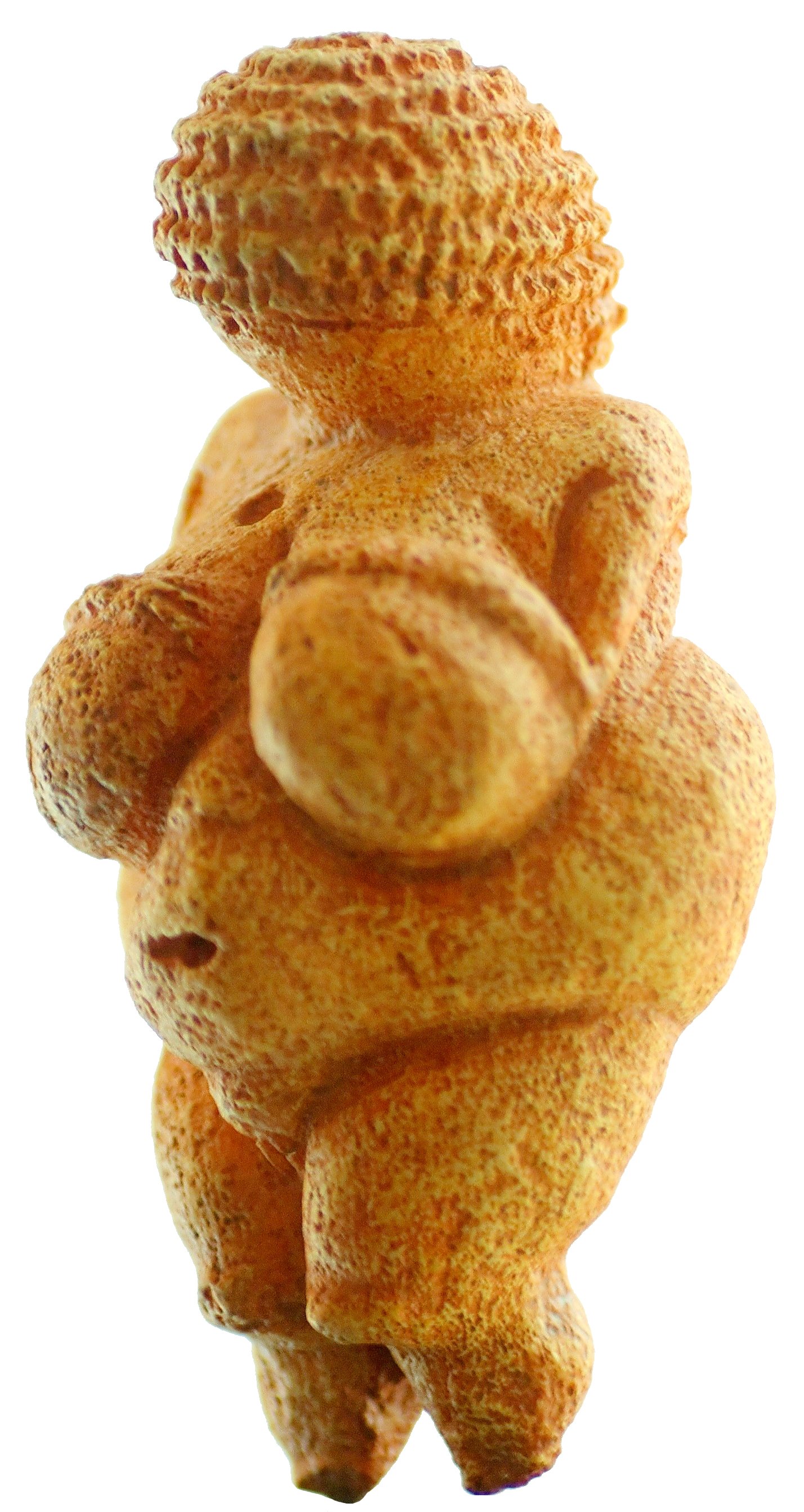
Venus of Willendorf

              File:Venus von Willendorf 01.jpg


                                Venus of Willendorf 
 
                          (24,000 B.C. – 22,000 B.C.)
 
                                     __________
 
 
by giving it prominence in a work of art an artist by definition
idealizes a figure, gives it stature, Andy Warhol did that to our
own cultural overlord, Commerce, with his soup cans, putting
them right up there where altarpieces used to be, these icons 
are even in financial institutions now in fact instead of churches,
supplanting thereby the earlier Christian message, which you
don’t see represented very much in art anymore incidentally,
our present culture not finding much of an even metaphorical
call for it any longer it would appear 
 
Marilyn” (1960s)
 
Mickey Mouse” (1981)
 
the Venus of Willendorf (24,000 B.C. – 22,000 B.C.)
 
Benefits Supervisor Sleeping” (1995)
 
these last two upending what is in fact only an arbitrary
cultural notion of svelte and silken beauty ever, though
often vigorously held  
  
 
Richard


                           _____________________