Richibi’s Weblog

Just another WordPress.com weblog

November / Month of the Sonata – 3

Mona Lisa, c.1503 - c.1519 - Leonardo da Vinci

  “Mona Lisa ( c.1503 – c.1519) 


      Leonardo da Vinci


             __________


the next sonata, Beethoven’s Piano Sonata 

No 8 in C minor,  Op 13, the ‘Pathétique’“, 

is one that everyone’s heard, if only ever in 

fragments, right up there with “Jingle Bells” 

in our musical repertory, in our cultural DNA,

or, for that matter, Beethoven’s, also, other 

iconic piece, the Moonlight Sonata“, the 

Mona Lisa, nearly, see above, of music 


the initial chords are peremptory, have 

resonated, echoed, reverberated, 

throughout the ages


this is not, however, the way one should 

be addressing the aristocracy, Beethoven

was speaking for the growing Middle

Classes, who, hungering for the status 

and refinement of the elite, the French

Revolution having just happened, were 

crowding the burgeoning concert and 

recital halls cashing in on that interest


the artist was now the main attraction,

where earlier the performer had been

merely decorative, the sponsored

employee of an, however benevolent, 

aristocrat, see Mozart, see Haydn


listen to Beethoven strutting, for the 

ages, his revolutionary stuff, thumbing

his nose at convention, demanding

attention


enjoy


R ! chard 


November / Month of the Sonata – 2

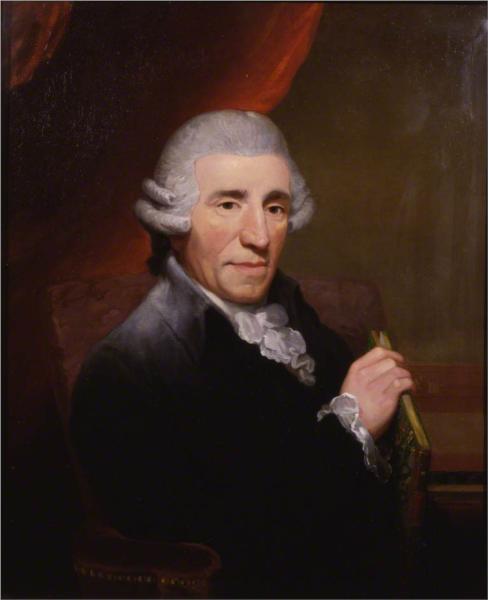
Joseph Haydn, 1791 - Thomas Hardy

     “Joseph Haydn (1791) 


           Thomas Hardy


               ________


Haydn, profoundly underrated, was the

other pillar of Classical music during that 

period, Beethoven, with half a foot only 

in that era, uses its elements to yank us, 

yelling and screaming, into the next, the 

Romantic Era, 1800 to 1870 more or less, 

more about which later


if Haydn sounds a lot like Mozart, it’s that

this piece was also written in 1789, both 

were catering to the aristocracy, courts, 

salons, music was therefore frivolous, 

meant to be entertaining, not inspirational,

trills, a lot of decoration, technical agility,

prestidigitation over profundity


Beethoven will change all that, stay tuned 


meanwhile, listen to, enjoy, Haydn’s Piano  

Sonata in A-flat major, no 31, Hob XVI-46,  

today’s prescribed apple


R ! chard

November / Month of the Sonata – 1

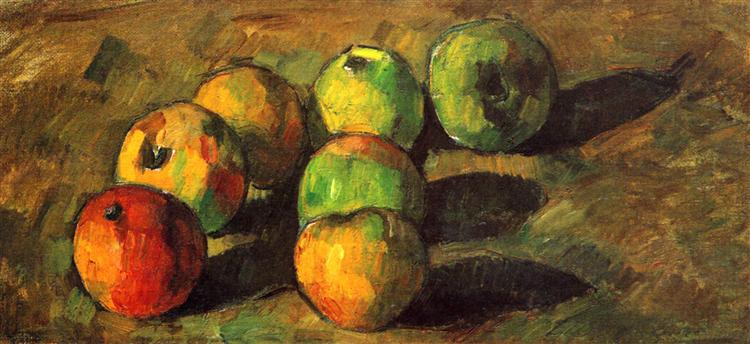
Still life with seven apples, 1878 - Paul Cezanne

      Still Life with Seven Apples (1878) 


               Paul Cézanne


                      _____


a sonata is to the concerto what an apple

is to an apple pie, its essential component, 

after which the rest is decoration, however 

inspired


sonatas existed before Mozart, but he’s 

the one, along with Haydn, as well as

early Beethoven, who put them on the 

musical map, 1750 to 1800, more or 

less


it seems to me appropriate, therefore, 

to start my Sonata Month then


here’s something by Mozart, 1789, his 

last piano sonata, No. 18, in D major,

K. 576


three movements, fast, slow, fast – allegro, 

adagio, allegretto – a perfect example of 

the sonata as it was establishing itself

then, a piece of music consisting of 

several distinct sections, movements, 

meant to highlight contrasts, musical 

agility in the artist, compositional 

imagination


listen, enjoy


R ! chard

November / Month of the Sonata

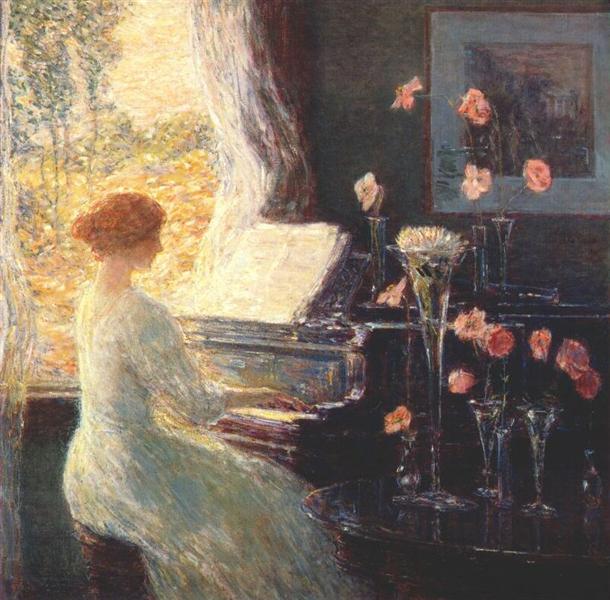
The Sonata - Childe Hassam   

    “The Sonata  

           Childe Hassam

                    ____


having recently determined that a sonata

a day keeps the doctor away, and inspired

to work upon that cure, I thought I’d initiate 

a Sonata Month starting in November


there are thirty days in November, so no 

more than thirty sonatas, each of which

will, I promise, be a revelation


a sonata is a piece of music consisting

of more than just one part, traditionally 

three or four, called movements


within those parameters, anything was,

is, possible, any kind of music, times 

three or four, traditionally, Classically


but traditions indeed applied, the tried 

and true, fast, slow, fast, became the 

standard, a cheery introduction, 

followed by a contrasting, which is to 

say slower, middle section, then a 

restorative, final, energetic, act, meant 

to send you, reinvigorated, on your way, 

maybe even an equally vivacious fourth


there’ll be sonatas with one movement, 

some seven, some with even maybe 

more


here’s one, for instance, listen, enjoy 


and stay tuned   


and thanks for joining in


R ! chard

how to listen to music if you don’t know your Beethoven from your Bach, XVIII – Rachmaninov

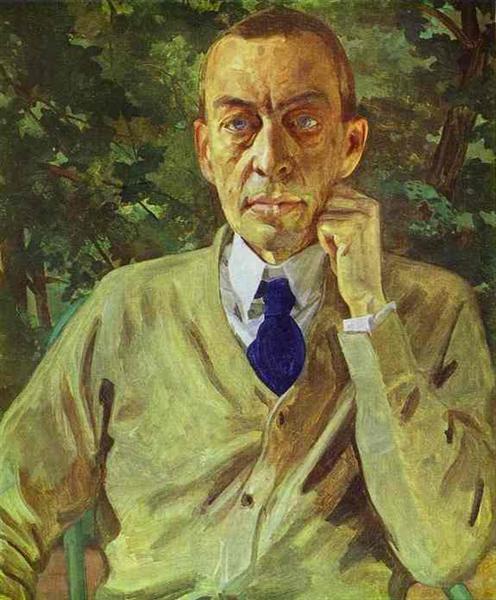
Portrait of the composer Sergei Rachmaninov, 1925 - Konstantin Somov


     Portrait of the composer Sergei Rachmaninov


                   Konstantin Somov


                                ______


though you probably still wouldn’t be able

to tell a prelude from a hole in the wall, 

nor, admittedly, can I, unless indicated,

if you’ve listened to the pieces I’ve

recently presented, you’ve noted, even 

merely sensed, really, that the preludes 

of one composer don’t sound at all like

those of the others, Bach doesn’t sound 

like Chopin, who doesn’t sound at all   

like Debussy, the first step in telling  

your Beethoven from your Bach, as 

promised in my title


you might not even be able to tell which  

is which as you’re listening, but you can

tell they’re different, you do the same 

thing telling your Monet from your 

Renoir


Rachmaninov also wrote, like Chopin, 

and Debussy, 24 preludes, and, like 

Chopin, in every key, major and minor


but spread out through three publications, 

Opus 3, no. 2from 1892, comprising of 

only one prelude, but a scorcher, The 

Bells of Moscow, listen

a second set, Opus 23, consists of ten, 

mostly iconic, pieces, you’ve heard 

them somewhere before, therefore 

iconic


the final set comes out in 1910, 

Opus 32with thirteen preludes,

for a total of 24


you’ll marvel, even Marilyn Monroe 

famously did


enjoy 


R ! chard 

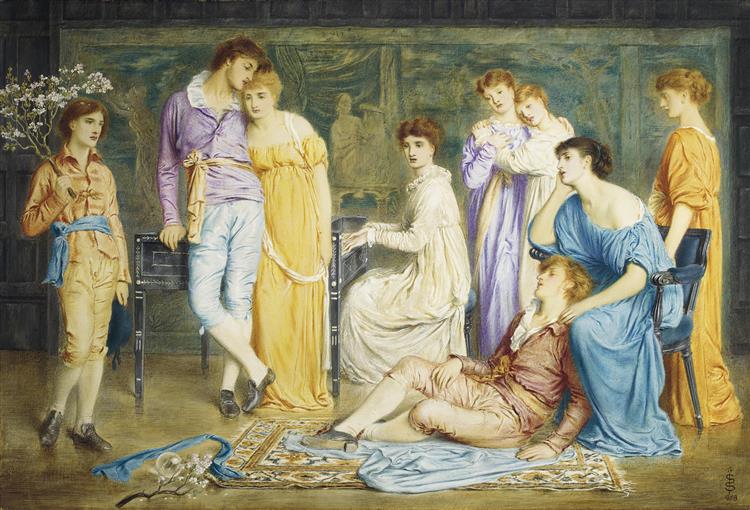
how to listen to music if you don’t know your Beethoven from your Bach, XVII – on preludes

A Prelude by Bach, 1868 - Simeon Solomon

       A Prelude by Bach (1868)              

              Simeon Solomon

                     __________

what’s a prelude 

as the word suggests – pre, from the

Latin, means before, lūdus, again 

from the Latin, means game, play, 

spectacle – it is a piece of music that 

precedes another more elaborate 

segment in a compositional whole


a prelude is therefore likely to be short,

otherwise completely improvisatory,

no technical demands, just something 

that comes from the heart


there probably existed preludes before 

Bach, but he’s the one who put them 

on the map, with, specifically, his 

monumental Preludes and Fugues,

though that’s another story, more 

about which later, but he did write 

some stand-alone preludes, for 

instance his Six Little Preludes,  

BWV 933-938, from around 1717

to 1720, see above


a little over a hundred years later,

in 1834, Chopin picked up the 

mantle and wrote his own iconic

Opus 28, 24 stand-alone preludes,

one for every major and minor key, 

and established thereby the prelude 

as a viable musical form


nearly a hundred years later still, 

Debussy set up his own homage 

to Chopin, in two bursts of inspired 

composition, the twelve preludes of 

his Book 1 in 1909 to 1910, followed 

by his Book 2, again of twelve preludes, 

written in 1912 to 1913


these works are now generally played 

in complete sets, though they often 

pop up individually as short and sweet  

encores here and there at the end of 

successful recitals


enjoy


R ! chard

how to listen to music if you don’t know your Beethoven from your Bach, XVI – on Chopin

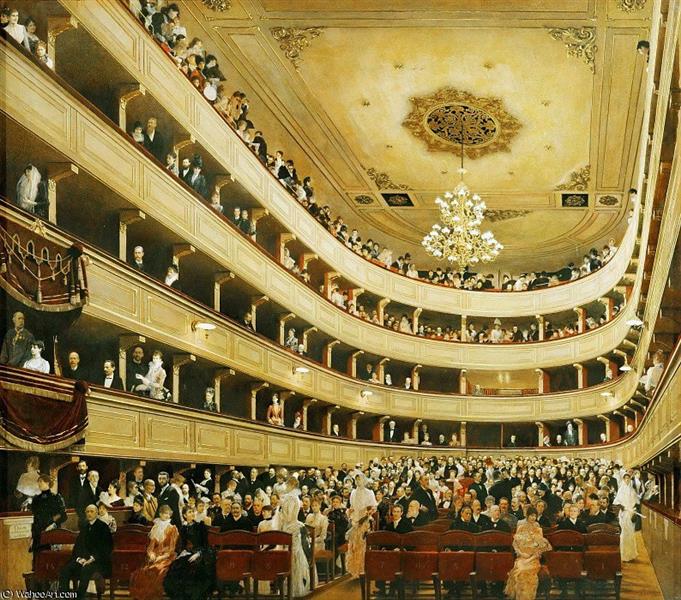
The Old Burgtheater, 1888 - 1889 - Gustav Klimt

       The Old Burgtheater (1888 – 1889)  

                  Gustav Klimt

                        _______


having brought up nocturnes and ballades

in my last instalment, however peripherally, 

I’ll dig into these deeper, to illustrate the 

impact Romanticism had on music, on 

fine arts as well, and literature, in the 

West, as it highlighted emotions as a 

requirement of the audiences that 

funded them


the French Revolution had happened,

the idea of individual rights, liberty,

equality, fraternity, spread across 

even autocracies, czars, kaisers, 

kings were threatened


theatres were becoming, because of 

the growth of the Middle Class, what 

had been the salons of the aristocrats,

people were paying for what the nobility

had been seeing, in concert halls, see

above


but the audience wanted their money’s 

worth, both in spectacle, and personal

contact, easy ingenuity was out, they

had to be impacted, get them howling,

whooping, just like today


but to return to ballades and nocturnes,

they were the answer, plangent appeals

to the heart, which had not been a 

concern of the earlier Classical Period,

where prestidigitation, technical

wizardry, had been the requirement

of the courtly courts  


ballades, nocturnes, preludes, didn’t 

exist before the Romantic Period, 

essentially, music that hadn’t a 

formal structure, hadn’t a set of 

compositional rules, but spoke, 

rather, from a place of intimacy,

unconstrainedly


here’s a balladefor instance, here’s 

a nocturne, both of Chopin, as 

identifiable as Shakespeare, van 

Gogh, in each their own particular 

vocabulary, wearing his heart on

his sleeve, and always absolutely 

extraordinary 


enjoy


R ! chard

how to listen to music if you don’t know your Beethoven from your Bach, XV – what’s a rhapsody

Rhapsody of Steel, 1959 - Eyvind Earle

        Rhapsody of Steel (1959)

                   Eyvind Earle

                       ________

so what’s a rhapsody

if you’ve been following at all my 

musical adventure, you’ll have 

heard by now several rhapsodies 


at first, I suggested that the rhapsody

was an evolution from the fantasia,

a piece of music in one movement

that allowed for any internal 

construction, but that, after the

Classical Period, became imbued  

with Romanticism, passion became 

a condition of music, mere technical

ability was no longer enough  


note that the audience was different,

rather than nobles who commissioned

artists to decorate their salons, the

burgeoning Middle Class was hungry 

for them to entertain, performers were

becoming the main attraction, not just

the background, see, for instance, 

Beethoven


but not only did rhapsodies spread 

from just one player to an entire

orchestra – see Brahms, then 

see Gershwin – but its essential 

structure, one movement, was 

challenged, see Ravel here, or 

Rachmaninov, whose rhapsodies 

are both composed of distinct 

movements, Rachmaninov even 

further refining his movements 

into variations, for years, I 

referred to his Rhapsody on a 

Theme of Paganini as his 

Variations


all this to say that a rhapsody is 

turning out to be not identified 

by its structure, its technical

parts, but rather by its intention,

a rhapsody is in the eye of its 

composer, like a nocturne, or 

a ballade


I’d thought that rhapsodies had 

been relegated to the Romantic 

Era, with the occasional later 

tribute


who, I wondered, could be

writing rhapsodies anymore


but here’s something, however

unexpectedly, you’ll be familiar

with, from 1975, Queen’s Bohemian

Rhapsodyin several movements 

– intro, ballad, opera, hard rock, 

outro – and including in all of them,

note, voice


all of which speaks of tradition

being a lot closer than one would 

think, ancestral, residual, but

defining, traces, like genes, 

however updated, however

posthumously interpreted,

pervade, infiltrate, pursue,

inexorably


rhapsodies are in our DNA, it

would appear, for better or for 

worse, ever


here’s to them


R ! chard


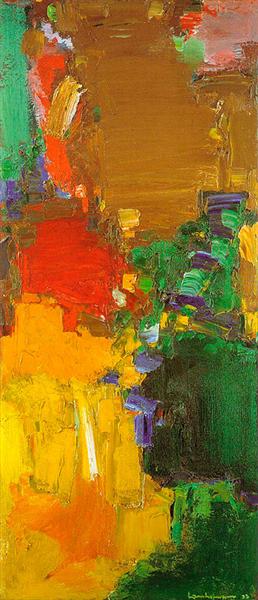
how to listen to music if you don’t know your Beethoven from your Bach, XIV – more rhapsodies

Rhapsody, 1958 - Hans Hofmann


    Rhapsody” (1958) 


         Hans Hofmann


                _______


now that you’ve heard New York in

Gerschwin’s Rhapsody in Blue, and

Vienna in Rachmaninov’s Rhapsody

on a Theme of Paganini, listen to 

Hungary, or rather its Gypsy

component, however rejected, 

reviled, at the time, but proud 

enough, resilient, to strike back 

with its infectious music, how

many times have we heard that

story before


Budapest doesn’t sound at all like 

Vienna, though they’re only mere 

blocks away, essentially, listen,

Liszt’s Hungarian Rhapsody no 2,

in C# minor, he wrote nineteen, 

you’ve probably heard this one,

it’s in our DNA


here are a couple of Spanish

rhapsodies, meanwhile, if we’re to 

follow a national agenda, Chabrier, 

a name you’ve probably never 

heard before, but not so, I assure

you, his music, his España,

Rhapsody for Orchestra, is

written in our blood, listen


Ravel wrote also a Rapsodie 

espagnole, more French than

Spanish, to my mind, steeped

in its early Twentieth Century

Impressionism,  all textures,

soundscapes, not rhythms


Ravel makes up for it, though, in his

Bolero, perhaps the most Hispanic 

piece ever of all, you tell me


both Chabrier and Ravel, incidentally, 

were French, doing what Dvořák, a 

Czech, had done, would do, for 

Americans, honour their fascinating

rhythms


Liszt, by the way, was Hungarian, his

rhapsodies were native, if profoundly

influenced by Vienna 


listen, enjoy


R ! chard

how to listen to music if you don’t know your Beethoven from your Bach, XIII – Antonin Dvořák

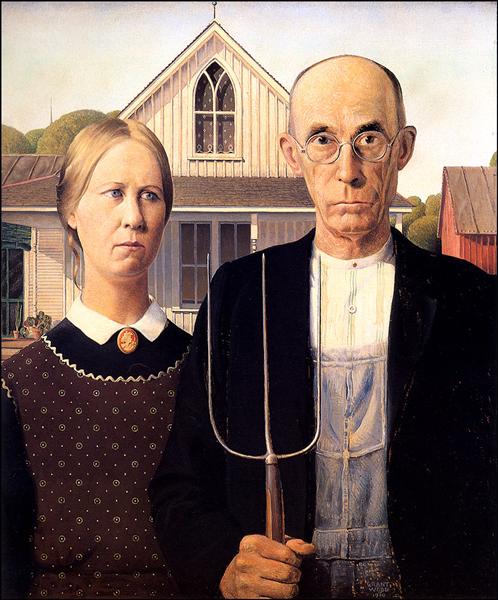
American Gothic, 1930 - Grant Wood

    “American Gothic (1930) 


                Grant Wood        


                      ______


if you were able to hear the difference

in my last communication between

Vienna and New York in the two

rhapsodies I compared, contemporaries,

incidentally, you might be interested in

European composer, highly

underestimated in my opinion, who

bridges both cultures by composing a

tribute to the country that receives him,

gloriously, for a couple of years, before

he returns, homesick, to his beloved

Bohemia, which is to say, Prague,

Antonín Dvořák, don’t ask, 1841 – 1904


here’s his 12th String Quartetnicknamed

the “American”, listen, you’ll understand

why


here’s his New World Symphonyagain

you’ll understand why


fun facts, Neil Armstrong brought a

recording of it, the New World

Symphonywith him to the moon

during the first manned landing,

back in 1969, can you get more

cool than that


also, this particular version is from

Pyongyang, which is to say, North

Korea, which is to say, the audience

here is nearly as interesting as the

symphony itself, do they even

speak the language, if they grew

up on Chinese opera


do you


R ! chard