parsing art – Rousseau/Siudmak
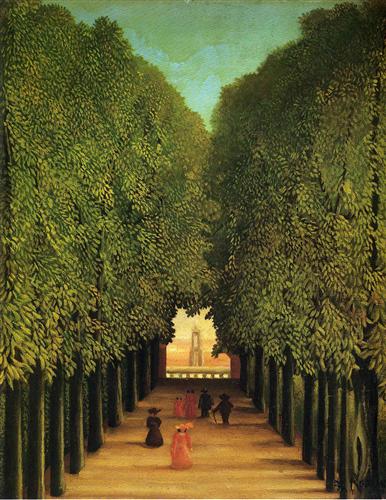
“Alleyway in the Park of Saint Cloud“ (1908)
_________
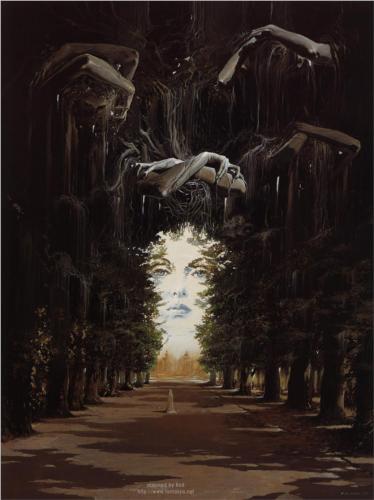
__________
the line seems fine here between homage
and appropriation
what do you think
Richard
“Alleyway in the Park of Saint Cloud“ (1908)
_________
__________
the line seems fine here between homage
and appropriation
what do you think
Richard
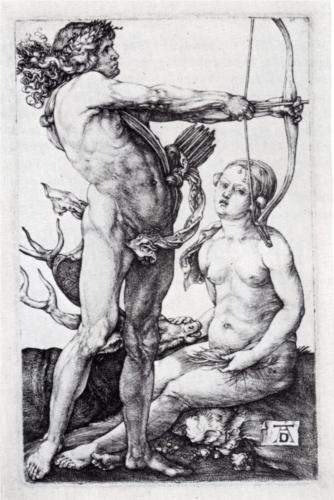
“Apollo and Diana“ (1502)
________
in the tradition of Elizabeth Barrett Browning,
a forthright, personal poem
a merely theoretical dilemma
yesterday, I had lunch with Vickie,
she said she admired our relationship,
despite the fact, which I’d interjected,
that there was no sex
she didn’t find that unacceptable
I found her concern more personal,
revealing, than strictly theoretical
then gave up the improbable
thought
I dream, however, ever, Apollo, and
irrepressibly, of your genitals,
knowing that your spawn would
transform me, ineradicably, into
a constellation, its crystallization
our progeny, into immortal stars
but that would mean leaving you,
Apollo, behind
could I, would I, do that
love
me
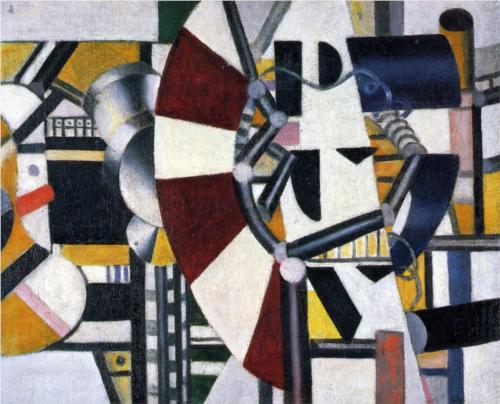
“Les éléments mécaniques“ (1920)
_________
more John Cage, if you dare
just click
with, if you can believe it, Garry Moore,
“I’ve Got a Secret“, a trip down memory
lane
also ads for Winston, and Bufferin, very
Andy Warhol, thrown in, entirely the
1950s
Richard

“Number 1 (Lavender Mist)“ (1950)
_________
in the introduction to my Coursera poetry
class, the professor read out this poem
that just blew me away, the chaos of
inspiration, he compared it to the works
of Jackson Pollock
Richard
____________
When aware of what I am in my painting, I’m not aware
When I am my painting, I’m not aware of what I am
When what, what when, what of, when in, I’m not painting my I
When painting, I am in what I’m doing, not doing what I am
When doing what I am, I’m not in my painting
When I am of my painting, I’m not aware of when, of what
Of what I’m doing, I am not aware, I’m painting
Of what, when, my, I, painting, in painting
When of, of what, in when, in what, painting
Not aware, not in, not of, not doing, I’m in my I
In my am, not am in my, not of when I am, of what
Painting “what” when I am, of when I am, doing, painting.
When painting, I’m not doing. I am in my doing. I am painting.
____________
psst: listen to my professor read it, at
15:05 on the introductory video,
just click
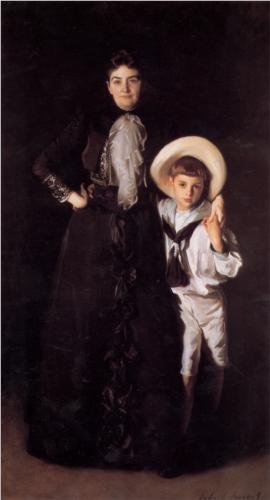
“Mrs Edward L. Davis and Her Son Livingston“ (1890)
______
about John Cage my mom writes,
“Hi Rick…..
When you called I had written the message but not sent it….I am trying again..
I cannot see people spending $100 or more and wasting almost 8 minutes of their time
to watch that crap…..
As for David Hockney…..well…..not my style….but for your sake I hope a lot of people like it…..
See you at 6 p.m……will give you enough time to digest what I said…..All my love….MOM….XXXX”,
most uncharacteristically, the last time
she used an epithet was when I landed
some Schönberg on her, which she
returned promptly and categorically,
that was some fifteen years ago, even
maybe twenty
bravo, Mom, for your robust opinion,
that’s what art’s about
but I’m reminded thereby that art is not
just for effetes, pretenders to arcane
insights, it’s for all of us, not getting it
is not necessarily our fault, sometimes
the artist is obtuse, even trite
what is true should be clear, I believe,
to everyone, which is why I ever adhere
to art, art cannot be anything other than
true, manifestly, else it falls apart
love you, mom
Rick
psst: if you’ve got quarters, please bring
some over tonight
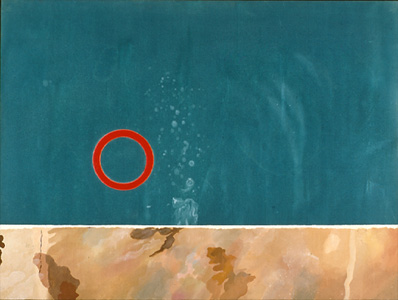
“Rubber Ring Floating in a Swimming Pool“ (1971)
_________
in responding to the powerful dictates
of Abstract Expressionism, dominant
in mid-Twentieth-Century art, its return
to essentials, the technical elements
of the medium – as indeed was taking
place in music and literature as well
during that period, see John Cage,
or Samuel Beckett, for instance, if
you dare – David Hockney, as well
as other related artists at the time,
were, it would seem, looking to
reconnect with a more general public,
their, after all, burgeoning market in
the post-war rise of the Middle Class,
not only with objects it would find
familiar, even iconic, Campbell Soup
cans, Marilyn, but with outright fun,
a not inconsequential attribute
out with ontological musings, they
were saying, dry taxonomy, and in
with, as it were, the bomp sh’ bomp
sh’ bomp
or Pop Art
noteworthy for its sense of
outrageousness, levity
and fashion, incidentally
not either inappropriately, fashion
was what the popes had been doing,
after all, adorning the Sistine Chapel
David Hockney here takes colour field
– flat, undifferentiated areas of a single
colour, a founding element of Abstract
Expressionism – and applies it to a
recognizable surface, which,
incidentally, he insists in his very title,
is not “Abstract”
we delight in the ingenuity of this
conjunction, form has become
function, or the reverse
and note furthermore the aptness
of other painterly preoccupations,
texture, a consideration that goes
back to Vermeer, and further
dimensionality, there is no horizon
to force representation of a third
dimension, which nevertheless
ingeniously doesn’t obliterate
clear three-dimensional
perspective
geometry, a hats-off to Mondrian
perhaps, and Cubism, though
we’ve come a long way from the
more diaphanous and shimmering
Cubism, just click
in fine, I’m impressed by the manner
in which this painting, despite its
naked and overt representation of
its subject, devoid of any context,
urges a more theoretical
consideration than substantial,
indeed “Abstract” rather than
grounded, rock, materially
speaking, solid
does “Rubber Ring Floating in a
Swimming Pool“ inform the form,
in other words
or does the form inform the
“Rubber Ring Floating in a
Swimming Pool“
is this grammar or a poem
you tell me
Richard
Brain writes
“I would never have guessed that Wolf Kahn was a student of Hoffman. Yet you can see the influence in the colour choice and lack of detail. It somehow reminds me of impressionism. The child of Hoffman and Monet. Especially the painting “Subtle Pink, 2000″. It reminds me of Monet’s painting series “Poplars”.
For the record, I prefer Kahn over Hoffman.”
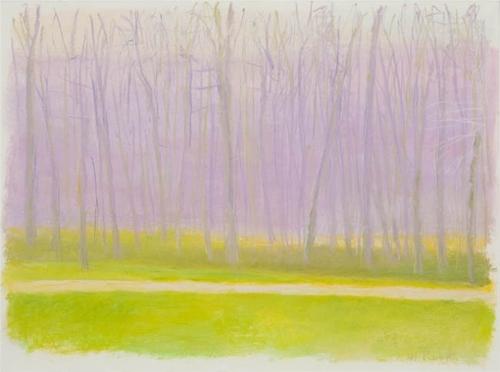
“Subtle Pink“ (2000)
______
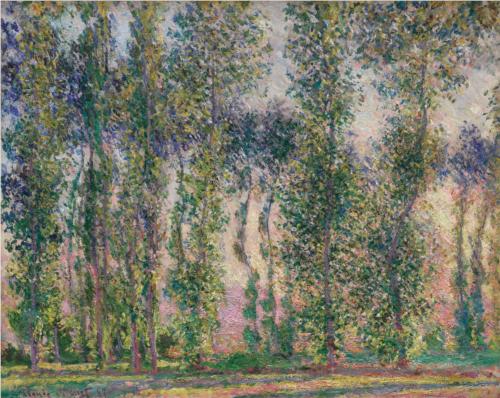
“Poplars at Giverny” (1887)
________
I would also compare his “Orange Cloud Over the Adriatic Sea“
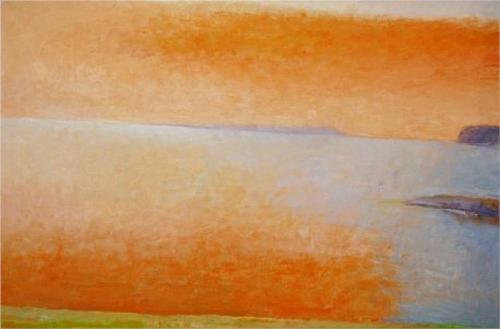
“Orange Cloud Over the Adriatic Sea“ (1996)
______
to Monet‘s “Impression, Sunrise“
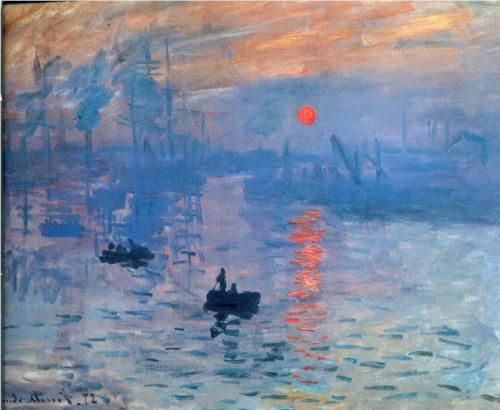
“Impression, Sunrise“ (1873)
__________
what do you think
Richard
psst: art, like novels, has its templates
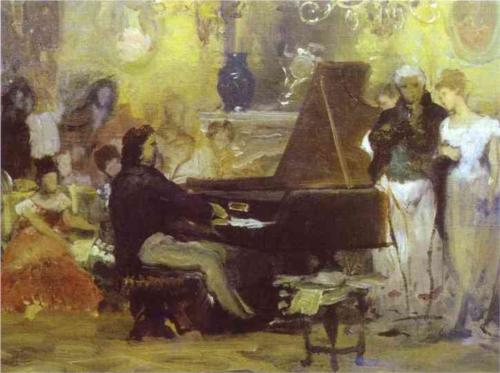
“Chopin Performing in the Guest Hall- of Anton Radziville in Berlin In 1829” (1887)
__________
no sooner does one inveigh against an
attitude than that attitude turns around
and slaps you in the face, my, however
brief, enrolments at art school, musical
conservatories, and creative writing
classes, were not, I think, without some
merit, some would even say much merit,
despite my short disparagement of them
in my last blog, there are tools for every
art, schools have the machinery to
channel inspiration
Hans Hofman must’ve believed he was
painting a “Poème d’amour“ when he
painted it, why otherwise would he
have painted it, despite myriad
objections, and general
incomprehension, could he have
known that no one would get it, did
he care, who called it art
did Chopin know when he wrote his
first set of “Études”, opus 10, a
theoretical set if there ever was one,
a set of fiendishly challenging
technical exercises, that they would
define the Romantic Period, an era
given over to the very heart, he was
23, having fun
what is art, art is what works, art is a
consensus, sometimes you’ll get it,
sometimes you won’t, sometimes I
get it, sometimes I don’t, art is in the
eye of the beholder, just like beauty
and love
Chopin, the theoretician, produces a
resounding argument for the technical
side of composition, the cerebral, this
is perhaps why they are my favourites
of his compositions
but he hasn’t left out the very centre
of music, how it connects, how it can
carry you along, even to enchantment,
he hasn’t left out the enchantment,
these to me are poems of love
he calls them études, opus 10 and 25
who’d ‘a’ thunk it
enjoy
Richard
“Orange Cloud Over rhe Adriatic Sea” (1996)
_______
a reader writes, about “Poème d’amour“,
Hans Hofman
“This is a bizarre painting. It bewilders me. I can’t make sense of it. But maybe that’s the point.”
below is my answer
Richard
______
with the invention of the camera, Brain,
representational art became irrelevant,
unable to present the accuracy a
photograph would it had to discover
for itself an alternate purpose, which
is to say, reinvent itself
the medium became the message,
as Marshall McLuhan would’ve
put it, art began to study itself, it
reached for its sinews, arteries,
its colours, textures, its planar,
dimensional, limitations, limits
its form, in other words, was
becoming its substance
Abstract Expressionism was the
nadir of this movement, after the
less ethereal, more visceral,
German Expressionism, and up
to Andy Warhol, who brought us
back down to earth again with
pictures of Campbell Soup cans,
Marilyn
more matter, less theory
note the residual attachment to flat
colour fields nevertheless
that said, what part of Hofman‘s
“Love Poem“ is indeed a love poem,
search me, I think it’s just pretentious,
failed Miro
but do read the sidebar on the upper
left at the site for less partisan perhaps
insights, just click “Show details” there
I don’t either much like Schönberg,
who did the same kind of thing to
music, eviscerated it, I want to see
the body, not the entrails, these
should be studied at art school,
the conservatory, creative writing
classes
but that is of course just what I think
Schönberg and Abstract Expressionists,
however, have left their indelible marks
on art history, commendable marks for
their theoretical underpinnings, rigours
see for instance the marvellous Wolf
Kahn above for the evolution of these
ideas, you get it in less than a minute,
and delight in it
that is what real art does
thanks for asking
Richard
psst: Wolf Kahn was a student of
Hans Hofman, incidentally, he
just put everyday references
back into the picture, I call it
heart, something organic

 Richibi's Weblog