Richibi’s Weblog

Just another WordPress.com weblog

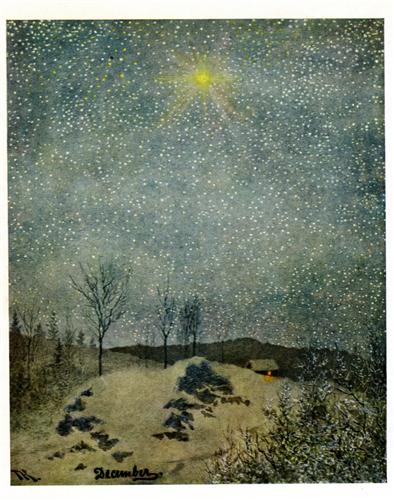
December, 2015‏

"December" - Theodor Severin Kittelsen

December (1890)

Theodor Severin Kittelsen

__________

for Susan

several years ago, a friend of mine
invited me to a concert, Sir Edward
Elgar
‘s The Dream of Gerontius“,
to my mind, a double mountain to
cross, both English and ceremonial,
this is not music you can dance to,
nor even dream on, but music that
demands your allegiance, as well
as your attention

to my mind English music, nearly
an oxymoron, remained stagnant
from Purcell, 1659 to 1695, to the
Beatles
, 1960 to 1970, with very
few exceptions, never managing,
mostly, to hold, even, a tune

ceremonial music suffered much
from its rigid partisan bent,
whether political or religious, try
singing La Marseillaise or
The Stars and Stripes if you’re
not of those nations, you are
instantly sidelined, a mere
spectator, try How Great Thou
Art
at a party, however
inspirational

but the ticket was free, my friend
couldn’t think of anyone else she
could invite who’d enjoy the show,
she’d received the tickets in a
bundle

Gerontius, an old man – you’ll note
the Greek root, geron, as in
gerontology” – is dying, fears the
other side, friends comfort him and,
in particular, a priest sends him on
his way, that’s act one

act two, he’s on the other side,
wherein the dream of being on the
other side, should he still be alive,
or the actuality of being on the
other side, confront him, have I
died, he wonders

I could tell you something about
that

an angel appears to lead him to,
the programme boasted, no less
than God eventually, in a burst,
for the occasion, of musical
pyrotechnics

well, I wondered, let’s see what
they’re going to do with that

it was unforgettable, though my
friend was somewhat more
equivocal, perhaps not as intent,
quite yet, as I was, about meeting
her divine

in search of something lately to
commemorate the several recent
worldwide atrocities, I quickly
settled on the only work I could
think of, apart from anything,
of course, by Bruckner, to mourn
appropriately

I found this extraordinary production
from no less than London’s St Paul’s

though not an oratorio, according
to the composer’s strict intentions,
Elgar‘s The Dream of Gerontius“, a
concert piece, is played here in a
church, an Anglican, indeed,
cathedral, despite the flagrantly
Catholic story being told, Elgar had
converted to Catholicism, the piece
transcends, however, religions

an oratorio, incidentally – not to be
confused with Ontario, the Canadian
province – is an opera conceived
without sets or costumes, usually
associated with significant religious
occasions

the text of “Gerontius” is taken
from a poem of Cardinal John
Henry Newman
, 1801 to 1890,
a Catholic convert himself, only
recently beatified, as a matter
of fact, not yet, however, for
insufficiency of miracles, it
would appear, canonized

The Dream of Gerontius is
Cardinal Newman‘s retelling of
Dante‘s Divine Comedy“, our
original tour guide through
Purgatory, Heaven and Hell,
Newman‘s take on it is
particularly poignant, Elgar‘s
musical accompaniment not
any less

the conjunction of divine,
composer, sacred venue and
superior performers is an
extraordinary occasion,
despite, not least, a
scratchy recording, the
experience here is
profound

bring your solemnity

Richard

by the way: December is the end of
the year, 2016 is already act two, are
you ready to meet your own God/dess

“upon considering large radishes”- me‏

Photo on 2015-11-26 at 6.28 PM

outsized radishes (November 26, 2015)

_____________

upon considering large radishes

I wrote a letter to my love
and marketwards I dropped it,
a little urchin must’ve picked it up
and put it in hir pocket

red peppers there, potatoes, pears,
parsleys, persimmons, parsnips,
cauliflower, cabbage, carrots, celery,
broccoli, rosemary, thyme, and turnips

but the radishes

what big radishes you’ve got, I thought,
the better, I deemed, to adorn my salads,
some red, some pink, some cream, some white,
all primed for my discriminating palate

presented gingerly in leafy green,
sold in inorganic, incongruous thus, individual blue elastics,
a brand name, the merchant’s label,
a small but indestructible, and glaring, plastic

something, of course, outrageous a pound,
or gram, at the indifferent check-out counter,
which, however dogmatic, I invariably pay,
to avoid any indecorous, unpleasant encounter

whatever is under my belt, no one can take away,
I’ve preached, propounded, promoted, pronounced,
before every filet mignon I’ve enjoyed
which another might’ve dutifully renounced

later, slicing these rarities, positively Swiftian,
I thought, verily Brobdingnagian, enormous,
pinwheels on my variety of vivid vegetables,
golf balls on my artfully distributed lettuce

what are they doing, though, to our planet,
momentarily I wondered, however impotently, I’ll admit,
having long ago succumbed to proliferating produce misfits,
with the advent of broccolini and, gosh, multicoloured carrots

my salad, with roasted prawns, and an
oil and vinegar vinaigrette, was to die, incidentally,
though not a word from the urchin,
nor from my love, not, I suppose, unnaturally, neither unexpectedly

may all your vegetables be ever so amazing

Richard


“Suite Française” (2014)

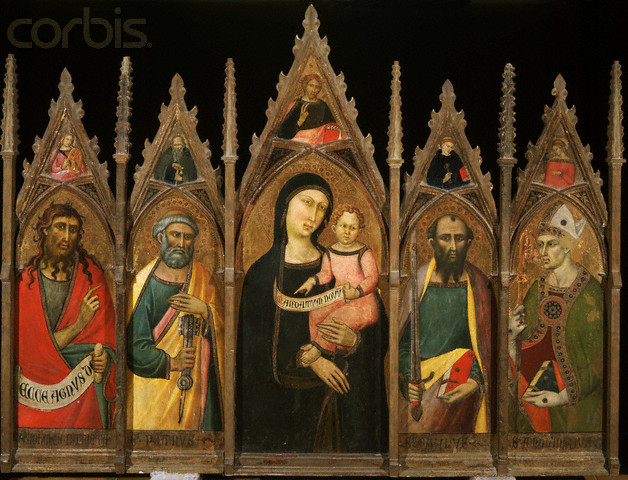
 "Madonna and Child Pentaptych" - Luca di Tommè Madonna and Child Pentaptych

Luca di Tommè

__________

Suite française“, had it not been for
its musical associations, would’ve
been called a “quintette”

a suite is, of course, a series of five
dance movements, a sarabande, a
minuet, a gigue, for instance, most
commonly with reference to Bach’s
Baroque masterpieces

which is to say that without its dance
implications, a suite would’ve been
called simply a sonata with five
movements, or a duet, trio, quartet,
and so forth, depending on the
participating instruments

in fiction, a sequence of five books
equals a quintet, see Durrell’s
Avignon Quintet“, for instance

in art, five panels are called a
pentaptych, see above

five books had been intended for her
Suite française“, but in 1942 their
author, Irène Némirovsky, was arrested
for being Jewish, and died later at
Auschwitz, she’d completed only two
of her intended manuscripts, a tragic
account of day-to-day life during the
Second World War

these texts were only discovered by her
daughters in 1998, who then had them
published in 2002, in just one volume
called Suite française

the superb movie came out last year

it’s a whiff of another era, a
recollection of things past

also a timely consideration of the
flawed foundations of any occupation,
I thought

Richard

psst: incidentally, in French, capital
letters are eschewed – gesundheit –
after the first initial, therefore
the French title, Suite française“,
sports a lower case f

the film, Suite Française uses
the English construction


Polonaise in F# minor, opus 44 – Frédéric Chopin

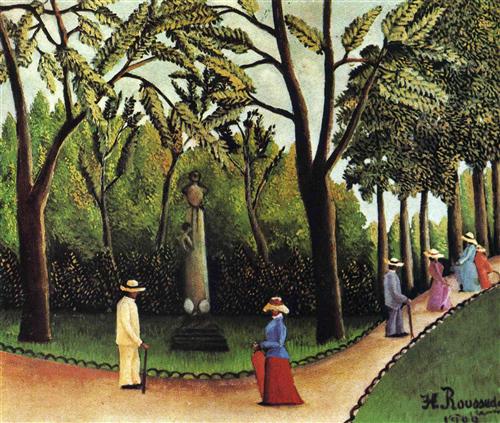
"The Monument to Chopin in the Luxembourg Gardens" - Henri Rousseau

The Monument to Chopin in the Luxembourg Gardens (1909)

Henri Rousseau

__________

a short while ago, my sister touted,
virtually of course, an up-and-coming
pianist, from around the corner,
relatively, from where she lives

Charles Richard-Hamelin was born in
Lanaudière, Quebec, whereas she’s
been living in Montreal forever, apart
from a stint in Timmins, Ontario, where
we were both born, at least a generation
before Shania Twain put it on the map

I left in a hurry, she followed
somewhat less urgently, a condition
of an intermediary marriage, which
engendered a miracle, my single,
but extraordinary, nephew, though
not much else

at his website, Charles Richard-Hamelin
delivers a few examples of his talent, I
listened to a couple of his Chopins, was
especially impressed by their structure,
the way Chopin imbues strict Classical
conditions with melting, Romantic,
sentiment, the very ideal, in my
estimation, of poetry

you’ll note in the Polonaise he plays
the adherence to tonality, never a
melodic line out of place, a strict
tempo, not ever indulgent, or maudlin,
despite evident emotional appeals,
and the recurrence of the original
theme after an however intoxicating
digression, giving subsistence to an
otherwise flight of aimless airs, out
of any context

music gives coherence, order, to an
otherwise inchoate, inscrutable world,
Classical music represents the original
rhythm of the heartbeat – time, regularity,
logic, the possibility of understanding,
the foundation of our present Western
culture, for better, of course, or for
worse, if not, indeed, of our very
species – defrayed of language’s inherent
ambiguities, its malleability, elasticity,
the indeed outright potential for
duplicity it accords the spoken, or
written, word

music is not just entertainment, it is
a philosophy, Apollo’s most transparent
muse

listen

Richard

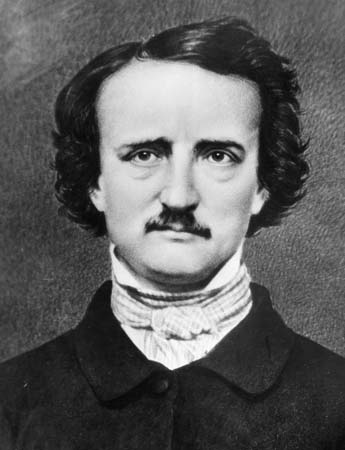
“The Raven” – Edgar Allan Poe

Edgar Allan Poe

Edgar Allan Poe

_________

only a few days ago, of an otherwise
uneventful afternoon, “there came a
tapping, as if someone gently rapping,
rapping at my”
[laptop] door”

“Tis some visitor”, I muttered, “tapping
at my [laptop] door – Only this and
nothing more.”

but to my surprise, to my delight, to my,
lo, roused and rustled up excitement,
for I hadn’t read this poem in countless
years, “in there stepped”, serendipitously,
uninvited, [the] stately Raven of the
saintly days of yore”

thanks, David

Edgar Allan Poe’s The Raven“, after
several perhaps of Shakespeare’s, is the
most famous of dramatic monologues,
certainly the most haunting

though it is set in “bleak December”,
there is no more apt poem to herald,
I think, the feast of Hallowe’en

here Vincent Price channels the epochal
work
, magisterially, unforgettably

watch

Richard

psst:

The Raven

Once upon a midnight dreary, while I pondered, weak and weary,
Over many a quaint and curious volume of forgotten lore—
While I nodded, nearly napping, suddenly there came a tapping,
As of some one gently rapping, rapping at my chamber door.
“’Tis some visitor,” I muttered, “tapping at my chamber door—
Only this and nothing more.”

Ah, distinctly I remember it was in the bleak December;
And each separate dying ember wrought its ghost upon the floor.
Eagerly I wished the morrow;—vainly I had sought to borrow
From my books surcease of sorrow—sorrow for the lost Lenore—
For the rare and radiant maiden whom the angels name Lenore—
Nameless here for evermore.

And the silken, sad, uncertain rustling of each purple curtain
Thrilled me—filled me with fantastic terrors never felt before;
So that now, to still the beating of my heart, I stood repeating
“’Tis some visitor entreating entrance at my chamber door—
Some late visitor entreating entrance at my chamber door;—
This it is and nothing more.”

Presently my soul grew stronger; hesitating then no longer,
“Sir,” said I, “or Madam, truly your forgiveness I implore;
But the fact is I was napping, and so gently you came rapping,
And so faintly you came tapping, tapping at my chamber door,
That I scarce was sure I heard you”—here I opened wide the door;—
Darkness there and nothing more.

Deep into that darkness peering, long I stood there wondering, fearing,
Doubting, dreaming dreams no mortal ever dared to dream before;
But the silence was unbroken, and the stillness gave no token,
And the only word there spoken was the whispered word, “Lenore?”
This I whispered, and an echo murmured back the word, “Lenore!”—
Merely this and nothing more.

Back into the chamber turning, all my soul within me burning,
Soon again I heard a tapping somewhat louder than before.
“Surely,” said I, “surely that is something at my window lattice;
Let me see, then, what thereat is, and this mystery explore—
Let my heart be still a moment and this mystery explore;—
’Tis the wind and nothing more!”

Open here I flung the shutter, when, with many a flirt and flutter,
In there stepped a stately Raven of the saintly days of yore;
Not the least obeisance made he; not a minute stopped or stayed he;
But, with mien of lord or lady, perched above my chamber door—
Perched upon a bust of Pallas * just above my chamber door—
Perched, and sat, and nothing more.

Then this ebony bird beguiling my sad fancy into smiling,
By the grave and stern decorum of the countenance it wore,
“Though thy crest be shorn and shaven, thou,” I said, “art sure no craven,
Ghastly grim and ancient Raven wandering from the Nightly shore—
Tell me what thy lordly name is on the Night’s Plutonian ** shore!”
Quoth the Raven “Nevermore.”

Much I marvelled this ungainly fowl to hear discourse so plainly,
Though its answer little meaning—little relevancy bore;
For we cannot help agreeing that no living human being
Ever yet was blessed with seeing bird above his chamber door—
Bird or beast upon the sculptured bust above his chamber door,
With such name as “Nevermore.”

But the Raven, sitting lonely on the placid bust, spoke only
That one word, as if his soul in that one word he did outpour.
Nothing farther then he uttered—not a feather then he fluttered—
Till I scarcely more than muttered “Other friends have flown before—
On the morrow he will leave me, as my Hopes have flown before.”
Then the bird said “Nevermore.”

Startled at the stillness broken by reply so aptly spoken,
“Doubtless,” said I, “what it utters is its only stock and store
Caught from some unhappy master whom unmerciful Disaster
Followed fast and followed faster till his songs one burden bore—
Till the dirges of his Hope that melancholy burden bore
Of ‘Never—nevermore’.”

But the Raven still beguiling all my fancy into smiling,
Straight I wheeled a cushioned seat in front of bird, and bust and door;
Then, upon the velvet sinking, I betook myself to linking
Fancy unto fancy, thinking what this ominous bird of yore—
What this grim, ungainly, ghastly, gaunt, and ominous bird of yore
Meant in croaking “Nevermore.”

This I sat engaged in guessing, but no syllable expressing
To the fowl whose fiery eyes now burned into my bosom’s core;
This and more I sat divining, with my head at ease reclining
On the cushion’s velvet lining that the lamp-light gloated o’er,
But whose velvet-violet lining with the lamp-light gloating o’er,
She shall press, ah, nevermore!

Then, methought, the air grew denser, perfumed from an unseen censer ***
Swung by Seraphim whose foot-falls tinkled on the tufted floor.
“Wretch,” I cried, “thy God hath lent thee—by these angels he hath sent thee
Respite—respite and nepenthe **** from thy memories of Lenore;
Quaff, oh quaff this kind nepenthe **** and forget this lost Lenore!”
Quoth the Raven “Nevermore.”

“Prophet!” said I, “thing of evil!—prophet still, if bird or devil!—
Whether Tempter sent, or whether tempest tossed thee here ashore,
Desolate yet all undaunted, on this desert land enchanted—
On this home by Horror haunted—tell me truly, I implore—
Is there—is there balm in Gilead? ***** —tell me—tell me, I implore!”
Quoth the Raven “Nevermore.”

“Prophet!” said I, “thing of evil!—prophet still, if bird or devil!
By that Heaven that bends above us—by that God we both adore—
Tell this soul with sorrow laden if, within the distant Aidenn, ******
It shall clasp a sainted maiden whom the angels name Lenore—
Clasp a rare and radiant maiden whom the angels name Lenore.”
Quoth the Raven “Nevermore.”

“Be that word our sign of parting, bird or fiend!” I shrieked, upstarting—
“Get thee back into the tempest and the Night’s Plutonian ** shore!
Leave no black plume as a token of that lie thy soul hath spoken!
Leave my loneliness unbroken!—quit the bust above my door!
Take thy beak from out my heart, and take thy form from off my door!”
Quoth the Raven “Nevermore.”

And the Raven, never flitting, still is sitting, still is sitting
On the pallid bust of Pallas * just above my chamber door;
And his eyes have all the seeming of a demon’s that is dreaming,
And the lamp-light o’er him streaming throws his shadow on the floor;
And my soul from out that shadow that lies floating on the floor
Shall be lifted—nevermore!

Edgar Allan Poe

* Pallas Athene, Greek goddess of wisdom,
courage, justice, the arts, patroness of
Athens

** Pluto, Greek god of the Underworld

*** censer, a vessel for burning incense

**** nepenthe, a drug which induces
forgetfulness

***** balm of Gilead, a rare perfume of Gilead,
a region east of the River Jordan, reputed to
have been a universal cure

****** Aidenn, paradise
a reader writes‏

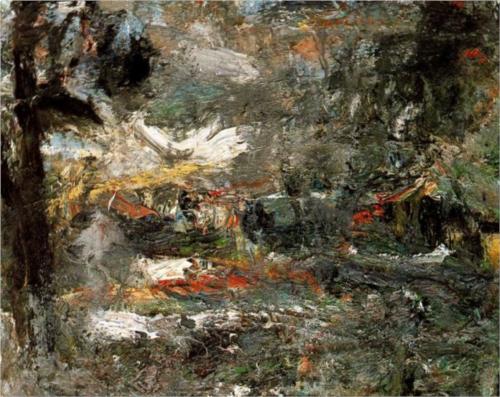
"November" - Eugène Leroy

November (1988)

Eugène Leroy

_________

a reader writes about Coming to
New York – John Updike
“,
my last
weblog entry

kurtnemes
October 30, 2015 at 12:00 pm

Nice post. Yours is a[s] poetic as Updike’s. Do you live there now? My wife and I spend June of 2013 in the Village and June of 2015 in Beacon, NY. When in NYC I always feel more alive, and it’s because of the frying bacon cheek-by-jowl with the Flat Iron Bldg, the Whitney, Union Square, Grand Central Station.

when my reply to him became too long,
and a paean to Vancouver, I thought I’d
make my tribute more formal, include it
in my main text, I hope you enjoy it

while I lived in Toronto, Kurt, ’68 – ’82, New York was my playground, Toronto, the Good, was still coming out of its WASP insularity, fun was a dirty word – when I moved to Vancouver, the only thing I missed, I used to always say, was civilization, or, interchangeably, New York

Vancouver has grown, of course, since then, but it still isn’t New York, we have no theatre to speak of, no competing orchestras, a modest art scene, thanks to, especially, significant art exhibitions on occasion, and here and there an errant, inspired, flower – the recital society, however, has been impressive, with a catalogue of international names visiting often

for Vancouver is indeed beautiful, breathtakingly so, right now the autumn colours are bold, bright, infinitely remarkable, enough to make you believe in God/dess

also the mountains make a splendid backdrop

thanks for the likeness to John Updike, a shot in the arm for someone who thinks he might be a poet

Richard

psst: Kurt has a blog with noteworthy
information about, esoteric even,
Classical music – check him out

thanks Kurt

“Coming into New York” – John Updike‏

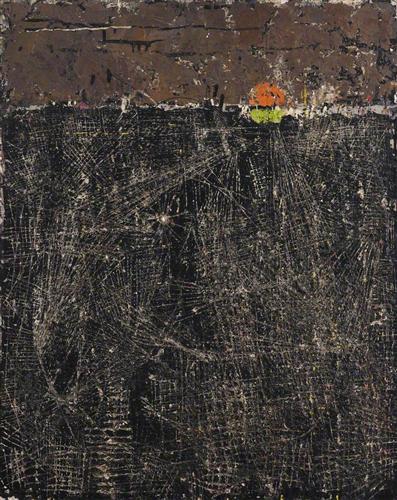
 "The Black City l (New York)" - William Congdon

The Black City l (New York) (1949)

William Congdon

________

at he other end of the continent from
Vancouver there’s New York, perhaps
not [t]he most liveable city on the
planet
but at one point the very
centre of the world, I know, I was
there, Liverpool, with even the
Beatles, had nothing on New York
City then

but that’s before Reaganomics and
Margaret Thatcher, since, Milan,
Tokyo, other cities have gotten into
the act, dulling some of New York’s
resplendence, glamour, magic

from the airport, rather than Updike‘s
Providence, the city buzzes with an
energy for me that’s electric, the
horizon sizzles already with a current
I feel in my skin, like watching bacon
fry, it commands your attention, all
grey, of course, with the washed out
colours of commercial advertisements
the size of buildings lining intermittently
the road in

New York seems a furnace, and it is,
whipping up Dante’s Inferno in all of
its myriad avenues and cells, but also
giving you flashes of Paradiso just
around any corner, the work of
inspiration, imagination, serendipity
and good will, the other side of the
infinitely variable human condition

here’s John Updike‘s equally idiosyncratic
picture of his coming home, however
more apocalyptic

Richard

_________________

Coming into New York

After Providence, Connecticut—
the green defiant landscape, unrelieved
except by ordered cities, smart and smug,
in spirit villages, too full of life
to be so called, too small to seem sincere.
And then like Death it comes upon us:
the plain of steaming trash, the tinge of brown
that colors now the trees and grass as though
exposed to rays sent from the core of heat—
these are the signs we see in retrospect.
But we look up amazed and wonder that
the green is gone out of our window, that
horizon on all sides is segmented
into so many tiny lines that we
mistake it for the profile of a wooded
hill against the sky, or that as far
as mind can go are buildings, paving, streets.
The tall ones rise into the mist like gods
serene and watchful, yet we fear, for we
have witnessed from this train the struggle to
complexity: the leaf has turned to stone.

John Updike


“Vancouver” – Philip Resnick

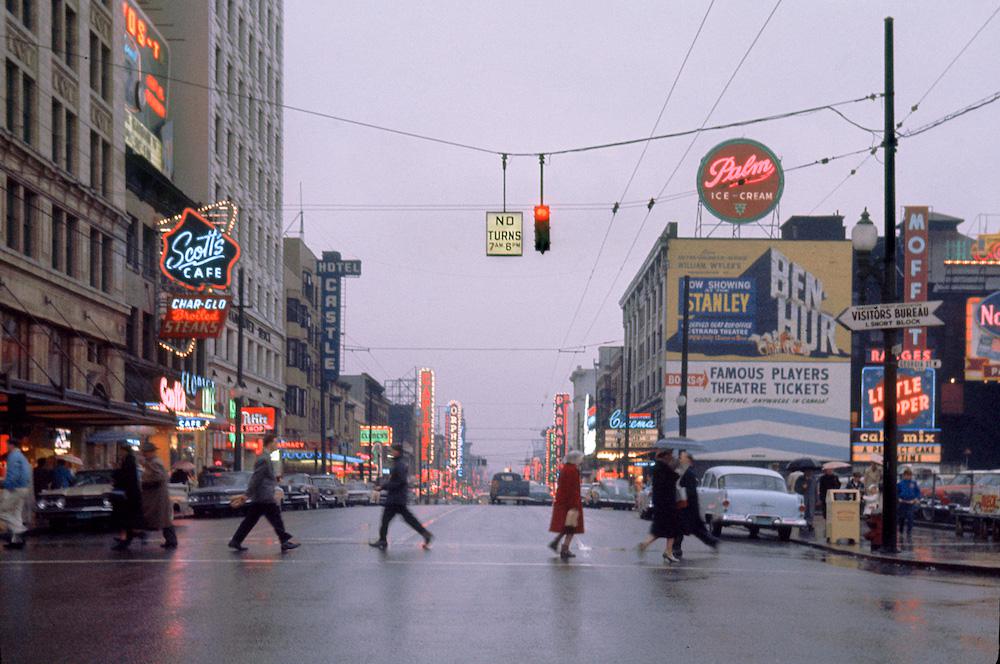
"Crosswalk" - Fred Herzog

Crosswalk (1960)

Fred Herzog

_______

not many poems exalt a city, the first
for me was Sandburg’s Chicago, a
far cry from Shelley, Byron, Keats,
and finally something that I could
sink my teeth into – though pretty,
the earlier, Romantic, poems had
been prissy, effete, skylarks,
Grecian urns, the irrelevant fall of
Babylon to the Assyrians
to me

– a lot of festooned air, I thought,
signifying nearly nothing, despite,
afterwards, its often very clever,
indeed truly inspiring, aphorisms

“Beauty is truth, truth beauty, — that is all
Ye know on earth, and all ye need to know.”

for instance

but I was young then, have gotten through
Romanticism’s idiosyncratic pretensions
to its noble universal heart, maybe ‘ve
even picked up a few of its literary
excesses since, what do you think

here’s one, right up there with Chicago“,
about Vancouver this time, my city

and it’s a dandy, I think

come visit

Richard

_______________

Vancouver

The most liveable city on the planet, they say,
which seems true enough on a mid-August afternoon,
sailboats dotting the bay,
picknickers at crowded beaches
competing for summer heat
and precious square centimetres of sand.
Sunlight casts its spell,
and hearing over and over again
how wonderful you are
has a hypnotic ring to it,
much like lovers gently rocking
to rhythms of the midnight hour
or first sight of running water to the parched.
We who grow old here
have like Cavafy‘s Alexandrians
learned to treat such messages with suspicion.
Those bereft of love
find little compassion betwixt concrete condo towers,
those with few means dwell in the same Inferno’s circles
as the bereft of other cities,
and those in hawk to the god of greed
are no less addicted for living in the suburbs of insatiability.

Philip Resnick

“King John” – Shakespeare‏

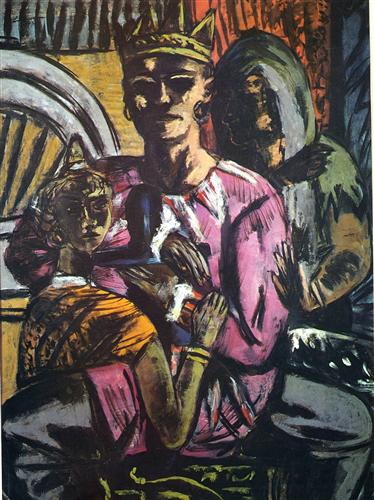
"The King" - Max Beckmann

The King ( 1934 – 1937)

Max Beckmann

_________

King John, 1166 to 1216, was the brother
of Richard the First, “the Lionheart”, and
of Geoffrey, both sons, as well as John,
of Eleanor of Aquitaine and Henry the
Second

you might remember them all from the
classic The Lion in Winter from the
Sixties

in Shakespeare’s story, John has become
king, both Geoffrey and Richard have
already perished, but Geoffrey has left an
heir, Arthur, Constance’s son, and since
Geoffrey had been the eldest, his own son,
it is contested, should be the rightful heir
to the English throne

John is not in agreement, nor is Eleanor,
his mom, but Constance is backed by the
Duke of Austria and the King of France,
who will go to war to unseat John

meanwhile Arthur is too young to be
anything but ineffectual, innocent

they all meet before Angiers, a town
now in France, but ruled then by
England, where a delightful
confrontation occurs at its gates,
the town representative will let in
the King of England but only when
he knows who, of either, He is

war is however averted when a
marriage is suggested between the
two courts, a niece of John, Blanche
of Castille, will marry the Dauphin,
Louis, son of Philip of France,
joining, however improbably, the
two sparring factions

but thereby Arthur’s claim is lost,
and Constance is fully aware of
the inevitable, and treacherous,
consequences

a legate from the Pope, Cardinal
Pandolf, also steps into the fray,
to stir the political pot, pompously,
predictably, punctiliously and
perniciously, not to mention,
perfidiously, in the end, of course

the language is Shakespeare’s, to
be sure, therefore unavoidably
wrought, but with garlands of
irrepressible poetry that is ever
utterly, and irresistibly, enchanting

“I am not mad:”, says Constance to
Pandolf, who’s accused her of being
in such a state

“Lady, you utter madness, and not sorrow.”

Constance replies

“I am not mad: this hair I pull is mine
My name is Constance; I was Geoffrey’s wife;
Young Arthur is my son, and he is lost:
I am not mad: I would to heaven I were!
For then, ’tis like I should forget myself:
O, if I could, what grief should I forget!
Preach some philosophy to make me mad,
And thou shalt be canonized, cardinal;
For being not mad but sensible of grief,
My reasonable part produces reason
How I may be deliver’d of these woes,
And teaches me to kill or hang myself:
If I were mad, I should forget my son,
Or madly think a babe of clouts were he:
I am not mad; too well, too well I feel
The different plague of each calamity.”

act lll, scene lV

has there ever been such a telling
evocation of agony

Stratford’s version is superb, extraordinary,
unforgettable, don’t miss it, just click

Richard

October, 2015‏

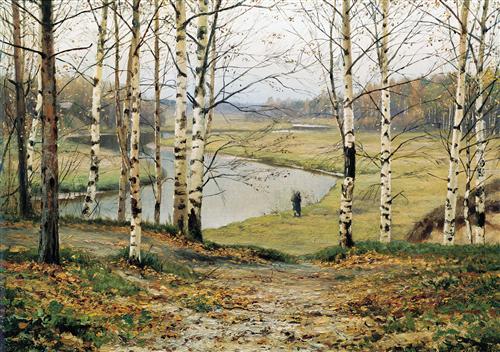
 "October" - Efim Volkov

October (1883)

Efim Volkov

_____

it’s the 3rd of October already, we’ve
slipped nearly imperceptibly, I’ve found,
into this new month, the days here are
crisp, if not cold, the leaves, not yet
fallen, are nevertheless bristling bright
orange, red, and gold, mustard, crimson,
and deep purple actually, in spotty
patches among the still prevalent greens
holding on determinedly to their extra
share of summer

nothing much more from me about this
otherwise unexceptional month, apart
from the introspection inherent in the
painting above
, offered for your
contemplation

and this wonderful piece from Tchaikovsky’s
The Seasons, its October: Autumn Song,
including this epigraph of Tolstoy from its
first Russian edition

“Autumn, our poor garden is falling down,
the yellowed leaves are flying on the wind.”

for your rapture

listen

Richard

psst:

today our building manager left a
chocolate on each of our doors