a rumination on rain
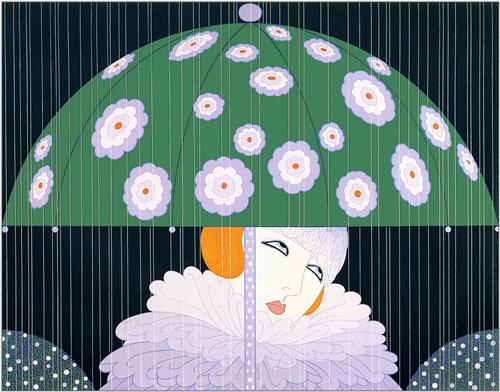


Program for “L’après-midi d’un faune” (1912)

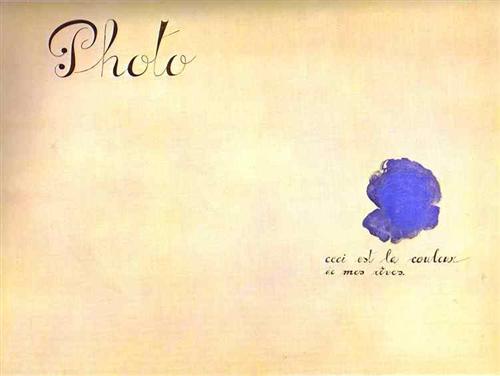
“Spam“
________
at the food market at the corner, an
international conglomerate, which is
close, and consequently convenient,
despite its often ecologically
questionable products, they’ve put
up a placard to tout their healthy,
apparently, nevertheless, fare, a
dude in jeans, life size, greets us
with a smile to outshine the Mona
Lisa‘s
excuse me, I always say before I
realize he’s not real
each time
later, as I’d payed for my generic
organic milk and coffee, one of
the cashier’s was from a distance
trying to delight a baby in a baby
carriage coming my way
cuter than I am, I’ll bet, I said
hard to beat, she responded,
meaning me and not the baby,
I, from the playful twinkle in her
eye, duly and deferentially
surmised
she’s the one who taught me how
to use my credit card more efficiently,
brown hair tied back in a tight short
pony tail, eyebrows to match, and a
smile to light up a stadium
she made my Saturday night, which
at my age, a doddering 66, is all that
is required
meanwhile as I was being turned
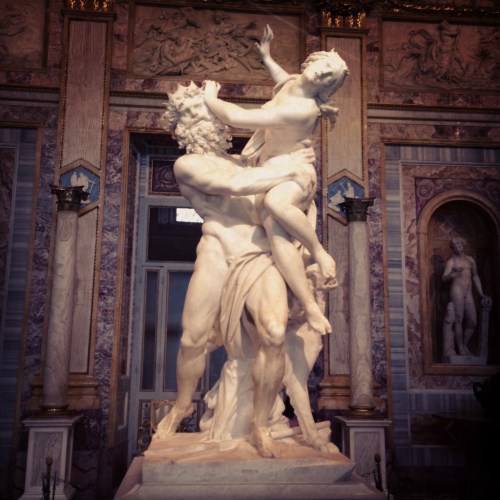
into a teenager, Syrinx was still
being hounded by Pan
listen to Carl Nielsen‘s wonderful
evocation
Carl Nielsen, Danish, 1865, 1931
Richard

for my sister
a competition program that pits
youngsters against each other,
but on a variety of instruments,
with some operatic voice, has
riveted us to our sets on Friday
evenings, seven o’clock local
time throughout Canada
out of the province of Quebec,
however, and therefore in
French
“Virtuose“ lives up to its name
with extraordinary performances
from mere children, and some
adolescents, you can catch all of
the past episodes, and performers,
on their website
last week a young man delighted
us with a movement from a bassoon
sonata, an unlikely instrument, of
Saint-Saëns, his opus 168
my sister expressed surprise,
un basson, she marvelled
quickly I sought out, of course, the
full composition, it’s otherwise for
me like reading one chapter only
out of a book
it’s a short piece, no longer the
grand statements of the earlier
Romantic Period, but a series of
pastiches, fleeting impressions,
impromptu ruminations rather
than extended dissertations,
something like what I’m doing
here with these texts
you’ll recognize also a similar
approach in other composers of
the period, Debussy especially,
but too Satie, Ravel, Poulenc to
name only a few, the speed of
the new century precluded
extended musical peregrinations,
you’ll remark on the dearth of
symphonies, concertos,
composed during this epoch
the composition is in G major, my
cleaning lady had come over, was
already busy in an adjoining room
at the time, I was nearing the
end of the first movement, the
allegro moderato, a wistful
evocation of spring, I thought,
an innocent, fragile blossom
unfurling its delicate petals
with unaffected grace and
unconscious poetry
the final note sounded, the
bassoonist removed his lips from
the tube, but the note kept on
playing, coming, as I soon
understood, not from the video I
was watching, but from the other
room, Jo had turned on the
vacuum cleaner
o my god/dess, I uttered, hurried
over to where she was, subdued
my enthusiasm in order not to
unduly rattle her, as I brimmed
with my scintillating insight
your vacuum cleaner vacuums in
G, I gushed when she turned to
acknowledge me, it continued the
last note, I explained, of the first
movement of my sonata, Saint-
Saëns’ – say that three times with
a lisp, I interjected – until you
turned your vacuum cleaner off,
which is also, I pointed out, a
wind instrument
her delight was modest compared
to mine, however ever nevertheless
congenial, and quickly she returned
to her duties
I went back tickled pink to my
monitor and the following
movement, the sprightly and equally
enchanting allegro scherzando
Richard
“A New Year’s Nocturne, New York“ (1892)
_________
for the past several days, I’ve been
humming the first two movements
of Beethoven’s First Piano Concerto,
the opus 15, being carried away by
the exhilarating energy of its
initial, adamant and authoritative,
dazzling and irresistible “allegro
con brio”, followed by the melting
beauty of its contrasting counterpart,
the meditative and enchanting “largo”,
the final “rondo – allegro sostenuto”
is coming along, but by that time I’m
out of wind and lost in wonder at
Beethoven’s already accomplishment,
the final movement is like the
strawberry on top once I’ve had the
prerequisite cheesecake, verging on
anticlimactic, however thrilling
his First is actually his second piano
concerto, written in 1797, but
composed after his opus 19, written
in 1787, not published until 1801,
either way a new voice was evident
Beethoven’s music was written for
a larger stage, no longer the salons
of the aristocracy, nor, for that matter,
the pews of the fragmenting Christian
Church, the growing middle class
was becoming able and willing to
spend and splurge on frivolities and
entertainment, theatres, concert halls
were popping up, and prospered
Beethoven had to dazzle a
heterogeneous crowd, no longer
just a circle of familiars
and watch, Leonard Bernstein is
spectacular
this is my New Year’s Eve Vienna
performance no matter who is
doing it there this year, nor, for
that matter, that it wasn’t even
performed for New Year’s Eve,
for me, it catches fire, inspires,
it is my New Year’s resolution
I hope it’ll do the same for yours
cheers
Richard
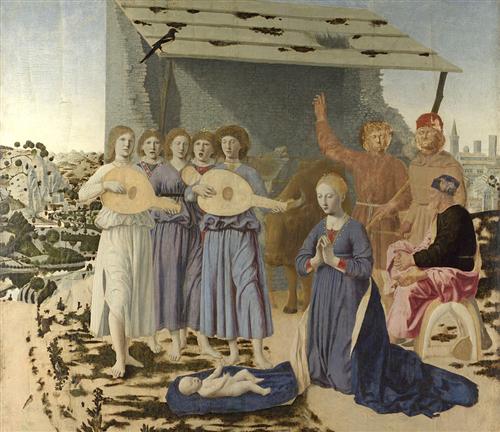
“Nativity“ (1470 – 1475)
__________
on the first day of Christmas, which
is to say December 25, 1734, the first
cantata of Bach’s “Christmas Oratorio“,
“The Birth”, was presented at the
Nikolaikirche, or the Church of St
Nicholas, in Leipzig
it was followed by five other cantatas,
each corresponding to its own
elaboration of the holy event
the Annunciation to the Shepherds, December 26, 1734
the Adoration of the Shepherds, December 27, 1734
the Circumcision – if you can believe it – and Naming of Jesus, January 1, 1735
the Journey of the Magi, January 2, 1735
and the Adoration of the Magi, January 6, 1735
the cantatas are usually played in
groups of three, or in their entirety,
to more easily accommodate too
either long, or short, performances
– the cantatas last only about 25
minutes – though Leipzig, and other
neighbouring communities might
still adhere to their more reverent
original position
an oratorio, of course, is an opera
without sets or costumes, usually
associated with religious services,
and, quite specifically, mostly, with
Bach’s, of whose manifestly prolific
output an astonishing 209 still
survive
a cantata is a work for voice and
instrumentation in several
movements, or contrasting musical
episodes, in Bach’s liturgical ones,
four voices, usually, cover the
ranges, soprano, alto, tenor and
bass, they tell the story, while the
choir stand in for the angels
this performance, conducted by the
eminent Nikolaus Harnoncourt, is
from the Nikolaikirche in Leipzig
itself, the Oratorio‘s very cradle,
its stunning altarpiece, flanked by
two mighty Christmas trees, is
glorious
incidentally the soprano and the
alto voices are taken over here by
cherubs, in the obvious guise of
prepubescents, you can tell by
their missing wings
their more stentorian counterparts,
tenor and bass, are aptly authoritative,
arresting, you’ll feel utterly blessed
here’s the text in English
Richard
psst: merry, incidentally, Christmas
______
last week I interpreted for a man
from Morocco, his French wasn’t
sufficient for him to hold an
interview with his insurance’s
medical examiner, I was the
intermediary
he’d been hit by a truck, a
“camion”, he called it, not at all a
small vehicle, sustained bruises
and chronic pain that significantly
restrained him, he was 63, the
driver, turning right against his
red light, hadn’t seen him
a few days ago on my own way to
the airport, a man got onto the bus
in a wheelchair, found his assigned
place behind the wall of the driver’s
seat, at the next stop another man
got on with a cane and a metal brace
along his lower left limb, and sat on
the bench in front of the first man
jovially the two began to compare
each other’s situation
both had been hit by a car turning
right on a red, neither would ever
walk right again
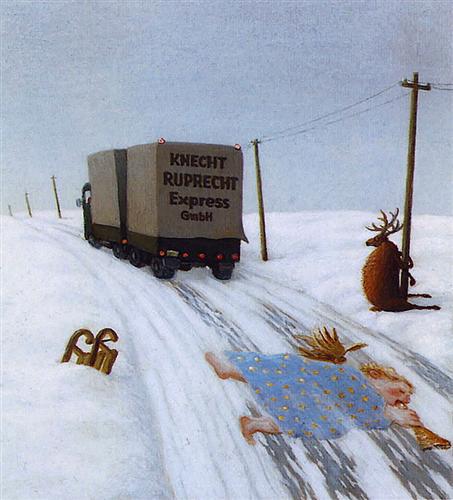
drive carefully, the one you hit might
be an angel, trumpeting, ironically,
caution to the world
or is it, tragically, irony
Richard