Richibi’s Weblog

Just another WordPress.com weblog

to spring

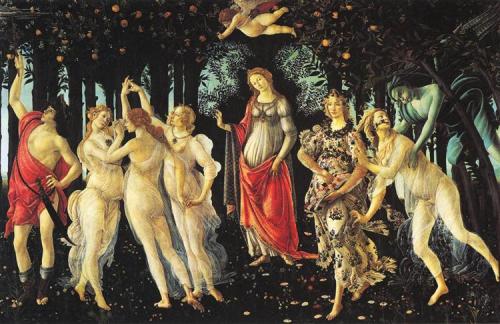
primavera-1478(1).jpg!Large.jpg

     Primavera” / “Spring (1478) 

              Sandro Botticelli

                   _________

according to long tradition, the 21st of March
has been the first day of spring, but yesterday,
the 20th, two people in separate encounters,
told me that spring had started that very day,
throwing my entrenched supposition out the 
window, for better or for worse

regardless, spring has now, surely decidedly, 
sprung

here’s Beethoven celebrating it, though the 
title, Spring“, was probably not his, others 
mostly gave his works their nicknames, for 
their own, usually associative, reasons – his
“Moonlight” Sonata also, for instance – but  
that’s been ever enough for me, it’s the 
music that ultimately matters, I think

the “Spring” Sonata, opus 24 then is for 
violin and piano, his 5th such, written in 1801, 
it is an early piece, full still of the verve we’ve 
heard here already in his Opus 5, no 1 for Cello
and Piano, with his musical phrases flying 
right through the bar lines and off the very
page

Kyung Wha Chung plays the violin, she 
remains after all these years my very 
favourite violinist 

enjoy

and have the greatest of springs, 
whenever you might want to start it


R ! chard

different trains – Reich / Bach

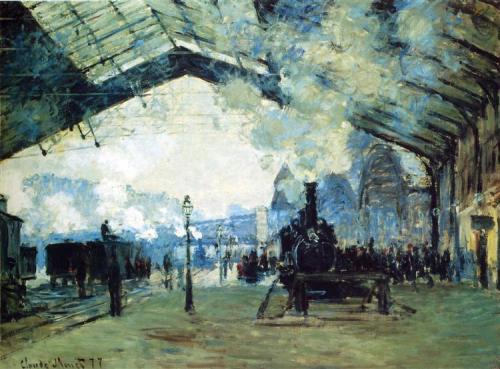
saint-lazare-gare-normandy-train.jpg!Large   

     “Saint-Lazare Gare, Normandy Train (1887) 

            Claude Monet

                   ________

since I’m on the subject of trains, let me
once again highlight a piece that, to my 
mind, is one of the most significant 
works of the 20th Century, Steve Reich’s
Different Trains“, an extraordinary 
homage to the victims of the Holocaust 

it is in three movements, America – 
Before the War”, “Europe – During the 
War“, andAfter the War“, Reich
recounts his impressions of train trips
that marked him throughout, therefore
this is an autobiographical work, as 
well as being an historical document,
and add to that a profoundly moving 
musical meditation on a pivotal 
moment in our history

I used to say that if you’re going to 
open your mouth, you should be 
either entertaining or informative,
preferably both, otherwise keep 
your mouth shut, many took 
offense, I must’ve been 
insufferable

but, I would opine, life is short, 
you’ll have to, I’m afraid, deal 
with your own shortcomings

Reich here has no shortcomings,
though at first you think this might 
be a long trip, with so many 
repeated musical clusters, not to 
mention the strident atonality, it  
soon becomes evident that this  
piece is amazing, a personal and
powerful evocation of a particular 
transformational event seen 
through the eyes of an innocent,
an American child, a poet, 
experiencing, however 
metaphorically, the horror of this
defining moment

style and content, information and 
entertainment, indissolubly gel to 
deliver an unforgettable experience, 
my own such pivotal moment 
would’ve been the Cold War air raid 
shelters, the nuclear threat

Reich holds on to Classical 
conditions by a mere thread, tempo, 
however variable, is solid throughout 
as a rock, dictated by the prepared 
tape that the instrumentalists must
follow rhythmically like a clock

another divergence from the 
Classical model is that tonality  
and recapitulation, apart from the 
repetition of musical clusters, is 
entirely jettisoned 

note, however, the same use of 
repeated clusters in Bach, to 
simulate propulsion, the 
minimalism of the 20th Century is
already prefigured in Bach’s stuff

plus ça change, as we say in French,
there is nothing really new, in other
words, under the sun


in the spirit of juxtaposing items
to discover much more than the 
sum of their parts, listen to Bach’s 
Second Suite, in D minor, for 
inspirational clarification 


R ! chard

psst: there were no trains at the time 
          of Bach, I should note, they were 
          a product of the later 19th-Century,
          its Industrial Revolution, see, for 
          instance, here, or above

French Suite no 3 in B minor – Bach

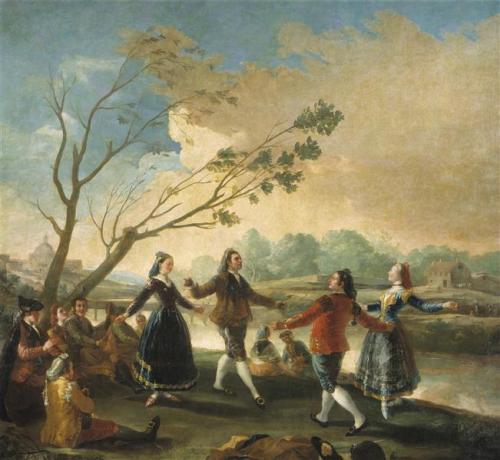
dance-of-the-majos-at-the-banks-of-manzanares-1777.jpg!Large.jpg

   “Dance of the Majos at the Banks of Manzanares (1777)

           Francisco Goya

                _________

upon reading up somewhat on the different
Bach Suites, I’ve provisionally concluded
that the earlier English Suites, 1715 to 1720,
were a modification of the established form 
of the suite, which would not have included 
a prelude, which isn’t, indeed, a dance

the Cello Suites follow, ahem, suit

but by the French Suites, 1722 to 1725, Bach 
is eschewing – Gesundheit – the prelude, but 
inserting, however, an air in his Fourth – an  
air is not either a dance – and mixing up  
their order in the later Suites, a minuet, for 
instance, in the last one of them, his Sixth,  
coming up after the gigue, which sports even
also a polonaise, where in his Fifth, Bach adds  
a loure, I ask you, a slow French gigue, to his  
bristling concoction

the terms French and English, incidentally, 
were added only after Bach’s demise, for 
diverse and uncorroborated reasons, so 
that these titles probably don’t mean much 
to a contemporary audience, who can’t tell, 
anyway, our gavottes from our bourrées

the music of Bach is like that of no other 
composer, he owns essentially the Baroque
Period, having, in fact, wrenched the Era 
from the painters, who’d established it in 
art to such a degree that it defined its
earlier historical phase

with Bach, the torch is handed over to 
music, from then on until the 
Impressionists, the period is defined 
by composers, both Classical, then 
Romantic, with some poets holding 
some sway 

the technique that dominates the music 
of Bach is that of counterpoint, where 
a tune is repeated in the harmonization
a few beats from its first iteration, 
vocally, we call that singing in canon

his music is introspective, as though 
the player were privately meditating,
it has the playfulness of Mozart, but
Mozart is expressive, not interior,
therefore nowhere near as spiritual,
Beethoven will return with a 
profundity that matches Bach’s, but 
with much more Sturm und Drang, 
tempestuous moral struggle, much  
less resignation, ouch, watch

listening to Bach for me is like getting 
on a train, and just letting the rhythm
of the wheels sustain me, as I watch,
indeed introspectively, the surrounding 
countryside, stopping at the musical 
journey’s several halts, its intervals, 
until its final destination, which 
despite, or even because of, taking 
sometimes hours, is nevertheless  
endlessly satisfying, and never  
ever less than, however improbably, 
inspiring

here’s Bach’s Third French Suite
you’ll note it includes an idiosyncratic 
“trio”, not strictly a recognized dance
either – leave it to the saucy French, I   
say, to consider interpolating a trio


R ! chard

English Suite No 3 in G Minor – Bach

suite-fibonacci-2003.jpg

   “Suite Fibonacci (2003) 

           Charles Bezie

               ________

 
before I say much more about his Cello
Suites, let me point out that Bach has
some French Suites, some English 
Suites, on top of similarly structured 
Partitas and Toccatas, the French have 
their tout de suites, and hotels have, 
nowadays, their so named luxury 
apartments 

musical suites are sets of dance pieces, 
by the early 18th Century much stylized, 
with an introductory prélude, an allemande, 
followed by a courante, which is to say, folk 
dances, the first German, the next French, 
then a sarabande, Spanish, followed by a 
couple of galanteries, court dances, 
minuets, gavottes, bourrées, then a final 
English gigue

all of the markings are in French, which
leads me to believe that all of these 
dances must’ve originated at the court 
of Louis XlVth, the Sun King, 1638 to 
1715

but the suggestion is that Europe was 
becoming an integrated community
all of these dances were eclipsed by
the Classical Period, of Haydn and 
Mozart, apart from the minuet, which 
more or less defined, nevertheless, 
that new era

the minuet will die out by the time of
Beethoven, you’ll note, to be replaced
by the waltz, which had been 
considered much too racy until 
transformed by Chopin into a work 
of ethereal art

the Strausses, father and son, gave it,
only a little later, celebratory potency,
but that’s another story


here’s Bach’s English Suite, the 3rd
for context, the French ones are a 
little too salty, as it were, they do not 
quite conform to prescribed suite 
notionshowever might their 
propositions have been, ahem, 
sweet 

meanwhile, enjoy this one


R ! chard

Cello Suite no 1, in G major – Bach

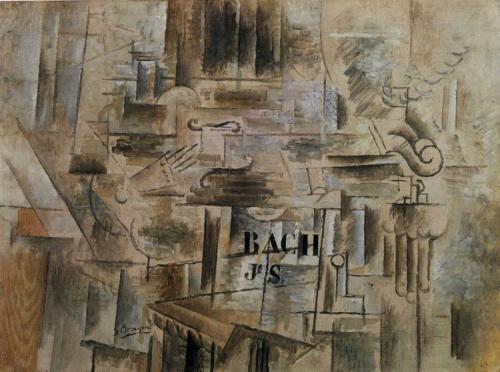
homage-to-j-s-bach-1912.jpg!Large

        “Homage to J.S. Bach (1912) 

              Georges Braque

                   __________

                                      for Lynne, who’s been catching up
                                                         on her Bach, recently
                                                                                   
the cello had been a peripheral instrument,
supplying accompaniment, merely, until 
Bach gave it wings, in new employ as 
Kapellmeister for Leopold, Prince of 
Anhalt-Cöthen, a Calvinist, who decried 
music in his churches, Bach turned to 
secular music mostly during this period,
instead of to the cantatas and oratorios,
the ecclesiastical stuff, he’d in earlier 
services been composing, not at all, 
however, unproductively, for he produced 
during this new period the template 
essentially for the entire modern epoch – 
the “Well-Tempered Klavier”, all of his 
piano literature, the Two- and Three-Part 
Inventions, his Toccatas, his Partitas, the 
sublime Cello Suites, his equally profoundly 
inspirational Sonatas for Unaccompanied 
Violin, are the basis upon which our 
contemporary music still stands, these 
pieces are still the Everests to climb for 
contemporary instrumentalists, you need 
only to listen to know why, by a semi-tone 
a cellist can fall apart, destroy the entire 
experience, distort an otherwise 
transcendental possibility, like a climber 
can tragically lose hir life

listen to Mischa Maisky, to my mind the 
very Zeus of 20th-Century cellists, 
perform Bach’s 1st Cello Suite, and
deliver incontrovertible proof of that,  
however Olympian, claim


R ! chard

up my eccentricities / the Ides of March

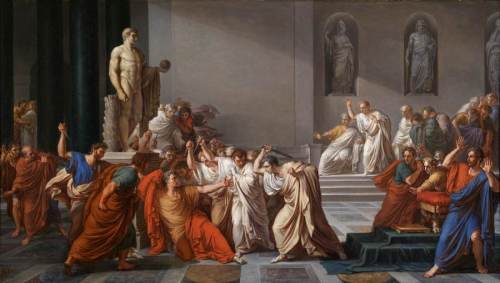
ides1

        “The Death of Caesar (1798) 

               Vincenzo Camuccini

                      ___________

in looking up a requiem to commemorate 
the Ides of March, today, a date imprinted  
on our collective consciousness since 
Shakespeare’s “Julius Caesar”, act l, 
scene ll –

    Soothsayer:   Beware the Ides of March.

    Julius Caesar:   What man is that?

    Marcus Brutus:   A soothsayer bids you beware the Ides of March.

    Julius Caesar    Set him before me, let me see his face.

    Cassius:   Fellow, come from the throng, look upon Caesar.

    Julius Caesar:   What say’st thou to me now? Speak once again.

     Soothsayer:   Beware the Ides of March.

    Julius Caesar:   He is a dreamer, let us leave him. Pass.

– I found an entirely appropriate work,
though with more contemporary, and 
consequently more immediate, 
associations 

but first, let me say more about both 
Julius Caesar and Shakespeare

Caesar died on the Ides of March, 
notoriously, and ignominiously – 
though ruthless in his own way, 
not to mention also flamboyant,  
Caesar had been a ruler conscious 
of his constituency, and therefore 
socially responsive, giving, for 
instance, citizenship to residents 
from far away, a contentious issue 
still nowadays, and support for 
veterans, another hot political 
topic

he was also the lover of Cleopatra, 
among apparently many other trysts, 
not to mention, it has been suggested, 
of King Nicomedes lV of Bithynia

regardless, he is the template for 
modern rulers, eclipsing Alexander
the Great by a long shot, who else 
has a very month, July, named after 
him, apart from Augustus, Caesar‘s
heir and successor

his complete literary works have only 
recently come out in English, an
apparently, and most undoubtedly,
significant enterprise, Caesar would 
be, of course, subjective, therefore
probably indifferent to, or more 
unforthcoming about, his less savoury
excesses – he’d apparently cut off the 
hands of soldiers he had conquered,
something he never mentioned  

should we consider the impunity of our 
own 21st-Century autocrats – who will
blithely destroy communities with 
lethal chemical agents, and even, in
like manner, specifically target 
individuals – with less condemnation
and horror

nobody cared, by the way, about the 
Ides of March, until Shakespeare 
suggested, for all time, that we 
should beware of it

and we’ve been doing so ever since 


March 11th, 2011, was the date of the
Japanese tsunami, the earth shook, 
thousands died, the devastation was 
unimaginable, including nuclear 
radioactive explosions

Tōru Takemitsu‘s Requiem, written
in 1957, though not specifically 
related to that national tragedy, is
not at all unrelated to their agony

and through the power of music to
bring souls together, manifestly, 
here and now, his thoughtful
evocation, however dissonant, 
however arhythmic, however 
unhinged from Western Classical 
musical precepts, which might 
very well, I remark, be the point, 
brings souls, if you’ll listen
demonstrably together


R ! chard

psst: did I mention that the words 
          “Tsar” and “Kaiser” are 
          derivations of the name 
          Caesar
what’s up in Pyeongchang / Bach

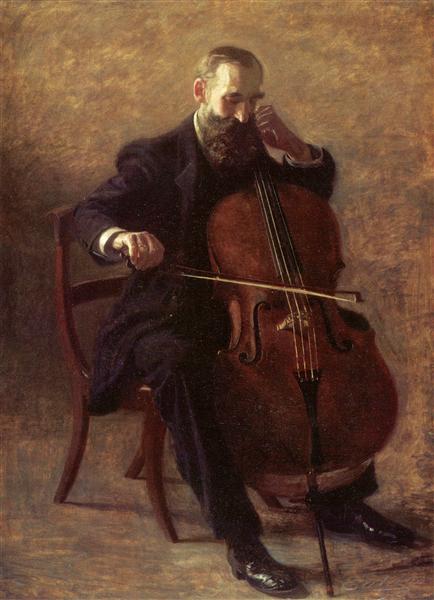
the-cello-player-1896.jpg!Large.jpg

      “The Cello Player (1896) 

              Thomas Eakins

                   ________

though I’d considered presenting all six
of Bach’s Cello Suites – your one stop
shopping for these extraordinary 
compositions – even one only of these
masterpieces floored me each time I
individually listened  

why the Suites, cause I couldn’t follow 
up on Beethoven’s Opus 5, for cello
and piano accompaniment, without 
saying more about the cello, by then 
an instrument of some significance, 
and who could argue, it’s resonance 
thrills you in your bones, in your very 
being

Frederick ll, King of Prussiaplayed it, 
earning for him tailored compositions, 
however controversial, from both 
Mozart and Haydn, but even earlier, 
Bach had composed definitive pieces 
for it, much as he’d done for the 
harpsichord, precursor to the piano, 
students of either still go to Bach for 
their basics, their intricate, exquisite, 
technical proficiency

the cello can play one note only at a
time, which means that, like a voice, 
you’re working without harmony, 
you need to make your own, 
otherwise your performance is 
boring, no one else, as far as I know,
has ever written anything else for 
unaccompanied cello, not even 
Beethoven

I find most performers lend Bach a 
more Romantic air, torrid emotion,
excesses of volume, pauses to the 
pace, ritardandos, rallentandos, 
which aren’t appropriate to the 
more genteel Baroque period,
something I usually find 
unwelcome

but in this performance, I’m sure 
not even Bach would object

I’m offering up first the Sixth Cello
Suite, D major, played by Jian Wang
someone I’d never heard of, in a 
dazzling performance in Pyeongchang
place I’d neither ever heard of, until 
only very recently

it appears both of these new kids on 
the block ought to be on the map


R ! chard

on, however exuberant, ambition

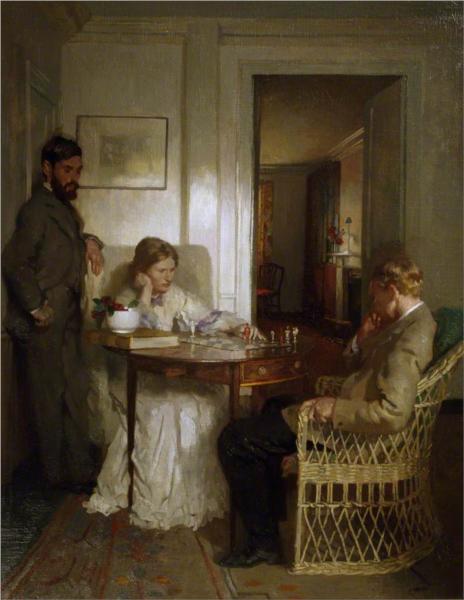
   the-chess-players-1902.jpg!Large.jpg

         “The Chess Players (1902)

                  William Orpen

                          _______

                                      for Joselyn, my Ariel

pumped as I was by my most recent
exegesis about longevity, a dear, 
dear friend, used to, and infinitely 
tolerant, of my, apparently often, 
according to her, exhortations 
about my significant literary abilities, 
sighed when I told her I’d make her 
famous with my artalso my mother,
as well as other influential and 
cherished characters, and produced 
a Scrabble word over our game to, 
in an instant, overwhelm me with 
seven letter concoction, at the very 
last moment, leaving me with a row, 
furthermore, of unused tiles, with,
however trivial, still annihilating, 
consequences

ouch, I said, girlfriend

but I’m not giving up on my promise
to her, I’m reaching for the stars

what do you think


R ! chard

comparing divas

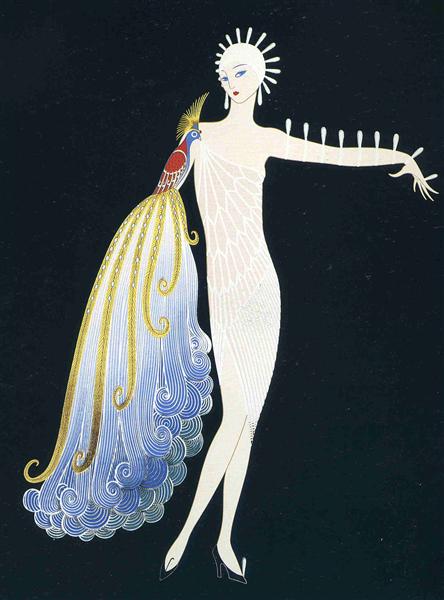
diva-i.jpg!Large

        Diva I 

             Erte

             __

comparing two extraordinary performances,
as I am wont to do with any coupled exhibits,
which render always more than the sum of 
their parts, let me let you consider an 
historical record of a legend already with 
that of one who is about to become one,
Bette Midler, 1971, doing the Continental 
Bathsopposite Vesselina Kasarova at the 
Schwetzinger Festspiele, 2005

the voices in either case are impeccable,
the only difference is the context, you 
choose what you’re into

but let me tell you that Vesselina Kasarova
doesn’t give an inch, she puts on a show 
that makes your jaw drop, trust me, it all 
depends on your mood

Vesselina comes from a different epoch,
despite her contemporary production,
polite, flirtatious, modest, the 18th
Century

but her staccatos, followed by verily,
and however improbably, organic 
legatos, indeed fervent, and  
unmitigated, fermatas, are stunning,  
a touras they say in such instances,  
de force, indeed de maîtrise, de  
mastery, wait till you hear the final 
moments of her surely definitive 
Glück, utterly, and incontrovertibly, 
astounding

Bette is brash, in your face, needs to 
get the attention of guys in towels, 
1971, intent on more prurient 
peregrinations than merely watching 
superstars, however in the making, 
strut their show-stopping stuff

both Vesselina and Bette achieve, I 
think, their goal, each strikingly, and 
unforgettably, each declares herself 
indestructible, a very force of
propulsive nature

watchwatch, which, in your opinion, 
delivers

ouch, both, either, I think

enjoy


R ! chard

the time change / March 11, 2018

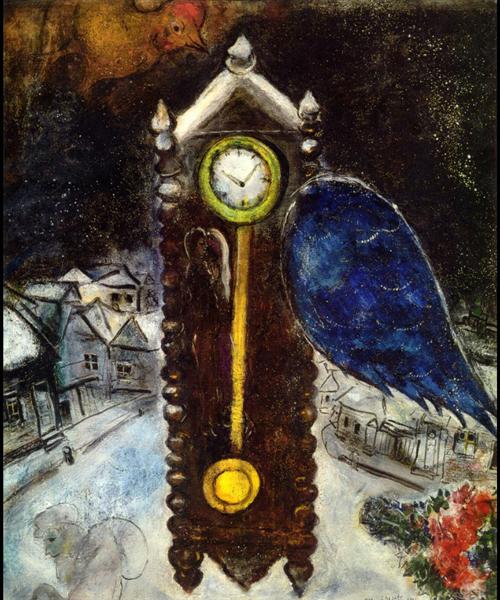
clock-with-blue-wing-1949.jpg!Large.jpg

   “Clock with Blue Wing (1949) 

           Marc Chagall

              ________

with the unruly sleeping patterns of the aged,
mostly, disquieting midnight hours awake, 
fretting ever about not enough proper rest,
even though the next day might be fraught, 
in retirement, with plenty of time to recover, 
I wondered, as such a person, at the 
relevance of this semiannual time change, 
especially among seniors, those dripping in 
time to squander, one day following the next, 
often nearly indistinguishably

all it means to me, I said to my mom, is that
I’ll be falling asleep, instead of at two, at three,
in the morning 

she hasn’t answered yet


R ! chard