Richibi’s Weblog

Just another WordPress.com weblog

String Quartet no 16 in F major, opus 135 – Beethoven
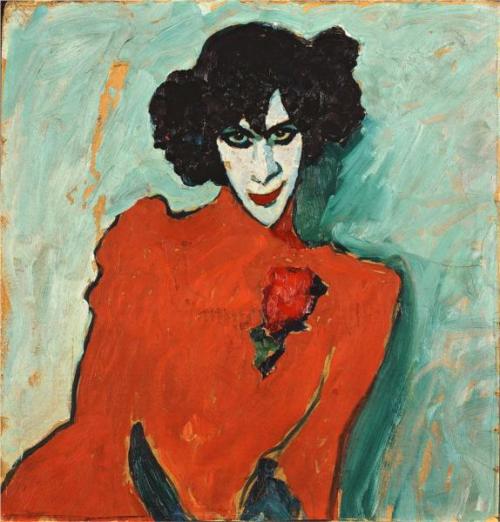
portrait-of-alexander-sakharoff-1909.jpg!Large.jpg

    “Portrait of Alexander Sakharoff (1909) 
      
            Alexej von Jawlensky

                 ______________

if you’re wondering, how could a simple 
composer have such influence on an age,
think of the impact the Beatles had on 
the 1960s, essentially defining them, 
moving them from the pop song, I Want 
to Hold Your Hand“, an updated version 
of anything by Elvis Presley, to their 
transformational Sgt. Pepper’s Lonely
Heart’s Club Band“, thirteen arias in 
search of an opera, paving the way for ,
not only concept albums, but for the 
likes of, for instance, the messianic, 
the oracular, Pink Floyd

Beethoven did much the same for the 
early 19th Century

the 16th String Quartet, his last, is,
like the 15th, in segmented pieces,
not the uninterrupted challenge for 
instrumentalists the continuous
14th is, where neither the players 
nor the audience get time to even 
breathe between movements 

but their composition is so riven 
with musical eccentricities, 
conceptual challenges, that they
are not to be dismissed, are even
epochal

the pauses, the interruptions of the 
beat, the irregular, and disconcerting
sometimes, rhythms, the stridency 
of some of the notes, pitched and
peremptory interpolations, despite 
a sensibility that still pays homage 
between the lines to the Classical 
considerations of deference, 
propriety – you can even feel the 
courtier’s hand, at times, extended 
in the dance, with ever such refined
grace, in order to accompany, to 
partner, to gently lead, his lady 

in other words, the 16th is Abbey
Road“, if I’m to continue with my 
Beatle comparison, for neither  
was the equal of their respective 
counterparts, Sgt. Pepper” ,  
Beethoven’s 14th String Quartet
both of which incontrovertibly and 
absolutely, in their time, changed 
everything, were culturally, thus, 
superior, where the others weren’t, 
didn’t, as effectively, as profoundly, 
leave so strong an imprint  

but you choose, all are extraordinary


R ! chard

psst: in order not to not add the nearly 
          irresistible digital blueprints, 
          which is to say, the not only 
          dancing but utterly illuminating 
          computer graphics, here they are,
          divided in the 16th‘s separate
          movements

             1. Allegretto
             2. Vivace
             3. Lento assai, cantante e tranquillo
             4. Der schwer gefaßte Entschluß. Grave, ma non troppo tratto 
                      (Muss es sein?)  –  Allegro (Es muss sein!) – Grave, ma 
                      non troppo tratto – Allegro
String Quartet no 15 in A minor, opus 132 – Beethoven

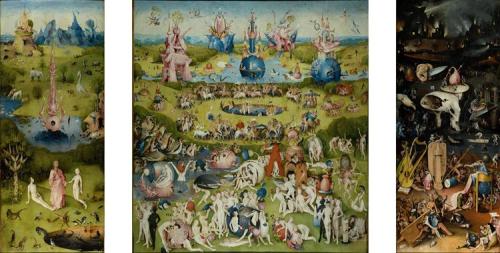
the-garden-of-earthly-delights-1515-7.jpg!Large

   “The Garden of Earthly Delights (1510 – 1515) 

          Hieronymus Bosch

               ____________

if I’ve been spending a lot of time on
Beethoven, it’s that, apart from 
besides him Napoleon, no one else 
dominates in the public imagination 
the early 19th Century, there is no 
one else of such comparable 
importance 

let me also point out that when 
Nietzsche identified his model for  
the Übermensch, Superman, it was  
not the French General, the French 
Emperor, however formidable, 
however illustrious, he named, but 
Beethoven 

Nietzsche had already understood 
that in the future, a future where the
idea of God had been put into question,
an issue which had begun irreversibly 
with the splintering of the Catholic 
supremacy, when the several 
Protestantisms, Lutheran, Calvinist
Anglican then, presented differing 
opinions of each their vehemently
defended deity, the eventual 
resolution would be inescapably up 
for metaphysical grabs, which set 
philosophers, scientists, poets in 
search of answers, which by 
definition must be as varied as 
there are voices

the outcome was the eventual 
declaration of human rights before
the court of international opinion 
as the ruling moral consideration
above the demands of any one 
faith

Nietzsche‘s pronouncement was that
a powerful opinion could therefore 
sway very populations towards its 
vision, however ultimately 
sometimes dire, Nietzsche was 
therefore blamed for predicting, 
for instance, Hitler, as though 
Nietzsche were himself responsible, 
rather than prescient 

one of his books, indeed, entitled 
Beyond Good and Evil“, illustrates
the breakdown of the traditional, 
which is to say Christian, moral
order, powerful people will take us 
where they want to, for better or 
for worse, he prophesied

therefore, note, the very present

but there is also Beethoven, the 
incandescent prophet, Charles 
Darwin, the biologist, who 
changed the way we understand 
ourselves, Sigmund Freud, who 
pushed that understanding even 
further, Albert Einstein, who gave 
us an alternate picture of the 
universe, John Lennon, who 
called upon us all to Imagine“, 
Princess Diana, who demonstrated 
what it was to be good in a world 
that was losing its compass, each 
shaping by force of personality 
our present age, their future
 
all was not, by their examples, 
lost, in other words, some of our 
leaders would be benevolent, 
verily even inspiring, despite the 
prevalence in their midst, the 
existential threat of, nefarious, 
indeed ruthless, and, too often, 
appalling, despots, a category 
too long to even begin to list

here’s, however, Beethoven doing 
again his stuff to inform the tenor
of his time, his 15th String Quartet
another forceful and foundational 
step towards the world that lay,
before him, ahead, our world, for 
better or for worse


R ! chard

String Quartet no 14 in C-sharp Minor, opus 131 – Beethoven

musician

        “Musician 

              Zaya

                 __

                                           for Ian, who surely 
                                              benefitted from my
                                                   intransigeance


after watching performed the first movement 
of Beethoven’s 14th String Quartet at home 
with a friend, I interrupted the piece and 
instead put on the one I’d found with 
computer graphics

not from the beginning, he said

yes, from the beginning, I retorted, a mere
six or seven minutes which’ll be worth it, I
insisted, and they were

four lines of music, the top one yellow for 
the first violin, red for the second, mauve 
for the viola, and blue for the cello, which 
individually advance according to the 
length of each instrument’s notes, the 
height, meanwhile, of the lines indicate 
pitch, top ones high notes, bottom lines 
low, it’s like watching a blueprint of 
what’s happening, and mesmerizing, a 
musical score in very motion, though 
without, admittedly, the bar lines, nor 
key and time signatures, clefs neither, 
for that matter 

the music meanwhile is transcendent

Beethoven here resolves all the issues
I brought up about his two early Late
Sonatas, grab bags of fine tunes but 
without a centre, cuts on an album, 
rather than the visionary 
pronouncements of the prophet I’ve
come to expect from Beethoven

Beethoven pulls out all the stops 
for his 14th, goes from a fugue in 
the first movement, a form 
reminiscent of Bach, who’d been 
completely obliterated during the 
Classical Period, masterful dance 
rhythms then, peppered 
throughout, referencing, indeed
honouring late 18th Century court
music, a set of variations in the
fourth movementand other 
classifications I won’t touch for 
their being too technical, but 
which all illustrate Beethoven’s 
mastery of every musical 
convention until his time, then 
pushes all of it further still into 
the future with this string quartet, 
supreme among all string quartets, 
his 14th

much later, Pink Floyd would pull 
off a similar stunt, take its own 
generation’s music to comparable 
heights with an equally cultural, 
which is to say historical, impact,
the comparison is, I think,  
noteworthy and instructive

Pink Floyd, incidentally, was also 
a quartet, for even more context

note that throughout, tonality, tempo,
and repetition have been strictly, 
though, admittedly, often 
eccentrically observed, the piece has 
been arresting, even riveting, however, 
for some, disconcertingly sobut 
never not understood, never foreign, 
the music isn’t at all alienating, as 
could besay, Chinese opera for most 
of us, we’re still here in our corner of 
the planet following faithfully in the 
Western musical tradition as it thus 
then evolved

I could say all of the above as well
again, by the way, about Pink Floyd  
in their own, ahem, Time


all of that said, this other version,  
by the Alban Berg Quartet, is the 
performance that you’ll remember,
it is still incomparable, the gold
standard

enjoy


R ! chard

String Quartet no 13 in B-flat major, opus 130 – Beethoven

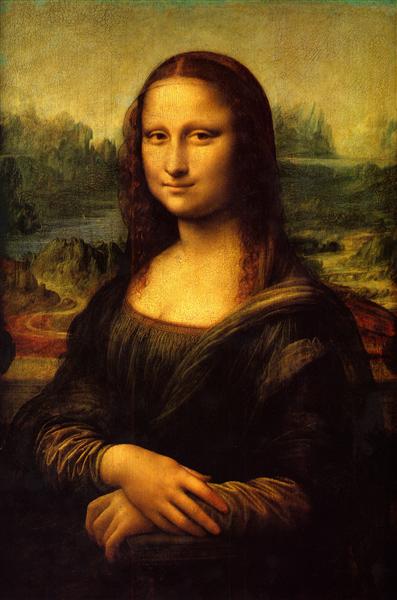
mona-lisa.jpg!Large

    “Mona Lisa (c.1504) 

           Leonardo da Vinci

                      ___________

not liking Beethoven is not an option, it’s 
like saying you don’t like Shakespeare, 
or the Mona Lisa“, or Paris, there’s too
much there to not not like, you either 
don’t know them, haven’t even a clue, 
or you’ve a very good reason for your
disfavour, which you are expected then
and with great authority, to explicate

which is to say, however, that not liking 
Beethoven, but for valid reasons, is a
sign of a sharpened, rather, intellect, 
something that no one, I suspect, 
would want to eschew – Gesundheit 

in his Late Quartets, Beethoven can be 
demanding, and not especially convincing
sometimes in his musical argument, let me 
stress the word “argument” here, a notably 
Beethovenian consideration, the last 
movement of his 13th String Quartetfor 
instance, his famous Große Fuge“*, has 
him verily in a rage

for me, the same objections apply to the 
13th as those I accused him of in his 12th
String Quartet, display of uncoordinated 
pieces, like food stands at public markets, 
apples, however delicious, oranges, 
however juicy, pomegranates, however 
exotic, varieties of fish, meat, cheeses, 
tempting desserts, but where I come out 
with just the basil that I wanted in the first 
place for being overwhelmed, wondering, 
wow, all that Sturm und Drang, but what
just happened

what do you think 

listen


R ! chard

*  do not not click, this is totally 
    transcendental, you’ll verily  
    learn how to read music 

String Quartet no 12, E-flat major, opus 127 – Ludwig van Beethoven

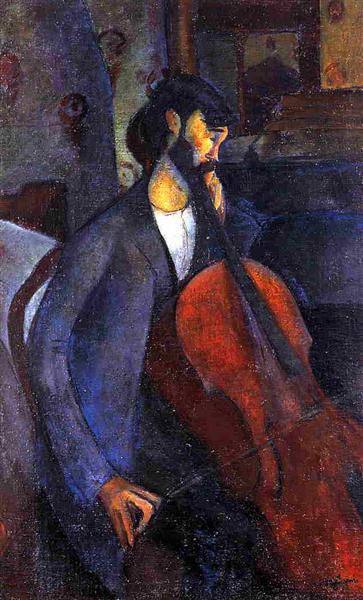
the-cellist-1909.jpg!Large

    “The Cellist (1909) 

          Amedeo Modigliani

                   _________

if I haven’t spent a lot of time with
Beethoven’s 12th String Quartet
ever, it’s that, despite being 
considered one of his “Late” 
compositions, 1825, the 
supposedly probing ones, it is 
still steeped in Classical 
traditions, rather than the 
introspective impulses of the 
“Hammerklavier”, for instance, 
most movements seem to aim
for entertainment, rather than 
for enlightenment

all movements display dance rhythms,
often 3/4 time, which is to say, three 
quarter notes to the bar – one, two, 
three, one, two, three, one, two, three, 
one, two, three, try counting them as 
you listen, a dance beat, instead of 
the probing philosophical explorations 
of his more profound “Late” pieces, 
the “Hammerklavier”, for instance

neither is the 12th especially cohesive
as a piece on its own, the movements
don’t especially relate to one another,
they’re like cuts on an album, however
satisfactory, even delightful, they’re
units in a display of abilities, the 
difference between Elvis Presley‘s  ,
however transcendent, but disparate,
ballads to, later, Pink Floyd‘s epic
metaphysical orations  


but you’ll want to watch the cellist 
here, whose enthusiasm, eagerness,
ardour are such that you might even 
want to shield your eyes on occasion, 
with splayed, even, fingers – whose 
breadth I’ll leave entirely up to your 
personal discretion – though I could 
notmyself, resist for even a moment 
the uninhibited physical expression 
of 
his thoroughly impassioned 
account 

tune in, if you dare


R ! chard

Piano Sonata no 29 in B♭ major, opus 106 – Beethoven

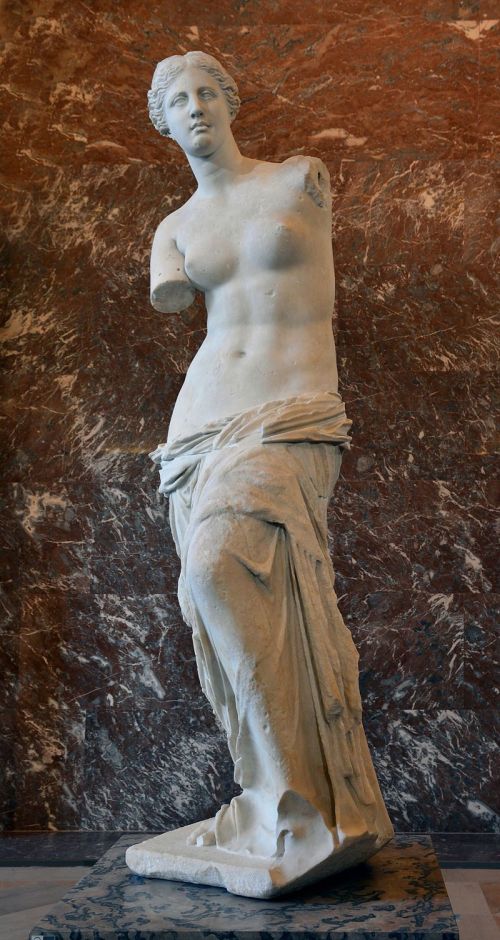
Front_views_of_the_Venus_de_Milo

       Venus de Milo

            _______

here and there, an artwork has presented 
itself to me as transcendent, which is to 
say that in its presence, I quivered, 
experienced verily cosmic transmission 
of energy, a sacred communication 

the Venus de Milo, in the Louvre, who
breathed, existed, as I turned a corner
and beheld her, imperiously presiding,
holding undying, immortal court, as a 
goddess indeed should, would, and
there profoundly did, and does, I  
suppose, still 

the Sistine Madonna“, in the Zwinger
in Dresden, mesmerized me from a 
distance as I approached her, along  
a long row of corridors, towards a 
resplendence that was 
incontrovertible, a very epiphany, I 
still reverberate recollecting her  
incandescent majesty

Beethoven’s Opus 106, his 
“Hammerklavier”, is such a work, 
not evident perhaps before the third 
movement, the “adagio sostenuto”,
which will, I suspect, stop you dead 
in your tracks, arrest you from its 
very first mystifying moments
magical, miraculous   

Beethoven’s “Hammerklavier” is 
the first piece of his to have moved
from being descriptive, narrative, 
to being philosophical, meditative 
in its motivation, emotions are 
evident, but evoked only in the 
context of exploring something 
grander, something metaphysical, 
you come out the other end having 
gone to church, having explored a 
spiritual environment, you exit
perhaps not absolved, but 
somehow understood, reassured
comforted, counted

a lot, incidentally, like Bach, note, 
plying his cantatas and oratorios, 
not to mention his introspective 
fugues, a not to be unremarked 
atavism, how grandchildren 
resemble, even imitate, however 
unconsciously, their grandparents, 
I even have such pictures

more about all of which later 


R ! chard

psst: something I found cute as I 
          brushed my teeth between 
          the movements, the 
          “Hammerklavier”  is in the 
          same key as my electric 
          toothbrush, B-flat major, a
          robust, I assure you, way 
          to greet the morning

“Lament From Epirus” – Christopher King

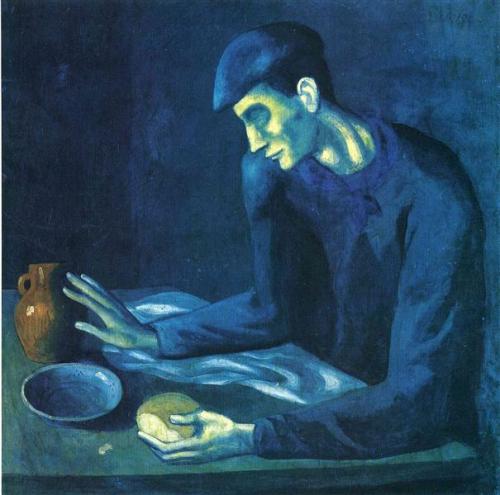
breakfast-of-a-blind-man-1903.jpg!Large.jpg

   “Blind Man’s Portion (1903) 

          Pablo Picasso

                ________

though you’ll have to actively listen 
to Christopher King rather than 
merely hear him hereas you might 
have been doing with many of my 
suggested musical pieces, should 
you be at all interested in the history 
of music, he is fascinatingdates his 
investigations back millennia to very 
Epirus, Ancient, nearly primordial, 
Greece, to mirologia there, ancient 
funerary chants

some have survived, and have been 
recorded for posterity, onein 1926, 
by Greek exile fled to New York City,
Alexis Zoumbas, a year laterhowever 
improbably, by an Americanblind 
man, his own story inspirational, akin 
to that of Epictetus, one of the two 
iconic Stoic philosophers, the other,
incidentally, an emperorthough the 
blind man here, Willie Johnson, was 
never himself slave, but only, by a 
historical whisker, the emancipations 
of the American Civil War


Christopher King‘s comparison
of an Epirotic miralogi with an 
American one brings up, for me,
the difference between Mozart 
and Beethoven, notice how the
Willie Johnson version is more
rhythmic, the cadence is much 
more pronounced than in the 
Greek one, Johnson would’ve
got that from the musical 
traditions Europeans had 
brought over from their native 
continent, probably also from
Africa, Africans

Beethoven would’ve been 
surroundedmeanwhile, by Roma, 
perhaps called gypsies then, their 
music ever resonant in his culture, 
not to mention later Liszt‘s, and 
the Johann Strausses’ even, for 
that matter, Paganini also seems 
to have been imbued with it, it 
having come up from Epirus 
through, notably, Hungary – not 
to mention, later still, that music’s 
influenceand I’ll stop there, on
late 19th-Century Brahms


Christopher King, incidentally,
sounds a lot like someone you 
already know, I think, from his 
eschewing Gesundheit – cell 
phones, for instance, to his 
enduring preoccupation with 
death, not to mention his 
endearing modesty, indeed 
his humility, his easy 
self-deprecationdespite his,
dare I say, incontestable, and 
delightful, erudition

makes one wonder why that 
other hasn’t become also 
famous yet

what do you think


R ! chard

mass appeal, or “Missa Solemnis”, opus 123 – Beethoven

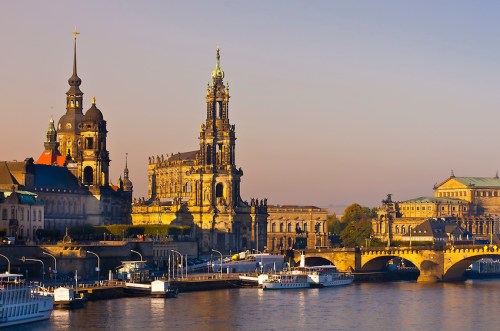
Hofkirche (Dresden Cathedral) and the Elbe River, Dresden, Saxony, Germany

    from the centre, the Hofkirche, the Dresden Cathedral, across from the 
    Augustusbrückeor Augustus Bridge, extends into the Zwinger, one  
    of three only palaces in Europe, along with Versailles and Vienna’s 
    Schönbrunndistinctly horizontally to the right, not to be confused 
  with a crook in the Cathedralan intolerable, were it so, ecclesiastical  
   gaffe, it ‘s now become one of the most significant art galleries in  
   Europe, the green rooves, to the right still, are the Semperoper‘s, the   
  black roof, nestling before it, an unforgettable Italian
  restaurant 

  before it all, majestically, the Elbe

        _______

from the very Semperoper in Dresden,
where I’ll ever remember seeing the 
worst “Barber of Seville” I’ve ever seen,
first balcony, left of centre, Figaro came 
out on a motorcycle, I ask you, it was 
downhill after that, my mom, beside 
me, was falling even asleep, we left at 
intermission, soldiered on to a 
restaurant overlooking the Elbe, Italian
if I remember, but utterly more enjoyable 
than the disappointing operatic option, 
there might even ‘ve been a moon at our 
tableside window, picturesquely 
shimmering on the river

but, hey, we both would‘ve stayed,
incontrovertibly, for this performance
Beethoven’s Missa Solemnis“, a late, 
and towering, entry, 1823, in his opus 
– second definition of that word, which 
is to sayhis entire output, all 135 
opuses, first definition there, discrete 
compositions – plus all his works 
without opus – first definition again – 
numbers, WoO

the plural of opusincidentally, can 
also be, both meanings, opera, just 
to confuse things, I use either
interchangeably, according to my 
narrative rhythm

 
missae solemnes, plural of missa 
solemnis, are a particularly Catholic
form of music, going back to the 
very Middle Ages, at which point 
religious art was all that really 
mattered, anything else was entirely
peripheral, of no consequence 

but Catholicism, and its Protestant
offshoots, which is to say, their 
common Christianity, remained 
culturally entrenched during the 
process of their slow disintegration

Nietzsche would, later, take care 
of that, but that’s another story

Beethoven, Mozart, Catholics, if, 
either, only by name, delivered 
missae solemneswhile Bach, 
Handel, both Protestant, 
delivered oratorios, with some 
intermingling

about which, later

Catholic, Protestant expression still
find, even strong, exponents at 
present, though the form is, 
essentially, outdated, our anthems 
are national, now, mostly, if even 
somewhat, that, halfheartedly, when 
notparadoxically, searchingly, 
hopefully, and maybe even
revolutionarily, again, ideological

imagine Imagine for instance, as 
suchjust click


R ! chard

how to read music – Cello Sonata in D major, opus 102, no 2 – Beethoven

head-in-black-and-green-1913.jpg!Large

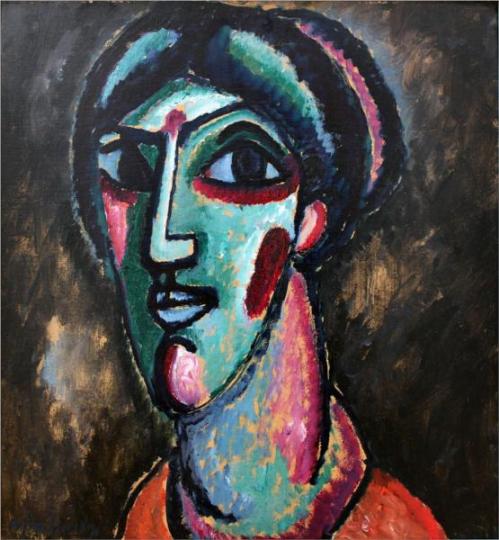
     “Head in Black and Green (1913) 

            Alexej von Jawlensky

                    ___________

the line of music, the essential melody, 
is not resolved in Beethoven until several 
bars from the beginning in his Fifth Cello
Sonata, one note follows another without 
any specific reference to what preceded it 
but the tempo, and the voice, which is to 
say, its tonality

there is ever, however, though perhaps 
sometimes eccentric, a harmony, a 
convincing argument, we are speaking 
the same language

as in reading, one follows the musical 
line for those several bars, hanging 
onto each note for meaning, spotting 
even commas, semi-colons, periods, 
however unconsciously, until one 
reaches the end of the paragraph,
made evident by the recapitulation

therefore music
 
which doesn’t only, however, 
recapitulate, here, but elaborates, 
adding depth, dimension, local 
colour, to the already intricate 
story

Beethoven is challenging the very 
idea of music in this composition
much as later the Impressionists 
did, for instance, when they 
upended the entrenched idea of 
merely representational art – 
process I saw reverberating in my 
very own 1950’s, ’60’s, when even 
Monet, people objected, could’ve 
been managed by their children

Picasso, of course, was, at the time, 
nothing less than a joke, not to 
mention any of the Surrealists, or – 
gasp – the Expressionists, see
above


I prefer the very early cello sonatas  
of Beethoven, for their verve, their 
energy, the second movement, the 
Adagio con molto sentimento 
d’affetto” in this late oneoverdoes 
it, I think, a little, it’s like sitting with 
someone you can’t leavewhose 
sorrow is immense, and which you 
can barely handle, but must, out of,
if nothing else, chivalry, or common,
and insuperable, one hopes, human
compassion
consider, and duly, 
thus, proffer, ideally, grace

who hasn’t been there


R ! chard

String Quartet in F minor, opus 95, “Serioso” – Beethoven

napoleon-bonaparte-in-his-study-at-the-tuileries-1812.jpg!Large

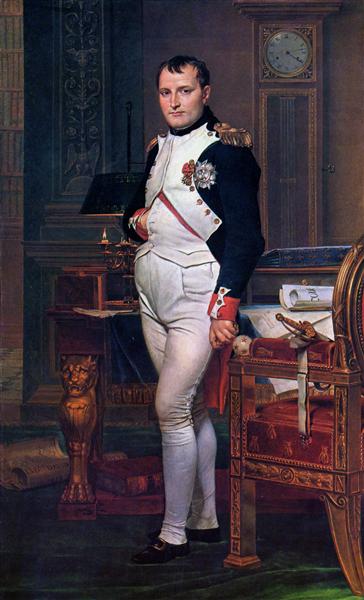
Napoleon Bonaparte in his Study at the Tuileries (1812) 

      Jacques-Louis David

              __________

first of all, let me resolve an issue I’d 
brought up recently, can there be music 
without repetition, recapitulation, of an 
initial musical idea 

no, I emphatically now state, otherwise 
one has a sentence, prose, thus 
reiteration must define as we 
understand it, music

until, of course, I’m made to eat my 
words

secondly, and to the present point
Beethoven’s 11th String Quartet, was 
nicknamed Serioso“, imagine how 
far that label would get one nowadays
but it was a different era, where fun,
levity, wasn’t, creatively, an essential 
component, that only began to happen, 
modestly, in the mid-19th Century, then 
full on in the 20th, after the First World 
War, see the Charlestonfor instance, 
Charlie ChaplinFred Astaire and
Ginger Rogers  

the 11th is the last string quartet of 
Beethoven’s Middle Period – and if 
you think this one is serious, wait
till you hear his Late ones

but don’t let me scare you, they are 
transcendental, very epiphanies,
you’ll verily leave the planet 

note that the music you’re listening 
to in the Serioso is not initially 
cadenced, a line of notes deliver, 
rather, a sentence, which is later 
restated, there are more than the 
four Classical tempi, also, to divide 
the movements, but several, which 
display, nearly indiscriminately, 
much like in literature, or movies, 
variety of emotions, here
however, without the words, one, 
even, specifically called serioso”,
delivered, expressed, spoken, in 
the language of, however, music

listen

I hope you’ll enjoy  


R ! 
chard

psst: note that there are no words in
          the Charlie Chaplin either, but 
          the information is transmitted 
          through the eyes, not the ears