Richibi’s Weblog

Just another WordPress.com weblog

Category: walking in beauty

“The Story of of Cadmus” (lV) – Ovid

     Cadmus Sowing the Dragon’s Teeth” (1610/1690)


               Peter Paul Rubens


                       ___________


                Cadmus beheld him wallow in a flood
                Of swimming poison, intermix’d with blood;


swimming poison, the venom the

dragon had spewed, intermix’d

with blood, after Cadmus had

struck the beast with his jav’lin,

if you’ll remember


                When suddenly a speech was heard from high
                (The speech was heard, nor was the speaker nigh),


the suggestion here is that the voice

is disincarnate, ethereal, otherworldly,

from high, not nigh


                “Why dost thou thus with secret pleasure see,
                Insulting man! what thou thy self shalt be?”


secret pleasure, the self-satisfaction

of the soul, unspoken


what thou thy self shalt be, a prophecy

as cryptic as oracular pronouncements

ever tended to be,also ever ominous


                Astonish’d at the voice, he stood amaz’d,
                And all around with inward horror gaz’d:


all around, the detritus, the waste, the

ravages that surrounded him, that

Cadmus viewed, gaz’d at, amaz’d …

with inward horror


                When Pallas swift descending from the skies,
                Pallas, the guardian of the bold and wise,


Pallas, the goddess Athena, of Wisdom,

of War, bold and wise patroness,

protectress of, among other Greek

cities, incidentally, Athens, site of, on

the Acropolis there, the Parthenon,

her temple


                Bids him plow up the field, and scatter round
                The dragon’s teeth o’er all the furrow’d ground;


we’ve seen this happen before, if you’ll

remember, with Deucalion and Pyrrha,

casting the stones, their mighty mother‘s

bones, to replenish, after the flood, the

resurgent Earth with people


                Then tells the youth how to his wond’ring eyes
                Embattled armies from the field should rise.


wond’ring, startled


                He sows the teeth at Pallas’s command,
 
               And flings the future people from his hand.
 
               The clods grow warm, and crumble where he sows;


Cadmus is sow[ing] people, future

people, however, apparently, military,

at the command of the goddess, but

Pallas, remember, is goddess of  War,

these metamorphosizing, ahem, 

entities would be her progeny, her

spawn


                And now the pointed spears advance in rows;
                Now nodding plumes appear, and shining crests,
                Now the broad shoulders and the rising breasts;
                O’er all the field the breathing harvest swarms,
                A growing host, a crop of men and arms.


an army – listen, this is how I think

Shostakovich would’ve heard it,

from his 7th Symphony, the

Leningrad, its first movement, a

searing allegretto, a movement

he’d initially entitled War before

deciding against it


here’s the entire symphony, should

you be, and I highly recommend it,

into it, a much more convincing, to

my mind, production, however

significantly extended

 
                So through the parting stage a figure rears
                Its body up, and limb by limb appears
                By just degrees; ’till all the man arise,
                And in his full proportion strikes the eyes.


as each of the teeth develops, grow[s]

warm, as each figure rears … and limb

by limb appears, men arise, recognizable

as such, each in his full proportion


                Cadmus surpriz’d, and startled at the sight
                Of his new foes, prepar’d himself for fight:
                When one cry’d out, “Forbear, fond man, forbear
                To mingle in a blind promiscuous war.”


forbear, hold on, desist, stop


promiscuous, indiscriminate


                This said, he struck his brother to the ground,
                Himself expiring by another’s wound;
                Nor did the third his conquest long survive,
                Dying ere scarce he had begun to live.


the new foes are slaughtering each

other, Cadmus doesn’t have to lift

a finger


what’s up


stay tuned


R ! chard

“The Story of of Cadmus” (lll) – Ovid

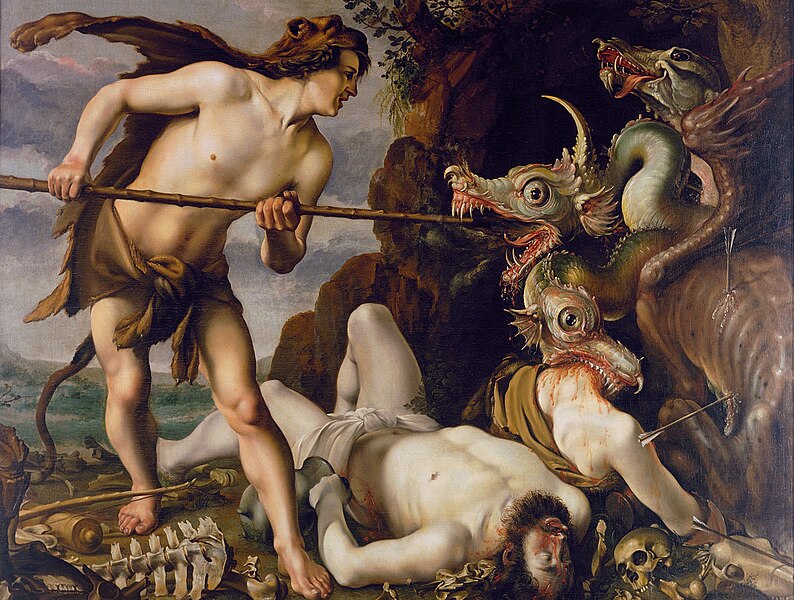
File:Hendrick Goltzius Cadmus Statens Museum for Kunst 1183.jpg

             Cadmus Slays the Dragon


                       Hendrick Goltzius


                                __________


             And now the scorching sun was mounted high,

             In all its lustre, to the noon-day sky;

             When, anxious for his friends, and fill’d with cares,

             To search the woods th’ impatient chief prepares.


th’ impatient chief, Cadmus, prince of

Tyre, had sen[t] his servants to a

neighb’ring grove / For living streams,

if you’ll remembersacrifice to Jove,

to thank that god for these new

dominionstheir new home


             A lion’s hide around his loins he wore,

             The well poiz’d javelin to the field he bore,

             Inur’d to blood; the far-destroying dart;

             And, the best weapon, an undaunted heart.


Cadmus here is a precursor of the

mythologically later Heracles, or

Herakles, or Hercules in Latin, a

hero, which is to say descended

from the gods, in that latter’s case,

son of Jove / Zeus / Jupiter, the

very deity who’d just abducted

Europa, Cadmus‘ sister, mother

of all Europeans, divine or human


             Soon as the youth approach’d the fatal place,

             He saw his servants breathless on the grass;


breathless, not breathing,

deceased


             The scaly foe amid their corps he view’d,

             Basking at ease, and feasting in their blood.


The scaly foe, the dragon


corps, corpses


             “Such friends,” he cries, “deserv’d a longer date;


a longer date, a longer life, a more

extended period of existence


             But Cadmus will revenge or share their fate.”


either [t]he scaly foe will die, the

dragon, or Cadmus himself, in the

attempt to avenge his friends, his

servants breathless on the grass,

he promises


              Then heav’d a stone, and rising to the throw, 

              He sent it in a whirlwind at the foe:


in a whirlwind, taking advantage

of a meteorological condition, as

one would a kite


             A tow’r, assaulted by so rude a stroke,

             With all its lofty battlements had shook;


a tower would’ve swayed at so

powerful a strike, I remember

an earthquake once rocking my

own high rise apartment building

for an unnerving moment before

settling, returning the ground, 

my ground, to its, otherwise

imperturbable, placidity


             But nothing here th’ unwieldy rock avails,

             Rebounding harmless from the plaited scales,

             That, firmly join’d, preserv’d him from a wound,

             With native armour crusted all around.


native, integral, a constituent

part of


             With more success, the dart unerring flew,


the dart, the javelin


             Which at his back the raging warriour threw;


the raging warriour, Cadmus


             Amid the plaited scales it took its course,

             And in the spinal marrow spent its force.

             The monster hiss’d aloud, and rag’d in vain,

             And writh’d his body to and fro with pain;

             He bit the dart, and wrench’d the wood away;

             The point still buried in the marrow lay.

             And now his rage, increasing with his pain,

             Reddens his eyes, and beats in ev’ry vein;

             Churn’d in his teeth the foamy venom rose,

             Whilst from his mouth a blast of vapours flows,

             Such as th’ infernal Stygian waters cast.


Stygian, of the River Styx, which

forms the boundary between the

Earth and the Underworld, named

after the Goddess Styx, daughter

of Tethys and Oceanus, god, and

river also, which encircled the

entire world


             The plants around him wither in the blast.

             Now in a maze of rings he lies enrowl’d,


enrowl’d, encircled, surrounded


             Now all unravel’d, and without a fold;


without a fold, without a hitch, without

an intervening obstacle


             Now, like a torrent, with a mighty force

             Bears down the forest in his boist’rous course.


Bears down the forest, advances,

like a torrent, against the wall of

trees


             Cadmus gave back, and on the lion’s spoil

             Sustain’d the shock, then forc’d him to recoil;


gave back, drew back, backed

away, forc’d … to recoil


the lion’s spoil, the dragon’s

venom and its gore


             The pointed jav’lin warded off his rage:


the dragon readies for the onslaught,

overcoming his, otherwise consuming

rage, at the sight of [t]he pointed jav’lin


             Mad with his pains, and furious to engage,

             The serpent champs the steel, and bites the spear,

             Till blood and venom all the point besmear.

             But still the hurt he yet receiv’d was slight;

             For, whilst the champion with redoubled might

             Strikes home the jav’lin, his retiring foe

             Shrinks from the wound, and disappoints the blow.


the jav’lin is still no match for the,

however wounded, dragon


             The dauntless heroe still pursues his stroke,

             And presses forward, ’till a knotty oak

             Retards his foe, and stops him in the rear;


retards, stops, inhibits


             Full in his throat he plung’d the fatal spear,

             That in th’ extended neck a passage found,

             And pierc’d the solid timber through the wound.


the fatal spear has pierc’d not

only th’ extended neck, but also

the knotty oak behind it, which

had prevented the dragon from

moving onward toward his

escape


             Fix’d to the reeling trunk, with many a stroke

             Of his huge tail he lash’d the sturdy oak;

             ‘Till spent with toil, and lab’ring hard for breath,

             He now lay twisting in the pangs of death.


ding dong, the dragon is, if not

dead, dying


stay tuned


R ! chard

“The Story of of Cadmus” (ll) – Ovid

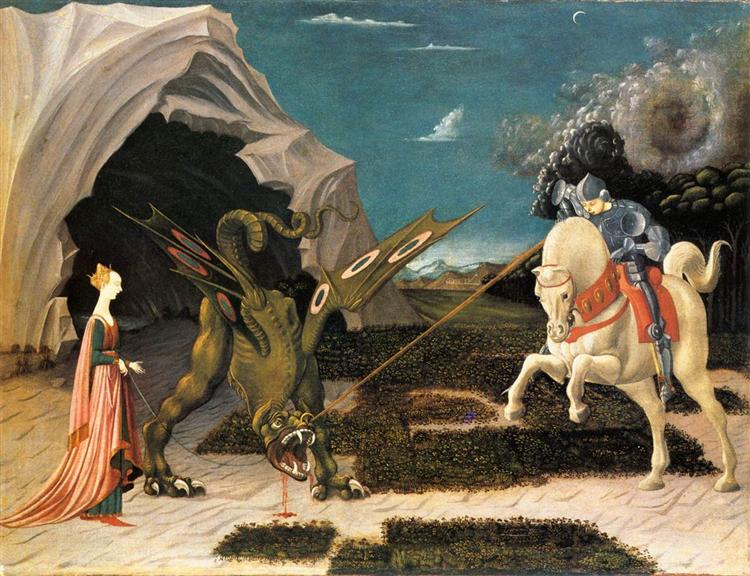
St. George and the Dragon, c.1470 - Paolo Uccello

          “St. George and the Dragon” (c.1470)


                 Paolo Uccello


                            _______


             Cadmus salutes the soil, and gladly hails

             The new-found mountains, and the nameless vales,

             And thanks the Gods, and turns about his eye

             To see his new dominions round him lye;


Cadmus, son of Agenor, brother of

Europa, has, on the advice of the

Delphick oracles, settled where

the lonely cow, / Unworn with yokes,

unbroken to the plow had stoop’d,

and couch’d amid the rising grass,

and stakes there his new appointed

home


vales, valleys


             Then sends his servants to a neighb’ring grove

             For living streams, a sacrifice to Jove.


Cadmus, a prince, would’ve had

a retinue, followers, Hamlet for

instance, his Horatio, his

Rosencrantz and Guildenstern


Jove, note, is the god who abducted

Europa, though Cadmus, according

to our story, isn’t yet supposed to 

know this, never having found his

sister, nor identified, consequently,

her ravisher, namely Jovethe god

to whom Cadmus is now about to

give sacrifice, give thanks


             O’er the wide plain there rose a shady wood

             Of aged trees; in its dark bosom stood

             A bushy thicket, pathless and unworn,

             O’er-run with brambles, and perplex’d with thorn:


perplex’d, a wonderful metaphor

here for entangled, enmeshed


             Amidst the brake a hollow den was found,

             With rocks and shelving arches vaulted round.


brake, bracken, brush


             Deep in the dreary den, conceal’d from day,

             Sacred to Mars, a mighty dragon lay,


Mars, god of War


a mighty dragon, dragons, it appears,

go back to very prehistory, perhaps

as a memory in our reptilian brain of

dinosaurs, and the like, that made its

way into our poetic imagination


see above 


             Bloated with poison to a monstrous size;

             Fire broke in flashes when he glanc’d his eyes:


glanc’d his eyes, threw glances at


             His tow’ring crest was glorious to behold,


crest, as in roosters, or reptiles


             His shoulders and his sides were scal’d with gold;


scal’d, having scales, plates,

overlapping surfaces


             Three tongues he brandish’d when he charg’d his foes;

             His teeth stood jaggy in three dreadful rowes.


rowes, rows, three dreadful ones,

one behind the other


             The Tyrians in the den for water sought,


The Tyrians, Cadmus and his men,

all originally from Tyre


             And with their urns explor’d the hollow vault:


urns, to collect from living streams

within the vault a sacrifice to Jove


             From side to side their empty urns rebound,


rebound, knock against a harder

surface repeatedly


             And rowse the sleeping serpent with the sound.


rowse, rouse


             Strait he bestirs him, and is seen to rise;


he bestirs him, he bestirs himself


             And now with dreadful hissings fills the skies,

             And darts his forky tongues, and rowles his glaring eyes.


rowles, rolls


             The Tyrians drop their vessels in the fright,


vessels, urns


             All pale and trembling at the hideous sight.

             Spire above spire uprear’d in air he stood,


Spire above spire, scale upon scale


uprear’d, reared up


he, the serpent


             And gazing round him over-look’d the wood:


overlook’d, looked over, surveyed


             Then floating on the ground in circles rowl’d;


rowl’d, rolled


             Then leap’d upon them in a mighty fold.


fold, embrace, encirclement


             Of such a bulk, and such a monstrous size

             The serpent in the polar circle lyes,

             That stretches over half the northern skies.


The serpent in the polar circle, Serpens,

a constellation in the Northern Hemisphere

in close proximity to the North Pole


lyes, lies


             In vain the Tyrians on their arms rely,


their arms, their weapons


             In vain attempt to fight, in vain to fly:
             All their endeavours and their hopes are vain;
             Some die entangled in the winding train;


the winding train, the serpent’s

tail


             Some are devour’d, or feel a loathsom death,
             Swoln up with blasts of pestilential breath.


stay tuned


R ! chard

“The Story of of Cadmus” – Ovid

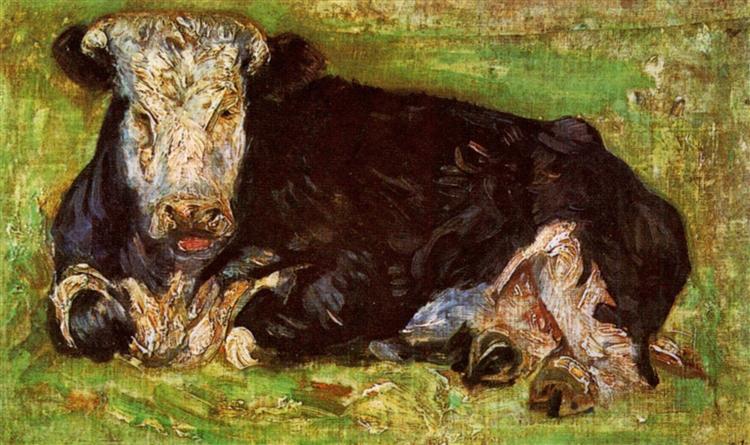
Lying Cow, 1883 - Vincent van Gogh

        Lying Cow(1883)


             Vincent van Gogh


                           ______

            When now Agenor had his daughter lost,


Agenor, king of Tyre, father of

Europahis daughter lost


            He sent his son to search on ev’ry coast;


his son, Agenor’s son, Cadmus,

Europa’s brother


            And sternly bid him to his arms restore
            The darling maid, or see his face no more,
            But live an exile in a foreign clime;
            Thus was the father pious to a crime.


pious to a crime, intent on, devoted to,

having justice restored


            The restless youth search’d all the world around;
            But how can Jove in his amours be found?


amours, loves, trysts, entanglements


            When, tir’d at length with unsuccessful toil,
            To shun his angry sire and native soil,


his angry sire, Agenor, father, sire


            He goes a suppliant to the Delphick dome;


suppliant, supplicant, petitioner,

one in search of a favour


Delphick dome, the Temple of Apollo

at Delphi, where the oracle, Pythia,

proclaimed her cryptic prognostications,

her famously ambiguous prophecies


Delphi, incidentally, was one of several

sacred sites in Greece, sanctuaries,

open to any Greek, or person who

could speak Greek, regardless of

geographical provenance, any

city-statefor instance then, or

kingdom, akin to embassies today,

or places where people can expect

to find similar political haven


Delphi was the destination then also of

pilgrimages, comparable to our own

Santiago de Compostela today, an

ancient path I dearly would’ve, but

never have, unfortunately, undertaken


though I did walk to Mission B.C. some

several years ago, from my home in

Vancouver, to a monastery there, a

place of recuperation when I needed

one, three days there, and a half, three

days and an equal half back, my feet

were blistered, I noticed at one point,

but hadn’t at all registered any pain,

a truth I gathered about the power of

intention, one’s very aim can be a

salve, a balm, a solace, against any

adversity


but back to Cadmus


            There asks the God what new appointed home
            Should end his wand’rings, and his toils relieve.


where do I land, asks Cadmus,where

is my appointed home, my final

destination


            The Delphick oracles this answer give.


The Delphick oracles, subordinates

to Pythia, the high priestess at Delphi


            “Behold among the fields a lonely cow,

            Unworn with yokes, unbroken to the plow;

            Mark well the place where first she lays her down,

            There measure out thy walls, and build thy town,

            And from thy guide Boeotia call the land,

            In which the destin’d walls and town shall stand.”


Boeotiaa region still of Greece


            No sooner had he left the dark abode,
            Big with the promise of the Delphick God,


the Delphick God, Apollo, god of

music, dance, truth, prophecy,

healing, the sun, light, poetry,

among many other things


            When in the fields the fatal cow he view’d,
            Nor gall’d with yokes, nor worn with servitude:


fatal, fateful


gall’d, irritated, frustrated


            Her gently at a distance he pursu’d;
            And as he walk’d aloof, in silence pray’d
            To the great Pow’r whose counsels he obey’d.


the great Pow’r, Apollo, by way of his

Delphick oracles,the high priestesses,

through their counsel, their divinations


            Her way thro’ flow’ry Panope she took,


Panope, plural, were sea nymphs, not

places, in Ancient Greece, therefore

Cadmus must’ve been crossing water,

however flow’ry, I’ll have to check my

Latin text for, maybe, inaccuracies in

the translation


            And now, Cephisus, cross’d thy silver brook;


Cephisus, or Cephissus, a river in Boeotia,

a brook, a stream, anthropomorphized here,

which is to say Cephissus, the flow, the

waterway, is being addressed as a rational

being, I have cross’d thy silver brook, he 

says, speaking to the torrent


meanwhile, to brook, to conquer, to

overcome, a wonderful, a shimmering,

literarily speaking, homonym, which is

to say, a word with two faces


            When to the Heav’ns her spacious front she rais’d,
            And bellow’d thrice, then backward turning gaz’d
            On those behind, ’till on the destin’d place
            She stoop’d, and couch’d amid the rising grass.


she, the fatal cow, see abovehas led

Cadmus to his famed, his mythic,

destination, destin’d place, destiny


stay tuned


R ! chard

“Europa’s Rape” (ll) – Ovid

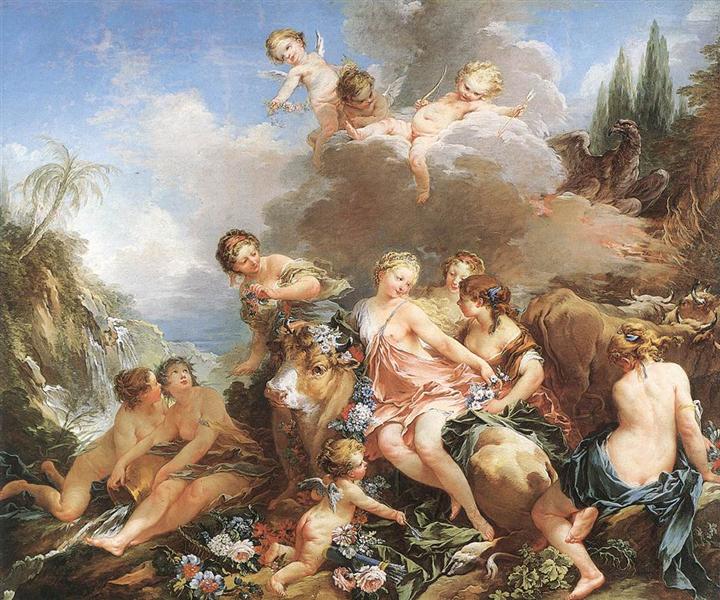
The Rape of Europa, c.1732 - 1734 - Francois Boucher

         The Rape of Europa” (c.1732 – 1734)


               François Boucher


                      ___________


            Agenor’s royal daughter, as she plaid

            Among the fields, the milk-white bull survey’d,


Agenor, king of Tyre, in Phoenicia,

an area comprised then of ancient

Lebanon, as well as a good part of

the Eastern, and later, the Southern,

which is to say the African,

Mediterranean coasts, father of,

notably, Europa, his royal, his

indeed mythic, daughter 


            And view’d his spotless body with delight,

            And at a distance kept him in her sight.


Europa is intrigued, delight[ed], by this

milk-white …spotless …bull, but from

a distance, discreetly, furtively


            At length she pluck’d the rising flow’rs, and fed

            The gentle beast, and fondly stroak’d his head.


pluck’d, dared, mischievously, to

confront


the rising flowers, offering [their] cup

to the sun


            He stood well-pleas’d to touch the charming fair,

            But hardly could confine his pleasure there.

            And now he wantons o’er the neighb’ring strand,

            Now rowls his body on the yellow sand;


to wanton, to play, to frolic, often

immodestly, like puppies, goats


strand, shore


rowls, rolls


            And, now perceiving all her fears decay’d,


decay’d, dispelled, dissipated,

evaporated


            Comes tossing forward to the royal maid;

            Gives her his breast to stroke, and downward turns

            His grizly brow, and gently stoops his horns.


grizly, grizzly, grayish


            In flow’ry wreaths the royal virgin drest


drest, adorned


            His bending horns, and kindly clapt his breast.

            ‘Till now grown wanton and devoid of fear,

            Not knowing that she prest the Thunderer,


the Thunderer, Jove / Jupiter / Zeus


            She plac’d her self upon his back, and rode

            O’er fields and meadows, seated on the God.


however heedlessly, however

immoderately, immodestly,

however innocently


see above


            He gently march’d along, and by degrees

            Left the dry meadow, and approach’d the seas;

            Where now he dips his hoofs and wets his thighs,

            Now plunges in, and carries off the prize.

            The frighted nymph looks backward on the shoar,


shoar, shore


            And hears the tumbling billows round her roar;

            But still she holds him fast: one hand is born


born, borne, held


            Upon his back; the other grasps a horn:

            Her train of ruffling garments flies behind,

            Swells in the air, and hovers in the wind.


see here also for a more windswept

picture of Europamore in keeping

with the last few lines


            Through storms and tempests he the virgin bore,

            And lands her safe on the Dictean shore;


Dictean, of Dicte, or Dikti, a mountain

range in Eastern Crete, site of the

Diktaion Antronor Dictaean Cave,

the place where Jove / Jupiter / Zeus

was apparently born, if it wasn’t the

Idaean Cave, which is to say a cave on

Mount Idatherefore Idaean, also in

Crete, both hollows having claimed

the right to be called the site of the

exalted provenance


            Where now, in his divinest form array’d,

            In his true shape he captivates the maid;


Jove / Jupiter / Zeus manifest, no

longer bull, but divinity, dripping

still in bovine potency, however

residual


            Who gazes on him, and with wond’ring eyes

            Beholds the new majestick figure rise,

            His glowing features, and celestial light,

            And all the God discover’d to her sight.


once, to a man who’d bewitched me,

how could you touch me, I wrote, you

must’ve known you would transfix me,

leave me breathless, which he,

however inadvertently, had, did


I went on, of course, to not populate

continents, nor to become queen of

Crete, but was Europa, in that

instance, before my own exalted

entity 


R ! chard

“Europa’s Rape” – Ovid

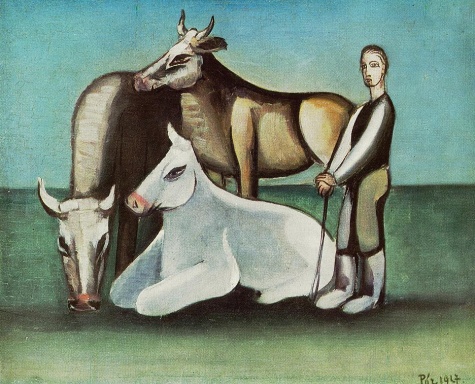
Bulls, 1948 - Bertalan Por

       Bulls” (1948)


               Bertalan Por


                           ____


though I’d heard, indeed, of the rape of

Europa, I wasn’t aware, I’d thought, of

the details, was loathe, therefore, to

read on, in the next segment of Ovid’s

Metamorphoseshaving been earlier

put off by such incidents in that text


as it turned out, Europa isn’t raped,

but, rather, abducted, more or less

willingly, however innocently, by

Jove / Jupiter / Zeus, and will even,

later, consensually, bear his children


who will then migrate, from their base

in Crete, to populate, to people, the

continent which we’ll come to know

as Europe, after their mum


but that’s a whole other story


meanwhile


           When now the God his fury had allay’d,

           And taken vengeance of the stubborn maid,

           From where the bright Athenian turrets rise

           He mounts aloft, and re-ascends the skies.


the God, Hermes / Mercury, if you’ll

remember, had just transformed

Aglauros, the stubborn maid, into a

statue for having been impudent

with him, and mounts aloft now,

re-ascends the skies over Athens,

where the damsel had lived


           Jove saw him enter the sublime abodes,


the sublime abodes, Olympus,

home of the gods


           And, as he mix’d among the crowd of Gods,

           Beckon’d him out, and drew him from the rest,

           And in soft whispers thus his will exprest.


Jove / Jupiter / Zeus wants something

from Hermes / Mercury


“My trusty Hermes, by whose ready aid

           Thy sire’s commands are through the world convey’d.


sire, Jove / Jupiter / Zeus is the father

of Hermes / Mercury, his sire


Hermes / Mercury, the messenger god,

patron of travellers, heralds, newscasters,

those who convey information

through[out] the world


           Resume thy wings, exert their utmost force,

           And to the walls of Sidon speed thy course;


Sidon, a city still in Lebanon


There find a herd of heifers wand’ring o’er

           The neighb’ring hill, and drive ’em to the shore.”

           Thus spoke the God, concealing his intent.


Jove / Jupiter / Zeus, the God, has

an ulterior motive, a conceal[ed] …

intent


           The trusty Hermes, on his message went,

           And found the herd of heifers wand’ring o’er

           A neighb’ring hill, and drove ’em to the shore;


mission accomplished


           Where the king’s daughter, with a lovely train
           Of fellow-nymphs, was sporting on the plain.


the conceal[ed] …intent is exposed,

Jove / Jupiter / Zeus, in character,

is on the prowl


           The dignity of empire laid aside,

           (For love but ill agrees with kingly pride)


power, empire, will not abide being

deprived, we’ve seen ample examples

of that in our, even most recent, past


           The ruler of the skies, the thund’ring God,

           Who shakes the world’s foundations with a nod,


Jove / Jupiter, Zeus, god, remember,

of Thunder


           Among a herd of lowing heifers ran,

           Frisk’d in a bull, and bellow’d o’er the plain.


Frisk’d, accoutered, dressed up as,

in the guise of, a bull


           Large rowles of fat about his shoulders clung,


rowles, rolls


           And from his neck the double dewlap hung.


dewlap, a looseflap of skin hanging

from the throat of some animals, or

birds, cattle, for instance, turkeys,

a wattle


           His skin was whiter than the snow


see above


                                                             that lies

           Unsully’d by the breath of southern skies;


breath of southern skies would

melt away white snow, revealing,

fatefully, ignominiously, patches

of [ ]sully’d earth


           Small shining horns on his curl’d forehead stand,

           As turn’d and polish’d by the work-man’s hand;

           His eye-balls rowl’d, not formidably bright,


rowl’d, rolled


           But gaz’d and languish’d with a gentle light.


as in doe eyes


           His ev’ry look was peaceful, and exprest

           The softness of the lover in the beast.


a wolf, if here a bull, in

sheep’s clothing


stay tuned


R ! chard

my 10 best films – “Copenhagen”

Copenhagen (2002) - Rotten Tomatoes

          ______________


yesterday – a Sunday afternoon, much

like Sundays the way they were

supposed to be, gracious, cordial, if

somewhat reverent, but, especially,

and quite specifically, as specified in

its prevailing Good Book then, restful

– a friend and I watched a second of

my ten favourite movies


Copenhagena three-character play

that had won the Tony in 2000, had

been made into a film a couple of

years later, with Daniel Craig, no

less than Daniel Craig, yes, that

Daniel Craig, if you’ll pardon my

gushing, the most recent, and

therefore ,to my mind, nearly

definitive James Bond, with a

couple of other less well known,

though supremely capable

performers


Daniel Craig is Werner Heisenberg,

the German physicist who’d studied

with Niels Bohr, his Danish tutor,

both becoming, individually, great

names in the history of 20th-Century

nuclear physics, right up there with

Einstein and Oppenheimer


the year is 1941, Denmark is

occupied, Heisenberg, though

earlier a beloved student, is

now a political enemy, of his

earlier mentor, Niels Bohr


conflicting, apparently, ideologies,

incompatible, clashing, loyalties,

fell even apparently indissoluble

intimacies


it is allowed by the German High

Command that Heisenberg visit

Bohr in Copenhagen, at his home,

to, perhaps, glean information

about the atom bomb, its

composition


Heisenberg, if not necessarily

coerced, is, however informally,

tasked with getting whatever

relevant information from Bohr,

who is not directly involved with

either the German or American

pursuits, his interest is essentially

theoretical, to the extent that he

can maintain that pose despite

intense international pressure


they meet, they met, an actual

historical event, Michael Frayn

the playwright, imagines their

meeting, which has never been

recorded, the play is a work of

the imagination, but of an

imagination of the very highest

order, and philosophical insight


Schubert provides most of the

music, sets the tone for the

film, the much more refined

atmosphere of polished Europe,

the Europe we look toward, like

Romans looked toward Athens,

for their moral and aesthetic

pre-eminence, a Europe that

profoundly reverberates still in

our, however globalized,

collectivity


listen


try hard to see the movie


R ! chard

“The Story of Aglauros, transform’d into a Statue” (lV) – Ovid

statue-in-the-park-of-versailles.jpg!Large

       Statue in the Park of Versailles


                   Giovanni Boldini


                             ________


Envy, at the instigation of Minerva,

has flown towards the site of her

commissioned mischief, to hex

Aglauros, who’s miffed her


            When Athens she beheld, for arts renown’d,

            With peace made happy, and with plenty crown’d,


Athens, its glories, architectural,

literary, political, philosophical, would

have been impressive still, despite its

intervening decline, to the mind of a

Roman poet of the later First Century,

compare, say, a contemporary poet’s

evaluation of Great Britain’s grandeur

during its 19th Century supremacy, or

of the United States’ promise before

its late-20th-Century deterioration


            Scarce could the hideous fiend from tears forbear,

            To find out nothing that deserv’d a tear.


Envy, the hideous fiend, was upset

because she couldn’t find anything

to cry about, anything that deserv’d

a tear


            Th’ apartment now she enter’d, where at rest

            Aglauros lay, with gentle sleep opprest.


with gentle sleep opprest seems

to me oxymoronic, conflicting

definitions, how could a gentle

sleep oppress, but let’s continue


            To execute Minerva’s dire command,

            She stroak’d the virgin with her canker’d hand,

            Then prickly thorns into her breast convey’d,

            That stung to madness the devoted maid:

            Her subtle venom still improves the smart,


improves the smart, accentuates

the sudden pain


            Frets in the blood, and festers in the heart.


Frets in, unsettles, the blood, festers,

rots , becomes cankerous, in the heart.


            To make the work more sure, a scene she drew,

            And plac’d before the dreaming virgin’s view

            Her sister’s marriage, and her glorious fate:

            Th’ imaginary bride appears in state;

            The bride-groom with unwonted beauty glows:

            For envy magnifies what-e’er she shows.


Aglauros is not only struck with

subtle venom, but subjected to

psychological manipulation, if

you’ll excuse the reference to

modern analytical methods, is

made to see [h]er sister’s

marriage, Herse‘s, as well as 

her glorious fate


For envy magnifies what-e’er

she shows, an observation

worth remembering


            Full of the dream, Aglauros pin’d away

            In tears all night, in darkness all the day;


the dream, though Envy might’ve

envenomed Aglauros in her sleep,

the unwanted vision continues to

plague her throughout the following

days, and nights


            Consum’d like ice, that just begins to run,

            When feebly smitten by the distant sun;

            Or like unwholsome weeds, that set on fire

            Are slowly wasted, and in smoke expire.


the slow torture in the mind of

rancour there eating away at

the psyche


            Giv’n up to envy (for in ev’ry thought

            The thorns, the venom, and the vision wrought)


The thorns, the venom, and the vision,

all three, wrought, writhing, smouldering,

in ev’ry thought


            Oft did she call on death, as oft decreed,


decreed, resolved


            Rather than see her sister’s wish succeed,

            To tell her awfull father what had past:


her awfull father, Cecrops l, founder

and first king of Athens, according to

myth


awfull, as in inspiring awe, reverence


            At length before the door her self she cast;


the door, of her chamber, where the

God Hermes / Mercury had asked

Aglauros to speak in his favour to

her sister, Herse, whom he had

wanted, if you’ll remember, to woo


cast, set herself up awaiting the

God’s return


            And, sitting on the ground with sullen pride,

            A passage to the love-sick God deny’d.


Aglauros denies the God his wish,

she will not praise him to her sister


            The God caress’d, and for admission pray’d,

            And sooth’d in softest words th’ envenom’d maid.


caress’d, used endearing words


            In vain he sooth’d: “Begone!” the maid replies,

            “Or here I keep my seat, and never rise.”


I’ll stay here till you leave, Aglauros

tells Hermes / Mercury


            “Then keep thy seat for ever,” cries the God,


the impudence of vying with a god

has its consequences


            And touch’d the door, wide op’ning to his rod.


his rod, his caduceus, his winged

staff


            Fain would she rise, and stop him,


Fain,willingly


                                                             but she found

            Her trunk too heavy to forsake the ground;

            Her joynts are all benum’d, her hands are pale,

            And marble now appears in ev’ry nail.

            As when a cancer in the body feeds,

            And gradual death from limb to limb proceeds;

            So does the chilness to each vital parte

            Spread by degrees, and creeps into her heart;

            ‘Till hard’ning ev’ry where, and speechless grown,

            She sits unmov’d, and freezes to a stone.


Aglauros has become of stone,

a statue


            But still her envious hue and sullen mien

            Are in the sedentary figure seen.


still, though Aglauros might’ve been

rendered inanimate, it’s interesting

to note that she’s nevertheless

become immortal, immortalized


see, for instance, above


R ! chard

“The Story of Aglauros, transform’d into a Statue” (lll) – Ovid

the-envious.jpg!Large

          The Envious


                  Gustave Doré


                             _______


all mythologies have their picture, their

rendition, their evocation of an afterlife,

states of either resignation, in earlier

traditions, perdition or bliss in the later

Christian view, manifest, these latter,

in Dante, his depictions of Hell,

Purgatory, and Heaven in his

Commediaare probably its most

explicit evocations


the Greek and Roman pictures of

their own representative Underworld,

available in Homer, Horace, Virgil,

notably, is less compartmentalized,

less extreme in its divisions, a gloom

pervades, but nowhere fire and

brimstone, nor the diametrically

opposed consolation of archangels

and trumpets, only an unending

sense of desolation, be one worthy

of it or not


limbo comes to mind


but Envy’s realm is actual, not

belated, in the Ancient Greek and

Roman traditions, it is of this world,

present, however horrid, a place

that lurks in the hearts of men, of

people, always, ever, accessible


Dante situates his nexus of Envy in

Purgatory, the afterlife, the nether

world, its Second Circle, of seven,

Wrath, Envy, Pride, Lust, Gluttony,

Greed, Sloth


for Ovid, you can reach Envy’s

dominion, in the nearby mountainous

areas, if only you’ll follow Minerva


the one course is transcendental,

the other, organic, note, physical,

carnate


            Directly to the cave her course she steer’d;

            Against the gates her martial lance she rear’d;

            The gates flew open, and the fiend appear’d.


the fiend, Envy herself


            A pois’nous morsel in her teeth she chew’d,

            And gorg’d the flesh of vipers for her food.


yech


             Minerva loathing turn’d away her eye;


as, incontrovertibly, would I


            The hideous monster, rising heavily,

            Came stalking forward with a sullen pace,

            And left her mangled offals on the place.

            Soon as she saw the goddess gay and bright,

            She fetch’d a groan at such a chearful sight.

            Livid and meagre were her looks, her eye

            In foul distorted glances turn’d awry;

            A hoard of gall her inward parts possess’d,

            And spread a greenness o’er her canker’d breast;

            Her teeth were brown with rust, and from her tongue,

            In dangling drops, the stringy poison hung.

            She never smiles but when the wretched weep,

            Nor lulls her malice with a moment’s sleep,

            Restless in spite: while watchful to destroy,

            She pines and sickens at another’s joy;

            Foe to her self, distressing and distrest,

            She bears her own tormentor in her breast.


the passage, without explication,

speaks for itself, I cede to its

manifest erudition


            The Goddess gave (for she abhorr’d her sight)


her sight, what she was looking

upon

 
            A short command: “To Athens speed thy flight;

            On curst Aglauros try thy utmost art,

            And fix thy rankest venoms in her heart.”


Minerva condemns, curs[es], 

Aglauros


            This said, her spear she push’d against the ground,

            And mounting from it with an active bound,

            Flew off to Heav’n:


Minerva reminds me of my own

generation’s Wonder Woman


meanwhile, the hag, Envy, with

eyes askew


            Look’d up, and mutter’d curses as she flew;

            For sore she fretted, and began to grieve

            At the success which she her self must give.


success, the humiliation of

Aglauros


            Then takes her staff, hung round with wreaths ofthorn,

            And sails along, in a black whirlwind born,


the picture of a witch on a

broomstick shouldn’t

here be unanticipated 


            O’er fields and flow’ry meadows: where she steers

            Her baneful course, a mighty blast appears,

            Mildews and blights; the meadows are defac’d,

            The fields, the flow’rs, and the whole years laidwaste:


the whole years, the yearly crops


            On mortals next, and peopled towns she falls,

            And breathes a burning plague among their walls.


the, not unfamiliar to us, season,

now, of the witch


R ! chard

my 10 best films – “Closer”

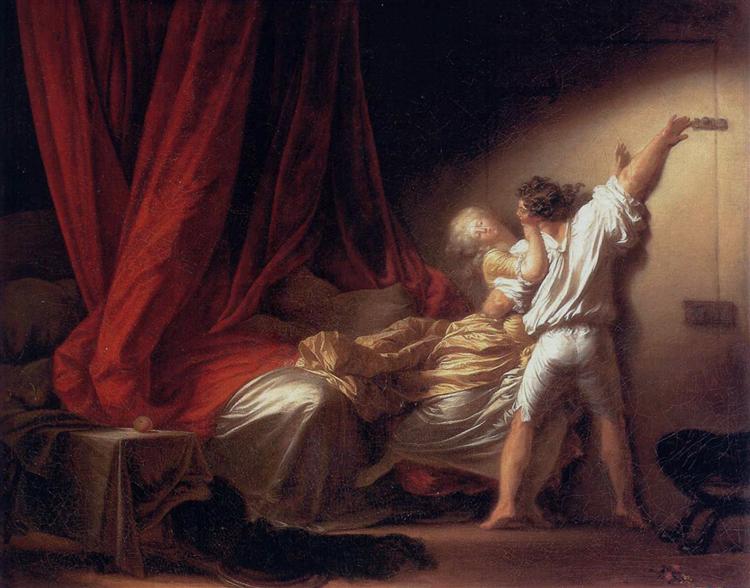
the-bolt.jpg!Large

          The Bolt” (c.1778)


                  Jean-Honoré Fragonard


                                       ________


in the spirit of recording my ten best

ever films, my favourite films of all

time, something that, at my relatively

advanced age, 71, I feel entitled to do,

however might some think me

presumptuous, others, not inaccurate,

I started last night with Closer


Mike Nichols directs, who also helmed

another of my ten favourites, Who’s

Afraid of Virginia Woolfwhich, having

just watched it recently, I won’t again

soon, having been, once more,

devastated, I cry from the first roll of

the credits, bawl when the music

comes on, a theme that’s reverberated

with me through the several ensuing

ages, same as just happened again

to me with this one


The Blower’s Daughter, listen, tells

the story, breathes the essence of,

anguish, the tale itself follows, four

individuals, in a tight, literary, conceit,

live out the agonies of participants in

modern emotional interactions, or, at

least, my modern, 2004, it all takes

place in London, with a brief, though

revelatory, postscript in New York, in

order to tie loose ends together, they

are called upon, the performers,

consummate in every instance, Julia

Roberts, Jude LawNatalie Portman,   

Clive Owen, however reduced might

be their full cast, a mighty, note,

professional challenge, to display the

myriad tragedies inherent in all loving

entanglements


try to find it, it ought to knock your

socks off


meanwhile, think about your own

best list, if you don’t suppose it’s

at all too early


R ! chard


psst: stick around, incidentally, for the

          final credits, to Mozart’s

          transcendental Soave sia il vento,

          from his Così fan tutteaptly,

          and sublimely, introspective