Richibi’s Weblog

Just another WordPress.com weblog

Category: up my idiosyncrasies

“Daffodils” – William Wordsworth (an epitaph)

wild-poppies-near-argenteuil-1873.jpg!Blog

     “Wild Poppies, Near Argenteuil” (1873) 

             Claude Monet

                  ________

                                                  for Pat

a dear friend passed away recently, 
Pat, the mother of my partner, who
passed away himself nearly 30 years 
ago, was already of a certain age at
which death follows closely tripping 
us up with itches and cramps and 
dire debilities as we walk along the 
winding road that isn’t that long any 
longer 

she’d already acquired Alzheimer’s 
though she read stillunderstood, 
even poetry, though she could not 
remember what had happened 
yesterday even, however traumatic, 
that she’d fallen the day before, for 
instance, and bore still corroborative 
angry scratches escaped her, left 
her puzzled, though never rattled,
ever compliant

you can forget all you want, Pat, I’d
said to her earlier in her prognosis,
but don’t ever forget I love you

since, during our regular Internet
encounters, along with her husband
on her end, she’s left the conversation
to him, but wraps her arms around 
herself and tells me she wants to hug
me, we always end our visit with I love 
you’s

when I went to visit her in hospital, 
where she’d ended up following more 
falls, which indicated eventually dire
complications, I brought her a teddy 
bear

here, Pat, I said, I can’t be here always 
to hug you, but you can think of me 
when you hug this bear

she died a few days later, the last 
words we said were, I love you, I
love you, before I flew back home 
to Vancouver from Victoria

I was sad, I lit candles, then a day 
later I thought, how do I get out from
under this somber cloud, I should  
listen for her, I remembered

talk to me, Pat, I’ll hear, I entreated

when my dad died, I’d said, talk to 
me, Dad, I’m your son, I’ll hear, and 
I did

when his sister died, a beloved aunt, 
I’d lit a scented candle inadvertently
in commemoration, when the air 
suddenly filled with the aroma of 
rosemary, which had wafted in on the 
exhalations of the candle to fuse with 
my own reveries in epiphanic, verily 
transcendental, conversation 

adagios, also, always remind me of 
John, Pat’s son

talk to me, Pat, say something, I 
said to the ether, and listened

last Thursday, at the service, turning
to the last page of the programme
which had been provided, I began to
read her favourite poem

I wandered lonely as a cloud, I read
but couldn’t make it through the next
line, tears welling up in my eyes, my 
mom, who was with me, holding my 
hand

thank you, Pat, I said, overcome with 
emotion, this poem would be her 
teddy bear to me

Richard

         ________________

Daffodils

I wander’d lonely as a cloud
That floats on high o’er vales and hills,
When all at once I saw a crowd,
A host of golden daffodils,
Beside the lake, beneath the trees
Fluttering and dancing in the breeze.

Continuous as the stars that shine
And twinkle on the milky way,
They stretch’d in never-ending line
Along the margin of a bay:
Ten thousand saw I at a glance
Tossing their heads in sprightly dance.

The waves beside them danced, but they
Out-did the sparkling waves in glee: –
A poet could not but be gay
In such a jocund company!
I gazed – and gazed – but little thought
What wealth the show to me had brought.

For oft, when on my couch I lie
In vacant or in pensive mood,
They flash upon that inward eye
Which is the bliss of solitude;
And then my heart with pleasure fills
And dances with the daffodils.

                         William Wordsworth

on truth

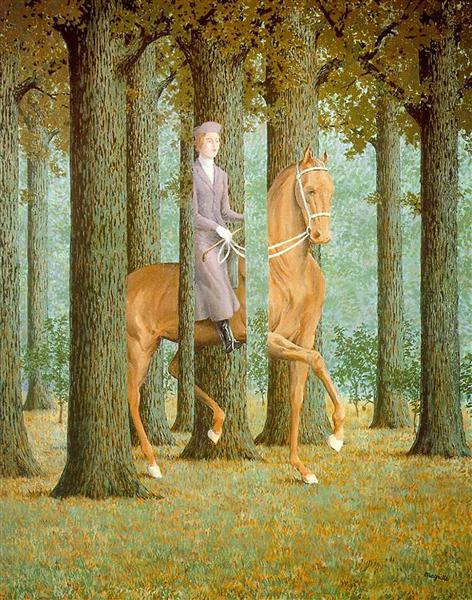
the-blank-signature-1965(1).jpg!Large

        La carte blanche” (“The Blank Signature”) (1965) 

              René Magritte

                 _________

being part of the truth, or Truth, we can’t 
see the forest for the trees, ever

Richard


“Is Art Truth?”

paradise-jpglarge

  “Paradise” 

        Hieronymus Bosch

                   __________

Is Art Truth?“, a friend asks after speaking of 
its benefits, “Art accepts and tells the truth-Is
that it ?“, she inquires, wonders

art, like truth itself and beauty, is in the eye 
of the beholder, I submit, and therefore my 
definition is, once again, entirely personal, 
though I’ve rigorously plumbed it

it requires background

art died for a thousand years, it was 
essentially unrecorded, dormant from 
the fall of Rome to the Renaissance, nor 
promoted but for Catholic purposes, 
hence the majestic cathedrals and the 
magisterial altarpieces, works produced 
by, however, communities until eventually 
certain artisans were recognized as more 
inspired than others, and given autonomy

enter Duccio, for instance

in time these new, necessarily idiosyncratic
perspectives – see Hieronymus BoschDante
Alighieri – dominated, veering in their search 
for truth in their art and beauty – selling points,
incidentally – towards less strictly orthodox 
utterances

see above

art, and its contemporary science, were 
chipping away at ecclesiastical dogma

till God died, and artists continued their 
prescient march forward, shaping our 
zeitgeist, our spirit of the times, with 
their pronouncements for lack of any 
other guides

but the voices grew personal, see Mozart
often profound and prophetic, see 
Beethoven, till the confluence of disparate 
realities gave us secularism, each soul for 
itself as a tenet, a credo, a belief, a truth

what did they have in common

I believe it was their quest for beauty 
through truth, their quest for truth 
through beauty, with a nod here to 
the salient Keats 

art is prayer, a search for, as well as a 
manifestation of, one’s personal 
identification with the sacred

it is not truth, it is not beauty, it is the 
fervent intention itself, linked with a 
correspondent workmanship, craft, 
which inspires 

see for instance van Gogh for this, who, 
remember, nevertheless shot himself, 
artists are mortal, merely, messengers, 
ever, therefore, fallible, unsure, fearful 
even, often, of their, perhaps 
Promethean, fire

for consolation, or even maybe 
transcendence, see again,
pertinently here, Beethoven  

listen

Richard

psst: thanks, Joan

what, me worry

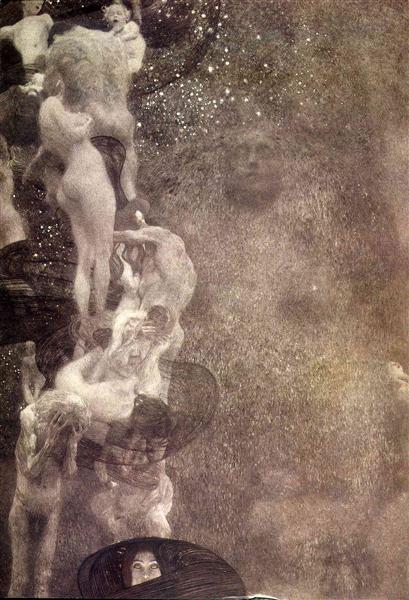
philosophy-final-state-1907-jpglarge

    “Philosophy (Final State) (1899-1907) 

         Gustav Klimt

              ______

at lunch recently, a friend was telling 
me about taking her family, kids,
grandkids, to Hawaii

I hope we have a good time, she said

what do you mean, I hope, I asked 

I’ve been worrying a lot lately, I wake 
up in the middle of the night, I worry
about sharks, for instance, off the 
coast of Maui

I know what you mean, I answered, I
worry about an earthquake hitting 
while I’m asleep, the whole city does 
in fact, I confirmed, those here who 
worry

when I was going to Munich in December 
and January with my mother, I continued, 
and people were saying it’d be cold, 
determined that we’d have a wonderful 
time despite whatever obstacles we might 
encounter, I meant it as a gift to my mother, 
after all it was for the magic of the C***mas 
and New Year’s Eve festivities there we 
were going, kind of like your Hawaiian 
beaches, I pointed out

there was the uncomfortable flight over,
the usual stomach upsets, cold and 
snow, which I hadn’t experienced in 
several years, an unruly Internet 
connection, but they were the price of 
admission to the wonderland I’d 
determined to fashion out of the 
elements that we’d find there, and did  

there were neither sharks nor earthquakes 
eventually, nor even the terrorist attacks 
that had threatened, but that no amount of 
worrying anyway could’ve done anything 
about 

and I just read something out of the New 
Yorker, I continued, that put me back on 
track, put everything back together again 
before any great existential fall

it’s all in your head, it said, or rather it
quoted EpictetusEpictetus, the Stoic 
philosopher I’ve always profoundly 
admired, I said, I’ll send it to you, the 
articleStoicism was a way of facing 
the world bravely and seeing it as a 
condition of your worth

is still a way, I extrapolated

also I’ve found that focussing on what
you’ve been worrying about, and 
thinking about what you can do about 
it, helps

about sharks, for instance, what would 
you do – don’t go in the water – after 
which there isn’t much else to think 
about but go on to the next problem 

meanwhile, you’re not worrying, but 
actually being productive, and reducing 
everything to what you can indeed do,
which ends up being most often not 
much

pray for grace, I’ve been telling myself
for the longest while, and make sure 
your tie ‘s on right, that’s all you 
can ever do, I repeat to myself, and to 
anyone who’ll listen, like an incantation, 
a refrain

but still I take my anti-depressants just 
in case, I said

we drank to Stoicism

afterwards we saw a new play about 
Queen Elizabeth

Richard

psst: the New Yorker article 

    How To Be a Stoic

The Stoic philosopher Epictetus was born a slave, around 55 A.D., in the Greco-Roman spa town of Hierapolis—present-day Pamukkale, Turkey. I first encountered his teachings in 2011, shortly after moving from San Francisco to Istanbul. I lived alone on a university campus in a forest. In the midst of a troubled long-distance relationship, I sometimes went days without talking to anyone but my boyfriend’s disembodied head on Skype. I was demoralized by Turkish politics, which made both secularists and religious people feel like victims. If you were a woman, no matter what you were wearing—décolleté or a head scarf—someone would give you a dirty look.

The first line of Epictetus’ manual of ethical advice, the Enchiridion—“Some things are in our control and others not”—made me feel that a weight was being lifted off my chest. For Epictetus, the only thing we can totally control, and therefore the only thing we should ever worry about, is our own judgment about what is good. If we desire money, health, sex, or reputation, we will inevitably be unhappy. If we genuinely wish to avoid poverty, sickness, loneliness, and obscurity, we will live in constant anxiety and frustration. Of course, fear and desire are unavoidable. Everyone feels those flashes of dread or anticipation. Being a Stoic means interrogating those flashes: asking whether they apply to things outside your control and, if they do, being “ready with the reaction ‘Then it’s none of my concern.’ ”

Reading Epictetus, I realized that most of the pain in my life came not from any actual privations or insults but, rather, from the shame of thinking that they could have been avoided. Wasn’t it my fault that I lived in such isolation, that meaning continued to elude me, that my love life was a shambles? When I read that nobody should ever feel ashamed to be alone or to be in a crowd, I realized that I often felt ashamed of both of those things. Epictetus’ advice: when alone, “call it peace and liberty, and consider yourself the gods’ equal”; in a crowd, think of yourself as a guest at an enormous party, and celebrate the best you can.

Epictetus also won me over with his tone, which was that of an enraged athletics coach. If you want to become a Stoic, he said, “you will dislocate your wrist, sprain your ankle, swallow quantities of sand,” and you will still suffer losses and humiliations. And yet, for you, every setback is an advantage, an opportunity for learning and glory. When a difficulty comes your way, you should feel proud and excited, like “a wrestler whom God, like a trainer, has paired with a tough young buck.” In other words, think of every unreasonable asshole you have to deal with as part of God’s attempt to “turn you into Olympic-class material.” This is a very powerful trick.

Much of Epictetus’ advice is about not getting angry at slaves. At first, I thought I could skip those parts. But I soon realized that I had the same self-recriminatory and illogical thoughts in my interactions with small-business owners and service professionals. When a cabdriver lied about a route, or a shopkeeper shortchanged me, I felt that it was my fault, for speaking Turkish with an accent, or for being part of an élite. And, if I pretended not to notice these slights, wasn’t I proving that I really was a disengaged, privileged oppressor? Epictetus shook me from these thoughts with this simple exercise: “Starting with things of little value—a bit of spilled oil, a little stolen wine—repeat to yourself: ‘For such a small price, I buy tranquillity.’ ”

Born nearly two thousand years before Darwin and Freud, Epictetus seems to have anticipated a way out of their prisons. The sense of doom and delight that is programmed into the human body? It can be overridden by the mind. The eternal war between subconscious desires and the demands of civilization? It can be won. In the nineteen-fifties, the American psychotherapist Albert Ellis came up with an early form of cognitive-behavioral therapy, based largely on Epictetus’ claim that “it is not events that disturb people, it is their judgments concerning them.” If you practice Stoic philosophy long enough, Epictetus says, you stop being mistaken about what’s good even in your dreams. 

                                                                                                 Elif Batuman

“Symphonie espagnole” – Édouard Lalo

the-treachery-of-images-this-is-not-a-pipe-19482-jpglarge

          La Trahison des images (Ceci n’est pas une pipe)
           / “The Treachery Of Images (This Is Not A Pipe) – (1948) 

                    René Magritte

                     ___________

                                                     paintings don’t lie,
                                                          music doesn’t either,
                                                              only words do 

                                                                                me

in this age of fake news, maybe the 
following piece of musicological 
misinformation shouldn’t be so 
surprising, yet there it is, flagrant,
disturbing and disorienting, and 
apparently irreversible

Édouard Lalo‘s Symphonie espagnole“, 
however acclaimed as such, is still to my
mind, and to several others concerned, a
misnomer, the Symphonie is actually a 
concerto, and can’t think for moment 
why Lalo would’ve called it otherwise

a symphony is an aggregation of sounds
to produce melodies and harmonies, a 
concerto spotlights a soloist, who 
generally determines the direction the 
music will follow

or soloists

once you have a concerto, you can no 
longer call it a symphony, it would be 
to disregard a defining element, like 
calling someone a girl once she’s 
become princessfor instance, 
complete with glass slippers and a 
tiara, it would be at the very least 
disrespectful, if not out and out 
dishonest

Lalo here is, however, magisterial, all 
five movements glitter with, for the 
violin, utterly magical moments, the 
violinist weaving wizardry minute by 
electrifying minute

after such a turn, one must allow 
Lalo to call his opus what he will,
I guess, forgive him his linguistic
trespasses

listen

Richard

psst: I have not accorded Bartók the same leniency
        for his Concerto for Orchestra, 
        however – the Lalo dilemma but in reverse,  
       an orchestra is by definition not a soloist 
         – for I’ve always found Bartók inscrutable, 
         sound and fury, here specifically, though 
         uncharacteristically scrutable in this 
         particular instance, signifying nevertheless,  
         I’m afraid, still nothing, no underlying animus, 
         philosophical, or existential, underpinning 
         but to kill time, a tragic and disqualifying, 
         flaw, unfortunately, in my, however humble  
         everopinion 

         but you be the judge

Rutebeuf’s Lament – Rutebeuf/Ferré

friends-since-childhood-2004-jpglarge

                      Friends Since Childhood” (2004) 

                                  George Stefanescu

                                         __________

having disparaged the only translation
I could find on the Internet of a poem
that is in French as famous as in 
English Elizabeth Barrett Browning‘s
How do I love thee? Let me count the 
ways.“, her 43rd “Sonnet[ ] from the
Portuguese”, I decided to translate 
myself the excerpt from “La Complainte
Rutebeuf“, of Rutebeuf himself, 1245 – 
1285, which became its indelible, and 
apparently timeless, virtual
manifestation

Rutebeuf’s entire poem is written in 
Old French, and excerpts of it were 
adapted into an updated French in 
1956 by Léo Ferré, a French
troubadour of the time, who then 
made it into a song that everyone
French remembers, despite, or 
maybe because of, its archaisms

though Ferré familiarized the French
for his listeners, it was still in an older
French, like rendering Chaucer‘s 
14th-Century English into Shakespeare‘s 
17th-Century counterpart tongue, “But 
look, the morn, in russet mantle clad, / 
Walks o’er the dew of yon high eastern 
hill”, “Hamlet”, act l, scene l, lines 166 
and 167, for instance

in my translation below, I eschew –
Gesundheit – such a daunting
challenge, but have chosen rather
to highlight the humanity that I find
especially compelling in the original
composition

Rutebeuf today would sound 
something of a cross between Harry
Nilsson and Bob Dylan, I think, of my
generationthe one for his 
straightforward simplicity, his crushing 
intimacy, the other for his social 
consciousness and probable greater, 
therefore, longevity

but will even Bob Dylan endure 800 
years

some will, some have, some do 

but who

we will never know

Richard 

           ______________

Rutebeuf’s Lament

What has become of my friends
that I had held to be so close 
and loved so dearly,
they were too carelessly tended
I think the wind has blown them away,
friendship has been forsaken.
And as the wind passed by my door,
took all of them away.

As time strips the trees of their leaves,
when not a leaf on a branch remains 
that will not hasten to the ground,
and poverty befalling me, 
from every corner appalling me,
as winter edges on.
These do not lend themselves well to my telling
of how I courted disgrace,
nor of the manner. 

What has become of my friends
that I had held to be so close 
and loved so dearly,
they were too carelessly tended
I think the wind has blown them away,
friendship has been forsaken.
And as the wind passed by my door,
took all of them away.
Sorrows do not show up on their own,
everything that was ever to happen  
has happened.

Not much of common sense, a poor memory
has God granted me, that God of Glory,
not much in sustenance either,
and it’s straight up my butt when the North wind blows, 
sweeping right through me, 
friendship has been forsaken.
And as the wind passed by my door,
took all of them away.

                                 Rutebeuf

listen

Richard

“Instructions to a Speaker” – Joanna M. Weston

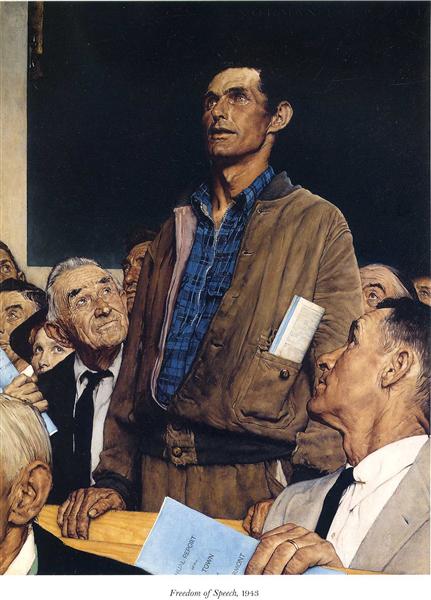
freedom-of-speech-1943-jpglarge

                       Freedom Of Speech (1943) 

                                 Norman Rockwell

                                        ________          

it’s been a while since I’ve featured 
poem, but this one tickled me 
positively pink

see if you’ll agree

Richard 

__________

Instructions to a Speaker

analyze the seated audience
each face a complex sentence

parse the roaming eyes
and conjugate restless hands

let the grammar of their bodies
straighten under your voice

until words slough into the book
you have created page by face

from the biographies extending
lip-by-line across the room

                    Joanna M. Weston

true love – an insight

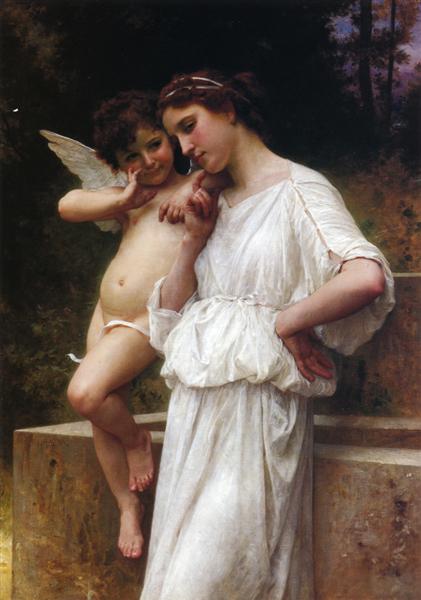
love-s-scerets-1896-jpglarge

                          “Love’s Secrets (1896) 

                    William-Adolphe Bouguereau

                                     _________

the only way you can hate someone 
you’ve loved is if your love was selfish,
true love can never not love, ever

Richard


“the nerdwriter” on e.e. cummings, and Donald Trump

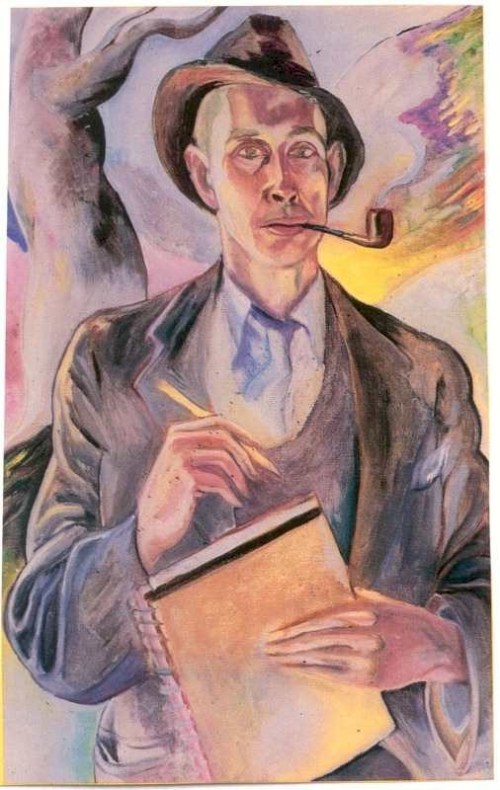
selfportrait.jpg

    “Self-portrait with sketchpad (1939) 

             e.e. cummings

                  ________

one of e.e. cummings‘ poems that I 
didn’t know of, i carry your heart  
with me(i carry it in]“, but that is 
apparently one of his most 
accessible, is explored and 
wonderfully deconstructed in this
video, which’ll also prove how much 
we need nerds, people who’ll open 
up areas of profound but murky 
matter for us 

  [i carry your heart with me(i carry it in]

         i carry your heart with me(i carry it in
         my heart)i am never without it(anywhere
         i go you go,my dear;and whatever is done
         by only me is your doing,my darling)
                                                                i fear
         no fate(for you are my fate,my sweet)i want
         no world(for beautiful you are my world,my true)
         and it’s you are whatever a moon has always meant
         and whatever a sun will always sing is you

          here is the deepest secret nobody knows
          (here is the root of the root and the bud of the bud
          and the sky of the sky of a tree called life;which grows
          higher than soul can hope or mind can hide)
          and this is the wonder that’s keeping the stars apart

          i carry your heart(i carry it in my heart)

                                                  e.e. cummings


when I grow up, I want to be a nerd

Richard 

psst: listen to how “the nerdwriter”, Evan Paschal, 
         deconstructs Donald Trump

Hesiod on poets, and, for that matter, kings

1280px-1807_Thorvaldsen_Tanz_der_Musen_auf_dem_Helikon_anagoria.JPG

The Dance of the Muses at Mount Helicon (1807)  

Bertel Thorvaldsen

________

though Zeus may preside over kings,
none other than Apollo and the Muses
preside over poets, according to
Hesiod

Kalliope, foremost of the nine Muses
who tends specifically to kings, and 
to those being born of kings, in the
company of her sisters, Kleo and 
Euterpe, Thaleia and Melpomene, 
Terpsichore and Erato and Polymnia 
and Ourania, will pour a dew sweeter 
than honey upon such a one’s tongue, 
and his words become soothing, 
palliative, placating

“far shooting Apollo, however, 
presides at the inspiration of poets,
lending the lyrical notes from his 
representative lyre, not to mention 
his lyrics, derivative both terms of 
that etymological “lyre”, incidentally,  
so far has Apollo “shot”, dare I say,  
his spirit into our collective 
unconscious
 
“From the Muses and far-shooting Apollo
are singers and guitar-players across the earth, 
but kings are from Zeus. Blessed is he whom the Muses
love. From his mouth the streams flow sweeter than honey.
If anyone holds sorrow in his spirit from fresh grief and
is dried out in his heart from grieving, the singer,
servant of the Muses, hymns the deeds of men of the past  

and the blessed gods who hold Olympus, and
right away he forgets his troubles and does not remember
a single care. Quickly do the gifts of the goddess divert him.” 
 
                                                    Theogony (lines 94 – 103)
                                                                     Hesiod

therefore poets 

Richard 

psst: a friend has just passed on,
 it is a time for poets