Richibi’s Weblog

Just another WordPress.com weblog

Category: up my idiosyncrasies

English Suite No 3 in G Minor – Bach
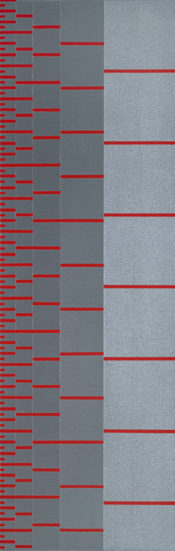
suite-fibonacci-2003.jpg

   “Suite Fibonacci (2003) 

           Charles Bezie

               ________

 
before I say much more about his Cello
Suites, let me point out that Bach has
some French Suites, some English 
Suites, on top of similarly structured 
Partitas and Toccatas, the French have 
their tout de suites, and hotels have, 
nowadays, their so named luxury 
apartments 

musical suites are sets of dance pieces, 
by the early 18th Century much stylized, 
with an introductory prélude, an allemande, 
followed by a courante, which is to say, folk 
dances, the first German, the next French, 
then a sarabande, Spanish, followed by a 
couple of galanteries, court dances, 
minuets, gavottes, bourrées, then a final 
English gigue

all of the markings are in French, which
leads me to believe that all of these 
dances must’ve originated at the court 
of Louis XlVth, the Sun King, 1638 to 
1715

but the suggestion is that Europe was 
becoming an integrated community
all of these dances were eclipsed by
the Classical Period, of Haydn and 
Mozart, apart from the minuet, which 
more or less defined, nevertheless, 
that new era

the minuet will die out by the time of
Beethoven, you’ll note, to be replaced
by the waltz, which had been 
considered much too racy until 
transformed by Chopin into a work 
of ethereal art

the Strausses, father and son, gave it,
only a little later, celebratory potency,
but that’s another story


here’s Bach’s English Suite, the 3rd
for context, the French ones are a 
little too salty, as it were, they do not 
quite conform to prescribed suite 
notionshowever might their 
propositions have been, ahem, 
sweet 

meanwhile, enjoy this one


R ! chard
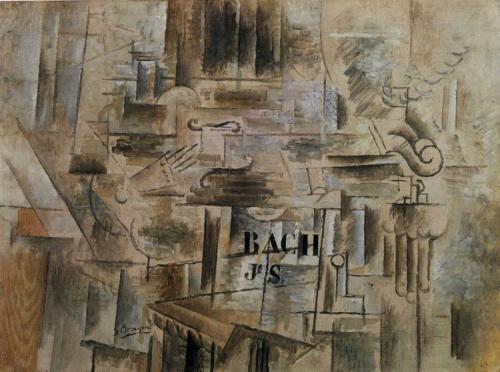
Cello Suite no 1, in G major – Bach

homage-to-j-s-bach-1912.jpg!Large

        “Homage to J.S. Bach (1912) 

              Georges Braque

                   __________

                                      for Lynne, who’s been catching up
                                                         on her Bach, recently
                                                                                   
the cello had been a peripheral instrument,
supplying accompaniment, merely, until 
Bach gave it wings, in new employ as 
Kapellmeister for Leopold, Prince of 
Anhalt-Cöthen, a Calvinist, who decried 
music in his churches, Bach turned to 
secular music mostly during this period,
instead of to the cantatas and oratorios,
the ecclesiastical stuff, he’d in earlier 
services been composing, not at all, 
however, unproductively, for he produced 
during this new period the template 
essentially for the entire modern epoch – 
the “Well-Tempered Klavier”, all of his 
piano literature, the Two- and Three-Part 
Inventions, his Toccatas, his Partitas, the 
sublime Cello Suites, his equally profoundly 
inspirational Sonatas for Unaccompanied 
Violin, are the basis upon which our 
contemporary music still stands, these 
pieces are still the Everests to climb for 
contemporary instrumentalists, you need 
only to listen to know why, by a semi-tone 
a cellist can fall apart, destroy the entire 
experience, distort an otherwise 
transcendental possibility, like a climber 
can tragically lose hir life

listen to Mischa Maisky, to my mind the 
very Zeus of 20th-Century cellists, 
perform Bach’s 1st Cello Suite, and
deliver incontrovertible proof of that,  
however Olympian, claim


R ! chard

up my eccentricities / the Ides of March

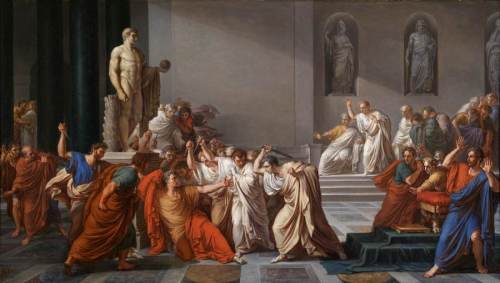
ides1

        “The Death of Caesar (1798) 

               Vincenzo Camuccini

                      ___________

in looking up a requiem to commemorate 
the Ides of March, today, a date imprinted  
on our collective consciousness since 
Shakespeare’s “Julius Caesar”, act l, 
scene ll –

    Soothsayer:   Beware the Ides of March.

    Julius Caesar:   What man is that?

    Marcus Brutus:   A soothsayer bids you beware the Ides of March.

    Julius Caesar    Set him before me, let me see his face.

    Cassius:   Fellow, come from the throng, look upon Caesar.

    Julius Caesar:   What say’st thou to me now? Speak once again.

     Soothsayer:   Beware the Ides of March.

    Julius Caesar:   He is a dreamer, let us leave him. Pass.

– I found an entirely appropriate work,
though with more contemporary, and 
consequently more immediate, 
associations 

but first, let me say more about both 
Julius Caesar and Shakespeare

Caesar died on the Ides of March, 
notoriously, and ignominiously – 
though ruthless in his own way, 
not to mention also flamboyant,  
Caesar had been a ruler conscious 
of his constituency, and therefore 
socially responsive, giving, for 
instance, citizenship to residents 
from far away, a contentious issue 
still nowadays, and support for 
veterans, another hot political 
topic

he was also the lover of Cleopatra, 
among apparently many other trysts, 
not to mention, it has been suggested, 
of King Nicomedes lV of Bithynia

regardless, he is the template for 
modern rulers, eclipsing Alexander
the Great by a long shot, who else 
has a very month, July, named after 
him, apart from Augustus, Caesar‘s
heir and successor

his complete literary works have only 
recently come out in English, an
apparently, and most undoubtedly,
significant enterprise, Caesar would 
be, of course, subjective, therefore
probably indifferent to, or more 
unforthcoming about, his less savoury
excesses – he’d apparently cut off the 
hands of soldiers he had conquered,
something he never mentioned  

should we consider the impunity of our 
own 21st-Century autocrats – who will
blithely destroy communities with 
lethal chemical agents, and even, in
like manner, specifically target 
individuals – with less condemnation
and horror

nobody cared, by the way, about the 
Ides of March, until Shakespeare 
suggested, for all time, that we 
should beware of it

and we’ve been doing so ever since 


March 11th, 2011, was the date of the
Japanese tsunami, the earth shook, 
thousands died, the devastation was 
unimaginable, including nuclear 
radioactive explosions

Tōru Takemitsu‘s Requiem, written
in 1957, though not specifically 
related to that national tragedy, is
not at all unrelated to their agony

and through the power of music to
bring souls together, manifestly, 
here and now, his thoughtful
evocation, however dissonant, 
however arhythmic, however 
unhinged from Western Classical 
musical precepts, which might 
very well, I remark, be the point, 
brings souls, if you’ll listen
demonstrably together


R ! chard

psst: did I mention that the words 
          “Tsar” and “Kaiser” are 
          derivations of the name 
          Caesar

what’s up in Pyeongchang / Bach

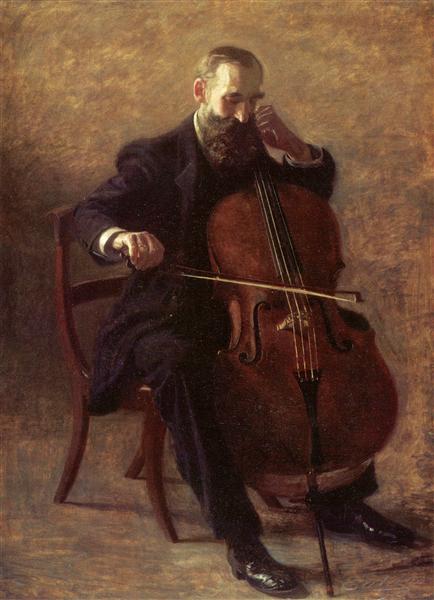
the-cello-player-1896.jpg!Large.jpg

      “The Cello Player (1896) 

              Thomas Eakins

                   ________

though I’d considered presenting all six
of Bach’s Cello Suites – your one stop
shopping for these extraordinary 
compositions – even one only of these
masterpieces floored me each time I
individually listened  

why the Suites, cause I couldn’t follow 
up on Beethoven’s Opus 5, for cello
and piano accompaniment, without 
saying more about the cello, by then 
an instrument of some significance, 
and who could argue, it’s resonance 
thrills you in your bones, in your very 
being

Frederick ll, King of Prussiaplayed it, 
earning for him tailored compositions, 
however controversial, from both 
Mozart and Haydn, but even earlier, 
Bach had composed definitive pieces 
for it, much as he’d done for the 
harpsichord, precursor to the piano, 
students of either still go to Bach for 
their basics, their intricate, exquisite, 
technical proficiency

the cello can play one note only at a
time, which means that, like a voice, 
you’re working without harmony, 
you need to make your own, 
otherwise your performance is 
boring, no one else, as far as I know,
has ever written anything else for 
unaccompanied cello, not even 
Beethoven

I find most performers lend Bach a 
more Romantic air, torrid emotion,
excesses of volume, pauses to the 
pace, ritardandos, rallentandos, 
which aren’t appropriate to the 
more genteel Baroque period,
something I usually find 
unwelcome

but in this performance, I’m sure 
not even Bach would object

I’m offering up first the Sixth Cello
Suite, D major, played by Jian Wang
someone I’d never heard of, in a 
dazzling performance in Pyeongchang
place I’d neither ever heard of, until 
only very recently

it appears both of these new kids on 
the block ought to be on the map


R ! chard

on, however exuberant, ambition

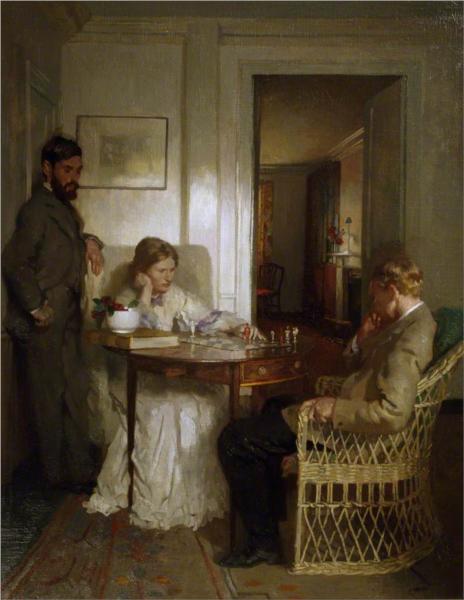
   the-chess-players-1902.jpg!Large.jpg

         “The Chess Players (1902)

                  William Orpen

                          _______

                                      for Joselyn, my Ariel

pumped as I was by my most recent
exegesis about longevity, a dear, 
dear friend, used to, and infinitely 
tolerant, of my, apparently often, 
according to her, exhortations 
about my significant literary abilities, 
sighed when I told her I’d make her 
famous with my artalso my mother,
as well as other influential and 
cherished characters, and produced 
a Scrabble word over our game to, 
in an instant, overwhelm me with 
seven letter concoction, at the very 
last moment, leaving me with a row, 
furthermore, of unused tiles, with,
however trivial, still annihilating, 
consequences

ouch, I said, girlfriend

but I’m not giving up on my promise
to her, I’m reaching for the stars

what do you think


R ! chard

comparing divas

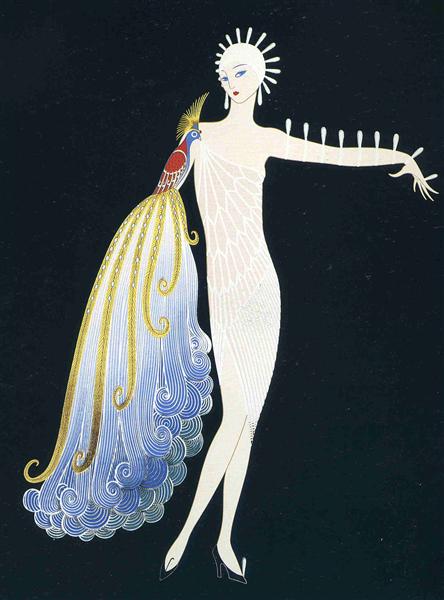
diva-i.jpg!Large

        Diva I 

             Erte

             __

comparing two extraordinary performances,
as I am wont to do with any coupled exhibits,
which render always more than the sum of 
their parts, let me let you consider an 
historical record of a legend already with 
that of one who is about to become one,
Bette Midler, 1971, doing the Continental 
Bathsopposite Vesselina Kasarova at the 
Schwetzinger Festspiele, 2005

the voices in either case are impeccable,
the only difference is the context, you 
choose what you’re into

but let me tell you that Vesselina Kasarova
doesn’t give an inch, she puts on a show 
that makes your jaw drop, trust me, it all 
depends on your mood

Vesselina comes from a different epoch,
despite her contemporary production,
polite, flirtatious, modest, the 18th
Century

but her staccatos, followed by verily,
and however improbably, organic 
legatos, indeed fervent, and  
unmitigated, fermatas, are stunning,  
a touras they say in such instances,  
de force, indeed de maîtrise, de  
mastery, wait till you hear the final 
moments of her surely definitive 
Glück, utterly, and incontrovertibly, 
astounding

Bette is brash, in your face, needs to 
get the attention of guys in towels, 
1971, intent on more prurient 
peregrinations than merely watching 
superstars, however in the making, 
strut their show-stopping stuff

both Vesselina and Bette achieve, I 
think, their goal, each strikingly, and 
unforgettably, each declares herself 
indestructible, a very force of
propulsive nature

watchwatch, which, in your opinion, 
delivers

ouch, both, either, I think

enjoy


R ! chard

the time change / March 11, 2018

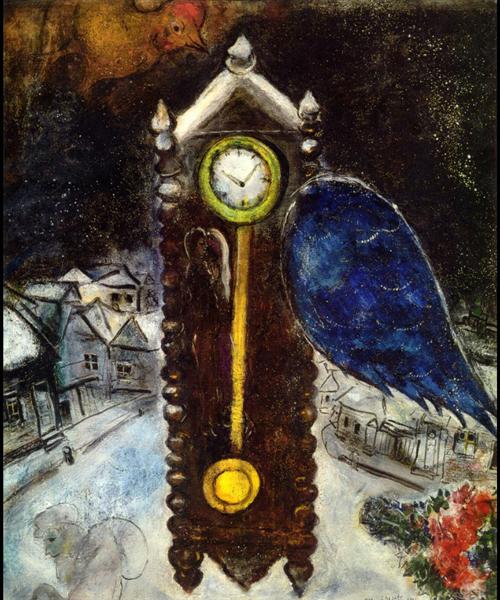
clock-with-blue-wing-1949.jpg!Large.jpg

   “Clock with Blue Wing (1949) 

           Marc Chagall

              ________

with the unruly sleeping patterns of the aged,
mostly, disquieting midnight hours awake, 
fretting ever about not enough proper rest,
even though the next day might be fraught, 
in retirement, with plenty of time to recover, 
I wondered, as such a person, at the 
relevance of this semiannual time change, 
especially among seniors, those dripping in 
time to squander, one day following the next, 
often nearly indistinguishably

all it means to me, I said to my mom, is that
I’ll be falling asleep, instead of at two, at three,
in the morning 

she hasn’t answered yet


R ! chard

pension protest, à la Russe

miriam-dances-1931.jpg!Large.jpg

  Miriam dances (1931) 

       Marc Chagall

             ______

a couple of retired Russian ladies spoofed 
a video that student airline pilots had 
performed, that shocked their academy,
who wanted the boys expelled

in protest, other Russians started sending
in their own versions of the dance, but these
two ladies, nothing at all like Tina Turner
turned out to be the Internet sensation

read all about it here, click on each of the
videos there, the girls’ and the boys’, you’ll
love ‘em


R ! chard

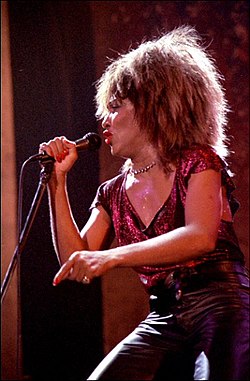
by special request, more Tina

250px-Tina_turner_21021985_01_350

  Tina Turner performing in Norway, 1985

             __________

                                                  for Norm

shortly after my most recent post, a 
friend, as avid as I am about Classical
music, but who also lived through our
own golden age of music, and throbbed 
as I did to its pounding rhythms, sent 
me this video of one of Tina’s greatest 
hits, Proud Mary

not to mention that my inbox lit up at 
the same time with equally corroborative 
applause from a host of other, apparently
also fervid, admirers


it was the best of times, it was the worst 
of times, everyone did everything with
anyone then, and was impeded only    
by hir own personal inhibitions

therefore Studio 54and even more 
glamorous Manhattan party outlets, 
the Paradise Garage, Les Mouches, 
warehouses full of carousers, and 
Bette Midler was showcasing at the
Continental Bathsif you were 
wanting a less frenzied, though not 
at all uneventful, evening, or night
  
London had it’s comparable Heaven, 
nowhere was not having its bacchanals

the era would come down crashing, 
never to be put back together again,
of course, as a soothsayer I knew 
was then prophesying, but while it 
lasted we revelled, and had Tina 
Turner, among other, as incendiary, 
oracles telling it like it was, is, listen

 
Beethoven would’ve been proud of 
Tina, incidentally, note the adherence 
to Classical conditions, tonality, tempo, 
and repetition, art is about doing your 
own stuff around those imperatives, or, 
if you can, busting through them

Tina might not have burst through, but  
she sure knew what to do with her 
perimeters, which is to say, knock them
right out of the ballpark   

wow, watch, what a woman


R ! chard

psst: thanks Norm

what’s up in Düsseldorf / Beethoven

tn_705x705_3

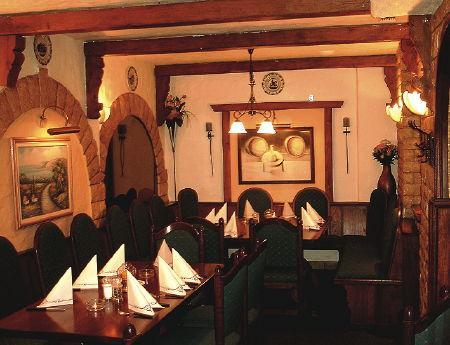
          the “Altstadt“, Düsseldorf, Germany

                  ______

from Düsseldorf, a city I’ve called 
Düsseldon’t, Düsseldreary, 
Düsselneverbother, comes a 
performance there to change, utterly,  
my mind about it, though I’d always 
known that every European city has
its extraordinary wonders, count ’em

watch this, for instance, one of those

Beethoven didn’t write string quartets
until he was ready, following in the 
footsteps of Haydn wouldn’t’ve been
easy, but Beethoven wasn’t wasting 
his time in the meanwhile, or, 
alternately, his while in the meantime
– while you consider that, listen

in his Opus 5, no 1, the first to leave  
me with much of an impression, as 
began to explore Beethoven 
chronologically, the first four 
opuses – a word I deplore, but its
equivalent plural, opera, seems 
to me so pretentious – seemed, 
indeed again, to me long, tedious 
and academic, a student delivering 
exercises  

then the Opus 5, no 1 hit, and blew 
me right out of the water, he verily, 
Beethoven, thrust the metre right  
out of the ballpark, propelled the  
music – who ‘ld ‘a’ ever thunk it –  
right off the page 

marvel, I urge


there was also a restaurant in 
Düsselwhatever I really loved,
it served an improbable 
assortment of schnitzels, the 
Altstadt 

we embraced, the staff and I, 
when I had to eventually, and 
finally, leave, to go back home, 
to Canada, I’ll always remember, 
never ever forget, their grace


R ! chard