Richibi’s Weblog
Just another WordPress.com weblog
Category: recitals to ponder
February 7, 2023
how to listen to music if you don’t know your Beethoven from your Bach, Vl
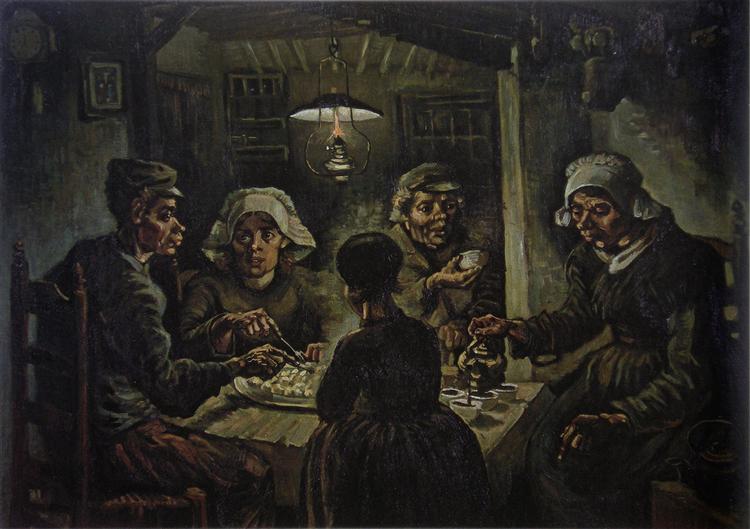
“The Potato Eaters” (1885)
Vincent van Gogh
___________
where do you start with Chopin, he is
in our Western cultural bloodstream,
as identifiable in music as, say, van
Gogh is in painting, you don’t need
to be interested in any kind of art to
have not been given even only a
whiff of these iconic artists
nearly anything I might present here
of Chopin you’ve probably already
heard somewhere before, if only in
bits
of van Gogh, well, he goes back in
the public imagination to at least
Vincent, 1971, the song, no one
doesn’t know about him, when I
heard it playing in Amsterdam at
the museum, with the first piece I
saw, The Potato Eaters, dominating
the first wall, insisting on van Gogh’s
vision, his prophecy, his profound
compassion, I cried, I understood
what art is, see above
Chopin exerts a different kind of,
however equally potent, magic
Mozart might sound like Haydn,
Beethoven might sound like
Schubert, all of the Impressionists
sound like all of the Impressionists,
be they Ravel, Debussy, Satie, or
Saint-Saëns, to the untrained ear
but no one sounds like Chopin,
he’s, culturally, a North Star
here’s one of his nocturnes, the
moonlit one, in E flat major
here’s a polonaise, here’s an étude,
in English, a study, a finger exercise,
an iconic, here, prestidigitation
here’s an impromptu, his very,
indeed, Fantaisie-Impromptu, just
to get your categories going
consider its construction, having
some information already about
fantasias, a work of the imagination,
open to any experimentation within
the confines of one movement, with
an impromptu, something purported
to have been created on the spot,
also in one movement
the answer requires you to sharpen
your aesthetic pencil, always a
delight – an impromptu, a
spontaneous invention, a fantaisie,
a work of the imagination, how do
they differ, which part is a fantaisie,
which an impromptu, how do they
nevertheless coalesce
this exercise is the first step in
listening
enjoy
R ! chard
February 2, 2023
how to listen to music if you don’t know your Beethoven from your Bach, V
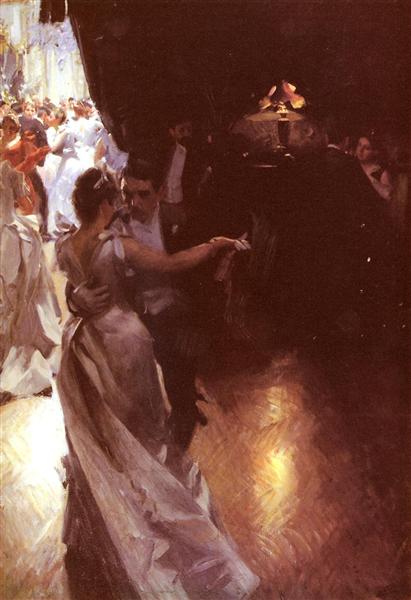
“Waltz” (1891)
Anders Zorn
________
having brought up the idea of
longevity in my last communication,
the fantasia, a musical form that
lasted about 150 years, with hats
off nevertheless to the later Disney
classic, Fantasia, a tribute, which,
full of Classical music references,
followed in its spiritual mode, and,
after introducing Chopin, perhaps
the very representation of the
Romantic Era, that we carry, or
intuit, in our very bones, I thought
I’d talk about the waltz, a Chopin
specialty, where he created,
incontrovertibly, utter magic
who hears of the waltz anymore, an
antiquated curiosity, though even in
our not so distant blood we feel the
reverberations of its memory, the
throb of its still vibrant cultural
intensity, relevance, rhythm
tangos, incidentally followed, and
other intimate interactions, which
had been earlier frowned upon
the waltz had been the minuet,
the difference was the physical
contact, young nobles left their
aristocratic salons, however
discreetly, to frequent the
more liberal, if disreputable,
establishments – like to
speakeasies during Prohibition
– where they could explore the
new, licentious venues, as
young nobles, ever, would, for
the lure of intimate connection
with the partner
the waltz was thereby born,
couples touched, breast upon
breast, composers followed
Chopin was metaphysical, you
didn’t dance to his waltzes, you
experienced them, here’s his
Minute Waltz, Opus 64, no 1,
here’s his equally delightful
Opus 64, no 2, its companion
but Strauss ll, Johann l‘s son,
got all of Vienna to dance his,
and everywhere else after, until
the waltz fell out of favour
somewhere in the 1950s, leaving
only its memories behind, here’s
his incandescent By the Beautiful
Blue Danube, makes you wish
you’d been there
in the one case, the waltz is
idealized, in the other, it’s the
waltz in action, listen, you can
tell the difference, you won’t
want to dance, for instance, to
Chopin, though you might give
it an ineffectual try, to Strauss,
you’ll careen
R ! chard
January 29, 2023
how to listen to music if you don’t know your Beethoven from your Bach, lV
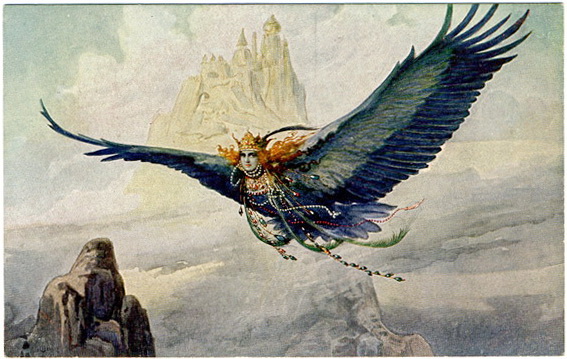
“Fantasy“
Sergey Solomko
________
trying to find a quick piece, nothing
ostentatious, like a symphony, or a
concerto, nor even a sonata, that
would get in the way of my point,
the difference between, by way of
the intermediary, and transformational,
Chopin, Mozart and Prokofiev, I found
the fantasia, the only musical form
that was carried forward, among them,
during the intervening years, a good
hundred and fifty, Mozart, 1756 – 1791,
Prokofiev, 1891 – 1953, Chopin, 1810 –
1849
what’s a fantasia, a musical form
consisting of one movement,
no breaks, but with, otherwise,
unlimited compositional liberties,
see above, only circumscribed by
the temper of the times
Western music has since its
Classical inception, and even
earlier, had a trinity of
commandments, that regulated,
even defined, what was meant
to be music, tempo, tonality,
and repetition, the history of
music in the West is the
chipping away at those
conventions
here’s Mozart, Fantasia in C
minor, K.475, establishing the
form, but also the foundation,
the grammar, that aspirants
would follow in the footsteps
of so great a master, children
and grandchildren of their
erudite elder
Chopin followed, here’s his
Fantasy in F minor, Op.49,
in this instance, a historical
moment you won’t want to
miss, when Van Cliburn, an
enemy American at the time,
played it for Nikita Kruschev,
First Secretary of the Communist
Party of the Soviet Union then, in
Moscow, and tempered thereby,
for an incandescent moment –
ticker-tape parades in New York
City ensued – the very Cold War
reliving it, I cried
the greatest difference between
Mozart and Chopin, I thought,
was volume, a consequence
of the development of the piano,
Mozart never gets as loud, also
tempo was much more expanded,
again a development of the piano,
neither was repetition with Chopin
so much in evidence, but shrouded,
less manifest
also Chopin wears his heart on
his sleeve, idiosyncratically
with Prokofiev, his Fantasia on
Themes from Scheherazade
tests tonality, gives us musical
conjunctions that are askew,
discordant, though completely
in syncopation with his own,
testy and unsettled, times
compare, consider, enjoy
R ! chard
January 24, 2023
how to listen to music if you don’t know your Beethoven from your Bach, lll
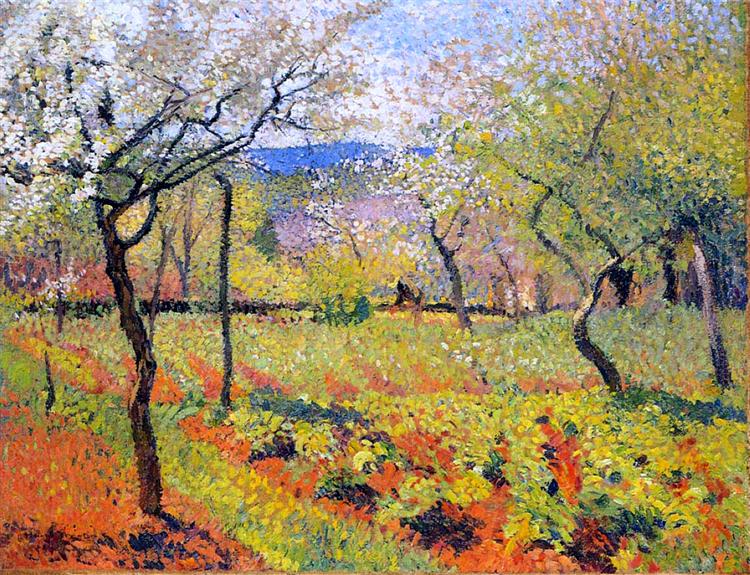
“Flowering Garden in Spring” (1920)
Henri Martin
_______
violin sonatas, apart from a few notable
exceptions, are accompanied by, usually,
a piano
the violin, as do a great many other
instruments, can only play one note
at a time, the piano can play as many
as you’ve got fingers, a harmonization
is a valued component of any musical
composition, therefore the piano
here’s a violin sonata of Mozart, here’s
a violin sonata of Prokofiev, you’ll
recognize Mozart, he’s the one you’ve
already got in your bones, the one we
grew up with, however ephemerally,
peripherally
Prokofiev is the other one
let me point out that Mozart is foursquare,
the music is straightforward, tonality and
pace, which is to say tempo, are never
eccentric, just delightful, while repetition,
another defining element of Classical
music, the recurrence of a theme, is
unmistakable, and often too often
reiterated, we get it, we want to
tell Mozart
Prokofiev is no longer any of those
things, but the underlying vocabulary
is the same, the rules set out by the
forefathers but extrapolated, turned
into unexpected, exotic flowers, just
as spring delivers its ever distinct,
and surprising, even astonishing,
blossoms every new year, see
above
we are so very blessed
R ! chard
January 17, 2023
how to listen to music if you don’t know your Beethoven from your Bach, cont.
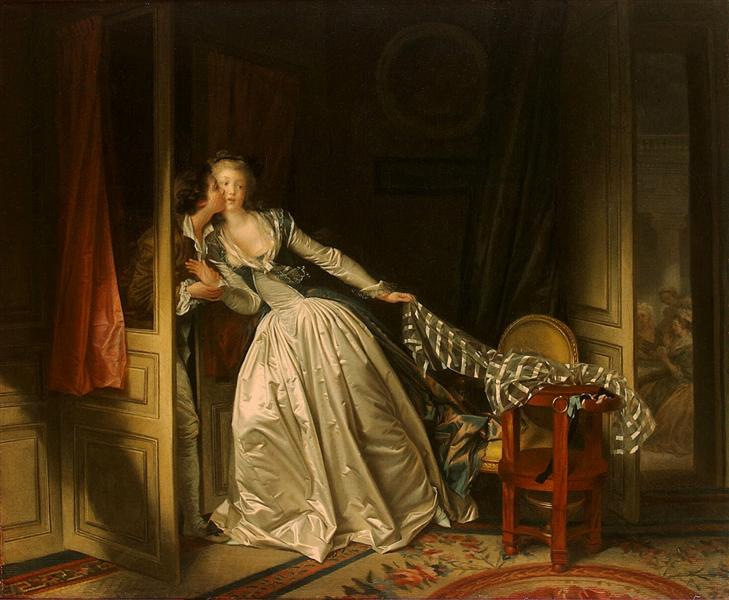
The Stolen Kiss (1788)
Jean-Honoré Fragonard
_____________
if you listened to the couple of pieces I
recommended in my last commentary,
you would’ve indeed recognized, if
even only subconsciously, that the
first work wasn’t composed by the
composer of the other, that different
spirits infused either
a visual representation of the same
thing might be to juxtapose a
contemporary painting of the one
epoch with a corresponding painting
of the other
over a hundred years had passed
between Mozart and Prokofiev,
Mozart’s Piano Sonata no 18, K576
– his last piano sonata, incidentally,
he died a short two years later –
was written in 1789, the year of the
French Revolution, a still safe
distance from Vienna, where
Mozart could still cater to an,
however endangered, species
Jean-Honoré Fragonard, a contemporary
painter, 1732 – 1806, had been doing the
same thing, The Stolen Kiss, 1788, for
instance, a mere year earlier, see above
meanwhile, over a hundred years later,
inches only away from the First World
War, Matisse is doing in art what
Prokofiev is doing in music, taking the
temperature of his own time, Seated
Riffian (1911 –1912) – a Riffian, a Berber,
a North African tribesman – see below,
to corroborate Prokofiev’s equally
emblematic vision of their shared era
you can hear this in the music
mostly through the difference in the use
of volume, languorous softs, thunderous
louds, but also in the more expansive use
of pace, fast, slow, the rapidity of some
notes, the embrace, the extended caress,
of others, in the later composition
which, in a word, follows the development
of the piano from harpsichord to the
instrument we’re used to today
Mozart still had the harpsichord in his ear,
he was writing for the fortepiano, which
evolved, through the pianoforte, to the
piano we know of today, no flexibility of
pace, no flexibility of volume then, listen,
hear, you can hear it in the juxtaposition
we hear a lot more than we think we
hear
R ! chard
__________
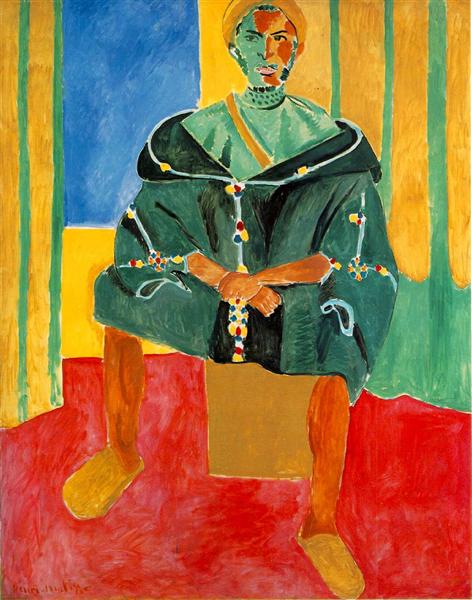
Seated Riffian (1911 – 1912)
Henri Matisse
__________
January 13, 2023
how to listen to music if you don’t know your Beethoven from your Bach

“Music“(1895)
Gustav Klimt
________
how to listen to music if you don’t know your
Beethoven from your Bach
the first thing to do, I would suggest, is to stop
and listen, spend the time with the work you’re
listening to, it’s no different than spending half
an hour with a friend
but you have to be there, listen, as you would
with a friend, no cell phones
the next thing I suggest is to compare, put your
work up against a different composer, a
different interpretation, a different version of
the piece you have on hand
I learned this as I learned to tell one artwork
from another, while I turned European art
museums into personal art history classes,
spending hours comparing one painting
with another, doing so chronologically,
century after century, imbibing thereby the
history of Western art
it’s not necessary to know who you might
even be listening to, just listen, hear,
later the names will come
here’s some Mozart, here’s some Prokofiev,
for instance, you’ll tell the difference
instinctively, forget about the composers,
just surrender to the magic
here’s a poem which says more or less
the same thing
How to Read a Poem: Beginner’s Manual
First, forget everything you have learned,
that poetry is difficult,
that it cannot be appreciated by the likes of you,
with your high school equivalency diploma,
your steel-tipped boots,
or your white-collar misunderstandings.
Do not assume meanings hidden from you:
the best poems mean what they say and say it.
To read poetry requires only courage
enough to leap from the edge
and trust.
Treat a poem like dirt,
humus rich and heavy from the garden.
Later it will become the fat tomatoes
and golden squash piled high upon your kitchen table.
Poetry demands surrender,
language saying what is true,
doing holy things to the ordinary.
Read just one poem a day.
Someday a book of poems may open in your hands
like a daffodil offering its cup
to the sun.
When you can name five poets
without including Bob Dylan,
when you exceed your quota
and don’t even notice,
close this manual.
Congratulations.
You can now read poetry.
Pamela Spiro Wagner
music is also like that
R ! chard
March 23, 2021
Beethoven – Septet, Opus 20
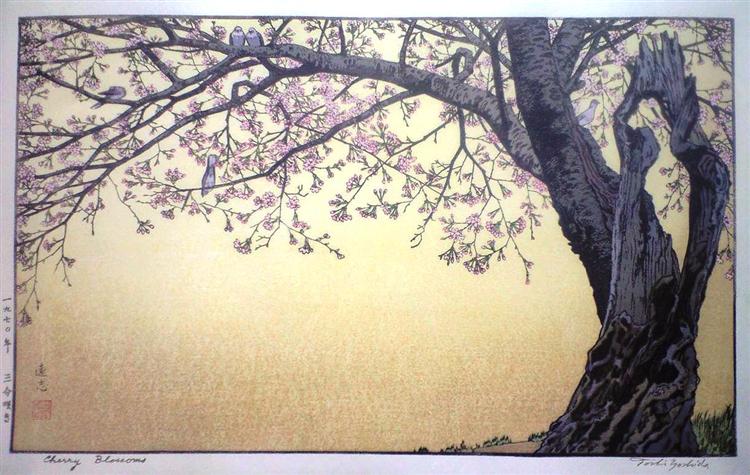
“Cherry Blossoms” (1970)
Toshi Yoshida
___________
though I’ve been focused on Ovid
especially lately, specifically his
Metamorphoses, other less
concentrated pursuits have also
taken up my time, Sophocles,
Shakespeare, American Idol, The
Great Canadian Baking Show,
Euclid, Existentialism, the variations
in colour, number, size of the cherry
blossoms growing on the trees along
my street as I ponder each morning
from my window their magical,
miraculous, incarnation, into the
world, their augury of, once again,
wondrously, springtime, March,
Vancouver
but recently I picked up a book, a
biography of Beethoven, in
snapshots, through the lens of
nine works of his in particular,
arranged chronologically
join me as I, one by one, present
them through the requisite number
of commentaries
the first is his forgotten, but apparently
all the rage in his day, Septet, opus 20,
which continued to be admired for its
Classical roots for a long time, a
comfortable, recognizable music,
but with enough modernity to warrant
extended popularity, the irrepressible
pull of Romanticism, the draw of the
encroaching 19th Century
Beethoven would become more and
more radical, irascible, demanding
eventually, and I conscientiously
interject here, more manifestly,
however counterintuitively, sublime
but there were contrary opinions,
much as elders have always objected
to the music of their children, portents,
always, of ensuing degeneration
you’ll recognize, perhaps, as I did,
in the Septet‘s third movement, the
same air as in Beethoven’s Piano
Sonata no 20, Opus 49, no 2, poets
borrowed from each other then,
still do, have ever, they speak the
same language, they would even,
as here, filch from themselves
the insignificant piece, the Sonata,
according to Beethoven, should’ve
been the disregarded work, the
Septet had the greater fame and
longevity, but history has its way,
a septet needs to put together
seven instrumentalists, of a certain
quality, each time, to survive, to
regenerate itself, a sonata, only
one committed interpreter each
generation
it is also an integral part of the
complete Beethoven sonatas, a
historical account equal, musically,
to the very Ten Commandments,
that foundational
R ! chard
September 17, 2020
Preludes and Fugues, Op.87 – Shostakovich
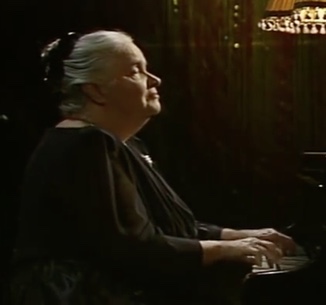
Tatiana Nikolayeva
___________
during this period of self-isolation, it
is nearly an unavoidable consequence
of such imposed solitude that one
would become contemplative, though,
I must admit, this is not for me an
especially unusual state
lately, I’ve returned to the Preludes and
Fugues of Shostakovich, a reinterpretation
of the form that Johann Sebastian Bach
had initiated in 1722, and indeed
reinterpreted himself between 1739 and
1742, each set known separately as
Books 1 and 2
a prelude is, as the name itself suggests,
an introductory piece, and I won’t get into
any further explanations of it, which would
be technical, and not especially relevant
here
a fugue is a line of music, however, that
is repeated a few bars in so that the tune
ends up essentially analyzing itself, for
voice we know this as singing in canon,
you’ve probably done this yourself, in a
group, singing, for instance, Row, Row,
Row Your Boat, or, even in French,
Frère Jacques
but the strictly instrumental form becomes,
by virtue of re-examining itself over and
over again, nearly, by definition,
introspective
there are neither highs nor lows, which
is to say, alterations in volume, in a fugue,
so that the couple of hours it takes to get
through any set including them would be
restful, though never not intellectually
intriguing, much as mental meandering,
or daydreaming, speculation, is
Shostakovich, much as Bach did,
composed his in every key, major
and minor, for a total of 24
here are his first 12
here are the remaining dozen
they were written by Shostakovich for
Tatiana Nikolayeva, who plays them
herself in both of these iterations
sit back, relax, enjoy
R ! chard
June 22, 2020
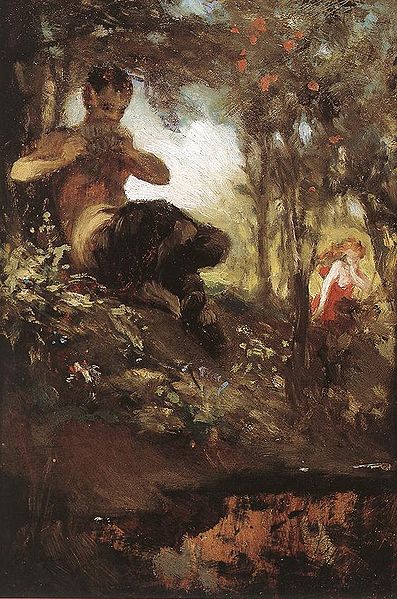
“The Afternoon of a Faun” – Debussy / Nijinsky / Nureyev
 Richibi's Weblog