Richibi’s Weblog

Just another WordPress.com weblog

Category: recitals to ponder

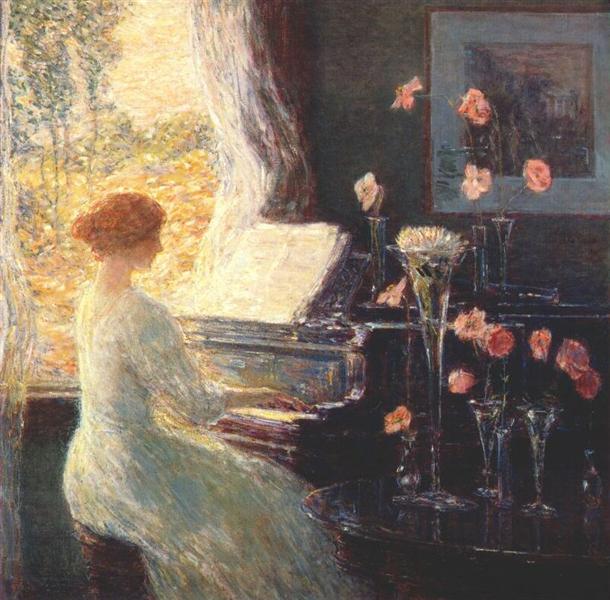
November / Month of the Sonata

The Sonata - Childe Hassam   

    “The Sonata  

           Childe Hassam

                    ____


having recently determined that a sonata

a day keeps the doctor away, and inspired

to work upon that cure, I thought I’d initiate 

a Sonata Month starting in November


there are thirty days in November, so no 

more than thirty sonatas, each of which

will, I promise, be a revelation


a sonata is a piece of music consisting

of more than just one part, traditionally 

three or four, called movements


within those parameters, anything was,

is, possible, any kind of music, times 

three or four, traditionally, Classically


but traditions indeed applied, the tried 

and true, fast, slow, fast, became the 

standard, a cheery introduction, 

followed by a contrasting, which is to 

say slower, middle section, then a 

restorative, final, energetic, act, meant 

to send you, reinvigorated, on your way, 

maybe even an equally vivacious fourth


there’ll be sonatas with one movement, 

some seven, some with even maybe 

more


here’s one, for instance, listen, enjoy 


and stay tuned   


and thanks for joining in


R ! chard

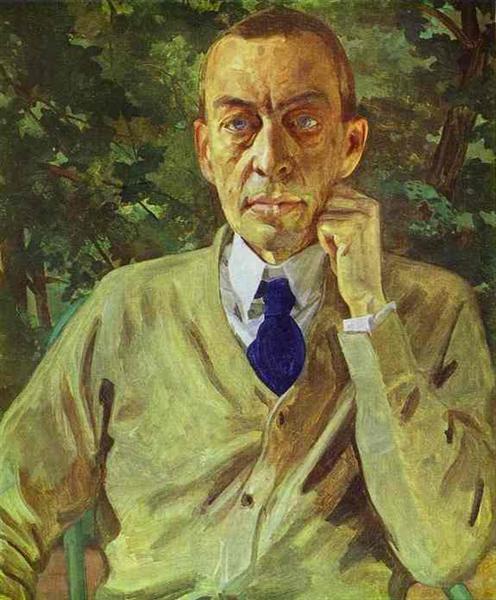
how to listen to music if you don’t know your Beethoven from your Bach, XVIII – Rachmaninov

Portrait of the composer Sergei Rachmaninov, 1925 - Konstantin Somov


     Portrait of the composer Sergei Rachmaninov


                   Konstantin Somov


                                ______


though you probably still wouldn’t be able

to tell a prelude from a hole in the wall, 

nor, admittedly, can I, unless indicated,

if you’ve listened to the pieces I’ve

recently presented, you’ve noted, even 

merely sensed, really, that the preludes 

of one composer don’t sound at all like

those of the others, Bach doesn’t sound 

like Chopin, who doesn’t sound at all   

like Debussy, the first step in telling  

your Beethoven from your Bach, as 

promised in my title


you might not even be able to tell which  

is which as you’re listening, but you can

tell they’re different, you do the same 

thing telling your Monet from your 

Renoir


Rachmaninov also wrote, like Chopin, 

and Debussy, 24 preludes, and, like 

Chopin, in every key, major and minor


but spread out through three publications, 

Opus 3, no. 2from 1892, comprising of 

only one prelude, but a scorcher, The 

Bells of Moscow, listen

a second set, Opus 23, consists of ten, 

mostly iconic, pieces, you’ve heard 

them somewhere before, therefore 

iconic


the final set comes out in 1910, 

Opus 32with thirteen preludes,

for a total of 24


you’ll marvel, even Marilyn Monroe 

famously did


enjoy 


R ! chard 

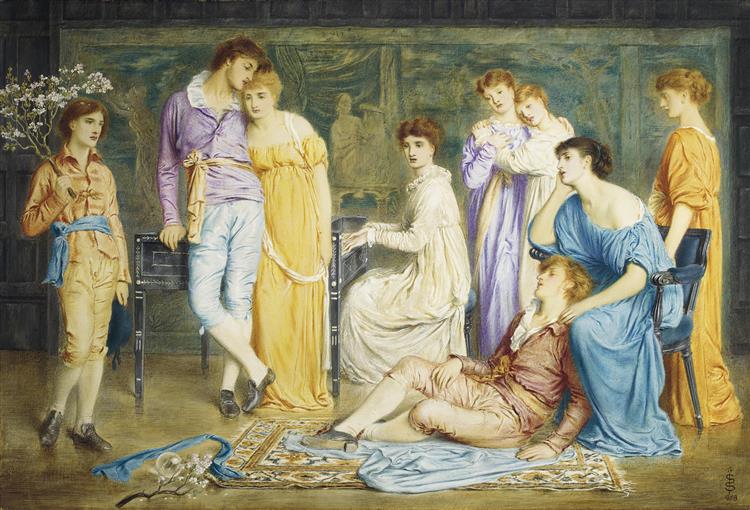
how to listen to music if you don’t know your Beethoven from your Bach, XVII – on preludes

A Prelude by Bach, 1868 - Simeon Solomon

       A Prelude by Bach (1868)              

              Simeon Solomon

                     __________

what’s a prelude 

as the word suggests – pre, from the

Latin, means before, lūdus, again 

from the Latin, means game, play, 

spectacle – it is a piece of music that 

precedes another more elaborate 

segment in a compositional whole


a prelude is therefore likely to be short,

otherwise completely improvisatory,

no technical demands, just something 

that comes from the heart


there probably existed preludes before 

Bach, but he’s the one who put them 

on the map, with, specifically, his 

monumental Preludes and Fugues,

though that’s another story, more 

about which later, but he did write 

some stand-alone preludes, for 

instance his Six Little Preludes,  

BWV 933-938, from around 1717

to 1720, see above


a little over a hundred years later,

in 1834, Chopin picked up the 

mantle and wrote his own iconic

Opus 28, 24 stand-alone preludes,

one for every major and minor key, 

and established thereby the prelude 

as a viable musical form


nearly a hundred years later still, 

Debussy set up his own homage 

to Chopin, in two bursts of inspired 

composition, the twelve preludes of 

his Book 1 in 1909 to 1910, followed 

by his Book 2, again of twelve preludes, 

written in 1912 to 1913


these works are now generally played 

in complete sets, though they often 

pop up individually as short and sweet  

encores here and there at the end of 

successful recitals


enjoy


R ! chard

how to listen to music if you don’t know your Beethoven from your Bach, XV – what’s a rhapsody

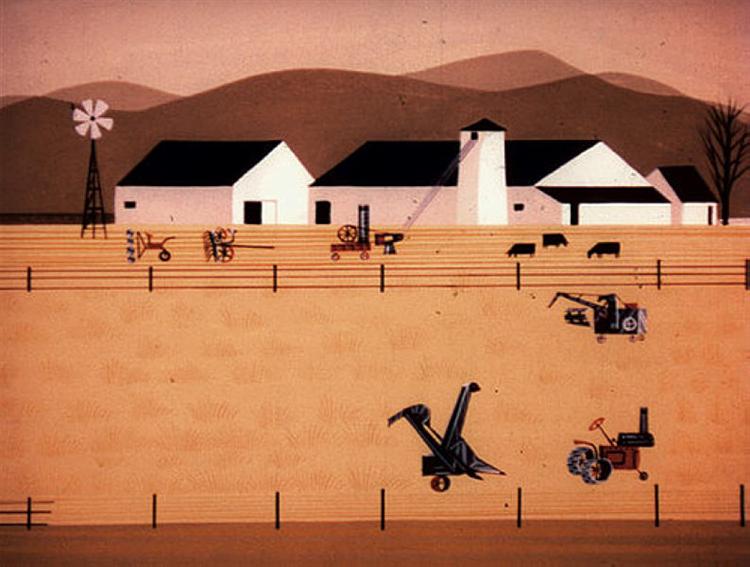
Rhapsody of Steel, 1959 - Eyvind Earle

        Rhapsody of Steel (1959)

                   Eyvind Earle

                       ________

so what’s a rhapsody

if you’ve been following at all my 

musical adventure, you’ll have 

heard by now several rhapsodies 


at first, I suggested that the rhapsody

was an evolution from the fantasia,

a piece of music in one movement

that allowed for any internal 

construction, but that, after the

Classical Period, became imbued  

with Romanticism, passion became 

a condition of music, mere technical

ability was no longer enough  


note that the audience was different,

rather than nobles who commissioned

artists to decorate their salons, the

burgeoning Middle Class was hungry 

for them to entertain, performers were

becoming the main attraction, not just

the background, see, for instance, 

Beethoven


but not only did rhapsodies spread 

from just one player to an entire

orchestra – see Brahms, then 

see Gershwin – but its essential 

structure, one movement, was 

challenged, see Ravel here, or 

Rachmaninov, whose rhapsodies 

are both composed of distinct 

movements, Rachmaninov even 

further refining his movements 

into variations, for years, I 

referred to his Rhapsody on a 

Theme of Paganini as his 

Variations


all this to say that a rhapsody is 

turning out to be not identified 

by its structure, its technical

parts, but rather by its intention,

a rhapsody is in the eye of its 

composer, like a nocturne, or 

a ballade


I’d thought that rhapsodies had 

been relegated to the Romantic 

Era, with the occasional later 

tribute


who, I wondered, could be

writing rhapsodies anymore


but here’s something, however

unexpectedly, you’ll be familiar

with, from 1975, Queen’s Bohemian

Rhapsodyin several movements 

– intro, ballad, opera, hard rock, 

outro – and including in all of them,

note, voice


all of which speaks of tradition

being a lot closer than one would 

think, ancestral, residual, but

defining, traces, like genes, 

however updated, however

posthumously interpreted,

pervade, infiltrate, pursue,

inexorably


rhapsodies are in our DNA, it

would appear, for better or for 

worse, ever


here’s to them


R ! chard


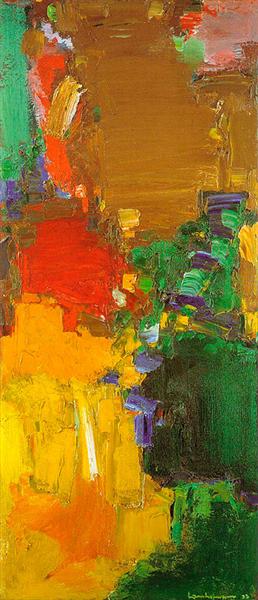
how to listen to music if you don’t know your Beethoven from your Bach, XIV – more rhapsodies

Rhapsody, 1958 - Hans Hofmann


    Rhapsody” (1958) 


         Hans Hofmann


                _______


now that you’ve heard New York in

Gerschwin’s Rhapsody in Blue, and

Vienna in Rachmaninov’s Rhapsody

on a Theme of Paganini, listen to 

Hungary, or rather its Gypsy

component, however rejected, 

reviled, at the time, but proud 

enough, resilient, to strike back 

with its infectious music, how

many times have we heard that

story before


Budapest doesn’t sound at all like 

Vienna, though they’re only mere 

blocks away, essentially, listen,

Liszt’s Hungarian Rhapsody no 2,

in C# minor, he wrote nineteen, 

you’ve probably heard this one,

it’s in our DNA


here are a couple of Spanish

rhapsodies, meanwhile, if we’re to 

follow a national agenda, Chabrier, 

a name you’ve probably never 

heard before, but not so, I assure

you, his music, his España,

Rhapsody for Orchestra, is

written in our blood, listen


Ravel wrote also a Rapsodie 

espagnole, more French than

Spanish, to my mind, steeped

in its early Twentieth Century

Impressionism,  all textures,

soundscapes, not rhythms


Ravel makes up for it, though, in his

Bolero, perhaps the most Hispanic 

piece ever of all, you tell me


both Chabrier and Ravel, incidentally, 

were French, doing what Dvořák, a 

Czech, had done, would do, for 

Americans, honour their fascinating

rhythms


Liszt, by the way, was Hungarian, his

rhapsodies were native, if profoundly

influenced by Vienna 


listen, enjoy


R ! chard

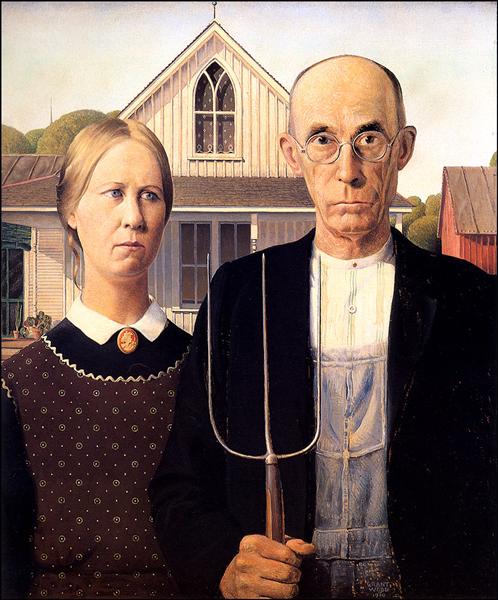
how to listen to music if you don’t know your Beethoven from your Bach, XIII – Antonin Dvořák

American Gothic, 1930 - Grant Wood

    “American Gothic (1930) 


                Grant Wood        


                      ______


if you were able to hear the difference

in my last communication between

Vienna and New York in the two

rhapsodies I compared, contemporaries,

incidentally, you might be interested in

European composer, highly

underestimated in my opinion, who

bridges both cultures by composing a

tribute to the country that receives him,

gloriously, for a couple of years, before

he returns, homesick, to his beloved

Bohemia, which is to say, Prague,

Antonín Dvořák, don’t ask, 1841 – 1904


here’s his 12th String Quartetnicknamed

the “American”, listen, you’ll understand

why


here’s his New World Symphonyagain

you’ll understand why


fun facts, Neil Armstrong brought a

recording of it, the New World

Symphonywith him to the moon

during the first manned landing,

back in 1969, can you get more

cool than that


also, this particular version is from

Pyongyang, which is to say, North

Korea, which is to say, the audience

here is nearly as interesting as the

symphony itself, do they even

speak the language, if they grew

up on Chinese opera


do you


R ! chard

how to listen to music if you don’t know your Beethoven from your Bach, XI

Funeral in the Snow near the Old Tower, 1883 - Vincent van Gogh

          Funeral in the Snow near the Old Tower (1883)


                        Vincent van Gogh

                            _________

having introduced, however peripherally, in my

last instalment, Chopin’s Piano Sonata no 2,

it wouldn’t be fair to not present Beethoven’s

Piano Sonata no 12 to compare, they both

contain iconic funeral marches, written, even

if you have no interest at all in such music, in 

the blood of our Western culture, like

Shakespeare, to be or not to be, you’ve

heard the line, somewhere, even if you have

no idea what he might’ve been talking about


I don’t need to point out the dirges among 

the movements, the solemn bits, they will

impose themselves, whether you’re paying

attention or not


Beethoven and Chopin sound a lot alike,

Beethoven, 1770 -1827, is earlier, pushed

the Classical Period into the Romantic Era,

pretty well, astonishingly, by himself


Chopin, 1810 – 1849, gives us the pinnacle

of Romantic music


I tell them apart by their beat, Chopin is

always on, Beethoven is always off, his

schtick, his revolutionary spirit, Chopin,

rather, played for the aristocracy, in

their courtly salons, much like Haydn,

but that’s another story


you might notice also that the last

movement in Chopin’s sonata is

all texture, a precursor to the later

Impressionism, in all of the arts


Beethoven, however, always takes

you on a journey, never gives you

merely background, there’s always

a core, a foundational melody


enjoy


R ! chard

how to listen to music if you don’t know your Beethoven from your Bach, X

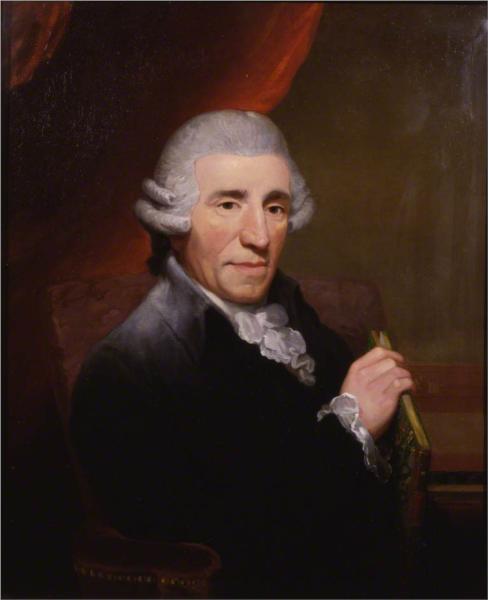
Joseph Haydn, 1791 - Thomas Hardy

        Joseph Haydn” (1791)


                 Thomas Hardy


                         _______


though I’ve focused especially, during

this introduction to Classical music,

on Mozart, a second great pillar of

that era is Haydn1732 – 1809


here is one of his 62 piano sonatas,

which expresses more than anything

you’ve heard here yet the definition

of what music was at the time, or

should be, tonality, as I’ve earlier

said, tempo and repetition were

tantamount


listen for or the rigidity of the tempo,

the consistent melliflousness of

the melody, and therefore tonality,

and the repetition of all the

component tunes


I remember going to a drum recital

once, here in Vancouver, a guy was

expressing his artistry in a formal

venue, I was sitting in a forward

row, saw him set up his music on

his music stand, and I thought,

he’s going to have to turn the

pages, which he did, a drummer


that’s all I remember of the

presentation, but that was enough,

an entire revelation


in this Haydn sonata, the pianist

turns the pages of his score, back

and forth, an interesting visual

expression of the imperative of

repetition in that era’s music,

having to return to what had

been written on the previous

page


also note that trills abound


note too in the second movement,

the adagio cantabile, the sudden

introduction of arpeggios,

transcendent, as though angels

had just appeared


which prefigures the metaphysical

aspirations of the Romantic Period

which ensued, see, for instance, 

Chopin


note also that we’re on fortepiano

here, a period instrument, a cross

between the harpsichord and the

modern instrument


thoroughly enjoy


R ! chard

how to listen to music if you don’t know your Beethoven from your Bach, Vlll

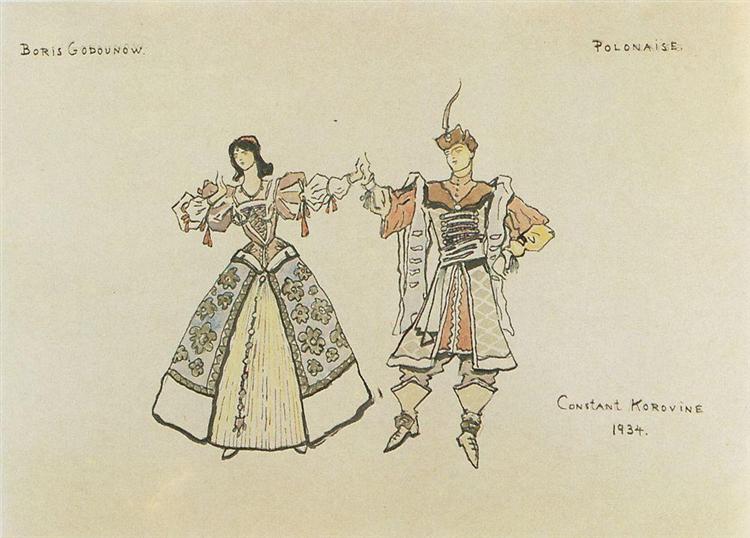
Polonaise, 1934 - Konstantin Korovin


         Polonaise” (1934)


                  Konstantin Korovin


                                  ________

cause the pickings are slim among the

shared musical formats between Mozart

and Chopin, Mozart, for instance,

composed eighteen piano sonatas to

Chopin’s mere three, Chopin’s First

even having been more or less 

disregarded since for being promising

maybe, but not at all inspired, where

Mozart meanwhile also wrote 27 piano

concertos to Chopin’s only two, though

both, his, entirely mighty


Chopin, however, pretty well establishes

the nocturne, the scherzo, the prelude,

the étude, the polonaise, the mazurka

as musical forms, while Mozart never

establishes a thing, apart from his own

supreme talent


but here are a couple of fantasias that

they both share, Mozart’s Fantasia

no 3 in D minor, of four, Chopin’s

Polonaise-fantaisie in A-flat major,

Opus 61, Chopin blending here his

fantaisie to the beat of a polonaise,

dance form of his native Poland,

see above


listen for trills in the Mozart, which

admittedly show up only near the

end of the piece, otherwise he

sounds a lot like, I’ll admit, Chopin


listen for arpeggios in the Chopin


a follow-up exercise in listening,

trills, notably, up against arpeggios


consider, enjoy


R ! chard

how to listen to music if you don’t know your Beethoven from your Bach, Vll (cont.)

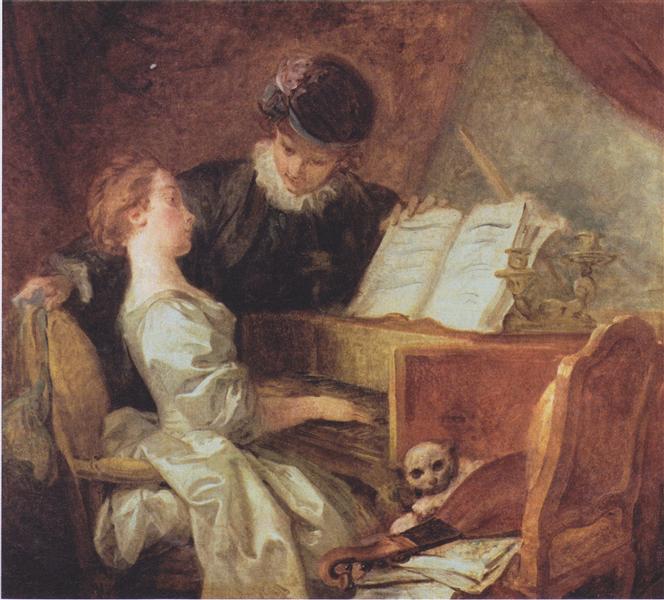
The Music Lesson, c.1769 - Jean-Honore Fragonard


          The Music Lesson” (c.1769)


              Jean-Honoré Fragonard


                    _______________


having spent too much time, perhaps,

giving context, from Classicism to

Romanticismin my last communication

brought on by the worlds that open up

to me when l Iisten to this kind of music,

rather than imparting specific information

about how to sharpen one’s aesthetic

sensitivity, about listening rather than

just hearing, this time I’ll get technical,

if you’ll allow, with the help of the same

two pieces, Mozart’s 16th piano sonata,

Chopin’s 3rd, how are they different,

how are they similar, how do they

compare


first, similarities, they are both sonatas,

pieces of music consisting of more than

one segment of music, traditionally, three

or four, Mozart here has three, Chopin

four


Chopin doesn’t diverge from the trinity

of imperatives that Mozart set up

during the Classical period, tempo,

tonality, and repetition, the pace of

the music remains constant within

the parameters established by the

directions at the top of the page,

an adagio doesn’t change its beat

throughout the movement for either,

nor would an andante, a presto, an

allegretto


this will change


neither does any element of the

music produce discords, tonality

remains mellifluous throughout

for both, lilting, harmonious ever,

even often, in either, enchanting


this will also change


and everywhere, a flight of musical

invention will eventually return to

its original source, and you find 

that you’ve come back from a sonic

adventure to home base, where the

whole thing starts all over again,

repetition, a condition considered

essential, until relatively recently,

to  the definition of music


this will also change


but how are they different


listen to the decoration, Mozart

applies trills to individual notes,

a flutter of adjacent tonalities 

to set the central one off, like

glitter, the twitter of birds

punctuating, here and there, 

the stillness of a forest


Chopin colours his entire

keyboard with arpeggios rather,

runs up and down the scales,

turning melodies into not only

delights, but stepping stones to

entirely other dimensions,

extrapolations from the original

tune, seemingly spontaneous

evolutions, the first burgeonings,

incidentally, of jazz, before returning,

notably, to his original air, much as

Mozart does, to his core statement,

fulfilling the Classical requirement

of repetition


here’s Mozart, trilling


here’s Chopin, arpeggiating


how to tell your Chopin from your

Mozart, how to sharpen your

aesthetic sensibility, listenlisten


R ! chard