Richibi’s Weblog

Just another WordPress.com weblog

Category: recitals to ponder

at the movies – “Phaedra”

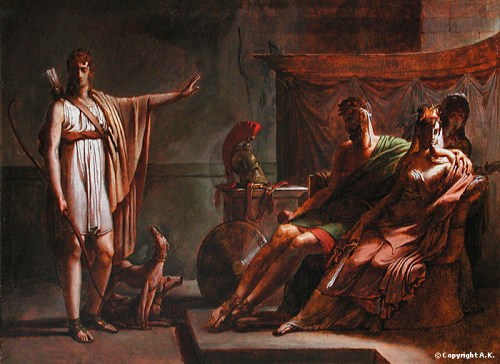
phaedra-and-hippolytus-1802.jpg

     “Phaedra and Hippolytus (1802) 

            Pierre-Narcisse Guérin

                   _____________

Phaedra, according to Greek myth, fell
in love with her stepson, and, of course,
ruined, for everyone, everything 

she’s been represented in music by
composers from, at least, Rameau,
1733, to, here, now, Benjamin Britten,  
1976by way of even Tangerine
Dream, 1973, however peripherally, 
and the hits just keep on coming

in literature, the story goes back to 
Euripides, 480 – 406 BCE, through
Jean Racine, 1639 – 1699, poet at 
the court of Louis XlV, the version 
that I studied in French Literature,
along with, in English, Shakespeare,
who was doing courtiers, rather, 
and royalty there, then, incidentally, 
instead of the Continent’s iconic 
Mediterranean figures – it remains 
my favourite play in my mother 
tongue, next to, for me, its only 
other equal, Cyrano de Bergerac

but I’d never seen a production of 
Phaedra until this searing, 
modern, rendition, set in, relatively 
contemporary, Greece, London, 
and Paris, with the irrepressible, 
the irresistible, Melina Mercouri
torrid temptress, the very goddess 
Herahereand Anthony Perkins
perfect as her suitor, a youth still, 
pulsing with a young man’s 
unbridled intentions

sparks fly, from moment to 
incendiary moment – I had often 
to pause to catch my breath – 
portents of an inescapable, and 
eventually epic, indeed mythic, 
apocalypse

watch, if you dare


R ! chard

why I believe in music, or “I Was Born For This” – Austin Wintory

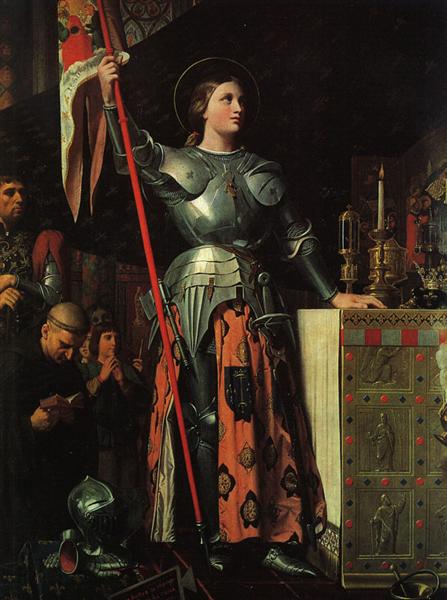
joan-of-arc-on-corronation-of-charles-vii-in-the-cathedral-of-reims.jpg!Large

  “Joan of Arc upon Coronation of Charles VII in the Cathedral of Reims (1854) 

        Jean Auguste Dominique Ingres

                ____________________

many years ago, while I was volunteering 
at our hospital’s palliative care unit, nearby, 
recently installed as a response to, among 
other pressing preoccupations, but most 
urgently then, the AIDS crisis, I was asked 
to sit by a lady in profound distress, her 
family, Western Buddhists, would go to 
lunch while I would sit by her to comfort 
her as much as I could

she was dishevelled, of course, completely 
disconcerted, all ajitter, lost, and evidently
confused, in her profound isolation, not to 
mention in the crumpled state of her 
harried bedunable to communicate, or
reason

I found a chair, sat by her with earnest 
concentration, my partner had died 
there, only recently, on that very unit, 
and I was expressing, to all of those 
concerned in his unparalleled care, 
my unlimited appreciation

I lay a hand gently upon her arm, to let
her feel, at least, the safety that my 
touch could allow, to let it settle on 
her, however removed might be her 
remaining consciousness, began to 
sing quietly a chant I’d been intoning   
from a creed I’d turned to for comfort 
in my own personal anguish, at the 
loss of my own friend, a call, an 
invocation, the continuous iteration 
of a line that brought solace, Om Nama
Shivaya, I prayed, over and over again, 
with the greatest intention, whatever
that phrase might’ve, I’ve forgotten, 
meant

she relented, found her space, little by
little she became, as though grace had 
descended upon her, calm, by however  
infinitesimal degrees, while I continued, 
now, my hopeful, helpful, it appeared,
manifestly mystical, intervention

she had become restful, I’d 
accomplished essentially, I gathered, 
my primary mission, though I 
continued, with some sense, perhaps
even a glow, of personal pridemy 
soulful incantation

then in a voice not much louder than a 
whisper, but much less distraught than 
a moan, she began to join in with row, 
row, row your boat, tunefully, over and 
over again, accommodating herself,
though, naturally, exceedingly weakly,   
to my rhythm, I felt I was experiencing,  
right there, and then, through the    
power of cadence, a miracle

when I looked back, upon hearing 
behind me a rustle, standing at the 
door was her family, wrapped in 
equal consternation 


here’s something with someone singing 
in several inscrutable languages for 
most of us, mostly, words from historical 
texts, in Greek, Latin, Olde English, 
Japanese, and French, I Was Born For 
This

that title, of one of the segments of 
longer work, Journey“, by a contemporary 
composer, Austin Wintoryis indeed a 
translation of Joan of Arc‘s words on the 
cross, “Ne me plaignez pas. C’est pour cela 
que je suis née.”, do not pity me, she says, 
I was born for this, Joan of Arc, my own 
personal Jesus

Shostakovich has an entire symphony,
his 14thcomposed of music to 
accompany classic poems, all in a 
variety of foreign, to him, tongues, but
translated back into Russian for his 
purpose in this particular, and not 
uncommon, instance, nevertheless 
pointed reference to music as superior
more direct, communication – note, here, 
the word, communication – it, the 14th,
is profound, extraordinary, read here 
first, then listen


R ! chard
Sonata for Violin and Piano in F minor, BWV 1018 – Bach

four-amateur-of-prints.jpg!Large.jpg

    “Four Devotees of Prints

            Honoré Daumier

                __________

up at the crack of about nine this 
morning, I determined to get the 
ordeal of trying to print 
something out of the way, go 
over to my mom’s, a few blocks 
down the street, to use her  
printer, something I figured  
would probably present obstacles

though we followed the proposed
instructions, nothing would work,
print, pressed, delivered nothing

hoops were required, several of 
which I managed, got closer, and  
more prepped, but when they 
essentially seemed to contract
marriage, I withdrew – though I 
might‘ve inadvertently sworn a 
ring

flummoxed, even irritated, by 
the manufactured distress, I
determinedly decided to go 
back to paper, I am not a robot, 
I ascertain, as they often 
electronically instruct, to, 
mean really, confirm your 
identity


back home, I lit a candle for Collin, 
my friend, who ‘s just had a 
debilitating stroke, and listened to
Bach again, an absolute cradle

listen to how falling into the 
rhythmic pocket, beats landing  
on anticipated beats in a rocking 
motion, lets you slip into surrender, 
and even physical, solace 

hear, however, how the lingering 
notes of the violin transgress bar
lines, much like with Beethoven
in order to tell a more personal
story

Bach gets to look a lot more like
Beethoven every minute, or the 
reverse, I’m finding, like 
grandchildren resembling, atom 
for atom, their grandparents

stay tuned, there’s a lot more
to uncover 


R ! chard

“Capriccio on the departure of his beloved brother” – Bach

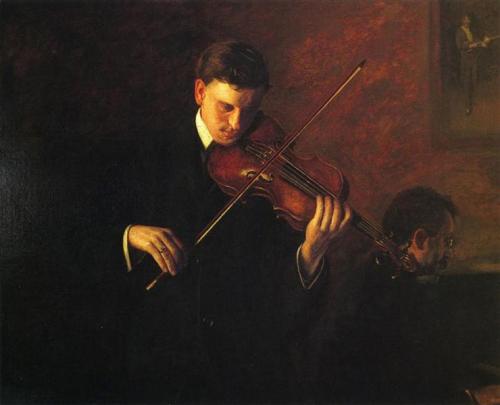
music-1904.jpg!Large

     “Music (1904) 

           Thomas Eakins

                  _______

music cannot lie, when it caresses 
you, your very senses on the alert 
for what, or what does not, inspire, 
from one note to the next, and, of 
course, from one sensation to the 
other

words are subject to all kinds of 
interpretations, visual arts can be 
manipulated, tell varying versions 
of an, even imagined, event, see, 
for instance, Surrealismwith its
distortions as multifarious as the 
imagination

but music cannot not tell the truth, 
one hears music with one’s senses, 
and responds to it with the same 
primitive instinct as, nearly, smell, 
another powerful truth teller, ask 
dogs, or ask a young man’s fancy 
when it turns to thoughts of love”,
in spring, there is no surer compass


here’s more Bach, Capriccio on the 
departure of his beloved brother“, 
from their family home, a marvel I’ve 
recently discovered 

  • Arioso: Adagio — ‘Friends Gather & Try to Dissuade Him…’
  • (Andante) – ‘They Picture the Dangers Which May Befall Him’
  • Adagiosissimo (or Adagissimo) – ‘The Friends’ Lament’
  • (Andante con moto) – ‘Since He Cannot Be Dissuaded, They Say Farewell’
  • Allegro pocco – ‘Aria of the Postilion’ (Aria di postiglione)
  • ‘Fugue in Imitation of the Postilion’s Horn’ (Fuga all’imitazione della cornetta di postiglione
 

do you love it


thanks, sincerely, for dropping by 

R ! chard

a “Musical Offering” – Bach

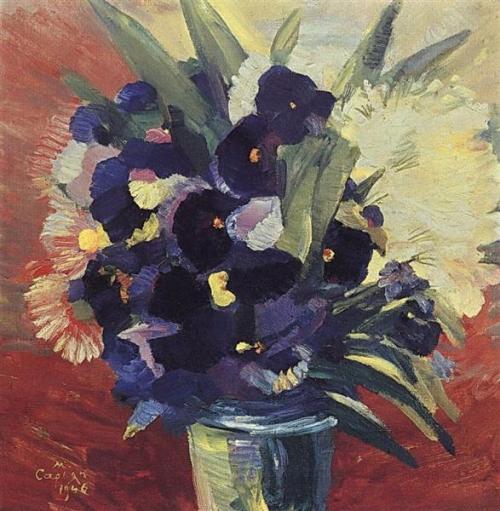
bouquet-of-flowers-1946.jpg!Large

    “Bouquet of Flowers (1946) 

            Martiros Sarian

                _________

                                      for Collin

a friend, who lives too far from me 
to visit, but who is too close to my 
heart for me to do nothing, has just 
had a stroke, “His body, smile, motor functions are improving.The most affected area is his speech center. He is filling in the gaps, has surrendered to his situation, but is operating at about 25% comprehension and memory. He has to rebuild his language, and is getting his ideas across with a lot of help in translation. He will be doing a lot of speech therapy. His uncanny resilience will serve him well.“, 
I’ve been advised

should I continue to write to him,
I’ve wondered, maybe just a few 
cheery words a day, does he 
take the time to read his mail, 
can he, does someone do it for 
him, should I call, or when  
I thought, if not anything else, why 
not music, something I can easily 
send, something he can hear, 
surrender to, rather than pay any 
more cerebral attention 

yesterday, I sent him Bach, Bach’s 
Musical Offering“, 1747, Bach is
from a much more serene period
in music than Beethoven, my 
recent area of investigation here
Bach wrote a lot of ecclesiastical 
stuff, cantatas and such, masses, 
was indeed music director for the 
Lutheran churches in Leipzig for 
a time, the combination makes for 
reflective, often even transcendental 
music, Beethoven wouldn’t at all, 
in this case, ‘ve done, with all of
his Sturm und Drang

I’m lighting a candle a day for my
friend, I’ll also be sending him
internet flowers, till I think of 
what else I can do but pray, for 
his speedy recovery


thanks for dropping by

R ! chard 

String Quartet no 10, opus 74, “The Harp” – Beethoven

primavera-1478(1).jpg!Blog

   “Primavera (1478) 

         Sandro Botticelli 

                 ___________

it’s 1809 and Beethoven rules, essentially,
the musical environment, he’s setting the 
standard, the tone, for the century to 
come and no one is anywhere close to 
challenging his authority, music students 
will remember Carl CzernyMuzio Clementi
for instance, but none of these, however 
noteworthy, contemporaneous composers, 
are even part of, anymore, the recital 
curriculum, think of Salieri and Mozart, 
for instance, without their mischief, who’s 
heard recently of any Salieri 

we’re not in Kansas anymore, this is the 
start of the Romantic Era, four movements,
but not one of them is a minuet, a signature 
element in a Classical composition, nor 
could you, would you want to dance to 
any of them

and this is where Beethoven starts to talk
rather than sing, music that you don’t just
listen to but read, note the disjointed 
rhythms that interject rather than court,
if you’ll pardon the Classical reference, 
from the very beginning of each 
movement, of each, indeed, recapitulation, 
music that is not at all genteel, but rousing, 
commanding

how does he do this

note that his rhythms don’t fall on the 
anticipated beat, they’re off, and 
therefore disconcerting, you need to 
get your bearings

then a motive, a musical idea that, as 
the word suggests, motivates, like a 
key to start an engine, will have an
odd, rather than an even, number of 
notes, like trying to fit a square into   
a circle, or a circle into a square, a 
tricky combination for balanced, by
definition, bar lines, one’s intellectual 
functions are thus activated, one 
doesn’t rest in the comfort of a 
prescribed cadence, but confronts 
the rocky, though constantly 
astonishing, even miraculous, road 
of Beethoven’s invention, adventure, 
if, of course, one’s into that 

instead of Mary had a little lamb, in
other words, we’re hearing, little  
lamb has Marie, accent on the 
wrong syllable, though here we 
might call her Mary, she calls her 
lamb Mouton, not unsurprisingly, 
and it’s always, day after day, 
beside her, which Beethoven then 
sets, as idiosyncratically, to music

he’s, in other words, toying with 
tempo – note the caesurae, the 
pregnant pauses in a melody, the 
multiplication of tempi throughout 
the work as a whole, which imply  
a narrative, a story, especially 
without the traditional, and 
diversionary, dance element 

tonality remains essentially stable, 
despite unusual juxtapositions, odd
intervals – the tonal reach along the 
musical scale, A to G, between two
successive notes – which is to say, 
we’re not yet at Stravinsky

but I find it interesting to observe 
that recapitulation, the third 
Classical imperative, along with 
tempo and tonality, remains 
uninterrupted, not even 
questioned, indeed forcefully 
reinvented 

can there even be music without 
recapitulation, I wonder, whereas 
the other two have since lost their 
immutability – I’m not sure, I’ll have 
to check


thanks wholeheartedly for stopping 

by

R ! chard

Piano Sonata no 17, opus 31, no 2 “The Tempest” – Beethoven

tempest-on-the-northern-sea-1865.jpg!Large

    “Tempest on the Northern Sea (1865) 

             Ivan Aivazovsky

                  __________

                               for Judy, who “glimpses“, she says,
                                   “a kinder world, that [my] missives
                                          provide” – thank you, Judy                            


just as I was being called on the 
carpet for my constant returns to 
Beethoven, none other than Glenn 
Gould should show up, in my 
cavern of wonders, to absolve me, 
or at least to stand stolidly by my 
side

let him talk

had I written, however, his 
observations, I’m sure you’d’ve  
balkedhe’s a product, after all,  
of the priggish pretensions that  
prevailed in my neck of the woods 
at the time, Southern Ontario, a  
product of British Imperialism  
of which I am myself, I avow,  
incontrovertibly subject, but due  
to the strength of his celebrity,  
one is likely to listen to Gould  
more attentively, I’m not 
sufficiently yetsuspect,  
significant, nor influential
 
he is, one way or the other, I concur,
absolutely right

about his Tempest“, though, I’ll say, 
even object, as Stravinsky and John 
Cage did, according to Gouldabout 
the commanding Beethoven, that 
Gould is dripping in Romantic
sentiment here, his rubato in the 
first movement tests the limits of   
our forbearance, and his second  
movement is so slow as to have 
one fall off the page

but his last movement, the allegretto,
is brilliant

Gould’s idiosyncratic, dare I say, 
eccentric, performance will 
throughout, nevertheless, 
astonish, indeed electrify, even,
I’m sure, inspire, watch, listen

and thanks ever, especially, for 
dropping by 


R ! chard

psst: here’s another version of the 17th,  
          to my mind, less self-indulgent, but 
          you be the judge, don’t think about 
          it, just ask yourself which one  
          would you want to hear a next time,  
          that’ll be your, gloriously personal,   
          reply

          enjoy

off my top – from Bach to Beethoven

6.jpg

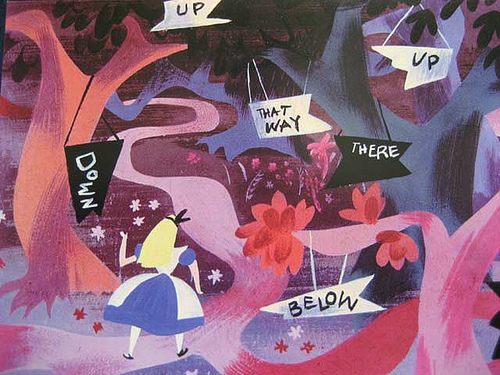
    “Alice in Wonderland” 

             Mary Blair

               _______

when I listen to Bach, I feel like I’m 
on a train – from Leipzig to Dresden, 
say, his territory – the constancy of
his rhythms, modified only by 
accidentals along the way, the 
particular condition of the rails, that 
indeed decorate an otherwise 
monotonous clockwork progression, 
beat upon beat, there is neither an 
increase in volume, which hadn’t been 
formally invented yet as a principal 
musical implement – and I’m only 
partially joking here – the music is 
horizontal, not focused on reiteration, 
but on getting there, accomplishing 
mission, upon which the outcome is
even spiritual – it’s Dresden, I get off 
at the Neustadt Station, am not only 
refreshed but utterly inspired, 
reminded of my position in the world, 
and my place in this novel, but
ordered, and pious, environment 

listen to Bach, his Sonata for Violin
and Piano, B minor, BWV 10141717 
to 1723 approximately, for instance

with Mozart, I get on a merry-go-round,
at a carnival, the clockwork has become 
circular, you can sing the tune, and sing 
it again without a problem, the wooden
horses fly by, one after the other, entirely 
recognizable, though ever magical and
entertaining, but you get off at exactly 
the same untransformed station, 
however delightedly

Mozart’s Sonata for Violin and Piano,
no 18 in G major, K301, 1778, say

with Beethoven, though, it’s like going 
through the looking glass, if you’ve ever 
been through one, the direction is 
horizontal again, you might try singing 
along, but get only so far, until you’re 
utterly confounded, what happened, 
where am I, you wonder, when 
suddenly a Mad Hatter comes along, 
or a Queen of Heartsand speechless, 
you hold onto your seat, it’s 
Disneyland, but without the usual 
safeguards

later, after however many movements,
you’re returned to, if you’ll permit in 
its American transliteration, Kansas, 
from Oz, and Dorothy’s tornado, her 
equally transformational journey, 
safe and wondrously sound, but with 
extraordinary benefits, mystical, 
even transcendental 

but, o my goodness, you think, it’s 
late, I’ve got to get the supper on, 
and, did that really just happen, a 
blip in the order of consciousness, 
a very illumination, a transcendence, 
however secular, however 
non-denominational a take on the 
question of our shared fate, our 
shared humanity, our manifest 
and sublime glories, our profound 
and wrenching tragedies, as 
probing, and indeed as oracular 
as the words of any of the other 
propounding pastors, indeed 
philosophers, then, in a world 
coming to grips with the debate 
around God, and by extension,  
I might extrapolate, my own 
God/dess

for by this time, that had become
a concern, Science, which is to say, 
the Enlightenment, the Age of 
Reasonhad provided a convincing 
counterpoint to the various takes on 
an, even just Christian, Supreme 
Deity, Who’s very viability was up,
in the 18th Century, for grabs

Beethoven provides the first 
personal option, his version of the 
Ten Commandments, for the later
non-denominational ages, our 
souls, our individual agonies, he 
demonstrates, are enough of an 
argument for our unconditional 
salvation, our personal, and 
resplendent souls are not not to
be discounted, their poetry, their 
truth and beauty, are the heaven 
towards which we can existentially 
all aspire, for better, of course, or  
for worse

Beethoven, his Sonata for Violin 
and Piano in G major, no 10
Opus 96, 1812, listen 


R ! chard

twice upon a “Pastorale” – Beethoven

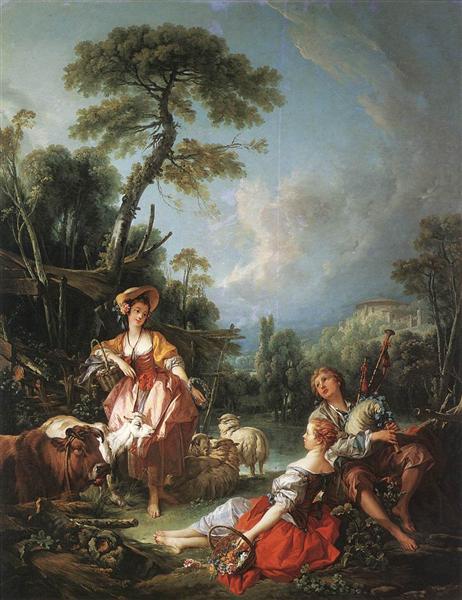
summer-pastoral-1749.jpg!Large   

    “Summer Pastoral (1749)

          Francois Boucher

                __________

on my way to my metaphorical 
Eiffel Tower, Beethoven’s Piano
Sonata no 15, the “Pastorale”,
his first to impress me, his 
Opus 28despite the notoriety 
of the earlier “Pathétique”, 
Opus 13and of the “Moonlight”
his Opus 27, no 2, splashy 
showpieces, those last twoto 
my mind, rather than revelatory,  
knew I was going to stop at the 
Arche de Triomphe, if you’ll 
allow me the developing allegory
to visit the other “Pastorale”, the 
6th, and my favourite, Symphony
one of the few works which he 
named, but where he also gives, 
apart from tempoin the usual 
Italian, descriptive headings in 
German, the culture that had 
taken over the arts, essentially, 
from the Italians, during the 
18th Century

Erwachen heiterer Empfindungen 
bei der Ankunft auf dem Lande, 
he, for instance, instructs, or
Awakening of cheerful feelings on 
arrival in the countryside, then
Scene by the brook, Merry 
gathering of country folk, Thunder. 
Storm, and finally Shepherd’s song. 
Cheerful and thankful feelings after 
the storm – five, unconventionally 
already, movements, instead of the 
usual three, or four, with headings 
that look a lot like stage settings,
cues for a play, chapters in a story

it’s evident that music has explicitly 
become, hereliterature, movements 
have been given a specific thrust, 
particular direction to follow, not  
dance, but emotive, appealing to the 
vocabulary of the senses, the 
grammar of the heart, music as 
graphic description, later we’ll even 
get tone poems 

sure, Vivaldi had written his Four 
Seasons“, 1723, but never, ever, 
as precisely rendered as here,
Beethoven brings to life an actual 
storm, bing, bang, pow, you hear, 
as thunder cracks, rumbles, 
crashesnot to mention the virtual 
call, chirp, twitter of the various 
birds he elicits bristling in the 
rustling leaves, you’ll even hear 
in the recovering countryside 
rainbow if you listen

music has become a language, a
medium of direct intelligent 
communication, enough, indeed, 
to verily inspire century, indeed,
as well, beyond


you’ll also fall in love with Leonard 
Bernstein here, who shows why 
Leonard Bernstein remains ever, 
indisputably, Leonard Bernstein,
beautiful, angelic, inspired

R ! chard

twice upon a dirge – Beethoven / Chopin

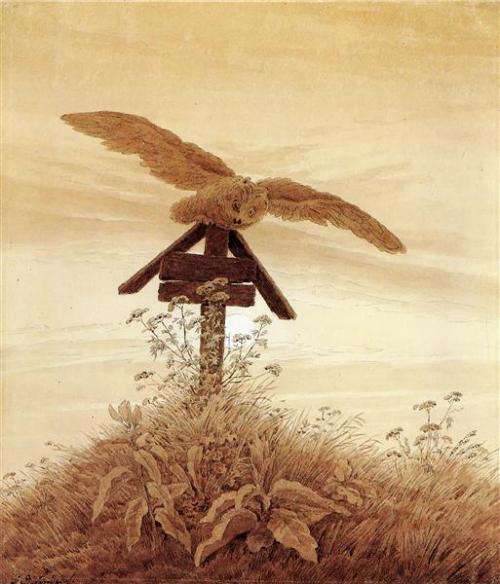
owl-on-a-grave-1837.jpg!Large

   Owl on a Grave” / “Eule am Grab (c.1836 – c.1837) 

          Caspar David Friedrich

                   _______

following my nose rather than 
my intellect in my exploration 
of musical treasures, like a very 
Aladdin uncovering at the click 
of my password a cave full of 
priceless wonders, I might find 
stuff out of sequence, but gems
nevertheless, and I can’t just 
whisk by without acknowledging 
them, however peripheral to my 
main task  

it’s like heading towards the Eiffel
Tower in Paris, and not stopping 
at the Arche de Triomphe

though I’d debated so soon 
presenting these two pieces, 
not because of their chronology 
especially, though also that, but 
mostly because of their dour 
content, I’ll point out that the 
move from Classicism to 
Romanticism is the transition 
from dance music, delightful 
music, to drama, passion, 
powerful emotions, dirges, 
therefore, are not out of place, 
however mournful

thus the two most famous 
funeral marches, Beethoven’s,
Chopin’s, the third movement 
in either of their home sonatas

the clincher for me was the 
immaculate performance of 
the Chopin herea revelatory 
moment, though the Beethoven
significantly earlier, the tune, 
1801, 1837, is nevertheless 
unimpeachable, however still 
underdeveloped – four variations 
only in the first movement, for 
instance, and all of them 
elementary – the caterpillar had 
not yet become the butterfly, the 
apple blossom the apple

note that each movement in the 
Chopin, apart from the last, has
two distinct tempi, executed 
effortlessly and nearly 
imperceptibly, a total of six, you 
can’t see, you can’t hear, the 
seams as you listen, which, with 
its virtual therefore episodes, 
conflicting and tortuous 
emotions, constitute collectively 
a drama, a narrative, music has 
become literature

the last movement of the Chopin
moves beyond even tempo – 
Beethoven’s also, incidentally, 
nearly – creating therefore 
very challenge to it, both trying 
to transcend tempi, an area to 
closely watch

Beethoven’s Piano Sonata no 12

Chopin’s Piano Sonata no 2

take your pick

both are supremely, mark, 
instructive


R ! chard