Richibi’s Weblog

Just another WordPress.com weblog

Category: philosophy

to Socrates – on monotheism‏

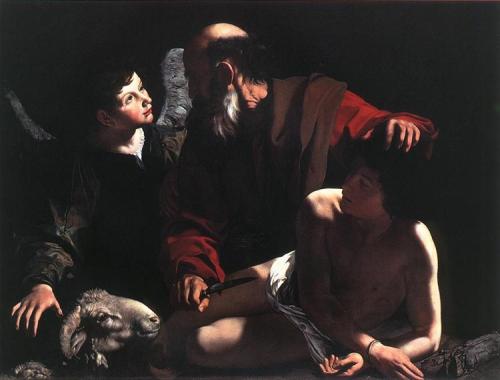
sacrifice-of-isaac(1).jpg!Large

      “The Sacrifice of Isaac (1598)

                        Caravaggio

                               ________

by very definition, the inevitable
result of monotheism, Socrates,  
is war, if there is one authority it  
will eventually be opposed by a 
contrary, however picayune, 
however trivial, opinion, see the 
Protestant Reformationsee Islam, 
for instance, now
 
after which there is disintegration
 
before Christianity, there were gods, 
a pantheon of them symbolically
alive among the rivers, the trees, 
the mountains, read Ovid for an
exhilarating description, wars were 
waged for territory, not conscience  
 
Judaism, the religion of the Jews,
evolved for their own existence a
deity, Yahweh, who was their one 
god, disdainful of foreign others,
an uncharacteristic attitude among 
other religions then, becoming one 
of the very first monotheistic, and
consequently existentially 
compromised faiths, if not the 
first
 
the intent was to rally ideological 
support among its adherents so 
that they could protect the lands 
of Israel and Judahtheir ancestral 
homesas they would have it, a 
sanctification of the territorial 
principle
 
their Bible, the Torah, a vengeful 
work, and the basis for the 
Christian Old Testament, 
demanded of its followers 
unblinking and cruel allegiance,
the sacrifice of Isaacfor instance,
a father required to sacrifice his 
own son, however might it ‘ve
been at the last minute averted by 
the intercession of an angel sent 
by that very Lord
 
Christ came along to turn the other
cheek
 
which didn’t last long 
 
indeed Montesquieu, an early 
philosopher of the French
Enlightenment, tells of the 
King’s librarian of Chinese 
texts, who had been converted 
to Catholicism in China, but 
who was nonplussed upon his 
arrival in Christian France to find 
that the French did not do onto 
others as they would have them 
do unto themselves, nor did they, 
more catastrophically, turn the  
other cheek
 
for that matter see what Christian 
Europe did to the Americans
 
Christ’s own followers, once they’d 
achieved political prominence, after, 
admittedly, 300 years of persecution 
by the prevailing Roman authorities, 
set their own deity, God, on high, 
indeed beyond the rivers, the 
mountains, the trees into the very 
ineffable, the inscrutable abstract, 
and squelched any opposition for  
the next thousand and some years,
the philosophical underpinnings of 
which was the work of your 
contemporary, Plato, Socrates, his 
ideal of the Ideal
 
Augustine signed those recalibrated 
papers with his City of God“, it took 
the Renaissance to make a dent in its 
armour, and another several centuries 
to declare the Christian God dead, 
Time magazine in the ’60s, on the 
heels of Nietzsche‘s nihilistic  
pronouncement some 70 years earlier, 
that God had exited history
 
what we are left with, Socrates, is every 
wo/man for hirself, therefore the Age of 
Human Rights, for better or for worse
otherwise many of us would’ve been 
guillotined, burnt at the stake, stoned 
to death, by now
 
what do you think
 
I’ll bet I can tell, you think that every 
wo/man owes allegiance to what s/he 
believes in, even to inexorable death, 
however impractical, unfortunate, or 
fateful, if your exemplary life has  
anything to say about it 
 
 
cheers
 
Richard
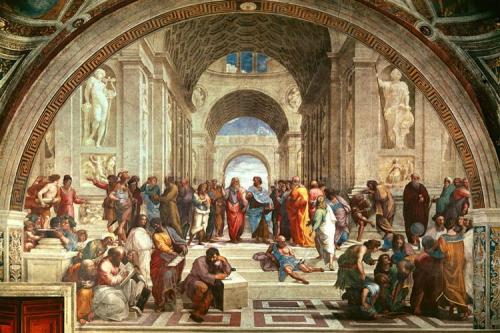
up my idiosyncrasies – Plato‏

school-of-athens-detail-from-right-hand-side-showing-diogenes-on-the-steps-and-euclid-1511.jpg!Large

      “The School Of Athens (1510-1511)
 
                   Raphael
 
                       _____
 
 
he sounds just like you, my friend said,
who’d bought me the works of Plato
for C***mas maybe, or my birthday, or 
maybe just because he knew I’d very
much appreciate them
 
we were reading him together, as is 
always my inclination, his Meno 
according to my calculations, 
Socrates was doing most of the 
talking, with Meno, a Sophist 
acolyte, a school of philosophy then, 
the Sophists, which claimed it could 
prove anything by using the right 
arguments 
 
lawyers, of course, ensued, politicians
 
and rhetoric, the art of proving anything 
by using the right arguments 
 
philosophy had reached a structural,
indeed an existential, impasse, why, 
they therefore wondered, philosophy
 
wherein it entered a phase of moral 
speculation, StoicismEpicureanism,
ScepticismCynicism, and can you 
blame them, theories about the 
stars, the moon, the world, even 
matter itself, had become so 
questionable, was it fire, air, water, 
atoms, at its source, who knew
 
 
I thought so too, I said, and told 
him that Plato’s were the first   
texts studied in philosophy when 
entered university, that’s where I 
learned to talk like that, philosophy 
from the scratch, as my German 
teacher would’ve said, which is to 
say, from its very beginnings, 
whence I could view, I figured, the 
evolution of received wisdom in 
Western culture
 
I was young then, the young have 
such dreams 
 
 
my father had been agnostic, ever
asking questions, though we were 
being raised Catholic, my sister 
and I, on account of our mother 
tongue, our entire community, 
having been historically linked 
with that religion, and cause my 
parents wanted us to be educated 
in French
 
an existentialist crisis would
eventually follow, I intuited, as
indeed it did, so I majored in 
philosophy
 
 
Socrates taught me to ask 
questions, that no one had  
all the answers
 
Plato, usurping his master’s voice, 
created the paradigm for our present 
version of a Divinity, and Its Paradise
 
there is an ideal version of any 
item we might consider, he spouted,
an ideal table, for instance, exists
of which every material table is an
imperfect example
 
to virtue, love, beauty, truth, he 
applied the same principle, which
early erudite Catholics, Augustine
Thomas Aquinas, for instance, and
others, despite rejecting all of the 
other Greek cultural achievements
appropriated in order to bolster their 
impression of God, the ideal of the 
Ideal
 
this lasted uncontested for just
over a thousand years
 
for a thousand years our salvation
had been extraterrestrial, 
supranatural, this, our very, 
perhaps only, existence, an 
imperfect reflection of somewhere
else an ideal, a mere simulacrum,  
we were, a metaphor
 
Socrates had only asked questions,
what is virtue, what is justice, what
is beauty, truth
 
Plato presumed to have known the 
answers
 
 
Aristotle is making a comeback,
whose method, in opposition to 
his contemporaneous forebear,  
was much more like Charles 
Darwin‘s, working from the facts, 
which proved then, and are 
proving still now, to be multifarious, 
diverse, astonishing, and nearly 
enough to make you believe in 
God/dess again, this time, however, 
through the back door 
 
or in a multiplicity, a panoply, a 
very pavilion, even, of natural 
deities, otherwise known as 
angels, for better or for worse
 
God/dess bless, or angels
 
 
Richard

up my idiosyncrasies – Albertine‏

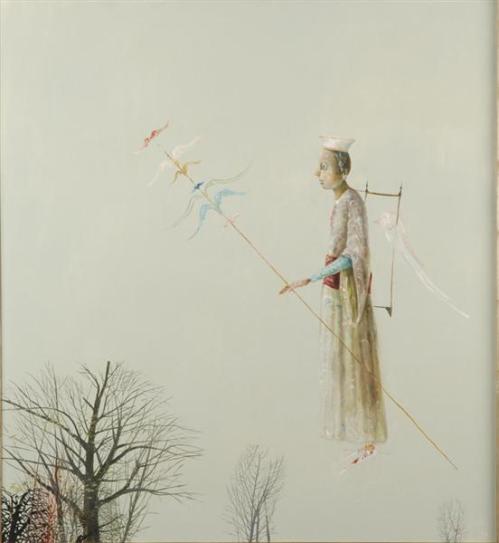
wing-seller-2006.jpg!Large

            Wing Seller (2006)

               Stefan Caltia


                        _______ 

 
what are you doing, a friend of mine
asked when he called 
 
I’m reading my Proust, I answered,
comfy enough with my textafter 
years waking up side by side, to 
use the possessive adjective 
 
what’s going on, he inquired
 
Albertine is lying on his bed, 
recounted, asleep, she’s been there 
for the past ten pages, and she’s 
just now turned onto her stomach
 
 
there is not so much story as 
paintings, in Proustdetailed 
descriptions applied like strokes of 
colour to a canvas, that of recovered 
time, colours that are specific to a 
place and a period, like photographs 
showing in their very fabric their 
ancestry, their lineage
 
but in the elucidation of what he 
sees, or, more accurately, of what
he remembers, Proust delivers 
a work of the very highest art, a 
mixture of poetry and philosophy,
Beethoven did as much, see his
 
 
Proust’s French is essentially 
immaculate, his tone, however 
intimate, always erudite, aristocratic, 
perspicacious, wise, penetrating,
embracing, which is to say, French,
though German can be also
incidentally, pretty cerebral, English 
is narrative, just the facts, please, 
though often, I think, hilarious
 
 
Albertine had been one of the “young
girls in bloom” he’d met at Balbec, a 
seaside resort, with whom he’d 
undertaken an illicit affair, but 
whose faithfulness he doubted
 
as she lay on his bed at his Paris
apartmenthe replays all the 
speculations his imagination could 
provide, an endless set of variations
on his anguish, which is to say, his
jealousy, worthy of a very Othello
 
for ten pages he paints a picture of 
infidelities completely of his making,
which, of course, becomes the world 
he will respond to
 
it is all in our little heads, I surmise, 
however informed, intelligent, that 
we create our little realities, they 
have never been nearly enough, 
though, indeed, our lives depend 
on themhowever dutifully
considered, however unconsciously,
and ever convincingly, contrived   
 
make them, I submit, good ones
  
I imagine myself a poet, for instance,
how’s that for a shot in the improbable 
dark
 
 
Richard

up my idiosyncrasies – Marcel Proust‏

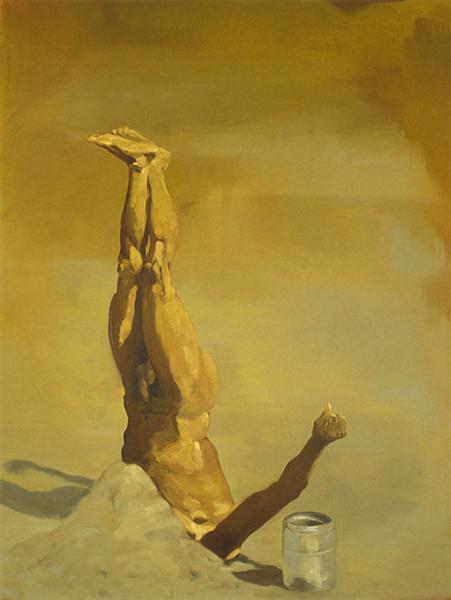
holy-man.jpg!Large

    “Holy Man (1989)
 
       Eric Fischl
 
          ______
 
 
Marcel Proust is not an easy read, 
of literature it is surely its Everest,
not an easy climb, but from its peak
the world takes on an entirely other
order
 
an English-speaking friend has 
suggested he might try to read it 
again, but not in French this time,
I countered that that way he’d miss
the many crevices and crags, the
slippery slopes and lethal ledges, 
that give shape to the mountain, 
which the French grammar would
apply in all its intricate 
manifestations
 
part of the pleasure in reading 
Proust is the poetry, where style 
and substance coexist to create 
magic, and inspiration  
 
the sentences are long, they wind 
on for often pages, you need to be 
able to tell the subject from the verb
despite sometimes extended
intervening distances
 
but the grammar is sound throughout, 
except for in a couple of isolated
instances, grammar that would test
even a Frenchman
 
indeed Proust is where, I profess, I 
truly learned to speak French
 
there’s another mountain
 
 
the conceit is that someone rings 
the bell at their Combray cottage,
and after 3300 pages someone 
rings at the same door again
 
in between the years have passed,
they are the fruit of Proust’s 
“recherche”, search, investigation,
quest, a term that can’t be fully 
expressed as such in English, 
which doesn’t express the 
confluence of cold science and 
candle-lit spirituality expressed 
in the French word
 
in dissecting the very entrails of a 
flower, a tea cup, a crumpet, an eye, 
a brow, a lip, a gesture, a frown, a 
smile, a gait, Proust describes his 
own world, concocts it, minutely, 
meticulously, until you realize this 
can be only his perception, that 
therefore all of our interpretations 
are but our individual perceptions, 
our myriad unique worlds
 
from which one can begin to 
shape one’s own
 
later with Wittgenstein, the 
philosopher, this became known 
as phenomenology, the idea that 
we are confined for knowledge to 
our private views of the world,
wherein language plays, manifestly, 
a crucial part
 
in the beginning, if you’ll remember, 
was the word
 
curiously, in French, it is the verb, in
the beginning, implicitly suggesting 
a word of action 
 
 
Proust had been prescient as Freud
uncovering an inner world we’d always 
believed was outside us
 
at the top of his priorities Proust
chose art, personal expression,
it’s all that we can return to the 
world
 
and what else could be our purpose
 
 
Richard
 
psst: bonne lecture, Kurt

on buying designer honey

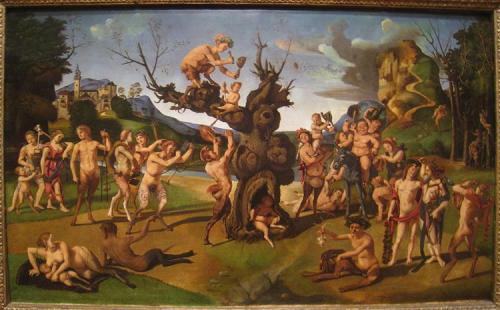
the-discovery-of-honey-by-bacchus-1505.jpg!Large.jpg

 
                Piero di Cosimo
 
                   ___________
 
 
it’s not every day that someone changes 
your outlook on, well, everything
 
I was at the supermarket, needed honey
for my recipe for carrot soup, with Brie
also, and nuts, an intriguing combination,
I’d thought
 
but I couldn’t place the honey in the 
umpteenth reorganization of the food
store
 
where’s the honey, I asked the clerk, 
who serendipitously was standing 
in front of me, this aisle or the one  
over, I added, not expecting anything 
more than cursory directions, and 
giving him thereby a feel for my 
attendant capabilities
 
but he took me, impressively, 
thought, the one aisle over to the 
honey spot, ahem
 
 
there was a modest selection there,
plastic honey bears, the white honey
you need to crank out of the jar, other 
honeys in less appealing packages,
several of the wild berry and grain
varieties
 
but I wanted the honey that melts in 
your mouth, instinctively, the one 
infused with clove, cardamom and 
cinnamon, the one that clings to 
your tongue lasciviously, leaving, 
with every lick of your lips, very bliss, 
though not, notably, at an especially 
conducive price
 
why not, you only live once, I’d 
devised already, despite the cost,
to validate my more cavalier 
expenses 
 
someone else was ogling, however,  
my honey, reaching for the larger of 
the two options, there was some
space, I reached up, into a kind of 
shopper’s no man’s land, how do  
you impinge on someone’s pending 
decision when you already know 
what you want, and not create 
confusion, if not distress
 
and he was bigger than me
 
looks good enough not to resist,
I said, you only live once, why not, 
rejoindered, falling back on my 
default position, my broken record, 
which sent nevertheless a strong 
existential message, I think
 
how can we know, he congenially 
replied, catching me up on my 
unexamined assertion, how do 
we know for sure we don’t have 
another, others
 
imagine that, I marvelled, I’ve never 
heard anyone else ever say that,
everyone ‘s always ceded, it’s 
something to profoundly, and 
inevitably have to, ponder
 
but not enough right now to not  
buy the honey, I added, however 
unphilosophically, though I’d think 
about it further for consequences, 
it could change everything, 
declared, my life, this life
 
and we waved each other goodbye 
from our present incarnations
 
 
Richard

2016, a rumination‏

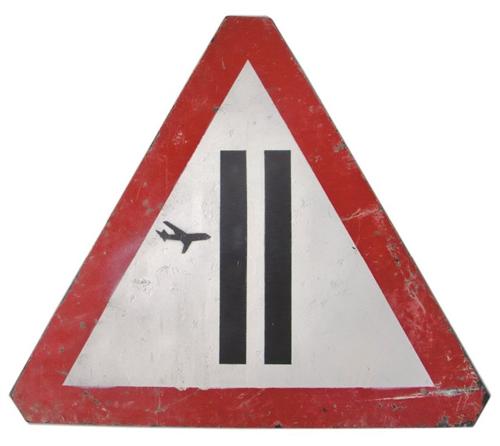
warning-sign-2006.jpg!Blog

                                         Warning Sign (2006)
 
                                                      Banksy
 
                                                        ____
 
 
in an introspective moment, I mused
 
    the days move on, the years, it’s 
    2016, beyond what I could ever 
    have imagined, born as I was 
    before even television nearly, 
    1949, Israel was being invented, 
    the Geneva Conventions were
    being devised 
 
    the future had been predicted with 
    “2001” in 1968, Kubrick’s visionary
    masterpiece, if not quite with “1984“, 
    Orwell’s 1949 attack on imminent, 
    impending, totalitarianism 
 
    though that work was too close to  
    have significant impact, we still, by 
    that eponymous date, weren’t at all 
    aware of possible pervasive 
    personal monitoring, of even 
    entirely innocent transactions, 
    we were busy deregulating, 
    privatizing, ceding our patrimony
    to unscrupulous speculators, that
    which our forebears had even died 
    for, who once had been serfs and 
    as indentured
 
    Big Brother since has been 
    identified, verified, and you, we, 
    are the perpetually espied
 
    we are seduced by the idea that 
    our innocence will be our salvation, 
    though innocence, like beauty, 
    truth, is in the eye of the, not 
    necessarily impartial, beholder 
 
    and the beholder, the monitoring 
    eye, cannot be impartial
 
    see God
 
 
    we have ever been at the mercy 
    of not necessarily Reason, but
    inexorable Fate, though prayer, 
    I’ve found, has worked miracles
 
    it is the only hope we have
 
    I wish you miracles
 
 
    Richard
 
 
Richard

September, 2015‏

 "A September Day" - George Henry

A September Day (1935)

George Henry

_______

September is a melancholy month, it
suggests fall in all of its connotations,
the array of burning colours lighting
up the leaves, purple, amber, magenta,
the steady decline into winter, of the
year and, by metaphorical extension,
of the years we have to come

it’s a month for philosophy, I think,
and introspection, therefore,
incidentally, I am

listen

Richard

“Death and the Maiden” – Franz Schubert‏

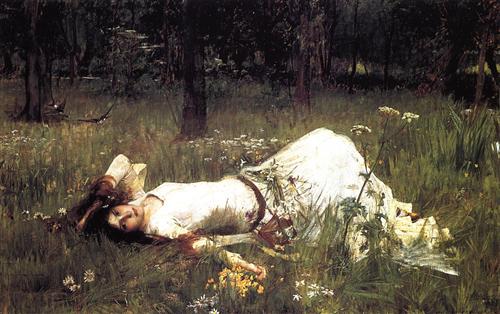
 "Ophelia" -  John William Waterhouse

Ophelia (1889)

John William Waterhouse

___________

though death is not an especially
appealing topic for many, it was
nevertheless of fundamental
consideration during the
Romantic Period

Goethe, the German poet, had
already created a sensation
with his The Sorrows of Young
Werther
, a young man,
disappointed in love, takes his
own life, a potent seed for the
new era, secularism was
overtaking theocracy, the
autocracy of the Christian
Church was giving way to the
prevalence of human rights,
a private opinion, well disputed,
was holding sway against the
rigidities of religious orthodoxies,
science and reason had been
chipping away at the very idea
of God

but with human rights there was
the question of personal
responsibility, if not an imposed
authority, then each man, woman
was in charge of his, her own

the fundamental question,
therefore, was Shakespeare’s
To be or not to be, or, for that
matter, Burt Bacharach’s and
Hal David’s What’s it all about

this is not me, this is Albert Camus
talking, who formalized the situation
in the 1940s

“There is but one truly serious
philosophical problem, and that
is suicide. Judging whether life
is or is not worth living amounts
to answering the fundamental
question of philosophy. All the
rest — whether or not the world
has three dimensions, whether
the mind has nine or twelve
categories — comes afterwards.”

after Werther, Madame Bovary followed,
Anna Karenina, suicide had become an
option, the penalty was no longer
opprobrium, castigation, as it had been
under unforgiving religious constraints

death itself, fatefully rather than
personally determined, was, of course,
no less considered when the era of
heartfelt declarations dominated,
Mendelssohn had written his
Quartet no 6 in F minor, opus 80
for his deceased sister, Beethoven
and Chopin, each his Funeral March,
either, incidentally, still iconic, and
perhaps the most poignant work
of all in this manner, Schubert’s
Death and the Maiden, a precursor
of his own much too premature
demise

this is music as if your life depended
on it

watch, listen

Richard

psst:

the Alban Berg Quartet, a group who
set the standard for several significant
string quartets in the ’80s, do no less
with this one

you’re not likely to see a better
performance of it ever, nor, for that
matter, of anything, pace even Glenn
Gould, a statement I think nearly
against my religion

you be the judge

seizing the iridescent moment

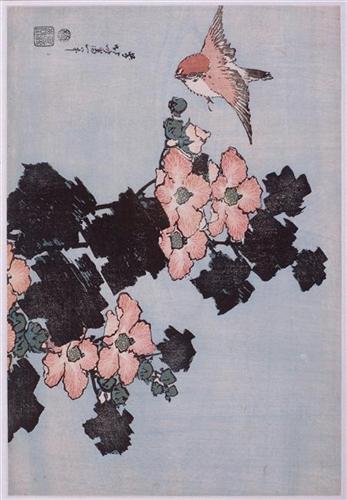
"Hibiscus and Sparrow" - Katsushika Hokusai

Hibiscus and Sparrow

Katsushika Hokusai

_______

standing behind a Japanese man
at the check-out counter the other
day at Safeway’s, thinking their
express line was about as fast
as a slow lane in Manhattan, I
listened to the cashier explaining,
over other transactional
considerations, that their point
cards were no longer in use

with the deference that seems to
me their trademark as a culture,
who else wears white gloves
when they’re driving a taxi, who
else returns your lost trinket to
your hotel room on no less than
a silver platter the following week
when you return – I’d been a flight
attendant, I know, I lived it – o
leally,
the Asian man replied

wherein I discovered completely
my patience, Manhattan, for the
moment at least, be damned, I
needed to stop to partake of this
serendipitous nugget, to carpe
this inadvertent and delightful
diem, midst the dross I’d’ve
otherwise, by default, probably
allowed

for that matter, what’s dross, I
wondered, isn’t dross itself in
the eye of the beholder

leally and tluly, I surmised, life
is in its details

Richard

psst: the attendant at Safeway
was, as usual there, utterly,
and enchantingly, gracious,
despite such as my own,
however in this instance
arrested, individualized
customer stress

“Whatever Works” – Woody Allen


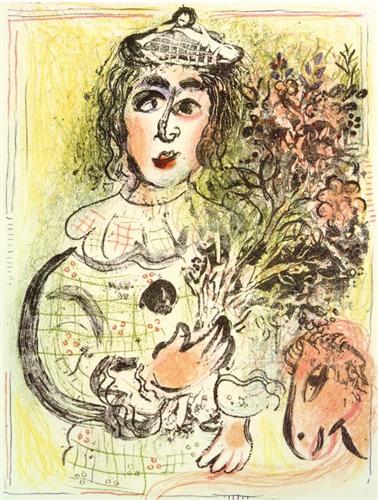
"Clown with Flowers"- Marc Chagall

Clown with Flowers (1963)

Marc Chagall

______

after Existentialism, Camus, Sartre,
after “God Is Dead”, there was
Woody Allen, to let us know that,
you know, Whatever Works“, you
can either jump out ‘ a window or
make the best of it

I am, of course, Boris Yellnikov,
though my girl from Mississippi
hasn’t shown up yet

nor for that matter has my
psychic

maybe I should jump out ‘ a
window

what do you think

watch

Richard