Richibi’s Weblog

Just another WordPress.com weblog

Category: people to ponder

Dmitri Shostakovich – Symphony no. 1, opus 10, continued
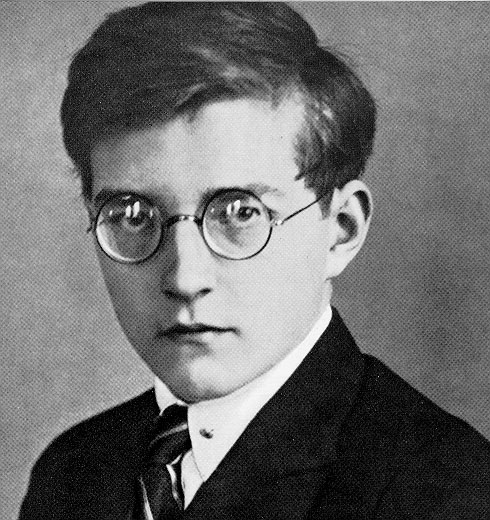
Dmitrij_Dmitrijevič_Šostakovič_(Дми́трий_Дми́триевич_Шостако́вич)

        Shostakovich in 1925

                   __________

                                        for Barbara, who died recently,
                                                 she would’ve loved this 

Shostakovich was just nineteen when
his Symphony No.1, opus 10 was 
first performed – it had been his 
graduation piece the previous year
from the Petrograd Conservatory –  
by, then, which is to say 1926, the 
Leningrad Philharmonicrenamed the 
Saint Petersburg after the fall of the 
U.S.S.R., the name it had held before 
the Bolshevik Revolution, the oldest 
philharmonic orchestra, therefore, 
incidentally, in our Russia, going  
back to 1882 

the work was a complete success, not 
surprisingly, if you’ll consider its scope, 
its power, and its novel musical 
interpolations, I mean a piano as an 
integral orchestral instrument rather 
than as a distinct, however interrelated, 
component, a pas de 40 instead of 
pas de deuxsomething I can’t remember 
anywhere else having seen for piano 

not to mention the drum roll between 
the last two movements, drums making 
splash in an orchestral setting, who’d 
‘a’ thunk it, though Richard Strauss had
done just that in his extraordinary 
Burleske” several decades earlier,  
another youthful work, Strauss only 21

but meanwhile back in Russia, before 
too seriously digress, Shostakovich  
was immediately compared to another 
earlier young prodigy there, Alexander 
Glazunovwho’d himself put out his 
own First Symphony, the Slavonic“,
at age 16, introducing, incidentally, his 
own instrumental novelty then, an oboe 
obbligato, which by very definition is 
lovely
  
Glazunov also mentored, by the way, 
Shostakovich at the Petrograd, proved
to be instrumental indeed in his 
progress

it’s interesting to put these last two 
together, to compare, the Glazunov, 1881,
follows the traditional Romantic 
imperatives, tempo, tonality and 
repetition, but with more bombast, to my
mind, than its European counterparts,
its fields are the Russian steppes with 
troikas, horse-drawn carriages, flying 
across vast unhampered vistas of the 
Russian snow-covered, therefore 
pristine, tundra, to whet the unbridled 
Russian spirit, the Europeans, Brahms,
MendelssohnMahler, conversely, 
are confined to the hunt, however ever
glorious, but with shrubs, copses,   
thickets, if not veritable forests, to blur
the sonic arena, inspire dreams, 
consequently, less far-reaching than  
those of Johnny Appleseed even, of 
the North American Prairies poets,    
their own far-flung, boundless  
imaginations, inspiration, you can 
hear it all, blatantly, in the resonance
of the horns

you’ll note the movements follow 
essentially the same rhythmic order 
in either symphony, the first two fast 
enough, then a third that’s somewhat 
slower, a variation from the strictly 
Classical order of fast, slow, fast, then
a last, eclectic, movement 

but Shostakovich is more atonal, 
melodically divergent, an eccentricity 
he’ll later polish to a degree of 
politically subversive brilliance

for not submitting, however, to the rule 
of repetition, which is manifest, though,  
in GlazunovShostakovichI find, leaves
us trying to find our bearings as his music 
rolls along, kind of like in biographical 
movies, when you start looking at your 
watch to determine how many life 
incidents remain in this particular, 
however significant, existential drama

as spectacle – and it must be noted that 
symphonic displays were at the time 
indeed spectacles – there was no 
phonographic, photographic 
equipment to transmit such 
experiences, the symphony itself was 
the show, it had, right there, itself, to 
wow the audience

in all of these cases, all of them did 

Shostakovich, however, of all of them 
remained eventually potently 
pertinent, powerfully paramount, 
watch

R ! chard

Dmitri Shostakovich – Symphony no. 1, opus 10

portrait-of-dmitri-shostakovich-1963.jpg!Large

     “Portrait of Dmitri Shostakovich (1963) 

             Martiros Sarian

                    ______

after being transfixed, rendered aquiver, by
this mesmerizing conductor in a performance
I can only remember for his magnetism, 
expressive fingers performing arabesques of 
such exquisite sensitivity, eyes that melt, 
light up, gleam, glitter, at every ebb and flow 
of the turbulent, towering, music, eyebrows 
that, blonde, cherubic, angelic, display with 
manifest intention, the spiritual implications 
of every musical turn, a youth only, in my 
senescent estimation, taking on the conquest 
of the 21st-Century world, lately installed as 
conductor, most illustriously, of both the 
Royal Liverpool, in 2005, and the Oslo, in 
2011, Philharmonics

Vasily Petrenko led me back to Shostakovich,
after his monumental Tchaikovsky 5th,
whereupon I’ve undertaken a chronological 
review of all Shostakovich’s symphonies, 
something I did long ago with Beethoven’s 
sonatas, to my great cultural advantage, it 
was a journey that informed me not only 
intellectually but, even more significantly, 
spiritually, taught me about patience, tumult, 
and the wisdom, even glory, one acquires in 
resignation, so long as you hold onto your 
principles, your core 

you look back, I told a man once, and you 
see what you’ve come through, and you 
are proud, you recognize the hero that 
you are, or weren’t

we have only our poise and grace to lend 
to the world, or our venom and invective

but I digress

here’s Shostakovich, his First, in a line 
of Shostakovichian explorations

if you’ll join me

R ! chard

on “Aristotle” – Billy Collins

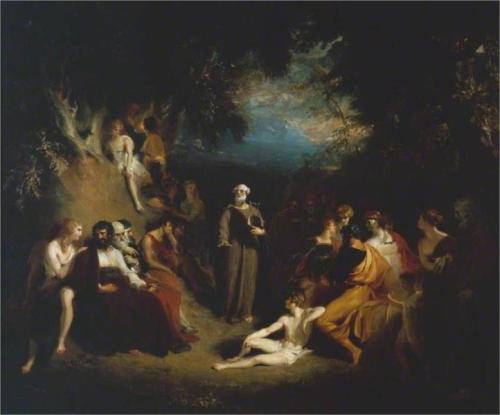
homer-reciting-his-poems-1790.jpg!Large.jpg

      Homer Reciting his Poems (1790) 

             Thomas Lawrence

                    _________

thanks Collin

hot on the heels of my paean to
Billy Collins, his my favourite 
poem of the year, a friend sent 
me Aristotle“, saying, hey, you 
might like this, like this, Aristotle 
has been my rebuke to Plato for 
a while now, latent even in my 
least metaphysical speculations

in his poem, Collins goes back 
to the earliest definitions of the
structure of literary works as 
anticipated, or defined even, by
arbiters who were trying to 
understand their place and 
function, the poems’, in the 
culture, Aristotle’s Poetics is 
the very source, 350 BCE, the 
diagram, for our understanding, 
even in the present age, of what 
we mean, in the West, by art, 
we’ve been answering him ever 
since, it’s genetic  

Billy Collins‘ description is not 
chronological, it’s poetic, 
appropriate to its topic

its structure nevertheless 
follows specifically Aristotelian 
logic, shedding glory, 
coincidentally, on both prophets

for a special treat, listen to the 
poet’s audio recording at the
poem’s site – which delivers 
even more compelling 
information – by clicking the 
red arrow pointing right 
beside Aristotle“, the title

R ! chard

           ___________ 

Aristotle

This is the beginning.
Almost anything can happen.
This is where you find
the creation of light, a fish wriggling onto land,
the first word of Paradise Lost on an empty page.
Think of an egg, the letter A,
a woman ironing on a bare stage
as the heavy curtain rises.
This is the very beginning.
The first-person narrator introduces himself,
tells us about his lineage.
The mezzo-soprano stands in the wings.
Here the climbers are studying a map
or pulling on their long woolen socks.
This is early on, years before the Ark, dawn.
The profile of an animal is being smeared
on the wall of a cave,
and you have not yet learned to crawl.
This is the opening, the gambit,
a pawn moving forward an inch.
This is your first night with her,
your first night without her.
This is the first part
where the wheels begin to turn,
where the elevator begins its ascent,
before the doors lurch apart. 

This is the middle.
Things have had time to get complicated,
messy, really. Nothing is simple anymore.
Cities have sprouted up along the rivers
teeming with people at cross-purposes—
a million schemes, a million wild looks.
Disappointment unshoulders his knapsack
here and pitches his ragged tent.
This is the sticky part where the plot congeals,
where the action suddenly reverses
or swerves off in an outrageous direction.
Here the narrator devotes a long paragraph
to why Miriam does not want Edward’s child.
Someone hides a letter under a pillow.
Here the aria rises to a pitch,
a song of betrayal, salted with revenge.
And the climbing party is stuck on a ledge
halfway up the mountain.
This is the bridge, the painful modulation.
This is the thick of things.
So much is crowded into the middle—
the guitars of Spain, piles of ripe avocados,
Russian uniforms, noisy parties,
lakeside kisses, arguments heard through a wall—
too much to name, too much to think about.

And this is the end,
the car running out of road,
the river losing its name in an ocean,
the long nose of the photographed horse
touching the white electronic line.
This is the colophon, the last elephant in the parade,
the empty wheelchair,
and pigeons floating down in the evening.
Here the stage is littered with bodies,
the narrator leads the characters to their cells,
and the climbers are in their graves.
It is me hitting the period
and you closing the book.
It is Sylvia Plath in the kitchen
and St. Clement with an anchor around his neck.
This is the final bit
thinning away to nothing.
This is the end, according to Aristotle,
what we have all been waiting for,
what everything comes down to,
the destination we cannot help imagining,
a streak of light in the sky,
a hat on a peg, and outside the cabin, falling leaves.


                                         Billy Collins

Nobuyuki Tsujii / Chopin

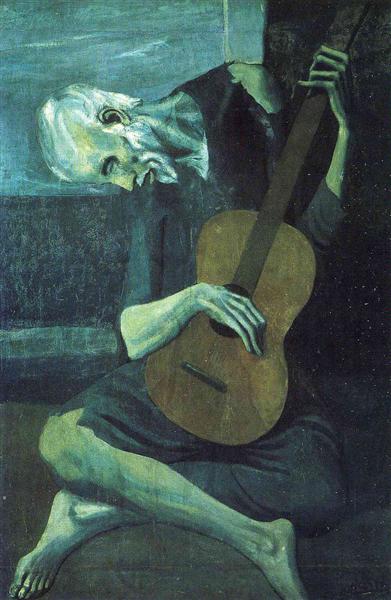
the-old-blind-guitarist-1903.jpg!Large.jpg

     “The Old Blind Guitarist (1903) 

               Pablo Picasso

                      ________

to watch Nobuyuki Tsujii play the 
piano, a piano he cannot see, nor
anything else around him, not 
even his fingers, is a wonder, 
one beholds the work of the 
imagination taking place inside 
tenebrous, one would’ve 
supposed, cerebellum, a place 
without height, depth, width, 
without the idea, even, of, verily, 
spatial dimensions

not only has he had to imagine 
Chopin’s extraordinary, admit it, 
First Piano Concerto therehe’s  
had to imagine himself playing  
it, playing it before even 
international audiences – here
the 2009 Van Cliburn Competition, 
in which he tied for first place – 
despite surely profound physical, 
moral, emotional impediments, 
mountains most, I’m sure, 
couldn’t climb

it is to see the face of an angel
think, to watch him, only angels,
I believe, can do this sort of thing

watch, be inspired

and the Chopin is terrific

R ! chard

on “Elegy for the Victims of the Tsunami of March 11, 2011 in Japan” – Nobuyuki Tsujii

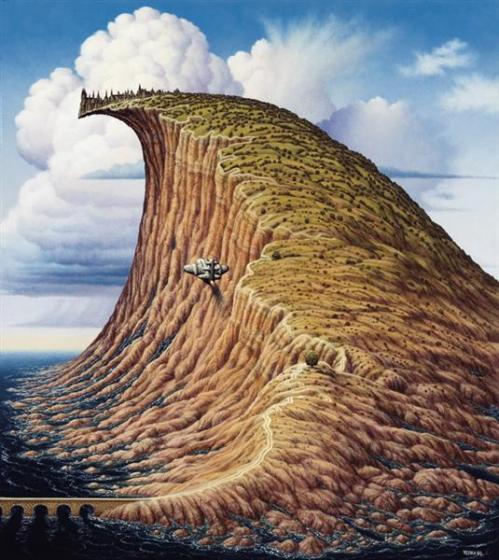
tsunami-1998.jpg!Large

    Tsunami (1998) 

         Jacek Yerka

          __________

while watching Nobuyuki Tsujii play the
extraordinarily demanding Tchaikovsky 
First Piano Concerto on television the 
other night, with no less than Valery
Gergiev, conducting the resident 
orchestra at the Mariinsky Theatre in 
Moscow, for its White NightsI was 
wonderstruck by the challenges a 
visually handicapable pianist would 
have to conquer in order to reach 
such an apogee 

everything must be learned by ear, all
items must be discovered tactually, 
from the piano itself to the very 
individual keys, not to mention 
the player’s very own fingers

there can be no visual contact with a 
conductor, either, for cues, for 
instance, nor for any other 
accompaniment, for neither even an 
audience, it would all take place in 
the dark recesses of the head, the 
amorphous and, I suppose, 
confounding, cerebellum

later he played for an encore his own 
composition, Elegy for the Victims of
the Tsunami of March 11, 2011 in Japan“,
a fine addition to my budding collection 
of threnodies

and a very, very moving piece

an elegy, incidentally, is usually written,
while a threnody is composed, but these 
terms are often used interchangeably, as, 
indeed, they are here

you’ll note the utterly Classical mode of
composition of the Elegy“, it adheres to  
a uniform tonality, a consistent tempo, 
and the grounding and comfort of 
repetition, returning always to the main, 
endearing air, rather than more modern 
tripwires and stridencies, traditionalism 
being not an inappropriate, nor ineffective,
mode of address for honoured forebears 

long live Classicism


R ! chard

“My Romance” – Carly Simon

hot-jazz-1940.jpg!Large

       Hot Jazz (1940) 

               Franz Kline

                        _____

in this video of one of her concerts, 
Carly Simon tells the story of how
when she told her special guest on
the program, Harry Connick Jr., that
he was born the same year as 
Sgt. Pepper, he answered, Sgt. Who

   “Harry, you were born the same year that 
                     Sgt. Pepper came out”, she said
   “Sgt. Who”, he answered

the same had happened to me when  
I’d told someone, a sprite, ten years 
younger, don’t ask, about my 
admiration for Susan Hayward
Richard, he asked, who’s Susan 
Hayward, to my utter consternation

I mean, Susan Hayward

you might not know who Carly Simon
is, nor even Sgt. Pepper, but the story 
is that those who once had been our 
very idols fade and become question 
marks in the eyes of the following 
generations

you might not either know who Harry 
Connick Jr. is, but listen to both of 
them here, Carly and Harry, put 
together an entertainment enough 
to turn an otherwise lazy hour into 
an unmitigated enchantment

Richard

what, me worry

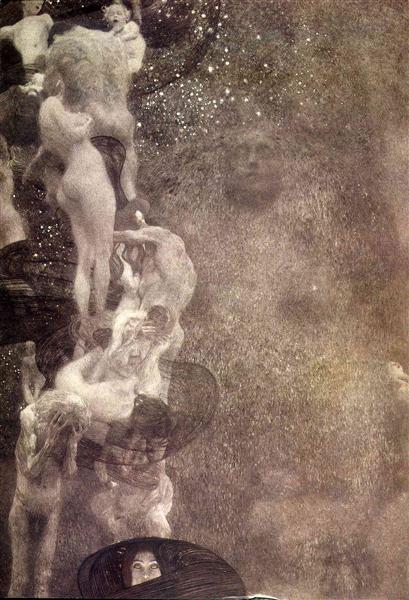
philosophy-final-state-1907-jpglarge

    “Philosophy (Final State) (1899-1907) 

         Gustav Klimt

              ______

at lunch recently, a friend was telling 
me about taking her family, kids,
grandkids, to Hawaii

I hope we have a good time, she said

what do you mean, I hope, I asked 

I’ve been worrying a lot lately, I wake 
up in the middle of the night, I worry
about sharks, for instance, off the 
coast of Maui

I know what you mean, I answered, I
worry about an earthquake hitting 
while I’m asleep, the whole city does 
in fact, I confirmed, those here who 
worry

when I was going to Munich in December 
and January with my mother, I continued, 
and people were saying it’d be cold, 
determined that we’d have a wonderful 
time despite whatever obstacles we might 
encounter, I meant it as a gift to my mother, 
after all it was for the magic of the C***mas 
and New Year’s Eve festivities there we 
were going, kind of like your Hawaiian 
beaches, I pointed out

there was the uncomfortable flight over,
the usual stomach upsets, cold and 
snow, which I hadn’t experienced in 
several years, an unruly Internet 
connection, but they were the price of 
admission to the wonderland I’d 
determined to fashion out of the 
elements that we’d find there, and did  

there were neither sharks nor earthquakes 
eventually, nor even the terrorist attacks 
that had threatened, but that no amount of 
worrying anyway could’ve done anything 
about 

and I just read something out of the New 
Yorker, I continued, that put me back on 
track, put everything back together again 
before any great existential fall

it’s all in your head, it said, or rather it
quoted EpictetusEpictetus, the Stoic 
philosopher I’ve always profoundly 
admired, I said, I’ll send it to you, the 
articleStoicism was a way of facing 
the world bravely and seeing it as a 
condition of your worth

is still a way, I extrapolated

also I’ve found that focussing on what
you’ve been worrying about, and 
thinking about what you can do about 
it, helps

about sharks, for instance, what would 
you do – don’t go in the water – after 
which there isn’t much else to think 
about but go on to the next problem 

meanwhile, you’re not worrying, but 
actually being productive, and reducing 
everything to what you can indeed do,
which ends up being most often not 
much

pray for grace, I’ve been telling myself
for the longest while, and make sure 
your tie ‘s on right, that’s all you 
can ever do, I repeat to myself, and to 
anyone who’ll listen, like an incantation, 
a refrain

but still I take my anti-depressants just 
in case, I said

we drank to Stoicism

afterwards we saw a new play about 
Queen Elizabeth

Richard

psst: the New Yorker article 

    How To Be a Stoic

The Stoic philosopher Epictetus was born a slave, around 55 A.D., in the Greco-Roman spa town of Hierapolis—present-day Pamukkale, Turkey. I first encountered his teachings in 2011, shortly after moving from San Francisco to Istanbul. I lived alone on a university campus in a forest. In the midst of a troubled long-distance relationship, I sometimes went days without talking to anyone but my boyfriend’s disembodied head on Skype. I was demoralized by Turkish politics, which made both secularists and religious people feel like victims. If you were a woman, no matter what you were wearing—décolleté or a head scarf—someone would give you a dirty look.

The first line of Epictetus’ manual of ethical advice, the Enchiridion—“Some things are in our control and others not”—made me feel that a weight was being lifted off my chest. For Epictetus, the only thing we can totally control, and therefore the only thing we should ever worry about, is our own judgment about what is good. If we desire money, health, sex, or reputation, we will inevitably be unhappy. If we genuinely wish to avoid poverty, sickness, loneliness, and obscurity, we will live in constant anxiety and frustration. Of course, fear and desire are unavoidable. Everyone feels those flashes of dread or anticipation. Being a Stoic means interrogating those flashes: asking whether they apply to things outside your control and, if they do, being “ready with the reaction ‘Then it’s none of my concern.’ ”

Reading Epictetus, I realized that most of the pain in my life came not from any actual privations or insults but, rather, from the shame of thinking that they could have been avoided. Wasn’t it my fault that I lived in such isolation, that meaning continued to elude me, that my love life was a shambles? When I read that nobody should ever feel ashamed to be alone or to be in a crowd, I realized that I often felt ashamed of both of those things. Epictetus’ advice: when alone, “call it peace and liberty, and consider yourself the gods’ equal”; in a crowd, think of yourself as a guest at an enormous party, and celebrate the best you can.

Epictetus also won me over with his tone, which was that of an enraged athletics coach. If you want to become a Stoic, he said, “you will dislocate your wrist, sprain your ankle, swallow quantities of sand,” and you will still suffer losses and humiliations. And yet, for you, every setback is an advantage, an opportunity for learning and glory. When a difficulty comes your way, you should feel proud and excited, like “a wrestler whom God, like a trainer, has paired with a tough young buck.” In other words, think of every unreasonable asshole you have to deal with as part of God’s attempt to “turn you into Olympic-class material.” This is a very powerful trick.

Much of Epictetus’ advice is about not getting angry at slaves. At first, I thought I could skip those parts. But I soon realized that I had the same self-recriminatory and illogical thoughts in my interactions with small-business owners and service professionals. When a cabdriver lied about a route, or a shopkeeper shortchanged me, I felt that it was my fault, for speaking Turkish with an accent, or for being part of an élite. And, if I pretended not to notice these slights, wasn’t I proving that I really was a disengaged, privileged oppressor? Epictetus shook me from these thoughts with this simple exercise: “Starting with things of little value—a bit of spilled oil, a little stolen wine—repeat to yourself: ‘For such a small price, I buy tranquillity.’ ”

Born nearly two thousand years before Darwin and Freud, Epictetus seems to have anticipated a way out of their prisons. The sense of doom and delight that is programmed into the human body? It can be overridden by the mind. The eternal war between subconscious desires and the demands of civilization? It can be won. In the nineteen-fifties, the American psychotherapist Albert Ellis came up with an early form of cognitive-behavioral therapy, based largely on Epictetus’ claim that “it is not events that disturb people, it is their judgments concerning them.” If you practice Stoic philosophy long enough, Epictetus says, you stop being mistaken about what’s good even in your dreams. 

                                                                                                 Elif Batuman

“the nerdwriter” on e.e. cummings, and Donald Trump

selfportrait.jpg

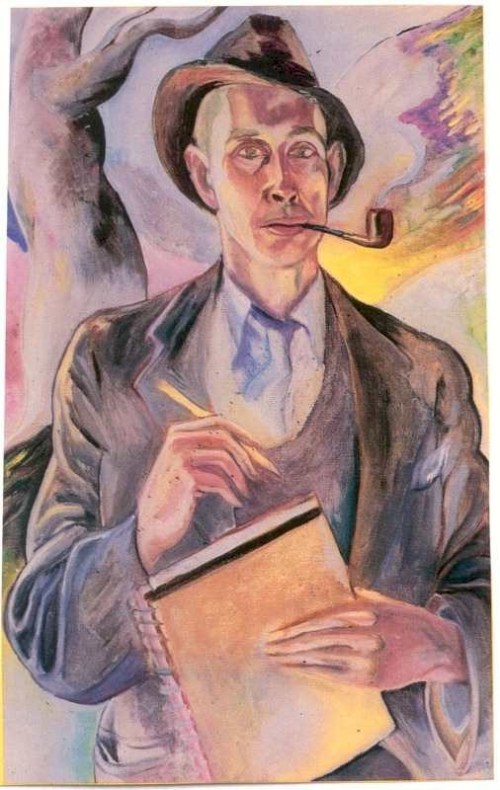
    “Self-portrait with sketchpad (1939) 

             e.e. cummings

                  ________

one of e.e. cummings‘ poems that I 
didn’t know of, i carry your heart  
with me(i carry it in]“, but that is 
apparently one of his most 
accessible, is explored and 
wonderfully deconstructed in this
video, which’ll also prove how much 
we need nerds, people who’ll open 
up areas of profound but murky 
matter for us 

  [i carry your heart with me(i carry it in]

         i carry your heart with me(i carry it in
         my heart)i am never without it(anywhere
         i go you go,my dear;and whatever is done
         by only me is your doing,my darling)
                                                                i fear
         no fate(for you are my fate,my sweet)i want
         no world(for beautiful you are my world,my true)
         and it’s you are whatever a moon has always meant
         and whatever a sun will always sing is you

          here is the deepest secret nobody knows
          (here is the root of the root and the bud of the bud
          and the sky of the sky of a tree called life;which grows
          higher than soul can hope or mind can hide)
          and this is the wonder that’s keeping the stars apart

          i carry your heart(i carry it in my heart)

                                                  e.e. cummings


when I grow up, I want to be a nerd

Richard 

psst: listen to how “the nerdwriter”, Evan Paschal, 
         deconstructs Donald Trump

the judgment of richibi

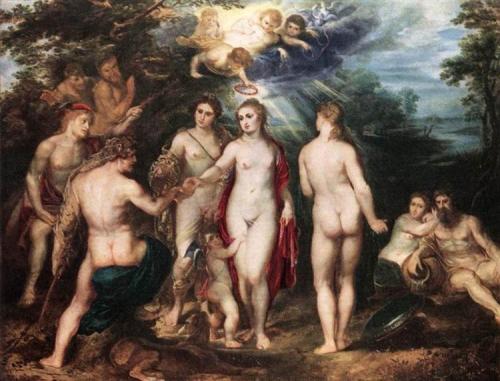
the-judgment-of-paris-1.jpg!Large.jpg

        “The Judgment Of Paris (1625) 

                         Peter Paul Rubens

                                       ___________

at the end of a long overdue visit to 
friend’s home the other night, she 
asked me, did you notice their facial
skin, which of us do you think had 
the best complexion, you can be 
honest, she insisted

we had intended to watch the finals
of a voice competition we’d both 
been following, over a glass of 
wine, or two, each, when a friend 
called, from, essentially, the door,
with a second friend in tow on their
way to a concert in the city

the friend of the friend, a lovely,
effervescent woman, from Poland
originally, with a story to tell of
growing up behind the Iron 
Curtain, was also a beautician in 
spa she runs in a nearby resort
city

the first friend, equally effervescent, 
had been telling my own friend of the 
intervening events since last they’d  
met, while I lapped up, more or less  
by default, this other alternate Soviet 
reality, perfumed as it was irresistibly 
throughout with the friend’s  
friend’s mellifluous Polish accent

I hadn’t paid any attention whatsoever
to skin quality apart from accepting  
a spa courtesy card for my mother, who 
would, naturally, be interested 

my dearest dear, I answered, I am  
not going anywhere near that one
look what happened to Paris when
he fell into that trap

what happened, she asked

the Trojan War, I answered  

the Trojan War, she asked

Paris was the son of Priam and Hecuba
king and queen of Troy, explained, he, 
one of its princes, he’d been awarded 
Helenwife of Menelausking of Sparta, 
by Aphroditegoddess of lovehe’d 
chosen Aphrodite to be the most 
beautiful among the goddesses, that 
was her prize

but let me step back a little, I  
interrupted, you need more context

Eris, goddess of discord, had not been 
invited to the marriage of Peleus and 
Thetis, I recounted, he a Greek hero, 
she a sea nymph, parents both later to 
Achilleshero at Troy, slain, incidentally, 
by that very Paris, you can read all about 
it in the Iliad“, I highly recommended

during the festivities, Eris tosses a 
golden apple among the assembled 
divinities, which reads

            “to the fairest” 
 
you can hear the stirrings of the much 
later Sleeping Beautyincidentally, in 
this earliest of tellings, reconfigured 
from the original myth

AthenaAphrodite and Hera, all assume
they are meant to receive the apple, and 
ask Zeus, father and husband, to decide

you’ll have to get someone else to touch 
that one, he replies, much as I did

and delegates the task, with the help 
of Hermes, the messenger god, to the
the guileless Paris, son of Priam and 
Hecuba, Trojan king and queen, as I 
said, he, Parisprince

Paris was tending sheep on Mount Ida
when, fatefully, by a spring, the nubile 
goddesses appeared vaunting their 
unadorned splendours, stark, flagrant, 
manifest, to the musical accompaniment 
of the Graces, Faith, Hope and Charity, 
also the Horae, the Hoursgoddesses 
of the seasons, maidens all in complicit  
attendance

Paris, mere mortal, would never have 
stood a chance 

but to sweeten, nevertheless, the 
deal, were it not yet sufficiently sweet, 
Hera promises Paris Europe and Asia 
should he choose her, Athena
conquest in war, Aphroditegoddess 
of love, was set to give him the most
beautiful woman in the world

Paris opts for Aphrodite, and is 
awarded Helenthe face that
launched the thousand proverbial 
ships, the wife, not incidentally,  
and completely inconveniently, of 
the King of Sparta, Menelauswho 
attacks thereupon Troy with his 
brother, Agamemnon, and their 
allied legions, to reclaim 
Menelaus’, whether abducted, or 
indeed unfaithful, wife, no one 
has ever conclusively determined
Paris having been Paris

no one won 

no one survived but Odysseus
but that’s another story

I walked home shortly afterwards, 
crossed my own Aegean, ten or
eleven blocks back, red lights, 
nighttime traffic, watched the voice 
competition I’d taped in any case at 
homewhooped it up along with my
favourite contestants, drank to my
narrow miss, had gotten away, I
considered, with the equivalent of 
Europe and Asia, if only in my 
mind

beauty might be in the eye of the 
beholder, I surmised, but it can 
have its thorny indeed 
consequences

Richard

Aristotle on poetry

aristotle-jpglarge

      Aristotle” (1653)

        Luca Giordano

          ___________

so what’s a poem

in an attempt to get a clearer picture 
of what a poem should be, rather 
than trust only my own, however 
informed perhaps, opinion – though 
it must be added that we all bring 
something to that word’s definition, 
mine no less worthy than yours, 
yours no less worthy than mine – 
thought I’d go back to authoritative 
sources to see what they might 
have said

and it doesn’t get any earlier and 
authoritative than Aristotlewriting 
in 350 B.C.E., at the height of 
Ancient Greek preeminence, 
dissecting the term in his 
penetrating and perspicacious, 
ahem, Poetics” 

I propose to treat of Poetry in itself and of its various kinds,
noting the essential quality of each, to inquire into the
structure of the plot as requisite to a good poem; into the
number and nature of the parts of which a poem is
composed; and similarly into whatever else falls within
the same inquiry.“, he says in Part 1 of his 
magisterial treatise

and proceeds to declare the parameters 
of “Poetry” for the ages  

Poetry in general seems to have sprung from two causes“, 
he proceeds, imitation and rhythm 

by imitation I think it best to think of 
representation, which is another way, 
anyway, of saying imitation, but 
much more evocative in this instance,
more attuned to our sense of his word 

a poem is a representation then, a 
reproduction of something other than 
itself 

while its rhythm is what George
Gershwin‘s got, and by extension, as  
you can see from this videoGene Kelly

and yes, that means that “Epic poetry and Tragedy, Comedy also
and Dithyrambic poetry, and the music of the flute and of the lyre in
most of their forms, are all in their general conception modes of
imitation.” 

so, according to Aristotle, is dance 

all, therefore, poems

an interesting elaboration about “Tragedy” 
states that it should have the three unities 
that I grew up with during my French 
Canadian upbringing, the unity of time, of
space, and of action the famous French 
Classical dramatists, Racine and Corneille,
applied under the aegis of Louis XlV

not to mention Tragedy’s use of iambic 
pentameter, Shakespeare’s ubiquitous 
beat, a beat that persevered into the very 
Nineteenth Century, in France with 
Rostand‘s Cyrano de Bergerac“, for 
instance, and into the Twentieth Century 
with Eliot‘s Murder in the Cathedral“, 
about the assassination of Archbishop
Thomas Becket at Canterbury in 1170 
under Henry the Second‘s own aegis,
all written as poetry 

the most famous play to follow the 
three unities in the modern era is 
Who’s Afraid of Virginia Woolf?“,
the play which I think defines the 
Twentieth Century, which takes 
place overnight somewhere in 
New England college town, mid-
century, at George and Martha’s 

though followed closely by O’Neill‘s 
Long Day’s Journey int Night“, 
which transpires from morning, one 
day in August, 1912, till midnight, at 
the home ofunity of space, note, 
the dysfunctional Tyrones

so it appears not much has changed
about poetry, Aristotle got a lot of 
mileage out of his early definition, 
nearly 2500 years 

makes you wonder  why so much 
attention was paid instead to 
Platohis contemporary, the 
mystic, who would’ve banned
poetry, he thought it was 
subversive
 
Richard

psst: for a modern day application
          of the three unities, watch 
          In Treatment“, a television
          series, which takes place 
          in a psychotherapist’s office,
          each episode a session,