Just another WordPress.com weblog
Category: parsing art
_______
at the end of the Nineteenth Century, a
a seismic shift occurred in our Western
culture’s sensitivity to art
much as visual representation during
the Renaissance and up until the late
Baroque Period had dominated, to
be replaced by music during the
Classical Age as the sensory
temperature of the times, visual
representation once again took over
as arbiter of Western sensibility
during Impressionism
you’ll remember the artists of the
Renaissance, but not many of the
composers, you’ll be able to name
the composers of the Classical Age
and the Romantic, but not many, if
any, of the painters, you’ll then
immediately toss off a list of artists
of the Impressionist Era, but not
many of its composers
this lasts till, I’d say, Andy Warhol,
when the visual arts still held sway,
but the present is, it seems, up for
grabs
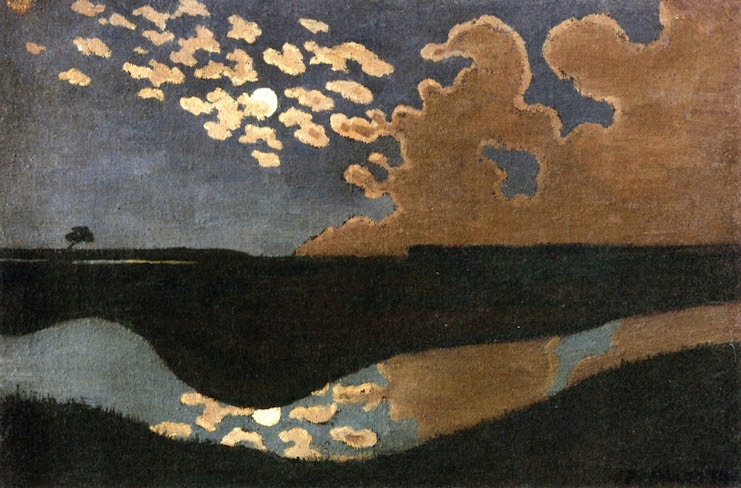
here’s meanwhile, an Impressionist,
an obvious Impressionist statement,
to be compared, incidentally, with
its Romantic counterpart, Beethoven’s
enjoy
R ! chard

______
at the end of the Romantic Period, 1886, and
encroaching on the upcoming Impressionistic
A major, a musical glimpse into a new age,
this is not Chopin, not Beethoven, not
Schubert, despite obvious, if you’re
listening, homages, references
you’ll note the atonality, musical progressions
that seem askew, eccentric, not as harmonious
as those earlier composers, like a neurosis
taking over
tempo, a second essential element of music
in the West, however changeable might it be,
even within the individual movements, is
recognizable
repetition, the third pillar of Western music
is keeping us on track, bringing us back to
the original statement, to the air each
movement presents at their several
introductions
Frank’s sonata was so appreciated by an
accomplished cellist friend, Jules Delsart,
that he asked if he would transcribe it for
stalwart on the cello circuit
compare, an exercise in sharpening your
aesthetic pencil, try it, enjoy
R ! chard
______
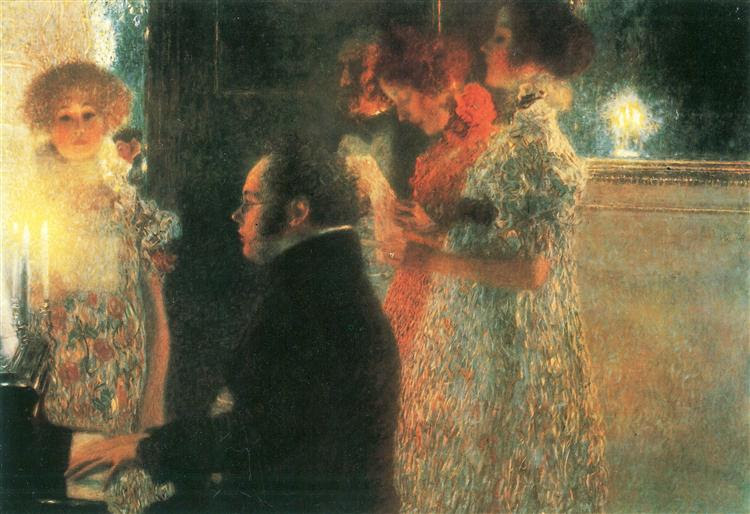
before going any further, it’s about time
I brought up Schubert, had he survived,
he might, I think, however conservatively,
have rivalled Beethoven
he died at the age of 31, of a sexually
transmitted disease, I believe the reason
for his relative obscurity
but he is titanic
listen to one only here of his sublime piano
though one mustn’t discount his other
transcendental masterpieces, his D956,
characteristically, transcendental,
you’ll leave the planet, I promise
enjoy
R ! chard
_____________
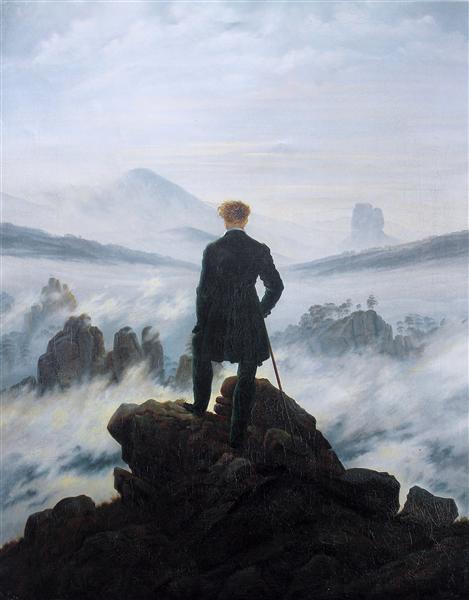
meanwhile, back at sonatas for one
instrument, it’s about time I brought
up Chopin, the one composer that
everyone associates before anyone
else with Romanticism, 1800, say,
till about 1880, he incorporates it,
not without reason, Chopin
personifies the Romantic Era, like
Mozart represents the Classical
others who count would be Elizabeth
Barrett Browning, her “Sonnets from
“Les Misérables”, and Charles Dickens
preaching, in all his works, humanity
Chopin sounds a lot like Beethoven,
indeed, the first notes of his Second
are a reference to Beethoven’s
you’ll hear the same peremptory,
commanding, chord, demanding
attention, the rest is consummate,
however, Chopin
in the last movement, you’ll specifically
hear what Chopin brought to the table,
texture, soundscape, rather than a
narrative line, music as background,
atmosphere, context
enjoy
R ! chard
_________
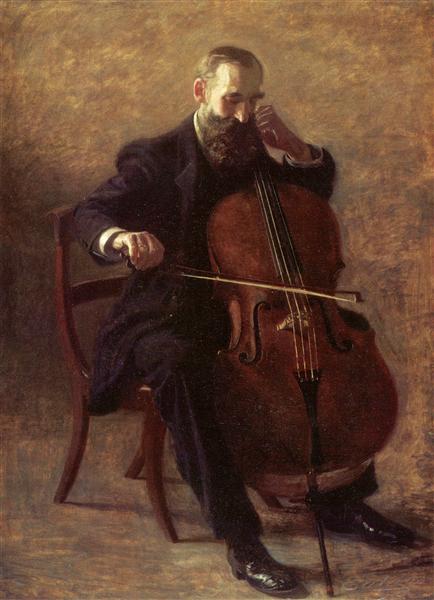
if there could be violin sonatas, there
could be sonatas for, also, other
instruments
here’s one for cello, Beethoven’s utterly
note that the structure of the sonata is
being challenged, two movements only,
though the first has two sections that
are linked without pause, the aim is to
connect the musical information, the
work becomes a narrative, not a
collection of disparate pieces
Beethoven is telling a story, speaking
in notes, listen, it’s revelatory
I wish you ears
R ! chard
_________
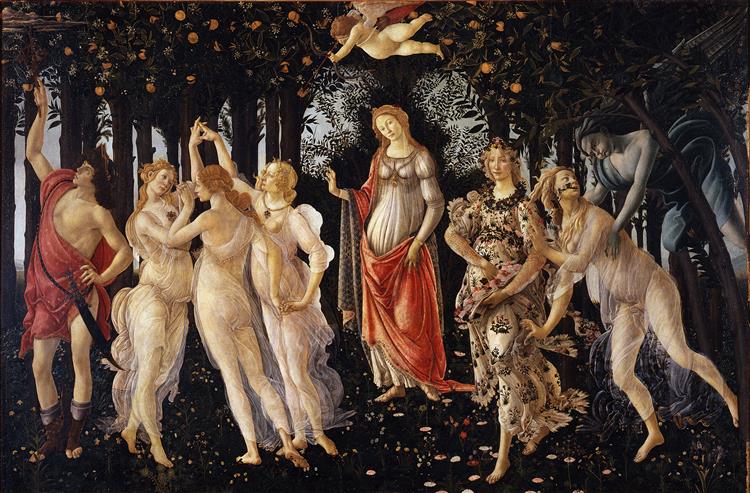
here’s a violin sonata from Beethoven,
nicknamed “Spring“, it is ebullient
Beethoven is more forthright than
Mozart, he’s passionate, wears his
heart on his sleeve, is tender, then
rambunctious, you’ll hear it in the
extremes of volume, loud, soft,
often with spontaneous outbursts,
it’s like talking to a friend, the
appeal is emotional, personal,
where Mozart was earlier decorative,
it’s the Romantic Era taking over
from the Classical
you’ll notice also that Beethoven is
chipping away at the conventions,
there are four movements here
instead of just three, he’s saying
that his stuff is not just decorative
but important, Beethoven has
something to say, he’s got a story
to tell, there’s even a narrative feel
to his composition, like there’s a
conclusion to his story, a point
we’ve moved from a variety of
artefacts, disparate pieces, to a
cohesive and meaningful entity
the sonata is a trinity, three
essences in one
R ! chard
____
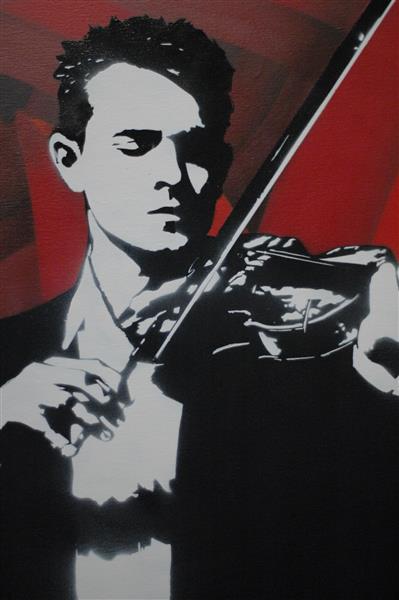
it must be pointed out that sonatas could be
written for other instruments than keyboard,
but since any other instrument could play
just one note at a time, it became the custom
to make a keyboard instrument, which is to
say, essentially, the piano, its accompaniment
therefore, you’ll find that sonatas can be
comprised of more than just one instrument,
more about which later
don’t be confused, the history of music
is one of contradictions, as it is with, for
that matter, any representation of reality
including, incidentally, religion, art’s
historical ancestor, before the modern
world took over, before the advent of
democracy, the French and American
Revolutions, before our secular
21st Century, when artists took over
from preachers, where we started
getting our gospel from literature,
rather, movies, television, concerts,
instead of the Bible, for better or
for worse
here’s, meanwhile, Mozart’s Violin Sonata
telling it like it was, back then, starting
the process
R ! chard
________
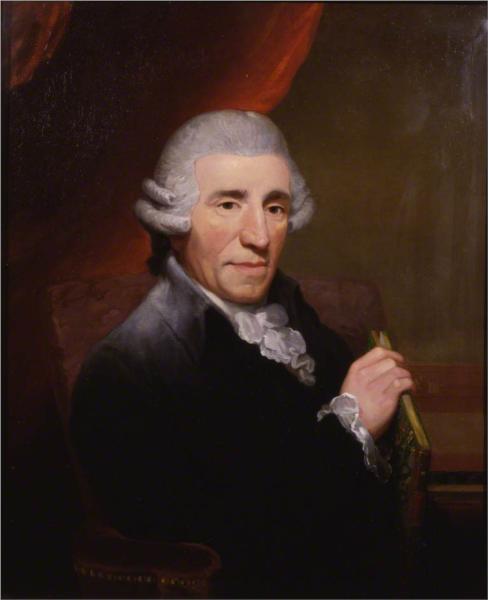
Haydn, profoundly underrated, was the
other pillar of Classical music during that
period, Beethoven, with half a foot only
in that era, uses its elements to yank us,
yelling and screaming, into the next, the
Romantic Era, 1800 to 1870 more or less,
more about which later
if Haydn sounds a lot like Mozart, it’s that
this piece was also written in 1789, both
were catering to the aristocracy, courts,
salons, music was therefore frivolous,
meant to be entertaining, not inspirational,
trills, a lot of decoration, technical agility,
prestidigitation over profundity
Beethoven will change all that, stay tuned
meanwhile, listen to, enjoy, Haydn’s Piano
today’s prescribed apple
R ! chard
_____
is to an apple pie, its essential component,
after which the rest is decoration, however
inspired
sonatas existed before Mozart, but he’s
the one, along with Haydn, as well as
early Beethoven, who put them on the
musical map, 1750 to 1800, more or
less
it seems to me appropriate, therefore,
to start my Sonata Month then
here’s something by Mozart, 1789, his
three movements, fast, slow, fast – allegro,
adagio, allegretto – a perfect example of
the sonata as it was establishing itself
then, a piece of music consisting of
several distinct sections, movements,
meant to highlight contrasts, musical
agility in the artist, compositional
imagination
R ! chard
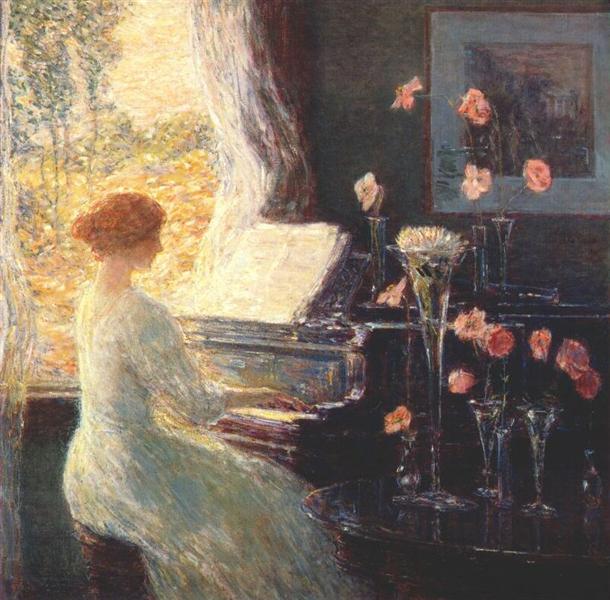
“The Sonata“
____
having recently determined that a sonata
a day keeps the doctor away, and inspired
to work upon that cure, I thought I’d initiate
a Sonata Month starting in November
there are thirty days in November, so no
more than thirty sonatas, each of which
will, I promise, be a revelation
a sonata is a piece of music consisting
of more than just one part, traditionally
three or four, called movements
within those parameters, anything was,
is, possible, any kind of music, times
three or four, traditionally, Classically
but traditions indeed applied, the tried
and true, fast, slow, fast, became the
standard, a cheery introduction,
followed by a contrasting, which is to
say slower, middle section, then a
restorative, final, energetic, act, meant
to send you, reinvigorated, on your way,
maybe even an equally vivacious fourth
there’ll be sonatas with one movement,
some seven, some with even maybe
more
and stay tuned
and thanks for joining in
R ! chard

 Richibi's Weblog