Richibi’s Weblog

Just another WordPress.com weblog

Category: parsing art

a gift from Brain

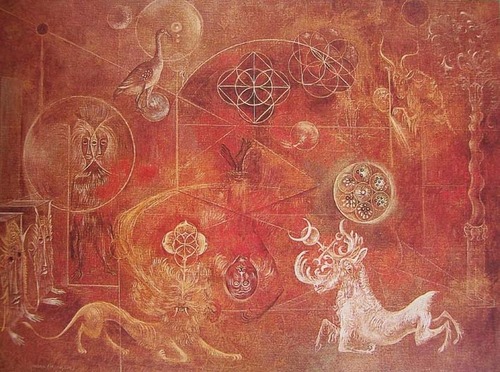
Leonora Carrington - "The Burning of Giordano Bruno" (1964)

“The Burning of Giordano Bruno (1964)

Leonora Carrington

_______

the last entry at The Other Side of the Brain
was the following poem, which delivers such
thunder that I couldn’t help appropriating it
for my own purposes

forgive me, Brain, but with this one you’ve
been too much of an inspiration

thanks

________________

What He Thought

for Fabbio Doplicher

We were supposed to do a job in Italy
and, full of our feeling for
ourselves (our sense of being
Poets from America) we went
from Rome to Fano, met
the mayor, mulled
a couple matters over (what’s
a cheap date, they asked us; what’s
flat drink). Among Italian literati
we could recognize our counterparts:
the academic, the apologist,
the arrogant, the amorous,
the brazen and the glib—and there was one
administrator (the conservative), in suit
of regulation gray, who like a good tour guide
with measured pace and uninflected tone narrated
sights and histories the hired van hauled us past.
Of all, he was the most politic and least poetic,
so it seemed. Our last few days in Rome
(when all but three of the New World Bards had flown)
I found a book of poems this
unprepossessing one had written: it was there
in the pensione room (a room he’d recommended)
where it must have been abandoned by
the German visitor (was there a bus of them?)
to whom he had inscribed and dated it a month before.
I couldn’t read Italian, either, so I put the book
back into the wardrobe’s dark. We last Americans
were due to leave tomorrow. For our parting evening then
our host chose something in a family restaurant, and there
we sat and chatted, sat and chewed,
till, sensible it was our last
big chance to be poetic, make
our mark, one of us asked
“What’s poetry?
Is it the fruits and vegetables and
marketplace of Campo dei Fiori, or
the statue there?” Because I was
the glib one, I identified the answer
instantly, I didn’t have to think— “The truth
is both, it’s both!”, I blurted out. But that
was easy. That was easiest to say. What followed
taught me something about difficulty,
for our underestimated host spoke out,
all of a sudden, with a rising passion, and he said:
The statue represents Giordano Bruno,
brought to be burned in the public square
because of his offense against
authority, which is to say
the Church. His crime was his belief
the universe does not revolve around
the human being: God is no
fixed point or central government, but rather is
poured in waves through all things. All things
move. “If God is not the soul itself, He is
the soul of the soul of the world.” Such was
his heresy. The day they brought him
forth to die, they feared he might
incite the crowd (the man was famous
for his eloquence). And so his captors
placed upon his face
an iron mask, in which
he could not speak. That’s
how they burned him. That is how
he died: without a word, in front
of everyone.
And poetry—
(we’d all
put down our forks by now, to listen to
the man in gray; he went on
softly)—
poetry is what

he thought, but did not say.

Heather McHugh

______________

this made me think that God is an
adjective not a noun, an attribute,
not a commandment, “God is no
fixed point or central government,
but rather is poured in waves
through all things”

cheers, Richard

psst: I’ve made the choice to leave out
the poem’s purported paragraphs
for their being indiscriminate in
every Internet reproduction
“A Repentance” – richibi‏

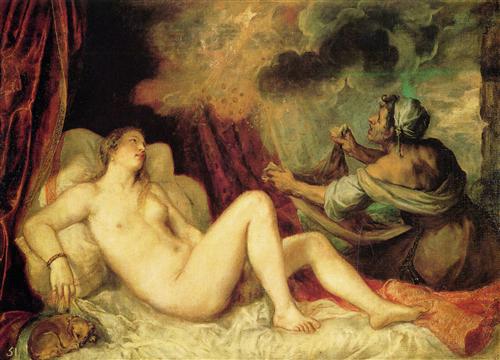
Titian "Danaë" (1554)

Danaë (1554)

Titian

________

nor can I not report a poem that I offered
as an apology for an affront I’d caused,
utterly unwittingly, to one of my course’s
gracious participants

she had objected to slights against the
very perception of sex crimes, which I’d
egregiously equated, she said, with
soul-destroying profanities

_________

A Repentance

(wherein I “bite my thumb”
at the Petrarchan sonnet, I think)

Stand certain, Anonymous, that
I am completely in your corner,
No even passing account of sexual
Crimes against women should

Ever overlook their horror,
Regardless of the context,
Erudite or otherwise, therefore
Let me here sincerely apologize

Your reprimand is not lightly
Stamped upon my conscience,
Only understand that for me a

Rape of the soul is also a
Repulsive matter, greatly also deplorable
Yours truly, Richard

____________

you’ll note the acrostic interpolation,
“SINCERELY SORRY”, at the head of
each verse of my text, meant to
counter the mode of the offending
matter, John Peale Bishop’s vicious
A Recollection

Richard

psst: the painting above is the subject
of Bishop’s, completely
objectionable, stunt

Jackson Pollock / Tristan Tzara

 Jackson Pollock -  "Blue Poles (Number 11)"

Blue Poles (Number 11) (1952)

Jackson Pollock

_____

How to Make a Dadaist Poem

To make a Dadaist poem:

Take a newspaper.
Take a pair of scissors.
Choose an article as long as you are planning to make your poem.
Cut out the article.
Then cut out each of the words that make up this article and put them in a bag.
Shake it gently.
Then take out the scraps one after the other in the order in which they left the bag.
Copy conscientiously.
The poem will be like you.
And here are you a writer, infinitely original and endowed with a sensibility that is charming though beyond the understanding of the vulgar.

Tristan Tzara

_________________

though the idea at first seems fanciful,
outrageous, think of Jackson Pollock,
and his “action paintings”, great art
produced by the instinctual wisdom of
musculature, its preconscious impulses

Tristan Tzara, 1896 – 1963, was one of
the originators of Dada, an influential
art movement of the early Twentieth
Century that rejected all traditional
forms of art for having led to the
havoc of World War l

Richard

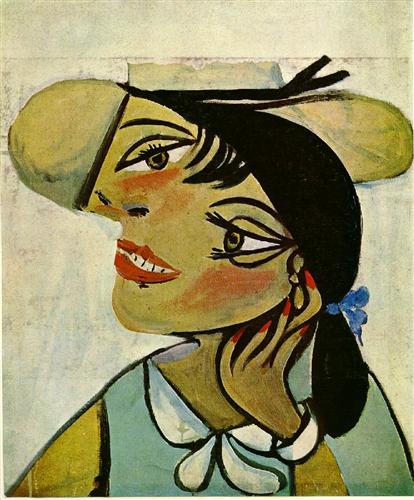
Pablo Picasso/Gertrude Stein

Pablo Picasso - "Untitled" (1923)

Untitled (1923)

Pablo Picasso

________

Gertrude Stein was a friend of Pablo Picasso,
you can see it in her prose, a disordering of
traditional practices, perspectives and
proportions

in loving repeating she writes

As I was saying loving repeating being is in a way earthly being. In some it is repeating that gives to them always a solid feeling of being. In some children there is more feeling and in repeating eating and playing, in some in story-telling and their feeling. More and more in living as growing young men and women and grown men and women and men and women in their middle living, more and more there comes to be in them differences in loving repeating in different kinds of men and women, there comes to be in some more and in some less loving repeating. Loving repeating in some is a going on always in them of earthly being, in some it is the way to completed understanding. Loving repeating then in some is their natural way of complete being. This is now some description of one.

Gertrude Stein

_________________

in my poetry course the Modernists keep on
coming, quite a few I’ve found impenetrable
and obtuse, I can see their points, but find
them pedantic and trivial

similar sentiments greeted the Impressionists
when they came out, so I’m watching myself

it’s easy to digest Picasso‘s painting now,
but even when I was a boy he was
controversial, now everyone admires him

Gertrude Stein not so much, writing is not
painting

they are both, I believe, returning to the
language of innocence, putting together
their world as children do, getting their
information in overlapping concepts,
trying to make their way through the
muddle

a five-year-old would talk like that, a
five-year-old would paint like that,
both are sorting out their new world,
the world that had been so profoundly
disturbed, disjointed

they were returning to the disarray,
and consequent irregular grammar,
of children, making their own kind
of common sense, trying to get their
bearings, after all, even God had
died, see Nietzsche on that

and, for better or worse, finally,
they’ll leave you behind, the children,
whose world, then, is it worth attending

Richard

psst: as a boy I asked my dad, while
interminably, I thought, fishing,
how long it would take the
minnow to grow into the
required fish, how’s that for
not illogical observation

Bill and Flossie Williams

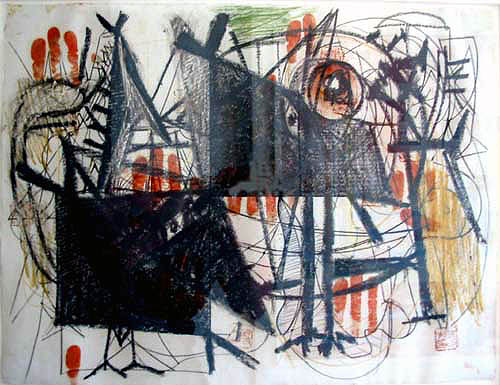
Arshile Gorky - "Hitler invades Poland" (1939)

Hitler Invades Poland (1939)

Arshile Gorky

________

it must be understood that World War l
changed everything, the old order,
orders, had been discredited, new
states were formed, territories allotted,
-isms proliferated, the arts had to, of
course, reflect that, and did, as many
-isms were hatched in the art world
as in the political world, indeed,
many more

which is why much of it at first
seems questionable, practitioners
were learning anew how to talk, paint,
make music, they were creating a new
conceptual universe to replace the one
that had been roundly discredited, the
one that had been around in the West
for the last two thousand years

therefore Schoenberg, therefore
Picasso, and therefore Finnegan’s
Wake
“,
for instance

we’ve been studying American
Modernists in the classes on the
Internet I’m taking
, none of whom
I find interesting, and I’m, contrary
to all expectations, losing even my
early enthusiasm for the much too
thorny, I think, Emily Dickinson

but here’s another abstruse poet
that I like in this poem

though I much prefer his wife
Flossie’s sardonic reply
, which
follows

________________

This Is Just To Say (1934)

I have eaten
the plums
that were in
the icebox

and which
you were probably
saving
for breakfast

Forgive me
they were delicious
so sweet
and so cold

William Carlos Williams

________________

Flossie’s Reply (1934)

Dear Bill: I’ve made a
couple of sandwiches for you.
In the ice-box you’ll find
blue-berries–a cup of grapefruit
a glass of cold coffee.

On the stove is the tea-pot
with enough tea leaves
for you to make tea if you
prefer–Just light the gas–
boil the water and put it in the tea

Plenty of bread in the bread-box
and butter and eggs–
I didn’t know just what to
make for you. Several people
called up about office hours–

See you later. Love. Floss.

Please switch off the telephone.

Florence Williams

____________

go Florence, I say, but you can
see, of course, why I’d say that

Richard

Ezra Pound “on the language of form and colour”‏

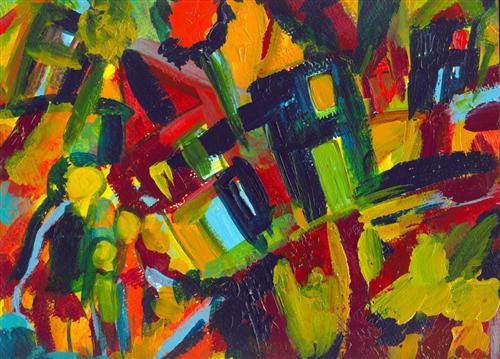
Wassily Kandinsky - "304"

304 (1910)

Wassily Kandinsky

______

in trying to explain the genesis of his poem,
In a Station of the Metro“, Ezra Pound
says

And so, when I came to read Kandinsky’s chapter on the language of form and colour, I found little that was new to me. I only felt that someone else understood what I understood, and had written it out very clearly. It seems quite natural to me that an artist should have just as much pleasure in an arrangement of planes or in a pattern of figures, as in painting portraits of fine ladies, or in portraying the Mother of God as the symbolists bid us.”

Pound is saying that playing at painting is
no different from playing an instrument or
playing a part in a play, art is about playing,
the artist has reached enough skill at his or
her craft, that he or she, however seriously,
is now playing

therefore Kandinsky, for instance

there remains, however, communication,
how much will one want to play, join in,
when the artist’s aim should be, I would
think, communication, have the
refinements become so inscrutable as to
become alienating, and contrary to art,
if not outright rubbish under an effete,
affected, gaze

what do you think

Richard

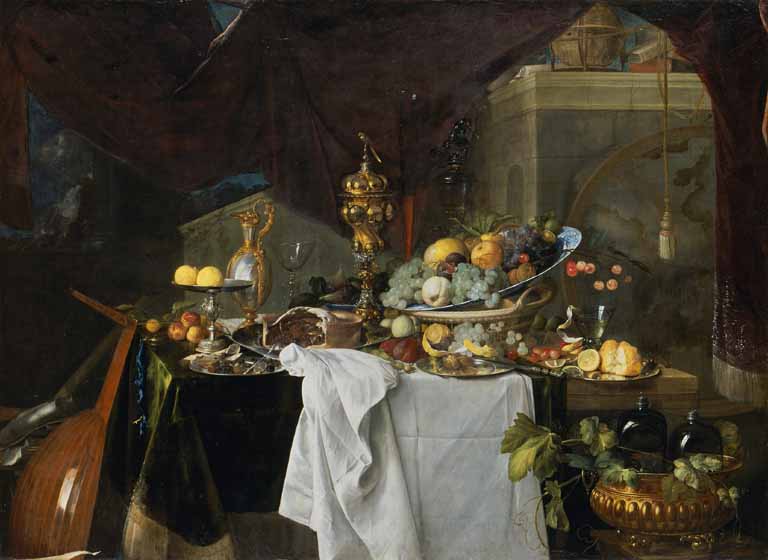
parsing art : “A Table of Desserts” – de Heem/Matisse‏

Jan Davidszoon de Heem - "A Table of Desserts" (1640)

A Table of Desserts (1640)

Jan Davidsz. de Heem

_________

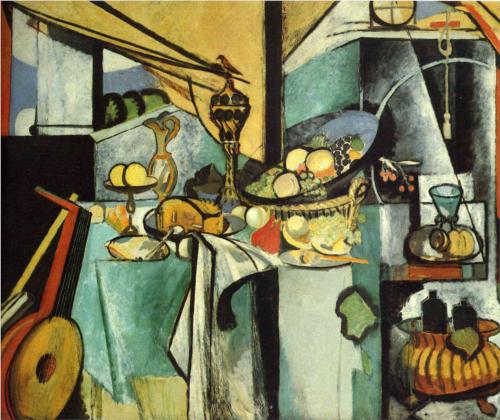
Henri Matisse - "Still Life after Jan- Davidsz de Heem's 'La desserte'"

Still Life after Jan Davidsz. de Heem’s ‘La desserte’(1915)

Henri Matisse

________

if Siudmak was a little too much like
Rousseau for my taste, then what
Matisse does to de Heem is just
right, though the blueprint is
identical the outcome is starkly
different and individual, Matisse
is evidently his own man

directors will do the same with
Shakespeare, for instance, or
Verdi, when they alter, or update,
the work’s time frame, giving it
more immediacy, a new life

not always however effectively,
we saw a Figaro in Dresden come
in on a motorcycle, we walked out
after the first act, though not
before my mom had fallen asleep
during the torpid arias

whose table of desserts above
would you like

Richard

Visconti’s Death in Venice‏

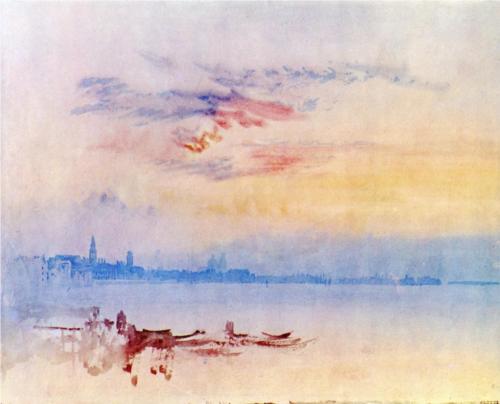
  William Turner -  "Venice Looking East from the Guidecca, Sunrise" (1819)

Venice Looking East from the Guidecca, Sunrise (1819)

William Turner

_______

Death in Venice is perhaps the most
beautiful film I’ve ever seen, just click

Visconti suffuses his masterpiece with
all the colours and textures of Monet,
Renoir, Seurat, Toulouse-Lautrec, and
a host of other Impressionists, and
settles them all upon, nearly inevitably,
the splendours of a Canaletto Venice

Dirk Bogarde has never been better,
his von Aschenbach is definitive,
Silvana Mangano is every single inch
an aristocrat, the epitome of poise,
elegance and propriety, Tadzio is
throughout the very incarnation of a
Botticelli

all is given stately motion by the art
of film and made thereby into another
equal and haunting form of poetry

enjoy, marvel

Richard

psst: Visconti even makes Mahler sound
profound

as does Leonard Bernstein, incidentally,
in the accompanying clip, who is
manifestly transported throughout his
evidently otherworldly experience,
just as you might even be, just click

parsing art – Rousseau/Siudmak‏

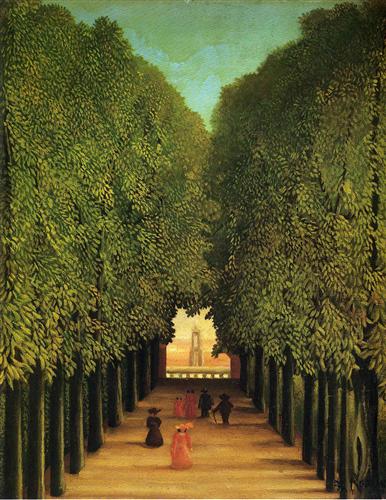
Henri Rousseau "Alleyway in the Park of Saint Cloud" (1908)

Alleyway in the Park of Saint Cloud (1908)

Henri Rousseau

_________

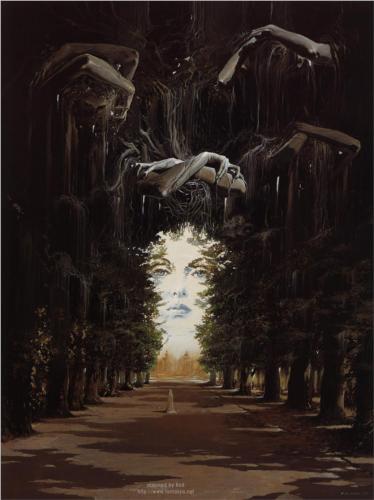
Wojciech Siudmak - "Poème Matinal)

Poème Matinal

Wojciech Siudmak

__________

the line seems fine here between homage
and appropriation

what do you think

Richard

a merely theoretical dilemma, a poem


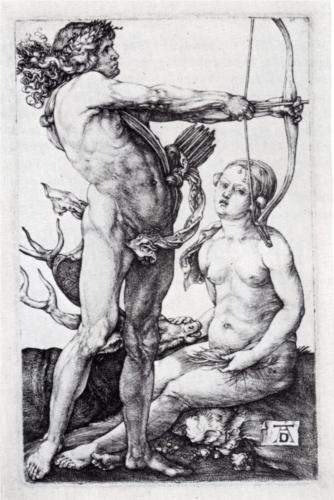
Albrecht Dûrer - "Apollo and Diana(" (1502)

Apollo and Diana (1502)

Albrecht Dürer

________

in the tradition of Elizabeth Barrett Browning,
a forthright, personal poem

a merely theoretical dilemma

yesterday, I had lunch with Vickie,
she said she admired our relationship,
despite the fact, which I’d interjected,
that there was no sex

she didn’t find that unacceptable

I found her concern more personal,
revealing, than strictly theoretical

then gave up the improbable
thought

I dream, however, ever, Apollo, and
irrepressibly, of your genitals,
knowing that your spawn would
transform me, ineradicably, into
a constellation, its crystallization
our progeny, into immortal stars

but that would mean leaving you,
Apollo, behind

could I, would I, do that

love

me