Richibi’s Weblog

Just another WordPress.com weblog

Category: parsing art

“How I Didn’t Get Myself to a Nunnery” – Suzanne Lummis‏

"Ophelia" - Arthur Hughes

Ophelia (1852)

Arthur Hughes

_________

according to Suzanne Lummis Ophelia
“g[o]t outta town”

Suzanne Lummis is Ophelia here, this
is a dramatic monologue, I can’t tell you
how much I find that exciting

you’ll want to run to the source, of course,
to find pertinent references, so I’ve linked
a few for you from the text below to their
counterparts in Hamlet“, if it’s coloured,
just click, otherwise a couple of asterisks
explain two probably too obvious items,
in which case you’ll forgive me my
infelicitous impertinence, my unintended
and hapless presumption

thanks

How I Didn’t Get Myself to a Nunnery

That girl they found ensconced in mud and loam,
she wasn’t me. Small wonder, though, they jumped.
To a conclusion. Water puffs you up,
and we pale Slavic girls looked much alike—
back then. Deprivation smooths you out.
Yes, that was the season of self-drowned maids,
heart-to-hearts with skulls, great minds overthrown.
And minds that could be great if they could just
come up for air. Not in that town. Something stank. *

But me, I drifted on. I like rivers.
And I’m all right with flowers. I floated
on a bed of roses—well, O.K., rue
and columbine
. It bore me up not down.
That night I made a circle with my thumb
and finger, like a lens, and peered through it
at the moon—mine, all mine. My kissed-white moon.
“Moon River wider than a . . .” Mancini/
Mercer wrote that, sure, but I wrote it first.

You wonder where I’m going with all this?
Where water goes. It empties into sea.
Sold! I’d take it—the sea or a fresh life.
Some other life. A good man—good enough,
fair—fished me out. He’d come to quench his thirst.
No sun-god prince,* of course, like him I’d loved,
still loved. (Some loves don’t die; not even murder
kills them.) I married his thatched hut, hatched chicks—
kids running underfoot. Don’t cry for me,

Denmark. I’d learned the art of compromise
back there, in the black castle—then came blood,
ghosts. Something in me burst. If not lover,
father, king, ** then whom can you trust? Alone,
I took up some playing cards. I played them
into skinny air. A voice said, Swim or drown.
It said: Your house caught fire, flood, caught fear—
it’s coming down. No one loves you now, here.
By land or water, girl, get outta town.

Suzanne Lummis

* i.e. Hamlet, of course, prince of Denmark
** Hamlet, Polonius, Claudius

our debt to Shakespeare in literature
is enormous, after even 400 years –
“Hamlet” was written in 1602 – his
literary form, his countless neologisms,
his stories, his blueprints, transformed
into ballets, paintings as above, operas,
have become our myths, our moral and
philosophical standard, our modern
Olympus, the measure of our time,
our epoch, Shakespeare is our Iliad

only Beethoven in music has ever
matched this, in the visual arts, no
one

you’ll notice that the poem itself is a
monologue, in answer, in homage, to
Shakespeare, it’s in iambic pentameter,
also his wont

mine too, incidentally

Richard

 

on numbers

Rogier van der Weyden - "Polyptych with the Nativity"

Polyptych with the Nativity

Rogier van der Weyden

____________

one is a lonely number

but let there be four – 11:11 – and the
angels are passing, a.m. or p.m.

two is the natural minimum from which
grows three, a pyramid, also a trinity,
or even a Trinity

then four, which is solid, foursquare,
even cubic, therefore a house

five, a pentagon, authority

many is a polyptych, representing a
multiplicity, metaphysically a polis, a
community, from the Greek for “many
folds”, or, extrapolating, manifold

twelve, a dozen, and so forth

numbers, in other words, talk, signify
within a context something specific to
that context that is not stated but
instinctively ever understood, animals
flee when confronted with uncomfortable
numbers

but countless they also shimmer, like
stars, a panoply, a myriad

also like works of art

therefore the polyptych above, do click,
for a magnificent reproduction, see it
bring together parts of a whole, in one
place, at one time, and transcending
imaginatively even earthly dimensions,
for our contemplation

therefore also Vingt regards sur l’Enfant
Jésus
“,
which I spoke of in my last posting,
my first to this, my second day of C…mas

you get art and music through the senses,
instinctively, unlike the murkier medium
of words, which can be cryptic

numbers speak louder, which is to say,
than ever words

read my lips

Richard

“Le Jazz Hot” – Henry Mancini‏

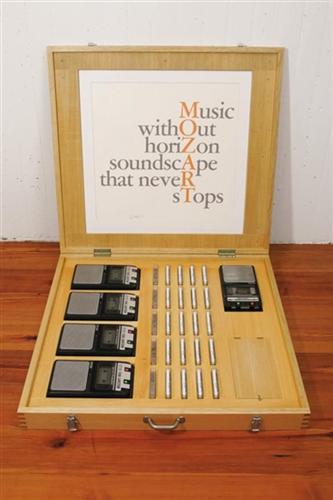
  John Cage - "Mozart Mix" (1991)

Mozart Mix (1991)

John Cage

_______

in a movie,“Victor Victoria”, that should’ve
gotten more Oscars than it finally did,
Le Jazz Hot sizzles, Henry Mancini
received one for the music, Lesley Anne
Warren should’ve too for her incandescent
moll

lock the door, she says to Julie Andrews,
in an otherwise compromising moment,
a line one should never forget

in Julie Andrews’ category, who could’ve
taken it away from Meryl Streep for
“Sophie’s Choice”

but jazz here is a misnomer, jazz merely
dolls up in this number an otherwise
entirely Classical structure, the melody
is right out of Mozart, rigid rhythm,
unflinching tonality, and repetition after
repetition, you can sing along just as you
can for Mozart, try doing that with anyone
after him, try to hum along with real jazz

but I’ll entirely agree that this
whatever-it-is is hot, steaming

catch the astounding vocal glissando
at the very end, just before the final
whispered recitative, riveting

Richard

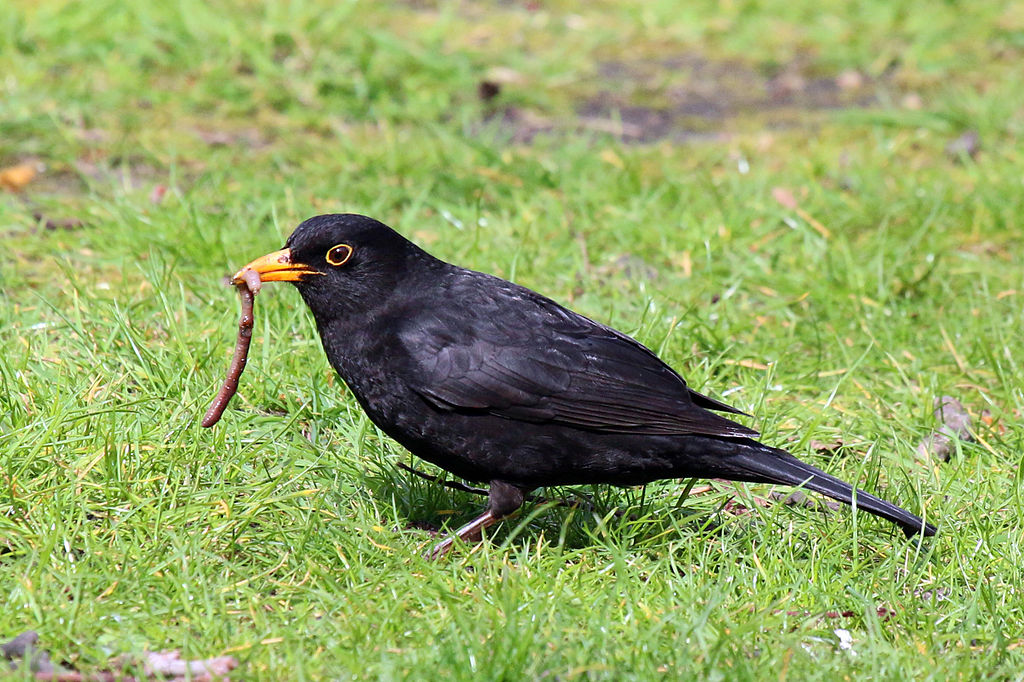
“Le merle noir” – Olivier Messiaen‏

common blackbird (turdus merula)

common blackbird (turdus merula)

________________

while we’re on the subject of birdsong,
it would be incorrect not to mention
Olivier Messiaen, the composer I think
to be the most representative of the
late XXth-Century, with the addition,
however, of George Crumb only lately,
whom I blush to say I’d never heard
of till then, a lacuna culturala, as
we say in Italian, of the very
greatest proportions

Le merle noir is Messiaen‘s earliest
work specifically devoted to birds,
his later Catalogue d’oiseaux lists
thirteen birds, and lasts nearly
three hours

listen to Le merle noir first, you’ll
even want to watch it for taking place
in the Église du Bon Secours in Paris,
June 7, 2012, flanked by dour,
though highly decorative, clergy

Yvonne Loriod, Messiaen’s wife, plays
the entire Catalogue…“, but behind a
detail from Bosch’s Garden of Earthly
Delights
“,
which remains throughout
glumly static

if we think of this as music, which
indeed I do do, where are tempi,
where are tonalities, where even are
identifiable repetitions, how do we
define, then, music

this is not an easy proposition

think about it

good luck

Richard

re: songs of some birds

a friend writes

Date: Sun, 16 Nov 2014 21:30:02 -0800
Subject: Re: songs of some birds
From: lynne……
To: richibi……….

The other day on CBC Quirks and Quarks program they played the song of a type of thrush who’s name escapes me at the moment. It sounded like a nice bird song and then they slowed it way down and it sounded a lot like whale sounds but a far more musical with quite discernible notes.

hmmm..
.if I were to break up the sentences
in the foregoing paragraph
in some artistic fashion
would it then be poetry?
(I know, I’m such a cretin)

__________________

interesting

I think that good grammar is already
a move towards poetry, if not, indeed,
the quintessential ingredient, good
grammar has already in its stipulations
a cadence and an expressive flexibility,
in its declensions and conjugations

we are sloppy grammarians generally

your statement, “The other day on CBC Quirks and Quarks program they played the song of a type of thrush who’s name escapes me at the moment. It sounded like a nice bird song and then they slowed it way down and it sounded a lot like whale sounds but a far more musical with quite discernible notes.“,
corrected for grammatical aberrations,
The other day on [the] CBC Quirks and Quarks program they played the song of a type of thrush who’s name escapes me at the moment. It sounded like a nice bird song and then they slowed it way down and it sounded a lot like whale sounds but […] far more musical with quite discernible notes.“,
sounds already musical when you
speak it out loud, cadential and
probably properly emotionally
inflected, if you put your intention
into it

a few artful turns could make it
luminous, even a poem

hmmm..” yourself

Richard

songs of some birds‏


untitled-1939-1.jpg!BlogPablo Picasso - "Untitled" (1939)

Untitled (1939)

Pablo Picasso

_________

having wondered only recently about
bird song, whale song
, can these be
considered singing when they are
essentially language, we think, and
not codified, technically constricted,
I see pertinently appear a study
suggesting birds follow a pentatonic
scale, our own musical basis,
harmonics between birds and
humans are apparently identical

this suggests that harmonics in
nature are as fundamental as
mathematics, we have somehow,
humans, diverged from what we
think of as singing, left rhythm
and tonality from our conversation
to produce uninflected prose and
monotony, language at the level
of atonal, arhythmic expression,
for better or for worse, corruption,
or refinement, evolution

I wonder, again, if prose is not
bad poetry, or has poetry evolved
into prose

should we feel shame or ingenuity,
do birds have their own divergent
degrees of poetry, do some, most
maybe, veer also towards the less
exacting prose

do some birds not sing, in other
words, or only sometimes maybe,
when mating, for instance,
something like how we croon
when we’re dating, put on our
very best airs

Richard

Vox Balaenae (Voice of the Whale) – George Crumb‏

whales

whales

____

we say that birds sing, despite the
fact that it is their ordinary language,
whales, upon our hearing them, seem
also to be singing

when we sing we alter our voices to
fit pitches and volume and rhythms
intentionally, otherwise we’re talking

what, then, is music, is bird song
music, whale song, is Vox Balaenae“,
a composition by George Crumb, from
1971

if so, what do we mean by music, which
used to be, a long time ago it appears
now, melodic, recurrent and rhythmic

in Vox Balaenae“, where is the music
we used to think of as music, though
harmonious it has the elements rather
of language, communication, instead
of the ordered outlay of composition

it is, however, indeed Classically laid,
with movements and everything, even
a set of variations, though interestingly
attended on either side, these, by, as it
were, book ends, a prologue and an
epilogue, literary terms, to reinforce
the idea of narration, there are three
movements

Prologue: Vocalise (…for the beginning of time)

Variations on Sea-Time [Sea Theme]
Archeozoic
Proterozoic
Paleozoic
Mesozoic
Cenozoic

Epilogue: Sea-Nocturne (…for the end of time)

a blue light in the performance suggests
a marine environment, masks dehumanize,
render everything “[a]rcheozoic”, extended
technique, unusual use of the instruments,
are instructions stated in the score

for a while I’ve been saying that prose is
just bad poetry, for a while I’ve been trying
to make poetry out of prose

how are we doing

Richard

another Tony treasure


the Tony Award Medallion

the Tony Award Medallion

___________

from the 1974 Tonys, you’ll want to
watch this skit, Mrs Snodgrass has
had 27 children, Nancy Walker is
Mrs Snodgrass

should the video not come up at the
right position, as it should, find Mr
and Mrs Snodgrass at 1:42:00 on
the time strip

enjoy

Richard

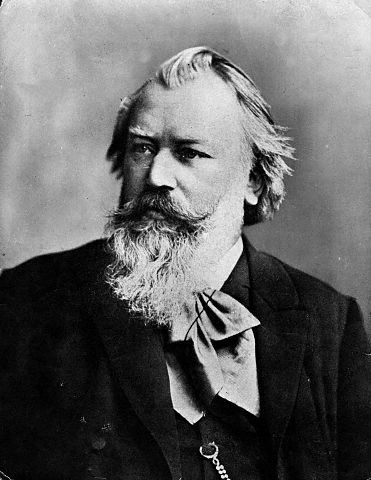
Horn Trio in E-flat Major, opus 40 – Johannes Brahms

Johannes Brahms

Johannes Brahms

__________

if I’ve been away from my perhaps too
abundant, Cornucopian indeed sometimes,
post of late, not as ubiquitous in your
hotmail, it’s because I’ve been following
not six but six and half courses at
Coursera, which have taken up a
considerable amount of my time, all of
them fruitful except for that half, which
apart from some smoke still from its
lingering ashes in the form of belated
comments on what were personally
pertinent fora, forums, I’ve committed to
the cellar of wasted money, despite its
being free, time itself being, according
to my father, hard currency

The Fiction of Relationship
Introduction to Philosophy
Revolutionary Ideas: An Introduction to Legal and Political Philosophy
Søren Kierkegaard – Subjectivity, Irony and the Crisis of Modernity
From the Repertoire: Western Music History through Performance
Philosophy and the Sciences

the half will remain unnamed for its
being, to my mind, inferior, not worth
not only recommending but even
mentioning, or, worth not only not
recommending but neither mentioning,
take your pick

but from “From the Repertoire” we were
offered this week to investigate Brahms’
Horn Trio in E-flat Major, opus 40
, entirely
worth looking into, I thought I’d pass it
along

it was composed in commemoration of
Brahms’ mother who’d died not much
earlier, a cello could replace the horn,
stipulated Brahms, even a viola for
fear of later horns being too brassy,
incommensurate with the intent of the
dedication however passionate some
of its musical argumentation, much
more abstract than that of Beethoven,
you’ll note, though still nevertheless
ever melodic

he has as well a more heraldic tone,
consequently, by extension
earthbound, rather than Beethoven’s
more transcendental ruminations
,
both remaining equal, however, ever,
in, in each his realm, their grandeur

Richard

“Nude Descending a Staircase” – Duchamp / Kennedy‏

Marcel Duchamp "Nude Descending a Staircase, No.2" (1912)

Nude Descending a Staircase, No.2 (1912)

Marcel Duchamp

________

Nude Descending a Staircase

Toe upon toe, a snowing flesh,
A gold of lemon, root and rind,
She sifts in sunlight down the stairs
With nothing on. Nor on her mind.

We spy beneath the banister
A constant thresh of thigh on thigh—
Her lips imprint the swinging air
That parts to let her parts go by.

One woman waterfall, she wears
Her slow descent like a long cape
And pausing, on the final stair,
Collects her motions into shape.

X.J. Kennedy

_________

in my class on Modern Poetry on the
Internet they complained that both
Duchamp and Kennedy were
objectifying women

maybe I too am

read my response

“I thought the poem was hot, and I’m not even a heterosexual, it renders voluptuous the female body, as the female body should be rendered, and, again, I’m not even a heterosexual, how can a heterosexual man not tremble at the “snowing flesh, / a gold of lemon, root and rind,”, the “constant thresh of thigh on thigh”, the very “swinging air / that parts to let her parts go by.”, by the time she gets to the “final stair” you’re jelly

women have their own pornography, have you seen The Bridges of Madison County

I also love Duchamp’s painting, all shimmering gold and glittering, all panels of incandescent light, his “Nude” could descend my staircase any day, despite my counterintuitive position, for which information you can again read above

cheers, Richard”

cheers, Richard

psst: poets are supposed to defy conventions,
watch me, poets know we’ve got nothing
to lose