Richibi’s Weblog

Just another WordPress.com weblog

Category: paintings to ponder

how to listen to music if you don’t know your Beethoven from your Bach, Vlll

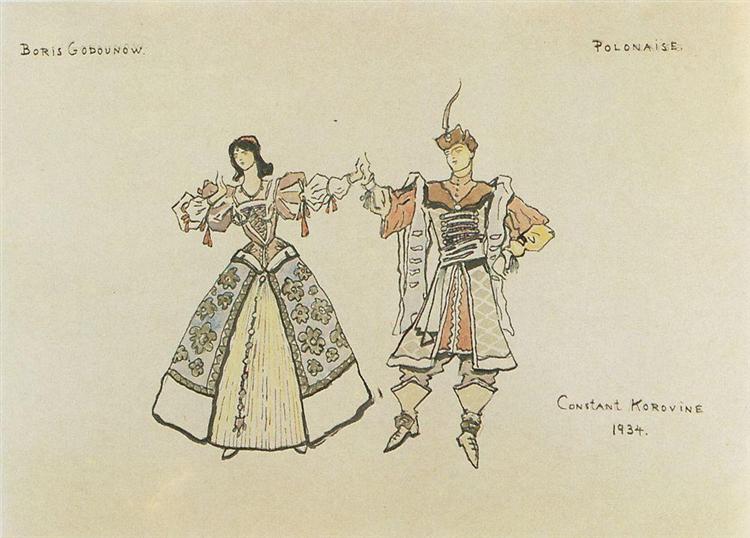
Polonaise, 1934 - Konstantin Korovin


         Polonaise” (1934)


                  Konstantin Korovin


                                  ________

cause the pickings are slim among the

shared musical formats between Mozart

and Chopin, Mozart, for instance,

composed eighteen piano sonatas to

Chopin’s mere three, Chopin’s First

even having been more or less 

disregarded since for being promising

maybe, but not at all inspired, where

Mozart meanwhile also wrote 27 piano

concertos to Chopin’s only two, though

both, his, entirely mighty


Chopin, however, pretty well establishes

the nocturne, the scherzo, the prelude,

the étude, the polonaise, the mazurka

as musical forms, while Mozart never

establishes a thing, apart from his own

supreme talent


but here are a couple of fantasias that

they both share, Mozart’s Fantasia

no 3 in D minor, of four, Chopin’s

Polonaise-fantaisie in A-flat major,

Opus 61, Chopin blending here his

fantaisie to the beat of a polonaise,

dance form of his native Poland,

see above


listen for trills in the Mozart, which

admittedly show up only near the

end of the piece, otherwise he

sounds a lot like, I’ll admit, Chopin


listen for arpeggios in the Chopin


a follow-up exercise in listening,

trills, notably, up against arpeggios


consider, enjoy


R ! chard

how to listen to music if you don’t know your Beethoven from your Bach, Vll (cont.)

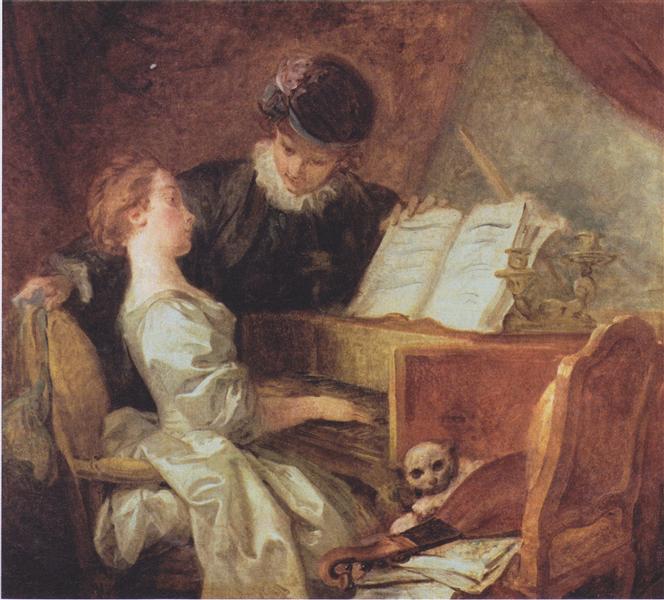
The Music Lesson, c.1769 - Jean-Honore Fragonard


          The Music Lesson” (c.1769)


              Jean-Honoré Fragonard


                    _______________


having spent too much time, perhaps,

giving context, from Classicism to

Romanticismin my last communication

brought on by the worlds that open up

to me when l Iisten to this kind of music,

rather than imparting specific information

about how to sharpen one’s aesthetic

sensitivity, about listening rather than

just hearing, this time I’ll get technical,

if you’ll allow, with the help of the same

two pieces, Mozart’s 16th piano sonata,

Chopin’s 3rd, how are they different,

how are they similar, how do they

compare


first, similarities, they are both sonatas,

pieces of music consisting of more than

one segment of music, traditionally, three

or four, Mozart here has three, Chopin

four


Chopin doesn’t diverge from the trinity

of imperatives that Mozart set up

during the Classical period, tempo,

tonality, and repetition, the pace of

the music remains constant within

the parameters established by the

directions at the top of the page,

an adagio doesn’t change its beat

throughout the movement for either,

nor would an andante, a presto, an

allegretto


this will change


neither does any element of the

music produce discords, tonality

remains mellifluous throughout

for both, lilting, harmonious ever,

even often, in either, enchanting


this will also change


and everywhere, a flight of musical

invention will eventually return to

its original source, and you find 

that you’ve come back from a sonic

adventure to home base, where the

whole thing starts all over again,

repetition, a condition considered

essential, until relatively recently,

to  the definition of music


this will also change


but how are they different


listen to the decoration, Mozart

applies trills to individual notes,

a flutter of adjacent tonalities 

to set the central one off, like

glitter, the twitter of birds

punctuating, here and there, 

the stillness of a forest


Chopin colours his entire

keyboard with arpeggios rather,

runs up and down the scales,

turning melodies into not only

delights, but stepping stones to

entirely other dimensions,

extrapolations from the original

tune, seemingly spontaneous

evolutions, the first burgeonings,

incidentally, of jazz, before returning,

notably, to his original air, much as

Mozart does, to his core statement,

fulfilling the Classical requirement

of repetition


here’s Mozart, trilling


here’s Chopin, arpeggiating


how to tell your Chopin from your

Mozart, how to sharpen your

aesthetic sensibility, listenlisten


R ! chard

how to listen to music if you don’t know your Beethoven from your Bach, Vll

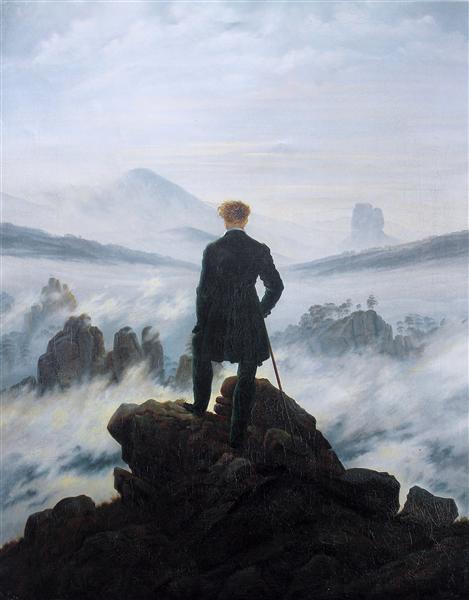
The Wanderer Above the Sea of Fog, 1818 - Caspar David Friedrich


        The Wanderer Above the Sea of Fog” (1818)


                 Caspar David Friedrich


                       _____________


by now, if you’ve been listening,

you’ll probably easily tell your

Chopin from your Mozart, even

without looking


if not, the one who isn’t Mozart

is Chopin, the one who isn’t

Chopin is Mozart, cause you’re

likely to recognize the one if not

the other


here’s Mozart’s Piano Sonata

no 16 in C major, K. 545from

1788, which even Mozart

deemed “for beginners”, but

its very elementary qualities

suit, here, my purposes


here’s Chopin’s Piano Sonata

no 3 in B minor, Op. 581844,

some sixty years later, the

epitome of the Romantic Era


Mozart is Classical, the foundation

of the shape and sound of music

in the West, think of Oriental music,

Chinese, for instance, opera, as an

alternative inspirational direction


he sets, along with Haydn, incidentally,

the parameters of Western music, I

call it its grammar, tempo, tonality,

and repetition, its hallmarks, its sine

qua non, as we say in Latin, its trinity

of imperatives, its without which there

would be no Western music as we

know it


Romanticism, after two revolutions,

the French and the American, comes

along to turn all of that into literature,

prompted by the spirit of democracy,

the first expressions of it since Caesar,

Ancient Rome, where earlier,

everywhere, kings had ruled, and by

extension, even more autocratically,

the Church, for monarchs had

received, morally, and consequently

politically, from it, their mandates

from God


one man, one vote, even theoretically,

upended that entire metaphysical

construct, therefore Romanticism


everyone had a voice, everyone had

a story, the birth of the individual,

and of, by extension, human rights,

for better or for worse, see above


therefore Chopin


listen, Chopin is the new Jesus,

prophet, but for a new age 


stay tuned


R ! chard

how to listen to music if you don’t know your Beethoven from your Bach, Vl

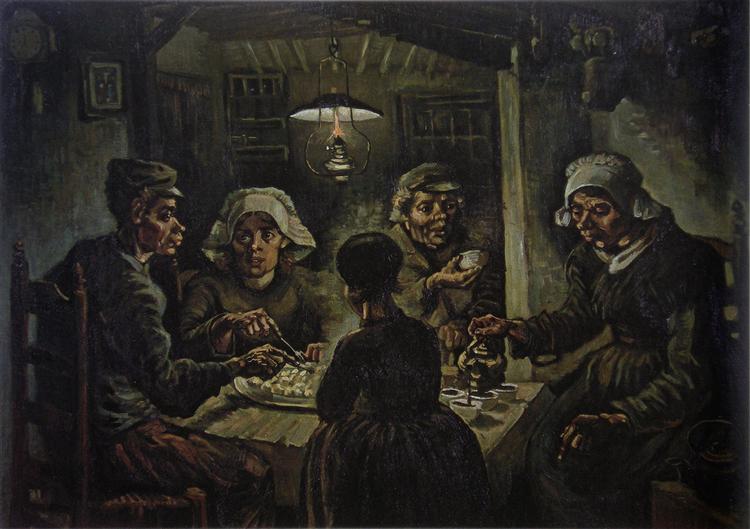
The Potato Eaters, 1885 - Vincent van Gogh

            The Potato Eaters” (1885)


                   Vincent van Gogh


                        ___________


where do you start with Chopin, he is

in our Western cultural bloodstream,

as identifiable in music as, say, van

Gogh is in painting, you don’t need 

to be interested in any kind of art to

have not been given even only a

whiff of these iconic artists


nearly anything I might present here

of Chopin you’ve probably already

heard somewhere before, if only in

bits


of van Gogh, well, he goes back in

the public imagination to at least

Vincent1971, the song, no one

doesn’t know about him, when I

heard it playing in Amsterdam at

the museum, with the first piece I

saw, The Potato Eatersdominating

the first wall, insisting on van Gogh’s

vision, his prophecy, his profound

compassion, I cried, I understood

what art is, see above


Chopin exerts a different kind of,

however equally potent, magic


Mozart might sound like Haydn,

Beethoven might sound like

Schubert, all of the Impressionists

sound like all of the Impressionists,

be they Ravel, Debussy, Satie, or

Saint-Saëns, to the untrained ear


but no one sounds like Chopin,

he’s, culturally, a North Star


here’s one of his nocturnes, the

moonlit one, in E flat major  


here’s a polonaisehere’s an étude,  

in English, a study, a finger exercise,

an iconic, here, prestidigitation


here’s an impromptu, his very,

indeed, Fantaisie-Impromptu, just

to get your categories going


consider its construction, having

some information already about

fantasias, a work of the imagination,

open to any experimentation within

the confines of one movement, with

an impromptu, something purported

to have been created on the spot,

also in one movement


the answer requires you to sharpen

your aesthetic pencil, always a

delight – an impromptu, a

spontaneous invention, a fantaisie,

a work of the imagination, how do

they differ, which part is a fantaisie,

which an impromptu, how do they

nevertheless coalesce


this exercise is the first step in

listening


enjoy


R ! chard

how to listen to music if you don’t know your Beethoven from your Bach, V

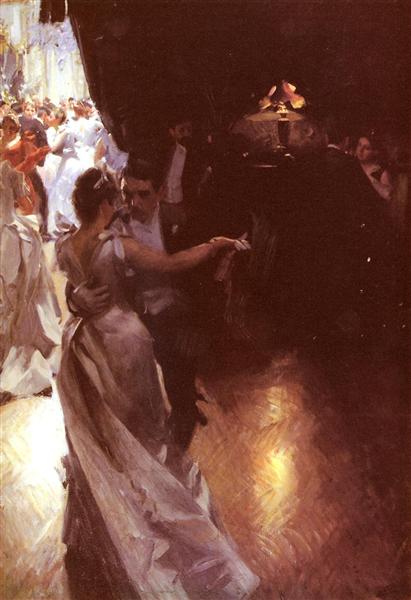
Waltz, 1891 - Anders Zorn


       Waltz” (1891)


        Anders Zorn


           ________


having brought up the idea of

longevity in my last communication,

the fantasiaa musical form that

lasted about 150 years, with hats

off nevertheless to the later Disney

classic, Fantasiaa tribute, which,

full of Classical music references,

followed in its spiritual mode, and,

after introducing Chopin, perhaps

the very representation of the

Romantic Era, that we carry, or

intuit, in our very bones, I thought

I’d talk about the waltz, a Chopin

specialty, where he created,

incontrovertibly, utter magic


who hears of the waltz anymore, an

antiquated curiosity, though even in

our not so distant blood we feel the

reverberations of its memory, the

throb of its still vibrant cultural

intensity, relevance, rhythm


tangos, incidentally followed, and

other intimate interactions, which

had been earlier frowned upon


the waltz had been the minuet,

the difference was the physical

contact, young nobles left their

aristocratic salons, however

discreetly, to frequent the

more liberal, if disreputable,

establishments – like to

speakeasies during Prohibition

– where they could explore the

new, licentious venues, as

young nobles, ever, would, for

the lure of intimate connection

with the partner


the waltz was thereby born,

couples touched, breast upon

breast, composers followed


Chopin was metaphysical, you

didn’t dance to his waltzes, you

experienced them, here’s his

Minute Waltz, Opus 64, no 1,

here’s his equally delightful

Opus 64, no 2, its companion


but Strauss ll, Johann l‘s son,

got all of Vienna to dance his, 

and everywhere else after, until  

the waltz fell out of favour 

somewhere in the 1950s, leaving

only its memories behind,  here’s          

his incandescent By the Beautiful

Blue Danubemakes you wish

you’d been there


in the one case, the waltz is

idealized, in the other, it’s the

waltz in action, listen, you can

tell the difference, you won’t 

want to dance, for instance, to 

Chopinthough you might give

it an ineffectual try, to Strauss

you’ll careen


R ! chard

how to listen to music if you don’t know your Beethoven from your Bach, lV

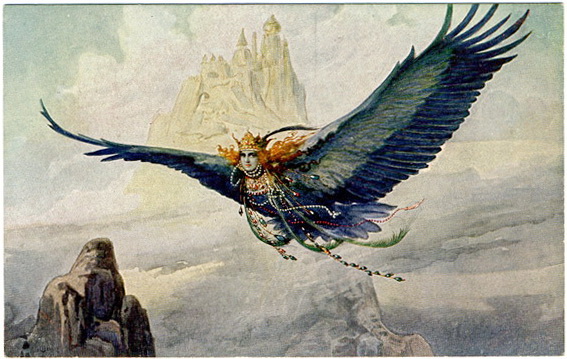
Fantasy - Sergey Solomko

        Fantasy


               Sergey Solomko


                     ________


trying to find a quick piece, nothing

ostentatious, like a symphony, or a

concerto, nor even a sonata, that

would get in the way of my point, 

the difference between, by way of 

the intermediary, and transformational,

Chopin, Mozart and Prokofiev, I found

the fantasia, the only musical form

that was carried forward, among them,

during the intervening years, a good

hundred and fifty, Mozart, 1756 – 1791,

Prokofiev, 1891 – 1953, Chopin, 1810 –

1849


what’s a fantasia, a musical form

consisting of one movement,

no breaks, but with, otherwise,

unlimited compositional liberties,

see above, only circumscribed by

the temper of the times


Western music has since its

Classical inception, and even

earlier, had a trinity of

commandments, that regulated,

even defined, what was meant

to be music, tempo, tonality,

and repetition, the history of

music in the West is the

chipping away at those

conventions


here’s Mozart, Fantasia in C

minor, K.475establishing the

form, but also the foundation,

the grammar, that aspirants

would follow in the footsteps

of so great a master, children

and grandchildren of their

erudite elder


Chopin followed, here’s his

Fantasy in F minor, Op.49,

in this instance, a historical

moment you won’t want to

miss, when Van Cliburn, an

enemy American at the time,

played it for Nikita Kruschev,

First Secretary of the Communist 

Party of the Soviet Union then, in

Moscow, and tempered thereby,

for an incandescent moment –

ticker-tape parades in New York

City ensued – the very Cold War


reliving it, I cried


the greatest difference between

Mozart and Chopin, I thought,

was volume, a consequence

of the development of the piano,

Mozart never gets as loud, also

tempo was much more expanded,

again a development of the piano,

neither was repetition with Chopin

so much in evidence, but shrouded,

less manifest


also Chopin wears his heart on

his sleeve, idiosyncratically


with Prokofiev, his Fantasia on

Themes from Scheherazade

tests tonality, gives us musical

conjunctions that are askew,

discordant, though completely

in syncopation with his own,

testy and unsettled, times


compare, consider, enjoy


R ! chard

how to listen to music if you don’t know your Beethoven from your Bach, lll

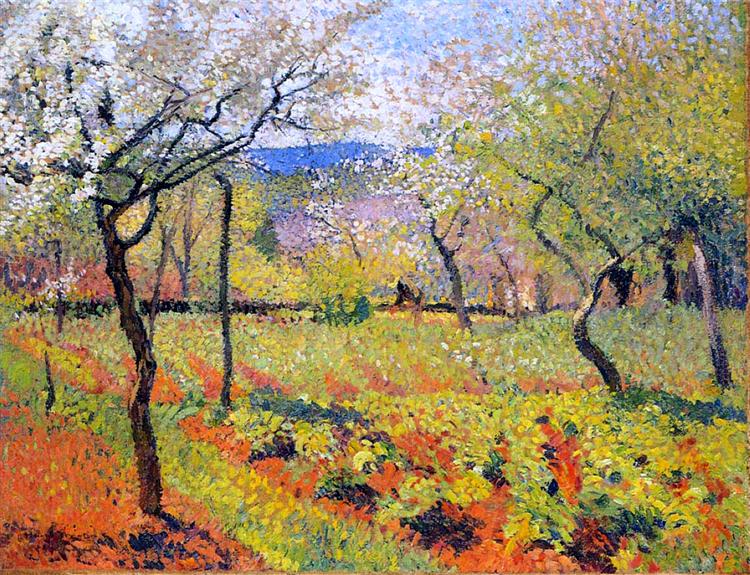
Flowering Garden in Spring, 1920 - Henri Martin


            Flowering Garden in Spring” (1920)


                     Henri Martin


                          _______


violin sonatas, apart from a few notable

exceptions, are accompanied by, usually,

a piano


the violin, as do a great many other

instruments, can only play one note

at a time, the piano can play as many

as you’ve got fingers, a harmonization

is a valued component of any musical

composition, therefore the piano


here’s a violin sonata of Mozart, here’s

a violin sonata of Prokofiev, you’ll

recognize Mozart, he’s the one you’ve

already got in your bones, the one we

grew up with, however ephemerally,

peripherally


Prokofiev is the other one


let me point out that Mozart is foursquare,

the music is straightforward, tonality and

pace, which is to say tempo, are never

eccentric, just delightful, while repetition,

another defining element of Classical

music, the recurrence of a theme, is

unmistakable, and often too often

reiterated, we get it, we want to

tell Mozart


Prokofiev is no longer any of those

things, but the underlying vocabulary

is the same, the rules set out by the

forefathers but extrapolated, turned

into unexpected, exotic flowers, just

as spring delivers its ever distinct,

and surprising, even astonishing,

blossoms every new year, see

above


we are so very blessed


R ! chard

how to listen to music if you don’t know your Beethoven from your Bach, cont.

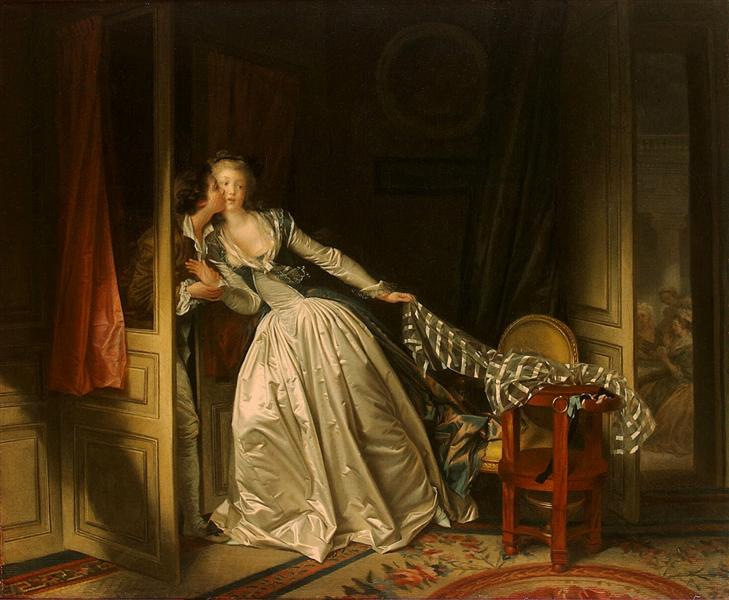
The Stolen Kiss, 1788 - Jean-Honore Fragonard


        The Stolen Kiss (1788)


       Jean-Honoré Fragonard


               _____________


if you listened to the couple of pieces I

recommended in my last commentary,

you would’ve indeed recognized, if

even only subconsciously, that the

first work wasn’t composed by the

composer of the other, that different

spirits infused either


a visual representation of the same

thing might be to juxtapose a

contemporary painting of the one

epoch with a corresponding painting

of the other


over a hundred years had passed

between Mozart and Prokofiev,

Mozart’s Piano Sonata no 18, K576

– his last piano sonata, incidentally,

he died a short two years later –

was written in 1789, the year of the

French Revolution, a still safe

distance from Vienna, where

Mozart could still cater to an,

however endangered, species


Jean-Honoré Fragonard, a contemporary

painter, 1732 – 1806, had been doing the

same thing, The Stolen Kiss, 1788, for

instance, a mere year earlier, see above


meanwhile, over a hundred years later,

inches only away from the First World

War, Matisse is doing in art what

Prokofiev is doing in music, taking the

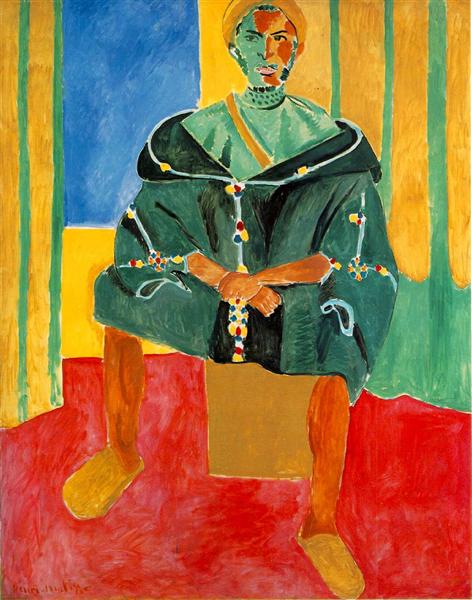
temperature of his own time, Seated

Riffian (1911 –1912) – a Riffian, a Berber,

a North African tribesman – see below,

to corroborate Prokofiev’s equally

emblematic vision of their shared era


you can hear this in the music


mostly through the difference in the use

of volume, languorous softs, thunderous

louds, but also in the more expansive use

of pace, fast, slow, the rapidity of some

notes, the embrace, the extended caress,

of others, in the later composition


which, in a word, follows the development

of the piano from harpsichord to the

instrument we’re used to today


Mozart still had the harpsichord in his ear,

he was writing for the fortepiano, which

evolved, through the pianoforte, to the

piano we know of today, no flexibility of

pace, no flexibility of volume then, listen,

hearyou can hear it in the juxtaposition


we hear a lot more than we think we

hear


R ! chard


                  __________


Seated Riffian, 1912 - 1913 - Henri Matisse


        Seated Riffian (1911 – 1912)


                Henri Matisse


                  __________

“The Mariners transform’d to Dolphins” (ll) – Ovid

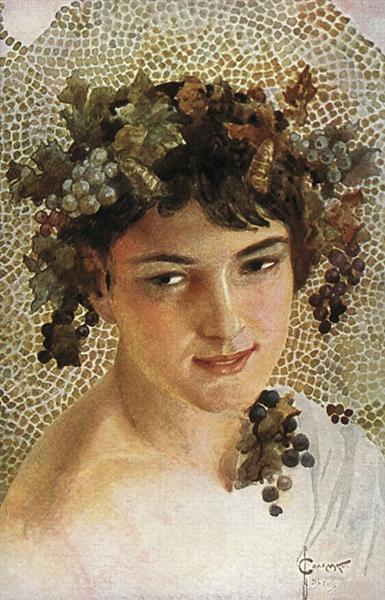
Bacchus - Sergey Solomko

                 Bacchus


             Sergey Solomko


                     ______


          “His base confederates the fact approve;


His base confederates, the shipmates who

would not protect the soft and lovely boy,

the little captive, that Acoetes believes to

be a god, if you’ll remember


          When Bacchus (for ’twas he) begun to move,

          Wak’d by the noise and clamours which they rais’d;

          And shook his drowsie limbs, and round him gaz’d:

          What means this noise? he cries; am I betray’d?

          Ah, whither, whither must I be convey’d?


whither, whither, where, where, to

what place, to what place


          Fear not, said Proreus, child, but tell us where
          You wish to land, and trust our friendly care.


Proreusanother of the several sailors

serving on Acoetes‘ ship


          To Naxos then direct your course, said he;

          Naxos a hospitable port shall be

          To each of you, a joyful home to me.


Naxosa Greek island, whither Bacchus /

Dionysus presently direct[s] his, however

questionable, hosts to repair


          By ev’ry God, that rules the sea or sky,

          The perjur’d villains promise to comply,

          And bid me hasten to unmoor the ship.


me, Acoetes


          With eager joy I launch into the deep;

          And, heedless of the fraud, for Naxos stand.


heedless, unaware


the fraud, [t]he perjur’d villains promise to comply


stand, proceed


          They whisper oft, and beckon with the hand,

          And give me signs, all anxious for their prey,

          To tack about, and steer another way.


They, the rebellious crew


anxious, wary,  suspicious


to tack, to change course


          Then let some other to my post succeed,

          Said I, I’m guiltless of so foul a deed.


succeed, take the place of, replace


guiltless, Acoetes will not accept

responsibility for the treachery of

his crew


          What, says Ethalion, must the ship’s whole crew

           Follow your humour, and depend on you?


Ethalion, again a shipmate


          And strait himself he seated at the prore,

          And tack’d about, and sought another shore.


prore, the prow, the fore part of a ship


          “The beauteous youth now found himself betray’d,


The beauteous youth, Bacchus / Dionysus


          And from the deck the rising waves survey’d,

          And seem’d to weep, and as he wept he said:

          And do you thus my easy faith beguile?

          Thus do you bear me to my native isle?


thus, in such a manner


beguile, deceive


          Will such a multitude of men employ

          Their strength against a weak defenceless boy?


this weak defenceless[ness] is his only

defence, apparently, to his captors, who

cannot, with the exception of Acoetes,

perceive the god’s divinity


          “In vain did I the God-like youth deplore,


deplore, express strong disapproval

of what the seamen were doing to

the god


          The more I begg’d, they thwarted me the more.

          And now by all the Gods in Heav’n that hear

          This solemn oath, by Bacchus’ self, I swear,

          The mighty miracle that did ensue,

          Although it seems beyond belief, is true.


make way,  says Acoetes, for the

metamorphosis, what you are

about to hear


          The vessel, fix’d and rooted in the flood,


fix’d, became affixed


          Unmov’d by all the beating billows stood.

          In vain the mariners would plow the main

          With sails unfurl’d, and strike their oars in vain;


plow the main, move forward on

the high seas


          Around their oars a twining ivy cleaves,

          And climbs the mast, and hides the cords in leaves:

          The sails are cover’d with a chearful green,

          And berries in the fruitful canvass seen.

          Amidst the waves a sudden forest rears

          Its verdant head, and a new Spring appears.


the ship is transformed into a

floating grove


stay tuned


R ! chard

“The Story of Pentheus” – Ovid

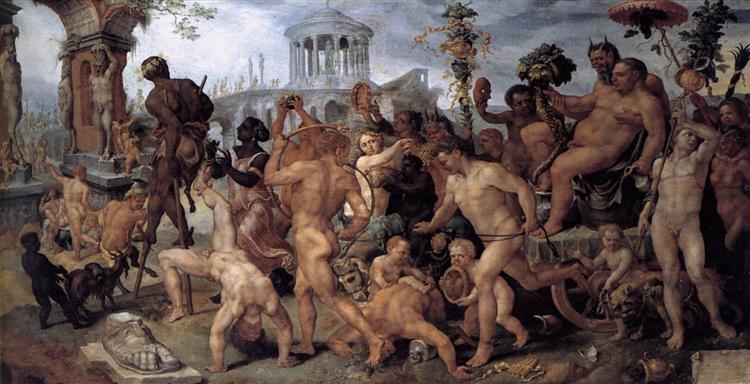
The Triumphal Procession of Bacchus, c.1536 - Maerten van Heemskerck

         The Triumphal Procession of Bacchus” (c.1536)


                   Maerten van Heemskerck


                             _______________


till now the separate stories in Ovid’s

Metamorphoses have been linked,

one being either a consequence of

the other,or its cause, but the story

of Pentheus, grandson of Cadmus,

king and founder of Thebes, who

earlier in this series had his own

tale told, starts, as my German

teacher used to say, from the

scratch


This sad event, therefore, in the

first line of the poem, refers to

what will follow, not what came

before


            This sad event gave blind Tiresias fame,

            Through Greece establish’d in a prophet’s name.


Tiresias, if you’ll remember, had been

blinded by Juno / Hera, goddess of the

gods, for having sided with Jove / Jupiter

/ Zeus, her husband, in a wager between

them he’d been called upon to decide,

Jove / Jupiter / Zeus, however, gave 

Tiresias, as consolation, having been

barred by a pact among the gods not

to undo each other’s spells, the gift

of insight, prophecy


the example that follows, of his divination,

establish[‘d] at that time his reputation

[t]hrough[out] Greece as a prophet


            Th’ unhallow’d Pentheus only durst deride

            The cheated people, and their eyeless guide.


unhallow’d, unholy, wicked, sinful


Pentheus, king of Thebes following

his grandfather, Cadmus, but that’s

an entirely other story


only, of all the people, none but

Pentheus durst, dared, deride,

mock, their eyeless guide, Tiresias

            To whom the prophet in his fury said,

            Shaking the hoary honours of his head:


hoary, grizzled, gray, aged


            “‘Twere well, presumptuous man, ’twere well forthee

            If thou wert eyeless too, and blind, like me:

            For the time comes, nay, ’tis already here,

            When the young God’s solemnities appear:


the young God[], Bacchus / Dionysus,

son of Semele and Jove / Jupiter / Zeus,

if you’ll remember, god of revelry,

intoxication, wild abandon


            Which, if thou dost not with just rites adorn,

            Thy impious carcass, into pieces torn,

            Shall strew the woods, and hang on ev’ry thorn.


impious carcass, dishonoured corpse, 

of any thou who wouldn’t’ve honoured

the celebrations


            Then, then, remember what I now foretel,

            And own the blind Tiresias saw too well.”


own, agree to, admit

            Still Pentheus scorns him, and derides his skill;

            But time did all the prophet’s threats fulfil.

            For now through prostrate Greece young Bacchus rode,


prostrate, beholden, reverent, observant

of the solemnities


            Whilst howling matrons celebrate the God:

            All ranks and sexes to his Orgies ran,

            To mingle in the pomps, and fill the train.


the rites of Bacchus were bacchanals,

orgies, celebrations of abandon, Mardi

Gras, for instance, in New Orleans,

annual Gay Parades, now everywhere,

or Hallowe’en since time immemorial


see above


            When Pentheus thus his wicked rage express’d:

            “What madness, Thebans, has your souls possess’d?

            Can hollow timbrels, can a drunken shout,


timbrels, tambourines


            And the lewd clamours of a beastly rout,

            Thus quell your courage;


quell your courage, overcome your

sense of discipline


                                            can the weak alarm

            Of women’s yells those stubborn souls disarm,


those stubborn souls, the Theban

spirit of pride and honour


            Whom nor the sword nor trumpet e’er could fright,

            Nor the loud din and horror of a fight?

            And you, our sires, who left your old abodes,


our sires, the older generation of

Thebans, of his grandfather

Cadmus‘ ilk


            And fix’d in foreign earth your country Gods;


foreign earth, very Thebes, from Tyre,

where Cadmus and his followers had

come from, in search of Europa, if

you’ll remember


            Will you without a stroak your city yield,


stroak, stroke


            And poorly quit an undisputed field?


undisputed field, there are no

military obstructions


            But you, whose youth and vigour should inspire

            Heroick warmth, and kindle martial fire,

            Whom burnish’d arms and crested helmets grace,

            Not flow’ry garlands and a painted face;


Remember him to whom you stand ally’d:


him, Pentheus himself, their king


            The serpent for his well of waters dy’d.


The serpenta reference here to the

dragon that Cadmus slew, which had

guarded the cavern where his crew

had been scouting for water, if you’ll

remember


            He fought the strong; do you his courage show,

            And gain a conquest o’er a feeble foe.


a feeble foe, licentiousness, abandon,

undisciplined revelry


            If Thebes must fall, oh might the fates afford

            A nobler doom from famine, fire, or sword.


Pentheus appeals to a loftier reason

for defeat, famine, fire, or sword, than

mere, and ignoble, debauchery


            Then might the Thebans perish with renown:

            But now a beardless victor sacks the town;


beardless victor, the young Bacchus /

Dionysus


            Whom nor the prancing steed, nor pond’rous shield,

            Nor the hack’d helmet, nor the dusty field,

            But the soft joys of luxury and ease,

            The purple vests, and flow’ry garlands please.


Bacchus / Dionysus is not impressed

by armour, military accomplishments,

prowess, but by grace, elegance, and

poetry


            Stand then aside, I’ll make the counterfeit

            Renounce his god-head, and confess the cheat.


the counterfeit, Bacchus / Dionysus


            Acrisius from the Grecian walls repell’d

            This boasted pow’r; why then should Pentheus yield?


Acrisius, a king of Argos, who must’ve

also repell’d from his city Bacchus /

Dionysus, according to the poem


            Go quickly drag th’ impostor boy to me;


th’ impostor boy, the counterfeit,

Bachus / Dionysus


            I’ll try the force of his divinity.”


try, test


            Thus did th’ audacious wretch those rites profane;


th’ audacious wretch, Pentheus


            His friends dissuade th’ audacious wretch in vain:

            In vain his grandsire urg’d him to give o’er

            His impious threats; the wretch but raves the more.


his grandsire, Cadmus

            So have I seen a river gently glide,

            In a smooth course, and inoffensive tide;

            But if with dams its current we restrain,

            It bears down all, and foams along the plain.


nature will have its way, so will the

gods, watch out, the narrator says,

who it is that you challenge

            But now his servants came besmear’d with blood,

            Sent by their haughty prince to seize the God;


his servants, Pentheus‘ men


the God, Bacchus / Dionysus


            The God they found not in the frantick throng,

            But dragg’d a zealous votary along.


votary, follower, adherent,

acolyte


the servants, Pentheus‘ men,

who did not, apparently, deliver


stay tuned


R ! chard