Richibi’s Weblog

Just another WordPress.com weblog

Category: paintings to ponder

what’s happening in Poland

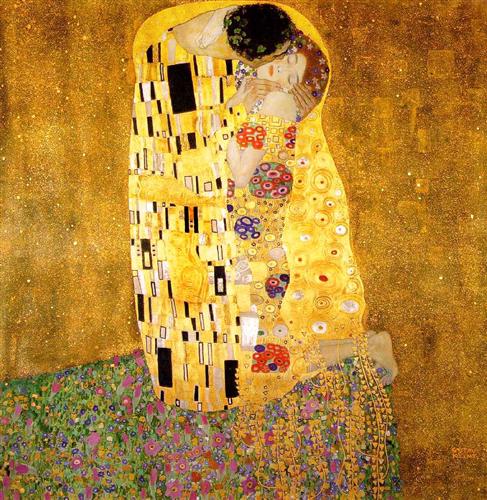
"The Kiss" - Gustav Klimt

The Kiss (1907-08)

Gustav Klimt

_______

last night, most unexpectedly,
someone I know sent me this, I
wondered if it was because of
the music, the message, or the
performance, consequently I
assumed everything

Mateusz Ziółko won the Voice
of Poland
contest in 2013, it’s
fun, despite the language
barrier – the adjudication being
all in Polish – to watch also,
during the evaluation, the judge
in blue fall apart, come entirely
undone, be unabashedly smitten,
from nearly the very first note of
this riveting audition, then spend
the rest of the show trying to get
herself back together again

much as I did, in fact, without
a camera

quiver too, enjoy

Richard


September, 2015‏

 "A September Day" - George Henry

A September Day (1935)

George Henry

_______

September is a melancholy month, it
suggests fall in all of its connotations,
the array of burning colours lighting
up the leaves, purple, amber, magenta,
the steady decline into winter, of the
year and, by metaphorical extension,
of the years we have to come

it’s a month for philosophy, I think,
and introspection, therefore,
incidentally, I am

listen

Richard

“Let’s Face the Music and Dance”‏

"Hot Jazz" - Frank Kline

Hot Jazz (1940)

Frank Kline

_______

having watched a superb interpretation
of this classic Nat King Cole number on
“So You Think You Can Dance” recently,
a show I havent missed since it started,
I went looking for a performance of the
song I could sink my teeth into, and
Fred and Ginger, however wonderful,
could not give me the immediacy I was
intent on discovering, I needed words,
not action, “Let’s Face the Music and
Dance”
from the heart

though I’d heard of Diana Krall, I hadn’t
anywhere yet identified her, if ever I’d
even heard her

she took my breath away, knocked my
socks off, I want to go to Rio, where
she sang this song, just click

once I’d heard this piece on free Internet
video, I ran, didn’t just walk, albeit on the
comfort of my own sofa, to iTunes and
bought the whole show for what turned
out to be essentially a song, $4.99
Canadian, wow

turned out I could’ve got it for free as
well right there by running instead to
Google, had I not been so impetuous,
smitten

Live in Rio is a revelation, and I don’t
even like jazz, but I liked this show
enough to make me want to fly to Rio,
make my own Bossa Nova, maybe even
meet my own Ipaneman

though Diana Krall, incidentally lives
right here in Vancouver, she says

note, in passing, the connections to
Classical music, you’ll want to count
tenuti, for instance, and rubati,
accelerandi
and rallentandi, while
you’re at it

note also the Classical imperatives,
tonality, tempo, and repetition, which,
you’ll find, haven’t much changed in
the 21st Century, though rhythm is a
lot more fluid, flexible, now, not so
rigid

the group is a variation on the string
quartet, now comprising double bass,
guitar, percussion, and piano, with
voice thrown in

an orchestral back up makes us ready
for a concerto, where here we have a
set of independent pieces held
together, however solidly, by mere
mood

and, of course, Diana Krall’s vocal
and interpretive magic

listen, be smitten

Richard


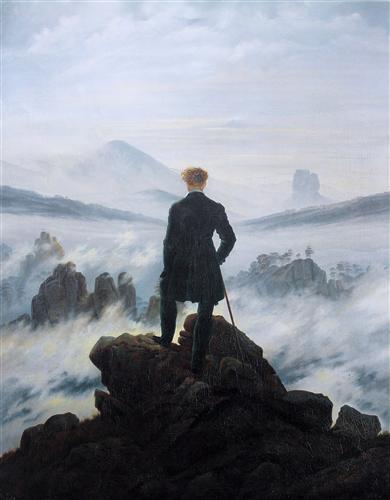
Fantasie in C Major, D. 760 (“Wanderer”) – Franz Schubert‏

 "The Wanderer above the Sea of Fog" - Caspar David Friedrich

The Wanderer above the Sea of Fog (1818)

Caspar David Friedrich

____________

a great way of learning to speak music,
approfondir, we say in French, to plumb
the intellectual depths of, is to count the
tenuti, as I quasi-humorously suggested
in my last piece one should, a tenuto, of
course, holds, caresses, one note, or one
chord, only, before proceeding any
further

music is a language, like French, English,
indeed I even include it as a language I
speak as professional qualification, people
find it amusing who don’t speak it

but you need to start somewhere, and
tenuti are as good a place as any, they’re
like an exclamation mark, denote intensified
intention, these give direction, and structure
to the statement, separating the units of
what’s being said

pauses between words, when you’re learning
a language, for learners is a godsend, and
thank goodness for them at least at the end
of sentences

tenuti do the same, count the tenuti, you’ll
discover an enchanted world of music,
right there between the lines

surprisingly you’ll find, rubati, tenuti,
rallentandi, accelerandi
don’t occur much
in Romantic music, where you’d expect
the grand passions to swoop and sway
and swoon, but gripped still by the
rigours of Classicism, and its own roots
in the harpsichord, its beats were rigid
still, mostly, right through to Schubert,
Chopin, whereupon more lachrymose
composers began to use these devices
nearly indiscriminately

count the tenuti in this wonderful
Fantasie in C Major, D. 760 of Schubert,
his Wanderer” Fantasy, you won’t find
that many, nor rubati, rallentandi,
accelerandi,
for that matter, and that’s like
someone not crying on your shoulder,
Schubert gives it to you straight, whether
emphatic, earning empathy, or making
magic

Richard

psst:

the Wanderer” Fantasy, incidentally,
is, again, programmatic music, it is
based on Schubert‘s own lied, song,
to Georg Philipp Schmidt von
Lûbeck
‘s The Wanderer

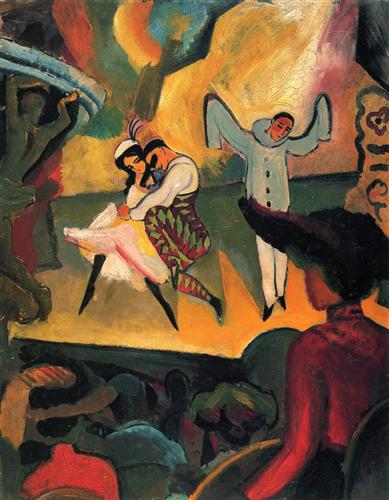
“Three Movements from Petroushka” – Igor Stravinsky‏

"Ballets Russes" - August Macke

Ballets Russes (1912)

August Macke

__________

Donald, I said to my friend, the
musicologist, what’s the plural
of tenuto

I’d been lining up what I call my
“articles of pace”, the musical
notations that indicate tempo,
tempi

rubato, of course, for time stretched,
the bottom of a dip when your partner
pauses at the end of your arm where
you steal a private moment during
otherwise waltz time, or tango

rubato must be in the middle of a
bar cause a stolen moment needs
space to return to its more natural
rhythm, equilibrium

a ritardando, or rallentando, slows
down but at the end of a bar, or
musical statement, often at the very
end of a piece, for an introspective,
say, ending

an accelerando is its opposite,
speeding up the beat, and will
continue till it reaches its apogee,
climax, as it were

a tenuto holds, caresses, one note,
or one chord, only, before proceeding
any further

all of these words, incidentally, are
adverbs, not nouns, but through
usage have assimilated the idioms
of nouns, therefore singulars and
plurals, articles and adjectives
apply

what’s the plural of tenuto, I’d
asked

Donald, always a sport, answered
tersely, tenuti, grinning

you’re kidding me, I replied, boy,
will I have fun with that

two tenuti, three tenuti, four tenuti,
five, six tenuti, seven tenuti, eight
tenuti, jive, I continued, racking up
immediate levity, not to mention
momentum, and cadence

count the tenuti in this masterpiece,
Stravinsky‘s Three Movements
from Petroushka
“,
a programmatic
piece, Petroushka is a puppet in love
with a ballerina, but she’s in love
with a Moor, more about Moors later,
maybe, it could get controversial

Petroushka, distressed, challenges
the Moor, but the Moor kills him

Petroushka returns as a ghost, but
ineffectually, cause he’s really only,
finally, a puppet

Vaslav Nijinsky played Pertroushka
in the original production with
Diaghilev‘s Ballets Russes, June 13,
1911, in Paris, the rest is history

in 1921 Stravinsky wrote an arrangement
for virtuosic, he specified, piano, using
three scenes only from the ballet as
pivot

1 – Danse russe (Russian Dance)
2 – Chez Pétrouchka (Petroushka’s Room)
3 – La semaine graisse (The Shrovetide Fair)

they’re fast, very fast, prestississimo,
you’ll miss the breaks if you blink,
where you’d be likely to find, if any,
tenuti

good luck

Richard
“Pohádka” (“Fairytale”) – Leoš Janáček

"Fairy Lake" - Martiros Saryan

Fairy Lake (1905)

Martiros Saryan

________

for the recital season coming up,
my friend, the musicologist, has
once again been called upon to
write reviews of featured pieces

out of giddy exhilaration at his
playful essays, he sent me
several draughts he’d already
composed around piano and
cello pieces, of mostly familiar
enough faces, Schumann,
Beethoven, Strauss, but of Leoš
Janáček
I’d only heard mention,
none ever of his compositions

his Pohádka“, or Fairytale“, is
a programmatic piece, which
means it accompanies a story,
like a soundtrack does a movie,
but Pohádka is based on a tale
of Vasily Zhukovsky, a Russian
epic poet, and is not accompanied
by a film, nor a ballet for that
matter – see “The Nutcracker” or
“Sleeping Beauty” for that – but
lives and breathes on its own
merits

Kashchei, Lord of the Underworld,
objects to the union of his daughter
with a charming prince, represented
here by the piano and the cello
respectively

they run away and find refuge with
another potentate who prefers the
prince for his own daughter, and
casts a spell on him so that the
prince may love her, instead of
Maria, the princess, which he does

Maria, forsaken, in a pique at this
turn of events, turns into a blue
flower

o, to turn into a blue flower
whenever I’m in a pique, I thought,
I only wish, and succumbed
forthwith to the improbable story

the spell is lifted, however, from
both, of course, however much I
might prefer to remain a blue iris,
say, anemone, or hyacinth, when a
magician, don’t ask, turns up to
set everything aright, and they
live happily ever after

the version you’ll hear is
transposed for piano and double
bass, a somewhat deeper, thrilling
register, or that may be just the
bassist, but the magic entirely
remains, if it isn’t completely
enhanced, rendered definitive
by this superb performance

my friend says Janáček has
neither musical forebears, nor
descendants, but composes in
a world of his own, an utterly
enchanted world, I surmised

what do you think

listen, just click

Richard

psst:

“con moto”, by the way, means
“with conviction”

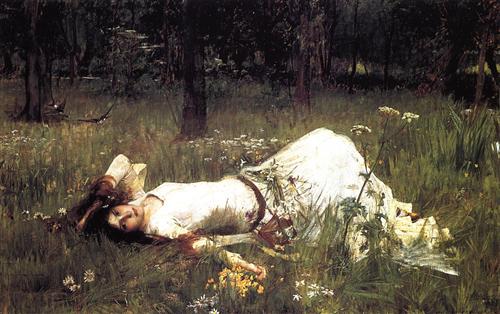
“Death and the Maiden” – Franz Schubert‏

 "Ophelia" -  John William Waterhouse

Ophelia (1889)

John William Waterhouse

___________

though death is not an especially
appealing topic for many, it was
nevertheless of fundamental
consideration during the
Romantic Period

Goethe, the German poet, had
already created a sensation
with his The Sorrows of Young
Werther
, a young man,
disappointed in love, takes his
own life, a potent seed for the
new era, secularism was
overtaking theocracy, the
autocracy of the Christian
Church was giving way to the
prevalence of human rights,
a private opinion, well disputed,
was holding sway against the
rigidities of religious orthodoxies,
science and reason had been
chipping away at the very idea
of God

but with human rights there was
the question of personal
responsibility, if not an imposed
authority, then each man, woman
was in charge of his, her own

the fundamental question,
therefore, was Shakespeare’s
To be or not to be, or, for that
matter, Burt Bacharach’s and
Hal David’s What’s it all about

this is not me, this is Albert Camus
talking, who formalized the situation
in the 1940s

“There is but one truly serious
philosophical problem, and that
is suicide. Judging whether life
is or is not worth living amounts
to answering the fundamental
question of philosophy. All the
rest — whether or not the world
has three dimensions, whether
the mind has nine or twelve
categories — comes afterwards.”

after Werther, Madame Bovary followed,
Anna Karenina, suicide had become an
option, the penalty was no longer
opprobrium, castigation, as it had been
under unforgiving religious constraints

death itself, fatefully rather than
personally determined, was, of course,
no less considered when the era of
heartfelt declarations dominated,
Mendelssohn had written his
Quartet no 6 in F minor, opus 80
for his deceased sister, Beethoven
and Chopin, each his Funeral March,
either, incidentally, still iconic, and
perhaps the most poignant work
of all in this manner, Schubert’s
Death and the Maiden, a precursor
of his own much too premature
demise

this is music as if your life depended
on it

watch, listen

Richard

psst:

the Alban Berg Quartet, a group who
set the standard for several significant
string quartets in the ’80s, do no less
with this one

you’re not likely to see a better
performance of it ever, nor, for that
matter, of anything, pace even Glenn
Gould, a statement I think nearly
against my religion

you be the judge

August, 2015

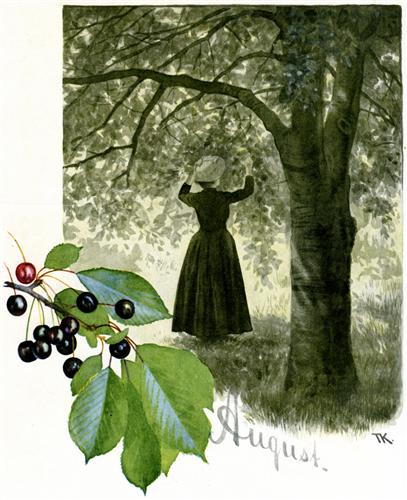
 "August" (1890) - Theodor Severin Kittelsen

August (1890)

Theodor Severin Kittelsen

_____________

a friend wrote recently about her recent
relative silence, a dearest friend had died,
she said, and nights she would wake still
crying

I thought it not accidental that I would
that very day learn of Mendelssohn’s
hommage to his beloved sister shortly
after her passing, 1847, Mendelssohn
died himself that same year, aged 38

this Quartet no 6 in F minor, opus 80,
is my way of paying my respects,
music, art, has always been a place
of great repair, consummate
reorganization, grace, for me

may all grieving people find such
consolation

Richard

“Tru”‏

"Truman Capote" - Gloria Vanderbilt

Truman Capote

Gloria Vanderbilt

____________

Truman Capote, a towering XXth-Century
figure, might be remembered much more
for his personality than his considerable
literary output, In Cold Blood remains
a turning point in the history of literature,
not to mention an extraordinary read

three major works have been produced
about Capote since at least 1992, when
Robert Morse won a Tony for Tru, my
favourite rendition, with a nod to the
superb Infamous, before even the
dire, Oscar-winning, Capote, however
deserving Philip Seymour Hoffman
might’ve been of his own award for his
brilliant work

watch Tru in coordinated instalments,
no fuss, no muss, only the suspicion
you’ve missed an irretrievable and
perhaps crucial nugget in the clip
change

chill, Tru, however apportioned here,
is seamless, and captivating, hilarious
and, all at once, profound, not to be
ever forgotten, much as I never have

Richard


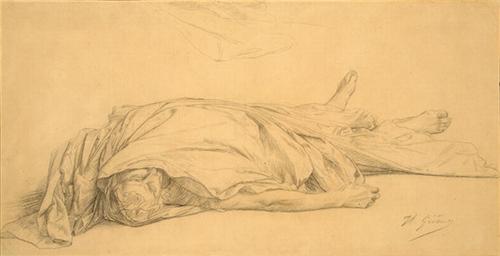
“Julius Caesar”, a foretaste

"The Dead Caesar" -  Jean-Léon Gérôme

The Dead Caesar (c.1859)

Jean-Léon Gérôme

__________

a friend and I are undertaking our
umpteenth reading of a Shakespeare
play, “Julius Caesar” this time, which
I hadn’t read in an age

in this version, still unparalleled,
Brutus, James Mason, presents his
argument for the assassination of
Caesar
, “Hear me for my cause, and
be silent that you may hear…not that
I loved Caesar less but that I loved
Rome more”,
he proclaims

Mark Antony, in the incarnation of
Marlon Brando, responds, for the
ages

and therein lies the glory, incidentally,
of Shakespeare

just saying

Richard