Just another WordPress.com weblog
Category: paintings to ponder
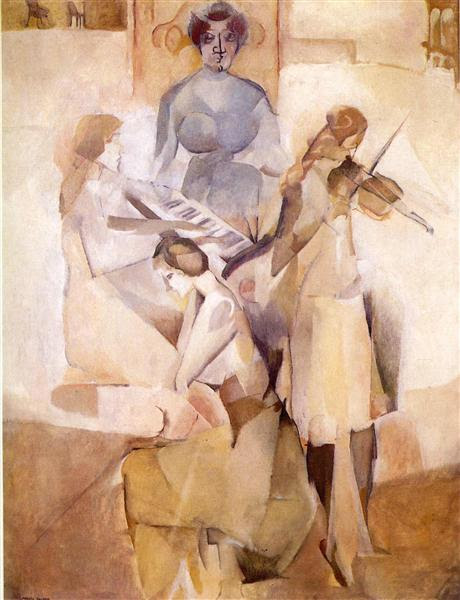
_______
as I was about to listen to Stravinsky’s
I thought, combination, I came upon,
entirely inadvertently, his Concerto for
Two Pianos, which, to my confusion,
was for only two pianos
a concerto is a piece of music consisting,
indeed, of more than one movement,
but with an accompanying orchestra,
according to the definition, Stravinsky
must’ve been playing with words, his
suits my project, a month of, specifically,
sonatas, irrespective of his erroneous
nomenclature
and it is entirely delightful, though
maybe in your face, listen
this is where I might elaborate on the
meaning of sonata, it is nothing more
than a piece of music consisting of
more than one segment, called
movements, anything can happen,
much like in a novel, consisting of
chapters, where anything also can
happen
the term sonata is used for pieces of
music written for one or two instruments,
for the one which can only play one note
at a time, anything not a keyboard,
requires harmonic accompaniment, it is
a tradition, though not absolute
a piece of music written for three
instruments consisting of more than
one segment, movements, is called
a trio, for four, a quartet, five, a
quintet, and so forth, until one stops
counting and we call it a symphony,
a symphony is a sonata written for
an indefinite number of instruments,
which is to say an orchestra
a concerto is a symphony with a
soloist, it’s named according to
the soloist’s instrument
but they’re all, essentially, sonatas
a piece of music consisting of more
than one segment of music, or
movement, written for two instruments
only, as far as I’m concerned, is called
a sonata, so, to my mind, this Concerto
sonata
but that’s just my opinion
what do you think
I think one should ever read the fine
print, even with Stravinsky
R ! chard
________
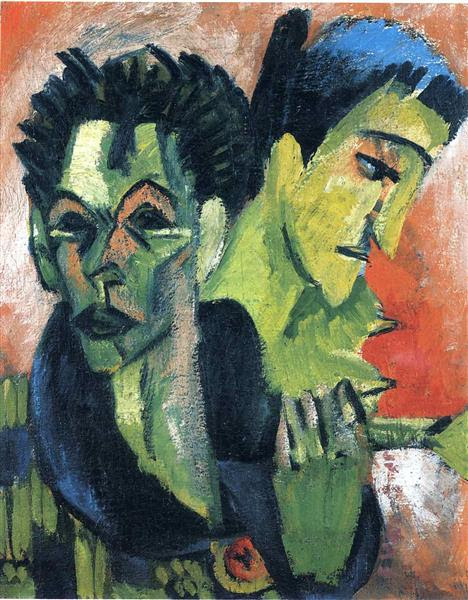
long way from the Romantics, though I
usually settle Ravel among the
Impressionists, this piece seems rather
to reflect the later Expressionists in art,
see above, for its virulence and eccentric
tonalities and performance techniques
in both the violin and the piano, the age
had given us the First World War, and
would soon lead to the Second
the three Classical imperatives of tonality,
tempo, and repetition are maintained still,
but their descendants are unruly, willful,
bold and impervious, there are no holds
barred here, they take no prisoners
R ! chard

________
Johannes Brahms is pretty well the last of
the great Romantics, 1833 – 1897, he wrote
when he was not quite twenty, with the
same bravura as Beethoven, let me point
out, his sonata has five movements, a sign,
as I’ve said before, of bristling confidence
as a form grows from its original, pristine,
shape, it can only grow by evolving,
becoming something, eventually, that it
wasn’t, by dint of breaking all the rules,
transgressing
style becomes the manner in which a
work is transformed from its integral
state into something more decorated,
more intricately designed, like adding
lace to a perfectly adequate collar, or
making a soufflé out of an egg
but who wouldn’t, won’t
a point is reached where style overcomes
substance then, and becomes the focus
of the entertainment, one watches the
bravura
sonata, hasn’t the emotional appeal
that I’d heard in the earlier Romantics,
that would keep me rapt to the end,
the draw for me is the prestidigitation,
the manual dexterity, which is like
watching someone fly through the
air with the greatest of ease, but be
not otherwise moved, see above
but that’s me, and that’s to my mind
incidentally, since this is Brahms’
this is probably the last of the
great Romantic sonatas, after
which Impressionism
R ! chard
________
though there are other, and quite significant,
composers who fit into this category,
Beethoven, Schubert, and Chopin pretty
much define, all by themselves, the
Romantic Period
Chopin composed only two sonatas of note,
plus one more that is overlooked for being
an early, student effort, not up to the
standard of his later ones, Chopin, rather,
wrote mostly shorter pieces, nocturnes,
études, preludes, polonaises, and more,
that later became the very stuff of his
reputation
Schubert wrote enough sonatas that he
could be compared to Beethoven, indeed
it can be difficult to tell one from the other,
much as it can be difficult to tell Haydn
from Mozart, products in either case of
being both of their respective eras
when I was much younger, a guest among
a group of academics, where I’d been invited
by the host’s wife, a co-worker, what I knew
of Classical music, in the large sense, which
is to say comprising all of the musical periods,
Classicism, Romanticism, Impressionism,
and beyond, was all self-taught
is that Beethoven, I asked the host, about
a piece of music he’d put on
that’s Schubert, he replied, aghast, as
though I’d just farted
I blushed, deep red, confounded
Schubert, having great admiration for
Beethoven, took on many of the older
composer’s lessons, four movements
instead of the Classical three, for
instance, and many of the technical
tricks of his forebear
but there’s an essential component of
their styles that marks one from the
other, an easy way to tell them apart,
Beethoven always composes against
the beat, Schubert following it
listen to the first few notes of Beethoven’s
“Pathétique”, for instance, the beats are
erratic, confrontational, the mark of a
revolutionary, Beethoven was brashly
proclaiming his worth, he had something
to prove
Schubert, who was essentially playing
for friends, just wanted to entertain
them, which he did in spades, without
bombast or bluster
D959, for example, no swagger, no
ostentation, delivering nevertheless
something quite, and utterly,
enchanting, everything following,
unobtrusively, the beat
enjoy
R ! chard

________
both have three movements, fast, slow,
fast, Beethoven still doing Beethoven,
each only about a year apart, 1804,
1805, listen to them side by side, from
movement to movement, the moods
in either are much the same
I’ll point out, however, that the second
are linked, there is no pause between them,
Beethoven is making clear that the sonata
is an integral whole, not a collection of
disparate elements
what does that mean, it means that
Beethoven is creating a literature, not
only tunes, but a story, with beginning,
middle and end
compare in art with the triptych, see above,
with artists delivering more than individual
paintings, but a narration
both arts, music, painting, are meant to
transcend their original ends
enjoy
R ! chard

______
Beethoven’s piano sonatas are divided in
three sections, Early, Middle and Late,
indeed, the last of his Early sonatas is
the early ones are all still highly influenced
by his illustrious predecessors, Mozart and
and Haydn, and derive, however
idiosyncratically, from the Classical Era,
though there are notable differences, his
addition of a fourth movement, for instance,
instead of the standard three, an upstart
strutting his stuff, asserting his potent
individuality
with the Middle sonatas, Beethoven is well
on his way to defining the Romantic Period,
nearly single-handedly, the works are bold,
expansive, lush, powerful, a story is told,
movements are chapters in a book, a book
of metaphysical dimensions
with the Late sonatas, Beethoven will leave
the planet, deliver musical revelations
compositional issues apply, which I won’t
get into, for being abstruse, but you can
already hear in his Middle sonatas the
powerful voice of a musical prophet
the name, it straddles the Classical and
Romantic Periods, at home in the salons
of the nobles, but dazzling as well for the
new audiences that are flocking to the
flourishing concert halls
and we’re only at the start of his Middle
Period
stay tuned
R ! chard
_______
cause most composers, including the great
ones, didn’t write many sonatas, or not many
to equal their greatest compositions, I’ll skip
directly from Bach to Beethoven, who first
gave sonatas their commanding position
on the cultural map
he wrote 32, the early ones competent,
even admirable, others inspiring, several
completely transcendental
of the 32, here’s the first of my favourites,
“Pastorale”, German spelling, of 1801
you might wonder about all the letters and
numbers in the naming of early music, much
of it compiled by later musicologists, cause
titles hadn’t been given to musical pieces,
even Beethoven’s “Pastorale” had been
later provided by his publisher
music before the late Classical Period
might’ve been written down, but not
widely distributed, there wasn’t a
market for it until the advent of the
Middle Class, who now wanted
access to what the aristocracy had
earlier, what compositions existed
would’ve been the property not of
the composer, but of the duke,
baron, or prince who’d hired him
for his court, see Haydn here, for
when greater demand grew for music
manuscripts, titles little by little became
a manner of increasing marketing,
scores found their way throughout
Europe to supply the many amateurs
who’d gather and play before we had
television
some of these amateurs became
noteworthy performers, who also
began to proliferate, to fill the
burgeoning concert halls,
incidentally, there’s also a “Pastorale”
Opus 68, you might want to listen to
and compare
enjoy
R ! chard
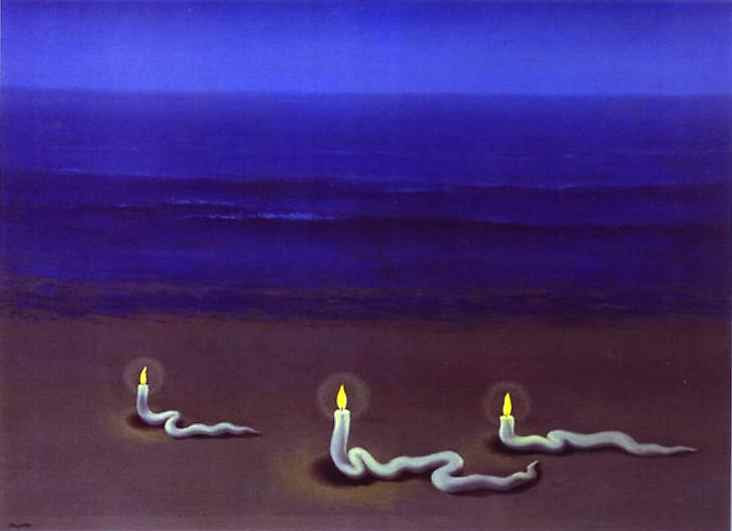.jpg "Meditation, 1936 - Rene Magritte")
_______
a story
while I volunteered at the palliative care
unit of our downtown hospital, a family
asked if I could monitor their mother
while they took time off for lunch
of course, I agreed
their mother lay unsettled on her hospital
bed, jittery, shaking, distressed, incoherent,
out of touch, in her own nether, dissociated
world, while the family, about ten of them,
had been chatting, seemingly oblivious to,
or unconcerned with, their mother’s flailing
they left
I sat by her side, placed a palm tenderly on
her quivering arm, to impart what calm I
could, to bring her warmth, care, attention,
and began to sing a mantra I’d learned at
an ashram I had been attending, weekly,
for months, after the death of my beloved,
in order to find solace, consolation, Om
Namah Shivaya, I chanted, gently, quietly,
over and over again
little by little, she settled, was becoming
calm
then, in a whisper, she began to join in,
Row, row, row your boat, she sang,
over and over again, along with my
own mantra, a duet of communication,
despite even the incongruity of the
tunes, we were meeting at an even
deeper, primordial level
something stirred behind me, I turned,
the family was standing in the doorway,
all held their breath, watching, as though
they were witnessing grace
I think they were
a mantra is a distillation of the three
pillars of Western music, tempo,
tonality, and repetition, what we sing
to children to lull them to sleep, that’s
what a mantra is
Row, row, row your boat indeed
the history of music in the West is
the disintegration of those norms,
for better or for worse
Bach, no accompaniment, no piano,
tail end of the Renaissance, when art
was directed by the Christian Church,
Bach was in fact cantor, music director,
of several churches in Leipzig
it took Mozart to kickstart the Classical
Era in the West, the purview, now, of
the aristocracy, a process that started
that he commissioned for Versailles,
leaving the Church behind in a
secularizing world
with Bach, tempo, tonality and repetition,
set the uncorrupted standard for the
ensuing ages, Bach is the next best
thing, to my mind, to meditation
R ! chard
__________
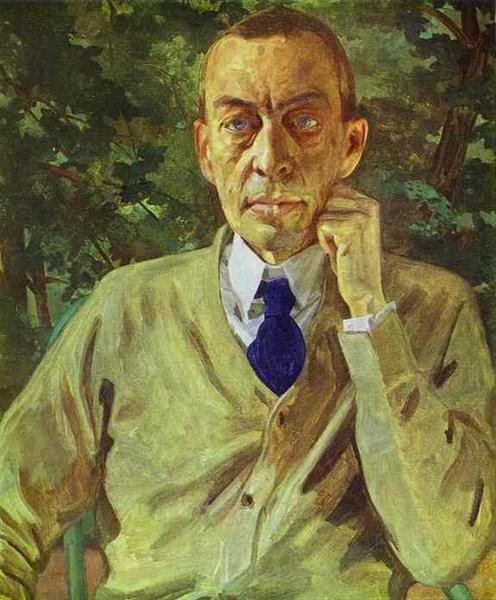
Rachmaninov, late Romantic, early
Impressionist, yanked, despite his
modern bent, Romanticism, solidly,
into the Twentieth Century, we
heard him in movies, and
consequently on TV, back then, on
long-play albums, 78s at the time,
that were flooding the market, first
movement on the one side, the next
two on the other, that’s how we used
to listen
later, we’d hear Sergeant Pepper’s
Lonely Heart’s Club Band doing the
same, in the late ’60s, before discs
Rachmaninov doesn’t sound like
Chopin, Beethoven, Schubert, but
you can hear their roots, their blood
running through his compositions
Opus 36, he elaborates, a sure sign
of Impressionism, intellectual rather
than emotional appeal, something
had become tiresome after half a
century of Romantic dramatization,
take
the culture was returning to objective,
rather than emotional, Charles Dickens,
Victor Hugo, and the like, bleeding-heart,
considerations, and seeking out more
rational answers to our psychological
stresses, consequently Freud, music
had to keep up
later, I’ll tell you a story about how
music changes the world
R ! chard

___________
today is Remembrance Day, at least in the
West, my father was in the war, the Second
World War, survived, manifestly, I was born
in ’49
my sister, who died a few years ago, said,
during her long, painful ordeal, that if
soldiers could endure on the battlefield,
she could do the same, and never
complained
these are my remembrances
here’s, meanwhile, Sergei Prokofiev’s
middle of three war sonatas he composed,
if to be represented in art history, I’d
associate it with Expressionism, see
above, abiding, essentially, within
each their particular artistic
conventions, in music, tonality,
tempo and repetition, in art, colour,
perspective, form, though wreaking
havoc, each, within, either, their
assigned parameters
listen, be inspired
in commemoration, and wonder
R ! chard

 Richibi's Weblog