Richibi’s Weblog

Just another WordPress.com weblog

Category: music to ponder

how to listen to music if you don’t know your Beethoven from your Bach

Music, 1895 - Gustav Klimt

          Music(1895)


            Gustav Klimt


                ________


how to listen to music if you don’t know your

Beethoven from your Bach


the first thing to do, I would suggest, is to stop

and listen, spend the time with the work you’re

listening to, it’s no different than spending half

an hour with a friend

but you have to be there, listen, as you would

with a friend, no cell phones


the next thing I suggest is to compare, put your

work up against a different composer, a

different interpretation, a different version of

the piece you have on hand

I learned this as I learned to tell one artwork

from another, while I turned European art

museums into personal art history classes,

spending hours comparing one painting

with another, doing so chronologically,

century after century, imbibing thereby the

history of Western art


it’s not necessary to know who you might

even be listening to, just listen, hear,

later the names will come


here’s some Mozart, here’s some Prokofiev,

for instance, you’ll tell the difference

instinctively, forget about the composers,

just surrender to the magic

here’s a poem which says more or less

the same thing


How to Read a Poem: Beginner’s Manual

   First, forget everything you have learned,

  that poetry is difficult,

  that it cannot be appreciated by the likes of you,

  with your high school equivalency diploma,

  your steel-tipped boots,

  or your white-collar misunderstandings.


  Do not assume meanings hidden from you:

  the best poems mean what they say and say it.


  To read poetry requires only courage

  enough to leap from the edge

  and trust.


  Treat a poem like dirt,

  humus rich and heavy from the garden.

  Later it will become the fat tomatoes

  and golden squash piled high upon your kitchen table.


  Poetry demands surrender,

  language saying what is true,

  doing holy things to the ordinary.


  Read just one poem a day.

  Someday a book of poems may open in your hands

  like a daffodil offering its cup

  to the sun.


  When you can name five poets

  without including Bob Dylan,

  when you exceed your quota

  and don’t even notice,

  close this manual.


  Congratulations.

  You can now read poetry.


                    Pamela Spiro Wagner


music is also like that


R ! chard
Beethoven – Septet, Opus 20

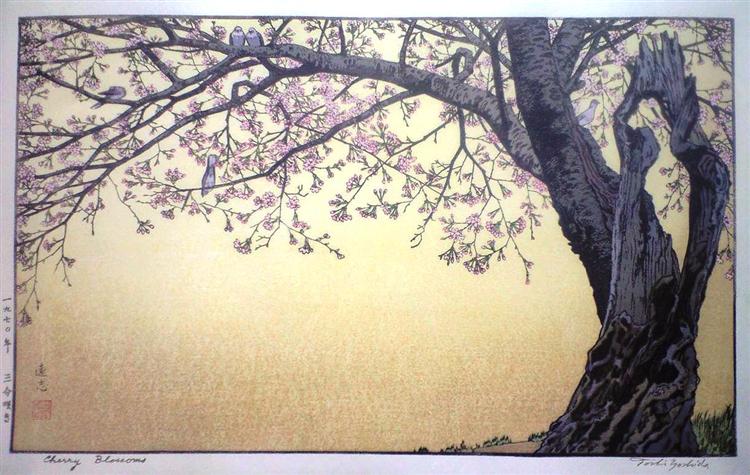
Cherry Blossoms, 1970 - Toshi Yoshida

              Cherry Blossoms” (1970)


                       Toshi Yoshida


                           ___________


though I’ve been focused on Ovid

especially lately, specifically his

Metamorphosesother less

concentrated pursuits have also

taken up my time, Sophocles,

Shakespeare, American Idol, The

Great Canadian Baking Show,

Euclid, Existentialism, the variations

in colour, number, size of the cherry

blossoms growing on the trees along

my street as I ponder each morning

from my window their magical,

miraculous, incarnation, into the

world, their augury of, once again,

wondrously, springtime, March,

Vancouver


but recently I picked up a book, a

biography of Beethoven, in

snapshots, through the lens of

nine works of his in particular,

arranged chronologically


join me as I, one by one, present

them through the requisite number

of commentaries


the first is his forgotten, but apparently

all the rage in his day, Septet, opus 20,

which continued to be admired for its

Classical roots for a long time, a

comfortable, recognizable music,

but with enough modernity to warrant

extended popularity, the irrepressible

pull of Romanticism, the draw of the

encroaching 19th Century


Beethoven would become more and

more radical, irascible, demanding

eventually, and I conscientiously

interject here, more manifestly,

however counterintuitively, sublime


but there were contrary opinions, 

much as elders have always objected

to the music of their children, portents,

always, of ensuing degeneration


you’ll recognize, perhaps, as I did,

in the Septet‘s third movement, the

same air as in Beethoven’s Piano

Sonata no 20, Opus 49, no 2, poets

borrowed from each other then,

still do, have ever, they speak the

same language, they would even,

as here, filch from themselves


the insignificant piece, the Sonata,

according to Beethoven, should’ve

been the disregarded work, the

Septet had the greater fame and

longevity, but history has its way,

a septet needs to put together

seven instrumentalists, of a certain

quality, each time, to survive, to

regenerate itself, a sonata, only

one committed interpreter each

generation


it is also an integral part of the

complete Beethoven sonatas, a

historical account equal, musically,

to the very Ten Commandments,

that foundational


R ! chard

“The Story of of Cadmus” (lV) – Ovid

     Cadmus Sowing the Dragon’s Teeth” (1610/1690)


               Peter Paul Rubens


                       ___________


                Cadmus beheld him wallow in a flood
                Of swimming poison, intermix’d with blood;


swimming poison, the venom the

dragon had spewed, intermix’d

with blood, after Cadmus had

struck the beast with his jav’lin,

if you’ll remember


                When suddenly a speech was heard from high
                (The speech was heard, nor was the speaker nigh),


the suggestion here is that the voice

is disincarnate, ethereal, otherworldly,

from high, not nigh


                “Why dost thou thus with secret pleasure see,
                Insulting man! what thou thy self shalt be?”


secret pleasure, the self-satisfaction

of the soul, unspoken


what thou thy self shalt be, a prophecy

as cryptic as oracular pronouncements

ever tended to be,also ever ominous


                Astonish’d at the voice, he stood amaz’d,
                And all around with inward horror gaz’d:


all around, the detritus, the waste, the

ravages that surrounded him, that

Cadmus viewed, gaz’d at, amaz’d …

with inward horror


                When Pallas swift descending from the skies,
                Pallas, the guardian of the bold and wise,


Pallas, the goddess Athena, of Wisdom,

of War, bold and wise patroness,

protectress of, among other Greek

cities, incidentally, Athens, site of, on

the Acropolis there, the Parthenon,

her temple


                Bids him plow up the field, and scatter round
                The dragon’s teeth o’er all the furrow’d ground;


we’ve seen this happen before, if you’ll

remember, with Deucalion and Pyrrha,

casting the stones, their mighty mother‘s

bones, to replenish, after the flood, the

resurgent Earth with people


                Then tells the youth how to his wond’ring eyes
                Embattled armies from the field should rise.


wond’ring, startled


                He sows the teeth at Pallas’s command,
 
               And flings the future people from his hand.
 
               The clods grow warm, and crumble where he sows;


Cadmus is sow[ing] people, future

people, however, apparently, military,

at the command of the goddess, but

Pallas, remember, is goddess of  War,

these metamorphosizing, ahem, 

entities would be her progeny, her

spawn


                And now the pointed spears advance in rows;
                Now nodding plumes appear, and shining crests,
                Now the broad shoulders and the rising breasts;
                O’er all the field the breathing harvest swarms,
                A growing host, a crop of men and arms.


an army – listen, this is how I think

Shostakovich would’ve heard it,

from his 7th Symphony, the

Leningrad, its first movement, a

searing allegretto, a movement

he’d initially entitled War before

deciding against it


here’s the entire symphony, should

you be, and I highly recommend it,

into it, a much more convincing, to

my mind, production, however

significantly extended

 
                So through the parting stage a figure rears
                Its body up, and limb by limb appears
                By just degrees; ’till all the man arise,
                And in his full proportion strikes the eyes.


as each of the teeth develops, grow[s]

warm, as each figure rears … and limb

by limb appears, men arise, recognizable

as such, each in his full proportion


                Cadmus surpriz’d, and startled at the sight
                Of his new foes, prepar’d himself for fight:
                When one cry’d out, “Forbear, fond man, forbear
                To mingle in a blind promiscuous war.”


forbear, hold on, desist, stop


promiscuous, indiscriminate


                This said, he struck his brother to the ground,
                Himself expiring by another’s wound;
                Nor did the third his conquest long survive,
                Dying ere scarce he had begun to live.


the new foes are slaughtering each

other, Cadmus doesn’t have to lift

a finger


what’s up


stay tuned


R ! chard

my 10 best films – “Copenhagen”

Copenhagen (2002) - Rotten Tomatoes

          ______________


yesterday – a Sunday afternoon, much

like Sundays the way they were

supposed to be, gracious, cordial, if

somewhat reverent, but, especially,

and quite specifically, as specified in

its prevailing Good Book then, restful

– a friend and I watched a second of

my ten favourite movies


Copenhagena three-character play

that had won the Tony in 2000, had

been made into a film a couple of

years later, with Daniel Craig, no

less than Daniel Craig, yes, that

Daniel Craig, if you’ll pardon my

gushing, the most recent, and

therefore ,to my mind, nearly

definitive James Bond, with a

couple of other less well known,

though supremely capable

performers


Daniel Craig is Werner Heisenberg,

the German physicist who’d studied

with Niels Bohr, his Danish tutor,

both becoming, individually, great

names in the history of 20th-Century

nuclear physics, right up there with

Einstein and Oppenheimer


the year is 1941, Denmark is

occupied, Heisenberg, though

earlier a beloved student, is

now a political enemy, of his

earlier mentor, Niels Bohr


conflicting, apparently, ideologies,

incompatible, clashing, loyalties,

fell even apparently indissoluble

intimacies


it is allowed by the German High

Command that Heisenberg visit

Bohr in Copenhagen, at his home,

to, perhaps, glean information

about the atom bomb, its

composition


Heisenberg, if not necessarily

coerced, is, however informally,

tasked with getting whatever

relevant information from Bohr,

who is not directly involved with

either the German or American

pursuits, his interest is essentially

theoretical, to the extent that he

can maintain that pose despite

intense international pressure


they meet, they met, an actual

historical event, Michael Frayn

the playwright, imagines their

meeting, which has never been

recorded, the play is a work of

the imagination, but of an

imagination of the very highest

order, and philosophical insight


Schubert provides most of the

music, sets the tone for the

film, the much more refined

atmosphere of polished Europe,

the Europe we look toward, like

Romans looked toward Athens,

for their moral and aesthetic

pre-eminence, a Europe that

profoundly reverberates still in

our, however globalized,

collectivity


listen


try hard to see the movie


R ! chard

my 10 best films – “Closer”

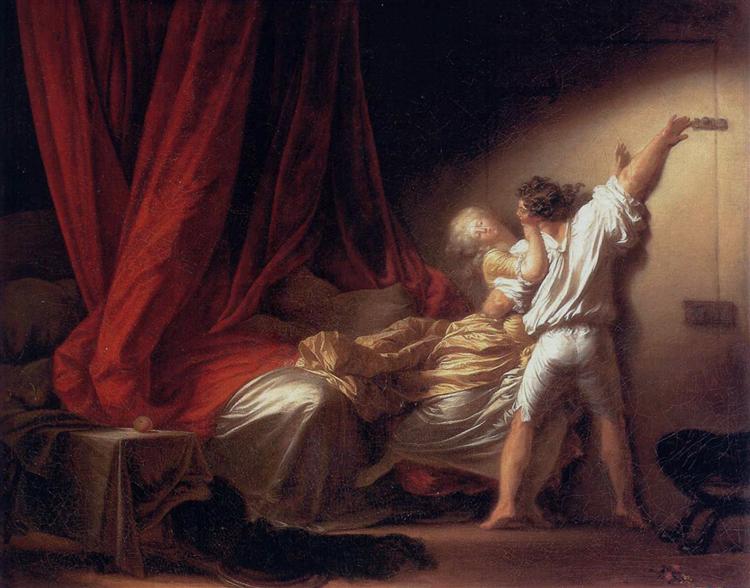
the-bolt.jpg!Large

          The Bolt” (c.1778)


                  Jean-Honoré Fragonard


                                       ________


in the spirit of recording my ten best

ever films, my favourite films of all

time, something that, at my relatively

advanced age, 71, I feel entitled to do,

however might some think me

presumptuous, others, not inaccurate,

I started last night with Closer


Mike Nichols directs, who also helmed

another of my ten favourites, Who’s

Afraid of Virginia Woolfwhich, having

just watched it recently, I won’t again

soon, having been, once more,

devastated, I cry from the first roll of

the credits, bawl when the music

comes on, a theme that’s reverberated

with me through the several ensuing

ages, same as just happened again

to me with this one


The Blower’s Daughter, listen, tells

the story, breathes the essence of,

anguish, the tale itself follows, four

individuals, in a tight, literary, conceit,

live out the agonies of participants in

modern emotional interactions, or, at

least, my modern, 2004, it all takes

place in London, with a brief, though

revelatory, postscript in New York, in

order to tie loose ends together, they

are called upon, the performers,

consummate in every instance, Julia

Roberts, Jude LawNatalie Portman,   

Clive Owen, however reduced might

be their full cast, a mighty, note,

professional challenge, to display the

myriad tragedies inherent in all loving

entanglements


try to find it, it ought to knock your

socks off


meanwhile, think about your own

best list, if you don’t suppose it’s

at all too early


R ! chard


psst: stick around, incidentally, for the

          final credits, to Mozart’s

          transcendental Soave sia il vento,

          from his Così fan tutteaptly,

          and sublimely, introspective


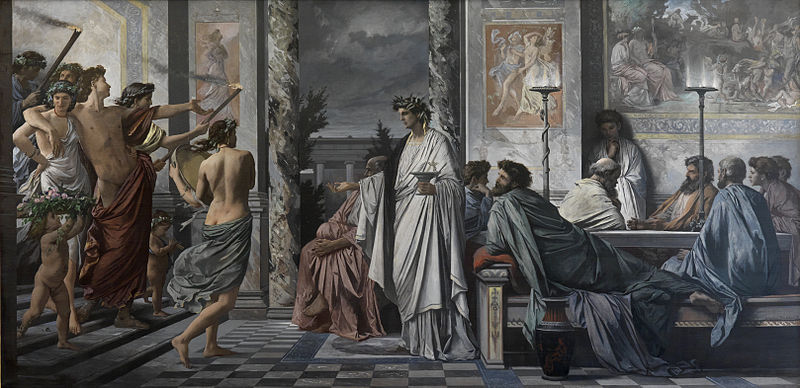
Serenade after Plato’s “Symposium” – Leonard Bernstein

800px-Plato's_Symposium_-_Anselm_Feuerbach_-_Google_Cultural_Institute

       Plato’s Symposium


          Anselm Feuerbach


                    __________


imagine my surprise when having put

on a concert I’d recently taped from

television and, not having checked

out the program, apart from having

noted the featured violinist, someone

I, however peripherally, knew, then

heading out to the kitchen to do

some kitchen things, chop vegetables,

stir a pot, watch water, maybe, come

to a boil, a piece came up with which

I wasn’t familiar, thought maybe it

might be Shostakovich for its atonality,

though with, here again, his signature

decipherable melodies, ever, and

characteristically, maimed, twisted,

contorted, for, too, its Eastern

European rhythms, its apparent

Jewish folklore, touches of Fiddler

on the RoofI thought, hints of

Schindler’s Listmaybe, when the

work turned out to be, however

improbably, by Leonard Bernstein,

most famous, rather, for his Broadway

shows, West Side Storyfor instance,

but especially as a conductor


his Serenade for violin, string orchestra,

harp and percussionknown also as

Serenade after Plato’s “Symposium”,

was written, in 1954, in commemoration

of a couple of personal friends, husband

and wife, after their demises


Plato‘s Symposium is one of his several

dialogues, a clutch of noteworthy

Athenians meet socially after an earlier,

more crowded, revel, a kind of debriefing,

and decide to each give his definition of

love, the work remains one of the great

disquisitions on the subject, not tackled

much sincesurprisingly, in the history

of philosophy


there are seven people in attendance,

though Alcibiades, yes, the Alcibiades,

orator and statesman, stumbles into

the gathering, late and last


Bernstein has a voice for each

participant, though in five rather than

seven movements, two couples, the

first and the last, have no break

between their conjoined movements


 I. Phaedrus: Pausanias lento and allegro

 II. Aristophanes allegretto

 III. Eryximachus, the doctor – presto

 IV. Agathon adagio

 V. Socrates: Alcibiades – molto tenuto and allegro molto vivace


in the Symposium, Eryximachus speaks

before Aristophanes, yes, the Aristophanes,

the playwright, cause the bard has the

hiccoughs, and the doctor, Eryximachus,

agrees to go first, if out of the agreed upon

order, an order that Bernstein chooses not

to follow, for reasons to do with tempo, I

suspect, otherwise the progression is as

in Plato


Eryximachus, interestingly, advises

Aristophanes to make himself sneeze,

a cure apparently for hiccoughs, in

order to be ready for his turn, which

he does, and indeed manages


Agathon was a poet, his adagio here

is accordingly gorgeous, melting,

completely appropriate for a writer

of verse, and entirely, incidentally,

worth the price of admission


Socratesmolto tenuto, even and

tempered, measured, is, likewise, 

totally apt for a philosopher 


enjoy


R ! chard

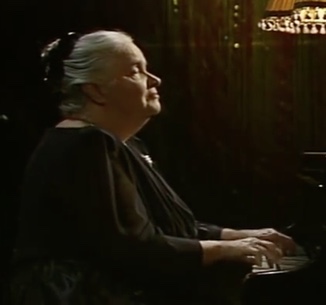
Preludes and Fugues, Op.87 – Shostakovich

fullsizeoutput_5d8

  Tatiana Nikolayeva


  ___________


during this period of self-isolation, it

is nearly an unavoidable consequence

of such imposed solitude that one

would become contemplative, though,

I must admit, this is not for me an

especially unusual state


lately, I’ve returned to the Preludes and

Fugues of Shostakovich, a reinterpretation

of the form that Johann Sebastian Bach

had initiated in 1722, and indeed

reinterpreted himself between 1739 and 

1742, each set known separately as 

Books 1 and 2


a prelude is, as the name itself suggests,

an introductory piece, and I won’t get into

any further explanations of it, which would

be technical, and not especially relevant

here


a fugue is a line of music, however, that 

is repeated a few bars in so that the tune 

ends up essentially analyzing itself, for

voice we know this as singing in canon,

you’ve probably done this yourself, in a

group, singing, for instance, Row, Row,

Row Your Boat, or, even in French,

 Frère Jacques


but the strictly instrumental form becomes,

by virtue of re-examining itself over and

over again, nearly, by definition,

introspective


there are neither highs nor lows, which

is to say, alterations in volume, in a fugue,

so that the couple of hours it takes to get

through any set including them would be

restful, though never not intellectually

intriguing, much as mental meandering,

or daydreaming, speculation, is


Shostakovich, much as Bach did,

composed his in every key, major

and minor, for a total of 24


here are his first 12


here are the remaining dozen


they were written by Shostakovich for

Tatiana Nikolayeva, who plays them

 herself in both of these iterations


sit back, relax, enjoy


R ! chard

Piano Concerto no 20, K.466 – Mozart (Uchida)

mozart-2015.jpg!Large

  Mozart (2015)


       Bernd Luz


          ______


having been immersed recently, indeed 

consumed by, Ovid, his Metamorphoses, 

for four months now, according to a 

friend, since, however improbably, April, 

and we’re now in mid-August, I’ve been 

redirected recently, not only for

metaphysical breath, but by friends 

who’ve brought up other ideological 

realities


I watched a concert on TV yesterday, 

my mother said this morning when I 

went over for coffee, she lives, 

providentially, to my mind, only a few 

blocks away, we touch bases regularly


great, I reacted, I’ve got it on tape, I 

was meaning to watch it later


the pianist, she marvelled, also

conducted, I’ve never seen that


I cheered her on, and couldn’t wait to 

see for myself when I got home


but couldn’t watch more than a few 

moments, the pianist / conductor, 

famous in his day, had become 

crotchety, decrepit, the piece was 

Mozart, you can’t play Mozart with 

arthritic fingers


which had me finding the mistress of 

Mozart on the internet, unmatched at 

Mozart to this day, Mitsuko Uchida, 

watch her transform Mozart’s flights 

of lyrical fantasy into utter, and 

irrepressible, magic, sent it to my

mom for incontrovertible 

corroboration


his 20th Piano Concerto, K.466


watch, marvel   


R ! chard


Chopin Piano Concerto no. 1

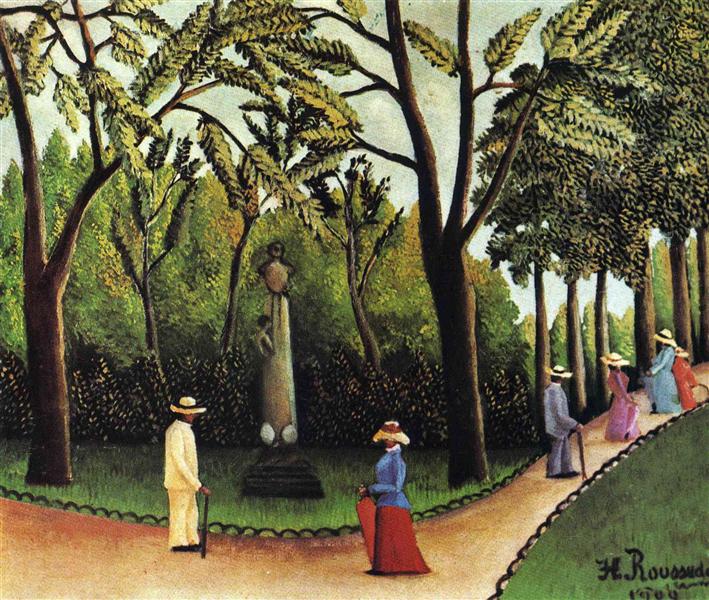
the-monument-to-chopin-in-the-luxembourg-gardens-1909.jpg!Large

   “The Monument to Chopin in the Luxembourg Gardens (1909) 


             Henri Rousseau


                   ________


                                               for Joselyn, thanks for the tip


one good Chopin Piano Concerto deserves

another, especially if it is, to my mind, superior,

however ever be these things entirely subjective, 

you decide 


here’s his First, listen, be mesmerized


R ! chard


an enlightening distraction / Chopin

friends.jpg!Large

   Friends (1895) 


        Konstantin Makovsky


                         ________


like a lover who needs to return to old and

trusted friends to find a sense of balance, 

where a recent infatuation might’ve rendered 

usual assumptions untrustworthy, is black 

white, is up down, is what I’m doing crazy,

I turned to Chopin, a muse of long and 

distinguished standing, this evening, for 

instruction, a different perspective from 

my recently all-consuming, though entirely 

exhilarating, fascination with Ovid, his 

highly engrossing, even enchanting, 

utterly beguiling, Metamorphoses


here’s Chopin’s Piano Concerto no 2, which 

reminded me that it’s good to pay attention

to your old friends, the ones who’ll be there 

when others won’t, when the going gets, 

well, disconcerting, tough, the ones who’ll 

ever stand by you


you get his Revolutionary Etude and his 

posthumous Waltz in E minor here too, 

as encores, equally sturdy, staunch, if 

only apparently metaphysical, supporters, 

who turn out to be, however miraculously, 

rocks when you need them


listen


R ! chard