Richibi’s Weblog

Just another WordPress.com weblog

Category: music to ponder

“Vingt regards sur l’enfant Jésus” – Olivier Messiaen‏

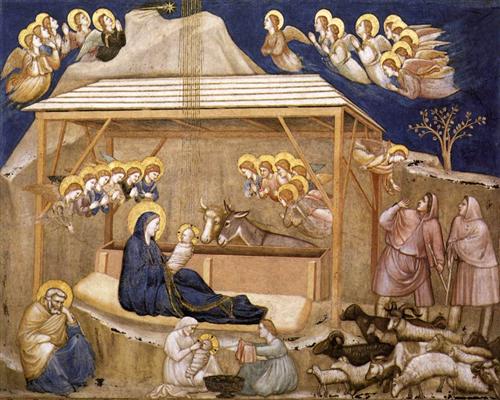
Giotto - "Nativity" (1311-1320)

Nativity (c. 1311)

Giotto

____

just in time for C***mas, a sublime
piece on the Nativity of Christ as
profound, dare I say, as any High,
or even Midnight, Mass

Olivier Messiaen, one of, to my mind,
the greatest composers of the XXth
Century, was also a devout Catholic,
the organist at the Église de la Sainte
-Trinité
in Paris, his music is imbued
with Catholic sentiment, the idea of
holiness

he seems to me a reincarnation, nearly,
of the great organist at the Augustinian
monastery of Sankt Florian
in Upper
Austria, Anton Bruckner, no other
composers, after Bach, have been so
inspired specifically by their religious
faith

Bruckner builds cathedrals with his
music, notably out of his eleven
symphonies

Messiaen, a century later, performs,
instead, sacraments, attends to the
intricacies of their consecrations

Vingt regards sur l’Enfant Jésus is
a succession of twenty perspectives
upon the child Jesus, linked by their
intention rather than by a common
musical theme, as would be the case
in a set of variations, the only other
form that would contain so many
movements

it is atonal, arhythmic, and does not
present the evident repetitions that
Classically would have given the
music a sense of structure, it seems
to me to be trying rather to describe
the iridescence of starlight, the
majesty of the enveloping night,
the gathering, and worshipful
confederation, of the host angels

Richard

psst:

the 20 movements –

1. Regard du Père (“Contemplation of the Father”)
2. Regard de l’étoile (“Contemplation of the star”)
3. L’échange (“The exchange”)
4. Regard de la Vierge (“Contemplation of the Virgin”)
5. Regard du Fils sur le Fils (“Contemplation of the Son upon the Son”)
6. Par Lui tout a été fait (“Through Him everything was made”)
7. Regard de la Croix (“Contemplation of the Cross”)
8. Regard des hauteurs (“Contemplation of the heights”)
9. Regard du temps (“Contemplation of time”)
10. Regard de l’Esprit de joie (“Contemplation of the joyful Spirit”)
11. Première communion de la Vierge (“The Virgin’s first communion”)
12. La parole toute-puissante (“The all-powerful word”)
13. Noël (“Christmas”)
14. Regard des Anges (“Contemplation of the Angels”)
15. Le baiser de l’Enfant-Jésus (“The kiss of the Infant Jesus”)
16. Regard des prophètes, des bergers et des Mages (“Contemplation of the prophets, the shepherds and the Magi”)
17. Regard du silence (“Contemplation of silence”)
18. Regard de l’Onction terrible (“Contemplation of the awesome Anointing”)
19. Je dors, mais mon cœur veille (“I sleep, but my heart keeps watch”)
20. Regard de l’Église d’amour (“Contemplation of the Church of love”)
“Le Jazz Hot” – Henry Mancini‏

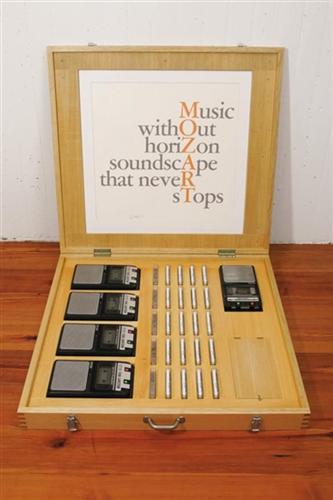
  John Cage - "Mozart Mix" (1991)

Mozart Mix (1991)

John Cage

_______

in a movie,“Victor Victoria”, that should’ve
gotten more Oscars than it finally did,
Le Jazz Hot sizzles, Henry Mancini
received one for the music, Lesley Anne
Warren should’ve too for her incandescent
moll

lock the door, she says to Julie Andrews,
in an otherwise compromising moment,
a line one should never forget

in Julie Andrews’ category, who could’ve
taken it away from Meryl Streep for
“Sophie’s Choice”

but jazz here is a misnomer, jazz merely
dolls up in this number an otherwise
entirely Classical structure, the melody
is right out of Mozart, rigid rhythm,
unflinching tonality, and repetition after
repetition, you can sing along just as you
can for Mozart, try doing that with anyone
after him, try to hum along with real jazz

but I’ll entirely agree that this
whatever-it-is is hot, steaming

catch the astounding vocal glissando
at the very end, just before the final
whispered recitative, riveting

Richard

“Le merle noir” – Olivier Messiaen‏

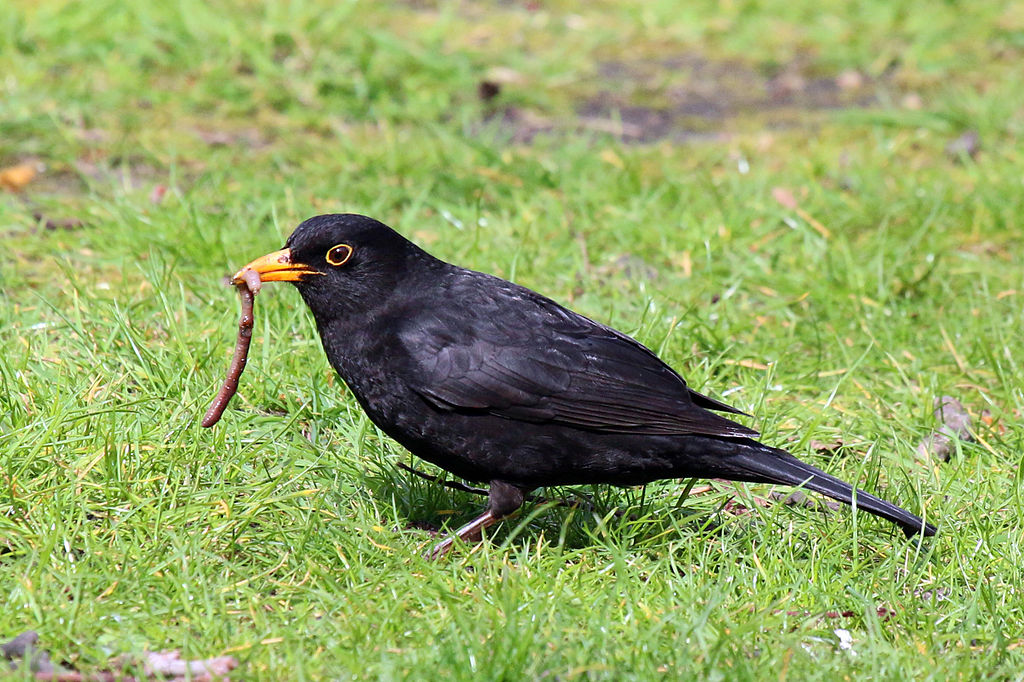
common blackbird (turdus merula)

common blackbird (turdus merula)

________________

while we’re on the subject of birdsong,
it would be incorrect not to mention
Olivier Messiaen, the composer I think
to be the most representative of the
late XXth-Century, with the addition,
however, of George Crumb only lately,
whom I blush to say I’d never heard
of till then, a lacuna culturala, as
we say in Italian, of the very
greatest proportions

Le merle noir is Messiaen‘s earliest
work specifically devoted to birds,
his later Catalogue d’oiseaux lists
thirteen birds, and lasts nearly
three hours

listen to Le merle noir first, you’ll
even want to watch it for taking place
in the Église du Bon Secours in Paris,
June 7, 2012, flanked by dour,
though highly decorative, clergy

Yvonne Loriod, Messiaen’s wife, plays
the entire Catalogue…“, but behind a
detail from Bosch’s Garden of Earthly
Delights
“,
which remains throughout
glumly static

if we think of this as music, which
indeed I do do, where are tempi,
where are tonalities, where even are
identifiable repetitions, how do we
define, then, music

this is not an easy proposition

think about it

good luck

Richard

songs of some birds‏


untitled-1939-1.jpg!BlogPablo Picasso - "Untitled" (1939)

Untitled (1939)

Pablo Picasso

_________

having wondered only recently about
bird song, whale song
, can these be
considered singing when they are
essentially language, we think, and
not codified, technically constricted,
I see pertinently appear a study
suggesting birds follow a pentatonic
scale, our own musical basis,
harmonics between birds and
humans are apparently identical

this suggests that harmonics in
nature are as fundamental as
mathematics, we have somehow,
humans, diverged from what we
think of as singing, left rhythm
and tonality from our conversation
to produce uninflected prose and
monotony, language at the level
of atonal, arhythmic expression,
for better or for worse, corruption,
or refinement, evolution

I wonder, again, if prose is not
bad poetry, or has poetry evolved
into prose

should we feel shame or ingenuity,
do birds have their own divergent
degrees of poetry, do some, most
maybe, veer also towards the less
exacting prose

do some birds not sing, in other
words, or only sometimes maybe,
when mating, for instance,
something like how we croon
when we’re dating, put on our
very best airs

Richard

Vox Balaenae (Voice of the Whale) – George Crumb‏

whales

whales

____

we say that birds sing, despite the
fact that it is their ordinary language,
whales, upon our hearing them, seem
also to be singing

when we sing we alter our voices to
fit pitches and volume and rhythms
intentionally, otherwise we’re talking

what, then, is music, is bird song
music, whale song, is Vox Balaenae“,
a composition by George Crumb, from
1971

if so, what do we mean by music, which
used to be, a long time ago it appears
now, melodic, recurrent and rhythmic

in Vox Balaenae“, where is the music
we used to think of as music, though
harmonious it has the elements rather
of language, communication, instead
of the ordered outlay of composition

it is, however, indeed Classically laid,
with movements and everything, even
a set of variations, though interestingly
attended on either side, these, by, as it
were, book ends, a prologue and an
epilogue, literary terms, to reinforce
the idea of narration, there are three
movements

Prologue: Vocalise (…for the beginning of time)

Variations on Sea-Time [Sea Theme]
Archeozoic
Proterozoic
Paleozoic
Mesozoic
Cenozoic

Epilogue: Sea-Nocturne (…for the end of time)

a blue light in the performance suggests
a marine environment, masks dehumanize,
render everything “[a]rcheozoic”, extended
technique, unusual use of the instruments,
are instructions stated in the score

for a while I’ve been saying that prose is
just bad poetry, for a while I’ve been trying
to make poetry out of prose

how are we doing

Richard

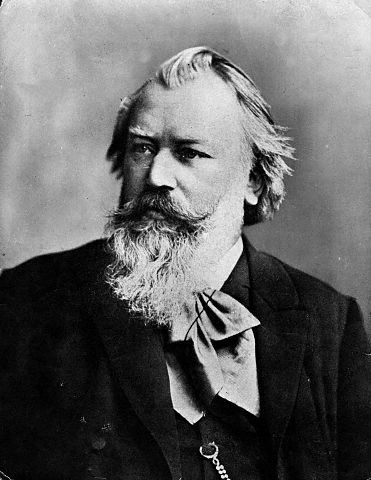
Horn Trio in E-flat Major, opus 40 – Johannes Brahms

Johannes Brahms

Johannes Brahms

__________

if I’ve been away from my perhaps too
abundant, Cornucopian indeed sometimes,
post of late, not as ubiquitous in your
hotmail, it’s because I’ve been following
not six but six and half courses at
Coursera, which have taken up a
considerable amount of my time, all of
them fruitful except for that half, which
apart from some smoke still from its
lingering ashes in the form of belated
comments on what were personally
pertinent fora, forums, I’ve committed to
the cellar of wasted money, despite its
being free, time itself being, according
to my father, hard currency

The Fiction of Relationship
Introduction to Philosophy
Revolutionary Ideas: An Introduction to Legal and Political Philosophy
Søren Kierkegaard – Subjectivity, Irony and the Crisis of Modernity
From the Repertoire: Western Music History through Performance
Philosophy and the Sciences

the half will remain unnamed for its
being, to my mind, inferior, not worth
not only recommending but even
mentioning, or, worth not only not
recommending but neither mentioning,
take your pick

but from “From the Repertoire” we were
offered this week to investigate Brahms’
Horn Trio in E-flat Major, opus 40
, entirely
worth looking into, I thought I’d pass it
along

it was composed in commemoration of
Brahms’ mother who’d died not much
earlier, a cello could replace the horn,
stipulated Brahms, even a viola for
fear of later horns being too brassy,
incommensurate with the intent of the
dedication however passionate some
of its musical argumentation, much
more abstract than that of Beethoven,
you’ll note, though still nevertheless
ever melodic

he has as well a more heraldic tone,
consequently, by extension
earthbound, rather than Beethoven’s
more transcendental ruminations
,
both remaining equal, however, ever,
in, in each his realm, their grandeur

Richard

the Tonys‏

the Tony Award Medallion

the Tony Award Medallion

______________

this is why I love the Tonys

this is why I love Broadway

this is why I love New York

just click

Richard

Bill and Flossie Williams

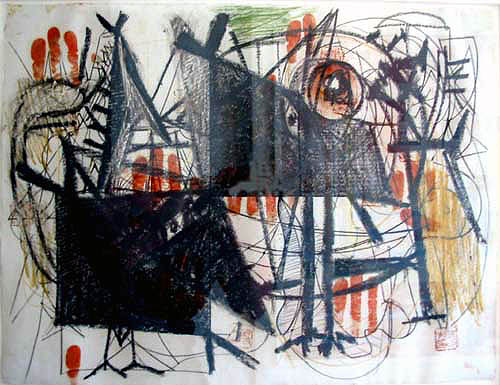
Arshile Gorky - "Hitler invades Poland" (1939)

Hitler Invades Poland (1939)

Arshile Gorky

________

it must be understood that World War l
changed everything, the old order,
orders, had been discredited, new
states were formed, territories allotted,
-isms proliferated, the arts had to, of
course, reflect that, and did, as many
-isms were hatched in the art world
as in the political world, indeed,
many more

which is why much of it at first
seems questionable, practitioners
were learning anew how to talk, paint,
make music, they were creating a new
conceptual universe to replace the one
that had been roundly discredited, the
one that had been around in the West
for the last two thousand years

therefore Schoenberg, therefore
Picasso, and therefore Finnegan’s
Wake
“,
for instance

we’ve been studying American
Modernists in the classes on the
Internet I’m taking
, none of whom
I find interesting, and I’m, contrary
to all expectations, losing even my
early enthusiasm for the much too
thorny, I think, Emily Dickinson

but here’s another abstruse poet
that I like in this poem

though I much prefer his wife
Flossie’s sardonic reply
, which
follows

________________

This Is Just To Say (1934)

I have eaten
the plums
that were in
the icebox

and which
you were probably
saving
for breakfast

Forgive me
they were delicious
so sweet
and so cold

William Carlos Williams

________________

Flossie’s Reply (1934)

Dear Bill: I’ve made a
couple of sandwiches for you.
In the ice-box you’ll find
blue-berries–a cup of grapefruit
a glass of cold coffee.

On the stove is the tea-pot
with enough tea leaves
for you to make tea if you
prefer–Just light the gas–
boil the water and put it in the tea

Plenty of bread in the bread-box
and butter and eggs–
I didn’t know just what to
make for you. Several people
called up about office hours–

See you later. Love. Floss.

Please switch off the telephone.

Florence Williams

____________

go Florence, I say, but you can
see, of course, why I’d say that

Richard

ballin’ the Jack‏

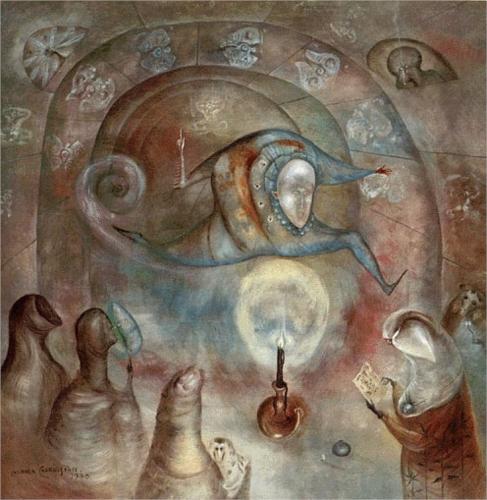
 Leonora Carrington  - "Jack be Nnimble, Jack be Quick" (1970)

“Jack be Nnimble, Jack be Quick (1970)

Leonora Carrington

_________

a friend writes about my most recent
parsing art – Rouseau/Siudmak entry

“You are so perceptive, Richard. How did you possibly remember these two very disparate paintings and realize (in your mind!!!) that they were so similar????
Encyclopedic visual memory?

Brilliant! Fun!

Thanks!

Theresa.”

I answered

first I put my two knees close up tight,
I swayed them to the left and then I
swayed them to the right, I twisted
around the floor kind of nice and light,
and then I twisted around and twisted
around with all my might

it works every time, just click

enjoy

Richard

Visconti’s Death in Venice‏

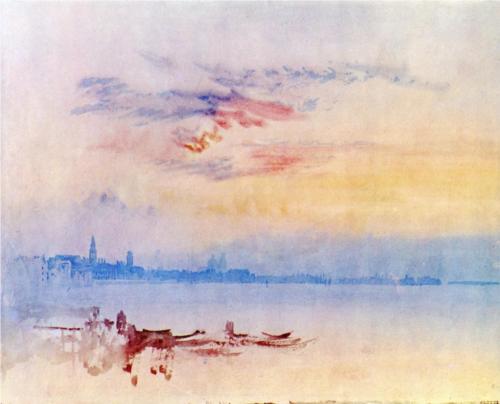
  William Turner -  "Venice Looking East from the Guidecca, Sunrise" (1819)

Venice Looking East from the Guidecca, Sunrise (1819)

William Turner

_______

Death in Venice is perhaps the most
beautiful film I’ve ever seen, just click

Visconti suffuses his masterpiece with
all the colours and textures of Monet,
Renoir, Seurat, Toulouse-Lautrec, and
a host of other Impressionists, and
settles them all upon, nearly inevitably,
the splendours of a Canaletto Venice

Dirk Bogarde has never been better,
his von Aschenbach is definitive,
Silvana Mangano is every single inch
an aristocrat, the epitome of poise,
elegance and propriety, Tadzio is
throughout the very incarnation of a
Botticelli

all is given stately motion by the art
of film and made thereby into another
equal and haunting form of poetry

enjoy, marvel

Richard

psst: Visconti even makes Mahler sound
profound

as does Leonard Bernstein, incidentally,
in the accompanying clip, who is
manifestly transported throughout his
evidently otherworldly experience,
just as you might even be, just click