String Quartet in G minor, opus 10 – Claude Debussy

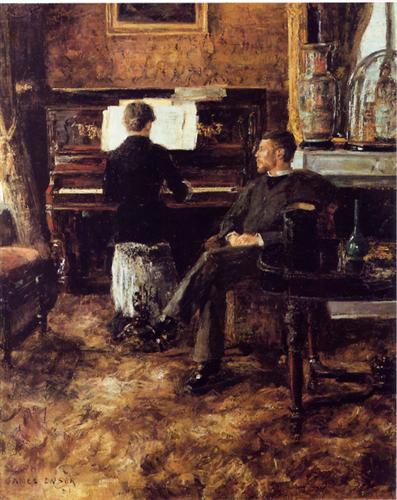
“A New Year’s Nocturne, New York“ (1892)
_________
for the past several days, I’ve been
humming the first two movements
of Beethoven’s First Piano Concerto,
the opus 15, being carried away by
the exhilarating energy of its
initial, adamant and authoritative,
dazzling and irresistible “allegro
con brio”, followed by the melting
beauty of its contrasting counterpart,
the meditative and enchanting “largo”,
the final “rondo – allegro sostenuto”
is coming along, but by that time I’m
out of wind and lost in wonder at
Beethoven’s already accomplishment,
the final movement is like the
strawberry on top once I’ve had the
prerequisite cheesecake, verging on
anticlimactic, however thrilling
his First is actually his second piano
concerto, written in 1797, but
composed after his opus 19, written
in 1787, not published until 1801,
either way a new voice was evident
Beethoven’s music was written for
a larger stage, no longer the salons
of the aristocracy, nor, for that matter,
the pews of the fragmenting Christian
Church, the growing middle class
was becoming able and willing to
spend and splurge on frivolities and
entertainment, theatres, concert halls
were popping up, and prospered
Beethoven had to dazzle a
heterogeneous crowd, no longer
just a circle of familiars
and watch, Leonard Bernstein is
spectacular
this is my New Year’s Eve Vienna
performance no matter who is
doing it there this year, nor, for
that matter, that it wasn’t even
performed for New Year’s Eve,
for me, it catches fire, inspires,
it is my New Year’s resolution
I hope it’ll do the same for yours
cheers
Richard
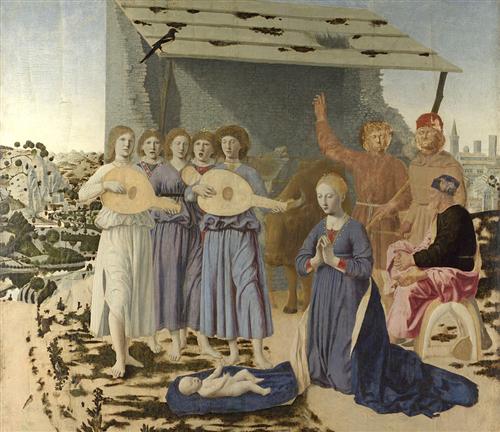
“Nativity“ (1470 – 1475)
__________
on the first day of Christmas, which
is to say December 25, 1734, the first
cantata of Bach’s “Christmas Oratorio“,
“The Birth”, was presented at the
Nikolaikirche, or the Church of St
Nicholas, in Leipzig
it was followed by five other cantatas,
each corresponding to its own
elaboration of the holy event
the Annunciation to the Shepherds, December 26, 1734
the Adoration of the Shepherds, December 27, 1734
the Circumcision – if you can believe it – and Naming of Jesus, January 1, 1735
the Journey of the Magi, January 2, 1735
and the Adoration of the Magi, January 6, 1735
the cantatas are usually played in
groups of three, or in their entirety,
to more easily accommodate too
either long, or short, performances
– the cantatas last only about 25
minutes – though Leipzig, and other
neighbouring communities might
still adhere to their more reverent
original position
an oratorio, of course, is an opera
without sets or costumes, usually
associated with religious services,
and, quite specifically, mostly, with
Bach’s, of whose manifestly prolific
output an astonishing 209 still
survive
a cantata is a work for voice and
instrumentation in several
movements, or contrasting musical
episodes, in Bach’s liturgical ones,
four voices, usually, cover the
ranges, soprano, alto, tenor and
bass, they tell the story, while the
choir stand in for the angels
this performance, conducted by the
eminent Nikolaus Harnoncourt, is
from the Nikolaikirche in Leipzig
itself, the Oratorio‘s very cradle,
its stunning altarpiece, flanked by
two mighty Christmas trees, is
glorious
incidentally the soprano and the
alto voices are taken over here by
cherubs, in the obvious guise of
prepubescents, you can tell by
their missing wings
their more stentorian counterparts,
tenor and bass, are aptly authoritative,
arresting, you’ll feel utterly blessed
here’s the text in English
Richard
psst: merry, incidentally, Christmas
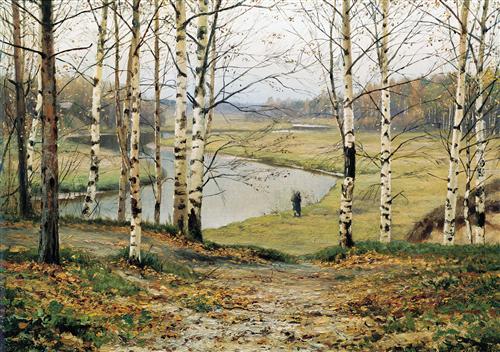
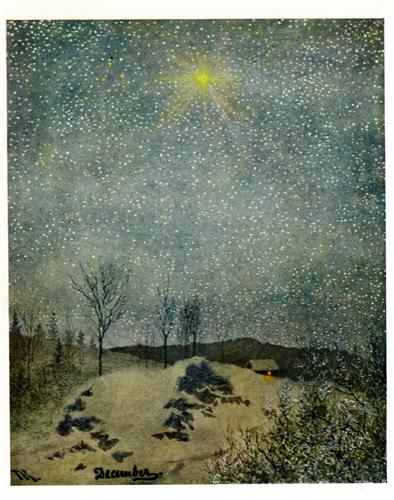
“December“ (1890)
__________
for Susan
several years ago, a friend of mine
invited me to a concert, Sir Edward
Elgar‘s “The Dream of Gerontius“,
to my mind, a double mountain to
cross, both English and ceremonial,
this is not music you can dance to,
nor even dream on, but music that
demands your allegiance, as well
as your attention
to my mind English music, nearly
an oxymoron, remained stagnant
from Purcell, 1659 to 1695, to the
Beatles, 1960 to 1970, with very
few exceptions, never managing,
mostly, to hold, even, a tune
ceremonial music suffered much
from its rigid partisan bent,
whether political or religious, try
singing “La Marseillaise“ or
“The Stars and Stripes“ if you’re
not of those nations, you are
instantly sidelined, a mere
spectator, try “How Great Thou
Art“ at a party, however
inspirational
but the ticket was free, my friend
couldn’t think of anyone else she
could invite who’d enjoy the show,
she’d received the tickets in a
bundle
Gerontius, an old man – you’ll note
the Greek root, geron, as in
“gerontology” – is dying, fears the
other side, friends comfort him and,
in particular, a priest sends him on
his way, that’s act one
act two, he’s on the other side,
wherein the dream of being on the
other side, should he still be alive,
or the actuality of being on the
other side, confront him, have I
died, he wonders
I could tell you something about
that
an angel appears to lead him to,
the programme boasted, no less
than God eventually, in a burst,
for the occasion, of musical
pyrotechnics
well, I wondered, let’s see what
they’re going to do with that
it was unforgettable, though my
friend was somewhat more
equivocal, perhaps not as intent,
quite yet, as I was, about meeting
her divine
in search of something lately to
commemorate the several recent
worldwide atrocities, I quickly
settled on the only work I could
think of, apart from anything,
of course, by Bruckner, to mourn
appropriately
I found this extraordinary production
from no less than London’s St Paul’s
though not an oratorio, according
to the composer’s strict intentions,
Elgar‘s “The Dream of Gerontius“, a
concert piece, is played here in a
church, an Anglican, indeed,
cathedral, despite the flagrantly
Catholic story being told, Elgar had
converted to Catholicism, the piece
transcends, however, religions
an oratorio, incidentally – not to be
confused with Ontario, the Canadian
province – is an opera conceived
without sets or costumes, usually
associated with significant religious
occasions
the text of “Gerontius” is taken
from a poem of Cardinal John
Henry Newman, 1801 to 1890,
a Catholic convert himself, only
recently beatified, as a matter
of fact, not yet, however, for
insufficiency of miracles, it
would appear, canonized
“The Dream of Gerontius“ is
Cardinal Newman‘s retelling of
Dante‘s “Divine Comedy“, our
original tour guide through
Purgatory, Heaven and Hell,
Newman‘s take on it is
particularly poignant, Elgar‘s
musical accompaniment not
any less
the conjunction of divine,
composer, sacred venue and
superior performers is an
extraordinary occasion,
despite, not least, a
scratchy recording, the
experience here is
profound
bring your solemnity
Richard
by the way: December is the end of
the year, 2016 is already act two, are
you ready to meet your own God/dess
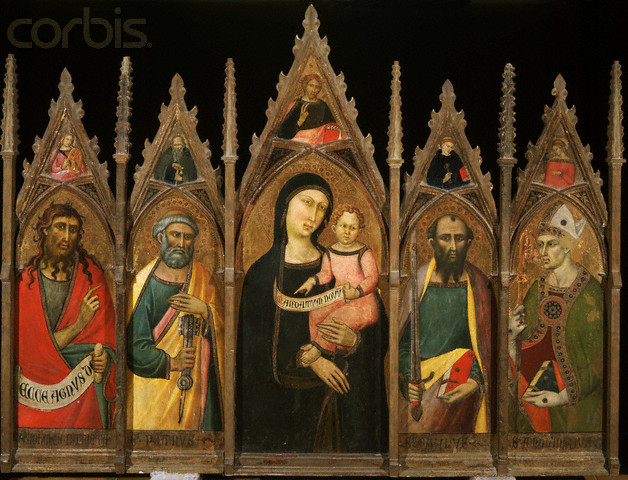
“Madonna and Child Pentaptych“
__________
“Suite française“, had it not been for
its musical associations, would’ve
been called a “quintette”
a suite is, of course, a series of five
dance movements, a sarabande, a
minuet, a gigue, for instance, most
commonly with reference to Bach’s
Baroque masterpieces
which is to say that without its dance
implications, a suite would’ve been
called simply a sonata with five
movements, or a duet, trio, quartet,
and so forth, depending on the
participating instruments
in fiction, a sequence of five books
equals a quintet, see Durrell’s
“Avignon Quintet“, for instance
in art, five panels are called a
pentaptych, see above
five books had been intended for her
“Suite française“, but in 1942 their
author, Irène Némirovsky, was arrested
for being Jewish, and died later at
Auschwitz, she’d completed only two
of her intended manuscripts, a tragic
account of day-to-day life during the
Second World War
these texts were only discovered by her
daughters in 1998, who then had them
published in 2002, in just one volume
called “Suite française“
the superb movie came out last year
it’s a whiff of another era, a
recollection of things past
also a timely consideration of the
flawed foundations of any occupation,
I thought
Richard
psst: incidentally, in French, capital
letters are eschewed – gesundheit –
after the first initial, therefore
the French title, “Suite française“,
sports a lower case f
the film, “Suite Française“ uses
the English construction
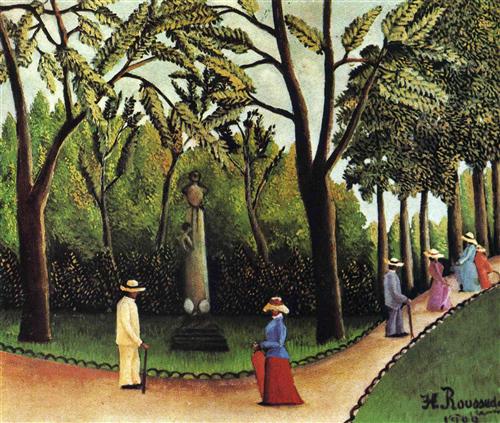
“The Monument to Chopin in the Luxembourg Gardens“ (1909)
__________
a short while ago, my sister touted,
virtually of course, an up-and-coming
pianist, from around the corner,
relatively, from where she lives
Charles Richard-Hamelin was born in
Lanaudière, Quebec, whereas she’s
been living in Montreal forever, apart
from a stint in Timmins, Ontario, where
we were both born, at least a generation
before Shania Twain put it on the map
I left in a hurry, she followed
somewhat less urgently, a condition
of an intermediary marriage, which
engendered a miracle, my single,
but extraordinary, nephew, though
not much else
at his website, Charles Richard-Hamelin
delivers a few examples of his talent, I
listened to a couple of his Chopins, was
especially impressed by their structure,
the way Chopin imbues strict Classical
conditions with melting, Romantic,
sentiment, the very ideal, in my
estimation, of poetry
you’ll note in the Polonaise he plays
the adherence to tonality, never a
melodic line out of place, a strict
tempo, not ever indulgent, or maudlin,
despite evident emotional appeals,
and the recurrence of the original
theme after an however intoxicating
digression, giving subsistence to an
otherwise flight of aimless airs, out
of any context
music gives coherence, order, to an
otherwise inchoate, inscrutable world,
Classical music represents the original
rhythm of the heartbeat – time, regularity,
logic, the possibility of understanding,
the foundation of our present Western
culture, for better, of course, or for
worse, if not, indeed, of our very
species – defrayed of language’s inherent
ambiguities, its malleability, elasticity,
the indeed outright potential for
duplicity it accords the spoken, or
written, word
music is not just entertainment, it is
a philosophy, Apollo’s most transparent
muse
Richard
“October“ (1883)
_____
it’s the 3rd of October already, we’ve
slipped nearly imperceptibly, I’ve found,
into this new month, the days here are
crisp, if not cold, the leaves, not yet
fallen, are nevertheless bristling bright
orange, red, and gold, mustard, crimson,
and deep purple actually, in spotty
patches among the still prevalent greens
holding on determinedly to their extra
share of summer
nothing much more from me about this
otherwise unexceptional month, apart
from the introspection inherent in the
painting above, offered for your
contemplation
and this wonderful piece from Tchaikovsky’s
“The Seasons“, its “October: Autumn Song“,
including this epigraph of Tolstoy from its
first Russian edition
“Autumn, our poor garden is falling down,
the yellowed leaves are flying on the wind.”
for your rapture
Richard
psst:
today our building manager left a
chocolate on each of our doors
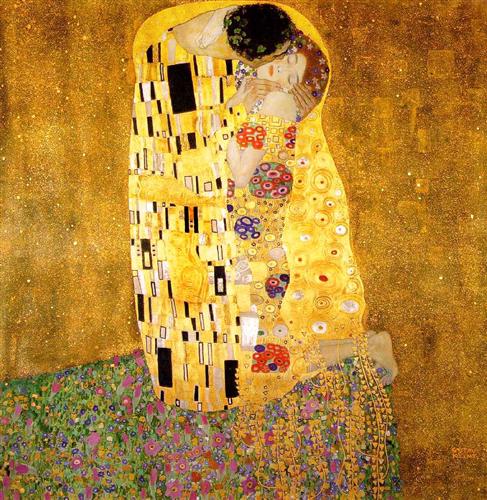
“The Kiss“ (1907-08)
_______
last night, most unexpectedly,
someone I know sent me this, I
wondered if it was because of
the music, the message, or the
performance, consequently I
assumed everything
Mateusz Ziółko won the Voice
of Poland contest in 2013, it’s
fun, despite the language
barrier – the adjudication being
all in Polish – to watch also,
during the evaluation, the judge
in blue fall apart, come entirely
undone, be unabashedly smitten,
from nearly the very first note of
this riveting audition, then spend
the rest of the show trying to get
herself back together again
much as I did, in fact, without
a camera
quiver too, enjoy
Richard