Richibi’s Weblog

Just another WordPress.com weblog

Category: music to ponder

“Ebben? Ne andrò lontana” – Alfredo Catalani‏

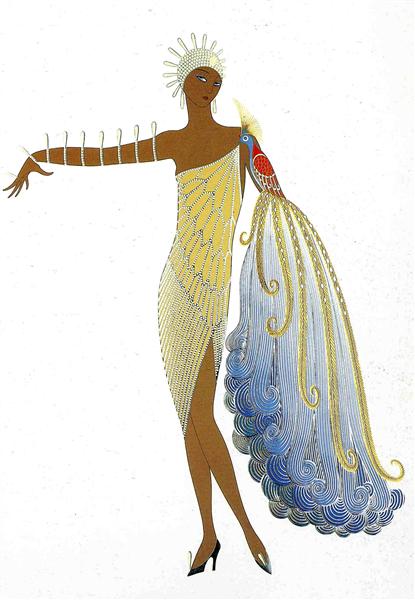
diva-ii.jpg!Large.jpg

     “Diva II 
 
         Erte
 
       __
 
a fellow bloggerwho’s been inspiring
me with an array of diverse composers,
some obscure to me, others personally
transformational, unearthed a piece of 
music recently, on that composer’s
very birthday, that resounds in my 
spirit still, through, for me, its signal 
interpretationas though it were very 
yesterday
 
it was 1981, a French filmDiva“, had
taken the world by storm, precursor 
to Bladerunner“, the cultural 
phenomenon, made the following year 
 
like in Bladerunner“, the music was 
haunting
 
the antihero had stolen not only 
the dress of the sublime soprano  
he worshipped, but had also taped
surreptitiously one of her concerts,
something absolutely forbidden
 
corporations were avid to get a copy
of the tape, and the chase ensues 
throughout the streets of Paris, 
The French Connection“, but on 
Gallic drugs
 
the air is from Catalani‘s La Wally“,
a fraught opera, with the heroine 
eventually, and her beloved, dying,
separately however, in the same 
avalanche, which he’d set off by 
calling out, unaware of the sonic 
consequences, her name 
 
don’t ask
 
but at a moment of great despair, in 
those very treacherous mountains,
after her father has thrown her out 
of the house for wanting one of his 
very enemies, the wrong man, she
sings an air that will break your 
heart, Ebben? Ne andrò lontana“,  
 
sings it in the movie, you’ll 
quiver, thrill, at her clarity, her
purity, she’s a goddess, you’ll
see why Jules wanted her dress
 
but listen to Angela Gheorghiu,
as well, bring it up again a few 
years later, live in Prague, from 
her very Là fra la neve bianca“,  
There somewhere in the white 
snow“, I melted, after which I 
became burnt toast, if you’ll
pardon those clashing, however
forcefully compelling, metaphors  
 
nor would I ‘ve minded either her 
dress

 
Richard
 
psst: thanks, Kurt

a coronation anthem – Handel‏

Normans_Bayeux

                      “the Battle of Hastings” –  the Bayeux Tapestry 

                                       ______________________ 

among the ruling entities in our, indeed,
global history, none apart from the Catholic
Church has lasted so long as the English
monarchy, not even the Roman Empire, 
from Julius Caesar in 48 BCE, the year he 
took power, called himself emperor, until
Charlemagne, King of the Franks, who on 
the highly political date of December 25, 
800 CE, and at St Peter’s very Basilica in 
Rome, wrenched power from Leo lllthen 
Pope, and claimed the title of Holy Roman 
Emperor, Protector, thus, of the Church, 
changing thereby the face of Europe, and
burying forever Ancient Rome’s aegis
yes, aegis, protectorate
 
in 1066, once again on the propitious, 
apparently, date of Christmas Day, 
William the Conqueror, after his Norman 
Conquest, and the Battle of Hastings
proclaimed himself first king of England
in London
 
we count from there to Queen Elizabeth ll,
still monarch after all these years
 
here’s a pictorial rundown to the tune of 
England’s musical specialty, the ceremonial, 
one of Handel‘s Coronation Anthems 
commissioned for George ll by his dad, 
George l, for his 1727 coronation, though 
not, this time, on Christmas Day, sung at 
coronations apparently ever since
 
the Priest after the mystic who anointed 
 
long live the Queen, I guess
 
 
Richard

“Casta diva” – Vincenzo Bellini‏

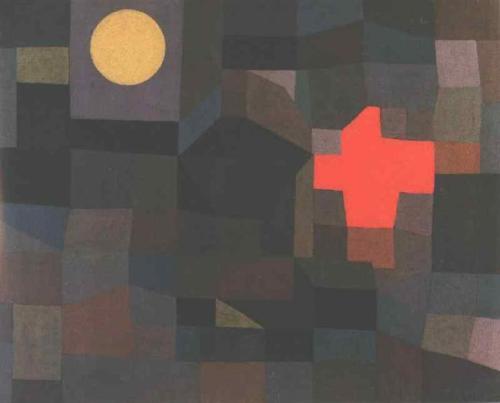
fire-full-moon-1933(1).jpg!Large

         “Fire, Full Moon (1933)
 
          Paul Klee
 
          ______


a few nights ago the moon was full,
I’d gone up to the roof, one floor up
from my apartment, to the deck there,
complete with pool, barbecue area,
lounge chairs, there was no one, just
me, it was one o’clock in the morning,
my witching hour

I’ve been going there, lately, the air 
is fresh, crisp, it’s quiet, I can relax
there after a day of whatever
 
a perfect chair looks out onto the 
entire city, the bay in the distance, 
the harboured ships, Vancouver 
Island even further during the day
 
I looked at the moon, it stared 
nakedly back at me like a spotlight, 
but clouds got in the way, bubbling,
boiling peremptorily westwards 
before her, clouds on a mission
 
she monitored their march 
imperviously, imperially, implacably,
like a goddess
 
I slunk beneath her gaze, stretched, 
surrendered, slipped into lunar 
things, love, loves, truth, beauty,
purpose, meaning, memories
 
through much of it, I closed my eyes,
aware always she was watching me,
but wrapped in my own transcendental 
reveries
 
when I returned, I stretched again, 
listened for the words, the notes, 
of “Casta diva”, Bellini‘s anthem 
to the moon
 
Norma is a Druid princess, she is
the priestess of the moon, near the
beginning of the opera she makes 
her pitch, it’s her introduction, her 
first aria, a cavatina, well done it is 
unforgettable
 
chaste goddess, she sings, casta 
diva, who casts silver light upon 
these sacred trees, turn thy lovely 
face upon us, unclouded and 
unveiled
 
restrain, o goddess, these zealous 
spirits, I prayed, shed upon earth 
that peace that reigns in heaven 
 
but I couldn’t get the notes right, 
kept slipping into other arias,
though I brought to it my entire
attention, I was, only modestly, 
therefore, there, Norma, also only
softly
 
later I found signature 
performances on the Internet,
Joan Sutherland, a classic, 
Renée Fleming in a superb 
concert performance
 
shed upon earth that peace that 
reigns in heaven, they also cry
pray
 
 
Richard
 
psst: a cavatina is a short aria


Beethoven – piano sonata no.31, op.110 (3rd movement)‏

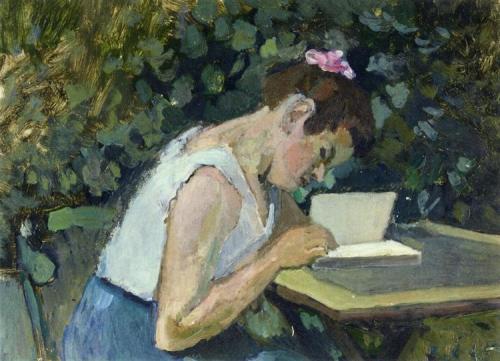
woman-reading-in-a-garden-1903.jpg!Large

Woman Reading in a Garden (1902-03)


         _______


perhaps my best teacher ever was
my father, others never questioned
the orthodoxy, spewing out the
curriculum like it was sacred, dead,
untouchable, depriving it of its very
worth

my father was a philosopher, God 
was a question, not an answer, I,
at the time, needed an answer
 
we were sent to a Catholic school,
my sister and I, where God was in 
everything, everywhere, omnipotent,
omniscient, and, like a father then, 
autocratic, industrious, demanding,
not unopposed to punishment
 
sins against the Father could be 
summarized, at that age, briefly,
do not kill, do not lie, do not 
disobey your parents, do not 
cheat on your husband, wife, 
and follow all the rituals of the 
Church, the Ten Christian 
Commandments, brought to 
you universally then by Charlton 
“Moses” Heston, under the aegis 
 
none of these graded offences  
applied to me, really, then, but 
lying, and disobeying one’s 
parents, the others were all so 
remote as to be inconsequential, 
though the Church kept up on 
our family’s abrogations of 
religious rites – non-attendance 
at Sunday mass, eating meat 
on Fridays, worse – while 
nevertheless tending dutifully
to our wayward souls, they told 
us, holding out for a final repentant 
confession
 
we never lied at home, I’d lied about 
something once, and was so daunted
when my father probed, I sweated,
must’ve turned purple, not just red,
of embarrassment, I knew I couldn’t 
use that tactic again, I’d inexorably 
blush, flush
 
who put the Brylcreem on the dog,
he’d queried
 
not me, I trembled
 
my sister stood beside me, might 
not have even known anything 
about it, I can’t remember, though 
I recall her dismay, I think, at having 
been so blithely thrown under the 
bus, or maybe that’s just me 
extrapolating 
 
my dad turned back to what he’d 
been doing, having, I’d understood, 
got his answer, proving himself to 
be to me thereby omniscient, I’d 
have no chance, I gathered, against 
something like that, this turned me 
into a good, an at least conscientious, 
person
 
my teachers, paradoxically, only 
ever took marks off for technical 
stuff, Math, History, French, they 
never taught me lessons   
 
a teacher, once, had asked me to
stand at the head of the class and 
read a passage from Shakespeare,
be Romeo, Mark Antony, Lear, I
can’t remember which
 
“O, pardon me, thou bleeding 
piece of earth, / That I am meek 
and gentle with these butchers!”,
I uttered, fraught with emotion,
“Thou art the ruins of the noblest 
man / That ever lived in the tide 
of times”
 
in my mind and in my body I was 
Mark Antony there, shot through 
with the weight of his friend’s 
brutal death, his own irretrievable 
loss 
 
my teacher laughed
 
what, I asked
 
you’re right into it, aren’t you, he 
replied, and shut me up right there 
to any public display of expression 
 
 
I didn’t stop reading Shakespeare 
though, but by myself
 
later I read Homer, Ovid, Proust,
others, did the same with music 
and art, made countless lifelong 
friends thereby, people I’ve always 
been able to turn to, even just in 
ruminative thought as their stories 
still pervaded me, diligently leading   
still the way, like guardian angels,  
maybe


Richard

“Easter Oratorio”, BWV 249 – Johann Sebastian Bach‏

ascension-of-jesus.jpg!Blog

 
                                    El Greco
 
                                      ______
 
 
                        for Martha and Chris, who still go to Easter 
                        Mass, and whom Martha calls therefore  
                        relics 
 
                        and for Staf and Annemie, who live in 
                        presently beleaguered Belgium, and 
                        who must, at this time of distress, 
                        need our prayers
 
 
having long ago lost track of the Christian
calendar, I only this week found out 
Sunday ‘d be Easter, therefore Friday
Good Friday, not that this would much 
change my daily routine, but it set me 
perusing pertinent art, I knew I could 
count on Bach for an oratorio, and sure 
enough I found it
 
an oratorio, as I earlier explained, is an
opera without sets or costumes, usually
associated with religious services, but 
Bach had one for every Sunday and 
every Christian feast day
 
after an instrumental introduction, 
reminiscent of Handel, I thought, 
Bach’s “Easter Oratorio” slips into a
lovely adagio, notable for its exquisite
oboe obligato, where the innocence 
and purity of that wind defines the 
movement
 
the ceremonial pomp of the earlier 
section then returns to include 
chorus expressing triumph, the 
realization that the Lamb of God 
has returned
 
but soon enough, Mary, the soprano 
of a quartet of singers, each of the 
four singing according to their own – 
alto, Mary Magdalene, tenor, Simon 
Peter, bass, John the Evangelist  
voices, and accompanied by an 
utterly transcendental transverse 
flute, sings 
 
      “My soul, the spice that embalms 
       you shall no longer be myrrh. Only
       a crown of laurels can soothe your 
       anxious longing.”  
 
and knocks your socks off 
 
 
this week at market, stuffing my 
organic red pepper and a bag of 
handcrafted chips, barbecued,
designer, into my bagat their 
express counter, collecting my 
coins, my receipt, my change 
purse, my wallet, and last but not 
least, of course, my self, I sensed 
something of mine drop, looked 
dutifully aroundcould find 
nothing, wondered, and made to 
go
 
excuse me, sir, I heard behind me, 
you dropped something
 
a little boy, an urchin, blond hair, 
blue eyes, right out of Charles 
Dickens, I thought, eight maybe,
nine, held out a quarter, apparently 
mine
 
why thank you, I replied, enchanted
 
and you know what, I asked, I’m 
going to give this back to you, and 
put the quarter back into his hand
 
the last time I did something like 
that, I saw an angel, I remembered
but that’s another story
 
thank you, he said back, gleaming
with the maturity of his interaction, 
though I’m not sure he wasn’t 
himself in fact also a very angel
 
 
later I thought I should’ve sent him 
for a crème brûlée, a piece of carrot 
cake, a pastry, or something, and 
berated myself for the paucity of 
my recompense
 
 
but there is a link to Easter in my 
tale, the idea of hope, revival, 
regeneration, in the possibility of
goodness reentering the world, a
task inherited by the children, and 
whom we must not lead astray
 
apart from its more traditional 
associations, for perhaps the less 
observant, people of other creeds 
and faiths, if Easter means anything 
still, or has ever, it is about just that, 
hope, revival, regeneration, nor must 
we ourselves betray those ideals   
 
happy Easter 
 
 
Richard

a rumination on rain‏

spring-rain.jpg!Blog

                                                 Spring Rain 
 
                                        Erte (Romain de Tirtoff)
 
                                                    _________
 
 
since last November the days have 
been short, and have not hastened 
since winter to be longer, not 
helped either by the most recent 
time change, more than anything 
a biannual irritant  
 
nor has the rain stopped, apart from 
a few clement days, its persistent,
often pounding, onslaught
 
that’s me, above, expressing my 
displeasure
 
 
as usual, in distress, I turned to art 
to see, or hear, what others might 
have to say about my current 
dilemma, my chagrin du jour, if you 
like, in this instance, the Erte on rain 
took the sting out of the raindrops
 
others had inspired, a Gauguin,
unexpectedly grey, but haunting,
a Monet, of course, equally sombre, 
who painted in all weathers
 
Constable, uncharacteristically 
angry, was looking a lot like 
Turner, but more direct, accessible,
less oracular, more matter-of-fact, 
sensible, reading only the weather 
in the weather
 
Winston Churchill, of all people, 
gives us, incidentally, something 
in between
 
 
especially to my sense of poetry 
among the artworks I perused, 
someone I’ll have to further, for his 
tender homage to perhaps other 
colours than orange, explore
 
to me unknown, does a similar thing
in, essentially, a monochrome, with 
a fine mist standing in for ethereality
 
Miró is ever up to his old tricks, 
find it  
 
but Erte catches best of all my desire
for irony, sardonicism, self-criticism
 
in music I couldn’t think of anything 
other than Beethoven’s Der Sturm
to temper the weather, despite the 
fact that rain hadn’t been ever his 
inspiration, the title came from his 
publisher to increase sales, 
Beethoven wrote pure music, 
abstract, never specifically literally 
to describe, what is called program
music, his descriptions, his 
evocations, came unadulterated,
untransliterated, from the heart 
 
 
in literature nothing beats Somerset 
Maugham’s short story, Rain“, 
masterpiece of intrigue as well as 
literary prowess, searing substance 
married to superb style
 
the book was duly made into film,
and several times, with Gloria 
Swanson in 1928, Joan Crawford 
in 1932, and Rita Hayworth in 1953
none of these slouches
 
 
the clouds have now coincidentally
dispersed, the metaphorical ones, 
not so surprisingly, have been 
meanwhile displaced by my retreat 
into art, a recourse I’ve found to be 
always dependable, and, yet again, 
in this otherwise grim environment,
diverting and trustworthily inspiring
 
 
I wish you consequently, also, for 
similar reasons, art, a salve along 
life’s often obstreperous journey 
 
 
Richard
 

“The Afternoon of a Faun” – Vaslav Nijinsky‏

800px-Bakst_Nizhinsky

                           Program for L’après-midi d’un faune”  (1912)

                                                       Léon Bakst
 
                                                          _______
 
 
though the reference to Pan is not direct
in the title of Nijinsky‘s choreographic 
rendition of Debussy‘s 1894 symphonic
classic, itself a musical transposition
of Stéphane Mallarmé‘s 1876 poem, 
L’après-midi d’un faune“, or, in English, 
connections are unmistakably implicit, 
not only in the story which is told, but 
also in the elements of the dance, which 
borrows heavily from Grecian urns, their 
static, angular poses
 
also Mallarmé makes specific allusions to
Syrinx herself, among other nymphs, in his 
seminal work, not to mention to the deity’s
eponymous flute
 
the only change to the original production 
dancers, here, Rudolf Nureyev performs 
with the Joffrey Ballet, where Vaslav
Nijinskythe choreographer himself, 
danced with Sergei Diaghilev‘s Ballets
Russes in the show that made history, 
the sets and costumes by Léon Bakst 
remain also unchanged, this is what the 
audience saw May 12, 1912, at the very  
 
the piece shocked even irreverent Paris,
of course, for its overt and unapologetic
eroticism, it‘ll probably even shock you, 
still
 
I thought, this is what happened to Berlin 
after the First World War, a reconstructed
chthonic* resurgence at the death of an 
old order, the Age of Aquarius after the 
nuclear scare, “Hair
 
famously, Auguste Rodin loved it
 
 
Richard
 
chthonic: of what makes you snort, grunt,
   instinctive forces, the ones which make  
   a young man’s fancy turn to, well, love 
 
   or worse

“Pan and Syrinx” – Carl Nielsen

spam.jpg!Blog

                                                                “Spam

                                                          Andy Warhol

                                                               ________

at the food market at the corner, an
international conglomerate, which is
close, and consequently convenient,
despite its often ecologically
questionable products, they’ve put
up a placard to tout their healthy,
apparently, nevertheless, fare, a
dude in jeans, life size, greets us
with a smile to outshine the Mona
Lisa‘s

excuse me, I always say before I
realize he’s not real

each time 

later, as I’d payed for my generic
organic milk and coffee, one of
the cashier’s was from a distance
trying to delight a baby in a baby
carriage coming my way  

cuter than I am, I’ll bet, I said

hard to beat, she responded,
meaning me and not the baby,
I, from the playful twinkle in her
eye, duly and deferentially
surmised

she’s the one who taught me how
to use my credit card more efficiently,
brown hair tied back in a tight short
pony tail, eyebrows to match, and a
smile to light up a stadium

she made my Saturday night, which
at my age, a doddering 66, is all that
is required

meanwhile as I was being turned
into a teenager, Syrinx was still
being hounded by Pan

listen to Carl Nielsen‘s wonderful
evocation

Carl Nielsen, Danish, 1865, 1931 

Richard

“Syrinx” – Claude Debussy‏

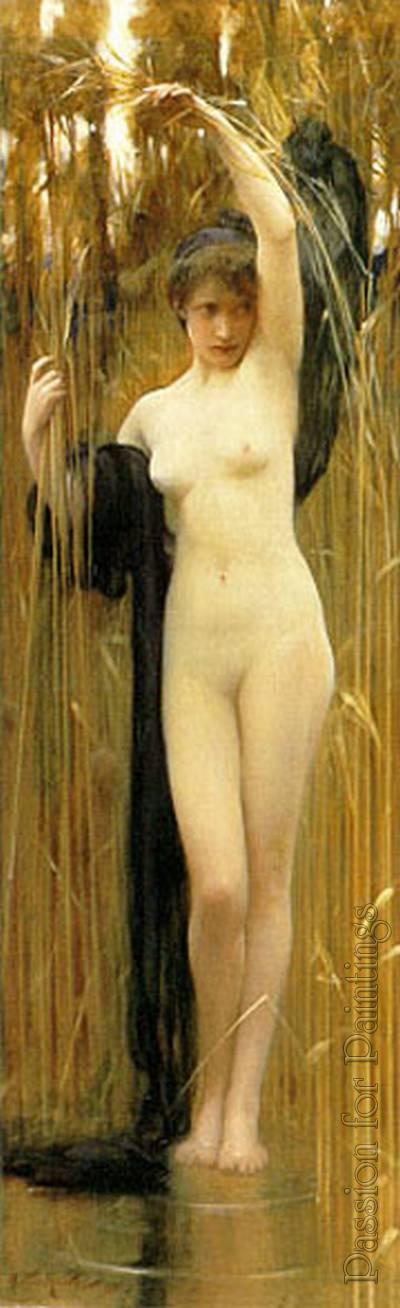
big

         Syrinx (1892)
 
          Arthur Hacker
 
            __________
 
 
though Debussy would’ve called his
Syrinx “Flûte de Pan”, “Pan Flute”,
alas, the name had already been 
taken, he therefore came up with the 
much more inspired Syrinx
 
Syrinx, with the help of other nymphs, 
who’d come at her cry for help as she 
fled the god Pan, a pursuer, had been 
turned into a bush of reeds, its canes 
producing a song so sweet as to 
confound and disarm him, impelling
him to create of them that sublime 
instrument  
 
Hermes had been telling Argus, Argus 
Panoptes, the giant with the hundred 
eyes, the story about the pipes he  
was playing, an implement received 
from Jove, apparently, god of all the 
gods, who wanted him to kill Argus, 
for confining Io, who’d been turned 
into a heifer by Juno, Jove’s wife, 
who’d caught him chasing her, Io’s 
plaintive lows had been getting to 
Juno as Io fretted unfettered through 
the fields too close to Olympus 
 
when Hermes’ music finally closed the
giant’s last two eyes, he beheaded him,
but Juno, in merciful recognition of his
service, however ultimately ineffectual, 
set them into the variegated tail of the 
peacock
 
are you kidding me, I always think when
I read Ovid’s “Metamorphoses”, and am
ever nevertheless entirely enchanted
 
a flute solo had not been composed in
over 150 years when Debussy composed
his Syrinx“, 1913, after C.P.E. Bach’s not  
at all unimpressive Sonata in A Minor 
of 1747, it duly set off a new life for the 
long overlooked flute, a reed which 
Mozart famously didn’t like
 
note the tonal, rhythmic, and repetition 
shifts from the rigid Classical model, 
where these are much more strict, 
Impressionism was not only breaking 
down pictures, the pictorial arts, but its
sound world as well, it was an utterly
new era, new sensibility, new zeitgeist, 
and you can feel it, though you might
not be quite able to immediately 
verbalize it, the arts were again, as
they ever ‘ve been, the canary in the 
gold mine
 
 
Richard
 
psst:
 
   The Transformation of Syrinx into Reeds 
 
Then Hermes thus: A nymph of late there was 
Whose heav’nly form her fellows did surpass. 
The pride and joy of fair Arcadia’s plains, 
Belov’d by deities, ador’d by swains: 
Syrinx her name, by Sylvans oft pursu’d, 
As oft she did the lustful Gods delude: 
The rural, and the woodland Pow’rs disdain’d; 
With Cynthia hunted, and her rites maintain’d: 
Like Phoebe clad, even Phoebe’s self she seems, 
So tall, so streight, such well-proportion’d limbs: 
The nicest eye did no distinction know, 
But that the goddess bore a golden bow: 
Distinguish’d thus, the sight she cheated too. 
Descending from Lycaeus, Pan admires 
The matchless nymph, and burns with new desires. 
A crown of pine upon his head he wore; 
And thus began her pity to implore. 
 
Now while the lustful God, with speedy pace, 
Just thought to strain her in a strict embrace, 
He fill’d his arms with reeds, new rising on the place. 
And while he sighs, his ill success to find, 
The tender canes were shaken by the wind; 
And breath’d a mournful air, unheard before; 
That much surprizing Pan, yet pleas’d him more. 
Admiring this new musick, Thou, he said, 
Who canst not be the partner of my bed, 
At least shall be the confort of my mind: 
And often, often to my lips be joyn’d. 
He form’d the reeds, proportion’d as they are, 
Unequal in their length, and wax’d with care, 
They still retain the name of his ungrateful fair.
 
                                                  Ovid

Bassoon Sonata, opus 168 – Camille Saint-Saëns

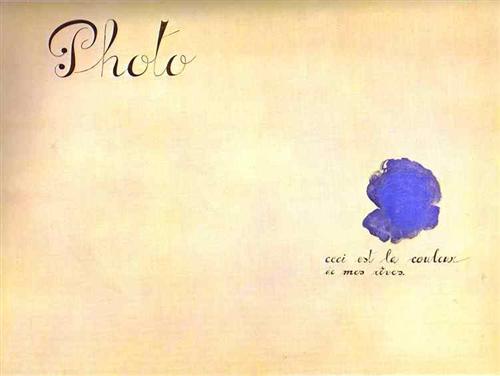
photo-this-is-the-color-of-my-dreams.jpg!Blog

                  Photo; This is the Color of My Dreams (1925)
 
                                                Joan Miró 
 
                                                   ______


 for  my sister

a competition program that pits
youngsters against each other,
but on a variety of instruments,
with some operatic voice, has
riveted us to our sets on Friday
evenings, seven o’clock local
time throughout Canada

out of the province of Quebec,
however, and therefore in
French

Virtuose lives up to its name
with extraordinary performances
from mere children, and some
adolescents, you can catch all of
the past episodes, and performers,
on their website

last week a young man delighted
us with a movement from a bassoon
sonata
, an unlikely instrument, of 

Saint-Saëns, his opus 168

my sister expressed surprise,
un basson, she marvelled

quickly I sought out, of course, the
full composition, it’s otherwise for
me like reading one chapter only
out of a book

it’s a short piece, no longer the
grand statements of the earlier
Romantic Period, but a series of
pastiches, fleeting impressions,
impromptu ruminations rather
than extended dissertations,
something like what I’m doing
here with these texts

you’ll recognize also a similar
approach in other composers of
the period, Debussy especially,
but too Satie, Ravel, Poulenc to
name only a few, the speed of
the new century precluded
extended musical peregrinations,
you’ll remark on the dearth of
symphonies, concertos,
composed during this epoch

the composition is in G major, my
cleaning lady had come over, was
already busy in an adjoining room
at the time, I was nearing the
end of the first movement, the
allegro moderato, a wistful
evocation of spring, I thought,
an innocent, fragile blossom
unfurling its delicate petals
with unaffected grace and
unconscious poetry

the final note sounded, the
bassoonist removed his lips from
the tube, but the note kept on
playing, coming, as I soon
understood, not from the video I
was watching, but from the other
room, Jo had turned on the
vacuum cleaner

o my god/dess, I uttered, hurried
over to where she was, subdued
my enthusiasm in order not to
unduly rattle her, as I brimmed
with my scintillating insight

your vacuum cleaner vacuums in
G, I gushed when she turned to
acknowledge me, it continued the
last note, I explained, of the first
movement of my sonata, Saint-
Saëns’ – say that three times with
a lisp, I interjected – until you
turned your vacuum cleaner off,
which is also, I pointed out, a
wind instrument

her delight was modest compared
to mine, however ever nevertheless
congenial, and quickly she returned
to her duties

I went back tickled pink to my
monitor and the following
movement, the sprightly and equally
enchanting allegro scherzando

Richard