Richibi’s Weblog

Just another WordPress.com weblog

Category: music to ponder

English Suite No 3 in G Minor – Bach
suite-fibonacci-2003.jpg

   “Suite Fibonacci (2003) 

           Charles Bezie

               ________

 
before I say much more about his Cello
Suites, let me point out that Bach has
some French Suites, some English 
Suites, on top of similarly structured 
Partitas and Toccatas, the French have 
their tout de suites, and hotels have, 
nowadays, their so named luxury 
apartments 

musical suites are sets of dance pieces, 
by the early 18th Century much stylized, 
with an introductory prélude, an allemande, 
followed by a courante, which is to say, folk 
dances, the first German, the next French, 
then a sarabande, Spanish, followed by a 
couple of galanteries, court dances, 
minuets, gavottes, bourrées, then a final 
English gigue

all of the markings are in French, which
leads me to believe that all of these 
dances must’ve originated at the court 
of Louis XlVth, the Sun King, 1638 to 
1715

but the suggestion is that Europe was 
becoming an integrated community
all of these dances were eclipsed by
the Classical Period, of Haydn and 
Mozart, apart from the minuet, which 
more or less defined, nevertheless, 
that new era

the minuet will die out by the time of
Beethoven, you’ll note, to be replaced
by the waltz, which had been 
considered much too racy until 
transformed by Chopin into a work 
of ethereal art

the Strausses, father and son, gave it,
only a little later, celebratory potency,
but that’s another story


here’s Bach’s English Suite, the 3rd
for context, the French ones are a 
little too salty, as it were, they do not 
quite conform to prescribed suite 
notionshowever might their 
propositions have been, ahem, 
sweet 

meanwhile, enjoy this one


R ! chard
Cello Suite no 1, in G major – Bach

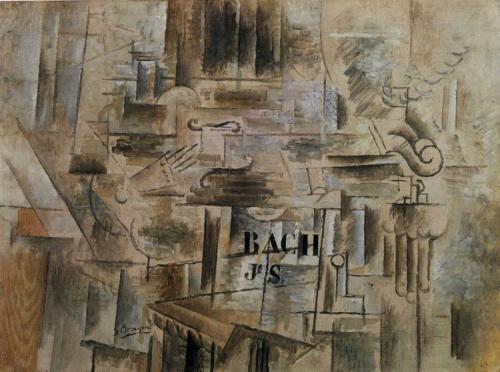
homage-to-j-s-bach-1912.jpg!Large

        “Homage to J.S. Bach (1912) 

              Georges Braque

                   __________

                                      for Lynne, who’s been catching up
                                                         on her Bach, recently
                                                                                   
the cello had been a peripheral instrument,
supplying accompaniment, merely, until 
Bach gave it wings, in new employ as 
Kapellmeister for Leopold, Prince of 
Anhalt-Cöthen, a Calvinist, who decried 
music in his churches, Bach turned to 
secular music mostly during this period,
instead of to the cantatas and oratorios,
the ecclesiastical stuff, he’d in earlier 
services been composing, not at all, 
however, unproductively, for he produced 
during this new period the template 
essentially for the entire modern epoch – 
the “Well-Tempered Klavier”, all of his 
piano literature, the Two- and Three-Part 
Inventions, his Toccatas, his Partitas, the 
sublime Cello Suites, his equally profoundly 
inspirational Sonatas for Unaccompanied 
Violin, are the basis upon which our 
contemporary music still stands, these 
pieces are still the Everests to climb for 
contemporary instrumentalists, you need 
only to listen to know why, by a semi-tone 
a cellist can fall apart, destroy the entire 
experience, distort an otherwise 
transcendental possibility, like a climber 
can tragically lose hir life

listen to Mischa Maisky, to my mind the 
very Zeus of 20th-Century cellists, 
perform Bach’s 1st Cello Suite, and
deliver incontrovertible proof of that,  
however Olympian, claim


R ! chard

what’s up in Pyeongchang / Bach

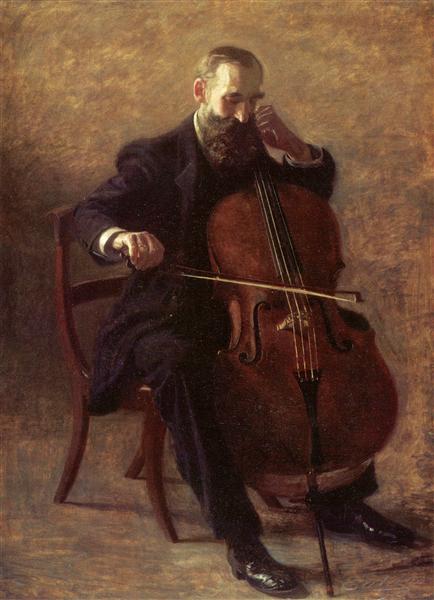
the-cello-player-1896.jpg!Large.jpg

      “The Cello Player (1896) 

              Thomas Eakins

                   ________

though I’d considered presenting all six
of Bach’s Cello Suites – your one stop
shopping for these extraordinary 
compositions – even one only of these
masterpieces floored me each time I
individually listened  

why the Suites, cause I couldn’t follow 
up on Beethoven’s Opus 5, for cello
and piano accompaniment, without 
saying more about the cello, by then 
an instrument of some significance, 
and who could argue, it’s resonance 
thrills you in your bones, in your very 
being

Frederick ll, King of Prussiaplayed it, 
earning for him tailored compositions, 
however controversial, from both 
Mozart and Haydn, but even earlier, 
Bach had composed definitive pieces 
for it, much as he’d done for the 
harpsichord, precursor to the piano, 
students of either still go to Bach for 
their basics, their intricate, exquisite, 
technical proficiency

the cello can play one note only at a
time, which means that, like a voice, 
you’re working without harmony, 
you need to make your own, 
otherwise your performance is 
boring, no one else, as far as I know,
has ever written anything else for 
unaccompanied cello, not even 
Beethoven

I find most performers lend Bach a 
more Romantic air, torrid emotion,
excesses of volume, pauses to the 
pace, ritardandos, rallentandos, 
which aren’t appropriate to the 
more genteel Baroque period,
something I usually find 
unwelcome

but in this performance, I’m sure 
not even Bach would object

I’m offering up first the Sixth Cello
Suite, D major, played by Jian Wang
someone I’d never heard of, in a 
dazzling performance in Pyeongchang
place I’d neither ever heard of, until 
only very recently

it appears both of these new kids on 
the block ought to be on the map


R ! chard

comparing divas

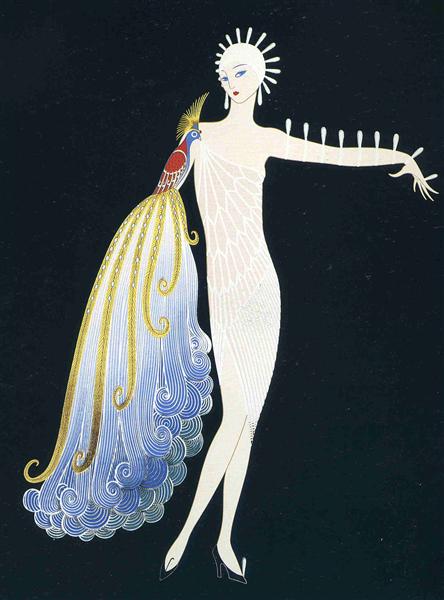
diva-i.jpg!Large

        Diva I 

             Erte

             __

comparing two extraordinary performances,
as I am wont to do with any coupled exhibits,
which render always more than the sum of 
their parts, let me let you consider an 
historical record of a legend already with 
that of one who is about to become one,
Bette Midler, 1971, doing the Continental 
Bathsopposite Vesselina Kasarova at the 
Schwetzinger Festspiele, 2005

the voices in either case are impeccable,
the only difference is the context, you 
choose what you’re into

but let me tell you that Vesselina Kasarova
doesn’t give an inch, she puts on a show 
that makes your jaw drop, trust me, it all 
depends on your mood

Vesselina comes from a different epoch,
despite her contemporary production,
polite, flirtatious, modest, the 18th
Century

but her staccatos, followed by verily,
and however improbably, organic 
legatos, indeed fervent, and  
unmitigated, fermatas, are stunning,  
a touras they say in such instances,  
de force, indeed de maîtrise, de  
mastery, wait till you hear the final 
moments of her surely definitive 
Glück, utterly, and incontrovertibly, 
astounding

Bette is brash, in your face, needs to 
get the attention of guys in towels, 
1971, intent on more prurient 
peregrinations than merely watching 
superstars, however in the making, 
strut their show-stopping stuff

both Vesselina and Bette achieve, I 
think, their goal, each strikingly, and 
unforgettably, each declares herself 
indestructible, a very force of
propulsive nature

watchwatch, which, in your opinion, 
delivers

ouch, both, either, I think

enjoy


R ! chard

by special request, more Tina

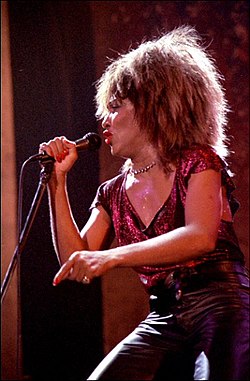
250px-Tina_turner_21021985_01_350

  Tina Turner performing in Norway, 1985

             __________

                                                  for Norm

shortly after my most recent post, a 
friend, as avid as I am about Classical
music, but who also lived through our
own golden age of music, and throbbed 
as I did to its pounding rhythms, sent 
me this video of one of Tina’s greatest 
hits, Proud Mary

not to mention that my inbox lit up at 
the same time with equally corroborative 
applause from a host of other, apparently
also fervid, admirers


it was the best of times, it was the worst 
of times, everyone did everything with
anyone then, and was impeded only    
by hir own personal inhibitions

therefore Studio 54and even more 
glamorous Manhattan party outlets, 
the Paradise Garage, Les Mouches, 
warehouses full of carousers, and 
Bette Midler was showcasing at the
Continental Bathsif you were 
wanting a less frenzied, though not 
at all uneventful, evening, or night
  
London had it’s comparable Heaven, 
nowhere was not having its bacchanals

the era would come down crashing, 
never to be put back together again,
of course, as a soothsayer I knew 
was then prophesying, but while it 
lasted we revelled, and had Tina 
Turner, among other, as incendiary, 
oracles telling it like it was, is, listen

 
Beethoven would’ve been proud of 
Tina, incidentally, note the adherence 
to Classical conditions, tonality, tempo, 
and repetition, art is about doing your 
own stuff around those imperatives, or, 
if you can, busting through them

Tina might not have burst through, but  
she sure knew what to do with her 
perimeters, which is to say, knock them
right out of the ballpark   

wow, watch, what a woman


R ! chard

psst: thanks Norm

“I Can’t Stand the Rain” – Tina Turner

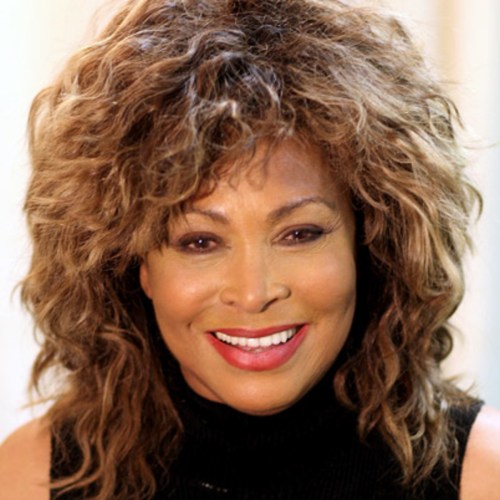
tina-turner-9512276-1-402

                Tina Turner                     

                       ______

finding it difficult lately to endure the
late winter, early spring, besetting 
our, however, not unbearable yet, 
unpleasant meteorological conditions, 
Tina Turner picked it up for me with 
her irresistible rendition around her 
perspective about such intemperate
weather, tightly wound, in my 
instance, with emotionally resonant 
considerations

call me Tina, I cried, and burst into
earnest collaboration, ever so, as 
much as possible, mellifluously

won’t you too, haven’t you, for that
matter, already, join, joined in


R ! chard 

what’s up in Düsseldorf / Beethoven

tn_705x705_3

          the “Altstadt“, Düsseldorf, Germany

                  ______

from Düsseldorf, a city I’ve called 
Düsseldon’t, Düsseldreary, 
Düsselneverbother, comes a 
performance there to change, utterly,  
my mind about it, though I’d always 
known that every European city has
its extraordinary wonders, count ’em

watch this, for instance, one of those

Beethoven didn’t write string quartets
until he was ready, following in the 
footsteps of Haydn wouldn’t’ve been
easy, but Beethoven wasn’t wasting 
his time in the meanwhile, or, 
alternately, his while in the meantime
– while you consider that, listen

in his Opus 5, no 1, the first to leave  
me with much of an impression, as 
began to explore Beethoven 
chronologically, the first four 
opuses – a word I deplore, but its
equivalent plural, opera, seems 
to me so pretentious – seemed, 
indeed again, to me long, tedious 
and academic, a student delivering 
exercises  

then the Opus 5, no 1 hit, and blew 
me right out of the water, he verily, 
Beethoven, thrust the metre right  
out of the ballpark, propelled the  
music – who ‘ld ‘a’ ever thunk it –  
right off the page 

marvel, I urge


there was also a restaurant in 
Düsselwhatever I really loved,
it served an improbable 
assortment of schnitzels, the 
Altstadt 

we embraced, the staff and I, 
when I had to eventually, and 
finally, leave, to go back home, 
to Canada, I’ll always remember, 
never ever forget, their grace


R ! chard

String Quartet in F major, opus 77, no 2 – Joseph Haydn


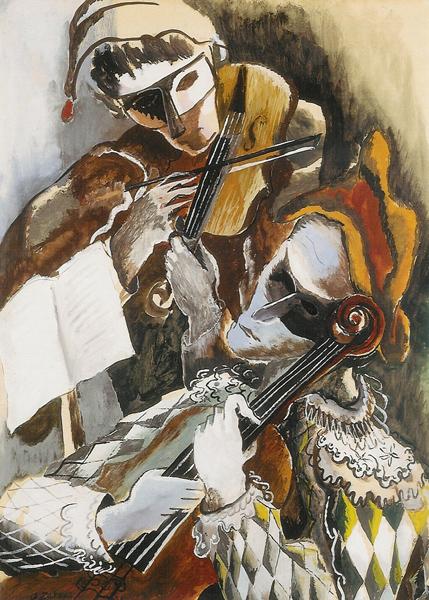
harlequins-violinists-hidden.jpg!Large.jpg

   Masked Harlequin Violinists (1944) 

              Ossip Zadkine

                  ________

the Opus 77, no 2, of Haydn is the last
full string quartet of his, his very last  
remaining unfinished, the Opus 103,
written in 1803

Haydn died in 1809, the Opus 77, no 2
was composed in 1799, he would’ve 
been 67

but by then, he had established the 
form that music would take for the 
next over two hundred years

call, response, and recapitulation is 
the house that Haydn built, and verily 
cemented, you can hear it in our own 
period’s Love Me Tender“, for 
instance, if you’ll also permit me here
its irresistible elaborationto today’s 
top hits, like my own most recent 
favourite such contemporary iteration,
released in 2014, Photograph

we could be listening otherwise to 
Bach right now, counterpoint, 
fugues, intricate, linear music, 
however powerfully transcendental, 
instead of recurring music, call,  
response, as I said, and 
recapitulation, something like how 
a clock works

but already Haydn is testing the 
waters, in the Opus 77, no 2, the
andante, a step up from an adagio, 
is in third place, something we 
haven’t heard before, and not, to 
my mind, especially effective, like 
his mixture of tempos in the Opus 
54, no 2, which was disconcerting, 
however masterfully resolved we 
find those to be in this very Opus
77, no 2notably in the second 
movement’s “Minuet, Presto – Trio”, 
where the tempo change is nearly 
imperceptible  

art works on contravention, but 
the affronts are to established 
conventions, which are very 
hard to overturn 

watch Haydn here continue to 
do just that, for better or for 
worse


R ! chard

psst: listen to Bach hereincidentally,  
          put his largo, or slow movement, 
          right where he wants to, at the 
          very top of the bill, does it work,    
          you tell me, a trivial pursuit,  
          you’ll ask, I say not, you are    
          defining your own aesthetic  
          sensibility, something 
          profoundly, think, important, 
          who it is, with perspective, you 
          want to be   
       

String Quartet, opus 77, no 1 – Joseph Haydn

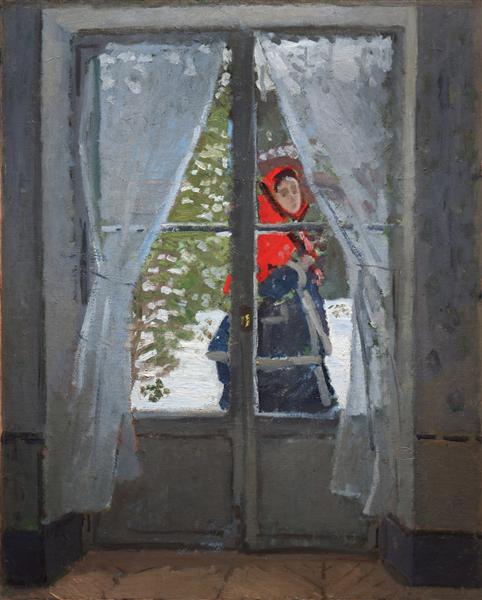
the-red-cape-madame-monet.jpg!Large.jpg

      The Red Cape (Madame Monet) (c.1870) 

              Claude Monet

                    _______

                                              for my mom

that’s a lot of Haydn, I said to my mom, 
when I saw the list of my transmittals in
her hotmail, hm, I wondered, maybe it’s 
too much

then I said, but it’s like when we’ve 
toured, for instance, our European 
art galleries, me propounding on 
the paintings, as I am wont, however 
incorrigibly, to do, but now, note, you 
can tell the difference between your 
Monets and your Klimts, however 
similar their perspectives

or like your tour guide taking you
recently through Argentina, 
highlighting spots, in the space of 
a month only, the same amount of 
time I’ve spent for the music of 
Haydn

pronounced, incidentally, I specified, 
like “hidin'” in English, not “maiden”, 
just sayin’

I gathered that she’d ‘ve sensed by 
now, if she’d been listening, which she 
said she had, mornings over her 
coffee, what a string quartet is, four
movements, different tempos, fast
at first, a joyful introduction, 
followed by a lament, then a spirited 
third movement, for countereffect, 
then a big fourth movement finish

also, the internal structure of each 
movement would’ve been internalized,
theme, a counter theme, a 
recapitulation of both, or either, all of 
it, probably unconsciously, which is 
how art fundamentally works till you
meticulously deconstruct it

the string quartet is the work of Haydn, 
the house that Haydn built, from 
peripheral aristocratic entertainment, 
like modern day artists sporting their 
wares in noisy restaurants, to the 
glamour of taking on, in concert halls, 
Europe, Brunelleschi did a similar, 
sleight-of-hand thing with his dome 
in Florence for its oracular Cathedral

remember that the string quartet lives 
on as a form, where no longer does 
the minuet, for instance, nor the 
polonaise, nor even the waltz, not to 
mention that concertos, and  
symphonies have become now  
significantly subservient to movies, 
secondary players


watch the instrumentalists here live 
out, in Haydn’s Opus 77, no 1, their 
appropriately Romantic ardour,
something not at all promoted in 
Haydn’s earlier Esterházy phase, to 
raise their bow in triumph, as they 
do at the end of most movements
is already an indicationnot at all 
appropriate for the earlier princely 
salons, that times have changed

Haydn was a prophet, but also an
elder, with an instrument to connect 
the oncoming, and turbulent, century 
to the impregnable bond of his 
period’s systems, the legitimacy of 
the autocratic, clockwork, world, 
Classicism, the Age of Reason, the 
Enlightenment, for better or for 
worse

we are left with its, however ever 
ebullient, consequences

enjoy


R ! chard

String Quartet in C major, opus 76, no 3, “Emperor” – Joseph Haydn

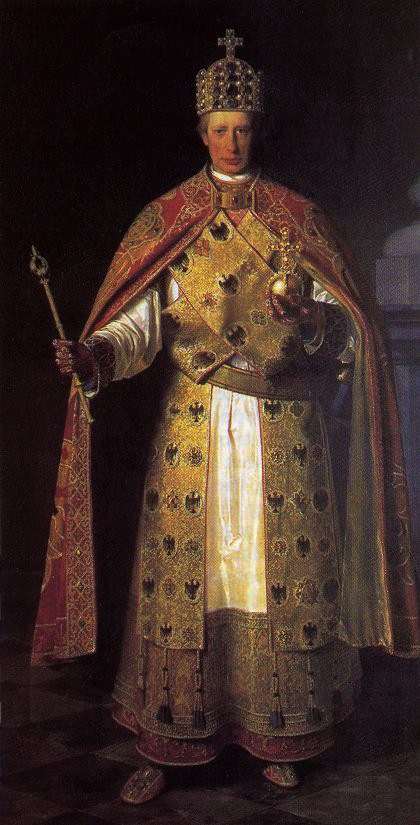
Ludwig_Streitenfeld_001.jpg

    Francis II as Holy Roman Emperor (1874)

          Ludwig Streitenfeld

               _____________

Haydn’s String Quartet, opus 76, no 3
is nicknamed the Emperor cause the 
second movement, the poco adagio;
cantabile, is a recapitulation of an 
anthem Haydn had earlier written for 
Francis ll, the Holy Roman Emperor
– not, incidentally, for Napoleon, the 
Emperor of the moment, who was to 
defeat Francis lleventually, at the 
Battle of Austerlitz, December 2, 1805, 
thereby dissolving that Holy Roman 
Empire, which had been established 
by Leo, the very Pope, lll when, on 
December 25th, 800, which is to say 
preceding Austerlitz by a thousand 
years, he crowned Charlemagne its 
Emperor 

Haydn must’ve been a monarchist


you’ll recognize that second movement
as the present day anthem of Germany

but listen to how Haydn makes it glisten, 
explicitly, with articulations and filigree 
that render it utterly irresistible

the adagio is usually the moment that
remains immutable, if the composer
is doing hir stuff, it’s the one you walk 
home singing, the faster movements,
however histrionic, are nearly a dime 
a dozen, though ever nevertheless 
often dazzling 

this adagio is utterly Romantic, though
I’m sure Haydn didn’t know what he 
was doing, cause despite their push
against the democratic surge, even 
monarchists, princes, dukes, dutiful 
composers, were finding, and voicing, 
their personal, and individual, which 
is to say, their democratic, opinions, 
however aristocratic their pedigree

artists had done a similar thing when 
their personalities began to single 
themselves out as especially gifted 
when the Renaissance was 
happening, it was now music’s hour, 
individual voices were staking their 
claim, Haydn’s manifestly superior 
based on talent and, after widespread 
economic affluence, audience appeal, 
Haydn’s commercial boots were made 
for walking, and he filled them both
magnificently and incontrovertibly

the poco adagio; cantabile is not 
courtly music, it reaches for not
merely elegance, but the heart,
we’ve entered another 
transformational generation, 
something like the revolution 
that triggered change in the 
cultural upheaval of the1960s 

our first step then was the Beatles, 
theirs was Haydn, or rather Elvis
Presley shoring up the Beatles, 
Beethoven was more aptly John,
Paul, George and Ringo 


but watch the rapture on the players’ 
faces, Francis ll would’ve been 
appalled, much like parents in my 
generation facing the pill, drugs, 
unorthodox sexual couplings, and, 
of course, raucous and unruly rock 

music

today, under the spell of the 
Romantic Period, and encouraged
by that very Sexual Revolution, the
Calidore String Quartet’s Elysium
their evident blissemotionally 
manifest, and utterly arresting, sells 
tickets, for better orhopefully not, 
for worse

but you call the shots, to decorum or 
not to decorum, that is the question

watch, wonder, listen 


R ! chard