Richibi’s Weblog

Just another WordPress.com weblog

Category: Mozart

Clarinet Quintet in B minor, Op. 115 – Johannes Brahms
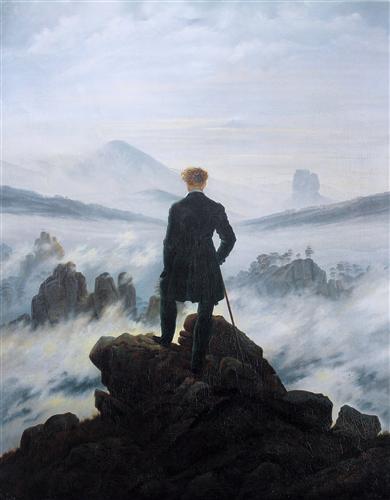
the-wanderer-above-the-sea-of-fog.jpg!Blog

    “The Wanderer above a Sea of Fog / 

            “Der Wanderer über dem Nebelmeer (1818)   

          Caspar David Friedrich

                     ___________

                              for Collin, who’ll appreciate
                                        especially, I’m sure, the 
                                             Chopin


while I’m on the subject of clarinet quintets,
since there are so few significant ones, let 
me pull Brahms’ out of my hat and celebrate 
it, a worthy challenge to Mozart’s own utter
masterpiece

but over a century has gone by, it’s 1891, 
Beethoven, the French Revolution, the 
Romantic Era is reaching its end, ceding 
to Impressionism, after the disruptions of 
rampant industrialization, and its 
consequent effects on the social contract

Marx has proposed a theoretical master 
plan to equitably protect the rest of us 
from the 1%, however too politically 
fraught, eventually, such a system – see
Communism

furthermore, Darwin had suggested that 
we weren’t all descended from Adam and 
Eve, but from larvae, which is to say, 
millennially morphed, modified, through
time, genetically, leading to festering still 
ideological  objections

Elizabeth Barrett Browning had written 
her unadulterated love poems to her 
husband, RobertCaspar David 
Friedrich had shown us his wanderer’s 
back while facing the mountainous 
challenges of the upcoming world, 
godless now after NietzscheAnna 
Karenina had thrown herself in front 
of a train, Madame Bovary had taken 
poison, and Ibsen‘s Nora had left her 
husband for a fraught, if not even 
dangerous, life on her own, to escape 
his safe but insufferable dominance, 
while Jane Eyre was finding ghosts
in her cobwebbed, and insufferable, 
to my mind, though admittedly  
aristocratic, attic 


you’ll note the clarinet is not sitting
centre stage, but has nevertheless 
a place at the table, by this time, 
though not not honoured, familiar,
and is more integrated to the 
conversation, the idea of democracy 
has taken hold, with everyone having
an equal, and even a vociferous, say

Brahms modelled his Clarinet Quintet,
on Mozart’s, the Classical structure is 
still the same, movements, tonality, 
musical recurrence, all to wonderful 
effect

that he would do that is not a given, 
but a tribute to the power of that form, 
take the waltz for instance, alive from 
even before Strauss, not to mention 
Chopin, to approximately the middle 
of the Twentieth Century

think about it, who waltzes anymore,
though they might’ve enchanted still, 
residually, the  50’s – see Patti Page
for instance – its lustre having 
dissipated, with the wind, as it were, 
the gust, before us, of the unending 
ages 


R ! chard
Clarinet Quintet in A major, K581 – Mozart

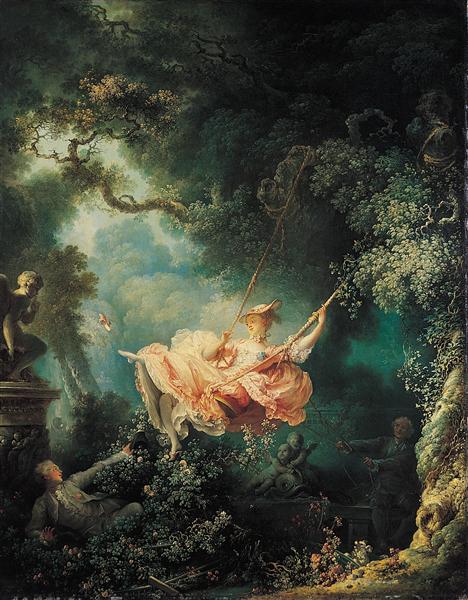
the-swing-1767.jpg!Large

The Swing / Les Hasards heureux de L’Escarpolette (1767) 

       Jean-Honoré Fragonard

                __________

it wouldn’t be fair to overlook Mozart 
when it comes to string quartets, after
all, he wrote 23 of them, but they’re 
not what he’s famous for, you have to 
go to his piano concertos for that, 
sublime things, and, in my estimation, 
to one of his chamber pieces, his 
utterly enchanting Clarinet Quintet,
in A major, K581, which, since I prefer
chamber pieces, I turn to most often

but to go to a quintet so quickly in a
discussion about quartets could be 
disconcerting, after all, you’ve got
somebody else at the table, you’ll
need another chair, another place 
setting, more food, for four still of the
standard courses, some of those even
elaborate, all this makes a difference

plus the new guest is to be accommodated, 
should typically be given the place of honour, 
as well as a distinct voice, command, like a 
soloist in a concerto, though, of course, be
less peremptory, more, indeed, courtly,
courteous, where, incidentally, the word
“courtesy” comes from

the sound of the clarinet in this quintet
mimics the sound of birds, midst the 
strings’ foliage, the guest, as it were, at 
the party, the piece delivers a wonderfully 
pastoral setting, a mainstay of that period 
see even above – an allegorical return to  
Mother Nature as a guiding principle over
the irascibility and the imperviousness of 
the Christian God, not to mention the 
search for a, nearly obliterated, feminine 
principle, deity

the second movement, the larghetto, 
which means a slow largo, which 
means it’s really, really slow, is 
accordingly melting

also, where would that movement be 
without the clarinet, I ponder, the guest 
that evening of especial honour, I get  
momentary glimpse at genius then 
and marvel, Mozart had written this for 
a clarinetist frienda friend he must’ve 
really admired

all the other movements are equally
consummate, unforgettable, perfect

I promise


R ! chard

psst: here’s Mozart’s 17th String Quartet
          no 17 in B flat major, “The Hunt”,  
          nevertheless, a quartetone of his    
          several, however perfunctorily

on string quartets – Opus 76, no 1 – Joseph Haydn

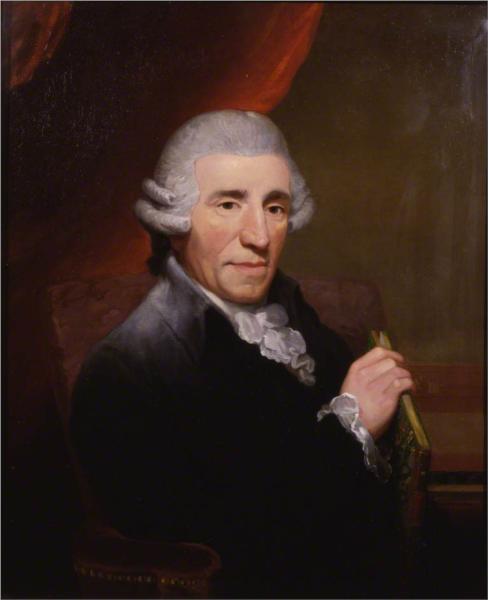
joseph-haydn-1791.jpg!Large.jpg

                                   “Joseph Haydn (1791) 

                                          Thomas Hardy

                                                 ______

to not consider other musical forms of
Shostakovich would be unfair, his
symphonies are mostly propaganda,
however often, though somewhat 
culturally specific, riveting

my favourite works of his, works I 
consider iconic, are mostly chamber 
pieces, piano solos, string quartets

a string quartet, after a symphony, is
like sitting down to dinner with four,
at the very least, acquaintances, 
rather than being a guest at a party,  
the conversation is more intimate,
every person plays hir part, everyone
is heeded, if even only with courtesy,
a social, a Classical, an aristocratic,
prerequisite 

movements can be compared to 
courses, distinct and identifiable for
their particular culinary, musical, 
propriety

later variations on this reflect the 
variations in social mores, where 
restaurants, the modern way of
socializing, allow for disparate 
choices, often superimposed, 
throughout the meal for any,
every, occasion

dim sum, tapas, celebrate this, not
unhappily 


but string quartets can be tricky, I 
thought I’d start from the beginning,
with some Haydn, their recognized 
Father, you’ll understand when you
hear this, his Opus 76, no 1, an 
outstanding string quartet to live 
up to

Haydn set the standard for string 
quartets when the norms of Western 
music were being established, Bach
had given us the alphabet, the
well-tempered clavier, Mozart, the 
grammar, the structure of music,
tempo, tonality, repetition, Beethoven 
gave us the literature, the poetry, the 
philosophical, the transcendent

Haydn is somewhere between these 
last two, but decidedly, still, the king  
of the string quartet, though Beethoven  
does a good job of trying to best him,  
and so does Shostakovich, you’ll have 
to pick

but first, let’s start with Haydn, that’ll
be already, you’ll see, or hear, enough

later, I’ll get into it


R ! chard

Symphony No 3 in Eb major, op. 20, “The First of May”

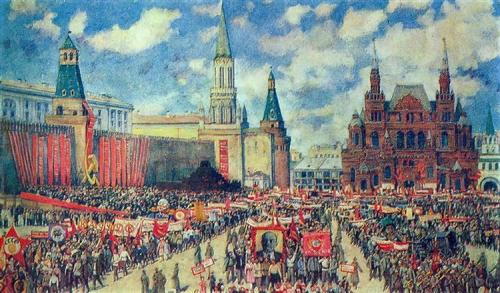
the-1st-may-demonstration-on-the-red-square-at-1929-1930.jpg!Large

   “The 1st May Demonstration on The Red Square, 1929 (1930) 

            Konstantin Yuon

__________

let me correct something I wrote in my 
last comment, inadvertently, misleading
you somewhat with my inappropriate 
use of the word “movement”, that the
Symphony no 2 had only one, I stated, 
by which I meant that there were no 
pauses throughout, there are, however, 
indeed four movements in the Second
four distinct sections that have been 
joined together, such an uninterrupted 
piece would usually have been given 
an appropriate title, or an opus number, 
to identify it, but would not have been 
called a symphony, a symphony is by  
very definition a clearly segmented 
composition, like chapters in a book, 
they might follow a theme, though not
necessarily, see Mozart, but the breaks
are integral, where you get a chance to
cough, or to get up and replenish your 
glass of wine 

the Second could have been, should 
have been, called simply, October“, 
and, ergo, left at that 

but it wasn’t

the very same must be said about the
Third Symphony, “The First of May”,
you can already probably hear the 
jubilation and fanfare in just the title,
another milestone of the Revolution, 
the anniversary of Lenin’s death, the 
final chorus sings a lyric of a poet of
the Revolution, Semyon Kirsanov, a
sure nod to the symphony‘s political, 
however peripheral, intent 

what you’ll note, however, is the 
sensuality of the music, above
whatever weight of a, perhaps 
more fitting, dirge, or the bombast 
even of a commemorative, an exalting 
tribute – though these are determinedly 
there – going back to the orchestral 
triumphs of the Romantic Era, with 
its lush rallentandos and its voluptuous
ritardandos, the better to seduce
 
Shostakovich is getting ready for the 
real thing, a piece with any partisan 
message, he must sense, can never 
work


by the way, should you disagree 
with any of my evaluations, this 
would not at all be offensive, but
even wonderful, I have been 
wrong, I can prove it, I have the 
dates, they are listed somewhere 
in my papers, but it would mean 
you’re paying attention, listening, 
which is the entire purpose, more
than anything else, of this 
exploratory exercise, should you
wish to participate 

R ! chard

the milonga

for-a-better-life-iii.jpg

   For a Better Life III 

          Fabian Perez

             ________

milonga, a song with a syncopated 
beat, is the musical form that gave 
birth to the tango, I wondered what 
one could be after my mom brought
my attention to one in a program for 
an upcoming event in our cityI had 
to look it up 

my only clue was that it was by 
Astor Piazzolla, the Argentinian who 
in the 20th Century reinvigorated the 
tango nearly all by himself, but in 
translation from Spanish to English,
milonga still came up milonga, what 
could milonga be, I asked 

here then, by Astor Piazzolla, is
what we’d be hearing

you’ll want to pay attention too to  
the paintings of Fabian Perez, also 
an Argentinian, which visually 
accompany the music, they are 
equally as seductive as the 
irresistible Piazzollan rhythms  

on the program as well, for a 
completely different musical 
experience, is Mozart’s Clarinet
Quintet, a piece I wrote about 
several years ago here, but must 
revisit, there is no more beautiful 
clarinet quintet, in my estimation,
and not many musical pieces are 
either as beautiful 

I won’t say a word about the other 
piece on this eclectic upcoming
programbut to say that I’d arrive 
after the intermission

R ! chard

an homage to the victims of the Titanic

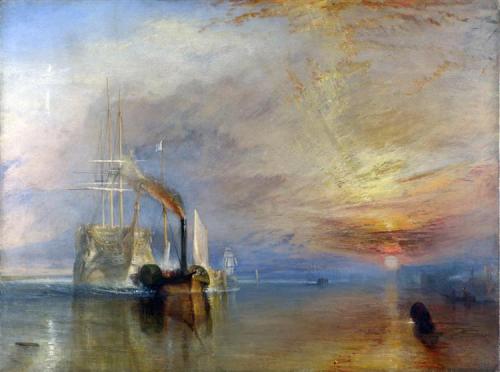
the-fighting-temeraire-tugged-to-her-last-berth-to-be-broken-up-1839.jpg!Large

  The Fighting Temeraire tugged to her last berth to be broken up (1839) 

          William Turner

                _______

while I’m on the subject of threnodies
which is to say “song[s] of lamentation
for the dead”, as I earlier statedlet me 
bring your attention to this extraordinary 
piece, an homage to the victims of the
Titanic
 
it doesn’t even have a title, much as 
Mozart and Haydn didn’t before music 
went mainstream, into public forums 
rather than merely aristocratic salons, 
and when an identifying moniker 
instead of a number became manifestly 
more practical, especially when the 
emerging Middle Classes were 
becoming the ones who were paying 
the composer’s bills, at the opera 
houses and the other sprouting 
concert venues, when some composers 
had even up to 32 sets of piano sonatas 
to remember, three and four often to 
a single set, opus number, as many as 
there are movements in a very sonata

and that’s not counting the numbered 

symphonies and string quartets of 
theirs, left to similarly calculate, 
decipher, extricate

it doesn’t have a title, I think, because
to my knowledge, it is the first of its
kind, a composition created by 
computer, for computer, an entirely 
self-contained digital work of, 
manifestly, art – I’d been waiting, 
diligently, for one – and like Beethoven, 
after the work was done, the artist(s)
just felt the title best left to the 
wordsmiths, thus – you’re welcome –  
Threnody for the Victims of the 
Titanic

sure, computers have done practical
things before, admirably, but never 
told a story, and certainly never one 
as profound as this one

these are the last moments of the 
Titanic, digitally reproduced, in real 
time, 2 hours and 40 minutes, they
are mesmerizing, you don’t want 
to miss a thing

there are no voices, apart from a 
few radio transmissions at the 
start, spotting the iceberg, calling 
out commands to beware, stop 
the engines

afterwards only silence, and the 
sound of the waves, the churning
of the engines, which have been 
restarted, sounding as rhythmic, 
incidentally, and numbing, as the 
wheels on the railroad tracks of
Steve Reich‘s Different Trains“,
another powerful threnody 

later the flash and crack of flares,
the crunch of the ship sinking  

the pervasive, however disrupted, 
silence and the inexorable passage 
of ever ticking time combine to be, 
thereafter, transfixing, meditative, 
ultimately transcendent, a fitting 
setting for a threnody 

I know of only another work to take
you to that venerable place,
Beethoven’s opus 111

and often enough Pink Floyd, for 
that matter, and the visionary 
Alan Parsons Project, of course, 
discoursing on inexorable Time 

and, now that I think of it, Elgar‘s
The Dream of Gerontius, whose 
character goes from his deathbed 
in the first act, to his afterlife in 
the second, effecting transcendence
for us by, yes, ingenious 
metaphorical proxy

but I digress

what I call Threnody for the Victims 
of the Titanic is a narrative with 
sound, not a movie, not a television
program, it has more commonality 
with a musical production than 
anything else but painting in art 
history, though its means are 
intuitively literary, ship stories go
back to The Odyssey through
Gulliver’s TravelsTreasure 
Island and to one of my very 
favourites, Ship of Fools“,
relatively recently

I could add Mutiny on the Bounty“,
Moby Dick“, “The Caine Mutiny 

in art, a precedent would’ve been set
in our collective consciousness by 
William Turner‘s celebratedThe 
Fighting Temeraire …, but I would 
mention as well Caspar David 
Friedrich‘s The Wanderer above 
the Sea of Fog for its existential
pertinence

a few literary points I’d like to stress
to back up my overt adulation, I find  
it impressive that the Classical rules
of tragedy have been maintained, 
unity of action, time, and place, 
prescriptions going back to 
Aristotle‘s Poetics in our cultural 
history, to profoundly express 
tragedy, iconic, epic, misfortune

not to mention the Classical musical
imperatives of tempo, tonality and 
repetition, none of which can be 
faulted here in this consummate 
composition

there is a no greater leveller of tempo 
than time, larghissimo here*, in the 
largest sense of that word, the 
cosmic, the inexorable pace of 
temporality in our brief heavens

a greater leveller of tonality neither  
is there than the rigorously impartial 
hum of the imperturbable Cosmos 

nor is there greater repetition than 
uniformity, however disrupted by  
however fervent ever human 
intervention, see Sisyphus, or 
Martha in “Who’s Afraid of Virginia
Woolf for iconic disrupters

R ! chard

*   Shostakovich had asked the 
     Beethoven Quartet to play the first 
     movement of his 15th String Quartet,
     “Elegy: Adagio“, so that flies 
     drop dead in mid-air, and the 
     audience start leaving the hall from 
     sheer boredom  

     well this inspired elucidation is even  
     slower than that

“Is Art Truth?”

paradise-jpglarge

  “Paradise” 

        Hieronymus Bosch

                   __________

Is Art Truth?“, a friend asks after speaking of 
its benefits, “Art accepts and tells the truth-Is
that it ?“, she inquires, wonders

art, like truth itself and beauty, is in the eye 
of the beholder, I submit, and therefore my 
definition is, once again, entirely personal, 
though I’ve rigorously plumbed it

it requires background

art died for a thousand years, it was 
essentially unrecorded, dormant from 
the fall of Rome to the Renaissance, nor 
promoted but for Catholic purposes, 
hence the majestic cathedrals and the 
magisterial altarpieces, works produced 
by, however, communities until eventually 
certain artisans were recognized as more 
inspired than others, and given autonomy

enter Duccio, for instance

in time these new, necessarily idiosyncratic
perspectives – see Hieronymus BoschDante
Alighieri – dominated, veering in their search 
for truth in their art and beauty – selling points,
incidentally – towards less strictly orthodox 
utterances

see above

art, and its contemporary science, were 
chipping away at ecclesiastical dogma

till God died, and artists continued their 
prescient march forward, shaping our 
zeitgeist, our spirit of the times, with 
their pronouncements for lack of any 
other guides

but the voices grew personal, see Mozart
often profound and prophetic, see 
Beethoven, till the confluence of disparate 
realities gave us secularism, each soul for 
itself as a tenet, a credo, a belief, a truth

what did they have in common

I believe it was their quest for beauty 
through truth, their quest for truth 
through beauty, with a nod here to 
the salient Keats 

art is prayer, a search for, as well as a 
manifestation of, one’s personal 
identification with the sacred

it is not truth, it is not beauty, it is the 
fervent intention itself, linked with a 
correspondent workmanship, craft, 
which inspires 

see for instance van Gogh for this, who, 
remember, nevertheless shot himself, 
artists are mortal, merely, messengers, 
ever, therefore, fallible, unsure, fearful 
even, often, of their, perhaps 
Promethean, fire

for consolation, or even maybe 
transcendence, see again,
pertinently here, Beethoven  

listen

Richard

psst: thanks, Joan

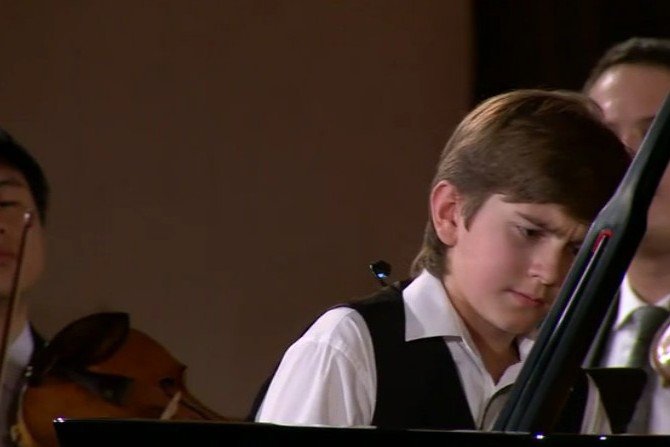
at the XVth International Tchaikovsky Competition – Daniel Kharitonov, ll‏

Daniel Kharitonov

Daniel Kharitonov

_________

there ‘ve been extraordinary
performances since Maria Mazo‘s
defining reinvention of Mozart’s
21st Piano Concerto
, the “Elvira
Madigan”, at the XVth International
Tchaikovsky Competition
, worthy
of, believe me, fruitful commentary,
but for the sake of brevity and, of
course, indiscretion, I’ve refrained
from going on and on, and on,
about however many of them, all,
nevertheless, quite outstanding

but before even the end of Daniel
Kharitonov
‘s final and deciding
performance, of Tchaikovsky’s
indomitable 1st Piano Concerto,
followed by whatever by Liszt,
he has, like Maria Mazo, here
given us a new standard for
hearing these indelible musical
epics, she takes over from
Mitsuko Uchida, goddess of
Mozart, he takes over from very
Van Cliburn, you’ve got to go
back to 1958 to have heard
this commanding thunder

Kharitonov is sixteen, a bud
becoming a flower

wow, no matter who wins

Richard

psst: his Liszt, incidentally, will
restore your faith in Liszt

at the XVth International Tchaikovsky Competition – Maria Mazo, ll‏

"Elvira Madigan"

a still from the movie “Elvira Madigan

________________

there’s been a second round of
recitals, enough to make you
weary of sonatas, unless you’re
stalwart, devoted, primed

the prizes have been awarded,
the results posted at the site,
so that any mystery, excitement,
has been chilled, had you been
in any way excited about your
choices

they certainly rained on my
parade

by now most of my favourites
have gone down, others have
been perfunctory, to my mind,
but three, which surely I’ll
cover, but presently let me
start with Maria Mazo, a
wonder, who’d wowed me
earlier with her
transcendental Beethoven

here, with an orchestra, she
takes on a monument of the
20th Century, Mozart’s 21st
Piano Concerto, better known
since the mid-20th Century as
the theme to the movie,
Elvira Madigan, a forgotten
film now, however enchanting,
but this is where a generation
learned about Mozart

Maria Mazo sets the new
standard here, this is how
you’ll hear this concerto from
now on, it is magical, it is
mystical, it is extraordinary,
it’s right up there with the
greatest, who are presently
handing over to her our
musical reins

thank you, Mitsuko Uchida,
with the greatest admiration

strangely Maria Mazo didn’t
even place

who could ‘a’ ever thunk it

Richard

at the XVth International Tchaikovsky Competition – Shino Hidaka

  "The Musical Contest" -  Jean-Honoré Fragonard

The Musical Contest (1754-5)

Jean-Honoré Fragonard

______

with only four contestants to go,
I already crown Shino Hidaka the
winner of the XVth Tchaikovsky
Competition
, this kind of affinity
only comes around once in a
lifetime, her Bach was not only
perfect but inspired, probing,
her ensuing Chopin,
mesmerizing, the Beethoven
that followed aptly, though ever
unexpectedly, transcendental,
transcendence not ever
happening without absolute
mystical concentration, her
Tchaikovsky, an evocation
rather than a mere description
of a Russian village, her
Rachmaninov, on utter fire

Dmitry Shishkin, before her,
neither was un-brilliant, a
consummate technician,
however, rather than an outright
revelation, his spirited Bach was
a turning point for me, finally
someone who got it, his Mozart,
as frivolous and delightful as
Mozart would’ve wanted it to be,
the rest appropriately everywhere
dazzling, second, therefore, ever
so illustrious, nevertheless,
prize, bravo

neither, incidentally, milked any
of their notes, just played what
was written

Richard

psst: compare Fragonard, above, to
Mozart, a synaesthetic match,
where sight and sound are
interwoven, giving you social
intimations of the mid-18th
Century