String Quintets – Mozart / Beethoven


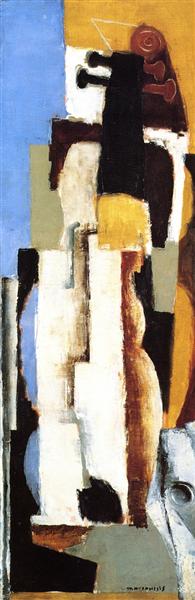
“A Cello“ (1921)
___________
between Bach’s transcendent Suites for
Cello and Beethoven’s reinvention of that
instrument, two only cello works occupy
the last half of that century, both by
Haydn
his Second, however, Concerto, written
several years later than his First, 1783,
indeed nearly twenty years later, seems
to me less accomplished, though ever,
nevertheless, unimpeachably, and
impressively, Haydn
the first movement is long, long works
only until you start thinking it’s long
the initial melody in the adagio, the
second movement, struck me as artificial,
saccharine, though Haydn weaves magic,
not unexpectedly, still, and
continuously, around it in its
development, his elaboration of it
and the pace of the third movement,
following the second, is disconcerting
rather than surprising, rather than,
were it effective, delightful
Mozart wrote a Cello Concerto too,
apparently, but, if so, it is lost
otherwise we’re on to the next historical
epoch, Beethoven’s, after this inauspicious
turn at this generation for the cello, lost
for a while among the more assertive
instruments of that prim, and proper,
Classical Era
R ! chard

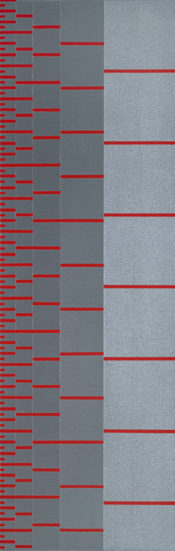
“Suite Fibonacci“ (2003)
________
before I say much more about his Cello
Suites, let me point out that Bach has
some French Suites, some English
Suites, on top of similarly structured
Partitas and Toccatas, the French have
their tout de suites, and hotels have,
nowadays, their so named luxury
apartments
musical suites are sets of dance pieces,
by the early 18th Century much stylized,
with an introductory prélude, an allemande,
followed by a courante, which is to say, folk
dances, the first German, the next French,
then a sarabande, Spanish, followed by a
couple of galanteries, court dances,
minuets, gavottes, bourrées, then a final
English gigue
all of the markings are in French, which
leads me to believe that all of these
dances must’ve originated at the court
of Louis XlVth, the Sun King, 1638 to
1715
but the suggestion is that Europe was
becoming an integrated community
all of these dances were eclipsed by
the Classical Period, of Haydn and
Mozart, apart from the minuet, which
more or less defined, nevertheless,
that new era
the minuet will die out by the time of
Beethoven, you’ll note, to be replaced
by the waltz, which had been
considered much too racy until
transformed by Chopin into a work
of ethereal art
the Strausses, father and son, gave it,
only a little later, celebratory potency,
but that’s another story
here’s Bach’s English Suite, the 3rd,
for context, the French ones are a
little too salty, as it were, they do not
quite conform to prescribed suite
notions, however might their
propositions have been, ahem,
sweet
meanwhile, enjoy this one
R ! chard

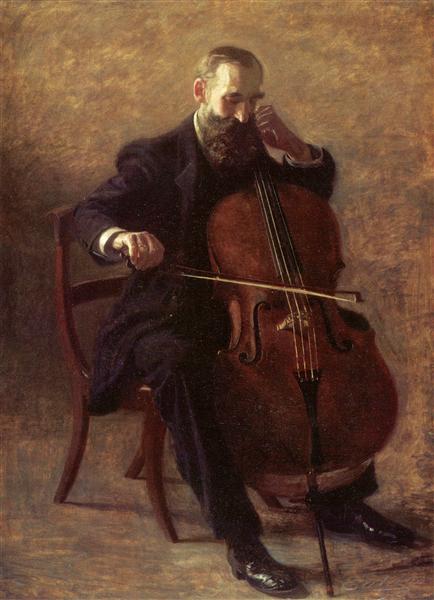
“The Cello Player“ (1896)
________
though I’d considered presenting all six
of Bach’s Cello Suites – your one stop
shopping for these extraordinary
compositions – even one only of these
masterpieces floored me each time I
individually listened
why the Suites, cause I couldn’t follow
up on Beethoven’s Opus 5, for cello
and piano accompaniment, without
saying more about the cello, by then
an instrument of some significance,
and who could argue, it’s resonance
thrills you in your bones, in your very
being
Frederick ll, King of Prussia, played it,
earning for him tailored compositions,
however controversial, from both
Mozart and Haydn, but even earlier,
Bach had composed definitive pieces
for it, much as he’d done for the
harpsichord, precursor to the piano,
students of either still go to Bach for
their basics, their intricate, exquisite,
technical proficiency
the cello can play one note only at a
time, which means that, like a voice,
you’re working without harmony,
you need to make your own,
otherwise your performance is
boring, no one else, as far as I know,
has ever written anything else for
unaccompanied cello, not even
Beethoven
I find most performers lend Bach a
more Romantic air, torrid emotion,
excesses of volume, pauses to the
pace, ritardandos, rallentandos,
which aren’t appropriate to the
more genteel Baroque period,
something I usually find
unwelcome
but in this performance, I’m sure
not even Bach would object
I’m offering up first the Sixth Cello
Suite, D major, played by Jian Wang,
someone I’d never heard of, in a
dazzling performance in Pyeongchang,
a place I’d neither ever heard of, until
only very recently
it appears both of these new kids on
the block ought to be on the map
R ! chard

“Prussian Homage“ (1796)
____________
it’s 1790, a year after the French Revolution,
and both Mozart and Haydn are peddling
their wares, Mozart to the King of Prussia,
Friedrich Wilhelm ll, who’d commissioned
some string quartets, as well as piano
works for his daughter, but wasn’t paying
Mozart off for them, where Haydn with the
help of Johann Tost, was hustling his stuff
in very, of all places, Paris
Haydn’s, incidentally, own Prussian Quartets,
dedicated to the same King of Prussia, were
sold to two different publishers, one in
Vienna, the other in England, commercial
transactions left essentially, for all it might
matter to us, for lawyers, and potentates, I
expect, eventually to have resolved
it is my habit to juxtapose two things always
to be able to see each more critically,
determining my favourite sharpens my
aesthetic pencil, one looks more closely at
what distinguishes one work from the other
therefore Mozart’s String Quartet no 22 in
B flat major, KV 589, up against Haydn’s
no 53 in D major, opus 64, no 5, “The Lark”,
both written in the same year
it’s like comparing apples with oranges,
different fruit from the same nevertheless
genus, my favourite being lichee, so go
figure
it’ll be up to you to find your especially
preferred nutrient
I‘ll just point out a few differences that
immediately set apart these, however
similar, masterpieces for me, Mozart
remains utterly Classical, relying on
the established, by now, conditions of
the string quartet, an entertainment for
nobility, nothing at all controversial,
where Haydn with his soaring notes
for the first violin, followed by
arabesques that define a personal
agony, introduces drama into the
equation, a music that speaks of
sentiment, is pointing already towards
the future, though I suspect he could
never have imagined where, in the
very next generation, Beethoven
would take it
to look back, to look forward, that is
the question, it’s not always an easy
one
but this is where art speaks to us,
reminding us of our tendencies,
defining, truly, eventually, who we
veritably are, according to our
individual choices, preferences,
for better or for worse, rendering
the world an ever effulgent garden
rather than a dour mausoleum
R ! chard

Cyprien Katsaris
________
if there’s only one concert you see
this week – I would’ve said this year
but I have way too many irresistible
concerts to promote – make it this
one, like none I’ve ever seen before,
Cyprien Katsaris, who wowed us in
my last encomium, delivers, not one,
but two concertos, when emotionally
I can usually deal with only one
but you can pause between the pieces,
like I did, to wipe a tear or two away
after the adagios, which remind me,
always, of my beloved, John
but that’s another story
Katsaris starts with an improvisation,
which he elucidates as an art form
much more expertly than I would,
then delivers a stunning rendition of
his mastery of that gift
though I couldn’t identify the first part
of it, the melting melody in the last
section of his homage to, essentially,
the Romantic Period, rushed back
memories for me of a piece I could
never forget, the music from Fellini’s
heartbreaking masterpiece “La Strada“
– listen, listen – right out of Romantic
Period idioms, its very story even, like
Dickens’ “Oliver Twist“, his Little Nell
from the “The Old Curiosity Shop“,
staples of my adolescence, married
to a nearly mythic lyrical invention
let me add that improvisations have
been an integral part of concertos for
a very long time, the cadenzas, an
interpolation by the performing artist,
hir riff, a strutting of hir stuff, late
in the, usually final, movement, a
consequence, incidentally, of the
more forward, individualistic,
18th-Century progression towards
individual rights, some left to the
performing artist, but many
prescribed by the composer himself,
where, here, I must, gender sensitive
myself, unceremoniously interject to
explain my deference to the
designation above, “himself“, to male
merely composers, who were then the
only ones, however culturally ignobly,
to nevertheless shape our quite, I
think, extraordinary musical trajectory,
for better, of course, or for worse
in this instance, I suspect Katsaris
wrote his own cadenzas for the
Mozart, notice his arm at the end of
the first movement fly up in an
especial transport, and in the last
movement, watch his very
exuberance mark the spot, but I
couldn’t put it past Mozart to have
written something so historically
visionary
Bach, incidentally, wasn’t doing
cadenzas, so don’t look for them
the two concertos that follow the
improvisation, Bach’s, my favourite
of his – you’ll understand why when
you hear it – then Mozart’s 21st –
everyone’s favourite – are both
played transcendentally
consider the difference in period,
the earlier Baroque, with Bach’s
notes skipping along inexorably,
the pace required by the
harpsichord, which didn’t have
hold pedals to allow notes to
resonate, the music moves along
therefore nearly minimalistic tracks,
a pace, and musical motif, that don’t
stop, they keep on chugging, until
they reach their destination, their,
as it were, station, or even their
stasis
Mozart’s music is as effervescent,
but conforms to a different cadence,
where a theme is presented, then a
musical, and contrasting, second,
with recapitulation, sometimes
merely partial, which is to say that
the call and response dynamic of
the dance, or for that matter, by
extension, modern ballads, is
being established, codified, and
elucidated
an era has intervened
then as an encore, Katsaris delivers,
not a cream puff, but Liszt, of all
people, we’re used to performers
giving us trifles at this point, but not
Katsaris
then to top it all off, he plays the Chopin
you thought you’d never ever hear again,
but here immaculate and utterly
inspirational
the orchestra alone performs after the
intermission, works by Ravel and Bizet,
surprisingly similar, I thought, the two
composers, in their musical idiom, the
use of the winds as metaphors, for
instance, for originality, eccentricity,
unmitigated poetry within the context
of what is not unnatural
neither is either composer adverse to
atonality, they work in textures, instead
of melodies, all of which is very
Impressionistic, see of course Monet
and others for historical reference
did I say I want to be Cyprien Katsaris
when I grow up, well there, it’s said,
he’s lovely
R ! chard

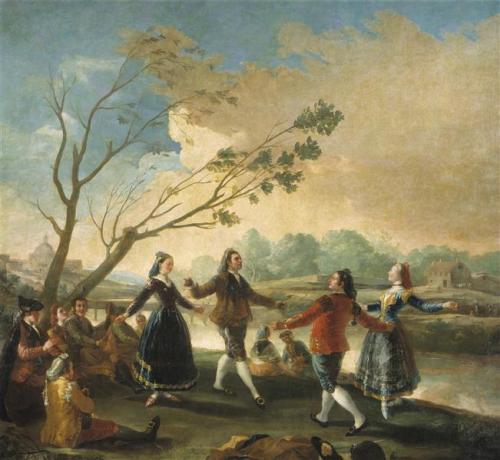
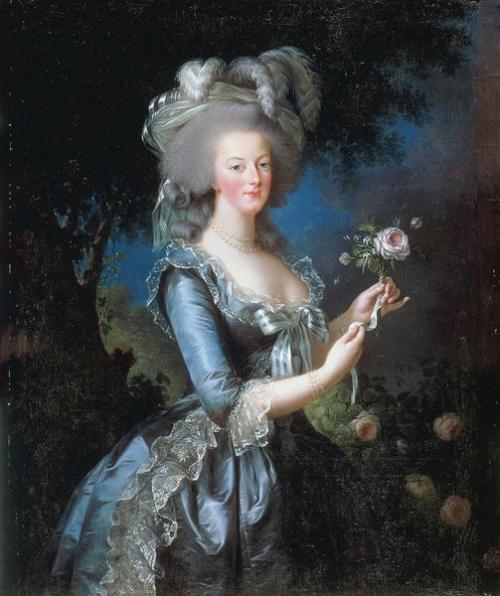
“Queen Marie Antoinette of France“ (1783)
Louise Élisabeth Vigée Le Brun
___________________
first of all, let me grievously repent an
egregious confusion I probably left
in my last diatribe, I said that the second
movement of the Opus 54, no 2 sounded
to me like a minuet, I had, through
embarrassing inattention, confused its,
however unmemorable, adagio with that
of this Opus 55, no 3, which I’d listened
to in too quick succession, driven as I
am by my thirst for epiphanies
the Opus 54, no 2 will do, but I’m not
going back for seconds, nor to the
Opus 55, no 3, though here’s where
I flaunt nevertheless Haydn, not to
mention Bach, Mozart, Beethoven,
all the way to eventually Bruckner,
Brahms, the extraordinary Richard
Wagner, passing through Schubert,
Mendelssohn, the Strausses, father
and son, and the unrelated Strauss,
Richard, another incontrovertible
giant, and I nearly left out the
unforgettable Liszt, all of them
forefathers of our present music
you might have noticed that these
are all Germanic names, obedient
to the Hapsburg empire, with
Vienna as its supreme cultural
capital, and it was that
Austro-Hungarian dynasty that
indeed nearly single-handedly
secured our Western musical
traditions
a few Italians are remembered,
from the 18th Century, Scarlatti
maybe, Boccherini, Albinoni,
but not many more
no one from France, but they were
about to have a revolution, not a
good time for creative types,
though, incidentally, Haydn was
getting Tost, to whom he was
dedicating his string quartets for
services rendered, to sell his stuff
in very Paris
then again, Marie Antoinette, I thought,
was Austrian, an even archduchess,
and would’ve loved some down-home
music at nearby Versailles
so there you are, there would’ve been
a market
the English had Handel, of course,
who was, albeit, German, getting
work where he could when you
consider his competition, he was
too solemn and plodding by half,
to my mind, for the more
effervescent, admittedly Italianate,
continentals, Italy having led the
way earlier with especially its
filigreed and unfettered operas
but here’s Haydn’s Opus 55, no 3
nevertheless, the best Europe had
to offer, socking it to them
Haydn’s having a hard time, I think,
moving from music for at court to
recital hall music, music for a much
less genteel clientele, however
socially aspiring, we still hear
minuets, and obeisances all over
the place, despite a desire to
nevertheless dazzle, impress
then again, I’m not the final word, as
my mea culpa above might express,
you’ll find what eventually turns
your own crank, floats your own
boat, as you listen
which, finally, is my greatest wish
R ! chard

__________
if I haven’t spoken much about Bach
until now it’s that, although he is at
the very start of our modern music,
having in fact set up its very alphabet,
the scale we’ve been using since, he
is nevertheless as different from our
own era in music as Shakespeare is
to us in literature, both are stalwarts,
but we no longer say, for instance,
thee or thou, nor write in iambic
pentameter, nor do we dance
gavottes at court, nor congregate
at church to hear cantatas
the turning point is the Enlightenment,
also called the Age of Reason, when
the concept of God was being
questioned, if not even debunked, and
the mysteries of nature were being
rationally resolved, handing authority
to knowledgeable individuals instead
of to popes
by the time of Mozart and Haydn, a
secular tone was gradually pervading
all of the arts, devoid of any religious
intentions, sponsors were private
rather than clerical
Bach had indeed been hired by a prince,
Leopold of Anhalt-Köthen, but was
appointed court musician at his ducal
chapel, Nikolaus l, Prince Esterházy
wanted Haydn’s music, rather, for his
court entertainment, and for himself
as well, incidentally, as a fellow baryton
player
Mozart was also employed by a prince,
but left when he wasn’t being payed
well
times haven’t changed much, see
Trump, for instance
after the French Revolution, there was
not much call for religious music,
human rights took the place of God,
liberté, égalité, fraternité, and all that,
not to mention the American Bill of
Rights, and that’s the route we’ve
been following ever since, for better
or for worse
but hey, we’re still reading Shakespeare,
and still listening to Bach, and loving
both of them, some of us
here’s some more Bach for old times’
sake, his Partita no 2 for solo violin
a partita is just a series of dance suites
– an allemande, a courante, a sarabande,
a gigue, and a chaconne, in this case – I
don’t think anyone other than Bach ever
wrote some, but his are sublime
it’s kind of like my calling my own
stuff prosetry, for whatever infinity
that word might ever deliver, though
no one else might ever use that term
again
listen also to a transposition of its
celebrated last movement, the
Chaconne, for left-hand piano, in
this instance, as transposed by
Brahms, a precursor to Ravel’s
Concerto in G major for the Left
Hand, written for Paul
Wittgenstein, an already
accomplished pianist – the much
more famous philosopher,
Ludwig‘s, brother – who’d lost his
right hand during the First World
War, and who’d hopefully be
inspired, by such positive
reinforcement
art, music, poetry thrives on such
heartfelt expressions of sympathy,
compassion, communion
art is the faith that we rely on now
that God/dess is gone
R ! chard

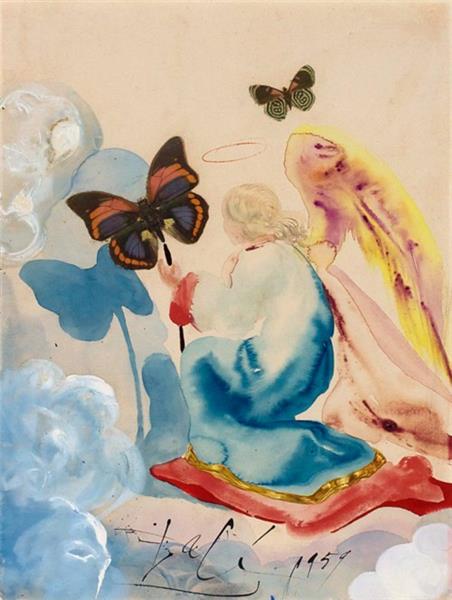
“Easter Angel“ (1959)
_______
for Elizabeth,
who needs an oratorio right now,
and who takes great comfort,
she tells me, in this music
if “The Seven Last Words of Our Saviour
on the Cross“ is not a divertimento, it
nevertheless didn’t come out of nowhere,
and a clue to its inspiration lies in the
eventual transposition of the orchestra
only piece to, a few years later, the piece
with voice, its oratorio
Haydn had heard his original composition
rendered in a nearby provincial town, where
they’d added lyrics, however saccharine, to
the score, and he thought it entirely effective
and appropriate, had new less sanctimonious
lyrics composed, and gave us what we now
hear
oratorios go back quite a while, not
surprisingly, they are quintessentially
religious music, meant to inspire, a
familiar convocational ploy, Bach and
Handel made them especially immortal
in the early 18th Century
listen to Bach’s “Easter Oratorio“ to see,
to hear rather, the connection to Haydn,
though you might not even notice much
significant difference, they’ve as many
movements more or less, nine for Haydn,
Bach’s has eleven, but all the forces are
the same, and in the same order
that Bach’s oratorio would be more
joyous is not surprising, the occasion for
the “Easter Oratorio“ is one of celebration,
where “The Words“ is more lugubrious, it
describes a portentous demise, dance
rhythms therefore are not in the former
inappropriate
its dances, however, are rather gavottes
and sarabandes instead of the later
minuets, a not not instructive alteration
when you think that minuets not much
later than Haydn had become waltzes,
more about that later
in the “Easter Oratorio“, the story is told
by the singers, whereas in “The Seven
Last Words“, the music is doing the
telling, secured by the fact that the piece
was originally written without singers
“The Words“ is more dramatic, more
use of contrasting volumes and tempi,
the piano hadn’t been invented at the
time of Bach, long notes couldn’t be
accommodated on the harpsichord,
which determined the pace of the plot,
the piano allowed with its soft pedal
a moderation in volume, and with its
hold pedal a moderation of a note’s
resonance, which allowed for more
expansive expression, which led
eventually, nearly inescapably, to
the Romantic Period, after passing,
of course, through, Mozart and
Haydn
but listen to what Bach can do
without these later interventions,
proof that a poet can inspire with
merely a matchstick, the second
aria itself – My soul, the spice that
embalms you shall no longer be
myrrh – for soprano and baroque
flute, spare as it is instrumentally,
is manifestly entirely worth the
priceless price of admission
R ! chard