Richibi’s Weblog

Just another WordPress.com weblog

Category: “Metamorphoses”

“The Story of Coronis, and Birth of Aesculapius” – Ovid
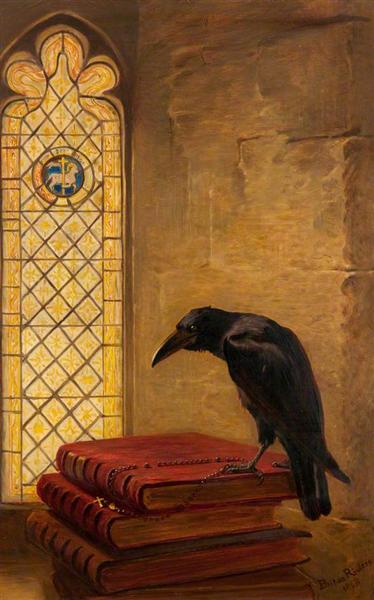
a-saint-from-the-jackdaw-of-rheims-1868(1).jpg!Large

   “A Saint, from ‘The Jackdaw of Rheims’ (1868) 


           Briton Rivière


              _______


             The raven once in snowy plumes was drest, 
             White as the whitest dove’s unsully’d breast, 
             Fair as the guardian of the Capitol, 
             Soft as the swan; a large and lovely fowl; 
             His tongue, his prating tongue had chang’d him quite 
             To sooty blackness, from the purest white. 


the Capitol, the Temple of Jupiter, only 

portions of which remain, on exhibit in

the Capitoline Museums, on the 

Capitoline Hill, one of the Seven Hills 

of Rome


the guardian of the Capitol, the Vestalis

Maxima, or the greatest of the Vestals,

who were charged with ensuring the 

security of the city


the raven was white once, Ovid says, 

[f]air as the guardian of the Capitol, 

[s]oft as the swan, but it seems his 

prating tongue got him in trouble


prating, chattering, tattling


here’s what happened


            In Thessaly there liv’d a nymph of old, 
             Coronis nam’d; a peerless maid she shin’d, 
             Confest the fairest of the fairer kind. 
             Apollo lov’d her, ’till her guilt he knew, 
             While true she was, or whilst he thought her true. 


Thessaly, a region of Greece


contrary to what’s taken place in

these myths till now, Coronis, a 

nymph, in name only, it appears,

was found out to be untrue to 

Apollowho lov’d her


                   his own bird the raven chanc’d to find 
             The false one with a secret rival joyn’d. 
             Coronis begg’d him to suppress the tale, 
             But could not with repeated pray’rs prevail. 


the raven, Apollo‘s own bird, was not 

going to not tell his master about his 

mistress’ indiscretion, despite [t]he 

false one’s pray’rs not to


              His milk-white pinions to the God he ply’d;


pinion, the outer part of a bird’s wing,

including the flight feathers


             [A] busy daw flew with him, side by side, 


daw, jackdaw, a black bird related to 

the crow


             And by a thousand teizing questions drew
             Th’ important secret from him as they 
flew. 


teizing, teasing


             The daw gave honest counsel, 
tho’ despis’d, 


tho’ despis’d, though the honest

counsel would be unpleasant to 

hear


              And, tedious in her tattle, thus advis’d: 


listen, said the daw, cautioning

the raven 


              “Stay, silly bird, th’ ill-natur’d task refuse, 


silly bird, the raven 


              Nor be the bearer of unwelcome news. 
             Be warn’d by my example: 


pay attention, the daw insists, be 

wary, [b]e warn’d


                                                         you discern 
             What now I am, and what I was shall learn. 
             My foolish honesty was all my crime; 
             Then hear my story.


here’s what happened to me,

says the pitch black bird


                                             Once upon a time, 


to follow


R ! chard


psst: The Jackdaw of Reims, by

            Richard Harris Barham
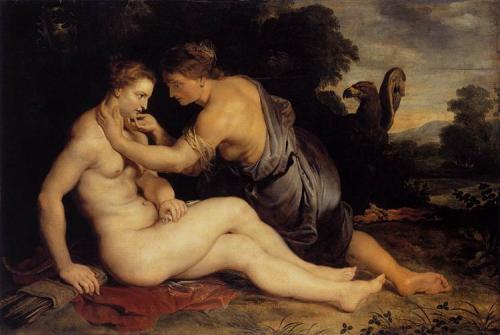


“The Story of Calisto” – Ovid

jupiter-and-callisto-1613.jpg!Large

   Jupiter and Callisto (1611 – 1613) 


            Peter Paul Rubens


                 ___________


after having read Homer’s Iliad, the 

greatest work of fiction, to my mind, 

ever told, resounding through the 

centuries and millennia with power,

pathos, and profound humanity, I 

found it hard for one reason or 

another to complete other 

acclaimed epics, Virgil’s Aeneid,

for instance, too brimming with 

bombast and bravado, much like

many American war movies,

wherein the Americans win every

conflict, whether or not they’ve 

indeed won, all on their own, with

little acknowledgment of the other

international militaries that might’ve

also played essential roles


Ovid’s Metamorphoses, as I read 

on, is becoming more and more 

offensive because of its recurrent

abuse of women, nymphs, virgins,

so that I can no longer champion 

this work, however enthusiastic I

might’ve been at the beginning


I’m not ready to personally give it 

up, but intend to relate it in brief

segments, with perhaps, here 

and there, noteworthy verses


the myth that follows the 

transformation of Cycnus into 

a swan, and the restoration of

Earth after its near conflagration 

upon the death of Phaeton, has 

Jove / Jupiter / Zeus cast[ing] 

an eye on ev’ry diff’rent coast in 

order to ensure that all is aright,

which it is, and Nature smiles 

again


but he spies by chance a nymph,

a follower of Diana, virginal

goddess of the Countryside, and

despite concerns about Juno, his

goddess wife, pursues the maiden


who was easy prey, did whate’er a 

virgin cou’d … / With all her might 

against his force … / But how can 

mortal maids contend with Jove?


following which Diana arrives with 

her train of nubile followers, to the 

dismay of the young victim, who 

could only try to hide her shame, 

which her altered demeanour 

must’ve somewhat, it is supposed, 

uncovered


                   How in the look does conscious guilt appear! 
                   Slowly she mov’d, and loiter’d in the rear; 
                   Nor lightly tripp’d, nor by the Goddess ran, 
                   As once she us’d, the foremost of the train. 


but now the moon had nine times 

lost her light, and any doubt about 

her condition was erased, so that 

Diana, unforgiving, a not uncommon 

reaction, I’ve found, among women, 

banished her to eventually alone 

give birth to a son


meanwhile Juno, now doubly 

incensed – This boy, she rails, shall 

stand a living mark, to prove / My 

husband’s baseness and the strumpet’s

love – turns the wretched mom into a

bear


but when the son had fifteen summers 

told, and came inadvertently upon this 

beast while in the forest, unaware it was 

his mother, and to protect himself, he


                                    aim’d a pointed arrow at her breast,  
                   And would have slain his mother in the beast;  
                   But Jove forbad, and snatch’d ’em through  
                   In whirlwinds up to Heav’n, and fix’d ’em there!


where now we know them as either 

the Great Bear and the Little Bear, 

Ursa Major and Ursa Minor or, 

more familiarly, as the Big Dipper 

and the Little Dipper


who could ‘a’ ever thunk it


R ! chard


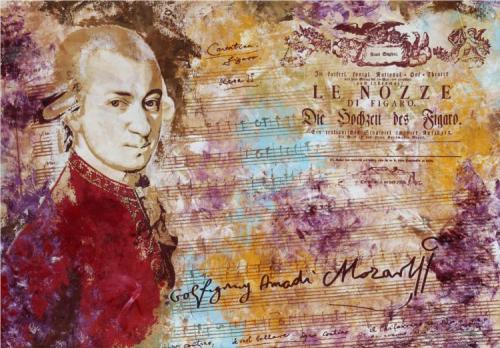
Piano Concerto no 20, K.466 – Mozart (Uchida)

mozart-2015.jpg!Large

  Mozart (2015)


       Bernd Luz


          ______


having been immersed recently, indeed 

consumed by, Ovid, his Metamorphoses, 

for four months now, according to a 

friend, since, however improbably, April, 

and we’re now in mid-August, I’ve been 

redirected recently, not only for

metaphysical breath, but by friends 

who’ve brought up other ideological 

realities


I watched a concert on TV yesterday, 

my mother said this morning when I 

went over for coffee, she lives, 

providentially, to my mind, only a few 

blocks away, we touch bases regularly


great, I reacted, I’ve got it on tape, I 

was meaning to watch it later


the pianist, she marvelled, also

conducted, I’ve never seen that


I cheered her on, and couldn’t wait to 

see for myself when I got home


but couldn’t watch more than a few 

moments, the pianist / conductor, 

famous in his day, had become 

crotchety, decrepit, the piece was 

Mozart, you can’t play Mozart with 

arthritic fingers


which had me finding the mistress of 

Mozart on the internet, unmatched at 

Mozart to this day, Mitsuko Uchida, 

watch her transform Mozart’s flights 

of lyrical fantasy into utter, and 

irrepressible, magic, sent it to my

mom for incontrovertible 

corroboration


his 20th Piano Concerto, K.466


watch, marvel   


R ! chard


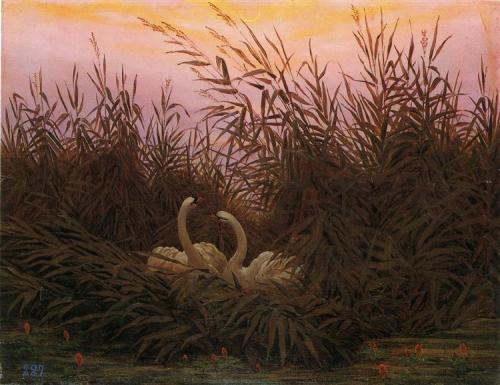
“The Transformation of Cycnus into a Swan” – Ovid

wans-among-the-reeds-at-the-first-morgenro.jpg!Large

   “Swans among the Reeds at First Light (1832) 


             Caspar David Friedrich


                 _______________


were I to be transformed into anything,

I told myself, after reading about all 

these earlier metamorphoses, then 

coming upon this one, of Cycnus, I 

wouldn’t mind, I decided, becoming 

a swan


                   Cycnus beheld the nymphs transform’d, ally’d 
                   To their dead brother on the mortal side, 
                   In friendship and affection nearer bound; 


Cycnus, son of Sthenelus, King of Liguria,

a region still of Northern Italy, a prince, 

therefore, in his own right, was a good 

friend of Phaeton


the nymphs, the Heliades, daughters

of Helios / Phoebus / Apollo and 

Clymene, though transform’d into trees, 

were nevertheless on the mortal side, 

living things, ally’d  / To their dead 

brother, by the earth, which confined, 

constrained, covered them, if only,

the maidens, partially


nearer bound, ally’d again, like a refrain, 

a literary reverberation, honouring their 

brother, Phaeton, [i]n friendship and

affection 


                   He left the cities and the realms he own’d, 
                   Thro’ pathless fields and lonely shores to range, 
                   And woods made thicker by the sisters’ change. 


the sisters’ change, more trees than 

there had been before


                   Whilst here, within the dismal gloom, alone, 
                   The melancholy monarch made his moan, 


monarch, Cycnus, prince of Liguria


                   His voice was lessen’d, as he try’d to speak, 
                   And issu’d through a long-extended neck; 


the transformation of Cycnus occurs, 

much as it did earlier with the Heliades

through the mercy, presumably, of the 

gods, who, usually indifferent, express 

compassion here, however 

uncharacteristically, for the unbearable 

anguish suffered by the grieving sisters 

and friend


Cycnus, incidentally, would also later be 

placed by Apollo among the stars, to 

become the constellation Cygnus


                   His hair transforms to down, his fingers meet 
                   In skinny films, and shape his oary feet; 


oary, hoary, grayish white, grizzled,

withered


                   From both his sides the wings and feathers break; 
                   And from his mouth proceeds a blunted beak: 
                   All Cycnus now into a Swan was turn’d, 
                   Who, still remembring how his kinsman burn’d, 


his kinsman, Phaeton, burn’d, in the

sundered Chariot of the Sun


                   To solitary pools and lakes retires, 
                   And loves the waters as oppos’d to fires. 


swans, it appears, seek out the shade, 

are oppos’d to fires, shun the heat of 

the nefarious, the treacherous, sun


see above


                   Mean-while Apollo in a gloomy shade 
                   (The native lustre of his brows decay’d) 


decay’d, disintegrated, fell away from,

its native lustre


                   Indulging sorrow, sickens at the sight 
                   Of his own sun-shine, and abhors the light; 


Indulging sorrow, allowing himself 

to steep in his own agony


                   The hidden griefs, that in his bosom rise, 
                   Sadden his looks and over-cast his eyes, 
                   As when some dusky orb obstructs his ray, 
                   And sullies in a dim eclipse the day. 


another reverberation erupts here

recalling the darkness, eclipse, just

undergone after the incineration of 

Apollo’s chariot, however paltry

might’ve been, to that god, the 

mere disturbance of a planet 

obstructing the sun, however 

otherwise momentous, compared 

to the death of his son    


                   Now secretly with inward griefs he pin’d, 
                   Now warm resentments to his griefs he joyn’d, 
                   And now renounc’d his office to mankind. 


Helios / Phoebus / Apollo, presently

in the throes of griefs and guilt, warm,

impassioned, resentments, chooses 

to no longer drive the Chariot of the 

Sun, renounc[es] his office, his duty,

responsibility, service, to mankind  


                   “Ere since the birth of time,” said he, “I’ve born 
                   A long ungrateful toil, without return; 
                   Let now some other manage, if he dare, 
                   The fiery steeds, and mount the burning carr; 
                   Or, if none else, let Jove his fortune try, 
                   And learn to lay his murd’ring thunder by; 


Helios / Phoebus / Apollo challenges 

Jove himself, if no other will take his 

place, to guide the horses, holding 

him responsible for the death of 

his son, Phaeton, by having cast his 

murd’ring thunder at him, though

the Earth herself and the harried

constellations, in Jove’s defence,

had begged the god of gods to do

something


                   Then will he own, perhaps, but own too late, 
                   My son deserv’d not so severe a fate.” 


but could there have been any other 

option

                   The Gods stand round him, as he mourns, and pray 
                   He would resume the conduct of the day, 
                   Nor let the world be lost in endless night: 


without the Chariot of the Sun and

someone to guide it, there would be

no day, an apocalyptic cataclysm


                   Jove too himself descending from his height, 
                   Excuses what had happen’d, and intreats, 


intreats, entreats, implores, beseeches


                   Majestically mixing pray’rs and threats. 


Jove / Jupiter / Zeus, from his position

of supreme authority, pulls out all the 

stops, uses all his mechanisms,

pray’rs, threats


                   Prevail’d upon at length, again he took 
                   The harness’d steeds, that still with horror shook, 
                   And plies ’em with the lash, and whips ’em on, 
                   And, as he whips, upbraids ’em with his son. 


Helios / Phoebus / Apollo takes out 

his anguish on the horses, which 

must’ve led to a daunting, a hellish 

day


R ! chard


Phaeton’s Sisters Transform’d into Trees – Ovid

Heliades_by_Rupert_Bunny

   “Heliades (1920s) 


           Rupert Bunny


                      ______


                     The Latian nymphs came round him, 


Latian, of Latium, a region still of Italy,

which comprised, and still comprises,

Rome, the Latians, or Latins, were its

original inhabitants, whose language,

Latin, is the root of many of our 

European languages today, it is, 

notably, the language of Ovid


                                                                                                 and, amaz’d, 
                     On the dead youth, transfix’d with thunder, gaz’d; 


the dead youth, Phaeton


                     And, whilst yet smoaking from the bolt he lay, 
                     His shatter’d body to a tomb convey, 
                     And o’er the tomb an epitaph devise: 
                     “Here he, who drove the sun’s bright chariot, lies; 
                     His father’s fiery steeds he cou’d not guide, 
                     But in the glorious enterprize he dy’d.” 


though Ovid’s text, as translated by

John Dryden, among others, has

its difficulties, a good portion of it 

is easy to understand, the secret,

mostly, is in paying attention to the

punctuation, which on occasion can

be tricky


                     Apollo hid his face, and pin’d for grief, 


Apollo, Phaeton’s father


                     And, if the story may deserve belief, 
                     The space of one whole day is said to run, 
                     From morn to wonted ev’n, without a sun: 


ev’n, evening

                     The burning ruins, with a fainter ray, 
                     Supply the sun, and counterfeit a day, 

                     A day, that still did Nature’s face disclose: 
                     This comfort from the mighty mischief rose. 


though the sun did not shine that

fateful day, the glow from the 

burning debris shed a light that 

allowed one to nevertheless 

make out, disclose, Nature’s face, 

a wry comfort midst the carnage,

midst the mighty mischief


                     But Clymene, enrag’d with grief, laments, 


Clymene, Phaeton’s mother


                     And as her grief inspires, her passion vents: 
                     Wild for her son, and frantick in her woes, 
                     With hair dishevel’d round the world she goes, 
                     To seek where-e’er his body might be cast; 
                     ‘Till, on the borders of the Po, at last 
                     The name inscrib’d on the new tomb appears. 


the Po, a river in Italy


the new tomb, where the Latian 

nymphs lay to rest Phaeton’s 

remains 


                     The dear dear name she bathes in flowing tears, 
                     Hangs o’er the tomb, unable to depart, 
                     And hugs the marble to her throbbing heart. 

                     Her daughters too lament, and sigh, and mourn 
                     (A fruitless tribute to their brother’s urn), 
                     And beat their naked bosoms, and complain, 
                     And call aloud for Phaeton in vain: 
                     All the long night their mournful watch they keep, 
                     And all the day stand round the tomb, and weep. 


Her daughters, the Heliades, along

with Phaeton, were the children of

Clymene and Helios / Phoebus / 

Apollo, god of the Sun


                     Four times, revolving, the full moon return’d; 
                     So long the mother and the daughters mourn’d: 


the equivalent of, more or less, 

four months


                     When now the eldest, Phaethusa, strove 
                     To rest her weary limbs, but could not move; 
                     Lampetia wou’d have help’d her, but she found 
                     Her self with-held, and rooted to the ground: 


Phaethusa and Lampetia, both daughters 

of Helios / Phoebus / Apollo, but with 

Neaera, and not, as Ovid indeed writes 

in his Latin text, with Clymene, were 

therefore not strictly speaking Heliades

but stepsisters only of Phaeton


furthermore, Ovid has them find their

purported brother in the Eridanos, a

river only later identified as the Po

so that Dryden cannot be faulted for

this not inaccurate anachronism


in either case, I suspect either’s metre

might’ve played a poetically pertinent 

part in these divergences


                     A third in wild affliction, as she grieves, 
                     Wou’d rend her hair, but fills her hands with leaves; 
                     One sees her thighs transform’d, another views 
                     Her arms shot out, and branching into boughs. 


in one version, Helios / Phoebus / 

Apollo and Clymene had three 

daughters, Aegiale, Aegle, and 

Aetheria, in another they had five, 

Helia, Merope, Phoebe, Aetheria 

and Dioxippe, you’ll note that 

Phaethusa and Lampetia are not 

among then


                     And now their legs, and breasts, and bodies stood  
                     Crusted with bark, and hard’ning into wood; 
                     But still above were female heads display’d, 

                     And mouths, that call’d the mother to their aid. 


there’s a pattern here, a friend said 

when I spoke to her about what 

was coming up


you mean these nymphs turning 

into trees, I asked


yes, she replied


look at it the other way around, I said, 

not that the girls are turning into trees, 

but that the trees are becoming human, 

becoming our kin, we are acknowledging 

their humanity, anthropomorphically, which 

is why some of us actually hug them, the 

world in Ovid’s earlier myths is still being 

created, not just the generic tree, but 

poplars, maples, laurel, out of the share 

of the common soul we impart to them, 

not only metaphorically, as in these myths, 

but even organically, we are, after all,  

all, fundamentally, stardust


                     What cou’d, alas! the weeping mother do? 
                     From this to that with eager haste she flew, 
                     And kiss’d her sprouting daughters as they grew. 
                     She tears the bark that to each body cleaves, 
                     And from their verdant fingers strips the leaves: 
                     The blood came trickling, where she tore away 
                     The leaves and bark: 


the process is not unlike watching, 

helplessly, a daughter leave home, 

age, take on life’s tribulations


                                                 the maids were heard to say, 
                     “Forbear, mistaken parent, oh! forbear; 
                     A wounded daughter in each tree you tear; 
                     Farewell for ever.” Here the bark encreas’d, 
                     Clos’d on their faces, and their words suppress’d. 


let go, let go, the daughters cry,

holding on to us only hurts 

                     The new-made trees in tears of amber run, 
                     Which, harden’d into value by the sun, 
                     Distill for ever on the streams below: 


the river Eridanos was supposed to be a

river rich in amber, the resin, apparently,  

of poplar trees there having drifted to the 

nearby stream, hardened


I’m reminded of the sap of our own

indigenous maple trees becoming

a prized delicacy


                     The limpid streams their radiant treasure show, 
                     Mixt in the sand; whence the rich drops convey’d 
                     Shine in the dress of the bright Latian maid. 


Latian, or Latin, maids have been 

weaving amber into their apparel

ever since


R ! chard


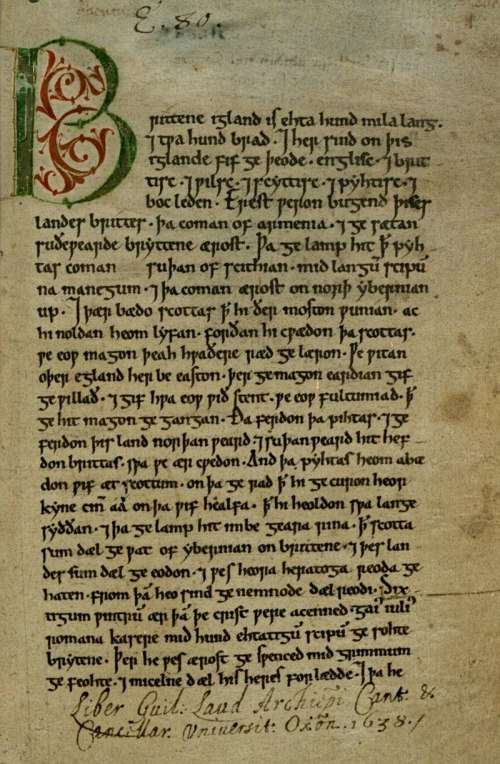
Story of Phaeton (VIII) – Ovid

800px-Peterborough.Chronicle.firstpage

  the initial page of the Peterborough Chronicle (14th Century CE)


           ___________


                  Jove call’d to witness ev’ry Pow’r above, 
                  And ev’n the God, whose son the chariot drove, 
                  That what he acts he is compell’d to do, 
                  Or universal ruin must ensue. 


had Dryden applied commas above,

as I am, you might’ve noted, nearly

compulsively wont to do, commas 

being a significant part of my religion, 

the verses might’ve been more easily 

understood, put a comma after 

witness and the object of the 

witnessing, in this case an entire 

independent clause, That what he 

acts he is compell’d to do, finds its 

natural position, clarity, Jove has to 

do, he says, what Jove has to do


I cannot too much blame Dryden for 

this literary indiscretion, this peccadillo,

to my mind, for punctuation has been 

an evolving thing, there was a time 

when there was no punctuation at all, 

not even spaces between the words, 

see abovethis translation, of 1717, 

stands somewhere within the gamut 

of our ever evolving English grammar


the God, meanwhile, whose son the 

chariot drove, in, above, the second 

pentameter, is Phoebus / Apollo

Phaeton‘s father


                  Strait he ascends the high aetherial throne, 


Jove does


                  From whence 
he us’d to dart his thunder down,  
                From whence his show’rs and storms he us’d to pour, 
                But now cou’d meet with neither storm nor show’r. 


Jove, being rendered impotent by the 

raging fires, the immutable trajectory 

of the very Sun having been 

catastrophically, however improbably, 

distorted, is left, at that time, or Then, 

as the next line starts up, with no 

option


                  Then, aiming at the youth, with lifted hand, 
                  Full at his head he hurl’d the forky brand, 
                  In dreadful thund’rings. 


forky brand, a forklike piece of burning 

wood, Jove’s trident


                                                  Thus th’ almighty sire   
                  Suppress’d the raging of the fires with fire. 


I’m reminded of the planned explosions 

at the mouth of the oil wells in Kuwait,

wellheads, after the Gulf War, that were 

meant to still for a critical moment the 

fires, that would otherwise burn out 

of control, in order to squelch the

disastrous conflagrations 


                  At once from life and from the chariot driv’n, 
                  Th’ ambitious boy fell thunder-struck from Heav’n. 
                  The horses started with a sudden bound, 
                  And flung the reins and chariot to the ground: 
                  The studded harness from their necks they broke, 
                  Here fell a wheel, and here a silver spoke, 
                  Here were the beam and axle torn away; 
                  And, scatter’d o’er the Earth, the shining fragments lay. 
                  The breathless Phaeton, with flaming hair, 
                  Shot from the chariot, like a falling star, 
                  That in a summer’s ev’ning from the top 
                  Of Heav’n drops down, or seems at least to drop; 
                  ‘Till on the Po his blasted corps was hurl’d, 


corps, body, from the French, or 

corpse 


the Po, a river in Italy


                   Far from his country, in the western world. 


one wonders, however, what happened

to the Earth, the Chariot of the Sun, 

upon their fiery interaction, perhaps 

the Sun, fallen behind the horizon,

beyond the western oceans, set out 

again, the following morning, with its 

usual master, Phoebus / Apollo, at 

its steady reins, for the world to 

see again another day under that 

lord’s august intervention


R ! chard


The Story of Phaeton (VII) – Ovid

earth.jpg!Large

   Earth (2010) 


            Rolf Ohst


                     ______


mythologies are stories a people will 

tell itself to explain phenomena that 

remain mysterious, by transforming 

conundrums into people, 

anthropomorphizing them, a tale is

told that not only entertains, but 

informs, gives context in order to

shape moral character


most mythologies, if not all, it’s a 

question of definition, which I’ll 

get into later, past and present, 

are pantheistic, which is to say 

they refer to many goddesses 

and gods, rather than to one 

almighty one, therefore they see 

deities in rivers, trees, oceans, 

mountains, the sun, the moon, 

constellations, as well as in the 

more metaphysical entities, 

poetry, beauty, love  


there is therefore a more respectful,

even reverent, attitude to all of these

otherwise neglected realities, for 

being, often, peripheral to more 

immediate, daily, domestic, 

concerns


our prevalent monotheistic 

mythologies, by contrast, purport 

to be historical, however specious, 

which is why the word mythology 

here might not be appropriate, but 

regardless, they all posit one 

omnipotent God, notably 

imponderable, esoteric, and there 

are, correspondingly, only a few 

mentions in their foundational  

texts, the Bible, the Koran, the 

Torah, of nature playing any  

significant part, it is secondary to

to their overriding message


we therefore have allowed ourselves 

to watch the world burning without

having even noticed it come about, 

a function exacerbated, incidentally,

by our living mostly, now, in cities


Phaeton has let his horses stray from 

the cosmically ordained path of the 

Sun, the constellations have already

complained, Earth will follow


we, for our part, have despoiled our 

mother, we are presently watching 

her being ignominiously desecrated


see above


                   The Earth at length, on ev’ry side embrac’d
                   With scalding seas that floated round her waste, 


waste, waist, though waste itself throws 

its own homonymic reverberations of 

disorganized detritus, float[ing] round, 

into the mix, something Shakespeare,

incidentally, was especially good at


                   When now she felt the springs and rivers come,
                   And crowd within the hollow of her womb, 


the waters are receding, evaporating


                   Up-lifted to the Heav’ns her blasted head, 


blasted, overwhelmed


                   And clapt her hand upon her brows, and said
                   (But first, impatient of the sultry heat,
                   Sunk deeper down, and sought a cooler seat): 


a strange, and not especially effective

interjection between the parentheses

here, I think


                   “If you, great king of Gods, my death approve,
                   And I deserve it, let me die by Jove; 


Earth asks of Jove, king of Gods, 

that she might die at his own hands,

if her time has come


                   If I must perish by the force of fire,
                   Let me transfix’d with thunder-bolts expire.
                   See, whilst I speak, my breath the vapours choak
                   (For now her face lay wrapt in clouds of smoak),
                   See my singe’d hair, behold my faded eye,
                   And wither’d face, where heaps of cinders lye! 


we are familiar with forest fires,

hurricanes, droughts in our own day


                   And does the plow for this my body tear? 


after all I have given through 

agriculture, the plow, of nourishment, 

Earth asks, is this how I am to be 

repaid 


                   This the reward for all the fruits I bear,
                   Tortur’d with rakes, and harrass’d all the year?
                   That herbs for cattle daily I renew,
                   And food for Man, and frankincense for you? 


not only does Earth benefit living

creatures, but also the goddesses

and gods, she exclaims


                   But grant me guilty; what has Neptune done? 


Neptune, god of Water, the Sea,

is also Jove‘s brother


                   Why are his waters boiling in the sun?
                   The wavy empire, which by lot was giv’n,
                   Why does it waste, and further shrink from Heav’n? 


wavy empire, made of waves


Jove, Neptune, and Pluto were all

sons of Saturn, Titan, god of Time, 

after the sons overthrew their father 

during the Giants’ War, they divided 

the world by lot, which is to say, who

had the longest straw, Jove got the 

Heavens, Neptune, the Seas, Pluto

the Underworld


waste, resounding from above 


                   If I nor he your pity can provoke,
                   See your own Heav’ns, the Heav’ns begin to smoke!
                   Shou’d once the sparkles catch those bright abodes,
                   Destruction seizes on the Heav’ns and Gods;
                   Atlas becomes unequal to his freight,
                   And almost faints beneath the glowing weight. 


Atlas, a Titan, condemned to hold 

the heavens up for eternity


                   If Heav’n, and Earth, and sea, together burn,
                   All must again into their chaos turn. 


into their chaos turn, see the Creation

of the World


                   Apply some speedy cure, prevent our fate,
                   And succour Nature, ere it be too late.” 


sounds disquietingly familiar


                   She cea’sd, for choak’d with vapours round her spread,
                   Down to the deepest shades she sunk her head. 


surrounded by vapours, round her 

spread, Earth inexorably succumbs


gasp


R ! chard


The Story of Phaeton (VII) – Ovid

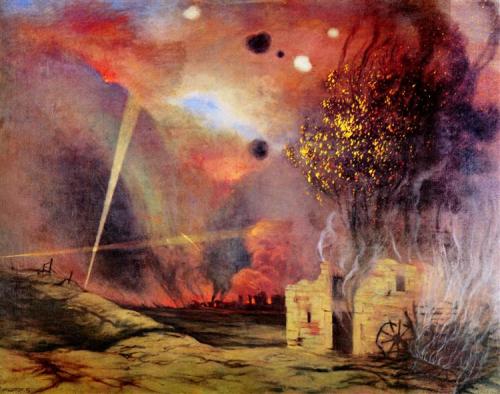
landscape-off-ruins-and-fires-1914.jpg!Large

   Landscape of Ruins and Fires (1914)


               Félix Vallotton


                   _______


                ‘Twas then, they say, the swarthy Moor begun
                To change his hue, and blacken in the sun. 


Moor, a flagrant anachronism here, 

as Moors, Muslim inhabitants of

North Africa, didn’t exist before the 

advent of Islam, which began in the 

Seventh Century CE, Ovid, in Latin,

uses Ethiopian, which would entirely 

throw off, note, Dryden‘s poetic 

metre, thus Moor


                Then Libya first, of all her moisture drain’d,
                Became a barren waste, a wild of sand. 


Libya, Ancient Libya, a much larger 

country of North Africa than the 

Libya we know of today


                The water-nymphs lament their empty urns,
                Boeotia, robb’s of silve Dirce, mourns, 


empty urns, the water has evaporated


Boeotia, a region still of Greece


Dirce, upon her gruesome death, which 

I won’t get into here, was transformed 

by Dionysus, god of revelry and fertility,  

into a fountain, which became revered


silve, sylvan, of the forest, the 

countryside


robb’s, I’ll guess robbers, because 

Boeotia is where Dirce, abducted,

became a fountain 


                Corinth Pyrene’s wasted spring bewails,
                And Argos grieves whilst Amymone fails. 


Corinth, a city still in Greece


Pyrene, a princess, who was, another 

distressing story, transformed into the 

Pyreneesby Heracles, her seducer,

as well as being a god renowned for 

his extraordinary exploits


Argos, a city still in Greece


Amymone, another unfortunate maiden,

who was granted by Poseidon, god of 

Water, for, throughout her tribulations, 

her probity, springs, sources of water, 

for her community, which, in the 

instance, all fail[ ] 


                The floods are drain’d from ev’ry distant coast,
                Ev’n Tanais, tho’ fix’d in ice, was lost. 


Tanais, the river today known as the 

Don in Russia, thus fix’d in ice


                Enrag’d Caicus and Lycormas roar, 


Caicus, a river in Asia Minor, now

given a different name in a different

script, Bakırçay, which I’ll let you 

try to pronounce 


Lycormas, a river in Ancient Greece, 

now called Evinos


                And Xanthus, fated to be burnt once more. 


Xanthus, or Xanthos, a river in Ancient

Asia Minor, which was yellowish already

due to its surrounding tainted soil, thus 

burnt once more    


                The fam’d Maeander, that unweary’d strays 


Maeander, a river in Ancient Asia

Minor


                Through mazy windings, smoaks in ev’ry maze. 


smoaks, smokes


mazy, maze, cute


                From his lov’d Babylon Euphrates flies;
                The big-swoln Ganges and the Danube rise
                In thick’ning fumes, and darken half the skies. 


the Euphrates, the Ganges, and the

Danube, rivers which still go by their

ancient names


                In flames Ismenos and the Phasis roul’d, 


Ismenos, or Ismenus, a river in 

Boeotia, Greece


Phasis, ancient name for the 

Rioni River in Georgia, Eurasia


roul’d, rolled


                And Tagus floating in his melted gold. 


Tagus, a river in the Iberian 

Peninsula


                The swans, that on Cayster often try’d
                Their tuneful songs, now sung their last and dy’d. 


Cayster, a river in Turkey


                The frighted Nile ran off, and under ground
                Conceal’d his head, nor can it yet be found:
                His sev’n divided currents all are dry,
                And where they row’ld, sev’n gaping trenches lye: 


it is being suggested that the Nile

had at one point seven tributaries,

some of which dried up, never

recovered


rowl’d, rolled


                No more the Rhine or Rhone their course maintain,
                Nor Tiber, of his promis’d empire vain. 


the Rhine, the Rhone, and the Tiber

are all European rivers


vain, deprived


                The ground, deep-cleft, admits the dazling ray,
                And startles Pluto with the flash of day. 


dazling, dazzling


Pluto, god of the Underworld, who 

would be understandably startle[d] 

by a flash of day


                The seas shrink in, and to the sight disclose
                Wide naked plains, where once their billows rose; 


billows, of [t]he seas


                Their rocks are all discover’d, and increase
                The number of the scatter’d Cyclades.

 discover’d, uncovered


Cyclades, a group of islands in the 

Aegean Sea, between present-day

Greece and Turkey


                The fish in sholes about the bottom creep, 


sholes, shoals


                Nor longer dares the crooked dolphin leap
                Gasping for breath, th’ unshapen Phocae die, 


Phocae, plural of Phoca, is the 

generic name, and therefore, 

interestingly, capitalized, for 

seals, walruses, sea lions


                And on the boiling wave extended lye. 


lye, lie


                Nereus, and Doris with her virgin train,
                Seek out the last recesses of the main; 


Nereus, and Doris, Sea god and 

goddess, parents, notably, of the 

Nereids, sea nymphs, the virgin 

train


the main, the ocean


                Beneath unfathomable depths they faint,
                And secret in their gloomy caverns pant. 


secret, unseen, alone, untended


                Stern Neptune thrice above the waves upheld
                His face, and thrice was by the flames repell’d. 


Neptune, principal god of the Sea


it is interesting to note that where 

earlier the earth had been 

submerged in water, during the 

Giants’ War, now the earth is

engulfed in flames, a primordial

global warming, as it were, the 

result, consider, of a human, 

Phaeton, trying to take on the 

duties of a god, a warning the 

Ancients were already delivering,

so many years, so many centuries, 

so many millennia, ago


I suspect, worldwide, indigenous 

people would be telling a similar 

tale were we able to access their 

own, unfortunately unwritten, 

though undoubtedly comparable, 

ancestral wisdom, going back,

perhaps, even as far 


R ! chard


The Story of Phaeton (VI) – Ovid

mountain-fire.jpg!Large

    Mountain Fire (c.1903 – c.1908)


              John Singer Sargent


                       _________


because Phaeton was light, nor cou’d 

he fill the seat, the horses he would’ve

controlled forsake / Their stated course, 

and leave the beaten track


                What cou’d he do? his eyes, if backward cast,
                Find a long path he had already past;
                If forward, still a longer path they find:
                Both he compares, and measures in his mind;
                And sometimes casts an eye upon the east,
                And sometimes looks on the forbidden west, 


note the description of the movement 

of the eyes, backward, forward, east

and west, uncontrolled, erratic, nearing 

madness, despite attempts, however 

futile, to remain rational, steady, his 

very mind, comparing, measuring, is 

quickly losing its bearings


forbidden, once again, this should 

probably read forbidding


                The horses’ names he knew not in the fright,
                Nor wou’d he loose the reins, nor cou’d he hold ’em right. 


“Now, Dasher! Now, Dancer! Now, 

Prancer, and Vixen! / “On, Comet! 

On, Cupid! On, Donner and Blitzen!,

who drove another of the very few 

famous chariots in our Western 

cultural history


couldn’t help it


the only other one I could think of 

is that of the Four Horsemen of 

the Apocalypse, red, white, black, 

and pale horses, which I won’t get 

into, but to say that they have no 

names


the horses who drove the Chariot of

the Sun, meanwhile, were called

Phlegon, Aeos, Aethon, and Pyrios, 

though I fully admit that I had to 

look those up, then again I’ve never 

had to ride the Chariot of the Sun


it appears that Helios / Phoebus / 

Apollo had other steeds in his stable 

as well, for a rainy day, but they don’t 

feature in this particular story


                Now all the horrors of the Heav’ns he spies,
                And monstrous shadows of prodigious size,
                That, deck’d with stars, lye scatter’d o’er the skies. 


lye, lie


                There is a place above, where Scorpio bent
                In tail and arms surrounds a vast extent; 


Scorpio, the constellation Scorpius

visible only in the Southern hemisphere


Scorpio, represented by a scorpion,

thus has eight legs, or arms, and a 

highly distinctive tail


                In a wide circuit of the Heav’ns he shines,
                And fills the space of two coelestial signs. 


coelestial, celestial


                Soon as the youth beheld him vex’d with heat
                Brandish his sting, and in his poison sweat,
                Half dead with sudden fear he dropt the reins; 


vex’d with heat, from the wayward 

chariot, Scorpio [b]randish[es]

his sting


poison sweat, Scorpio, under the 

influence of the heat, sweat[s],

exudes, produces, characteristically, 

poison


                The horses felt ’em loose upon their mains, 


mains, manes, long hair


                And, flying out through all the plains above,
                Ran uncontroul’d where-e’re their fury drove;
                Rush’d on the stars, and through a pathless way
                Of unknown regions hurry’d on the day. 


hurry’d on the day, kept the day going

at its usual, however presently pathless, 

or uncharted, pace


                And now above, and now below they flew,
                And near the Earth the burning chariot drew. 


ever, and increasingly, ominously

                The clouds disperse in fumes, the wond’ring Moon
                Beholds her brother’s steeds beneath her own; 


wond’ring, confused, puzzled


Brother Sun, Sister Moon


                The highlands smoak, cleft by the piercing rays,
                Or, clad with woods, in their own fewel blaze. 


smoak, smoke


fewel, fuel


where the highlands are clad with 

woods, they blaze in the fires 

consuming their own trees


                Next o’er the plains, where ripen’d harvests grow,
                The running conflagration spreads below.
                But these are trivial ills: whole cities burn,
                And peopled kingdoms into ashes turn. 


an apocalypse

                The mountains kindle as the car draws near, 


the car, the chariot


                Athos and Tmolus red with fires appear; 


Athos, Mount Athos, Tmolus, Mount

Tmolus, both mountains in Greece,

both named after mountain gods


                Oeagrian Haemus (then a single name) 


Haemus Mons, an early name for 

the Balkan Mountains


Oeagria, Agria, a town in Greece


                And virgin Helicon increase the flame; 


Helicon, Mount Helicon, notable for

being the home of the Muses


                Taurus and Oete glare amid the sky, 


Taurus, the Taurus Mountains, a 

mountain range in southern Turkey 


Oete, Mount Oeta, a mountain in

Central Greece


                And Ida, spight of all her fountains, dry.
                Eryx and Othrys, and Cithaeron, glow,
                And Rhodope, no longer cloath’d in snow;
                High Pindus, Mimas, and Parnassus, sweat,
                And Aetna rages with redoubled heat. 


spight, in spite

Ida, Eryx, Othrys, CithaeronRhodope

Pindus, and the more familiar Parnassus

and Aetna, or Etna, are all mountains, or 

ranges, in the Mediterranean, Mimas, an 

island there, which is to say, a partially 

submerged mountain, all of them

sweltering


see above


                Ev’n Scythia, through her hoary regions warm’d, 


Scythia, a region northeast of Ancient 

Greece, barbarian to the more cultured 

people of Greek Antiquity, coarse 

forebears of the Cossacks 


hoary, sullied white, tired, withered 


                In vain with all her native frost was arm’d. 


even so frosty a region as Scythia

was not immune to, arm’d against, 

the running conflagration


                Cover’d with flames the tow’ring Appennine,
                And Caucasus, and proud Olympus, shine;
                And, where the long-extended Alpes aspire,
                Now stands a huge continu’d range of fire. 


the AppennineCaucasusOlympus

and Alpes, or Alps, are all mountain 

ranges throughout Europe, the 

representative part then of the 

known world


               Th’ astonisht youth, where-e’er his eyes cou’d turn,
                Beheld the universe around him burn:
                The world was in a blaze; nor cou’d he bear
                The sultry vapours and the scorching air,
                Which from below, as from a furnace, flow’d;
                And now the axle-tree beneath him glow’d:
                Lost in the whirling clouds that round him broke,
                And white with ashes, hov’ring in the smoke.
                He flew where-e’er the horses drove, nor knew
                Whither the horses drove, or where he flew. 


R ! chard


an enlightening distraction / Chopin

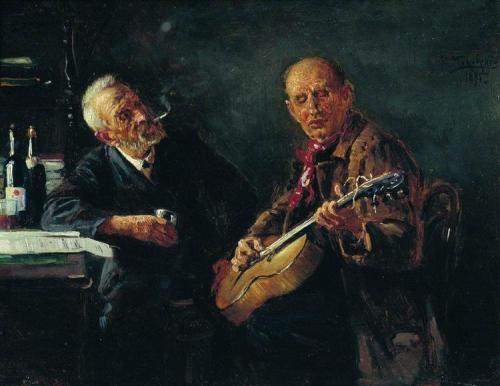
friends.jpg!Large

   Friends (1895) 


        Konstantin Makovsky


                         ________


like a lover who needs to return to old and

trusted friends to find a sense of balance, 

where a recent infatuation might’ve rendered 

usual assumptions untrustworthy, is black 

white, is up down, is what I’m doing crazy,

I turned to Chopin, a muse of long and 

distinguished standing, this evening, for 

instruction, a different perspective from 

my recently all-consuming, though entirely 

exhilarating, fascination with Ovid, his 

highly engrossing, even enchanting, 

utterly beguiling, Metamorphoses


here’s Chopin’s Piano Concerto no 2, which 

reminded me that it’s good to pay attention

to your old friends, the ones who’ll be there 

when others won’t, when the going gets, 

well, disconcerting, tough, the ones who’ll 

ever stand by you


you get his Revolutionary Etude and his 

posthumous Waltz in E minor here too, 

as encores, equally sturdy, staunch, if 

only apparently metaphysical, supporters, 

who turn out to be, however miraculously, 

rocks when you need them


listen


R ! chard