Richibi’s Weblog

Just another WordPress.com weblog

Category: Johann Sebastian Bach

String Quartet no 1, “From My Life” – Bedřich Smetana‏

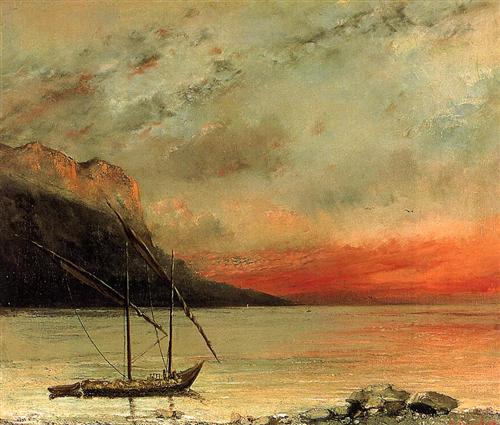
"Coucher de soleil sur le lac Léman" - Gustave Courbet

Coucher de soleil sur le lac Léman (1874)

Gustave Courbet

_________

paying attention to tenuti is not as
easy as all that, you’ll have found
probably that the music’s kept on
going and you’re not so sure if
what just went by indeed was a
tenuto, so brief, however stressed,
might’ve been the impression

rubati are easier, it’s hard to miss
them when they come round, for
being spread out through the
musical passage as a
consequence of being at the very
least three notes, usually
considerably more

tenuti happen on one note only,
one fleet fish in an ebullient river
rather than a more noticeable and
synchronous school

interestingly, not many of either,
rubati, tenuti, show up in music
history until the late Romantic
Era, the mid- to late 1800s, they’d
been only theoretically, and here
and there, part of the musical
vocabulary for having had no
purchase in music written for the
harpsichord, an instrument that
had allowed only minimal
resonance, though it laid the
foundations for composition,
and therefore dictated taste
into the very mid-nineteenth
century, a whole hundred years
after the invention of the piano,
by having entrenched the ideal
of strict tempo, the reflection,
note, of an ideal, and belief
then in a scientifically cogent
world

that was the Enlightenment

Romanticism came along to
express the ineffable reality of
the truths of the human heart,
in contrast to merely reason –
“Le coeur a ses raisons que la
raison ne connaît point”,
says
Pascal, “The heart has its own
logic which allows it to
understand what the rational
mind cannot”,
though he in a
somewhat other, much more
theological, context

but the shoe snugly fits, so I’ll
wear it, though with the same
consideration I’d render the
shoes, understand, of my
father

you can tell we’ve reached the
late 1800s when you start
hearing tenuti, ritardandi,
atonality, for that matter, and
also obscure and eccentric
repetitions

this pattern is probably more
evidenced in pictorial art,
where precision gives way to
individualized expression,
and the blurred lines of Early
Impressionism, see above

at the same time, the German
grip on the history of Western
music which it had held for a
hundred and fifty years, from
Bach to Brahms, began to loosen,
along with the idea, incidentally,
of a rationally, even irrationally,
conceived world, you can hear
it in the evolution of the tenuti,
the rubati, like canaries sense
altered conditions in a coal
mine

note however that music itself
is as indifferent to bald facts
as mathematics, it merely
describes, doesn’t comment

listen to Bedřich Smetana, a
Czech composer, his String
Quartet no 1, “From My Life”

follows in the footsteps of
the Germans, but with a
distinctively folkloric air,
there’s even a polka

tend the tenuti, relish the
rubati, if you can identify
them, they’re milestones
to the modern

but, more than anything,
enjoy

Richard
 

at the XVth International Tchaikovsky Competition – Dmitry Masleev‏

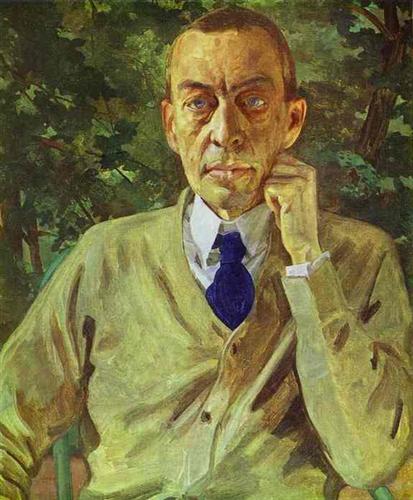
"Portrait of the Composer Sergei Rachmaninov" -  Konstantin Somov

Portrait of the Composer Sergei Rachmaninov (1925)

Konstantin Somov

_____________

after two superb performances on
the last day, June 20, of the Round
1 competitions, I expected to close
up shop, not listen to another
deserving competitor, skipped a
trio of competent but otherwise
uninteresting contenders, and
readied to quickly go on to the
second round nominations

Dmitry Masleev, the very last
performer, wasn’t to go down,
however, without a fight, wowed
me, despite my initial sceptical air
he delivered from the beginning an
unimpeachable Bach, followed by
a “Farewell” Sonata to rival Shino
Hidaka
‘s, my queen, from there it
was nowhere but up, his final
Rachmaninov dotted the i’s,
crossed the t’s, of his brilliance,
a fitting hiatus to a powerful
and significant showdown

listen

Richard

at the XVth International Tchaikovsky Competition – Bach‏

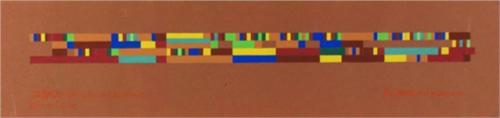
"J.S. Bach, Wohltemp. Klav. Bd. I, No. IV. (Extrait) / (Duo de Tristesse)" -  Robert Strûbin

“J.S. Bach, Wohltemp. Klav. Bd. I, No. IV. (Extrait) / (Duo de Tristesse)” (1957)

Robert Strûbin

________

if I’ve been getting on their backs
about their Bachs at the Tchaikovsky
Competition
, it’s that they’re playing
Bach as though he were mediocre
Beethoven, it’s like asking Duke
Ellington to be Pink Floyd, it’s just
a completely different generation,
era

Bach wrote for the harpsichord, a
precursor to the piano, it could not
control the volume, nor the length
of a note, the pianoforte came
along to resolve both issues

therefore before Beethoven, who
made full use of the new invention
and worked hard the pianissimos
and the fortissimos, to degrees that
often became either inappropriate
or too authoritative, indelicate or
obnoxious if you’re not in the mood
– I remember wanting to play his so
solemn 111 at my father’s funeral,
but realized late that the first
movement was not especially in
that situation warranted, nor even
parts of the transcendental, but not
always not obstreperous, adagio –
and thumbed thus his nose at the
aristocracy, who earlier, before
the citoyens had demanded their
rights and when the world had
been considered to be of a
rational, logical order, a clock,
and as regular, would never have
tolerated such impudence

Bach and Mozart do not sway
much from strict rhythm, neither
do they alter volume much at all

so that the constant display of
heartfelt Bach and passionate
Mozart becomes cloying, and
not at all what these Classical
and Baroque masters would
have approved of

nor Beethoven, nor Chopin, for
that matter, whose strict tempo
markings didn’t include much
rubato, ritardandos, which you
could think of as milking a note,
putting velvet on your canvas,
it doesn’t work, the composition
itself unaided by bathos, pathos,
delivers, check out, of course,
Glenn Gould

Andrei Korobeinikov sat me right
down the other night with his
arresting BWV868, thrilling,
followed by more dazzling
pyrotechnics, though he fizzled,
and fractured his Beethoven, the
very 111 I care so much for, I
couldn’t even finish, you don’t
need a velvet canvas behind the
111, neither cloying ritardandos,
just skill, nor tangles of notes,
for that matter

Richard

at the XVth International Tchaikovsky Competition – the program‏‏

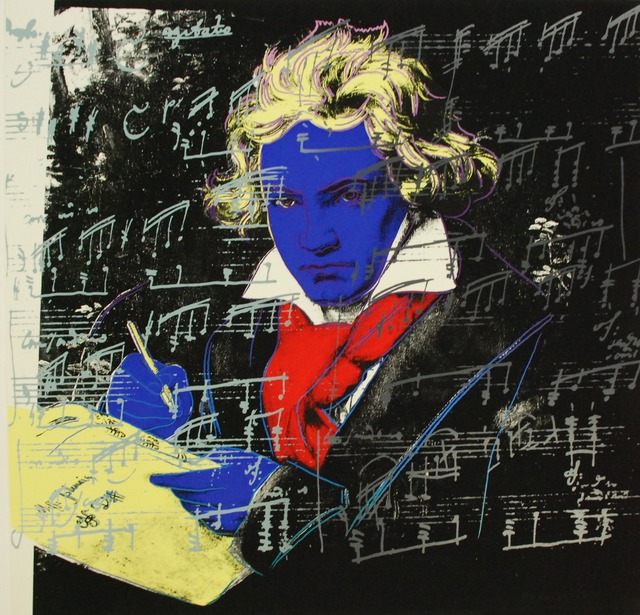
"Beethoven, 1987" -  Andy Warhol

Beethoven, 1987 (1987)

Andy Warhol

______

you’ll probably have noted, if you’ve
been following the Tchaikovsky
Competition
, that, unlike the
Rubinstein, the selection of works
is much more constrained, though
the mighties nevertheless
predominate

after the third day and into the
fourth, only one contestant has
started with anything other than
Bach, a Tchaikovsky

but unfortunately none of them but
one had given us a Bach worthy of
his name, then followed through
with, not surprisingly, a quite
competent Mozart, the cultural
conditions being not yet all that
different, aristocrats were looking
for their own music instead of the
church’s, secular instead of
ecclesiastical, therefore a tune
rather than an oratorio, Beethoven
and the Revolution would change
all that

afterwards a sonata of Mozart,
Haydn or Beethoven, the Classical
triumvirate, after which Tchaikovsky,
appropriately at this competition,
then études, either “-tableaux”,
“transcendentales”, or plain and
simple, by Rachmaninov, Liszt, or
Chopin, that’s it, you get to hear
the “Appassionata” or the “Grandes
études de Paganini”
several times
that way, sharpening discernibly
your musical ear

one was riveting, Andrey Dubov‘s

another, Lukas Geniušas transfixed
me with his opus 2, no 3, of
Beethoven, a work I usually only
ever tolerate, sending it soaring
into the bard’s later mature, and
revelatory, period

others have been competent, even
admirable, several, however, not
ready for this trial, they’ve come
without adequate preparation for
the ball

though I’ve been watching it in
my pajamas, I should talk

Richard

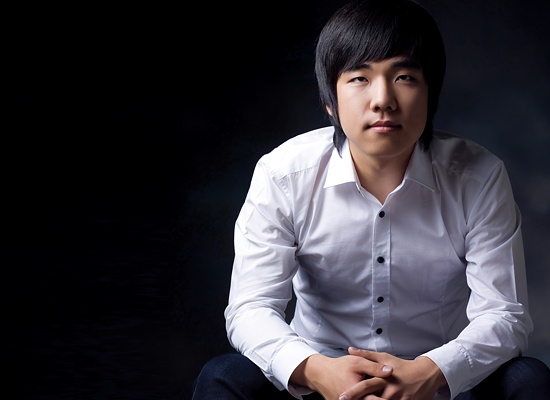
at the XVth International Tchaikovsky Competition‏ – Jeung Beum Sohn‏

 Jeung Beum Sohn

Jeung Beum Sohn

_________

in the second slot, on the second day,
Jeung Beum Sohn knocks the
competition to date right out of the
ballpark, his every interpretation is
not only flawless, but a revelation

his ostinatos, his agitatos, his
diminuendos, accelerandos, his
every stirring tremolando, are
precise, nuanced, utterly convincing,
his essential spirit more oracular than
merely ever only entertaining

can anyone win after such a
performance

I am impetuous, in my enthusiasm
I’ve promoted it seems already
undeserving contestants, all of
which have nevertheless excited
my undiluted appreciation, though,
apparently, ultimately unwarranted

it appears this competition is
holding out for utter stars,
wondrous elucidators of our
still profoundly influential cultural
heritage, in a manner I deem, and I
use the words advisedly,
determinedly transcendental

check it out

Richard

the flow (with a representative performance of Bach)

"The Kitchen"  - Pablo Picasso

The Kitchen (1948)

Pablo Picasso

________

having forgotten that I’d left a candle
in the kitchen, I thought, is that what
you’re going to strike me with,
Alzheimer’s

and then I thought, who’s you

certainly not some Creator with a
white beard and a vengeance, or
even, for that matter, without a
vengeance, even empathy, a
buddha, a guardian angel

no, “you” would be the order of
things, the flow

I spread my arms, and ceded to
it

to be one with the flow, I thought,
that’s the Force, there was no
getting around it

to be at one with the Force,
listen

then I remembered the chicken
drumsticks in the ginger cherry
sauce I’d left in the oven

which turned out nevertheless
perfect

Richard

psst:

for perfect coconut rice,
1 cup of coconut milk,
available in most high-end
food stores, one of water,
one of rice, of course, your
pick, bring to a boil, lower
heat, simmer covered for
45 minutes, an hour, or as
soon as you remember
you left it on the stove,
turn off heat, add a
tablespoon of butter, lime
juice

serve with chicken
drumsticks in ginger
cherry sauce

and, of course, wine

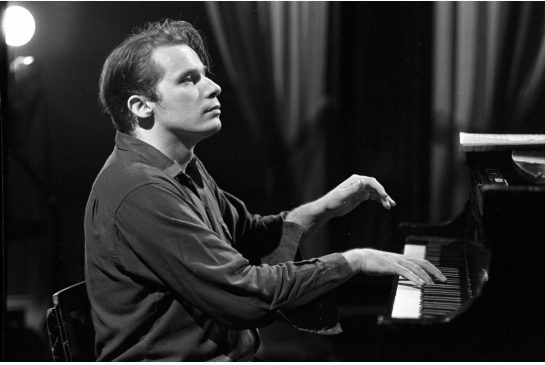
Glenn Gould‏

Glenn Gould

Glenn Gould

_______


if you think I can talk, listen to Glenn
Gould
tell in spades what I’ve only
ever been able to tell in clubs, or,
as we say in French, trèfles, clover,
a piece of music can say more than
just hello, great ones are oracular,
even transcendent

if ever they made a movie of my life
I want Glenn Gould to play me, even
the wonderful Colm Feore, I think,
couldn’t as effectively manage it

Richard

psst: here’s more, incandescent, Bach,
Glenn Gould playing his signature
piece
, just click

Beethoven Strinq Quartet no 14, opus 131‏

if Beethoven had written merely one transcendental
work we would still have been beholden, but that he
wrote neither two, nor three, but several immutable
pieces is extraordinary, super-, apparently, human,
though, of course, manifestly not, unless you want
to bring Jesus into the picture as such a dual being,
then we’ll talk, but Beethoven is a staunchly secular
voice, devoid of the spiritual considerations of a
Bach, for instance, Beethoven speaks for humanity,
its longings, consternations, aspirations, its essence,
no longer the discredited primacy of the Cross and
Its imperial derivatives, Human Rights have trumped
God

what Beethoven maintains however is the reverence,
his later pieces – you’ve heard the Hammerklavier“,
already, the 32nd piano sonata – are manifestly
spiritual experiences, as opposed to religious

the 14th String Quartet will do the same

if the Hammerklavier is akin to Moses delivering
his peremptory tablets, the 14th String Quartet is
the Sermon on the Mount, in the history of music
they have so great an impact

briefly, as briefly as I can, I’ll say a few introductory
words, then let your soul and the music do the rest,
see what happens to your karma

there are seven movements in the 14th, uninterrupted,
no pauses between the movements, though each is
easily identifiable, tempo therefore becomes incidental
instead of Classically ordered, the first movement, for
instance, is an adagio, a Classically improbable spot

the sections therefore play much as chapters in a
novel, advancing according to the logic and emotions
of the moment, always, as in all of Beethoven, moving
inexorably forward despite the intricacies of the, not at
all predictable, plot, as had been the case in the more
regimented Classical model, Beethoven takes you,
instead of around the corner, into the clouds, into a
spiritualized heaven, a place of profound existential
introspection

try listening to the 14th String Quartet attentively
without thinking about your soul, its existence,
its mission, in the very face of its ineradicable,
and fateful, actuality, the human conundrum,
Beethoven lets us know we’re not alone

some mountaintop Sermon indeed, watch what
happens to your sensibility, your very sacred
self, or maybe I should say, listen

may your path be decked meanwhile with laurels,
and your days be blessed with grace, be it ever
so merely, maybe, human

who knows

sincerely

Richard

psst: if you’ll allow me to pursue my series of
similarities you’ll imagine piano sonata
no 32
as Beethoven’s “Last Supper”,
this one in particular five luminous stars