Chopin / Debussy – Preludes
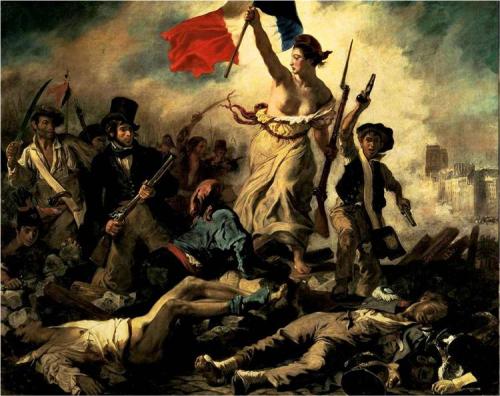
“Liberty Leading the People“ (1830)
_________
for everyone, with great gratitude,
who reads me, I mean only to
bring poetry, which is to say,
light
though I’d considered leaving the
Romantic Piano Concertos behind
to explore other areas of the period
in this survey, it seemed unfair,
indeed remiss of me, not to include
the three among my top ten that I
haven’t yet highlighted, Beethoven’s
2nd, 3rd, and 4th Piano Concertos,
Opuses 19, 37, and 58 respectively,
after all, these are where the spirit
of the age, the Zeitgeist, was
constructed, like a building, with
walls, windows, a hearth, all of
which would become a church,
then a Church, and by the time of
Brahms, a very Romantic Cathedral
the foundation had already been laid
by Mozart with his 27, but music had
not yet become anything other than
an entertainment by then, or
alternatively, an accessory to
ceremonial pomp and circumstance,
see Handel and England for this, or
liturgical stuff, see, among many
others here, Bach
but with the turn towards
independence of thought as the
Enlightenment progressed, cultural
power devolved from the prelates,
and their reverent representations,
to the nobles, who wanted their own
art, music, which is to say, something
secular, therefore the Classical
Period, 1750 – 1800, in round figures
then in the middle of all that, 1789,
the French Revolution happened,
and the field was ripe for prophets,
anyone with a message of hope,
and a metaphysical direction, midst
all the existential disarray – the Age
of Reason had set the way,
theoretically, for the possibility of a
world without God, something, or
Something, was needed to replace
the The Trinity, the Father, the Son,
and the Holy Ghost, Who had been
seeing Their supremacy contested
since already the Reformation
Beethoven turned out to be just
our man, don’t take my, but history‘s
authentification of it, see the very
Romantic Period for corroboration
in a word, Beethoven established a
Faith, a Vision, not to mention the
appropriate tools to instal this new
perspective, a sound, however
inherited, musical structure – his
Piano Concertos Two, Three, and
Four, for instance, are paramount
amongst a host of others of his
transcendental revelations
briefly, the initial voice, I am here, in
the first movement, is declamatory,
even imperious, but ever
compositionally solid, and proven,
tempo, tonality, recapitulation, the
materials haven’t changed from the
earlier Classical epoch, just the
design, the interior, the
metaphysical conception
his construction is masterfully
direct, the line of music is
throughout ever clear and concise,
despite flights of, often, ethereal,
even magical, speculation, you
don’t feel the music in your body
as you would in a dance, as in the
earlier era, of minuets, but follow
it, rather, with your intellect, you,
nearly irresistibly, read it
but the adagio, the slow movement,
the middle one Classically, is always,
for me, the clincher, the movement
that delivers the incontrovertible
humanity that gave power to the
Romantic poet, who touched you
where you live
Beethoven says life is difficult, and
eventually, at the end of his Early,
Middle and Late Periods, life may
even have no meaning
but should there be someone, he
says, who is listening, Someone –
though implicit is that one may be
speaking to merely the wind – this
is what I can do, this is who I am
and while I am here, however
briefly, I am not insignificant, I
can be worthy, even glorious,
even beautiful, I am no less
consequential, thus, nor
precious, than a flower
for better, of course, or for worse
R ! chard
___________
for Sarah and Rachel, the daughters
of the son of a dear cousin, after a
belated lunch recently, two young
girls, 14, 16, in bloom, as Proust
would say, who speak not only
music, but French and English,
fluently, I checked – perhaps
even German, their Oma
lives with them – they also
play the flute, the piano,
and sing, what could be
I ask you, more beautiful,
two young girls in bloom,
indeed in very blossom
or am I being too French
the form of the sonata had been established
decisively during the Classical Period, out
of the rudiments of Bach’s own such pieces,
Mozart and Haydn had given the concept its
final shape, its structure, three or four
contrasting movements, by definition all
entertainments
Beethoven kicked the entertainment part
right out of the ball park, made his show
into a veritable transcendental meditation,
rather than to merely applaud, audiences
gasped, were meant to be awed, as I still
ever am by his musical speculations
but by definition as well, a sonata is a
piece for a single instrument, therefore
inherently introspective, whether the
player has an audience or not, soloists,
note, play easily on their own
even an accompanied sonata, as violin
sonatas often are, for instance, or this
one for two pianos, would lose the
intimacy of a solo piece, for having
someone playing, however compatibly,
over one’s shoulder
in other words, a piano sonata is, by
definition, a monologue, a soliloquy,
where notes tell the story that words
would intimately, even confessionally,
in poetry, convey
the emotions that are elicited from
a piece are as real as they would
be from any literary alternative,
except that they’re quickened, like
aromas, through the senses, rather
than through divisive, by definition
confrontational, logic
rosemary reminds me always, for
instance, of one of my departed
aunts, like the taste of a madeleine
dipped in tea opened the door for
Proust to an entire earlier epoch,
the seed, the subject, of his
disquisition on Time, “À la
recherche du temps perdu“, “An
Exploration into Elapsed Time“,
my own translation, none of the
published proffered titles
having rendered the subtlety
of the shimmering original
rosemary, in other words, speaks,
if even only to me
listen to Tchaikovsky’s First Piano
Sonata, in C# minor, opus 80, one
of only two of his, what do you
hear, think, feel
R ! chard
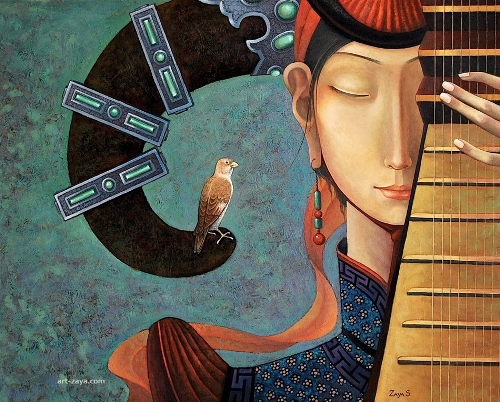
“Musician“
__
for Ian, who surely
benefitted from my
intransigeance
after watching performed the first movement
of Beethoven’s 14th String Quartet at home
with a friend, I interrupted the piece and
instead put on the one I’d found with
computer graphics
not from the beginning, he said
yes, from the beginning, I retorted, a mere
six or seven minutes which’ll be worth it, I
insisted, and they were
four lines of music, the top one yellow for
the first violin, red for the second, mauve
for the viola, and blue for the cello, which
individually advance according to the
length of each instrument’s notes, the
height, meanwhile, of the lines indicate
pitch, top ones high notes, bottom lines
low, it’s like watching a blueprint of
what’s happening, and mesmerizing, a
musical score in very motion, though
without, admittedly, the bar lines, nor
key and time signatures, clefs neither,
for that matter
the music meanwhile is transcendent
Beethoven here resolves all the issues
I brought up about his two early Late
Sonatas, grab bags of fine tunes but
without a centre, cuts on an album,
rather than the visionary
pronouncements of the prophet I’ve
come to expect from Beethoven
Beethoven pulls out all the stops
for his 14th, goes from a fugue in
the first movement, a form
reminiscent of Bach, who’d been
completely obliterated during the
Classical Period, masterful dance
rhythms then, peppered
throughout, referencing, indeed
honouring late 18th Century court
music, a set of variations in the
fourth movement, and other
classifications I won’t touch for
their being too technical, but
which all illustrate Beethoven’s
mastery of every musical
convention until his time, then
pushes all of it further still into
the future with this string quartet,
supreme among all string quartets,
his 14th
much later, Pink Floyd would pull
off a similar stunt, take its own
generation’s music to comparable
heights with an equally cultural,
which is to say historical, impact,
the comparison is, I think,
noteworthy and instructive
Pink Floyd, incidentally, was also
a quartet, for even more context
note that throughout, tonality, tempo,
and repetition have been strictly,
though, admittedly, often
eccentrically observed, the piece has
been arresting, even riveting, however,
for some, disconcertingly so, but
never not understood, never foreign,
the music isn’t at all alienating, as
could be, say, Chinese opera for most
of us, we’re still here in our corner of
the planet following faithfully in the
Western musical tradition as it thus
then evolved
I could say all of the above as well,
again, by the way, about Pink Floyd
in their own, ahem, Time
all of that said, this other version,
by the Alban Berg Quartet, is the
performance that you’ll remember,
it is still incomparable, the gold
standard
R ! chard
_______
here and there, an artwork has presented
itself to me as transcendent, which is to
say that in its presence, I quivered,
experienced a verily cosmic transmission
of energy, a sacred communication
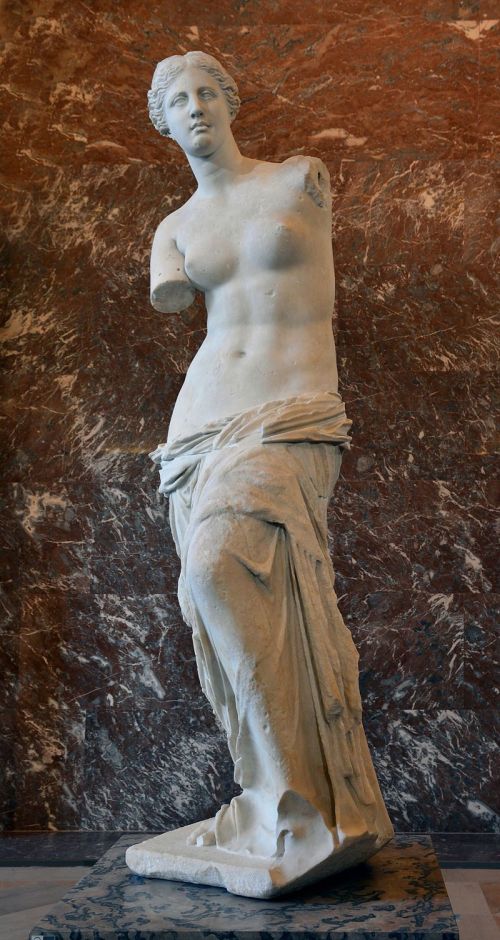
the Venus de Milo, in the Louvre, who
breathed, existed, as I turned a corner
and beheld her, imperiously presiding,
holding undying, immortal court, as a
goddess indeed should, would, and
there profoundly did, and does, I
suppose, still
the “Sistine Madonna“, in the Zwinger
in Dresden, mesmerized me from a
distance as I approached her, along
a long row of corridors, towards a
resplendence that was
incontrovertible, a very epiphany, I
still reverberate recollecting her
incandescent majesty
Beethoven’s Opus 106, his
“Hammerklavier”, is such a work,
not evident perhaps before the third
movement, the “adagio sostenuto”,
which will, I suspect, stop you dead
in your tracks, arrest you from its
very first mystifying moments,
magical, miraculous
Beethoven’s “Hammerklavier” is
the first piece of his to have moved
from being descriptive, narrative,
to being philosophical, meditative
in its motivation, emotions are
evident, but evoked only in the
context of exploring something
grander, something metaphysical,
you come out the other end having
gone to church, having explored a
spiritual environment, you exit
perhaps not absolved, but
somehow understood, reassured,
comforted, counted
a lot, incidentally, like Bach, note,
plying his cantatas and oratorios,
not to mention his introspective
fugues, a not to be unremarked
atavism, how grandchildren
resemble, even imitate, however
unconsciously, their grandparents,
I even have such pictures
more about all of which later
R ! chard
psst: something I found cute as I
brushed my teeth between
the movements, the
“Hammerklavier” is in the
same key as my electric
toothbrush, B-flat major, a
robust, I assure you, way
to greet the morning
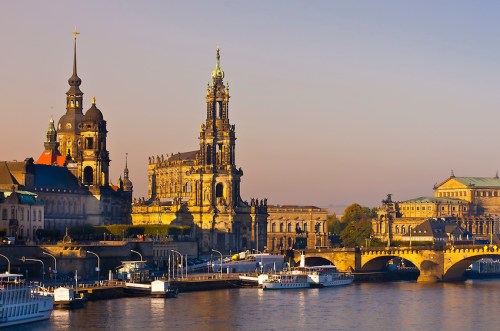
from the centre, the Hofkirche, the Dresden Cathedral, across from the
Augustusbrücke, or Augustus Bridge, extends into the Zwinger, one
of three only palaces in Europe, along with Versailles and Vienna’s
Schönbrunn, distinctly horizontally to the right, not to be confused
with a crook in the Cathedral, an intolerable, were it so, ecclesiastical
gaffe, it ‘s now become one of the most significant art galleries in
Europe, the green rooves, to the right still, are the Semperoper‘s, the
black roof, nestling before it, an unforgettable Italian
restaurant
before it all, majestically, the Elbe
_______
from the very Semperoper in Dresden,
where I’ll ever remember seeing the
worst “Barber of Seville” I’ve ever seen,
first balcony, left of centre, Figaro came
out on a motorcycle, I ask you, it was
downhill after that, my mom, beside
me, was falling even asleep, we left at
intermission, soldiered on to a
restaurant overlooking the Elbe, Italian,
if I remember, but utterly more enjoyable
than the disappointing operatic option,
there might even ‘ve been a moon at our
tableside window, picturesquely
shimmering on the river
but, hey, we both would‘ve stayed,
incontrovertibly, for this performance,
Beethoven’s “Missa Solemnis“, a late,
and towering, entry, 1823, in his opus
– second definition of that word, which
is to say, his entire output, all 135
opuses, first definition there, discrete
compositions – plus all his works
without opus – first definition again –
numbers, WoO
the plural of opus, incidentally, can
also be, both meanings, opera, just
to confuse things, I use either
interchangeably, according to my
narrative rhythm
missae solemnes, plural of missa
solemnis, are a particularly Catholic
form of music, going back to the
very Middle Ages, at which point
religious art was all that really
mattered, anything else was entirely
peripheral, of no consequence
but Catholicism, and its Protestant
offshoots, which is to say, their
common Christianity, remained
culturally entrenched during the
process of their slow disintegration
Nietzsche would, later, take care
of that, but that’s another story
Beethoven, Mozart, Catholics, if,
either, only by name, delivered
missae solemnes, while Bach,
Handel, both Protestant,
delivered oratorios, with some
intermingling
about which, later
Catholic, Protestant expression still
find, even strong, exponents at
present, though the form is,
essentially, outdated, our anthems
are national, now, mostly, if even
somewhat, that, halfheartedly, when
not, paradoxically, searchingly,
hopefully, and maybe even
revolutionarily, again, ideological
imagine “Imagine“ for instance, as
such, just click
R ! chard

__________
up at the crack of about nine this
morning, I determined to get the
ordeal of trying to print
something out of the way, go
over to my mom’s, a few blocks
down the street, to use her
printer, something I figured
would probably present obstacles
though we followed the proposed
instructions, nothing would work,
print, pressed, delivered nothing
hoops were required, several of
which I managed, got closer, and
more prepped, but when they
essentially seemed to contract
marriage, I withdrew – though I
might‘ve inadvertently sworn a
ring
flummoxed, even irritated, by
the manufactured distress, I
determinedly decided to go
back to paper, I am not a robot,
I ascertain, as they often
electronically instruct, to, I
mean really, confirm your
identity
back home, I lit a candle for Collin,
my friend, who ‘s just had a
debilitating stroke, and listened to
Bach again, an absolute cradle
listen to how falling into the
rhythmic pocket, beats landing
on anticipated beats in a rocking
motion, lets you slip into surrender,
and even physical, solace
hear, however, how the lingering
notes of the violin transgress bar
lines, much like with Beethoven,
in order to tell a more personal
story
Bach gets to look a lot more like
Beethoven every minute, or the
reverse, I’m finding, like
grandchildren resembling, atom
for atom, their grandparents
stay tuned, there’s a lot more
to uncover
R ! chard
“Music“ (1904)
_______
music cannot lie, when it caresses
you, your very senses on the alert
for what, or what does not, inspire,
from one note to the next, and, of
course, from one sensation to the
other
words are subject to all kinds of
interpretations, visual arts can be
manipulated, tell varying versions
of an, even imagined, event, see,
for instance, Surrealism, with its
distortions as multifarious as the
imagination
but music cannot not tell the truth,
one hears music with one’s senses,
and responds to it with the same
primitive instinct as, nearly, smell,
another powerful truth teller, ask
dogs, or ask “a young man’s fancy“
when it “turns to thoughts of love”,
in spring, there is no surer compass
here’s more Bach, “Capriccio on the
departure of his beloved brother“,
from their family home, a marvel I’ve
recently discovered
do you love it
thanks, sincerely, for dropping by
R ! chard
“Bouquet of Flowers“ (1946)
_________
for Collin
a friend, who lives too far from me
to visit, but who is too close to my
heart for me to do nothing, has just
had a stroke, “His body, smile, motor functions are improving.The most affected area is his speech center. He is filling in the gaps, has surrendered to his situation, but is operating at about 25% comprehension and memory. He has to rebuild his language, and is getting his ideas across with a lot of help in translation. He will be doing a lot of speech therapy. His uncanny resilience will serve him well.“,
I’ve been advised
should I continue to write to him,
I’ve wondered, maybe just a few
cheery words a day, does he
take the time to read his mail,
can he, does someone do it for
him, should I call, or when
I thought, if not anything else, why
not music, something I can easily
send, something he can hear,
surrender to, rather than pay any
more cerebral attention
yesterday, I sent him Bach, Bach’s
“Musical Offering“, 1747, Bach is
from a much more serene period
in music than Beethoven, my
recent area of investigation here,
Bach wrote a lot of ecclesiastical
stuff, cantatas and such, masses,
was indeed music director for the
Lutheran churches in Leipzig for
a time, the combination makes for
reflective, often even transcendental
music, Beethoven wouldn’t at all,
in this case, ‘ve done, with all of
his Sturm und Drang
I’m lighting a candle a day for my
friend, I’ll also be sending him
internet flowers, till I think of
what else I can do but pray, for
his speedy recovery
thanks for dropping by
R ! chard

“Clown with Flowers“ (1963)
_______
with the greatest respect for all
who read me, and especially
for those who are least
convinced, the way also,
I note, to a conscious,
and entirely personal,
aesthetic
let me once again insist that my
commentaries here are not at all
the last word on any of what I’ve
discussed, they’ve been merely
my opinion, according to my own
particular aesthetic, my comments
have been rather to excite curiosity
about, for some, an esoteric topic,
to awaken interest in a field, to my
mind, strewn with marvels, and
never to dictate, art, as I often
remind, is in the eye of the
beholder
I think of myself as company in
an art gallery, viewing a
succession of works, musical
here, expressing notions, either
specifically to do with the exhibit,
or, personal, but somehow related,
then moving on, just enough to
whet the appetite, or, of course,
not
here’s an instance
I’d been waiting for the sales clerk
to box some fresh pasta for me I
was buying at an eatery down the
street when a line of piped in music
from their overhead system swept
me off my disconcerted feet, which
I recognized to be Mozart, but as
I’d never heard him, ever
can you tell me who’s playing that,
I asked the cashier, many stores
played their own tapes back then,
some still indeed even do,
19-eighty, at that time, something
he replied, Mitsuko Uchida
what she’d done was to not stress
the bar line, the natural beat, to,
in fact, eliminate it, so that a flight
of notes went on like an unfettered
and iridescent miracle, prompted
by its own irrepressible momentum,
I was flabbergasted
Beethoven later on would do that
nearly consistently
where Glenn Gould would remove
his foot from the sustain pedal to
channel Bach while he played
Beethoven, an atavism, Mitsuko
Uchida was reversing the process
and using Beethoven‘s own
unleashing of rhythms to shed
light on her Classically otherwise
bound Mozart, a telling
anachronism, I nearly screamed
here, in the event, is the next work
of musical art in my idiosyncratic
gallery, the richibi galleri, I call it,
Mitsuko Uchida herself illuminating
gloriously, as ever, Mozart, his
splendid, as she reminds us, Piano
Concerto no 9
thanks so much for stopping by
ever
R ! chard
 Richibi's Weblog