Richibi’s Weblog

Just another WordPress.com weblog

Category: in search of truth

true happiness

 
in the movie Never on Sunday” Homer Thrace, an American moralist and armchair philosopher, objects to the libertine ways of the modern Greeks, Ilya especially, a whore, disconcerts him, she likes her job, so do the dockworkers, and the other women who ply her trade at the port of Piraeus, near Athens 
  
Homer Thrace accuses them all righteously of pursuing the Stoic and Epicurean philosophies that came out of the fall of Greece, instead of the true and noble ideals of the more upstanding Socrates, Plato, and Aristotle, who believed that the greatest happiness comes from the joy of understanding  
  
when he tells Taki, who plays the bouzouki, that he can never be a true musician because he can’t read music, Taki, who is too old now to learn, hides in the bathroom forlornly, and says he will never play again 
  
Ilya, Melina Mercouri, in a star turn, tells him composers need his music to be able to write his notes down, what would composers do without him, if birds can’t read music, she asks, should they stop singing  
  
Taki comes out of the bathroom
  
so had I   

  
Richard


                       ______________________________

John Ruskin, on truth in art

that we have dismissed, often indeed forgotten, the great voices of our culture,
the great oracles, the dead, they’ve dared to call them, painters, composers,
poets, doesn’t make their pronouncements less true, less inspiring, proof that
they are still very much alive, and relevant 
  
that they are still relevant ties us to the great notion that we are from very
Homer to the present day one family, one illustrious family, which to disregard, 
or any of its great giants, would be our inestimable loss 
 
where would we be without their wisdom, leaves without a trunk
 
 
John Ruskin was a great influence on Marcel Proust, my own supreme poet and prophet, I needed to plumb his literary pockets for, I did not doubt, nuggets of priceless gold
 
 
Richard 
 
 
                       _____________________


Chapter 7
 
8 – That then which I would have the reader inquire respecting
       every work of art of undetermined merit submitted to his
       judgment, is not whether it be a work of especial grandeur,
       importance, or power; but whether it have any virtue or
       substance as a link in this chain of truth; whether it have 
       recorded or interpreted anything before unknown; whether
       it have added one single stone to our heaven pointing pyramid,
       cut away one dark bough, or levelled one rugged hillock in our
       path. This, if it be an honest work of art, it must have done, for
       no man ever yet worked honestly without giving some such help
       to his race. God appoints to every one of his creatures a separate
       mission, and if they discharge it honourably, if they acquit themselves
       like men and faithfully follow that light which is in them, withdrawing
       from it all cold and quenching influence, there will assuredly come of
       it such burning as, in its appointed mode and measure, shall shine
       before men, and be of service constant and holy. Degrees infinite
       of lustre there must always be, but the weakest among us has a
       gift, however seemingly trivial, which is peculiar to him, and which
       worthily used will be a gift also to his race for  ever: 
                ‘Fool not’, says George Herbert,
                                                                     ‘For all may have,
                             If they dare choose, a glorious life or grave’ 
      
 
                                            John Ruskin (from “Modern Painters“) 


                     ______________________________________________

“Trouble” – Matthew Dickman‏

                                                                                                                                                                              after the great hiatus of the Middle Ages Descartes declared I think, therefore I am, and set the modern world in motion, the Age of Reason, the Era of Human Rights 
 
but even Shakespeare some seventy years earlier had given voice already to the consequent existential dilemma, by way of Hamlet in his “To be, or not to be“, the moral dilemma of the individual before existence – “the slings and arrows of outrageous fortune” – and the abyss of eternity, a question up to that point forbidden on dire pain of heresy  
  

                                                                                                                                                                         Emily Dickinson touches on the subject famously, others also of equal authority, but here is something I thought true, touching, beautiful, and ultimately inspiring for anyone who’s delved that deep  
 
                                                                                                                                                                   Richard 
  
  
                       ______________________
  
 
Trouble   
 

                                                                                                                                                                        Marilyn Monroe took all her sleeping pills
to bed when she was thirty-six, and Marlon Brando’s daughter
hung in the Tahitian bedroom
of her mother’s house,
while Stanley Adams shot himself in the head. Sometimes
you can look at the clouds or the trees
and they look nothing like clouds or trees or the sky or the ground.
The performance artist Kathy Change
set herself on fire while Bing Crosby’s sons shot themselves
out of the music industry forever.
I sometimes wonder about the inner lives of polar bears. The French
philosopher Gilles Deleuze jumped
from an apartment window into the world
and then out of it. Peg Entwistle, an actress with no lead
roles, leaped off the “H” in the HOLLYWOOD sign
when everything looked black and white
and David O. Selznick was king, circa 1932. Ernest Hemingway
put a shotgun to his head in Ketchum, Idaho
while his granddaughter, a model and actress, climbed the family tree
and overdosed on phenobarbital. My brother opened
thirteen fentanyl patches and stuck them on his body
until it wasn’t his body anymore. I like
the way geese sound above the river. I like
the little soaps you find in hotel bathrooms because they’re beautiful.
Sarah Kane hanged herself, Harold Pinter
brought her roses when she was still alive,
and Louis Lingg, the German anarchist, lit a cap of dynamite
in his own mouth
though it took six hours for him
to die, 1887. Ludwig II of Bavaria drowned
and so did Hart Crane, John Berryman, and Virginia Woolf. If you are
travelling, you should always bring a book to read, especially
on a train. Andrew Martinez, the nude activist, died
in prison, naked, a bag
around his head, while in 1815 the Polish aristocrat and writer
Jan Potocki shot himself with a silver bullet.
Sara Teasdale swallowed a bottle of blues
after drawing a hot bath,
in which dozens of Roman senators opened their veins beneath the water.
Larry Walters became famous
for flying in a Sears patio chair and forty-five helium-filled
weather balloons. He reached an altitude of 16,000 feet
and then he landed. He was a man who flew.
He shot himself in the heart. In the morning I get out of bed, I brush
my teeth, I wash my face, I get dressed in the clothes I like best.
I want to be good to myself.


Matthew Dickman


                        ____________________________________

5 April, 2010

                                                                                                                                                                               April is dour here, with grim rain and nearly sleet, but for the burgeoning buds and leaves manifesting themselves in a variety of resplendent colours, from the lightest pastels to the most saturated earth tones, for our wonder and delectation, despite the glum gray cover of clouds 
  
under my matching umbrella I am also a flower, I conclude, and take consolation, inspiration, from the fact that I am not among them alone
  
and proceed as though touched by magic   
    
  
Richard   


                               __________________________                                                                     


Still Life with Teapot and Fan – Wang Weidong‏

Still Life with Teapot and Fan by Wang Weidong

                           ” Still Life with Teapot and Fan ” 
 
                                       
Wang Weidong  
 
                                   _________________  

                                                                                                                                                                                                                                despite bifurcations in the direction of abstract art – Impressionism Surrealism, Expressionism, Pop – representational art, with its evident demands on the artist – formal excellence, not just heat and heart – still inspires perhaps our foremost admiration 
 
perhaps it’s true however that still lifes, nearly by definition, are bloodless, as is to my mind, here again, this exquisite nevertheless “Teapot“, which reaches out to your intellect rather than to your emotions
 
it speaks of duty rather than love, tradition rather than innovation, a nostalgia for security, conformity, philosophy perhaps, and ultimately by inference faith and trust  
 
if you let your sense of taste do the talking
  
 
Richard


                           __________________________

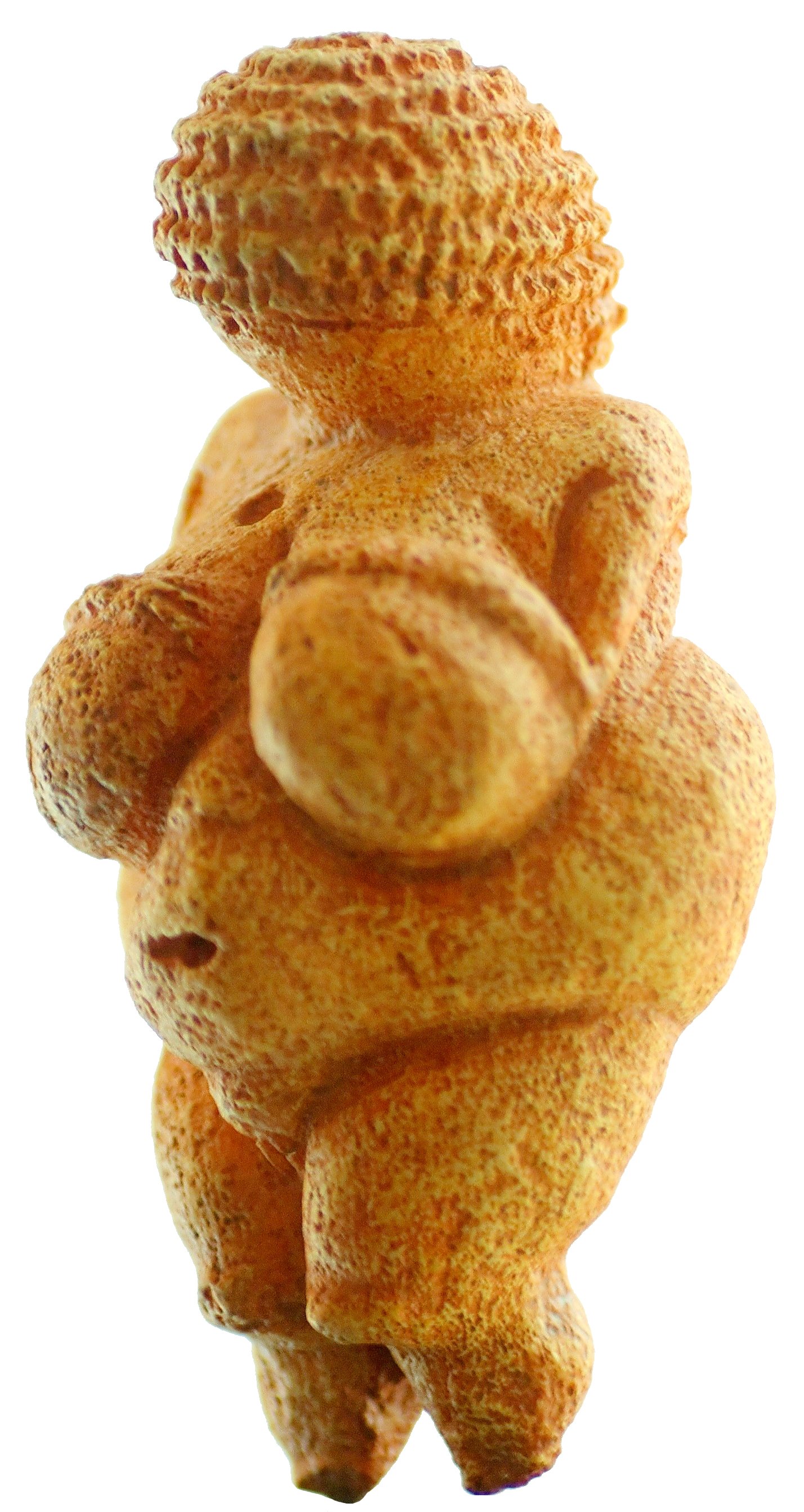
Venus of Willendorf

              File:Venus von Willendorf 01.jpg


                                Venus of Willendorf 
 
                          (24,000 B.C. – 22,000 B.C.)
 
                                     __________
 
 
by giving it prominence in a work of art an artist by definition
idealizes a figure, gives it stature, Andy Warhol did that to our
own cultural overlord, Commerce, with his soup cans, putting
them right up there where altarpieces used to be, these icons 
are even in financial institutions now in fact instead of churches,
supplanting thereby the earlier Christian message, which you
don’t see represented very much in art anymore incidentally,
our present culture not finding much of an even metaphorical
call for it any longer it would appear 
 
Marilyn” (1960s)
 
Mickey Mouse” (1981)
 
the Venus of Willendorf (24,000 B.C. – 22,000 B.C.)
 
Benefits Supervisor Sleeping” (1995)
 
these last two upending what is in fact only an arbitrary
cultural notion of svelte and silken beauty ever, though
often vigorously held  
  
 
Richard


                           _____________________

sowing poems

since April, National Poetry Month, and a flurry of commemorative throughout poems, one at least a day sent out by a dutiful and diligent moderator, I’ve carried in my pocket at her inspired, I think, suggestion not one but two poems, one per side per page, to scatter indiscriminately as raindrops, it was recommended, anywhere

I cannot help but think that these inadvertent seeds will somehow somewhere flower

they needed to be accessible, I thought, not trite, distinct enough as well to be quickly unforgettable, by definition nearly therefore profound

one described a poet finding intimations of perfection in the song of a nearby thrush, thereby inspiration and an instant recuperative salve

the other takes you into the heart of any poem

both to my mind are brilliant

I’ve been leaving them in restaurants beside my less august of course tip 


Richard

                 __________________________

                                                                                                                                                                                                                                                   The Poet with His Face in His Hands

You want to cry aloud for your
mistakes. But to tell the truth the world
doesn’t need any more of that sound.

So if you’re going to do it and can’t
stop yourself, if your pretty mouth can’t
hold it in, at least go by yourself across

the forty fields and the forty dark inclines
of rocks and water to the place where
the falls are flinging out their white sheets

like crazy, and there is a cave behind all that
jubilation and water fun and you can
stand there, under it, and roar all you

want and nothing will be disturbed; you can
drip with despair all afternoon and still,
on a green branch, its wings just lightly touched

by the passing foil of the water, the thrush,
puffing out its spotted breast, will sing
of the perfect, stone-hard beauty of everything.
 

                                     Mary Oliver

          _______________________________


How to Read a Poem: Beginner’s Manual

First, forget everything you have learned,
that poetry is difficult,
that it cannot be appreciated by the likes of you,
with your high school equivalency diploma,
your steel-tipped boots,
or your white-collar misunderstandings.

Do not assume meanings hidden from you:
the best poems mean what they say and say it.

To read poetry requires only courage
enough to leap from the edge
and trust.

Treat a poem like dirt,
humus rich and heavy from the garden.
Later it will become the fat tomatoes
and golden squash piled high upon your kitchen table.

Poetry demands surrender,
language saying what is true,
doing holy things to the ordinary.

Read just one poem a day.
Someday a book of poems may open in your hands
like a daffodil offering its cup
to the sun.

When you can name five poets
without including Bob Dylan,
when you exceed your quota
      and don’t even notice,
      close this manual.
 

                      Pamela Spiro Wagner


       _____________________________

The Creation of the World

                                                                                                                                                                                                                                     though I’d been reading a not unaccomplished version of Ovid‘s “Metamorphoses“, thrilling already at much of it, for the sake of comparison I happened upon this other utter masterpiece
 
the pedigree is impeccable, an array of the most illustrious English poets of the eighteenth century in concert around a mighty translation of one of poetry’s crowning works, Sir Samuel Garth, John Dryden, Alexander Pope, Joseph Addison, William Congreve, “and other eminent hands”, according to the web page, do the work, and it is masterly
 
read on, from the very first book of fifteen, its beginning, its genesis
 
 
Richard
 
                   ____________________________   
 
 
The Creation of the World

Of bodies chang’d to various forms, I sing:
Ye Gods, from whom these miracles did spring,
Inspire my numbers with coelestial heat;
‘Till I my long laborious work compleat:
And add perpetual tenour to my rhimes,
Deduc’d from Nature’s birth, to Caesar’s times.
 
Before the seas, and this terrestrial ball,
And Heav’n’s high canopy, that covers all,
One was the face of Nature; if a face:
Rather a rude and indigested mass:
A lifeless lump, unfashion’d, and unfram’d,
Of jarring seeds; and justly Chaos nam’d.
No sun was lighted up, the world to view;
No moon did yet her blunted horns renew:
Nor yet was Earth suspended in the sky,
Nor pois’d, did on her own foundations lye:
Nor seas about the shores their arms had thrown;
But earth, and air, and water, were in one.
Thus air was void of light, and earth unstable,
And water’s dark abyss unnavigable.
No certain form on any was imprest;
All were confus’d, and each disturb’d the rest.
For hot and cold were in one body fixt;
And soft with hard, and light with heavy mixt.

But God, or Nature, while they thus contend,
To these intestine discords put an end:
Then earth from air, and seas from earth were driv’n,
And grosser air sunk from aetherial Heav’n.
Thus disembroil’d, they take their proper place;
The next of kin, contiguously embrace;
And foes are sunder’d, by a larger space.
The force of fire ascended first on high,
And took its dwelling in the vaulted sky:
Then air succeeds, in lightness next to fire;
Whose atoms from unactive earth retire.
Earth sinks beneath, and draws a num’rous throng
Of pondrous, thick, unwieldy seeds along.
About her coasts, unruly waters roar;
And rising, on a ridge, insult the shore.
Thus when the God, whatever God was he,
Had form’d the whole, and made the parts agree,
That no unequal portions might be found,
He moulded Earth into a spacious round:
Then with a breath, he gave the winds to blow;
And bad the congregated waters flow.
He adds the running springs, and standing lakes;
And bounding banks for winding rivers makes.
Some part, in Earth are swallow’d up, the most
In ample oceans, disembogu’d, are lost.
He shades the woods, the vallies he restrains
With rocky mountains, and extends the plains.

And as five zones th’ aetherial regions bind,
Five, correspondent, are to Earth assign’d:
The sun with rays, directly darting down,
Fires all beneath, and fries the middle zone:
The two beneath the distant poles, complain
Of endless winter, and perpetual rain.
Betwixt th’ extreams, two happier climates hold
The temper that partakes of hot, and cold.
The fields of liquid air, inclosing all,
Surround the compass of this earthly ball:
The lighter parts lye next the fires above;
The grosser near the watry surface move:
Thick clouds are spread, and storms engender there,
And thunder’s voice, which wretched mortals fear,
And winds that on their wings cold winter bear.
Nor were those blustring brethren left at large,
On seas, and shores, their fury to discharge:
Bound as they are, and circumscrib’d in place,
They rend the world, resistless, where they pass;
And mighty marks of mischief leave behind;
Such is the rage of their tempestuous kind.
First Eurus to the rising morn is sent
(The regions of the balmy continent);
And Eastern realms, where early Persians run,
To greet the blest appearance of the sun.
Westward, the wanton Zephyr wings his flight;
Pleas’d with the remnants of departing light:
Fierce Boreas, with his off-spring, issues forth
T’ invade the frozen waggon of the North.
While frowning Auster seeks the Southern sphere;
And rots, with endless rain, th’ unwholsom year.

High o’er the clouds, and empty realms of wind,
The God a clearer space for Heav’n design’d;
Where fields of light, and liquid aether flow;
Purg’d from the pondrous dregs of Earth below.

Scarce had the Pow’r distinguish’d these, when streight
The stars, no longer overlaid with weight,
Exert their heads, from underneath the mass;
And upward shoot, and kindle as they pass,
And with diffusive light adorn their heav’nly place.
Then, every void of Nature to supply,
With forms of Gods he fills the vacant sky:
New herds of beasts he sends, the plains to share:
New colonies of birds, to people air:
And to their oozy beds, the finny fish repair.

A creature of a more exalted kind
Was wanting yet, and then was Man design’d:
Conscious of thought, of more capacious breast,
For empire form’d, and fit to rule the rest:
Whether with particles of heav’nly fire
The God of Nature did his soul inspire,
Or Earth, but new divided from the sky,
And, pliant, still retain’d th’ aetherial energy:
Which wise Prometheus temper’d into paste,
And, mixt with living streams, the godlike image cast.

Thus, while the mute creation downward bend
Their sight, and to their earthly mother tend,
Man looks aloft; and with erected eyes
Beholds his own hereditary skies.
From such rude principles our form began;
And earth was metamorphos’d into Man.


            _______________________________

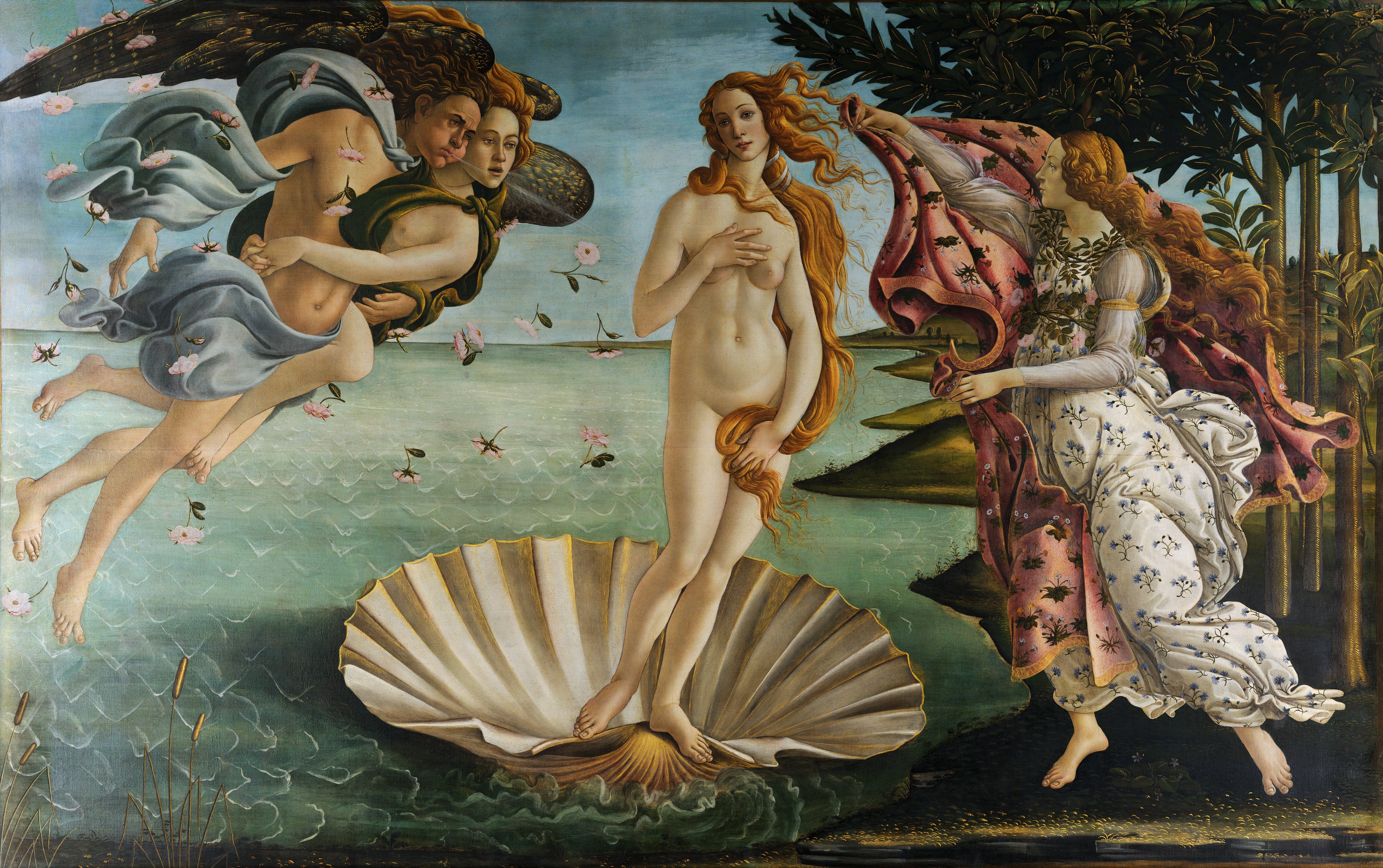
The Birth of Venus

  Botticelli Venus.jpg

                        “The Birth of Venus“, c.1482-6
 
                                    Sandro Botticelli 
 
                                       (1445 -1510)
 
                                         ________

this is me at New Year’s Eve, instead of a party after a day of some incidental work, not much but enough to hobble my spirit, I thought a hot bath would be good, maybe even an alternative, at midnight itself, I carried on, it sounded irresistible

I’d light a candle of course, play soft music, Lizst was already on, his “Années de Pèlerinage” – a meditation for piano on his Swiss, Italian pilgrimage – would go on tinkling away peripatetically prestidigitating still for hours, I wouldn’t have to even change a thing

I’d be reborn of course, that was the rationale for not going out, never mind the cold, the snow, for me the late hour, who’d pass after all even for a New Year’s party, I mused, on an outright reincarnation   

later I’d make my excuses

                                                                                                                                                                                                                                          meanwhile after a long, hot, indeed gestative soak, in the very womb of earth, in allegorical, I imagined, primal waters, wherein I’d redefine my inner being, redirect of course my errant soul, I could only rise transformed resplendent, I instinctively foresaw, as Venus, specifically Botticelli’s

I arose

a mane of golden hair, neck and profile by already Modigliani, fluted fingers a modest flutter above pert breasts, the others in their clutch a strand of protective locks to shield my innocent, inviolate pudenda

Venus, I thought, goddess of love

to be reflected not only for the moment in my mirror but like a resolution in my heart for the entire year, years in fact, to come

took a picture, hope you like it

                                                                                                                                                                                                                                             and all the very best                                                                                                                                                                                                                                     Richard

psst: only later did I realize there were zephyrs there, they’re there of course, I should’ve known, always

and one of also the Horae – Nymphe, I think, goddess of the morning hour of washing, ablutions – handing me a vernal cloak, a tribute to my season, of course, of spring


________________________________________________

Narcissus

Michelangelo Caravaggio 065.jpg

                           “Narcissus“,  (c.1597-1599)
 
                       Michelangelo Merisi da Caravaggio
 
                      (28 September 1571 – 18 July 1610)   
 
                            ________________________
 
in the myth of the beautiful Narcissus, he sees himself reflected for the first time in a pool, sees of course what others see, the surface    

but he’s confused, can’t see the forest for the trees, the id for the ego, the true for the superficial he knows quite well is there beyond what he’s been told again and again is beautiful, but that effortlessly and inextricably has always been just himself, just unsuspecting, unassuming Narcissus

to be beautiful, he inquires 

he will drown searching

                                                                                                                                                                                                                                           in truth and art       

Richard

psst: see also Salvador Dali’s “The Metamorphosis of Narcissus 


           ______________________________________