miracles
when I started looking for miracles,
I found out that there indeed were
some, as a matter of fact, many
here’s another, in case you missed
the last one
Richard
if Beethoven had written merely one transcendental
work we would still have been beholden, but that he
wrote neither two, nor three, but several immutable
pieces is extraordinary, super-, apparently, human,
though, of course, manifestly not, unless you want
to bring Jesus into the picture as such a dual being,
then we’ll talk, but Beethoven is a staunchly secular
voice, devoid of the spiritual considerations of a
Bach, for instance, Beethoven speaks for humanity,
its longings, consternations, aspirations, its essence,
no longer the discredited primacy of the Cross and
Its imperial derivatives, Human Rights have trumped
God
what Beethoven maintains however is the reverence,
his later pieces – you’ve heard the “Hammerklavier“,
already, the 32nd piano sonata – are manifestly
spiritual experiences, as opposed to religious
the 14th String Quartet will do the same
if the “Hammerklavier“ is akin to Moses delivering
his peremptory tablets, the 14th String Quartet is
the Sermon on the Mount, in the history of music
they have so great an impact
briefly, as briefly as I can, I’ll say a few introductory
words, then let your soul and the music do the rest,
see what happens to your karma
there are seven movements in the 14th, uninterrupted,
no pauses between the movements, though each is
easily identifiable, tempo therefore becomes incidental
instead of Classically ordered, the first movement, for
instance, is an adagio, a Classically improbable spot
the sections therefore play much as chapters in a
novel, advancing according to the logic and emotions
of the moment, always, as in all of Beethoven, moving
inexorably forward despite the intricacies of the, not at
all predictable, plot, as had been the case in the more
regimented Classical model, Beethoven takes you,
instead of around the corner, into the clouds, into a
spiritualized heaven, a place of profound existential
introspection
try listening to the 14th String Quartet attentively
without thinking about your soul, its existence,
its mission, in the very face of its ineradicable,
and fateful, actuality, the human conundrum,
Beethoven lets us know we’re not alone
some mountaintop Sermon indeed, watch what
happens to your sensibility, your very sacred
self, or maybe I should say, listen
may your path be decked meanwhile with laurels,
and your days be blessed with grace, be it ever
so merely, maybe, human
who knows
sincerely
Richard
psst: if you’ll allow me to pursue my series of
similarities you’ll imagine piano sonata
no 32 as Beethoven’s “Last Supper”,
this one in particular five luminous stars
to my utter surprise when I checked I’d never
but only once in the many months I haven’t
been able to shut up since I started spouting
my bristling endorsements, like a very rushing
river gushing with the overflowing bounty of
an inveterate spring, mentioned Schubert, an
incandescent voice from surely heaven
it was about his String Quartet in C major, the
D956, not surprisingly, it is utterly enchanting,
D for Otto Erich Deutsch still, incidentally
here’s an alternate version of it, an utterly
inspired one
but if I’ve reintroduced Schubert it’s specifically
this time to compare him with Beethoven, they’re
easily confounded, I even did it once myself, to
my crushing embarrassment, in erudite and
unflinching company, oof, I cringe to even
remember it
the D959, moments only after the 956 of course,
has all the idioms of a Beethoven, and exercises
them as expertly, the beat, however, is always
on, unlike Beethoven, whose beat is always off,
contrary, rebellious, against the prevailing
order
though this variance might seem slight, one
senses already in the younger and later
Schubert a return to form, elegance, and civility,
the First Empire had indeed taken hold during
the transformation of Napoleon from hero of
the Revolution to a different incarnation of
Emperor, Chopin as well would be beholden
to later similarly reinstated French courts
so seemingly trivial an alteration speaks
volumes when one attentively listens, one
must do this with one’s heart
such a return to aristocratic principles is not
uncommon, incidentally, we seem, indeed, to
thirst for dynasties, if you’ll note the return of
late, of the Bushes, the Clintons, and most
recently the Canadian Trudeaux
Putin is another, though arguably somewhat
less democratic, version of that principle
Beethoven is off the beat then, Schubert on, you
won’t find much else that’s different upon first
listening, you’ll note only that their music is very
much the same, rigorous beat, tonal, essentially,
harmonics, and the return eventually of the
melodies, Classical imperatives, but with the
distinction of the new Romantic,
transformational however, sensibilities
Schubert might’ve even outpaced Beethoven
had he survived, I think, but he didn’t, he died
much too young, at the most tender age of
only 31, younger even than the more
celebrated Mozart, famous for succumbing
prematurely at the still early age of 36
may they rest, may they all rest, Schubert,
Mozart, and the somewhat longer-lived
Beethoven, still early deceased at 56, in
eternal peace, for they have brought us
but wonders
Richard
psst: here’s a movie to go with the earlier
Schubert, “The Company of Strangers“,
the very best film Canada has ever had
to offer, bar none, a gaggle of old women
are stranded in the Laurentians after their
tour bus breaks down, Schubert would’ve
loved it
and been honoured
take a few minutes, well, nearly an hour,
to watch, imbibe, incorporate, integrate,
this video, to smell this miraculous
flower, Beethoven’s piano sonata no 29,
the monumental “Hammerklavier“, the
equivalent, to my mind, of the Eiffel
Tower, the Coliseum, the Parthenon,
Homer’s “Iliad“, I promise it will
transform you
I’ll talk about it later, I also promise
Richard
psst: you might need some Kleenex
___
Beethoven’s piano sonata no 28, opus 101,
in A major, is the first of what is considered
to be his late piano sonatas, as opposed to
early and middle, three entirely distinct
periods that are easily recognizable upon
closer listening, the early ones are bold,
even headstrong, with Beethoven’s ever
characteristic vigor and Promethean authority,
the length themselves of his early works are
a testament to his sense of his own great
personal validity, the first four, to my mind,
go on much longer than often enough they
should, a typically youthful presumption on
his part, and are musically at best trite, I find,
after their first expositions, the repeats come
as redundant, and tolerable merely, surprises,
even the famous 8th, the “Pathétique“, opus 13,
is, I think, too brash and impudent, however in
this manner, nevertheless admittedly, entirely
effective, listen
the “Pastorale“, of the middle period, opus 28,
no 15, is where I deem the music to become
henceforward sublime, it has a settled
confidence that brims with not only technical
wizardry but with also positively enchanting
and entrancing musical ideas, bursting like
very flowers in springtime, with colour and
inspired, effervescent, imagination
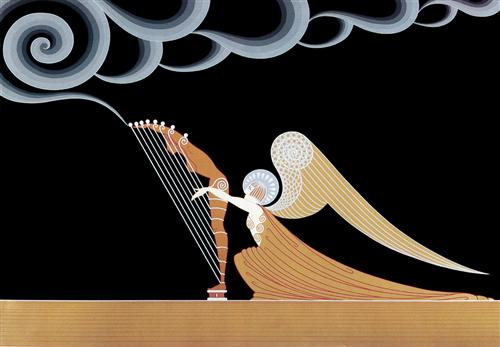
the late period is where Beethoven becomes,
however, a sage, a prophet, and indeed a
hierarch in the new secular order of a
reconstituted Heaven, after all, someone
had to take the place of the now discredited
angels, Nietzsche called them Übermenschen,
Supermen
the 28th sonata starts out slowly, or rather,
more slowly than the earlier forthright ones,
already a sign of less physical, more
measured and considered reponses, my
impression here is of a grandfather visiting
his granchildren, jovial but not too disportive,
merely jaunty, always cheery but for a moment
of haunting melancholy, at the adagio, before
becoming congenial and avuncular again,
with then a big, boastful ending, snapping
staunchly his patriarchal suspenders,
getting the last, and traditional, word, with
a firm, which is to say, a foursquare-major-
chord, finish, the aural equivalent of turning
out the lights
musically, however, the progressions are
exploratory, incremental, more and more
layered with possible, and often apparently
rejected outcomes, in order to try out
something more fitting, maybe, more
accurate, a deconstruction, in other words,
of musical ideas, an investigation, in search
of a viable musically cohesive path
in the 28th sonata Beethoven, I think, is
doodling, however, coming up with the
methods of his great addresses, the
language here is not yet philosophically
precise, a smattering merely of pianistically
plausible ideas, musical sketches, the first
stirrings here, you’ll gather, of formal jazz
in the next sonata, the 29th, the still
unsurpassed “Hammerklavier”, he writes
the definitive book, speaking for music in
the forthcoming history of the world, and
determining its future path, we are still
moving along on his transcendent carpet,
no one ‘s come along still to give us a
more assured ride, kind of like Homer,
some would say Shakespeare, others
Albert Einstein, other, incidentally,
post-Christian, post Revolutionary
Supermen
who do you presently pray to, who are
your angels, who your Superwomen,
-men, towards what do you aspire,
towards whom
Superwomen, -men, incidentally,
cultivate their own efflorescence,
manifest their own, I think, destinies,
or, if you like, their own Heaven
much as I believe angels also do
Mozart’s Fantasy in C minor on the
same program shows him in a nearly
Beethovenian mode atavistically, much
more somber than he usually is, but he’s
nevertheless easily distinguished by
his much less intricate musical
accompaniment and his much more
rigorous melodic line, you’re more
likely to hum it
Mozart also composes from the nursery,
I find, the exhilaration of playful discovery,
you can see the toy soldiers, the golden
tresses on little milkmaids in dirndls with
red circles for cheeks
Mozart’s pieces are like nursery rhymes
Beethoven progresses to literature
before you judge me too harsh on Mozart,
by the way, consider that my favourite
piece of the two in this program is the
Mozart, it’s like comparing apples and
oranges, though, it depends on your
mood that day which you’ll favour
cheers
Richard
psst: just in case you missed it, this version
of the “Pathétique“ is the best I’ve ever
heard, indeed, of all the pieces here
the most extraordinary, don’t miss it
 Richibi's Weblog