Richibi’s Weblog

Just another WordPress.com weblog

Category: in search of God

“Pohádka” (“Fairytale”) – Leoš Janáček

"Fairy Lake" - Martiros Saryan

Fairy Lake (1905)

Martiros Saryan

________

for the recital season coming up,
my friend, the musicologist, has
once again been called upon to
write reviews of featured pieces

out of giddy exhilaration at his
playful essays, he sent me
several draughts he’d already
composed around piano and
cello pieces, of mostly familiar
enough faces, Schumann,
Beethoven, Strauss, but of Leoš
Janáček
I’d only heard mention,
none ever of his compositions

his Pohádka“, or Fairytale“, is
a programmatic piece, which
means it accompanies a story,
like a soundtrack does a movie,
but Pohádka is based on a tale
of Vasily Zhukovsky, a Russian
epic poet, and is not accompanied
by a film, nor a ballet for that
matter – see “The Nutcracker” or
“Sleeping Beauty” for that – but
lives and breathes on its own
merits

Kashchei, Lord of the Underworld,
objects to the union of his daughter
with a charming prince, represented
here by the piano and the cello
respectively

they run away and find refuge with
another potentate who prefers the
prince for his own daughter, and
casts a spell on him so that the
prince may love her, instead of
Maria, the princess, which he does

Maria, forsaken, in a pique at this
turn of events, turns into a blue
flower

o, to turn into a blue flower
whenever I’m in a pique, I thought,
I only wish, and succumbed
forthwith to the improbable story

the spell is lifted, however, from
both, of course, however much I
might prefer to remain a blue iris,
say, anemone, or hyacinth, when a
magician, don’t ask, turns up to
set everything aright, and they
live happily ever after

the version you’ll hear is
transposed for piano and double
bass, a somewhat deeper, thrilling
register, or that may be just the
bassist, but the magic entirely
remains, if it isn’t completely
enhanced, rendered definitive
by this superb performance

my friend says Janáček has
neither musical forebears, nor
descendants, but composes in
a world of his own, an utterly
enchanted world, I surmised

what do you think

listen, just click

Richard

psst:

“con moto”, by the way, means
“with conviction”
“Death and the Maiden” – Franz Schubert‏

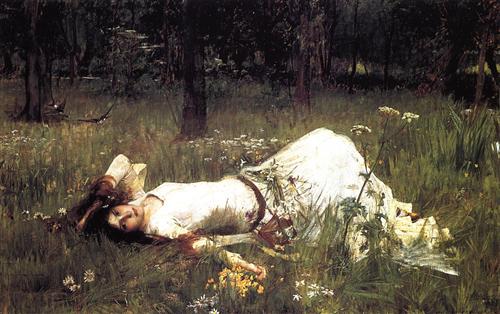
 "Ophelia" -  John William Waterhouse

Ophelia (1889)

John William Waterhouse

___________

though death is not an especially
appealing topic for many, it was
nevertheless of fundamental
consideration during the
Romantic Period

Goethe, the German poet, had
already created a sensation
with his The Sorrows of Young
Werther
, a young man,
disappointed in love, takes his
own life, a potent seed for the
new era, secularism was
overtaking theocracy, the
autocracy of the Christian
Church was giving way to the
prevalence of human rights,
a private opinion, well disputed,
was holding sway against the
rigidities of religious orthodoxies,
science and reason had been
chipping away at the very idea
of God

but with human rights there was
the question of personal
responsibility, if not an imposed
authority, then each man, woman
was in charge of his, her own

the fundamental question,
therefore, was Shakespeare’s
To be or not to be, or, for that
matter, Burt Bacharach’s and
Hal David’s What’s it all about

this is not me, this is Albert Camus
talking, who formalized the situation
in the 1940s

“There is but one truly serious
philosophical problem, and that
is suicide. Judging whether life
is or is not worth living amounts
to answering the fundamental
question of philosophy. All the
rest — whether or not the world
has three dimensions, whether
the mind has nine or twelve
categories — comes afterwards.”

after Werther, Madame Bovary followed,
Anna Karenina, suicide had become an
option, the penalty was no longer
opprobrium, castigation, as it had been
under unforgiving religious constraints

death itself, fatefully rather than
personally determined, was, of course,
no less considered when the era of
heartfelt declarations dominated,
Mendelssohn had written his
Quartet no 6 in F minor, opus 80
for his deceased sister, Beethoven
and Chopin, each his Funeral March,
either, incidentally, still iconic, and
perhaps the most poignant work
of all in this manner, Schubert’s
Death and the Maiden, a precursor
of his own much too premature
demise

this is music as if your life depended
on it

watch, listen

Richard

psst:

the Alban Berg Quartet, a group who
set the standard for several significant
string quartets in the ’80s, do no less
with this one

you’re not likely to see a better
performance of it ever, nor, for that
matter, of anything, pace even Glenn
Gould, a statement I think nearly
against my religion

you be the judge

August, 2015

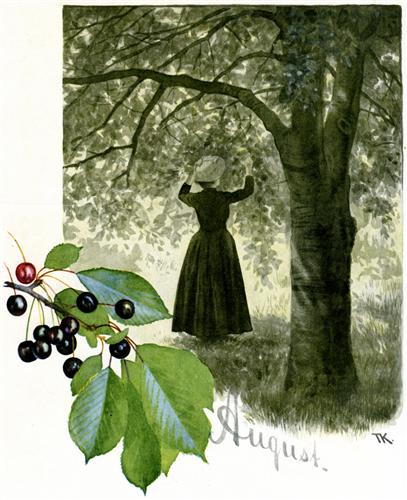
 "August" (1890) - Theodor Severin Kittelsen

August (1890)

Theodor Severin Kittelsen

_____________

a friend wrote recently about her recent
relative silence, a dearest friend had died,
she said, and nights she would wake still
crying

I thought it not accidental that I would
that very day learn of Mendelssohn’s
hommage to his beloved sister shortly
after her passing, 1847, Mendelssohn
died himself that same year, aged 38

this Quartet no 6 in F minor, opus 80,
is my way of paying my respects,
music, art, has always been a place
of great repair, consummate
reorganization, grace, for me

may all grieving people find such
consolation

Richard

Mendelssohn – Opus 13, String Quartet no 2 in A minor‏

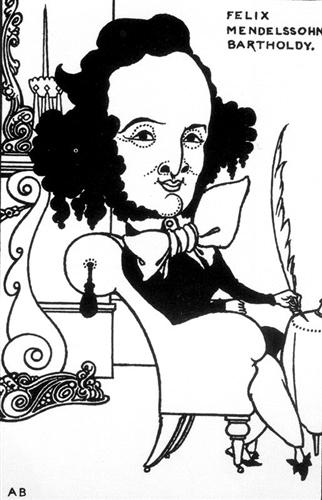
           "Caricature of Felix Mendelssohn" -  Aubrey Beardsley

Caricature of Felix Mendelssohn

Aubrey Beardsley

____________

my music teacher on the Internet,
a woman of impeccable credentials,
said about Mendelssohn that his
music was “instantaneously
recognized”

I raised a quizzical eyebrow, and
thought, not to me, honey, despite
my erudition I’d never even heard
of Mendelssohn’s Opus 13, String
Quartet no 2 in A minor

it was full of atonalities, you could
be forgiven, I thought, for thinking
it might be even after Brahms, by
you I mean, of course, me

but an incontrovertible tenderness
and courtesy runs like blood through
it, enough to anchor it to the very
engines, entrails, gut, if you’ll permit
me, of Romanticism, it was 1827

but there wasn’t a single tune I’d
ever heard, in contradiction to my
nevertheless highly respected
teacher, however ever pleasant,
however ever amazing the
number

I was surprised, I’d expected some
Proustian, which is to say, inchoate,
reminiscence, encounter

Mendelssohn was 18 when he wrote
this, sowing his oats, some oats

Richard

“Tru”‏

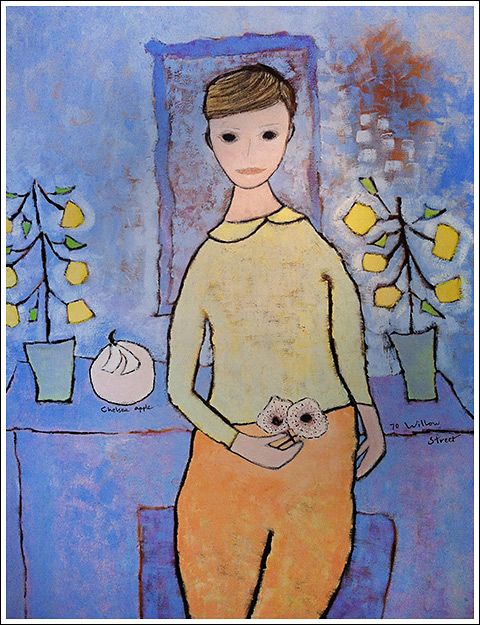
"Truman Capote" - Gloria Vanderbilt

Truman Capote

Gloria Vanderbilt

____________

Truman Capote, a towering XXth-Century
figure, might be remembered much more
for his personality than his considerable
literary output, In Cold Blood remains
a turning point in the history of literature,
not to mention an extraordinary read

three major works have been produced
about Capote since at least 1992, when
Robert Morse won a Tony for Tru, my
favourite rendition, with a nod to the
superb Infamous, before even the
dire, Oscar-winning, Capote, however
deserving Philip Seymour Hoffman
might’ve been of his own award for his
brilliant work

watch Tru in coordinated instalments,
no fuss, no muss, only the suspicion
you’ve missed an irretrievable and
perhaps crucial nugget in the clip
change

chill, Tru, however apportioned here,
is seamless, and captivating, hilarious
and, all at once, profound, not to be
ever forgotten, much as I never have

Richard


“Julius Caesar”, a foretaste

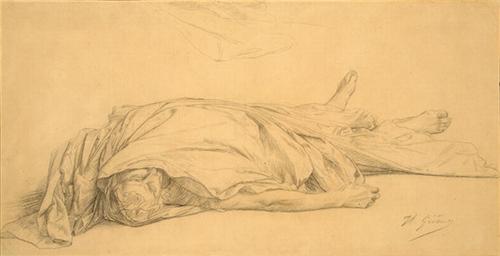
"The Dead Caesar" -  Jean-Léon Gérôme

The Dead Caesar (c.1859)

Jean-Léon Gérôme

__________

a friend and I are undertaking our
umpteenth reading of a Shakespeare
play, “Julius Caesar” this time, which
I hadn’t read in an age

in this version, still unparalleled,
Brutus, James Mason, presents his
argument for the assassination of
Caesar
, “Hear me for my cause, and
be silent that you may hear…not that
I loved Caesar less but that I loved
Rome more”,
he proclaims

Mark Antony, in the incarnation of
Marlon Brando, responds, for the
ages

and therein lies the glory, incidentally,
of Shakespeare

just saying

Richard

Grieg, Piano Concerto in A minor‏

Arthur Rubinstein

Arthur Rubinstein

_________

inspired by a favoured blogger of
mine who’d highlighted an obscure
composer who’d written an
unforgettable cultural ditty we’d
all heard but never further thought
of, Hugo Alfvén, I was reminded of
another Scandinavian giant, Grieg

stop, watch, don’t just listen, to
Arthur Rubinstein make history
with Grieg’s A minor Piano
Concerto
, he is the very
representation of all of the
proprieties of a late 19th-Century
aesthetic, noble, aristocratic,
austere, yet authentic, capable,
firm

André Previn’s orchestral
accompaniment is unobtrusive,
and disappears, for all intents
and purposes, behind the sheer
dedication, conviction, of the
true maestro, the veritable muse,
the instigator, Arthur Rubinstein,
watch him leave all of them behind
in flurries of electrified inspiration

this performance bursts beyond
all literal expectations, expect
nothing short of transcendence

Richard

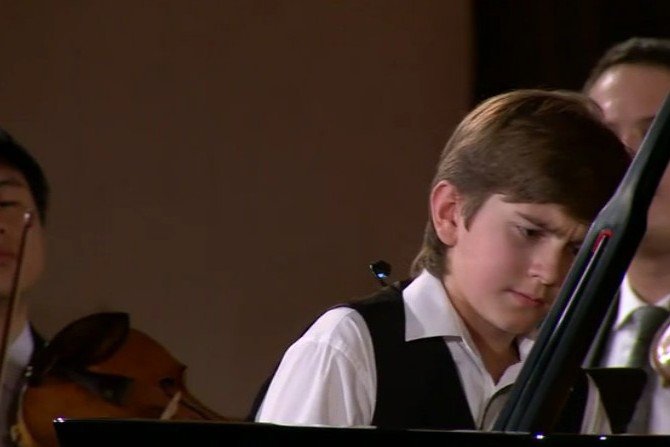
at the XVth International Tchaikovsky Competition – Daniel Kharitonov, ll‏

Daniel Kharitonov

Daniel Kharitonov

_________

there ‘ve been extraordinary
performances since Maria Mazo‘s
defining reinvention of Mozart’s
21st Piano Concerto
, the “Elvira
Madigan”, at the XVth International
Tchaikovsky Competition
, worthy
of, believe me, fruitful commentary,
but for the sake of brevity and, of
course, indiscretion, I’ve refrained
from going on and on, and on,
about however many of them, all,
nevertheless, quite outstanding

but before even the end of Daniel
Kharitonov
‘s final and deciding
performance, of Tchaikovsky’s
indomitable 1st Piano Concerto,
followed by whatever by Liszt,
he has, like Maria Mazo, here
given us a new standard for
hearing these indelible musical
epics, she takes over from
Mitsuko Uchida, goddess of
Mozart, he takes over from very
Van Cliburn, you’ve got to go
back to 1958 to have heard
this commanding thunder

Kharitonov is sixteen, a bud
becoming a flower

wow, no matter who wins

Richard

psst: his Liszt, incidentally, will
restore your faith in Liszt

at the XVth International Tchaikovsky Competition – Maria Mazo, ll‏

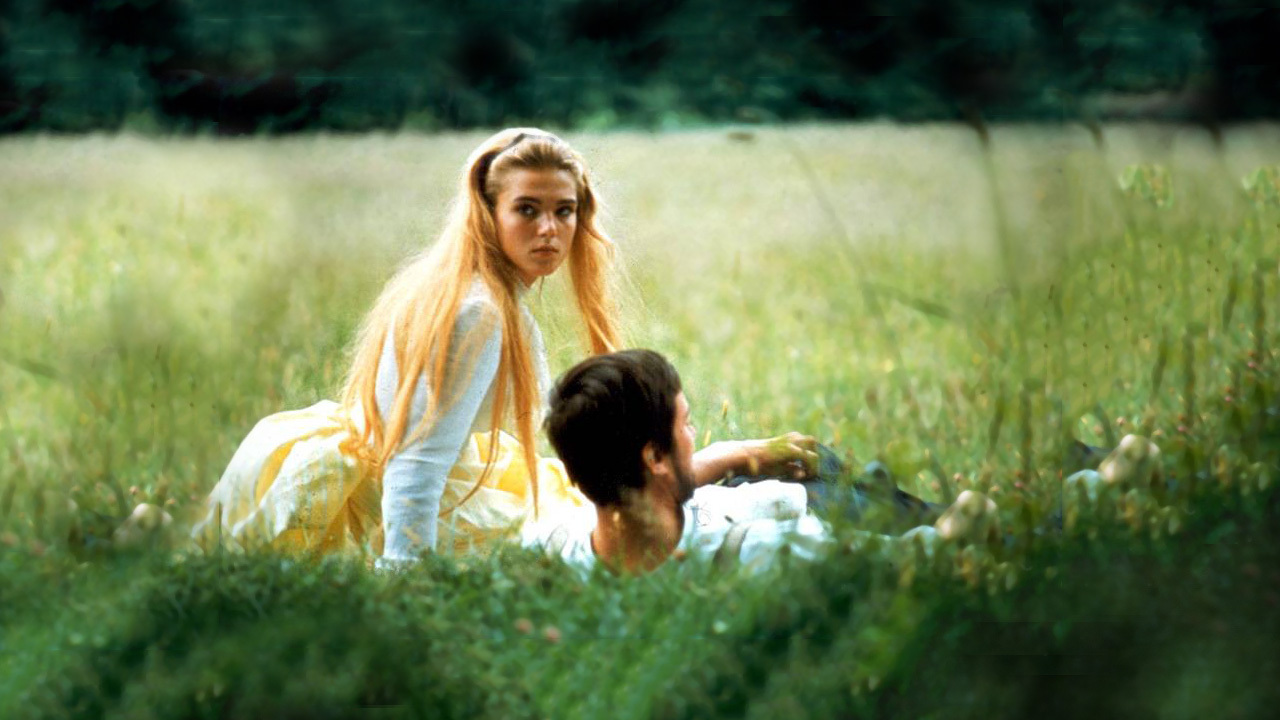
"Elvira Madigan"

a still from the movie “Elvira Madigan

________________

there’s been a second round of
recitals, enough to make you
weary of sonatas, unless you’re
stalwart, devoted, primed

the prizes have been awarded,
the results posted at the site,
so that any mystery, excitement,
has been chilled, had you been
in any way excited about your
choices

they certainly rained on my
parade

by now most of my favourites
have gone down, others have
been perfunctory, to my mind,
but three, which surely I’ll
cover, but presently let me
start with Maria Mazo, a
wonder, who’d wowed me
earlier with her
transcendental Beethoven

here, with an orchestra, she
takes on a monument of the
20th Century, Mozart’s 21st
Piano Concerto, better known
since the mid-20th Century as
the theme to the movie,
Elvira Madigan, a forgotten
film now, however enchanting,
but this is where a generation
learned about Mozart

Maria Mazo sets the new
standard here, this is how
you’ll hear this concerto from
now on, it is magical, it is
mystical, it is extraordinary,
it’s right up there with the
greatest, who are presently
handing over to her our
musical reins

thank you, Mitsuko Uchida,
with the greatest admiration

strangely Maria Mazo didn’t
even place

who could ‘a’ ever thunk it

Richard

at the XVth International Tchaikovsky Competition – Maria Mazo

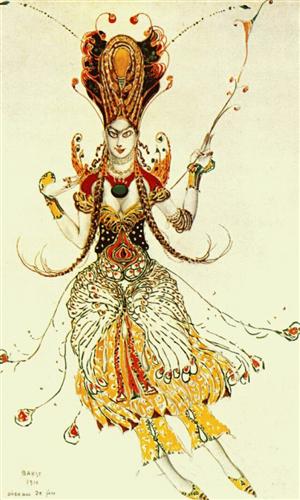
  "L'oiseau de feu" -  Leon Bakst

L’oiseau de feu (1910)

Leon Bakst

________

after playing Scriabin’s 4th Sonata,
in F# major, opus 30, a passionate
but poised performance of a work
dated 1903, Ravel maybe, or
Debussy, at first I thought, though
neither had ever been so furious in
my recollection, then a transcription
for piano of the last movements of
Stravinsky’s “Firebird”, a work as
obstreperous as the Scriabin, and
as revolutionary, relentless and
brash, much more audacity than
diplomacy however ultimately
treasured universally and celebrated,
Maria Mazo undertakes no less than
the mightiest of the mighty, gasp,
Beethoven’s “Hammerklavier”

she takes on the first two movements
at something of a clip, not an
unwelcome occurence so long as you
have the fingers for it, which on the
strength of her earlier numbers I
deemed she would, and did, which
only added to the gravitas of her then
largo, which thereby became
resplendent, luminous, utterly and
verily, indeed, transcendental, note
the cherubs twittering halfway
through, just before Beethoven
enters the portals of very Heaven
and is transformed into radiance and
incandescent light before your
very astonished sensibilities

Maria Mazo should win

Richard