Richibi’s Weblog

Just another WordPress.com weblog

Category: in search of God

my Amsterdam, January 12, 2013‏

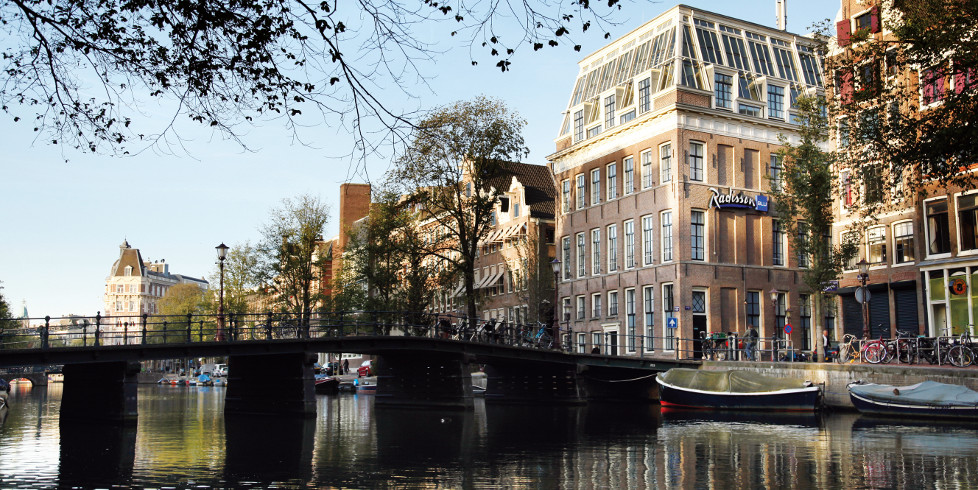
Rusland and the Kloveniersburgwal

“right across from those two bridges”

Amsterdam, Holland

________

upon reaching our rented apartment after
our cab crawl through the Friday night
streets of bustling Amsterdam, hemmed
in and harried wherever we went by its
canals, bikes and rickety cobblestones,
all festooned in the neon glitter of, at
seven already of a November evening,
its multicolour nightlife, I looked around
to get my bearings, we found ourselves
on a little lost street standing on uneven
ground in the darkness between a row
of doors and some water

up the short street, as I looked around,
a bridge crossed from our street over
the stream that passed before our
lodgings, and on the other side of that
bridge another crossed another canal
that ran perpendicular

in my mind cobblestones, canals and
bridges incontrovertibly led to fairy
tales, around me I foresaw, in the
pregnant darkness of our secluded
street, adventure, and I would be
its Alice in Wonderland

and verily there appeared, as though
like magic, right across from those
two bridges, two coffee shops and a
restaurant, my two essentials, nothing
else but moonlit buildings, otherwise
only bicycles loomed, and the
occasional pedestrian

of the two coffee shops I chose the
one that was the least pretentious,
seemed to me the least a nightspot,
though it had its own smoky den at
the back, as it turned out, where they
did indeed serve coffee, made friends
with Francesco and Danielo the first
night, who were easy and engaging,
as they rolled me some take-out coffee,
little trumpets of the best, of course,
Columbian, or something, enough for
a couple of days

further up the further street a neon
sign read “Radisson“, which was
perfect, we wouldn’t have to look
for dinner, a noted hotel is always
an excellent place to find fine fare

and that night that’s all we wanted

we weren’t disappointed, the room
was nigh empty, the service right, and
the delicacies good enough to come
back for seconds, which we did

later as we walked home churchbells
rang the late hour, soon, they tolled, Read the rest of this entry »
Botero’s Abu Ghraib

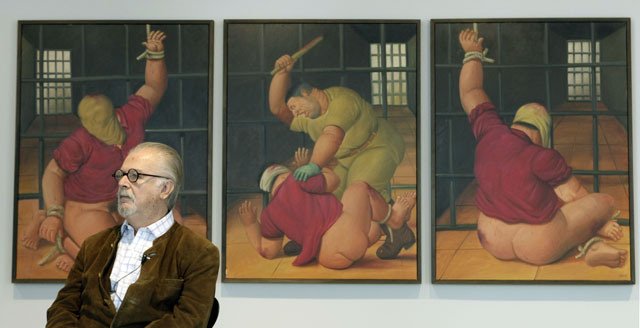
Botero's Abu Ghraib

Fernando Botero standing before three of over 80 of his stylized
depictions of atrocities committed at Abu Ghraib

____________

the role of art has always been to bring
attention to injustice, Goya, for instance,
famously, Picasso’s Guernica“, without
which Guernica would be forgotten, in
literature the servile position of women
and those marginalized by industrialization
in the works of Charles Dickens, Henrik
Ibsen, Émile Zola, in music the strident
strains of Shostakovich indelibly
imprinting the cruel depredations
of the Soviet system in his searing
compositions, just click

Botero, as the others, has given here
impermeability to what had been merely
news items, something tragic but lost
amongst so many other tragedies, by
giving it ideological breadth, depth and
substance, giving it the modern postion
of an altarpiece, a place of ardent
contemplation

we have after all no more churches,
only malls, we rely on potent images
for our moral guidance

therefore art

Richard

my Amsterdam, December 29, 2013‏

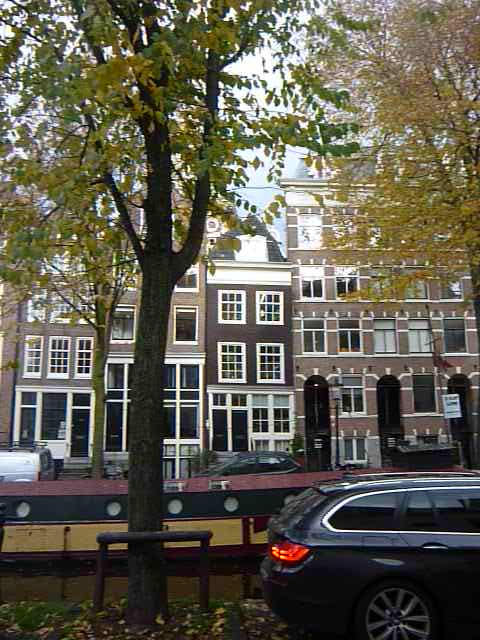
Amsterdam 071

The Amsterdam Canal Apartments

___________________

our trip from Bruges to Amsterdam was
circuitous, instead of a direct, unimpeded
journey, something that, incredibly I
thought, wasn’t even up for sale between
these two significant cities, we were made
to change trains in both Antwerp and
Rotterdam, with too long a wait at one,
and too short at the other, too brief to
tote comfortably our luggage there
such an inconvenient distance

I perspired, Mom worried about my heart,
not to mention my irascible impatience

Amsterdam Centraal was a replay of the
fall of Saigon, but with just a little bit more
order, a cab driver took our bags and crept
along the overflowing Friday night streets
and their contiguous, oddly moderating
canals, placid, constant, immutable, to
our, as they say in Europe, pied-à-terre

only a walk away from the train station,
I gathered, not carrying our luggage of
course, about the spot where the driver
dropped us off, the rest of the pertinent
city must be consequently nearby, I
supposed, as indeed it was

the driver put our bags on the
cobblestones, he’d driven up one
side of the canal, crossed a bridge
and returned along the one way
other, and stopped before our
own gingerbread house
, scrunched
up between several others, our host,
the owner’s representative, who’d
been waiting on the stoop later than
our proposed arrival hour was gentle,
gracious, efficient and helpful, but
spoke essentially maybe seven words
of English, just Spanish, being from
Venezuela, and Dutch

could we blame him

would we expect our host to speak
Dutch in Canada if we couldn’t speak
its English, I asked Mom, who’d, out
of surely the day’s distress, I decried,
was resorting to peevish indignation

I enunciated all of my concerns
throughout to our ever attentive squire,
repeated my words carefully, spoke
them ever louder, one by ardent one,
pointed, spread out my arms, became
a back-up act performing grandly my
own instructions

all, I commend, were met eventually
unimpeachably

let me help change the beds, I offered,
he’d had to set up for a mother and son
rather than the more connubial pair he’d
expected, no, he replied, or something
similar that I could comprehend, and
wouldn’t hear of it in any language

he gave us the keys, after which we
could rest, and did, until two days later,
not including nearby dinners, of course,
out

the place was what you would expect
of a gingerbread house, beams, uneven
corners, but spotless and ready to take
on our colours, long instead of wide, a
Dutch particularity, with all the up to the
minute conveniences

there was however no bath, but a
generous shower stall I could easily live
with, and gloriously did for that month

outside a few cars were parked by the
barges, homes some of them, along the
canal, another canal ran perpendicular
to it away from us between two rows of
houses lined each with their tree, also,
incidentally, their garbage, but that’s
another story

it was night already, everywhere street
lights twinkled, as did their glistening
reflections on the onyx water

on the quarter hour church bells rang

dreams, they tolled, and told over and
over again, were possible

Richard

my Bruges, December 24, 2013‏ (the Groeningemuseum)

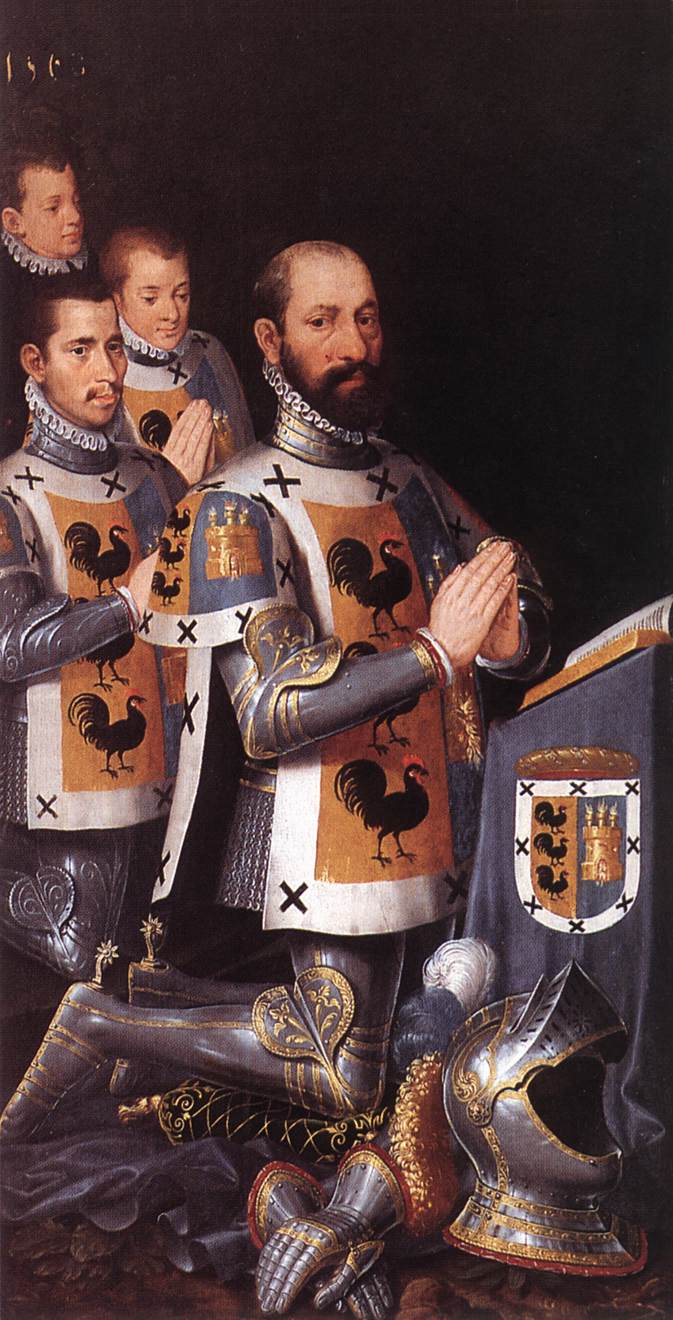
Pieter Pourbus - Portrait of Jan Lopez Gallo and His Three Sons (1568)

“Portrait of Jan Lopez Gallo and His Three Sons” (1568)

Pieter Pourbus

________

if Proust had his little patch of yellow wall
from Vermeer’s “View of Delft” to enchant
him, I’ve succumbed rather to blues that
I’ve found now in three paintings, van Eyck’s
Madonna and Child with Canon Joris van
der Paele
“, both of them, years ago at
London’s National Gallery the ultramarine
of the extraordinary Wilton Diptych, just
click, then again just click for a wonderful
presentation of it
, then the steel blue of the
one above, the “Portrait of Jan Lopez Gallo
and His Three Sons
” by Pieter Pourbus,
also like the van Eyck at the
Groeningemuseum in Bruges, a bargain
there therefore in unforgettable blues

the Groeningemuseum is Bruges’ most
impressive museum, despite both the
Picasso and the Dali nearby, though
nothing is very far in Bruges, except,
of course, the outskirts

we had wandered across the wrong
bridge our final day, confusing our
canals, and diligently marched forward
along a street perpendicular to our
purpose, heading out into what appeared
to be only countryside, though not
especially unduly cause we’d been
looking for Bruges’ famous windmills

but there were no windmills at all in
the distance, only open fields, and the
unending length of the wrong canal, it
transpired, had it been ever so
nevertheless idyllic

about a mile out a young man on a bike
passed us by with his dog and replied
when we asked that the windmills had
been all the time behind us, directly
to the left of our original bridge,
right there behind a tree which had
obstructed our view of the first of
them

that’s what you get maybe, I guessed,
for chasing, even famous, windmills

meanwhile back at the
Groeningemuseum, set along a path
along other medieval buildings, stone
instead of brick as later, then over a
bridge and beyond a small garden,
the door opens to especially early
Flemish art of very transcendental
qualifications, see again, for instance,
above, more profound than either the
brash Picasso, his fine though not
essential museum there, and the
flamboyant Dali, great fun however
ubiquitous ever, his museums seem
to pop up in countless cities

later, up the street, we ate at the
Maria van Bourgondië again, cause
nowhere could we find for Mom some
pasta, and where I could still savour
their Stroganoff sauce from the
previous night, and where, last but
not least, we could rest after a long
day our tired, tried indeed, feet

the Stroganoff was again sublime

so was their fireplace

Richard

“good news from Ghent”‏

the only thing that rang in my ears ever
about Ghent until contemplating the van
Eyck Altarpiece was Robert Browning‘s
poem about it, “How They Brought the
Good News from Ghent to Aix
“, the
idea, like in his “Pheidippides“, of
dying valiantly for a cause had mightily
impressed me

that cause is incidental, of course,
dependent on the beliefs and situation
of that particular stalwart person

it might make you unforgettable, that
unfettered and irevocable devotion, as
it did for me, for instance, the heroes
of these two poems, such an exalted
mission is an ambition for lots of folks,
very much for a young boy, especially,
such as I was when I read these

Rose Valland rose indeed to the occasion
when it came to saving priceless art before
the onslaught of ruthless Naziism, wherein
the very van Eyck Altarpiece, and also even
Raphael‘s incandescent “Sistine Madonna“,
to my utter horror, from another, and opposite,
corner of Europe, Dresden, could’ve been
forever lost

but the “good news” was in kind returned
to Ghent, eventually, in this fascinating
documentary, “Hitler’s Museum: The Secret
History of Art Theft During World War II”,
part 1, part 2, just click, from its hiding place
in Altaussee, a mountain fortress in Austria

The Adoration of the Lamb” now resides in
its rightful Ghent, even more, after so fraught
a trek, a wonder

also returned to Dresden, incidentally, the
Sistine Madonna“, that city’s own defining
artwork

it is to be noted that a task force had been
set up by no less than the Americans to
save the purloined art of Europe in that
however fraught time

this hasn’t been at all the case in their
recent military forays, what do you gain,
I ask, if you lose your ideals, what exactly
do you conquer

Richard

psst: Browning‘s “news”, if you’re wondering,
was of the “Pacification of Ghent“, 1576

my C***mas card‏

          Madonna and Child with Canon Joris van der Paele - Jan van Eyck

           Madonna and Child with Canon Joris van der Paele” 

                                                (1436)

                                          Jan van Eyck

                                                           _______

 
though I’ve long professed to not being
a Christian, having opted for the more
colourful pageant of Ancient Greece’s
Olympian divinities, and its attendant
metaphysical perspective, wherein
nature is honoured for its bounty
rather than saddled with the guilt of
Original – I ask you – Sin, I nevertheless
revere the spirit that spurred great
painters to such spectacular, even
exalted, heights  
 
in Bruges we saw van Eyck‘s Madonna
the blue of the prelate’s cape on the left
still reverberates in my subconscious
 
as though I’d discovered a new colour
 
 
the blue on the right on St George, the
patron saint of van der Paele, who
commissioned the painting, rendered
appropriately humble, even kneeling, 
in white, is only slightly less impressive
for being not less pungent but more pale,
noble yet understated, gold armour doing
the definitive rest
 
the ecclesiastic is St Donatian, patron
saint of Bruges, who knew how to
dress, apparently, for so vaunted an 
occasion  
 
 
merry C***mas
 
may your capes ever be as eloquent 
 
may your blues be ever as sublime   
 
 
Richard


my Ghent, December 6, 2013‏

 The Ghent Altarpiece - Jan van Eyck

                            “The Ghent Altarpiece (1432)

                                                    Jan van Eyck  

                                           ________

 
our room at the Ter Brugge was called
the van Eyck, after, of course, the most
impressive, perhaps, of the Flemish
painters, if you’ll put aside the
magnificence of the impish Bruegel,
the ubiquitous Rubens, and the
masterful van Dyck, for instance,
among countless other inspired 
artists of their rightly celebrated,
and wondrous, golden age  
 
what’s “Ter”, Mom asked, we see it
everywhere, “Ter” here, “Ter” there,
“Ter”, as I said, everywhere, and every
day of course at the Ter Brugge  
 
it means “at”, Staf said, as in “at the
bridge” for “Ter Brugge“, ever ready
to shower us with courtesy and 
attention
 
how obvious, I thought, and faulted
myself for not having already figured
that out
 
much like Kerkstwat, in Amsterdam, or,
more accurately, Kerkstraat, instead of
the more pungent pet name I had given
it, turned out to be Church Street, a
breeze when I’d set my mind to it
 
 
books then even followed, fresh fruit by
the handful, beer, voted the best in the
world, from a monastery in Belgium, he
said, and verily presented us with proof
of that high accolade, our favourite
Classical music over breakfast, not to
mention transportation back and forth
to the bus stop, for us too impracticable 
a distance 
 
we met him or Annemie at 8:11 every
evening there after our Brugesfest, they
were never, nor we either ever, late   
 
 
Staf had urged us to go to Ghent, a more
Romanesque city than the Gothic Bruges,
and putting two and two together I
remembered the GhentAltarpiece, The 
 
duh, chided myself
 
 
once there we had been given a proposed
route to follow to witness the sights, but
winds, cobblestones, and too short a time
for the visit halted us in our tracks at the
 
no, I don’t want to go up to the top, Mom
said, she’d climbed both the Frauenkirche
in Dresden and the Dom in Cologne,
Königstein even in Königstein, a few years
earlier, indeed so had I, but would not
undertake so steep again, and arduous,
an ascent
 
nor would I
 
 
we went next door instead to the Cathedral
we spent an hour marvelling, it is profoundly
inspired, a vision in complexity, colour, and
execution, all multiplied exponentially by
devotion, in all connotations of that word  
 
we were too, however, profoundly inspired,
and foreshortened, therefore, our tour of
Ghent, Ghent went   
 
 
later in Bruges we ate at what became there
our favourite restaurant, Maria of Something-
or-Other* – right beside Maria-of-Somewhere-
Else**, my next favourite restaurant, if you’ll
excuse my faltering memory, – on cordiality,
fine wine and hearty victuals before making
our way back home for 8:11, having indelibly
taken in Ghent  
 
no one was late


Richard 
  
 
** Maria van Bourgondië, read the menu, take
     the virtual tour, just click


telling time, and other related wonders‏

you’ll become engrossed in this clock,
be mesmerized for minutes, watch the
numbers roll, the provocative statistics

just click 
 
 
Richard


my Bruges, December 1, 2013‏

though we were some distance away
from Bruges the journey back and forth
proved to be no inconvenience given
both that Staf and Annemie, our hosts,
were so accommodating, ensuring that
those treks would be seamless, and that
our stay with them would be warm
 
in fact, every one of our wishes became
their inviolable command, and that at no
less than our indiscriminate pleasure
  
 
at the door of their glorious country 
home at first, behind the wrought
iron gate, there were only the chickens
to greet us, pecking away at the front
yard – whose fresh eggs we had for
breakfast every morning, along with
fresh orange and apple juices from
the nearby orchards, bottomless pots
of hot coffee, tea, ham, cheese and
warm bread – but soon around the
corner from the back Annemie showed
up having returned from harvesting
apples, welcoming us like old friends,
then Staf, doing his avuncular same  
 
the rooms, named after Flemish
artists, were unique, spotless,
and heartfelt 
 
we stayed a week, and it remains
equal to very Bruges, a Gothic
wonderland, in our estimation 
 
5 unequivocal st * rs
 
 
Richard  
 
psst: there’s even a five-star restaurant
        across the street, inexplicably, which
        doesn’t however, be warned, take
        credit cards, as do neither Staf and
        Annemie, who, none of them, ever
        questioned our honour in that
        improbable, we thought, 
        circumstance, an Old World, we
        guessed, thing  


sharpening one’s pencil‏

  Cottage and Woman with Goat - Vincent van Gogh

                     Cottage and Woman and Goat (1885)

 
                                       Vincent van Gogh 
 
                                            __________


  Village Street in Winter - Gustave Courbet

                               “Village Street in Winter(1865) 

 
                                     Gustave Courbet  
 
                                         __________


having considered that I’ve just spent
hours and days in some of the world’s
finest museums, you’ll perhaps pardon
my ebullience, I’ve never to date
juxtaposed two art works, I think, for
your consideration
 
but I scream, essentially, at everyone
with whom I visit a museum ever,
juxtapose, juxtapose, juxtapose, it
is the truest path to aesthetic erudition,
should you be so inclined, I call it,
sharpening one’s pencil 
 
 
having been overwhelmed by very
miracles of art, my mom and I, throughout
our European visit, in, specifically, Bruges,
Ghent, Amsterdam and Frankfurt, the
two above, van Gogh‘s Cottage“, called
at the Städel Museum in Frankfurt, and
some of, therefore, our last, burn for me
especially bright, standing naturally
together as comparable works of art,
though choosing between them is like
deciding between oranges and apples
 
but that’s the point, your aesthetic
sensibility says more about you than
it says about art, if you’ll surrender to 
that exploration 
 
and like apples and oranges, it depends
on your mood that day
 
which is also the point
 
 
Farmhouse” for me was a surprise, I’d
never seen this particular, wonderful, 
van Gogh, the Courbet, also a wonder,
stuck more to an anticipated style, where
van Gogh‘s more rural settings had never 
been for me his most successful, I’ll have
to change my mind about that
 
we’d visited the Städel for the splendid
Courbet exhibition we saw there the last
time we were there, when he became, 
along with Rembrandt – wow, Rembrandt – 
one of Mom’s now two favourite painters
 
right now for me it’s still, maybe, Canaletto,
either of them, or Chagall, Klimt, Schiele,
Monet, Avercamp, Filippo Lippi, and too
many others to really remember, I’ve
given up to merely enjoy 
 
here’s hoping you do too  
 
 
Richard  
 
        and follow the icon to enlarge it (+), for an
        alternate, more exact, if I remember, view of 
        Cottage“, which I couldn’t copy for this page,
        you’ll notice a remarkable difference